METHODS OF
IMPROVING
Bioavailability
Concept of
Bioavailability
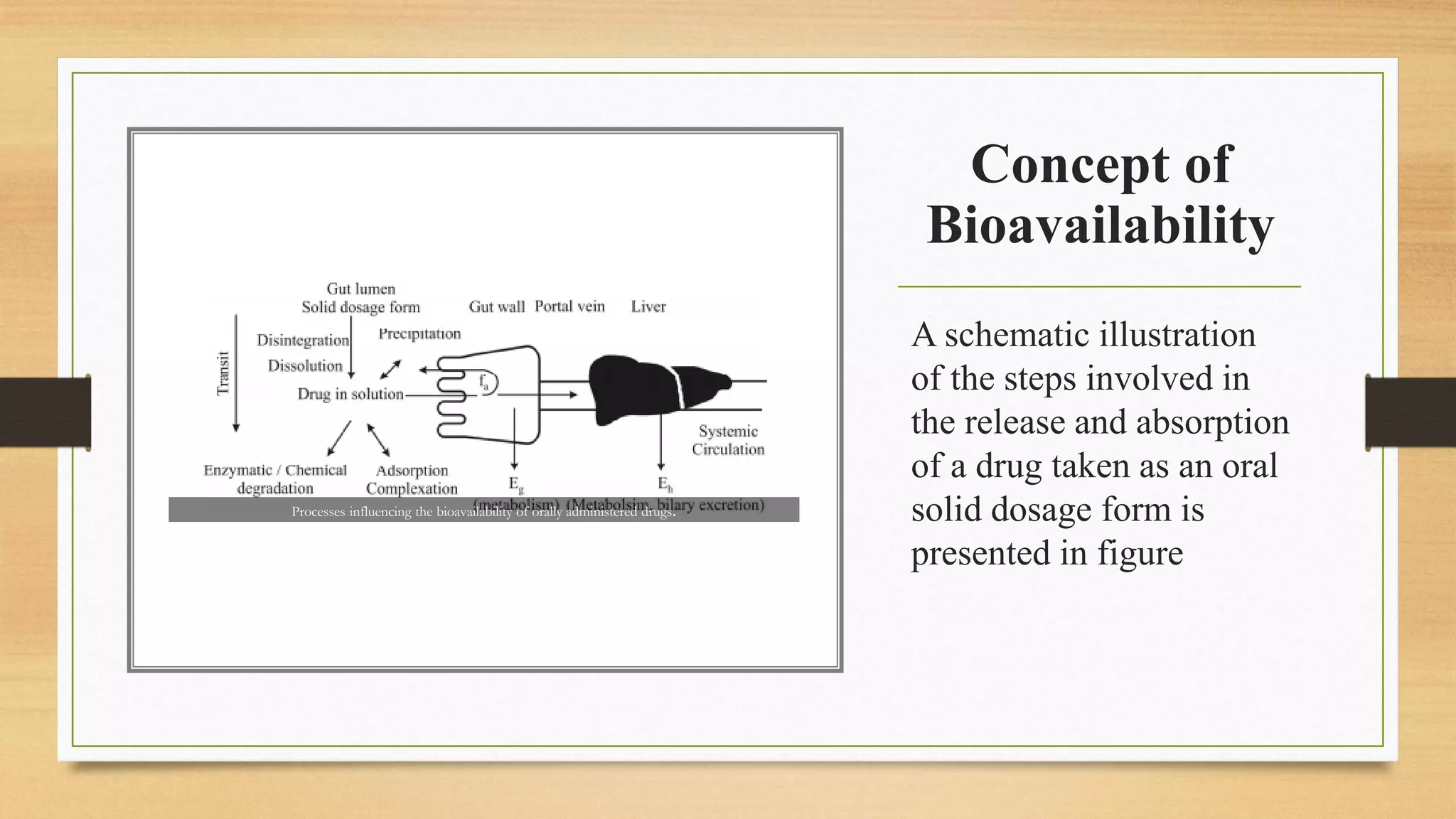
A schematic illustration
of the steps involved in
the release and absorption
of a drug taken as an oral
solid dosage form is
presented in figure
Processes influencing the bioavailability of orally administered drugs.
Methods of Improving Bioavailability
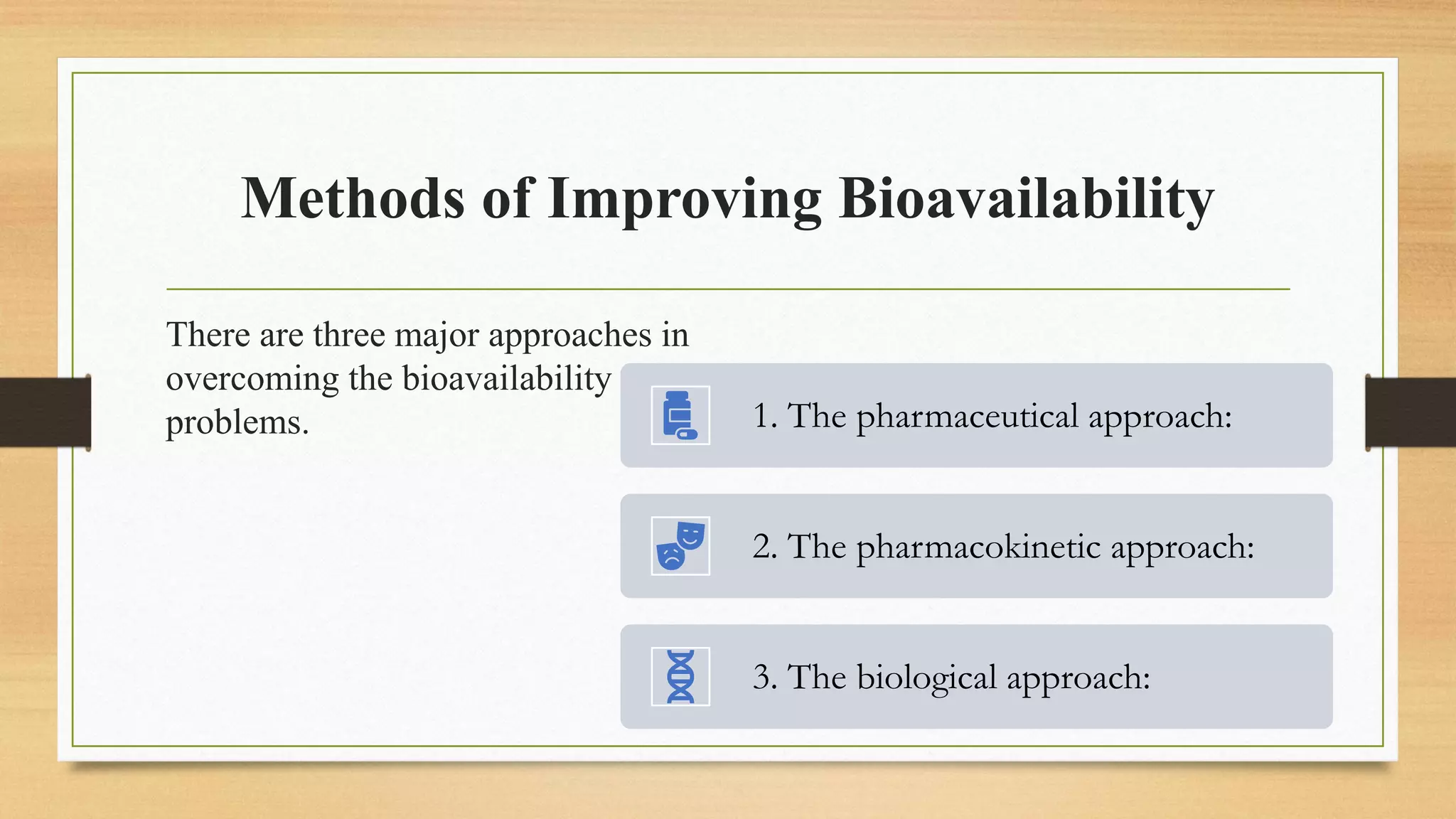
There are three major approaches in
overcoming the bioavailability
problems. 1. The pharmaceutical approach:
2. The pharmacokinetic approach:
3. The biological approach:
Methods of
Improving
Bioavailability
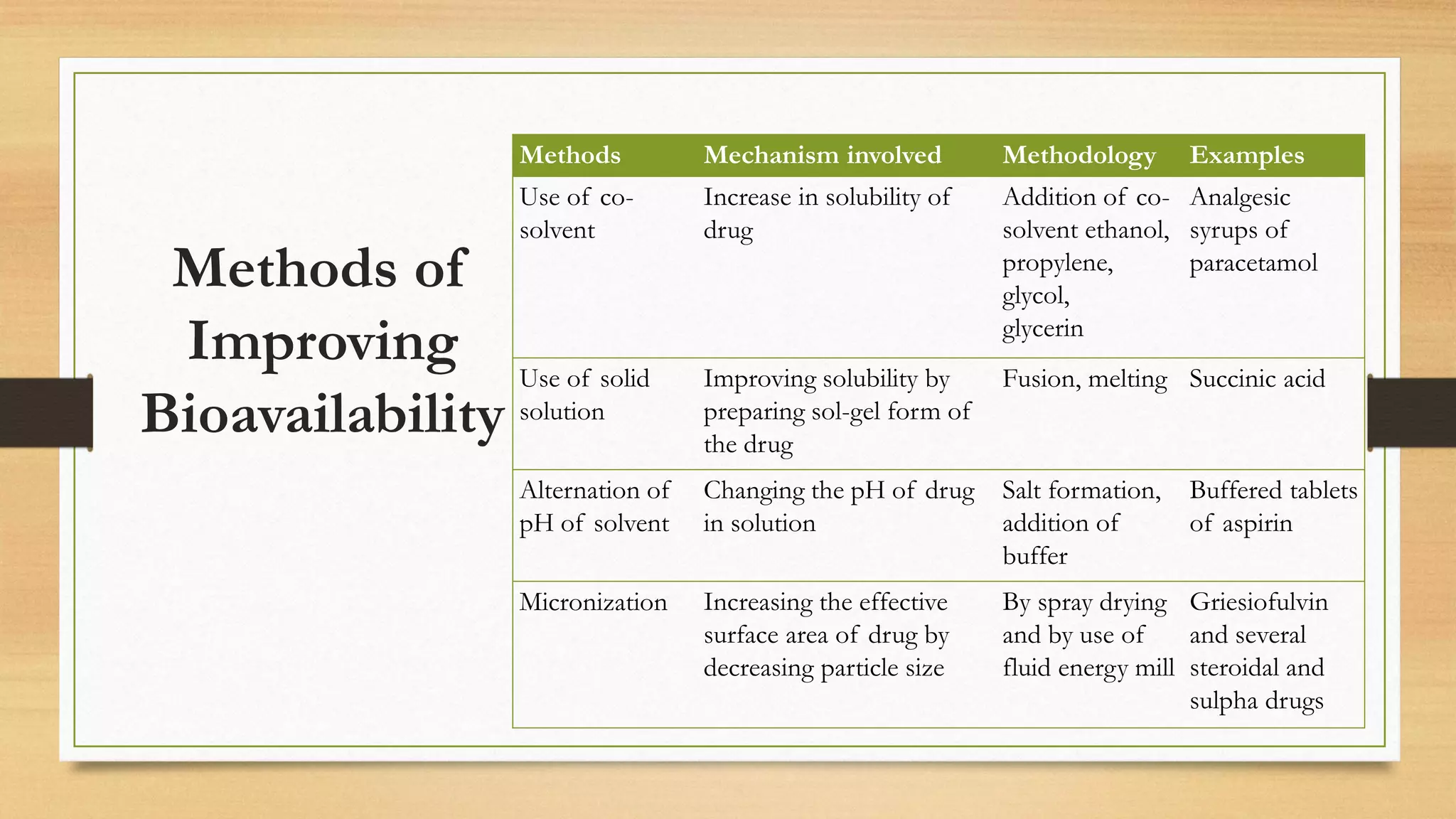
Methods Mechanism involved Methodology Examples
Use of co-
solvent
Increase in solubility of
drug
Addition of co-
solvent ethanol,
propylene,
glycol,
glycerin
Analgesic
syrups of
paracetamol
Use of solid
solution
Improving solubility by
preparing sol-gel form of
the drug
Fusion, melting Succinic acid
Alternation of
pH of solvent
Changing the pH of drug
in solution
Salt formation,
addition of
buffer
Buffered tablets
of aspirin
Micronization Increasing the effective
surface area of drug by
decreasing particle size
By spray drying
and by use of
fluid energy mill
Griesiofulvin
and several
steroidal and
sulpha drugs
Bioavailability Study
Characteristics
The evaluation of a drug product bioavailability study
involves them consideration of various factors. Some are:
1. Drug
(a) The drug substance in each product must be the same
(b) Bioavailability studies are conducted to compare two or
more products
(c) Different chemical substances cannot be compared
(d) Compare the drug products with the same drug in each
dosage form
Bioavailability Study
Characteristics
2. Drug product :
(a) Comparison is made between two
or more similar products containing
exactly the same chemical substance.
(b) Different dosage form can be
compared when they contain same
drug.
Bioavailability Study Characteristics
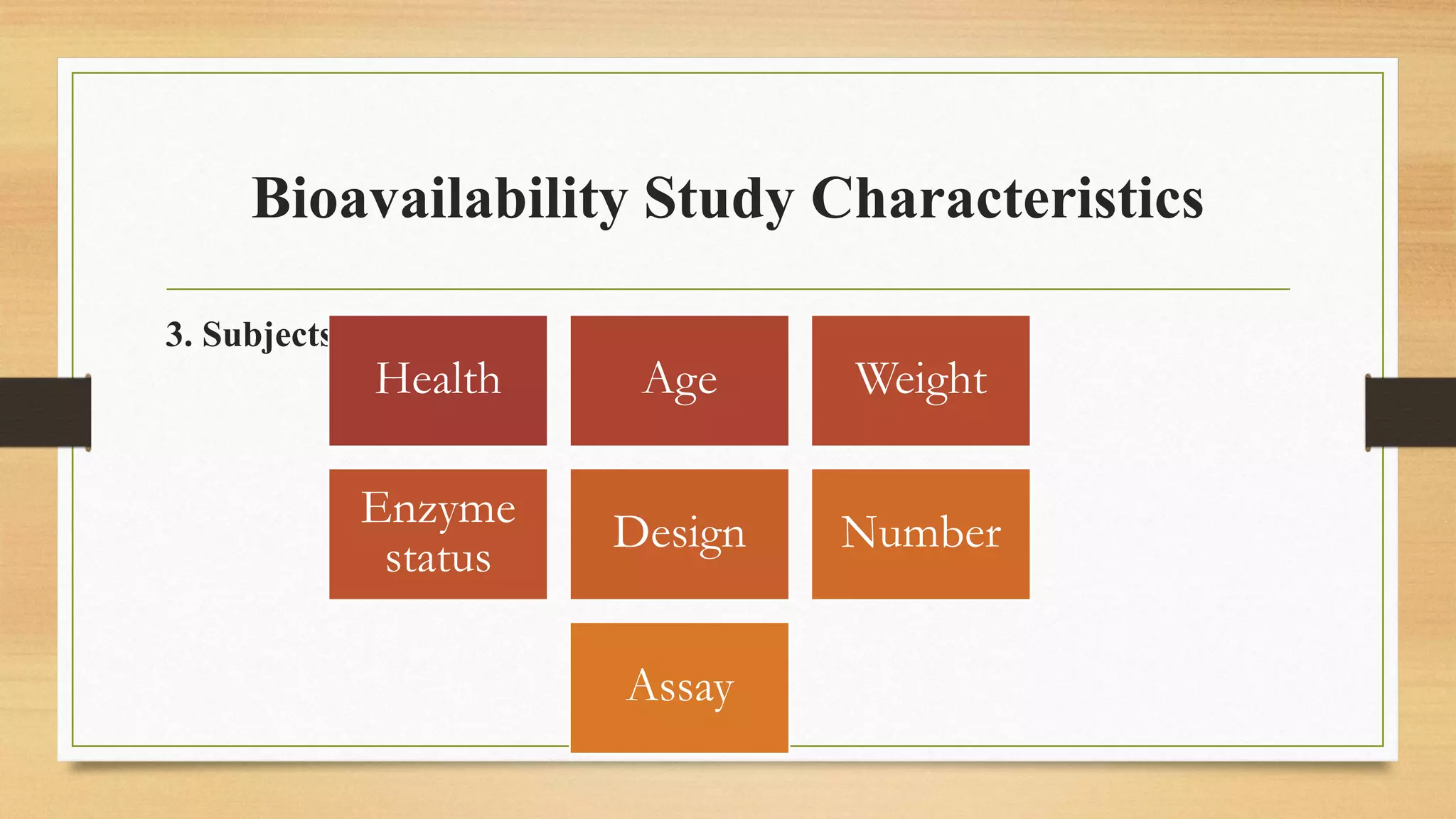
3. Subjects :
Health Age Weight
Enzyme
status
Design Number
Assay
Bioavailability Studies
• Bioavailability studies are designed to determine
either an absolute BA or relative BA.
• They can be used to compare different route of
administration.
• Ex: oral versus IV, IP versus IM.
• Advantages -
➢The patient will be benefitted from the study
➢Reflects better the therapeutic efficacy of the drug
Bioavailability
Studies
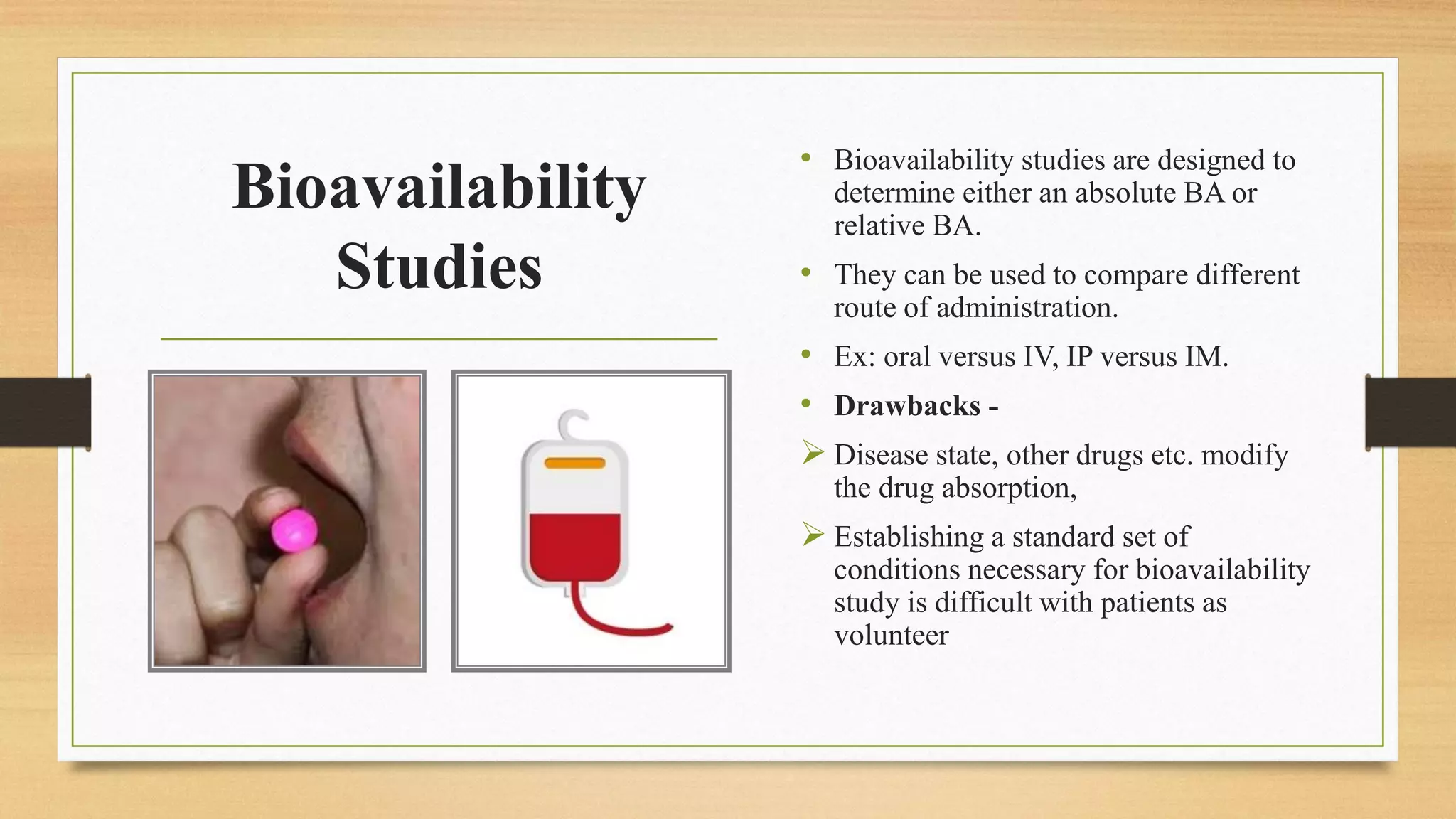
• Bioavailability studies are designed to
determine either an absolute BA or
relative BA.
• They can be used to compare different
route of administration.
• Ex: oral versus IV, IP versus IM.
• Drawbacks -
➢ Disease state, other drugs etc. modify
the drug absorption,
➢ Establishing a standard set of
conditions necessary for bioavailability
study is difficult with patients as
volunteer

Methods of improving bioavailability

  • 1.
  • 2.
    Concept of Bioavailability A schematicillustration of the steps involved in the release and absorption of a drug taken as an oral solid dosage form is presented in figure Processes influencing the bioavailability of orally administered drugs.
  • 3.
    Methods of ImprovingBioavailability There are three major approaches in overcoming the bioavailability problems. 1. The pharmaceutical approach: 2. The pharmacokinetic approach: 3. The biological approach:
  • 4.
    Methods of Improving Bioavailability Methods Mechanisminvolved Methodology Examples Use of co- solvent Increase in solubility of drug Addition of co- solvent ethanol, propylene, glycol, glycerin Analgesic syrups of paracetamol Use of solid solution Improving solubility by preparing sol-gel form of the drug Fusion, melting Succinic acid Alternation of pH of solvent Changing the pH of drug in solution Salt formation, addition of buffer Buffered tablets of aspirin Micronization Increasing the effective surface area of drug by decreasing particle size By spray drying and by use of fluid energy mill Griesiofulvin and several steroidal and sulpha drugs
  • 5.
    Bioavailability Study Characteristics The evaluationof a drug product bioavailability study involves them consideration of various factors. Some are: 1. Drug (a) The drug substance in each product must be the same (b) Bioavailability studies are conducted to compare two or more products (c) Different chemical substances cannot be compared (d) Compare the drug products with the same drug in each dosage form
  • 6.
    Bioavailability Study Characteristics 2. Drugproduct : (a) Comparison is made between two or more similar products containing exactly the same chemical substance. (b) Different dosage form can be compared when they contain same drug.
  • 7.
    Bioavailability Study Characteristics 3.Subjects : Health Age Weight Enzyme status Design Number Assay
  • 8.
    Bioavailability Studies • Bioavailabilitystudies are designed to determine either an absolute BA or relative BA. • They can be used to compare different route of administration. • Ex: oral versus IV, IP versus IM. • Advantages - ➢The patient will be benefitted from the study ➢Reflects better the therapeutic efficacy of the drug
  • 9.
    Bioavailability Studies • Bioavailability studiesare designed to determine either an absolute BA or relative BA. • They can be used to compare different route of administration. • Ex: oral versus IV, IP versus IM. • Drawbacks - ➢ Disease state, other drugs etc. modify the drug absorption, ➢ Establishing a standard set of conditions necessary for bioavailability study is difficult with patients as volunteer