Methodology in Research
Process
Methodology
 How the research is conducted.
 Research methods are categories of
terminologies, strategies, and techniques
that are used to conduct research.
 Research methods are the procedures of
studying a phenomenon, including ways of
collecting and handling empirical
observations and data.
Research Methodology
 Population
 Sampling
 Methods
 Instruments
 Data collection
 Data Interpretation
 Data Analysis
Population
 Population in research is the area under
study.
 POPULATION ARE OF TWO TYPES:
1.Theoretical/Target Population.
2.Accessible Population.
Target population
 The Target population refers to the entire
group of individuals or objects to which
researchers are interested in generalizing
the conclusions”.
Accessible Population
 “The accessible population is the
population in research to which the
researchers can apply their conclusions.
This population is a subset of the target
population and is also known as the study
population. It is from the accessible
population that researchers draw their
samples”.
Sample
 In general, a sample is a limited quantity of
something which is intended to be similar
to and represent a larger amount of that
thing(s).
 A Sample is a selection of units
from the entire group called the population
Sampling
 It refers to the method of selecting a
sample from a given universe or population
with a view to draw conclusion about the
universe.
Types of Sampling
 Probability sampling
 Non- probability sampling
 Probability sampling – representativeness
is most important
 Does the sample represent the population
as a whole?
 Techniques of probability sampling get at
different ways of ensuring
representativeness
Main Types of Probability
Sampling
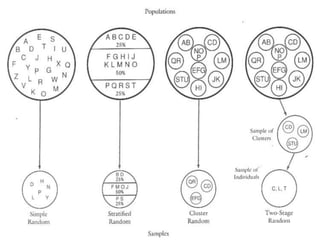
Simple Random Sampling
 randomly pick individuals to include in the
sample.
 All individuals must have an equal chance of being
selected.
 As sample size increases, sample becomes more and
more representative of population.
Systematic random sampling
 – samples according to a rule
E.g., every fifth person is chosen
Stratified sampling
 – break the sample into various subgroups
or strata and sample from them.
Stratified sampling
 – break the sample into various subgroups
or strata and sample from them.
Cluster sampling
 The subjects are selected in groups or
clusters rather than randomly
Non-probability Sampling
 Most researchers are bounded by time,
money and workforce and because of these
limitations, it is almost impossible to
randomly sample the entire population and
it is often necessary to employ another
sampling technique, the non-probability
sampling technique
Convenience, Haphazard or
Accidental sampling -
 members of the population are chosen
based on their relative ease of access. To
sample friends, co-workers, or shoppers at
a single mall, are all examples of
convenience sampling.
 – sample whoever is available
Cont…
 is probably the most common of all
sampling techniques. With convenience
sampling, the samples are selected because
they are accessible to the researcher.
Subjects are chosen simply because they
are easy to recruit. This technique is
considered easiest, cheapest and least time
consuming.
Snowball sampling
 - The first respondent refers a friend. The
friend also refers a friend, etc
 is usually done when there is a very small
population size. In this type of sampling,
the researcher asks the initial subject to
identify another potential subject who also
meets the criteria of the research. The
downside of using a snowball sample is
that it is hardly representative of the
population.
Judgmental sampling or
Purposive sampling
 - The researcher chooses the sample based
on who they think would be appropriate for
the study.
Data
 a collection of facts from which
conclusions may be drawn
Data collection
 The process of collecting facts with the
help of research instrument.
Data Interpretation
 The researcher interprets the newly
analyzed data and suggests a conclusion.
 Data interpretation is the representation of
collected data in research work
Data Analysis
 The manipulation of the collected data
according to the research question/s to
research conclusions.
Good Luck For Your Research
Methodology…

methodology in research

  • 1.
  • 2.
    Methodology  How theresearch is conducted.  Research methods are categories of terminologies, strategies, and techniques that are used to conduct research.  Research methods are the procedures of studying a phenomenon, including ways of collecting and handling empirical observations and data.
  • 3.
    Research Methodology  Population Sampling  Methods  Instruments  Data collection  Data Interpretation  Data Analysis
  • 4.
    Population  Population inresearch is the area under study.
  • 5.
     POPULATION AREOF TWO TYPES: 1.Theoretical/Target Population. 2.Accessible Population.
  • 6.
    Target population  TheTarget population refers to the entire group of individuals or objects to which researchers are interested in generalizing the conclusions”.
  • 7.
    Accessible Population  “Theaccessible population is the population in research to which the researchers can apply their conclusions. This population is a subset of the target population and is also known as the study population. It is from the accessible population that researchers draw their samples”.
  • 8.
    Sample  In general,a sample is a limited quantity of something which is intended to be similar to and represent a larger amount of that thing(s).  A Sample is a selection of units from the entire group called the population
  • 9.
    Sampling  It refersto the method of selecting a sample from a given universe or population with a view to draw conclusion about the universe.
  • 10.
    Types of Sampling Probability sampling  Non- probability sampling
  • 11.
     Probability sampling– representativeness is most important  Does the sample represent the population as a whole?  Techniques of probability sampling get at different ways of ensuring representativeness
  • 12.
    Main Types ofProbability Sampling
  • 13.
    Simple Random Sampling randomly pick individuals to include in the sample.  All individuals must have an equal chance of being selected.  As sample size increases, sample becomes more and more representative of population.
  • 14.
    Systematic random sampling – samples according to a rule E.g., every fifth person is chosen
  • 15.
    Stratified sampling  –break the sample into various subgroups or strata and sample from them.
  • 16.
    Stratified sampling  –break the sample into various subgroups or strata and sample from them.
  • 17.
    Cluster sampling  Thesubjects are selected in groups or clusters rather than randomly
  • 19.
    Non-probability Sampling  Mostresearchers are bounded by time, money and workforce and because of these limitations, it is almost impossible to randomly sample the entire population and it is often necessary to employ another sampling technique, the non-probability sampling technique
  • 20.
    Convenience, Haphazard or Accidentalsampling -  members of the population are chosen based on their relative ease of access. To sample friends, co-workers, or shoppers at a single mall, are all examples of convenience sampling.  – sample whoever is available
  • 21.
    Cont…  is probablythe most common of all sampling techniques. With convenience sampling, the samples are selected because they are accessible to the researcher. Subjects are chosen simply because they are easy to recruit. This technique is considered easiest, cheapest and least time consuming.
  • 22.
    Snowball sampling  -The first respondent refers a friend. The friend also refers a friend, etc  is usually done when there is a very small population size. In this type of sampling, the researcher asks the initial subject to identify another potential subject who also meets the criteria of the research. The downside of using a snowball sample is that it is hardly representative of the population.
  • 23.
    Judgmental sampling or Purposivesampling  - The researcher chooses the sample based on who they think would be appropriate for the study.
  • 24.
    Data  a collectionof facts from which conclusions may be drawn
  • 25.
    Data collection  Theprocess of collecting facts with the help of research instrument.
  • 26.
    Data Interpretation  Theresearcher interprets the newly analyzed data and suggests a conclusion.  Data interpretation is the representation of collected data in research work
  • 27.
    Data Analysis  Themanipulation of the collected data according to the research question/s to research conclusions.
  • 28.
    Good Luck ForYour Research Methodology…