
8	
  Ways	
  of	
  Learning	
  	
   May	
  2012	
  
8 Aboriginal	
  Ways	
  of	
  Learning	
  
	
  Factsheet	


This	
  academic	
  factsheet	
  explains	
  8	
  Aboriginal	
  Ways	
  of	
  Learning as	
  one	
  view	
  of	
  Indigenous	
  
cultural	
   competence	
   and	
   why	
   it	
   is	
   important	
   for	
   those	
   working	
   with	
   Aboriginal	
   and	
   non-­‐
Aboriginal	
  students.	


How	
  can	
  teachers	
  (lecturers	
  and	
  tutors)	
  use	
  Aboriginal	
  knowledge	
  authentically	
  and	
  
productively	
  with	
  students?	
  	
  
• The	
  8	
  Aboriginal	
  Ways	
  of	
  Learning	
  is	
  a	
  pedagogy	
  framework	
  that	
  allows	
  teachers	
  to	
  
include	
  Aboriginal	
  perspectives	
  by	
  using	
  Aboriginal	
  learning	
  techniques.	


Teaching	
  through	
  Aboriginal	
  processes	
  and	
  protocols,	
  not	
  just	
  Aboriginal	
  content	
  validates	
  
and	
  teaches	
  through	
  Aboriginal	
  culture	
  and	
  may	
  enhance	
  the	
  learning	
  for	
  all	
  students.	


Common	
  ground	
  between	
  mainstream	
  and	
  Aboriginal	
  pedagogies:	
  
• Learning	
  through	
  narrative.	
  
• Planning	
  and	
  visualising	
  explicit	
  processes.	
  
• Working	
  non-­‐verbally	
  with	
  self-­‐reflective,	
  hands-­‐on	
  methods.	
  
• Learning	
  through	
  images,	
  symbols	
  and	
  metaphors.	
  
• Learning	
  through	
  place-­‐responsive,	
  environmental	
  practice.	
  
• Using	
  indirect,	
  innovative	
  and	
  interdisciplinary	
  approaches.	
  
• Modelling	
  and	
  scaffolding	
  by	
  working	
  from	
  wholes	
  to	
  parts.	
  
• Connecting	
  learning	
  to	
  local	
  values,	
  needs	
  and	
  knowledge	


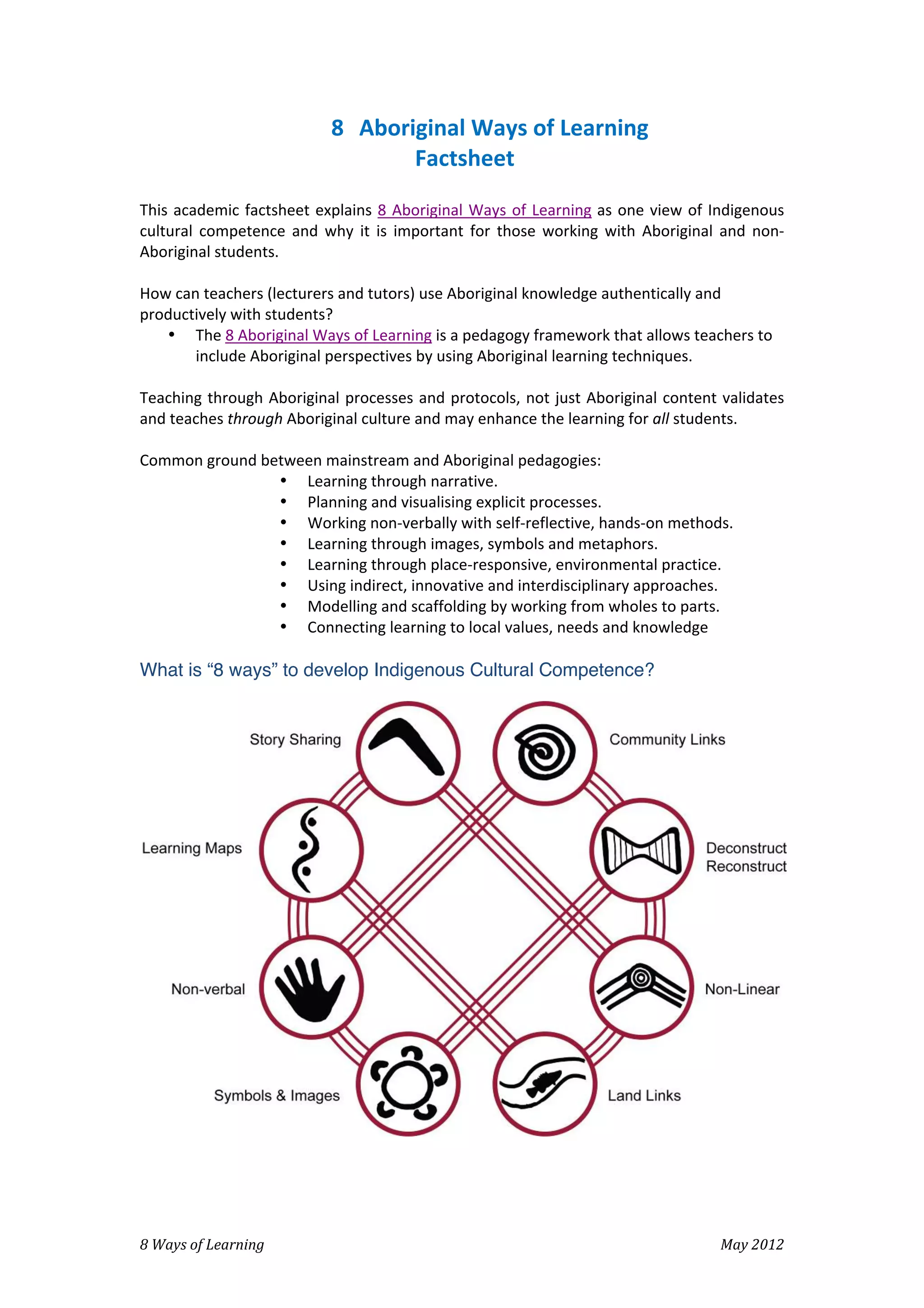
What is “8 ways” to develop Indigenous Cultural Competence?


8	
  Ways	
  of	
  Learning	
  	
   May	
  2012	
  
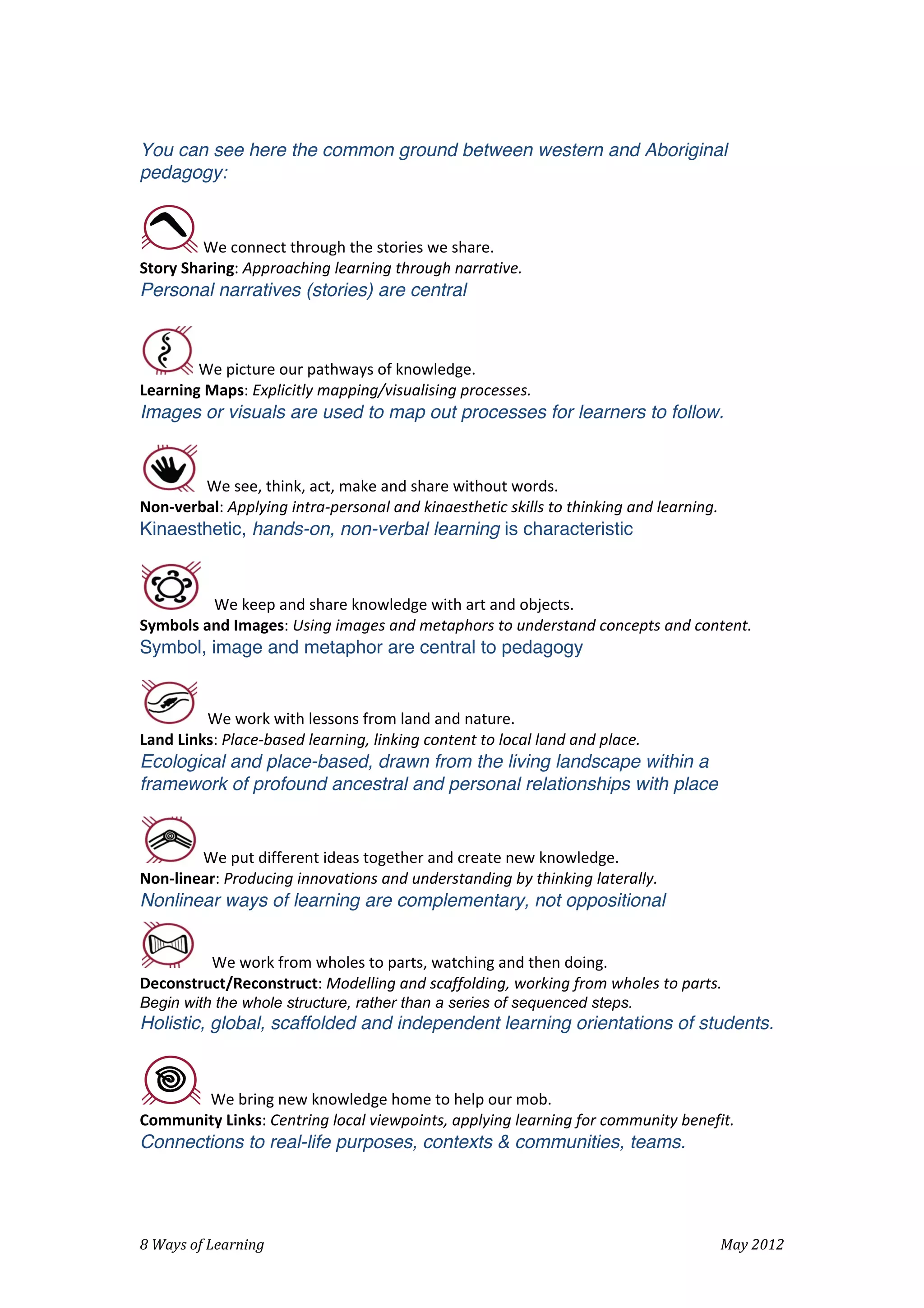
You can see here the common ground between western and Aboriginal
pedagogy:
We	
  connect	
  through	
  the	
  stories	
  we	
  share.	
  	
  
Story	
  Sharing:	
  Approaching	
  learning	
  through	
  narrative.	
  
Personal narratives (stories) are central
We	
  picture	
  our	
  pathways	
  of	
  knowledge.	
  
Learning	
  Maps:	
  Explicitly	
  mapping/visualising	
  processes.	
  
Images or visuals are used to map out processes for learners to follow.	
  
We	
  see,	
  think,	
  act,	
  make	
  and	
  share	
  without	
  words.	
  
Non-­‐verbal:	
  Applying	
  intra-­‐personal	
  and	
  kinaesthetic	
  skills	
  to	
  thinking	
  and	
  learning.	
  
Kinaesthetic, hands-on, non-verbal learning is characteristic
We	
  keep	
  and	
  share	
  knowledge	
  with	
  art	
  and	
  objects.	
  
Symbols	
  and	
  Images:	
  Using	
  images	
  and	
  metaphors	
  to	
  understand	
  concepts	
  and	
  content.	
  
Symbol, image and metaphor are central to pedagogy
We	
  work	
  with	
  lessons	
  from	
  land	
  and	
  nature.	
  
Land	
  Links:	
  Place-­‐based	
  learning,	
  linking	
  content	
  to	
  local	
  land	
  and	
  place.	
  
Ecological and place-based, drawn from the living landscape within a
framework of profound ancestral and personal relationships with place
We	
  put	
  different	
  ideas	
  together	
  and	
  create	
  new	
  knowledge.	
  
Non-­‐linear:	
  Producing	
  innovations	
  and	
  understanding	
  by	
  thinking	
  laterally.	
  
Nonlinear ways of learning are complementary, not oppositional	
  
We	
  work	
  from	
  wholes	
  to	
  parts,	
  watching	
  and	
  then	
  doing.	
  
Deconstruct/Reconstruct:	
  Modelling	
  and	
  scaffolding,	
  working	
  from	
  wholes	
  to	
  parts.	
  
Begin with the whole structure, rather than a series of sequenced steps.
Holistic, global, scaffolded and independent learning orientations of students.
We	
  bring	
  new	
  knowledge	
  home	
  to	
  help	
  our	
  mob.	
  
Community	
  Links:	
  Centring	
  local	
  viewpoints,	
  applying	
  learning	
  for	
  community	
  benefit.	
  
Connections to real-life purposes, contexts & communities, teams.
	
  
8	
  Ways	
  of	
  Learning	
  	
   May	
  2012	
  
Tell	
  a	
  story.	
  Make	
  a	
  plan.	
  Think	
  and	
  do.	
  Draw	
  it.	
  Take	
  it	
  outside.	
  Try	
  a	
  new	
  way.	
  Watch	
  
first,	
  then	
  do.	
  Share	
  it	
  with	
  others.	


8 aboriginal-ways-of-learning-factsheet

  • 1.
    8  Ways  of  Learning     May  2012   8 Aboriginal  Ways  of  Learning    Factsheet       This  academic  factsheet  explains  8  Aboriginal  Ways  of  Learning as  one  view  of  Indigenous   cultural   competence   and   why   it   is   important   for   those   working   with   Aboriginal   and   non-­‐ Aboriginal  students.       How  can  teachers  (lecturers  and  tutors)  use  Aboriginal  knowledge  authentically  and   productively  with  students?     • The  8  Aboriginal  Ways  of  Learning  is  a  pedagogy  framework  that  allows  teachers  to   include  Aboriginal  perspectives  by  using  Aboriginal  learning  techniques.     Teaching  through  Aboriginal  processes  and  protocols,  not  just  Aboriginal  content  validates   and  teaches  through  Aboriginal  culture  and  may  enhance  the  learning  for  all  students.       Common  ground  between  mainstream  and  Aboriginal  pedagogies:   • Learning  through  narrative.   • Planning  and  visualising  explicit  processes.   • Working  non-­‐verbally  with  self-­‐reflective,  hands-­‐on  methods.   • Learning  through  images,  symbols  and  metaphors.   • Learning  through  place-­‐responsive,  environmental  practice.   • Using  indirect,  innovative  and  interdisciplinary  approaches.   • Modelling  and  scaffolding  by  working  from  wholes  to  parts.   • Connecting  learning  to  local  values,  needs  and  knowledge     What is “8 ways” to develop Indigenous Cultural Competence?      
  • 2.
    8  Ways  of  Learning     May  2012   You can see here the common ground between western and Aboriginal pedagogy: We  connect  through  the  stories  we  share.     Story  Sharing:  Approaching  learning  through  narrative.   Personal narratives (stories) are central We  picture  our  pathways  of  knowledge.   Learning  Maps:  Explicitly  mapping/visualising  processes.   Images or visuals are used to map out processes for learners to follow.   We  see,  think,  act,  make  and  share  without  words.   Non-­‐verbal:  Applying  intra-­‐personal  and  kinaesthetic  skills  to  thinking  and  learning.   Kinaesthetic, hands-on, non-verbal learning is characteristic We  keep  and  share  knowledge  with  art  and  objects.   Symbols  and  Images:  Using  images  and  metaphors  to  understand  concepts  and  content.   Symbol, image and metaphor are central to pedagogy We  work  with  lessons  from  land  and  nature.   Land  Links:  Place-­‐based  learning,  linking  content  to  local  land  and  place.   Ecological and place-based, drawn from the living landscape within a framework of profound ancestral and personal relationships with place We  put  different  ideas  together  and  create  new  knowledge.   Non-­‐linear:  Producing  innovations  and  understanding  by  thinking  laterally.   Nonlinear ways of learning are complementary, not oppositional   We  work  from  wholes  to  parts,  watching  and  then  doing.   Deconstruct/Reconstruct:  Modelling  and  scaffolding,  working  from  wholes  to  parts.   Begin with the whole structure, rather than a series of sequenced steps. Holistic, global, scaffolded and independent learning orientations of students. We  bring  new  knowledge  home  to  help  our  mob.   Community  Links:  Centring  local  viewpoints,  applying  learning  for  community  benefit.   Connections to real-life purposes, contexts & communities, teams.  
  • 3.
    8  Ways  of  Learning     May  2012   Tell  a  story.  Make  a  plan.  Think  and  do.  Draw  it.  Take  it  outside.  Try  a  new  way.  Watch   first,  then  do.  Share  it  with  others.