Objectives Meeting 1 to 3: Deliverables
 Our mentoring relationship is voluntary
 Mentor can teach, not just do
 Mentor and mentee are accountable for their participation
 Mentoring is a partnership and a formal long term relationship
 Career Mentoring
 Responsibility of confidentiality, trust and respect
1. What is it that you really want to be and do?
2. What are you doing really well that is helping you get there?
3. What are you not doing well that is preventing you from getting there?
4. What will you do different tomorrow to meet those challenges?
5. How can the mentor help / where do you need the most help?
Resources Meeting 4 to 8: Deliverables
Mentor:
•Peter Schellinck
Mentee:
•…
Sponsor:
•….
Identify your needs and wants
Invigorate to consider new approaches and
other ways that could be useful for you
and your organisation
Innovate by developing creative solutions
with your team
Integrate your goals with your team
Implement an agreed course of actions and
monitor progress to a successful
outcome
Self-discovery and unleashing as yet unrealised potential:
•Uncover your leadership skills
•Stay connected to your vision so you can easily walk the path to success –
in leadership, in your business, in your community, personally and
professionally
•Achieve team synergy
•Discover and understand “Emotional Intelligence”
•Manage cultural/organisational/workplace diversity
•Develop long-term career and personal goals for work/life balance
•Identify stress factors and develop appropriate stress management
strategies
•Identify a range of ongoing professional/personal development options
•Meeting 9 & 10: Deliverables
•Taylor made closing sessions
•Networking incl. one on one’s with 2 renown Board Members
Scope :
• Create a “gift culture”
• Start with specific work needs
• Make it two-way
Results and Targets Goals
• At all times the mentor must listen with intent to understand rather
then respond.
• The mentor should always be there for the mentee: one – on – one,
phone and email.
• Secure that all important human feeling of well being.
• Mastering and embracing change
• Thinking like an entrepreneur
• Managing your own career
• Promoting yourself
• Lifelong learning and wisdom
Charter
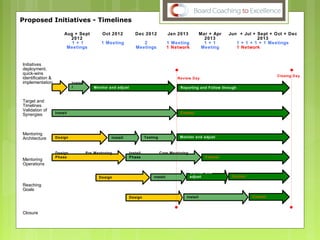
Proposed Initiatives - Timelines
Aug + Sept
2012
1 + 1
Meetings
Oct 2012
1 Meeting
Dec 2012
2
Meetings
Jan 2013
1 Meeting
1 Network
Mar + Apr
2013
1 + 1
Meeting
Jun + Jul + Sept + Oct + Dec
2013
1 + 1 + 1 + 1 Meetings
1 Network
Initiatives
deployment,
quick-wins
identification &
implementation
Target and
Timelines
Validation of
Synergies
Mentoring
Architecture
Mentoring
Operations
Reaching
Goals
Closure
Instal
l
Design
Design Pre Mentoring
Phase
Design
Install
Install
Control
Control
Control
Install Core Mentoring
Phase
Install
Review Day
Design Install
Closing Day
Control
Testing Monitor and adjust
Monitor and adjust Reporting and Follow through
Monitor and
adjust
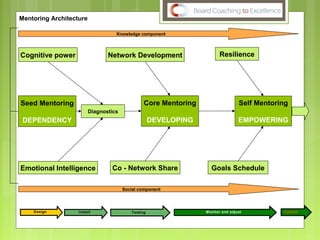
Mentoring Architecture
Diagnostics
Seed Mentoring
DEPENDENCY
Core Mentoring
DEVELOPING
Self Mentoring
EMPOWERING
Resilience
Co - Network ShareEmotional Intelligence
Network DevelopmentCognitive power
Goals Schedule
Social component
Knowledge component
Install TestingDesign Monitor and adjust Control
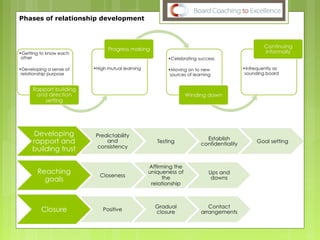
Phases of our mentoring relationship
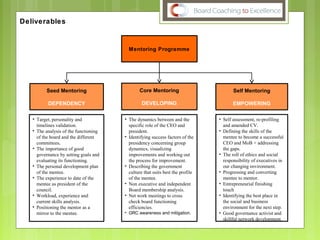
Deliverables
Mentoring Programme
Core Mentoring
DEVELOPING
Seed Mentoring
DEPENDENCY
Self Mentoring
EMPOWERING
• The dynamics between and the
specific role of the CEO and
president.
• Identifying success factors of the
presidency concerning group
dynamics, visualizing
improvements and working out
the process for improvement.
• Describing the government
culture that suits best the profile
of the mentee.
• Non executive and independent
Board membership analysis.
• Net work meetings to cross
check board functioning
efficiencies.
• GRC awareness and mitigation.
• Target, personality and
timelines validation.
• The analysis of the functioning
of the board and the different
committees.
• The importance of good
governance by setting goals and
evaluating its functioning.
• The personal development plan
of the mentee.
• The experience to date of the
mentee as president of the
council.
• Workload, experience and
current skills analysis.
• Positioning the mentor as a
mirror to the mentee.
• Self assessment, re-profiling
and amended CV.
• Defining the skills of the
mentee to become a successful
CEO and MoB + addressing
the gaps.
• The roll of ethics and social
responsibility of executives in
our changing environment.
• Progressing and converting
mentee to mentor.
• Entrepreneurial finishing
touch
• Identifying the best place in
the social and business
environment for the next step.
• Good governance activist and
skillful network development.
Phases of relationship development
Establish a relaxed, yet business like atmosphere
Gain consensus on the purpose of the meeting
Explore the issues from the mentee’s
perspective
Clarify and
elucidate
Challenge
assumptions
Stimulate
analysis
Draw on own
experience
Build
confidence /
motivation
Agree options
for action /
consideration
Agree actions
by both
partners
Agree
milestones
Summarise
Outline agenda for next meeting
Conducting the mentoring meeting
What makes a
mentor/mentee?
Why be a mentor?
Mentor expectations
 A patient listener and eagle-eyed
 Inspires trust
 Gives advice without dictating actions
 Encourages independence yet offers support
 Offers constructive criticism as well as
compliments
 Open and honest
 A good role model through actions and
words
 Willing to spend time, reach out, and share
 An effective intermediary
Mentee expectations
 Asks questions
 Willing to be mentored
 Strives to give his/her best at all times
 Accepts criticism graciously
 Learns from mistakes
 Has courage to try new things
 Accepts responsibilities
 Open and honest
 Respectful and grateful
 Listens, watches, learns, grows
Why Mentor?
 Satisfaction in knowing you had an impact
on someone’s professional and personal
development
 Develop leadership skills and build confidence
 A link with“the younger generation”
 Get a fresh perspective from your mentee
 Increase productivity
 Help develop your professional network
 Receive recognition from peers and
superiors
Why Mentee?
 Have an ally to help you through many
hurdles
 Benefit from another persons experiences
 Opens networks that would otherwise be
closed
 Life-long help with career advancement
 Practice for being a good mentor
Mentoring program
 My way of “Mentoring” desires to affect higher
rates of stability and satisfaction in a changing
business landscape that calls my mentee into
new collaborative relationships and new
systems of delivery.
 Mentoring is an effort to integrate the formation
dimensions of Spiritual development, Business
development, Intellectual development, and
Human development as the mentee moves
into a new phase of her life.
Life flow
mentee

Mentoring_Brussels_2015

  • 2.
    Objectives Meeting 1to 3: Deliverables  Our mentoring relationship is voluntary  Mentor can teach, not just do  Mentor and mentee are accountable for their participation  Mentoring is a partnership and a formal long term relationship  Career Mentoring  Responsibility of confidentiality, trust and respect 1. What is it that you really want to be and do? 2. What are you doing really well that is helping you get there? 3. What are you not doing well that is preventing you from getting there? 4. What will you do different tomorrow to meet those challenges? 5. How can the mentor help / where do you need the most help? Resources Meeting 4 to 8: Deliverables Mentor: •Peter Schellinck Mentee: •… Sponsor: •…. Identify your needs and wants Invigorate to consider new approaches and other ways that could be useful for you and your organisation Innovate by developing creative solutions with your team Integrate your goals with your team Implement an agreed course of actions and monitor progress to a successful outcome Self-discovery and unleashing as yet unrealised potential: •Uncover your leadership skills •Stay connected to your vision so you can easily walk the path to success – in leadership, in your business, in your community, personally and professionally •Achieve team synergy •Discover and understand “Emotional Intelligence” •Manage cultural/organisational/workplace diversity •Develop long-term career and personal goals for work/life balance •Identify stress factors and develop appropriate stress management strategies •Identify a range of ongoing professional/personal development options •Meeting 9 & 10: Deliverables •Taylor made closing sessions •Networking incl. one on one’s with 2 renown Board Members Scope : • Create a “gift culture” • Start with specific work needs • Make it two-way Results and Targets Goals • At all times the mentor must listen with intent to understand rather then respond. • The mentor should always be there for the mentee: one – on – one, phone and email. • Secure that all important human feeling of well being. • Mastering and embracing change • Thinking like an entrepreneur • Managing your own career • Promoting yourself • Lifelong learning and wisdom Charter
  • 3.
    Proposed Initiatives -Timelines Aug + Sept 2012 1 + 1 Meetings Oct 2012 1 Meeting Dec 2012 2 Meetings Jan 2013 1 Meeting 1 Network Mar + Apr 2013 1 + 1 Meeting Jun + Jul + Sept + Oct + Dec 2013 1 + 1 + 1 + 1 Meetings 1 Network Initiatives deployment, quick-wins identification & implementation Target and Timelines Validation of Synergies Mentoring Architecture Mentoring Operations Reaching Goals Closure Instal l Design Design Pre Mentoring Phase Design Install Install Control Control Control Install Core Mentoring Phase Install Review Day Design Install Closing Day Control Testing Monitor and adjust Monitor and adjust Reporting and Follow through Monitor and adjust
  • 4.
    Mentoring Architecture Diagnostics Seed Mentoring DEPENDENCY CoreMentoring DEVELOPING Self Mentoring EMPOWERING Resilience Co - Network ShareEmotional Intelligence Network DevelopmentCognitive power Goals Schedule Social component Knowledge component Install TestingDesign Monitor and adjust Control
  • 5.
    Phases of ourmentoring relationship
  • 6.
    Deliverables Mentoring Programme Core Mentoring DEVELOPING SeedMentoring DEPENDENCY Self Mentoring EMPOWERING • The dynamics between and the specific role of the CEO and president. • Identifying success factors of the presidency concerning group dynamics, visualizing improvements and working out the process for improvement. • Describing the government culture that suits best the profile of the mentee. • Non executive and independent Board membership analysis. • Net work meetings to cross check board functioning efficiencies. • GRC awareness and mitigation. • Target, personality and timelines validation. • The analysis of the functioning of the board and the different committees. • The importance of good governance by setting goals and evaluating its functioning. • The personal development plan of the mentee. • The experience to date of the mentee as president of the council. • Workload, experience and current skills analysis. • Positioning the mentor as a mirror to the mentee. • Self assessment, re-profiling and amended CV. • Defining the skills of the mentee to become a successful CEO and MoB + addressing the gaps. • The roll of ethics and social responsibility of executives in our changing environment. • Progressing and converting mentee to mentor. • Entrepreneurial finishing touch • Identifying the best place in the social and business environment for the next step. • Good governance activist and skillful network development.
  • 7.
  • 8.
    Establish a relaxed,yet business like atmosphere Gain consensus on the purpose of the meeting Explore the issues from the mentee’s perspective Clarify and elucidate Challenge assumptions Stimulate analysis Draw on own experience Build confidence / motivation Agree options for action / consideration Agree actions by both partners Agree milestones Summarise Outline agenda for next meeting Conducting the mentoring meeting
  • 9.
  • 10.
    Mentor expectations  Apatient listener and eagle-eyed  Inspires trust  Gives advice without dictating actions  Encourages independence yet offers support  Offers constructive criticism as well as compliments  Open and honest  A good role model through actions and words  Willing to spend time, reach out, and share  An effective intermediary
  • 11.
    Mentee expectations  Asksquestions  Willing to be mentored  Strives to give his/her best at all times  Accepts criticism graciously  Learns from mistakes  Has courage to try new things  Accepts responsibilities  Open and honest  Respectful and grateful  Listens, watches, learns, grows
  • 12.
    Why Mentor?  Satisfactionin knowing you had an impact on someone’s professional and personal development  Develop leadership skills and build confidence  A link with“the younger generation”  Get a fresh perspective from your mentee  Increase productivity  Help develop your professional network  Receive recognition from peers and superiors
  • 13.
    Why Mentee?  Havean ally to help you through many hurdles  Benefit from another persons experiences  Opens networks that would otherwise be closed  Life-long help with career advancement  Practice for being a good mentor
  • 14.
    Mentoring program  Myway of “Mentoring” desires to affect higher rates of stability and satisfaction in a changing business landscape that calls my mentee into new collaborative relationships and new systems of delivery.  Mentoring is an effort to integrate the formation dimensions of Spiritual development, Business development, Intellectual development, and Human development as the mentee moves into a new phase of her life.
  • 15.