

Improve employee performance with the largest
and fastest-growing library of training videos.
?
What are the primary
of objectives of your
mentoring program?
When mentoring programs don’t work…
Fuzzy goals
No leadership involvement
Poor planning
No training
What is mentoring?
A strategic approach to developing an employee.
It shortens the learning curve, enhances productivity,
and helps align to business strategy.
So - what works, and where do we start?
1. What are your goals?
2. Who will be involved?
3. Are you prepared to develop a
mentoring structure?
4. Are you prepared to allow
participants to control program?
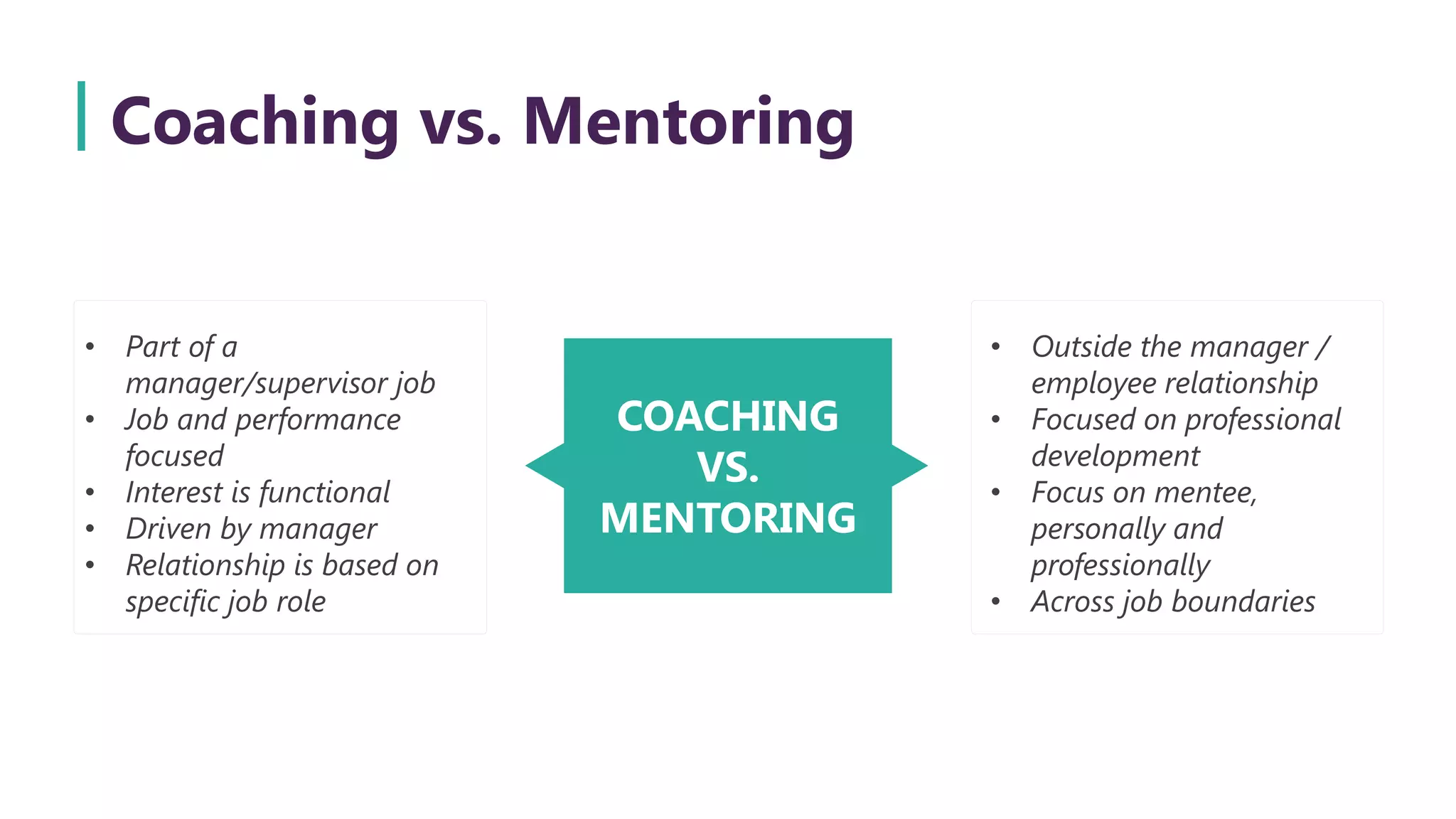
• Part of a
manager/supervisor job
• Job and performance
focused
• Interest is functional
• Driven by manager
• Relationship is based on
specific job role
Coaching vs. Mentoring
• Outside the manager /
employee relationship
• Focused on professional
development
• Focus on mentee,
personally and
professionally
• Across job boundaries
COACHING
VS.
MENTORING
Asking rather than telling.
How to think, not what to think.
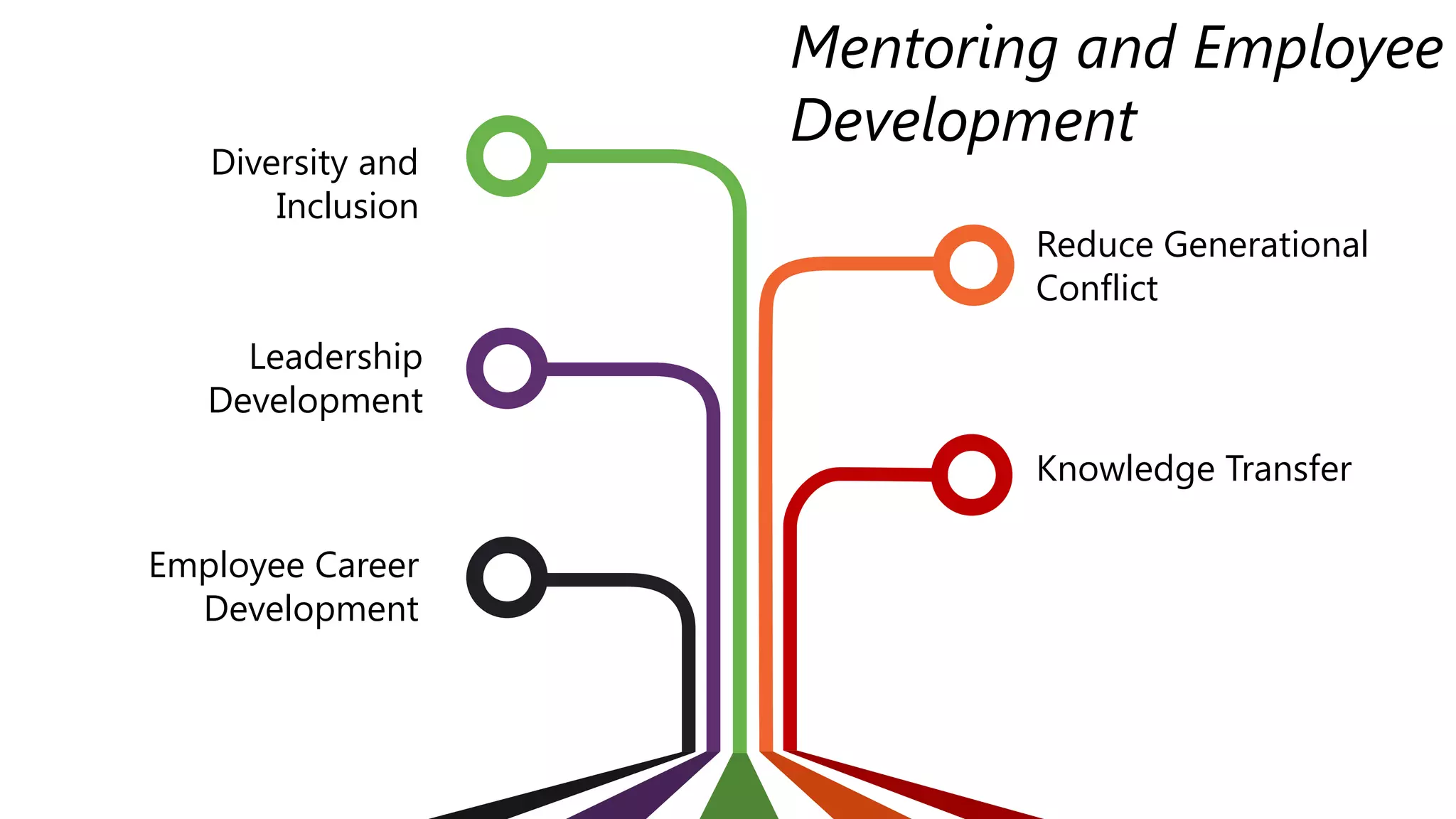
Leadership
Development
Diversity and
Inclusion
Employee Career
Development
Reduce Generational
Conflict
Knowledge Transfer
Mentoring and Employee
Development
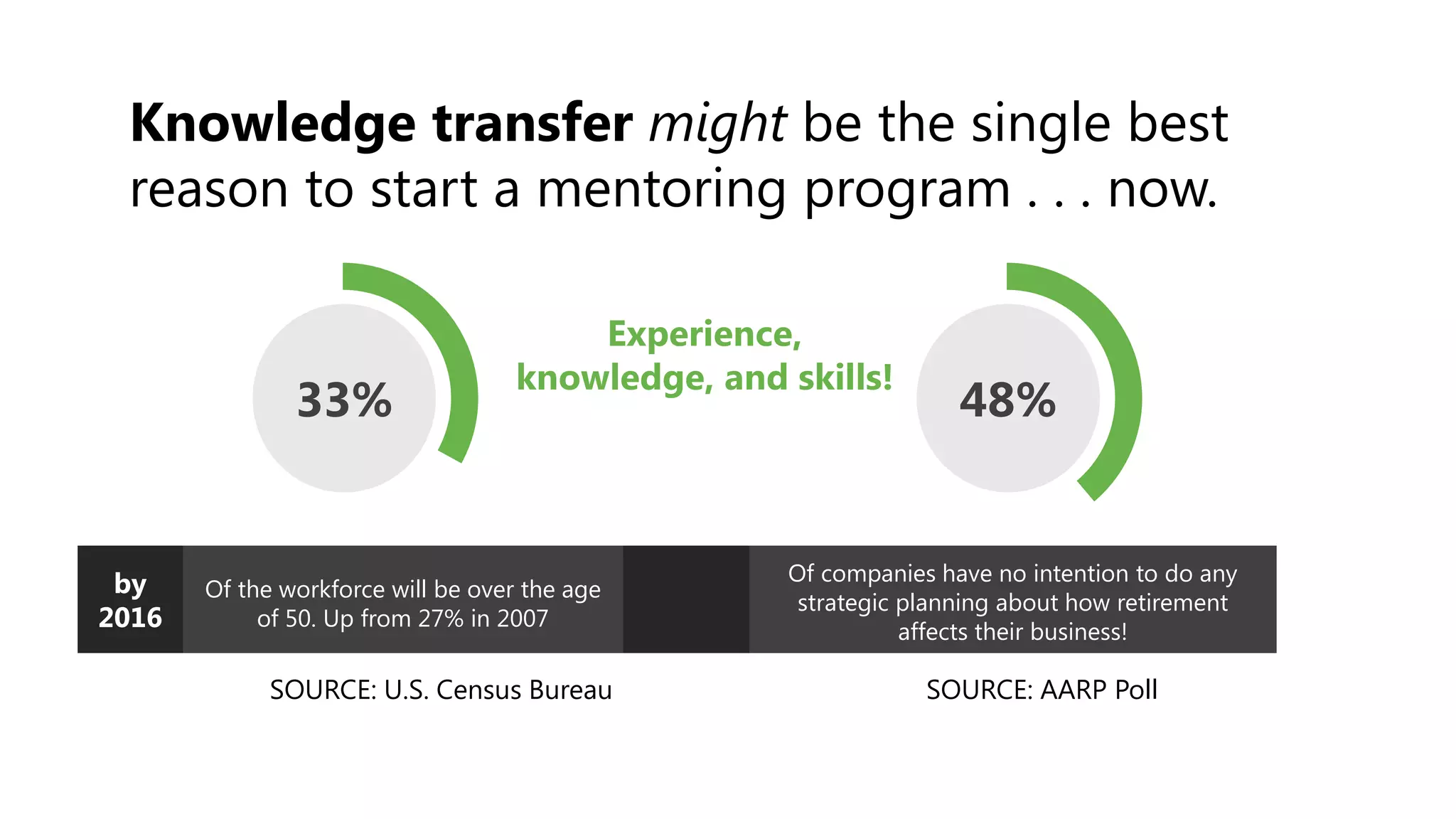
Knowledge transfer might be the single best
reason to start a mentoring program . . . now.
33%
by
2016
Of the workforce will be over the age
of 50. Up from 27% in 2007
SOURCE: U.S. Census Bureau
48%
Of companies have no intention to do any
strategic planning about how retirement
affects their business!
SOURCE: AARP Poll
Experience,
knowledge, and skills!
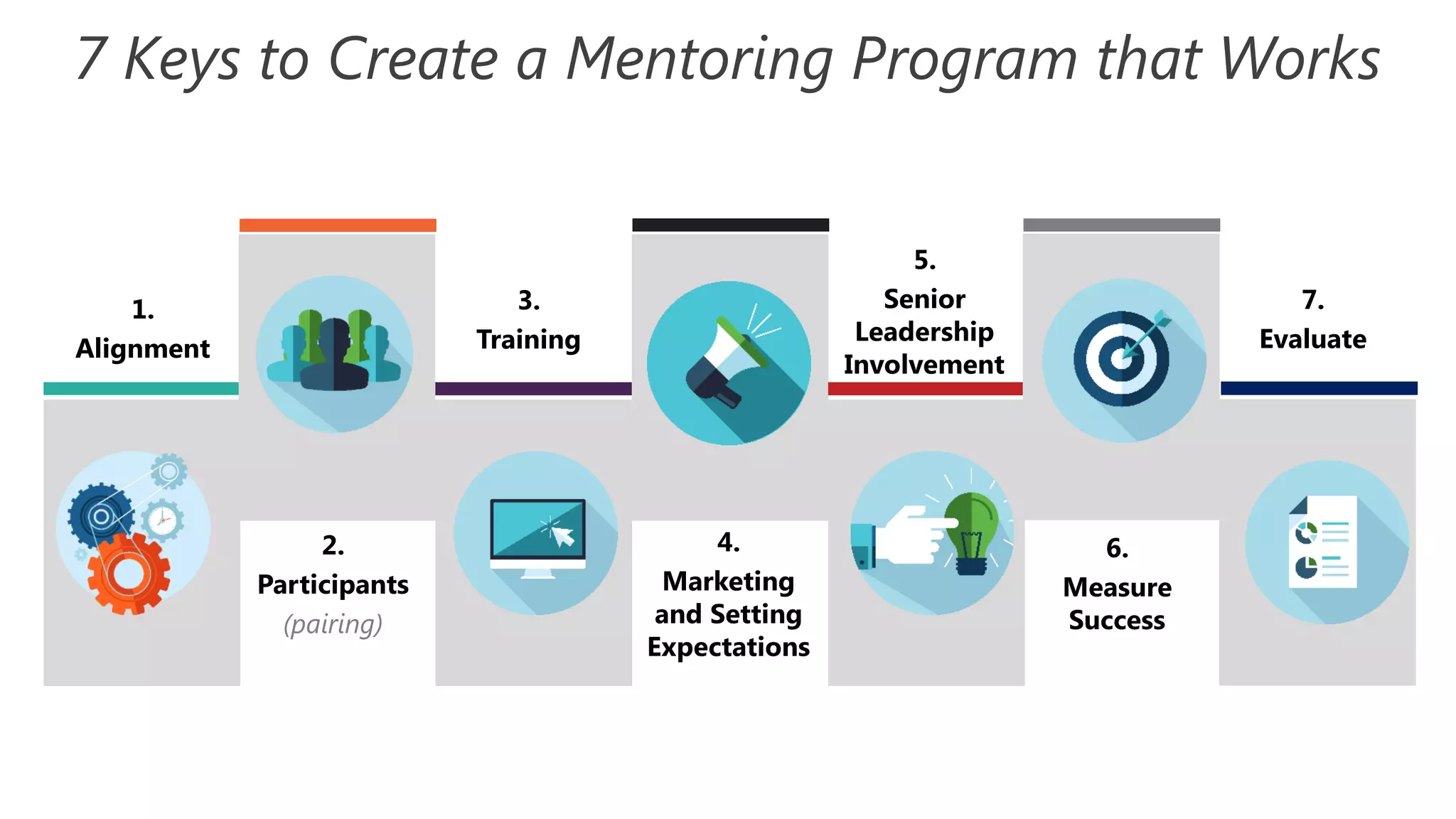
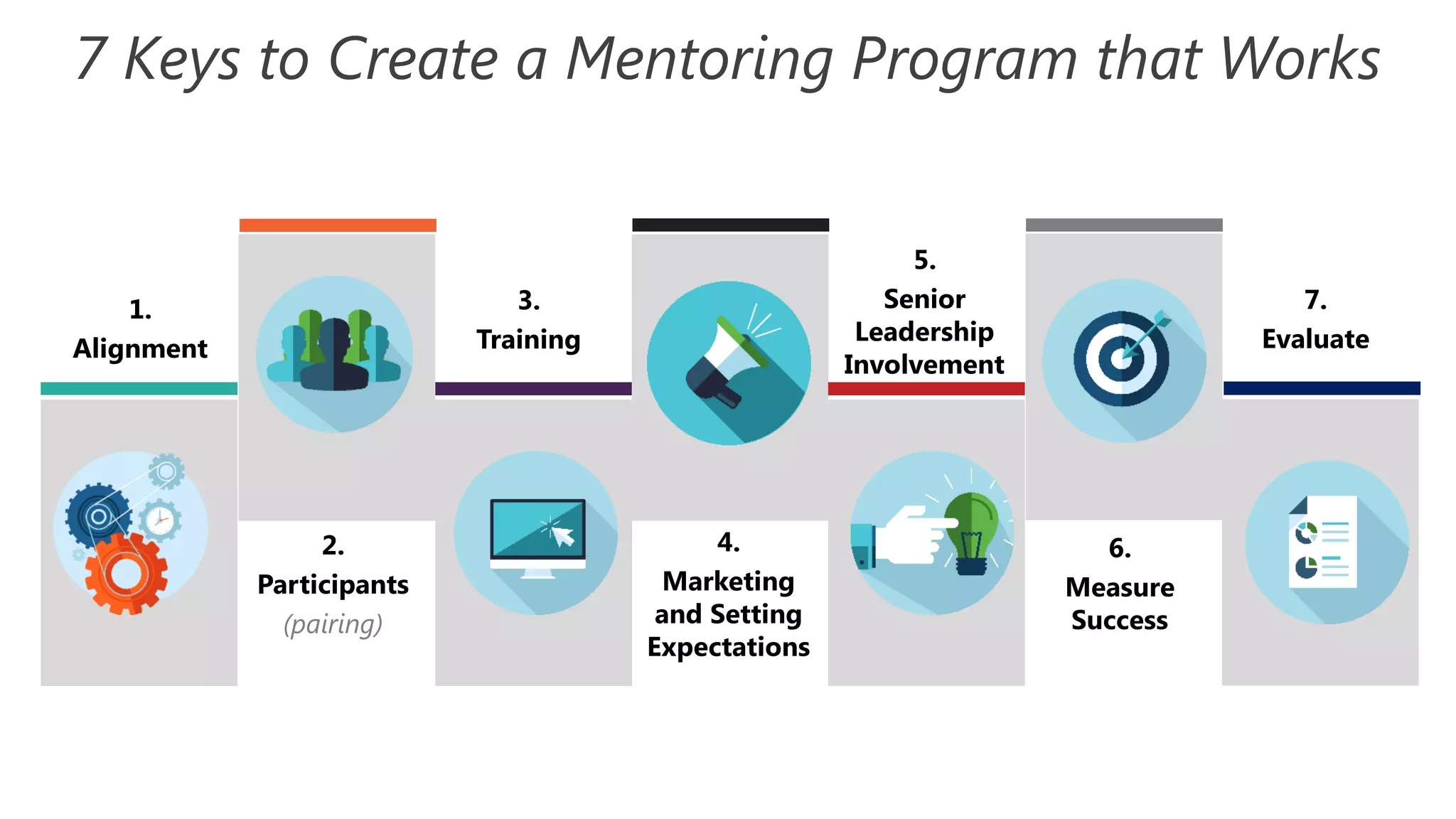
7 Keys to Create a Mentoring Program that Works
3.
Training
1.
Alignment
2.
Participants
(pairing)
4.
Marketing
and Setting
Expectations
5.
Senior
Leadership
Involvement
6.
Measure
Success
7.
Evaluate
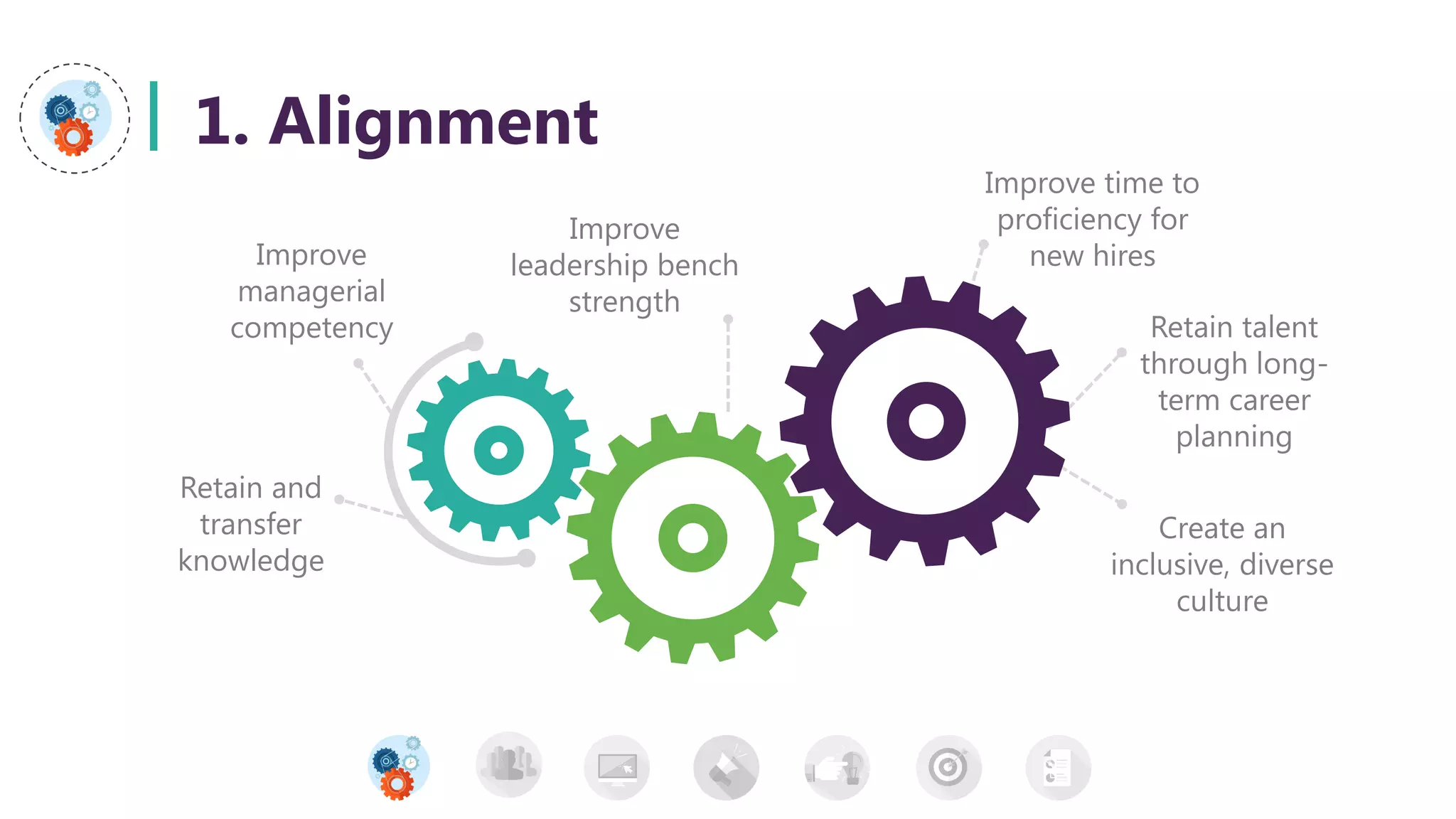
Improve
leadership bench
strength
Create an
inclusive, diverse
culture
Improve
managerial
competency
Retain and
transfer
knowledge
Retain talent
through long-
term career
planning
Improve time to
proficiency for
new hires
1. Alignment
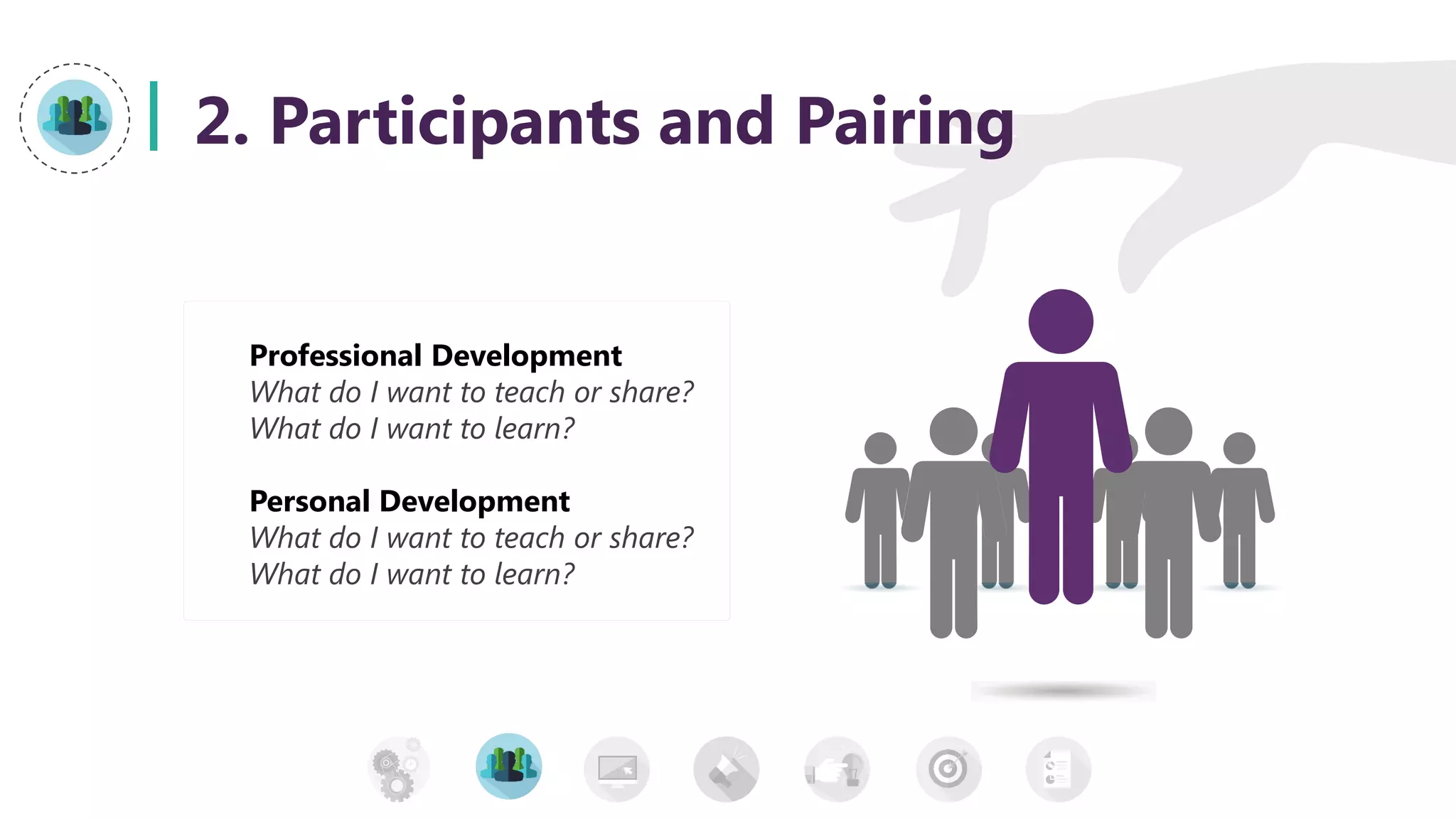
2. Participants and Pairing
Professional Development
What do I want to teach or share?
What do I want to learn?
Personal Development
What do I want to teach or share?
What do I want to learn?
As a researcher, I can tell you that how you
best match people is probably the issue where
we know the least about.
Source: Designing Workplace Mentoring Programs: An Evidence-Based Approach,
Tammy Allen, Professor of Psychology at the University of South Florida
Pairing Participants Tips
1. Don’t force it.
2. You can try assessments….but
3. Participants select each other
- Create profile (online would be great!)
- Interests
- Goals
- Prioritize based on mentee’s choice
Goals: State goals clearly and succinctly. They should be specific,
action-oriented, realistic, and timely. What is to be learned and by
whom?
Success Criteria and Measurement: Indicate how you will know
you have achieved your stated goals. Describe the process, method,
and milestones for evaluating success. Take into account that some
adjustments and revisions may need to be made to keep the
relationship focused and on track.
Mentor Partnership Work Plan: Describe your strategy for
achieving mentoring partnership goals, including objectives and
steps for completion (at minimum, the first few steps),
learning/sharing opportunities, and a target date.
Ground Rules: List the practices and activities you have agreed to
put into place in order to manage the partnership effectively and
efficiently. Items to consider include meeting schedule,
communication methods and styles, meeting agendas, and so on.
Consensual Mentoring Agreement: Additional information not
included in the above listed items, for example, anticipated
stumbling blocks, "what-if" situations and how they would be
handled or dealt with, and other possible concerns relevant to a
successful partnership. Remember to celebrate your successes.
SOURCE: Creating a Mentoring Program: Mentoring Partnerships Across the Generations
by Annabelle Reitman and Sylvia Ramirez Benatti, Association for Talent Development
Mentoring Partnership Agreement
Why establish a written agreement for a
mentoring partnership?
• Identify learning goals
• Agree on learning outcomes
accomplishments
• Strategy and a work plan
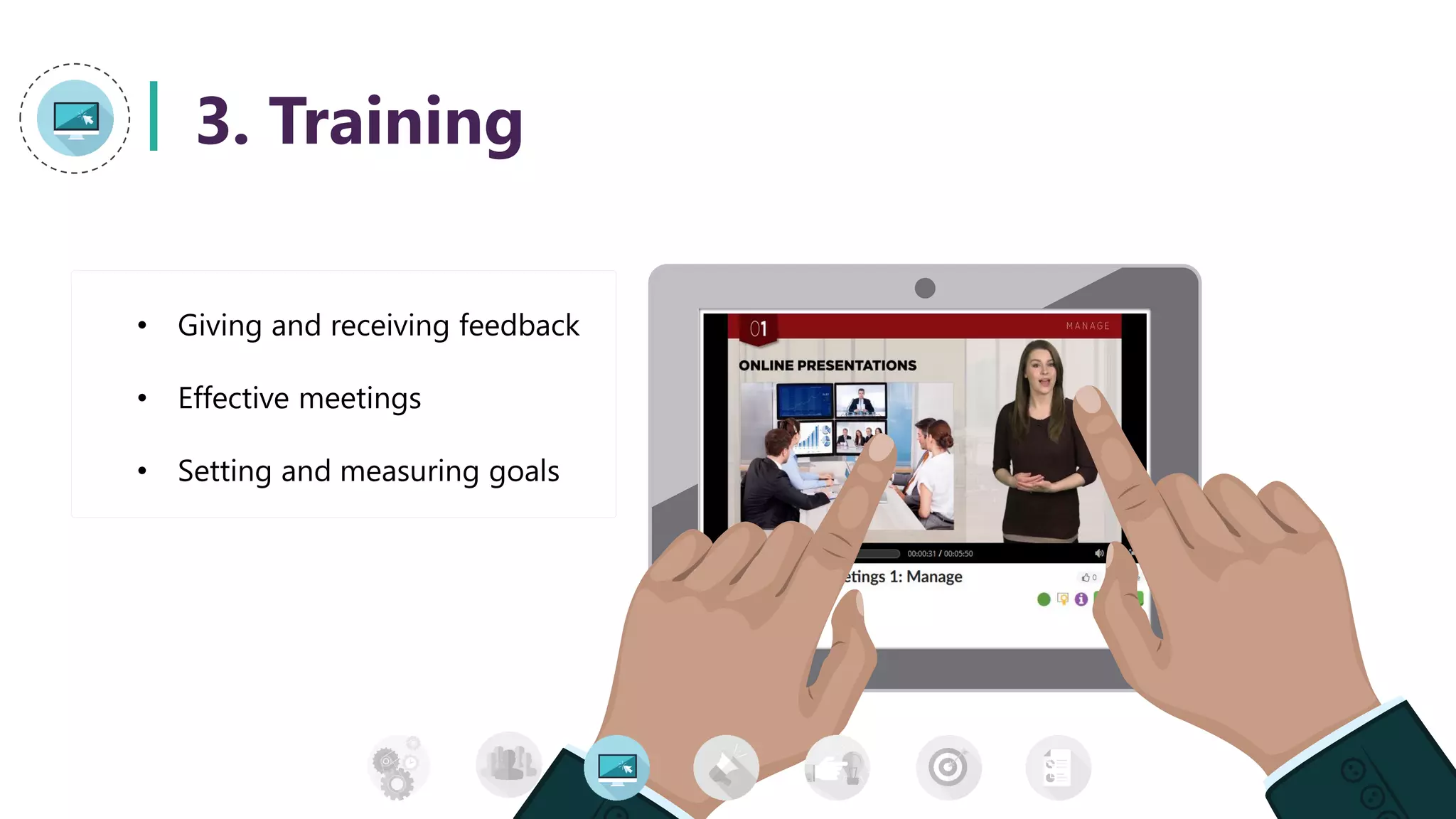
3. Training
• Giving and receiving feedback
• Effective meetings
• Setting and measuring goals
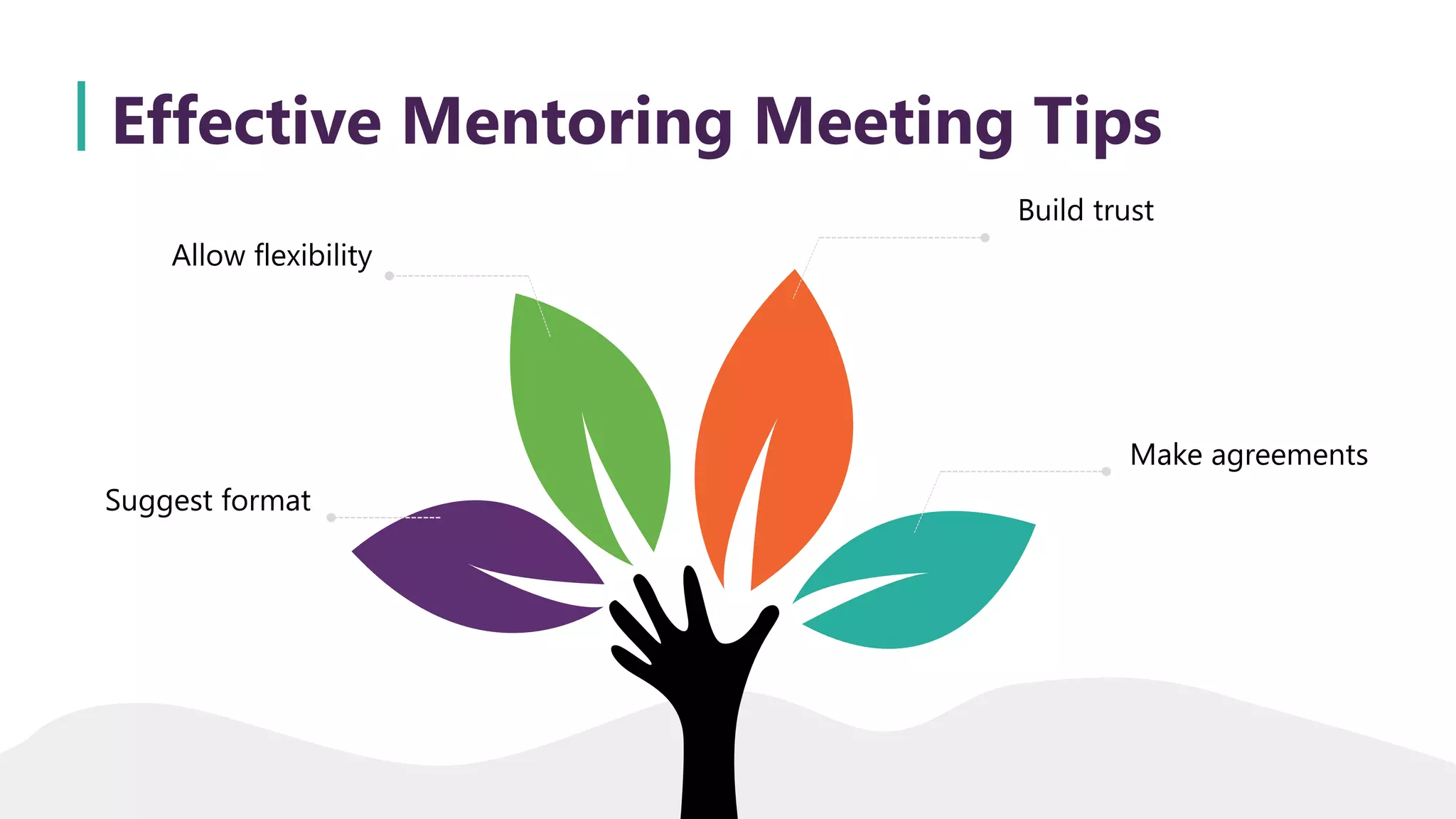
Build trust
Make agreements
Allow flexibility
Suggest format
Effective Mentoring Meeting Tips
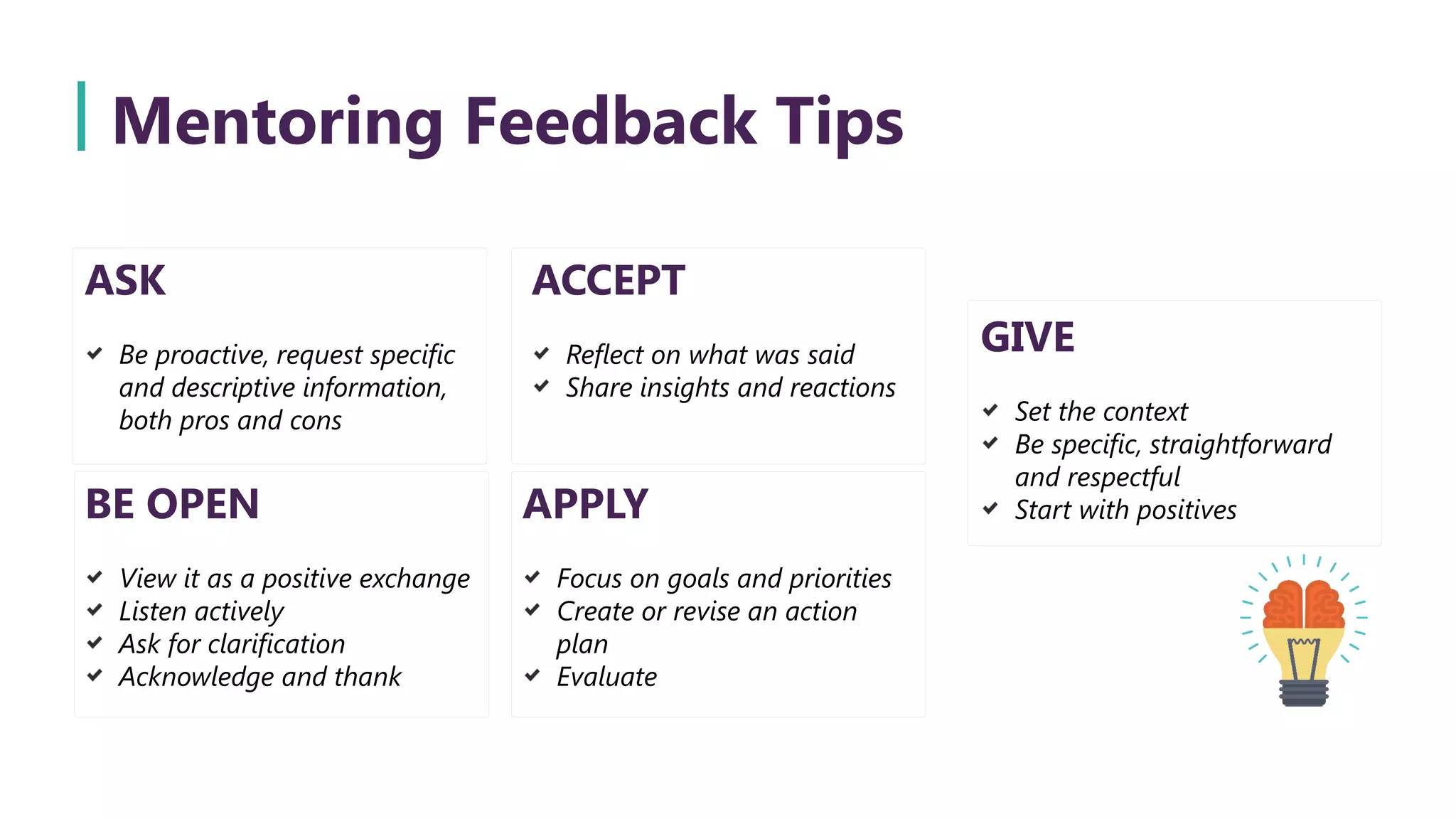
Mentoring Feedback Tips
ASK
Be proactive, request specific
and descriptive information,
both pros and cons
BE OPEN
View it as a positive exchange
Listen actively
Ask for clarification
Acknowledge and thank
ACCEPT
Reflect on what was said
Share insights and reactions
APPLY
Focus on goals and priorities
Create or revise an action
plan
Evaluate
GIVE
Set the context
Be specific, straightforward
and respectful
Start with positives
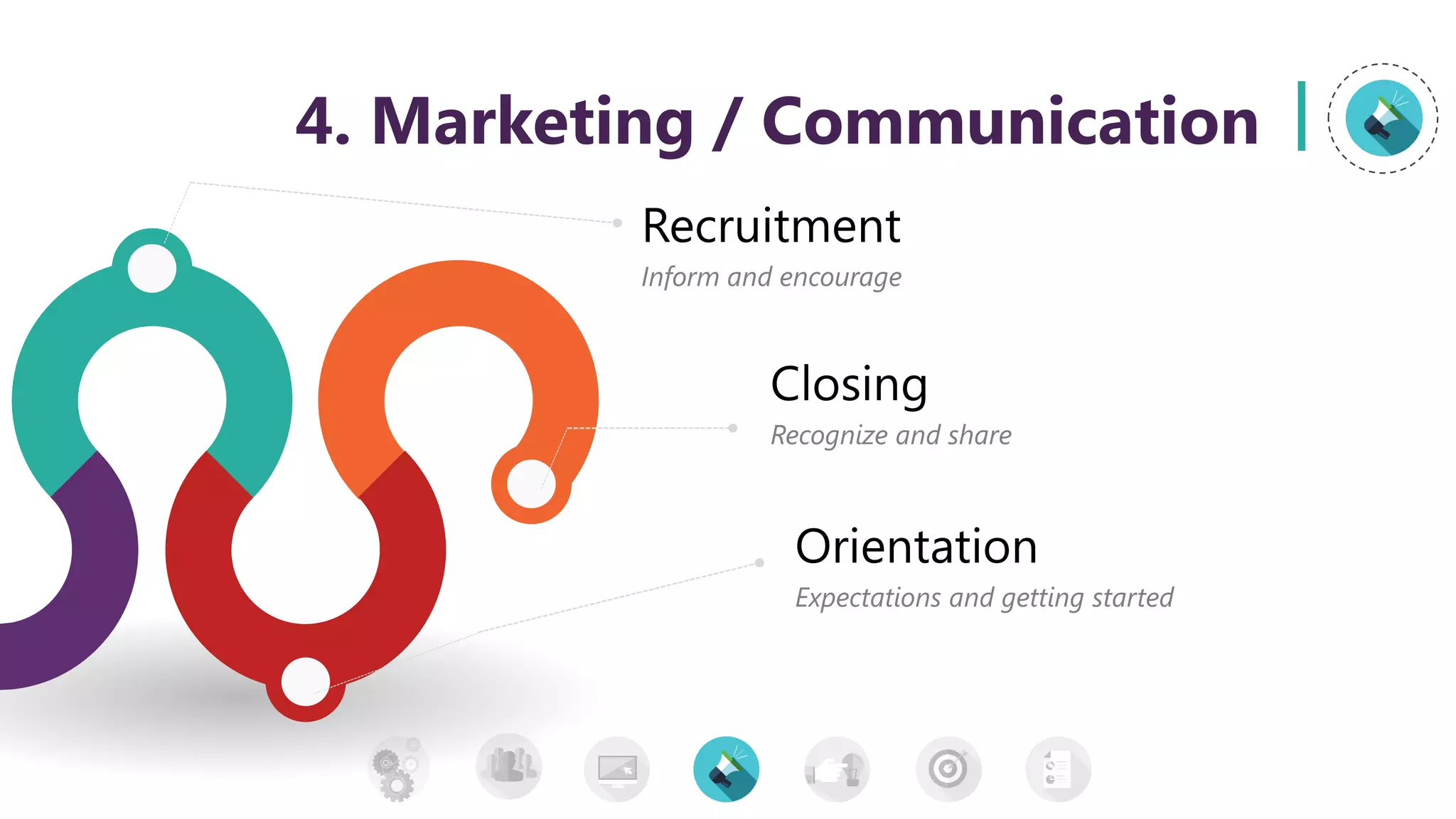
4. Marketing / Communication
Recruitment
Inform and encourage
Closing
Recognize and share
Orientation
Expectations and getting started
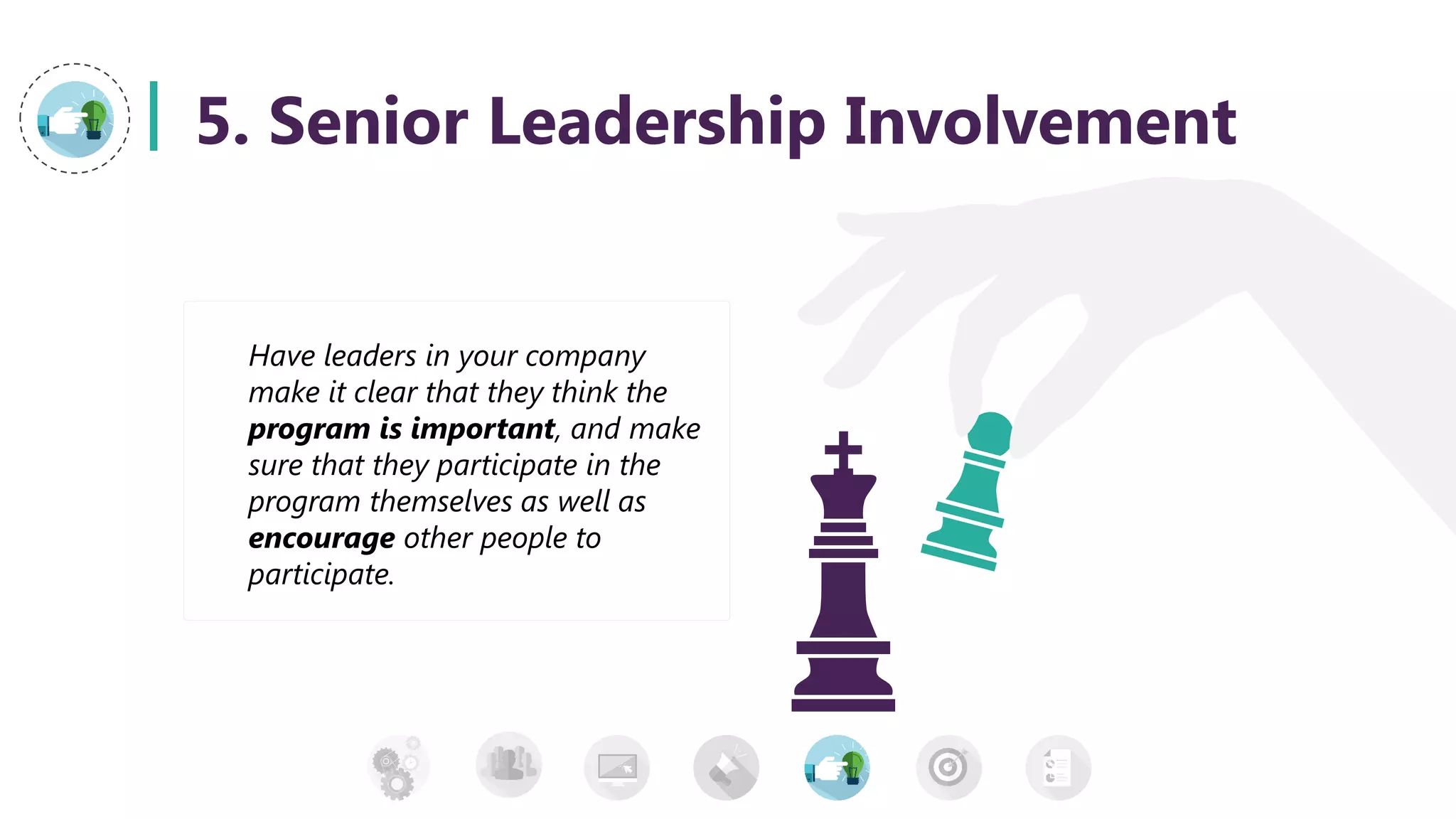
5. Senior Leadership Involvement
Have leaders in your company
make it clear that they think the
program is important, and make
sure that they participate in the
program themselves as well as
encourage other people to
participate.
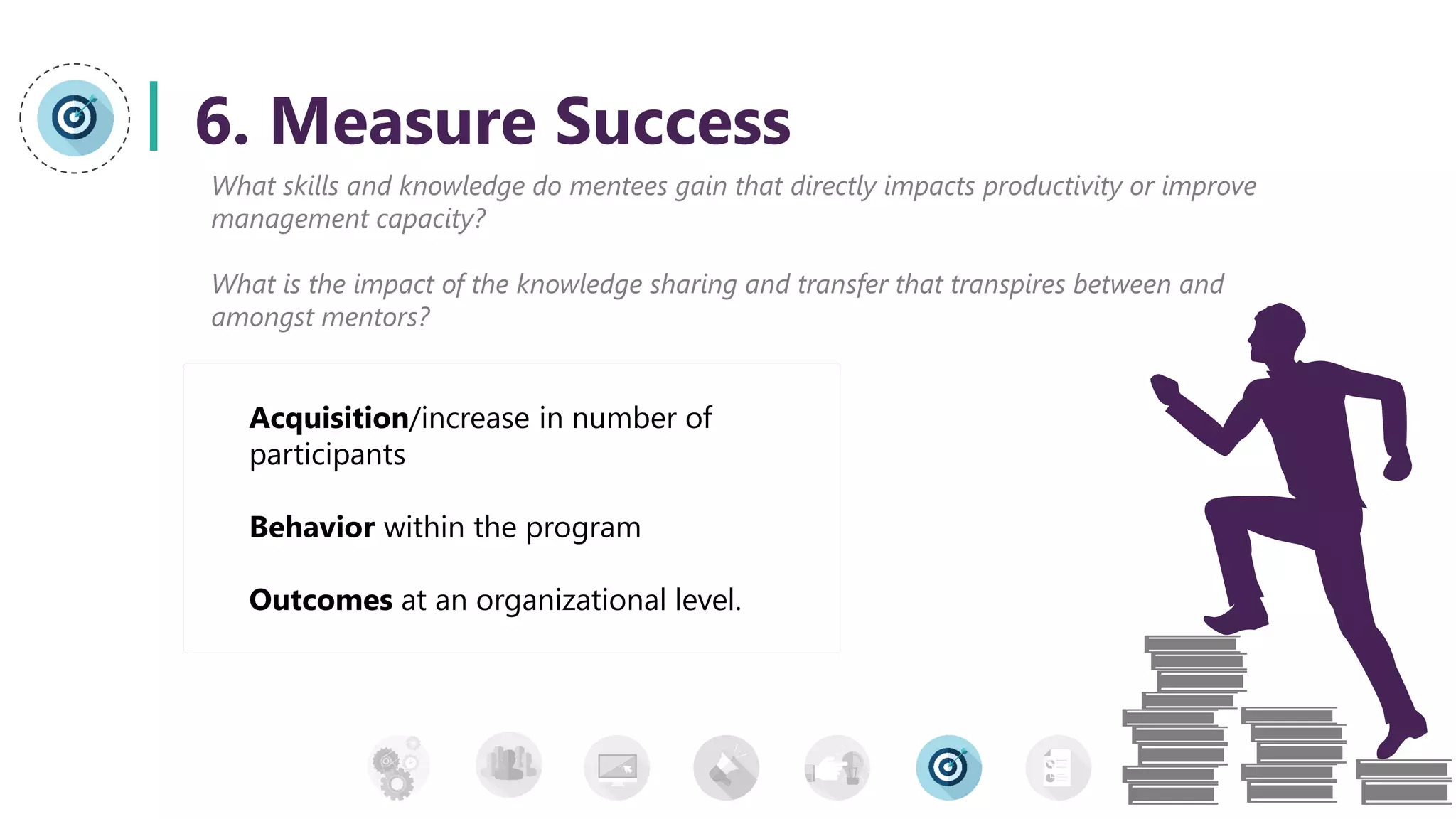
6. Measure Success
What skills and knowledge do mentees gain that directly impacts productivity or improve
management capacity?
What is the impact of the knowledge sharing and transfer that transpires between and
amongst mentors?
Acquisition/increase in number of
participants
Behavior within the program
Outcomes at an organizational level.
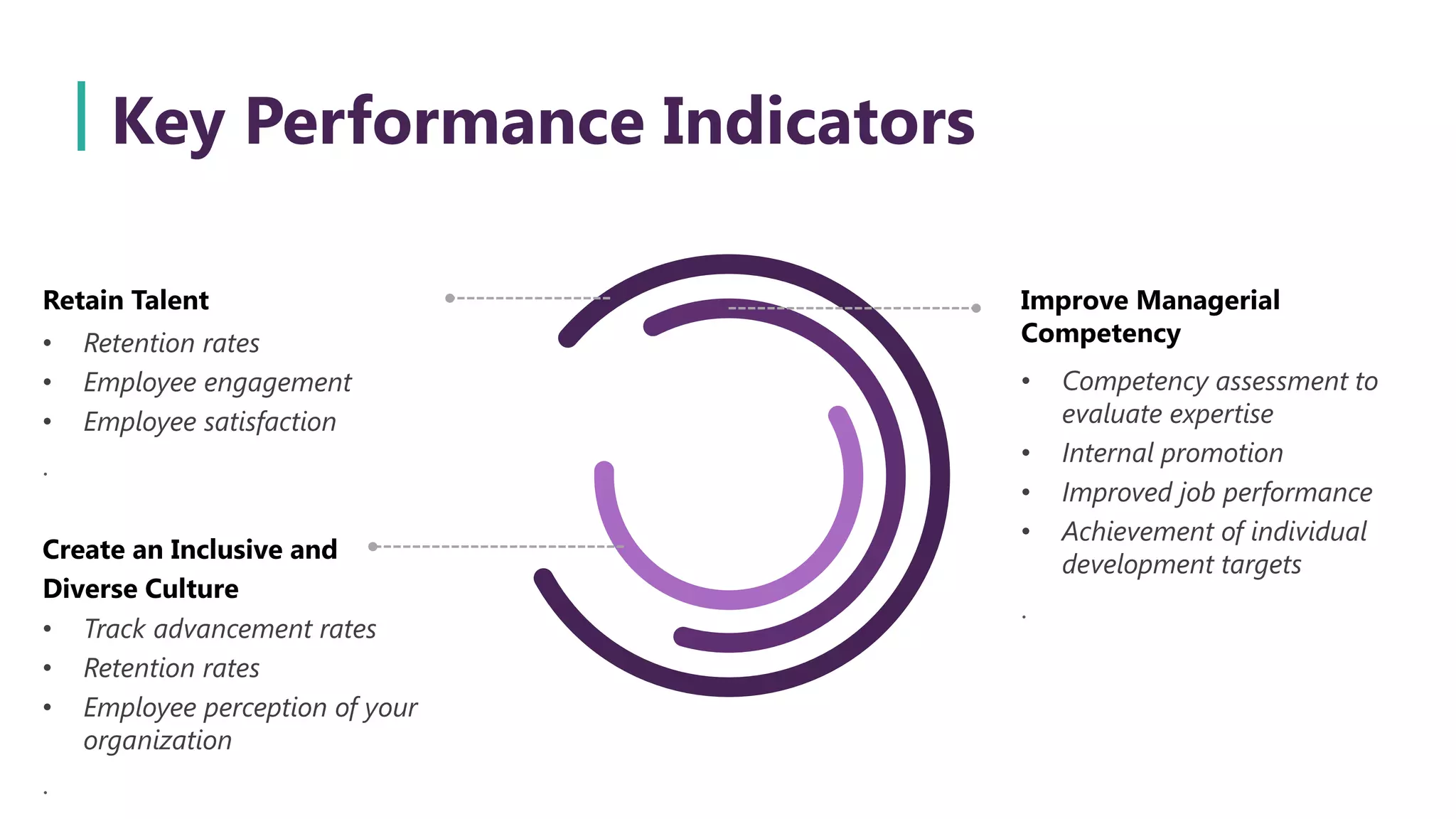
Key Performance Indicators
• Retention rates
• Employee engagement
• Employee satisfaction
.
Retain Talent
• Track advancement rates
• Retention rates
• Employee perception of your
organization
.
Create an Inclusive and
Diverse Culture
• Competency assessment to
evaluate expertise
• Internal promotion
• Improved job performance
• Achievement of individual
development targets
.
Improve Managerial
Competency
7. Evaluate
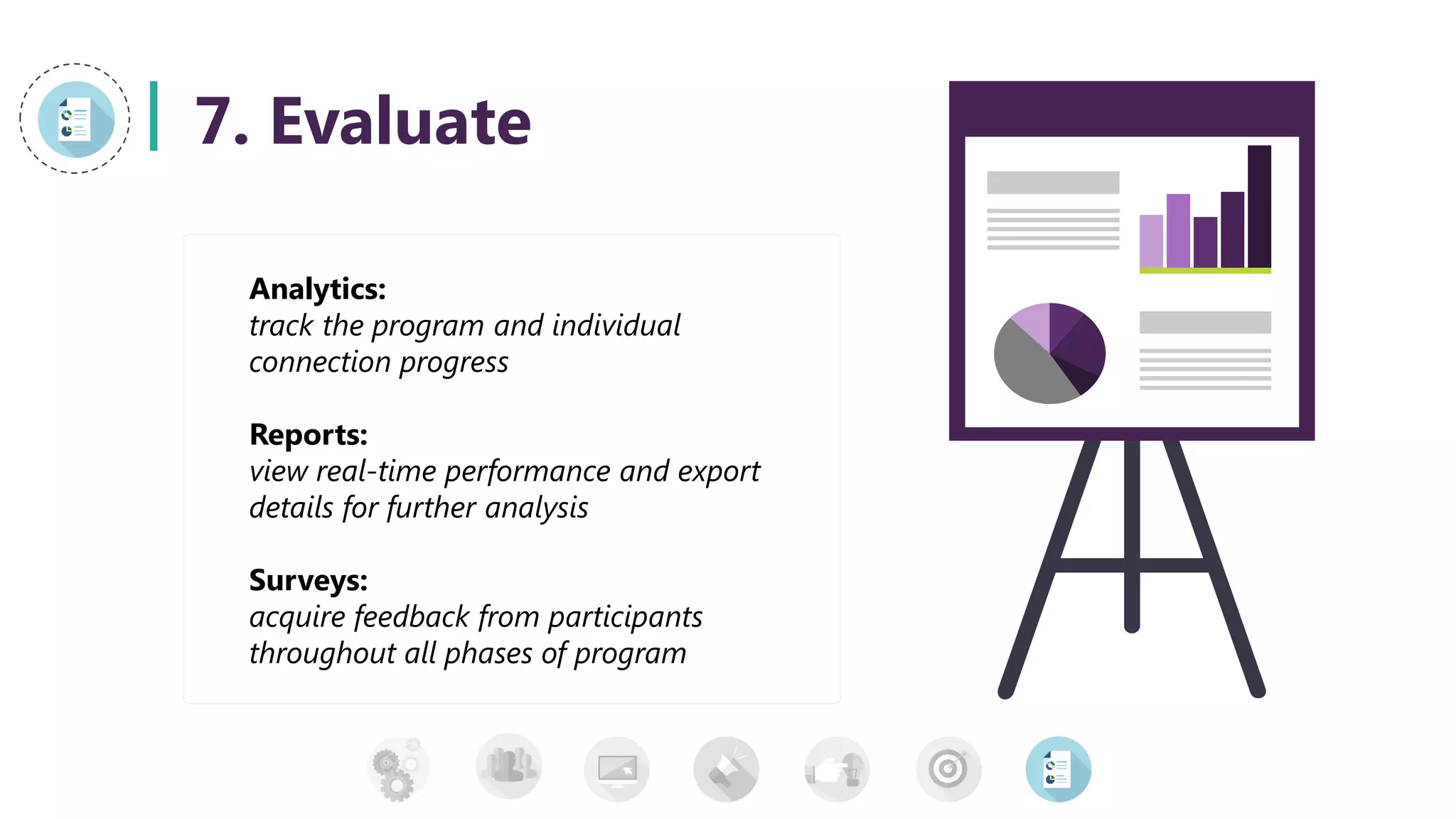
Analytics:
track the program and individual
connection progress
Reports:
view real-time performance and export
details for further analysis
Surveys:
acquire feedback from participants
throughout all phases of program
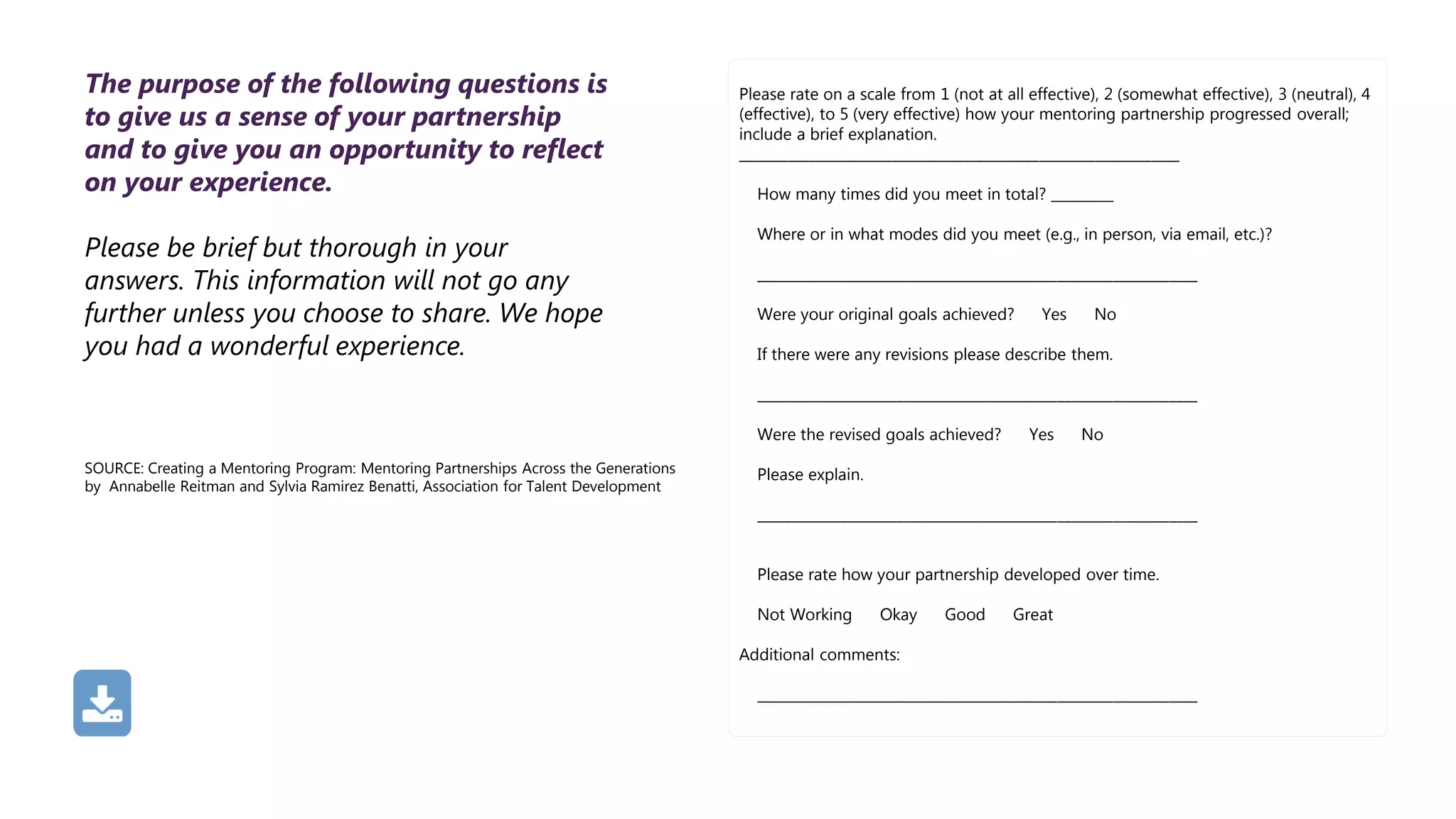
Please rate on a scale from 1 (not at all effective), 2 (somewhat effective), 3 (neutral), 4
(effective), to 5 (very effective) how your mentoring partnership progressed overall;
include a brief explanation.
_______________________________________________________________
How many times did you meet in total? _________
Where or in what modes did you meet (e.g., in person, via email, etc.)?
_______________________________________________________________
Were your original goals achieved? Yes No
If there were any revisions please describe them.
_______________________________________________________________
Were the revised goals achieved? Yes No
Please explain.
_______________________________________________________________
Please rate how your partnership developed over time.
Not Working Okay Good Great
Additional comments:
_______________________________________________________________
SOURCE: Creating a Mentoring Program: Mentoring Partnerships Across the Generations
by Annabelle Reitman and Sylvia Ramirez Benatti, Association for Talent Development
The purpose of the following questions is
to give us a sense of your partnership
and to give you an opportunity to reflect
on your experience.
Please be brief but thorough in your
answers. This information will not go any
further unless you choose to share. We hope
you had a wonderful experience.
1.
Alignment
7 Keys to Create a Mentoring Program that Works
3.
Training
2.
Participants
(pairing)
4.
Marketing
and Setting
Expectations
5.
Senior
Leadership
Involvement
6.
Measure
Success
7.
Evaluate
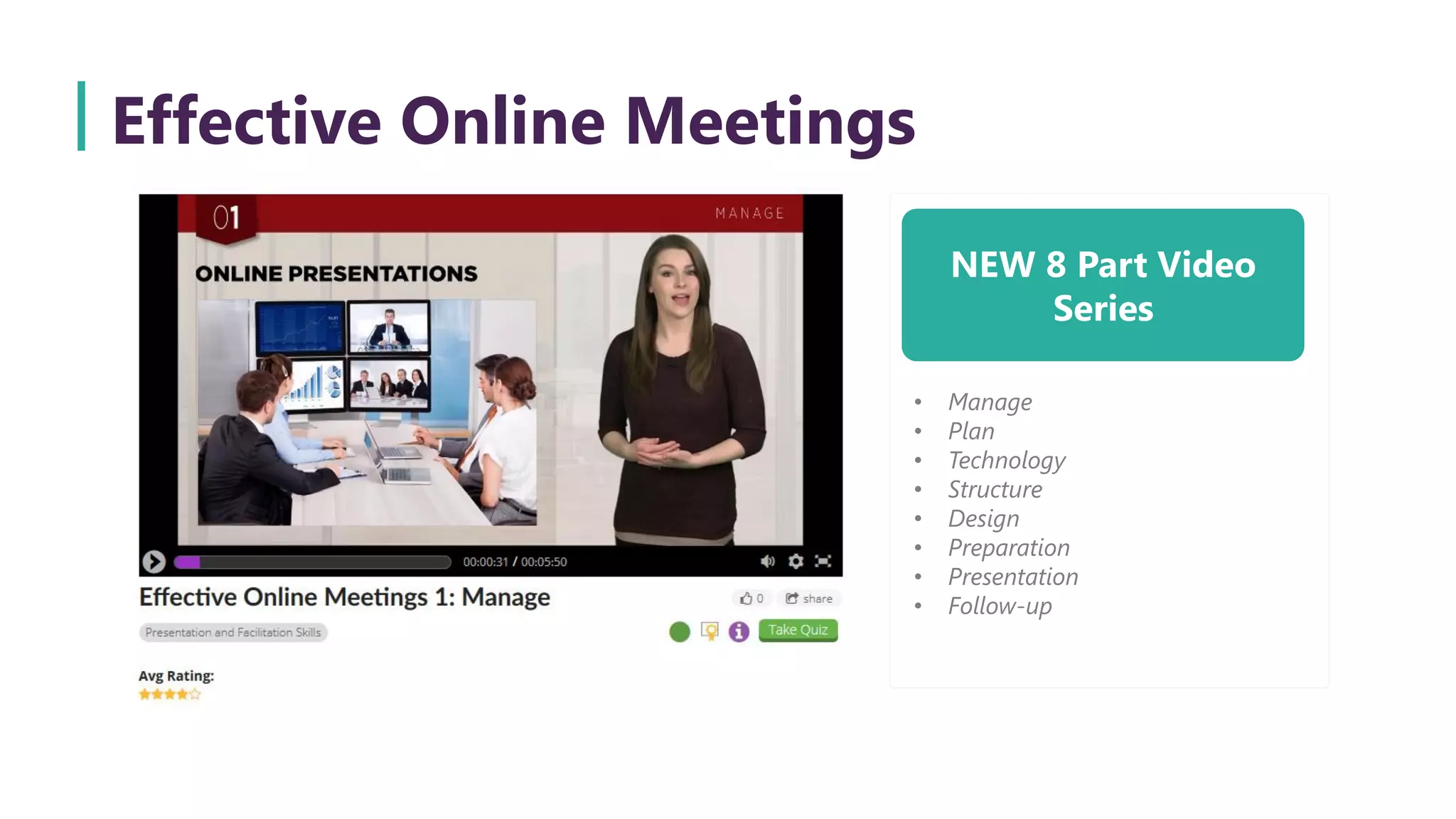
Effective Online Meetings
NEW 8 Part Video
Series
• Manage
• Plan
• Technology
• Structure
• Design
• Preparation
• Presentation
• Follow-up
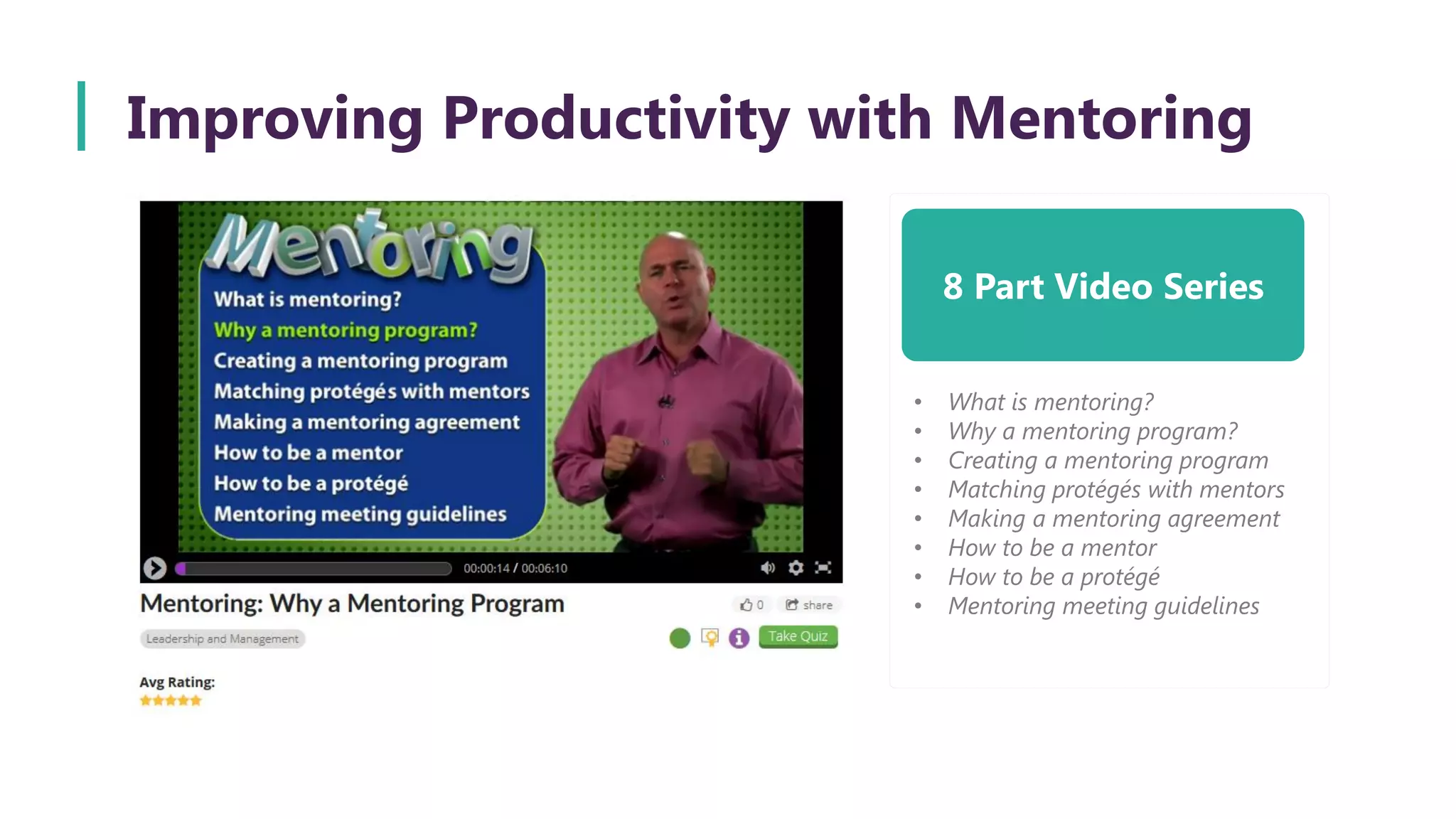
Improving Productivity with Mentoring
8 Part Video Series
• What is mentoring?
• Why a mentoring program?
• Creating a mentoring program
• Matching protégés with mentors
• Making a mentoring agreement
• How to be a mentor
• How to be a protégé
• Mentoring meeting guidelines
Try out these video lessons
and more!
Let us know through the poll if you’d like a free trial of BizLibrary’s
online course collection.
Thousands of videos and unlimited access for
your employees.
www.bizlibrary.com/free-trial
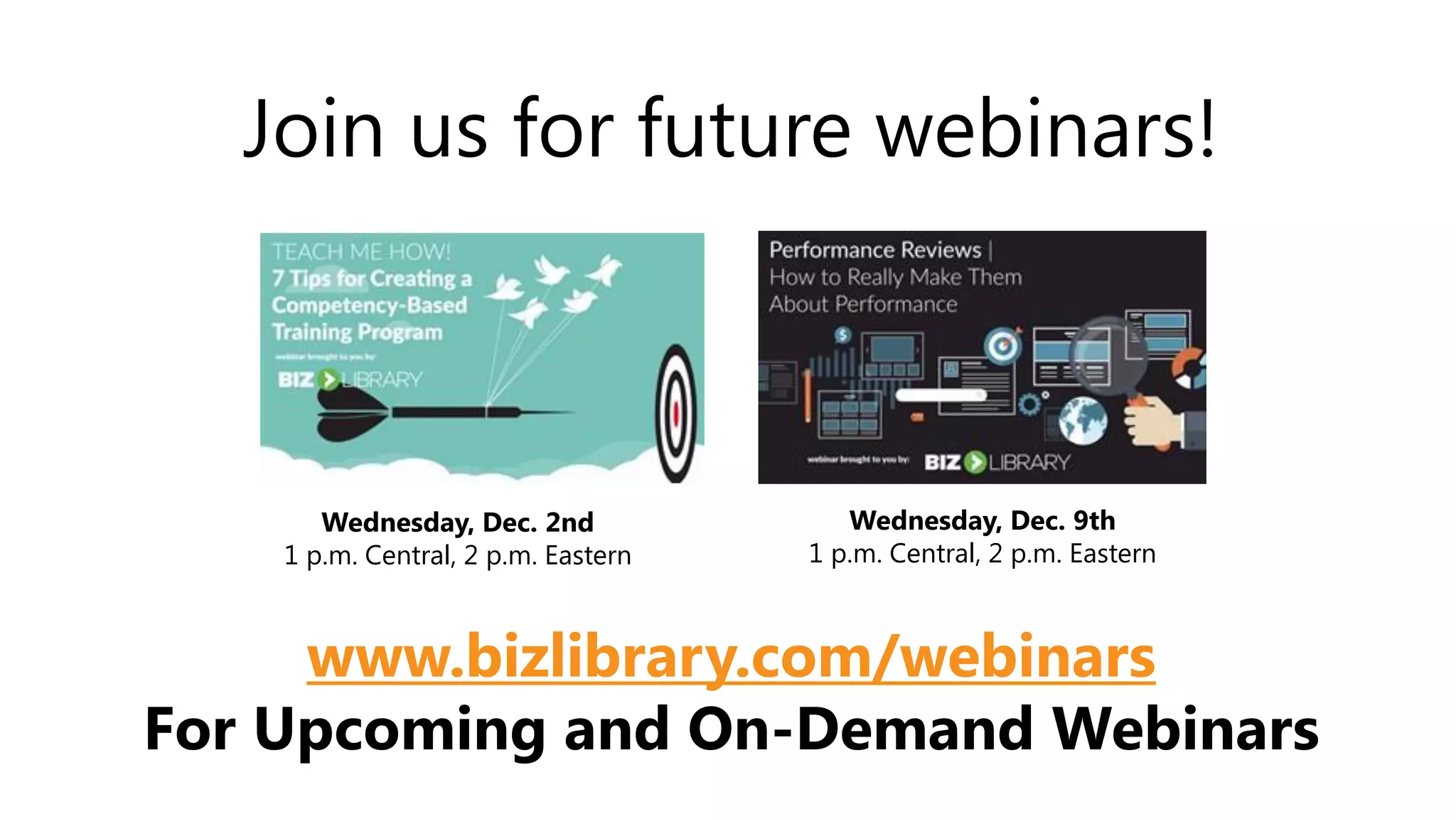
Wednesday, Dec. 2nd
1 p.m. Central, 2 p.m. Eastern
Wednesday, Dec. 9th
1 p.m. Central, 2 p.m. Eastern
Join us for future webinars!
www.bizlibrary.com/webinars
For Upcoming and On-Demand Webinars
Presenter:
Chris Osborn
Vice President of
Organizational Strategy
cosborn@bizlibrary.com
@chrisosbornstl
.
Host:
Jessica Petry
Sr. Marketing Specialist
jpetry@bizlibrary.com
@JessLPetry

How to Create Mentoring Programs That Work | Webinar 11.25.15

  • 2.
    Improve employee performancewith the largest and fastest-growing library of training videos.
  • 3.
    ? What are theprimary of objectives of your mentoring program?
  • 4.
    When mentoring programsdon’t work… Fuzzy goals No leadership involvement Poor planning No training
  • 5.
    What is mentoring? Astrategic approach to developing an employee. It shortens the learning curve, enhances productivity, and helps align to business strategy.
  • 6.
    So - whatworks, and where do we start? 1. What are your goals? 2. Who will be involved? 3. Are you prepared to develop a mentoring structure? 4. Are you prepared to allow participants to control program?
  • 7.
    • Part ofa manager/supervisor job • Job and performance focused • Interest is functional • Driven by manager • Relationship is based on specific job role Coaching vs. Mentoring • Outside the manager / employee relationship • Focused on professional development • Focus on mentee, personally and professionally • Across job boundaries COACHING VS. MENTORING
  • 8.
    Asking rather thantelling. How to think, not what to think.
  • 9.
    Leadership Development Diversity and Inclusion Employee Career Development ReduceGenerational Conflict Knowledge Transfer Mentoring and Employee Development
  • 10.
    Knowledge transfer mightbe the single best reason to start a mentoring program . . . now. 33% by 2016 Of the workforce will be over the age of 50. Up from 27% in 2007 SOURCE: U.S. Census Bureau 48% Of companies have no intention to do any strategic planning about how retirement affects their business! SOURCE: AARP Poll Experience, knowledge, and skills!
  • 11.
    7 Keys toCreate a Mentoring Program that Works 3. Training 1. Alignment 2. Participants (pairing) 4. Marketing and Setting Expectations 5. Senior Leadership Involvement 6. Measure Success 7. Evaluate
  • 12.
    Improve leadership bench strength Create an inclusive,diverse culture Improve managerial competency Retain and transfer knowledge Retain talent through long- term career planning Improve time to proficiency for new hires 1. Alignment
  • 13.
    2. Participants andPairing Professional Development What do I want to teach or share? What do I want to learn? Personal Development What do I want to teach or share? What do I want to learn?
  • 14.
    As a researcher,I can tell you that how you best match people is probably the issue where we know the least about. Source: Designing Workplace Mentoring Programs: An Evidence-Based Approach, Tammy Allen, Professor of Psychology at the University of South Florida
  • 15.
    Pairing Participants Tips 1.Don’t force it. 2. You can try assessments….but 3. Participants select each other - Create profile (online would be great!) - Interests - Goals - Prioritize based on mentee’s choice
  • 16.
    Goals: State goalsclearly and succinctly. They should be specific, action-oriented, realistic, and timely. What is to be learned and by whom? Success Criteria and Measurement: Indicate how you will know you have achieved your stated goals. Describe the process, method, and milestones for evaluating success. Take into account that some adjustments and revisions may need to be made to keep the relationship focused and on track. Mentor Partnership Work Plan: Describe your strategy for achieving mentoring partnership goals, including objectives and steps for completion (at minimum, the first few steps), learning/sharing opportunities, and a target date. Ground Rules: List the practices and activities you have agreed to put into place in order to manage the partnership effectively and efficiently. Items to consider include meeting schedule, communication methods and styles, meeting agendas, and so on. Consensual Mentoring Agreement: Additional information not included in the above listed items, for example, anticipated stumbling blocks, "what-if" situations and how they would be handled or dealt with, and other possible concerns relevant to a successful partnership. Remember to celebrate your successes. SOURCE: Creating a Mentoring Program: Mentoring Partnerships Across the Generations by Annabelle Reitman and Sylvia Ramirez Benatti, Association for Talent Development Mentoring Partnership Agreement Why establish a written agreement for a mentoring partnership? • Identify learning goals • Agree on learning outcomes accomplishments • Strategy and a work plan
  • 17.
    3. Training • Givingand receiving feedback • Effective meetings • Setting and measuring goals
  • 18.
    Build trust Make agreements Allowflexibility Suggest format Effective Mentoring Meeting Tips
  • 19.
    Mentoring Feedback Tips ASK Beproactive, request specific and descriptive information, both pros and cons BE OPEN View it as a positive exchange Listen actively Ask for clarification Acknowledge and thank ACCEPT Reflect on what was said Share insights and reactions APPLY Focus on goals and priorities Create or revise an action plan Evaluate GIVE Set the context Be specific, straightforward and respectful Start with positives
  • 20.
    4. Marketing /Communication Recruitment Inform and encourage Closing Recognize and share Orientation Expectations and getting started
  • 22.
    5. Senior LeadershipInvolvement Have leaders in your company make it clear that they think the program is important, and make sure that they participate in the program themselves as well as encourage other people to participate.
  • 23.
    6. Measure Success Whatskills and knowledge do mentees gain that directly impacts productivity or improve management capacity? What is the impact of the knowledge sharing and transfer that transpires between and amongst mentors? Acquisition/increase in number of participants Behavior within the program Outcomes at an organizational level.
  • 24.
    Key Performance Indicators •Retention rates • Employee engagement • Employee satisfaction . Retain Talent • Track advancement rates • Retention rates • Employee perception of your organization . Create an Inclusive and Diverse Culture • Competency assessment to evaluate expertise • Internal promotion • Improved job performance • Achievement of individual development targets . Improve Managerial Competency
  • 25.
    7. Evaluate Analytics: track theprogram and individual connection progress Reports: view real-time performance and export details for further analysis Surveys: acquire feedback from participants throughout all phases of program
  • 26.
    Please rate ona scale from 1 (not at all effective), 2 (somewhat effective), 3 (neutral), 4 (effective), to 5 (very effective) how your mentoring partnership progressed overall; include a brief explanation. _______________________________________________________________ How many times did you meet in total? _________ Where or in what modes did you meet (e.g., in person, via email, etc.)? _______________________________________________________________ Were your original goals achieved? Yes No If there were any revisions please describe them. _______________________________________________________________ Were the revised goals achieved? Yes No Please explain. _______________________________________________________________ Please rate how your partnership developed over time. Not Working Okay Good Great Additional comments: _______________________________________________________________ SOURCE: Creating a Mentoring Program: Mentoring Partnerships Across the Generations by Annabelle Reitman and Sylvia Ramirez Benatti, Association for Talent Development The purpose of the following questions is to give us a sense of your partnership and to give you an opportunity to reflect on your experience. Please be brief but thorough in your answers. This information will not go any further unless you choose to share. We hope you had a wonderful experience.
  • 27.
    1. Alignment 7 Keys toCreate a Mentoring Program that Works 3. Training 2. Participants (pairing) 4. Marketing and Setting Expectations 5. Senior Leadership Involvement 6. Measure Success 7. Evaluate
  • 28.
    Effective Online Meetings NEW8 Part Video Series • Manage • Plan • Technology • Structure • Design • Preparation • Presentation • Follow-up
  • 29.
    Improving Productivity withMentoring 8 Part Video Series • What is mentoring? • Why a mentoring program? • Creating a mentoring program • Matching protégés with mentors • Making a mentoring agreement • How to be a mentor • How to be a protégé • Mentoring meeting guidelines
  • 30.
    Try out thesevideo lessons and more! Let us know through the poll if you’d like a free trial of BizLibrary’s online course collection. Thousands of videos and unlimited access for your employees. www.bizlibrary.com/free-trial
  • 31.
    Wednesday, Dec. 2nd 1p.m. Central, 2 p.m. Eastern Wednesday, Dec. 9th 1 p.m. Central, 2 p.m. Eastern Join us for future webinars! www.bizlibrary.com/webinars For Upcoming and On-Demand Webinars
  • 32.
    Presenter: Chris Osborn Vice Presidentof Organizational Strategy cosborn@bizlibrary.com @chrisosbornstl . Host: Jessica Petry Sr. Marketing Specialist jpetry@bizlibrary.com @JessLPetry