Nur Amalina Aminuddin
082012100067
NUTRITION AND
FLUID THERAPY
 30% in surgical patients with GI disease
 60% in prolonged hospital stay patients
 Have higher risk of complications and death
 Aim of nutritional support
 Identify patients at risk of malnutrition
 Ensure their nutritional requirements are met
MALNUTRITION
 Metabolic response to
starvation
 Low plasma insulin
 High plasma glucagon
 Hepatic glycogenolysis
 Protein catabolism
 Hepatic gluconeogenesis
 Lipolysis
 Adaptive ketogenesis
 Reduced resting energy
expenditure ( 15-20kcal/kg/d)
PHYSIOLOGY
 Metabolic response to trauma and sepsis
 Increased counter- regulatory hormones
 Increased energy requirements ( 40kcal/kg/d)
 Increased nitrogen requirements
 Insulin resistance and glucose intolerance
 Increased gluconeogenesis and protein catabolism
 Loss of adaptive ketogenesis
 Fluid retention
1.Laboratory techniques
 Albumin
 <30g/l : poor prognostic indicator
 Immunity
 Eg.lymphocyte count or skin test for delayed
hypersensitivity
 Not precise/ reliable/ practical
NUTRITIONAL ASSESSMENT
 Weight loss
 >10% in 6 months
poor outcome
 BMI
 <18.5 : nutritional
impairment
 < 15 : increased hospital
mortality
 Anthropometric
techniques
 Estimate body fat and
muscle mass
 Indirect measure of
energy and protein
stores
 Bioelectrical impedence
analysis (BIA)
 Estimate intra- and extra
cellular fluid volume
2.BODY WEIGHT AND ANTHROPOMETRY
 British Association of Parenteral and Enteral Nutrition
 Malnutrition Universal Screening Tool (MUST)
3.CLINICAL
Low risk Medium risk High risk
Hospital Repeat screening :
Weekly
Document dietary and
fluid intake for 3 days
Refer dietician
Care homes Monthly
Community Yearly Repeat screening and
dietary advice
 If BMI or weight
loss cannot be
established, use
recalled value
 If both, use overall impression
of malnutrition
 Clinical impression or Clothes
becoming loose or loss of appetite
or any underlying cause
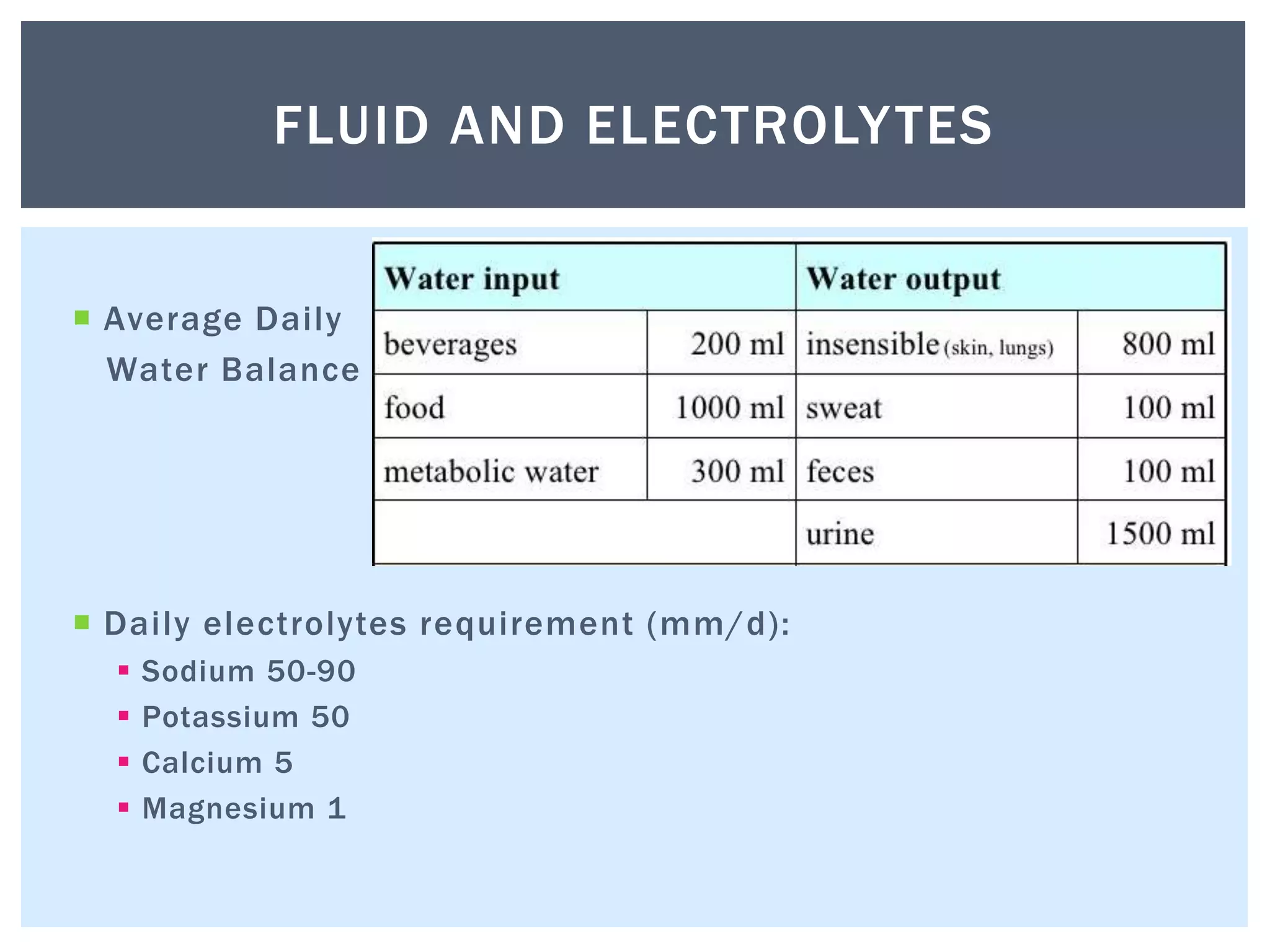
 Average Daily
Water Balance
 Daily electrolytes requirement (mm/d):
 Sodium 50-90
 Potassium 50
 Calcium 5
 Magnesium 1
FLUID AND ELECTROLYTES
 Nature and volume of fluids administered are determined by:
 Assessmnet of patient ( pulse,BP,CVP, hydration status, urine,
s.electrolyte and hematocrit)
 Estimation of loss
 Estimation of supplement fluids
 Electrolytes composition
Solution Na K Ca Cl Lactate Colloid
Hartmann’s 130 4 2.7 109 28
NS ( 0.9% NaCl) 154 154
Dextrose saline 30 30
Gelofusine 150 <1 150 Gelatin 4%
Haemecel 145 5.1 6.26 145 Polygelin 75g/l
Hetastarch Hydroxyethyl starch 6%
 Changes based on condition of patient
 Monitoring feeding regimens
NUTRITIONAL REQUIREMENTS
Daily Weekly Fortnightly
• Body weight
• Fluid balance
• FBC
• Blood glucose
• Electrolytes
• Urine volume
• Temperature
• Urine and
plasma
osmolality
• Ca ,Mg, Zn,
Phosphate
• Plasma protein
• LFT
• Acid- base
status
• S. Vit B12
• Folate
• Iron
• Lactate
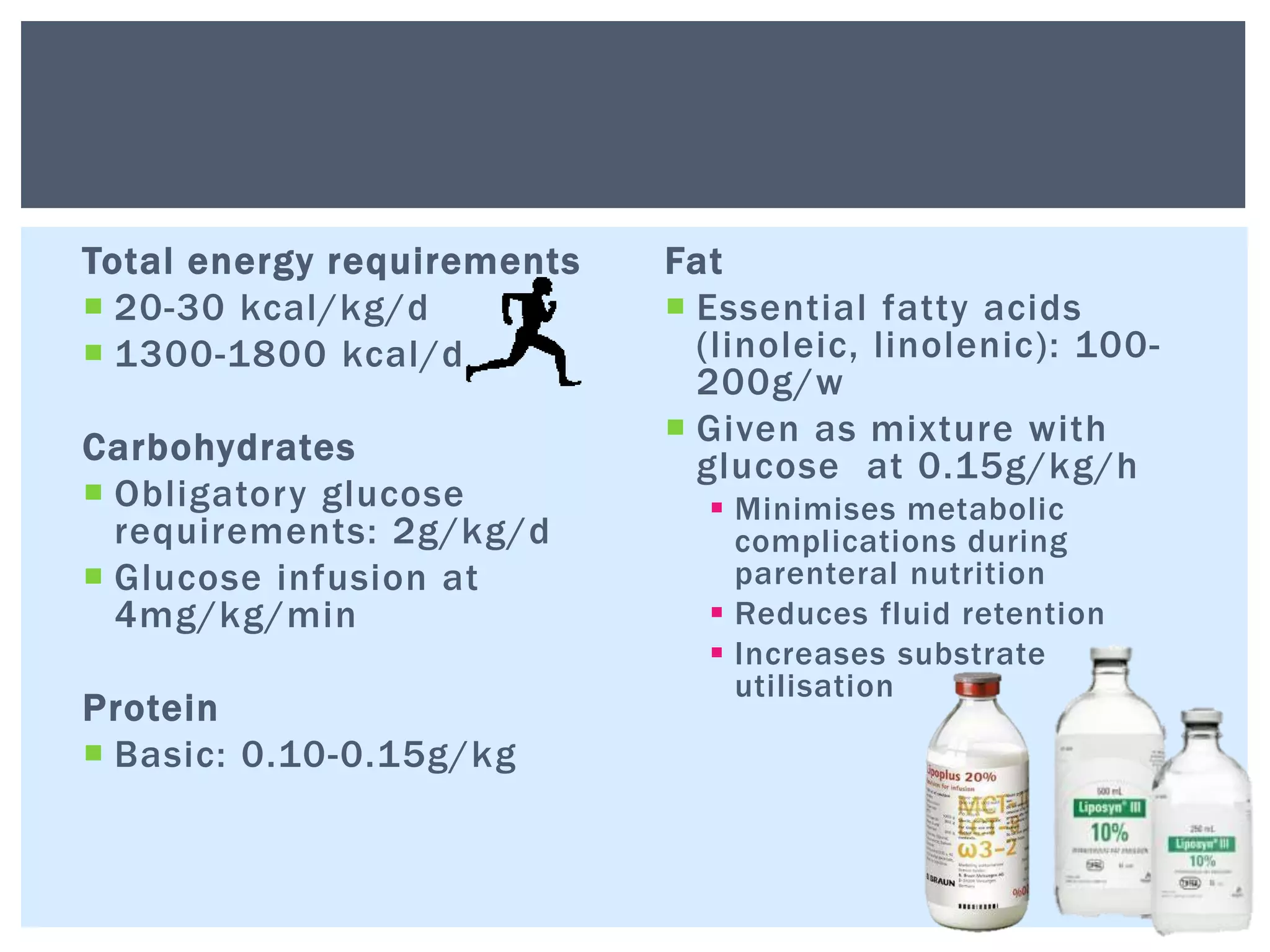
Total energy requirements
 20-30 kcal/kg/d
 1300-1800 kcal/d
Carbohydrates
 Obligatory glucose
requirements: 2g/kg/d
 Glucose infusion at
4mg/kg/min
Protein
 Basic: 0.10-0.15g/kg
Fat
 Essential fatty acids
(linoleic, linolenic): 100-
200g/w
 Given as mixture with
glucose at 0.15g/kg/h
 Minimises metabolic
complications during
parenteral nutrition
 Reduces fluid retention
 Increases substrate
utilisation
Vitamins, minerals and trace elements
 Vit B and C: collagen formation, wound healing
 B12 supplements for intestinal resection/ gastric surgery/ alcohol
dependence
 Vit A,D,E and K in steatorrhea and in absence of bile
 Necessary to optimise amino acids utilisation
Norman William, Christopher, & P.Ronan,
Bailey & Love’s Short Practice of Surgery, 25th
edition
REFERENCE
Mellss surgery yr3 nutritional and fluid therapy

Mellss surgery yr3 nutritional and fluid therapy

  • 1.
  • 2.
     30% insurgical patients with GI disease  60% in prolonged hospital stay patients  Have higher risk of complications and death  Aim of nutritional support  Identify patients at risk of malnutrition  Ensure their nutritional requirements are met MALNUTRITION
  • 3.
     Metabolic responseto starvation  Low plasma insulin  High plasma glucagon  Hepatic glycogenolysis  Protein catabolism  Hepatic gluconeogenesis  Lipolysis  Adaptive ketogenesis  Reduced resting energy expenditure ( 15-20kcal/kg/d) PHYSIOLOGY
  • 4.
     Metabolic responseto trauma and sepsis  Increased counter- regulatory hormones  Increased energy requirements ( 40kcal/kg/d)  Increased nitrogen requirements  Insulin resistance and glucose intolerance  Increased gluconeogenesis and protein catabolism  Loss of adaptive ketogenesis  Fluid retention
  • 5.
    1.Laboratory techniques  Albumin <30g/l : poor prognostic indicator  Immunity  Eg.lymphocyte count or skin test for delayed hypersensitivity  Not precise/ reliable/ practical NUTRITIONAL ASSESSMENT
  • 6.
     Weight loss >10% in 6 months poor outcome  BMI  <18.5 : nutritional impairment  < 15 : increased hospital mortality  Anthropometric techniques  Estimate body fat and muscle mass  Indirect measure of energy and protein stores  Bioelectrical impedence analysis (BIA)  Estimate intra- and extra cellular fluid volume 2.BODY WEIGHT AND ANTHROPOMETRY
  • 7.
     British Associationof Parenteral and Enteral Nutrition  Malnutrition Universal Screening Tool (MUST) 3.CLINICAL Low risk Medium risk High risk Hospital Repeat screening : Weekly Document dietary and fluid intake for 3 days Refer dietician Care homes Monthly Community Yearly Repeat screening and dietary advice
  • 8.
     If BMIor weight loss cannot be established, use recalled value  If both, use overall impression of malnutrition  Clinical impression or Clothes becoming loose or loss of appetite or any underlying cause
  • 9.
     Average Daily WaterBalance  Daily electrolytes requirement (mm/d):  Sodium 50-90  Potassium 50  Calcium 5  Magnesium 1 FLUID AND ELECTROLYTES
  • 10.
     Nature andvolume of fluids administered are determined by:  Assessmnet of patient ( pulse,BP,CVP, hydration status, urine, s.electrolyte and hematocrit)  Estimation of loss  Estimation of supplement fluids  Electrolytes composition Solution Na K Ca Cl Lactate Colloid Hartmann’s 130 4 2.7 109 28 NS ( 0.9% NaCl) 154 154 Dextrose saline 30 30 Gelofusine 150 <1 150 Gelatin 4% Haemecel 145 5.1 6.26 145 Polygelin 75g/l Hetastarch Hydroxyethyl starch 6%
  • 11.
     Changes basedon condition of patient  Monitoring feeding regimens NUTRITIONAL REQUIREMENTS Daily Weekly Fortnightly • Body weight • Fluid balance • FBC • Blood glucose • Electrolytes • Urine volume • Temperature • Urine and plasma osmolality • Ca ,Mg, Zn, Phosphate • Plasma protein • LFT • Acid- base status • S. Vit B12 • Folate • Iron • Lactate
  • 12.
    Total energy requirements 20-30 kcal/kg/d  1300-1800 kcal/d Carbohydrates  Obligatory glucose requirements: 2g/kg/d  Glucose infusion at 4mg/kg/min Protein  Basic: 0.10-0.15g/kg Fat  Essential fatty acids (linoleic, linolenic): 100- 200g/w  Given as mixture with glucose at 0.15g/kg/h  Minimises metabolic complications during parenteral nutrition  Reduces fluid retention  Increases substrate utilisation
  • 13.
    Vitamins, minerals andtrace elements  Vit B and C: collagen formation, wound healing  B12 supplements for intestinal resection/ gastric surgery/ alcohol dependence  Vit A,D,E and K in steatorrhea and in absence of bile  Necessary to optimise amino acids utilisation
  • 14.
    Norman William, Christopher,& P.Ronan, Bailey & Love’s Short Practice of Surgery, 25th edition REFERENCE

Editor's Notes

  • #5 Refer chapter metabolic response to trauma and sepsis in bailey for more detail
  • #10 Fluid losses (ml/d) Lungs: 400 Skin: 600 – 1000 Faeces : 60- 150 Urine : 1500
  • #13 Sat: palmitic 16, stearic 18 Unsat : (18) oleic 1 double bond, linoleic 2, linolenic 3