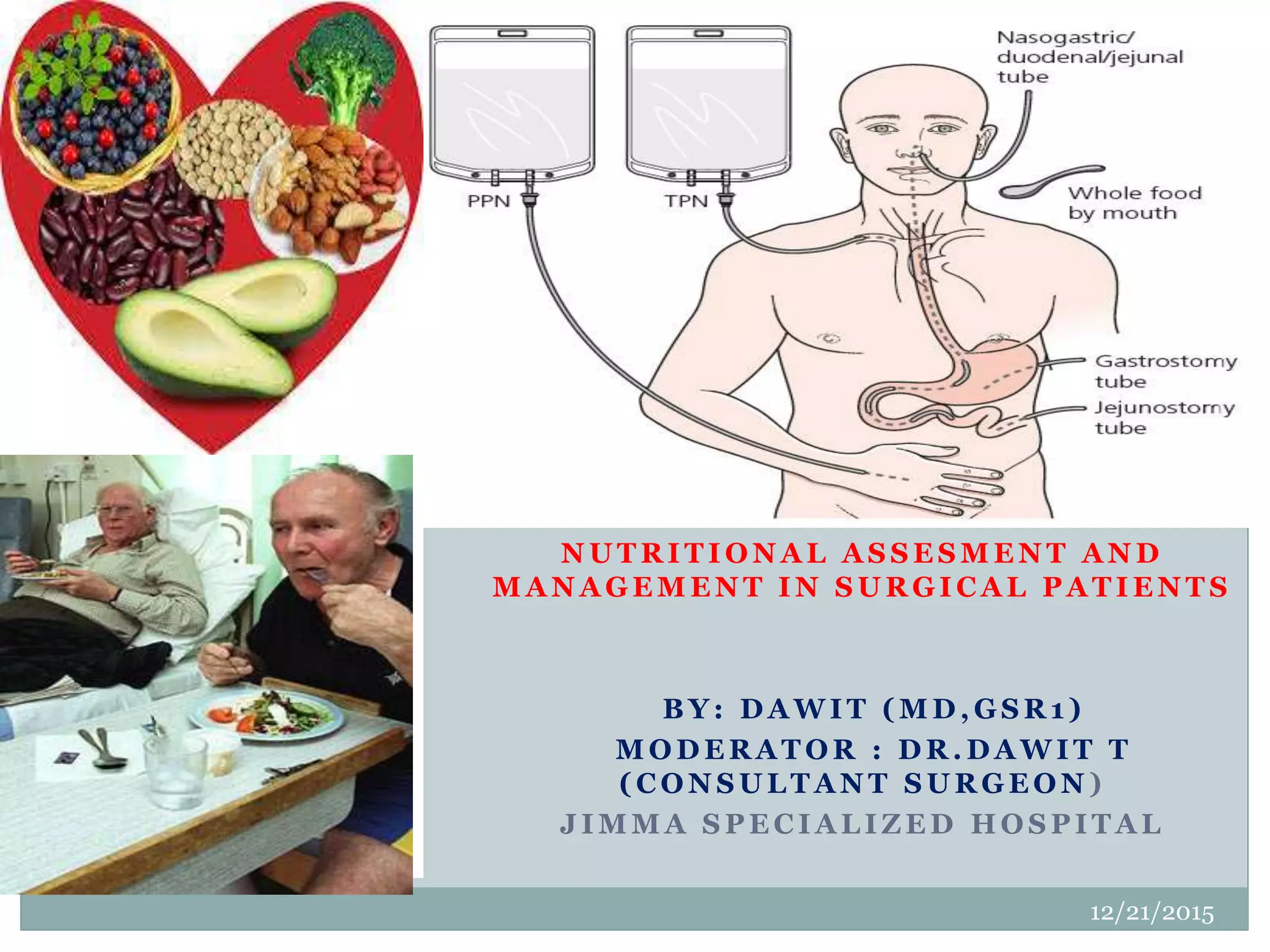
N U T R I T I O N A L A S S E S M E N T A N D
M A N A G E M E N T I N S U R G I C A L P A T I E N T S
B Y : D A W I T ( M D , G S R 1 )
M O D E R A T O R : D R . D A W I T T
( C O N S U L T A N T S U R G E O N )
J I M M A S P E C I A L I Z E D H O S P I T A L
12/21/2015
1
Outline
12/21/2015
2
 Introduction
 Nutritional assessment in surgical patients
 Nutritional requirments and interventions
 Nutrition in specific disease conditions
 Summary and recommendations
Objectives
12/21/2015
3
 To elaborate causes and consequences of
malnutrition in the surgical patient
 To clarify objective nutritional assessment methods
 To discuss on the different methods of providing
nutritional support and their complications
Introduction
12/21/2015
4
 Health is strongly influenced by nutritional
status
 Rates up to 50 percent in certain
populations
 1936=33% vs 3.5%(mortality)
 Identification
 Minimizes unwanted outcome in surgery
Consequence of malnutrition in surgical patients
12/21/2015
5
 Increase susceptibility to infection
 Poor wound healing
 Increase frequency of decubitus ulcer
 Over growth of bacteria in GIT
 Abnormal nutrient losses through the stool
Factors Affecting Nutritional Intake during
Illness
12/21/2015
6
Medications our role ????
Fear and Anxiety
Pain
Inappropriate
Diet Orders
ASSESSMENT OF NUTRITIONAL STATUS
12/21/2015
7
 The possibility of malnutrition should form part
of the work up of all patients
 A clinical assessment of nutritional status
involves:
 Focused Hx
 Focused P/E
 Focused Ixs
Nutritional ass’t…cont’d
12/21/2015
8
1. Clinical History
 History of poor nutrient intake
 Loss of body weight
 Social & economic condition that may lead
to poverty & malnutrition
 Gastrointestinal symptoms
 Other chronic medical illnesses
Nutritional ass’t…cont’d
12/21/2015
9
2. Physical Examination
 G/A
 V/S
 Anthropometry
 Body Mass Index
CONT’D
12/21/2015
10
BMI INTERPRETATION
<18.5 underweight
18.5-24.9 normal
25-29.9 Over wt
30-34.9 Obesity GI
35-39.9 Obesity GII
>/= 40 Extreme obesity GIII
HEENT
12/21/2015
11
Signs deficiencies
Alopecia, Easily plukablity PEM
Angular palebritis Vit B2
Bitot’s spots,conjuctival xerosis Vit A
Angular stomatitis Vit B2,6,12
Bleeding gum Vit C
Cont’d
12/21/2015
12
 Cardiovascular: Evidence of heart failure or high-
output state
 Neck: Thyromegaly
 Extremities: Edema, muscle wasting
 Skin: Ecchymoses, petechiae, pallor, pressure
ulcers, assessment of surgical wound healing and
signs of wound infection (if postoperative).
 Neurologic: Evidence of peripheral neuropathy,
reflexes, tetany, mental status
Nutritional ass’t…cont’d
12/21/2015
13
3. Laboratory Investiaton
 To detect subclinical nutritional deficiencies
• Nitrogen Balance
• Serum Albumin
• Creatinine excretion
• Immunological function assessment(TLS)
Nitrogen balance
12/21/2015
14
 Provides an index of protein gain/loss
1 g protein =6.25 g nitrogen
Nitrogen intake – loss{90%urine,intugumentary 5%,5%
stool}
overall protein status
effectiveness of a nutrition intervention
Serum albumin
 fall during acute stress b/c of
 Increase incirculating extravascular volume
 TNF alpha mediated inhibition of synthesis
Cont’d
12/21/2015
15
 Serum albumin
 most abundant
 liver
 = t1/2, 18-20 days
=2.2 g/dl marker of –ve catabolic state
Serum transferrin =t1/2, 8-9 days
 215–380 mg/dL
Serum prealbumin(transthyretin)=t1/2, 2-3
days. 19 to 43 mg/dL
Retinol binding protien
Creatinine excration
12/21/2015
16
 Metabolic product of skeletal muscle
 Produced constantly indirect proportion to skeletal
mass
 1g creatinine=18.5 fat free skeletal muscle
 CHI
 24-hour urine creatinine (mg)
 expected 24-hour urine creatinine (cm)
TOTAL ENERGY EXEDITURE
12/21/2015
17
 Definition
 BEE 60% of TEE
 Basal energy requirement is the function of the
individual's weight,height, age, gender, activity
level and the disease process
Basal energy expenditure (BEE)
12/21/2015
18
 Estimated using the Harris-Benedict equations:
 BEE(men)=66.47+13.75(W)+5(H)-6.67(A)
 BEE(women)=655.1+9.56(W)+1.85(H)-
4.68(A)
 where W = weight in kilograms; H = height in
centimeters; and A = age in years.
Cont’d
12/21/2015
19
 It will be adjusted in stress conditions
 Total calories=BEE X stress factor X activity factor
 Activity factor=1.2 in bed rest
=1.3 out of bed
conditions Kcal/kg/day Above BEE
Normal 25-30 1.1
Mild stress 25-30 1.2
Moderate stress 30 1.4
Sever stress 30-35 1.6
burns 35-40 2
ENERGY REQUIRMENT….cont’d
12/21/2015
20
 Rest Energy Expenditure
Adults (18-65)………………….. 20-30 kcal/kg
Elderly (65+)……………………. 25 kcal/kg
For burns Patients…………….. 30-35kcal/kg
 Other factors:
Pregnancy………………………..Add 300 kcal/day
Lactation………………………… Add 500 kcal/day
Obese or Super obese……… 15-20 kcal/kg
ENERGY REQUIRMENT….cont’d
12/21/2015
21Stress Factors
• Peritonitis……………………+ 15%
• soft tissue traum ………..+ 15%
• Fracture……………………..+ 20%
• fever (per oC rise)……….+ 13%
• Moderate infection………..+ 20%
• Severe infection ……………+ 40%
• <20% BSA Burns…………..+ 50%
• 20-40% BSA Burns…………+ 80%
• >40% BSA Burns……………+ 100%
NUTRITIONAL REQUIREMENTS…cont’d
12/21/2015
22FAT
 Requirement =3 g/kg/day
 30-40 percent of nutrition
 Liver can synthesize most fatty acids, but humans
lack the desaturase enzyme needed to produce n-3
and n-6 fatty acid series
 Therefore linoleic acid should constitute at least
2% and linolenic acid at least 0.5% of daily
caloric intake to prevent essential fatty acid
deficiency
NUTRITIONAL REQUIREMENTS…cont’d
12/21/2015
23CARBOHYDRATE
 40-50 percent of total nutrition
PROTEIN
 The basic requirement for nitrogen 0.10–0.15 g/kg
per day
 Additional protein burn injuries, open wounds,
protein losing Enteropathy / Nephropathy
 A lower protein intake may be necessary in patient
with chronic renal insufficiency who are not treated
by dialysis and certain patients with hepatic
encephalopathy
NUTRITIONAL REQUIREMENTS,
PROTEIN…cont’d
12/21/2015
24
Clinical condition requirement
normal 0.8
Metabolic stress (illness, injury) 1.0-1.5
Acute renal failure (undialyzed) 0.8-1.0
hemodialysis 1.2-1.4
Peritoneal dialysis 1.3-1.5
NUTRITIONAL INTERVATION
12/21/2015
25
 Goal
 To alter the course and outcome of
critical illness
 To supply the substrate necessary to meet
the metabolic needs of patients in who
adequate nourishment cannot be provided by
mouth
Indications for nutritional intervention
12/21/2015
26
 General indication
 pre existing nutritional deprivation
 Anticipated/actual inadequate energy
intake
Specific Indications for nutritional
intervention
12/21/2015
27
Inadequate intake for 5-7 days or anticipated
no intake for the same period
Serum albumin less than 3gm/dl
Weight loss of greater than 10% body wt in 6months.
Current wt less than 80% of the ideal wt
Anticipated severe insult to the body
Concurrent medical problem
ARTIFICIAL NUTRITIONAL SUPPORT
12/21/2015
28
 Nutritional support, via either enteral or parenteral
routes, is used in three main settings:
To provide adequate nutritional intake during
recuperative phase of illness or injury
to support the pts during systemic response to
inflammation, injury or infection during an extended
critical illness
pts with permanent loss of intestinal length or
function
12/21/2015
29
ENTERAL FEEDING
12/21/2015
30
 Delivery of nutrients into the gastrointestinal tract
 This can be achieved with
oral supplements (sip feeding) or
variety of tube-feeding techniques (NG, ND,NJ tubes)
Surgical techniques
 Percutaneous endoscopic gastrostomy (PEG)
 Surgical gastrostomy
 Percutaneous endoscopic Jejunostomy (PEJ)
 Surgical Jejunostomy
 A variety of nutrient formulations are available for
enteral feeding
ENTERAL FEEDING...cont’d
12/21/2015
31
 Long term feeding (>6 wk) usually requires
gastrostomy or jejunostomy tube
 Enteral feeding is often required in pts with
anorexia, impaired swallowing, or bowel disease
 Enteral formulas: standard (osmolality- 300) and
modified
ENTERAL FEEDING....CONT’D
12/21/2015
32
Why Preferable?
 Physiologic & matabolic benefits
 Immunologic function
 Cost benefits
 Safety benefits
Fewer infectious complicationsa
 44% reduction in infectious complications
Less hyperglycemia → neutrophil inhibition
Contraindications
12/21/2015
33
Short bowel syndrome
Bowel obstruction
GI bleeding
Protracted vomiting & diarrhea
Fistulas, Ileus
GI ischemia
Gastroparesis, GOO
Repeated aspiration(reflux)
Complications
12/21/2015
34
Tube related
 malposition
Blockage
Aspiration
Local complication
 mainly aspiration pneumonia and diarrhoea
Delivery Methods
12/21/2015
35 Sip feeding
Commercially available supplementary sip feeds are
used in patients who can drink but whose appetites
are impaired
 Nasogastric tube
less expensive, easier to secure and maintain
Diabetics and patients with severe head injuries
may have profound gastroparesis
Contraindications to NGT
12/21/2015
36
 delayed gastric emptying Gastric residuals of
200 mL or more in a 4- to 6-hour period
 gastric outlet obstruction
 a history of repeated aspiration due to
reflux
 inability to protect the airway (a relative
contraindication to gastric feeding)
Delivery Methods….cont’d
12/21/2015
37 Post pyloric access via
a duodenal or jejunal nasoenteric tube is preferred
when gastric feedings are not tolerated and/or when
patients are at risk for aspiration
Gastrostomy
 The placement of a tube through the abdominal wall
directly into the stomach if patients require enteral
nutrition for prolonged periods (4–6 weeks)
 Surgical vs PEG
Delivery method….cont’d
12/21/2015
38 Jejunostomy
 Jejunal feeding has become increasingly popular
 uses:
 associated with a reduction in aspiration
 enhanced tolerance of enteral nutrition
 in patients with severe pancreatitis
 The only absolute contraindication is distal
intestinal obstruction.
Feeding Tolerance
12/21/2015
39 Pts will tolerate
If GI output’s ˂600ml/d
Isotonic formula of 30ml/hr administered
 Poor tolerance
Vomiting & severe abdominal cramp
Gastric residuum >50% over past 4hrs
Increased abdominal distension
Worsening diarrhea
 NB: Parenteral nutrition if any of the above
Enteral Formulas
12/21/2015
40
 Low-Residue Isotonic Formulas
 Isotonic Formulas with Fiber
 Immune-Enhancing Formulas
 Calorie-Dense Formulas
 High-Protein Formulas
 Elemental Formulas
low-residue isotonic formulas
12/21/2015
41
 Most low-residue isotonic formulas provide a caloric
density of 1.0 kcal/Ml
 standard or first-line formulas for stable patients
with an intact gastrointestinal tract
Elemental Formulas
 predigested nutrients and provide proteins in the
form of small peptides
 ease of absorption
 malabsorption, gut impairment, and pancreatitis
Parenteral nutrition
12/21/2015
42
Definition
considered
7-10 days
enteral feeding is not feasible
Parenteral nutrition....cont’d
12/21/2015
43
TYPES
 Peripheral parenteral nutrition (PPN)
osmolarity 1,000 mOsm (approximately 12%
dextrose solution) to avoid phlebitis
 large volumes (>2,500 mL) are needed
Temporary (<2weeks)
solutions that contain more than 3%
aminoacid and 5% glucose are poorly
tolerated peripherally
Generally intended as supplement to oral
feeding and is not optimal for critically ill pts
Parenteral nutrition, PPN....cont’d
12/21/2015
44
Parenteral nutrition, types....cont’d
12/21/2015
45
 Total/central parenteral nutrition
(TPN/CPN)
provides complete nutritional support
The solution, volume of administration, and
additives are individualized based on an
assessment of the nutritional requirements
Catheters placed into the central venous system
terminate in the vena cava
catheter inserted via
 subclavian or
 internal/external jugular vein
Parenteral nutrition, TPN....cont’d
12/21/2015
46TYPES OF TPN FORMULATIONS
 TPN formulation without lipid (2-in-1
solution)
Calories from amino acids--- 20 to 25%
Calories from dextrose------- 75-80%
 TPN formulation with lipid ( 3-in-1 solution)
calories from amino acids----- 20 to 25%
calories from lipids------------- 20%
calories from dextrose--------- 55 to 60 %
Parenteral nutrition, TPN....cont’d
12/21/2015
47
 Special solutions
 Additives
Electrolytes should be adjusted daily
If the serum bicarbonate is low, the solution should
contain more acetate
The calcium:phosphate ratio must be monitored to
prevent salt precipitation
Parenteral nutrition, TPN....cont’d
12/21/2015
48
 Medications:
Albumin, H2-receptor antagonists, heparin, iron,
dextran, insulin, and metoclopramide can be
administered in TPN solutions
However, not all medications are compatible with
3-in-1 admixtures
Regular insulin should initially be administered
subcutaneously according to a sliding scale
After a stable insulin requirement has been
established, insulin can be administered in the TPN
solution, generally at two thirds of the daily
subcutaneous insulin dose
Parenteral nutrition, TPN....cont’d
12/21/2015
49
TPN- macronutrient solutions
 Crystalline Aas containing 40-50% essential and 50-
60% non essential Aas are used to provide protein
needs
rich in branched chain for hepatic encephalopathy
rich in essential Aas for renal insufficiency pts
 Glucose in IV solutions is hydrated
While there is no absolute requirement of glucose in
most pts, providing >150g glucose/d maximizes
protein balance
 Lipid emulsions are available as 10% (1.1kcal/ml) or
20% (2 kcal/ml) solutions and provide energy as well
as source of essential fatty acids
 Rate of infusion should not exceed 1 kcal/kg/h
INDICATIONS
12/21/2015
 Entero-cutaneous
fistula
 Renal failure (ATN)
 Short bowel syndrome
 Severe burns
 Hepatic failure
 Crohn’s disease
 Anorexia nervosa
 Acute radiation
enteritis
 Acute chemotherapy
toxicity
 Prolonged ileus
 Weight loss preliminary
to major surgery
50
Parenteral nutrition, TPN....cont’d
12/21/2015
51ADMINISTRATION OF TPN
Introduction of TPN should be gradual
E.g, approximately 1,000 kcal is provided the first
day
If there is metabolic stability (i.e.normoglycemia),
this is increased to the caloric goal over 1 to 2
days
 Continuous vs cyclic administration
ADVANTAGES DISADVANTAGES
12/21/2015
Bed side technique
Avoids complications of
central venous catheter
Avoid multiple venous
cannulations
Hypertonic solutions can
be given
Trained personnel is
needed
Line blockage
Mal position
Phlebitis
Line sepsis
thrombosis
52
Parenteral nutrition....cont’d
PICC line
12/21/2015
53
ADVANTAGES DISADVANTAGES
12/21/2015
Central access needed
Multiple lumen can be
used in acute emergency
Hypertonic solutions can
be given
Can be placed for more
than 6 weeks
Inserted in theatre
Increase infection rate
Multiple complications
54
Parenteral nutrition....cont’d
Central Catheter(Non Tunneled)
ADVANTAGES DISADVANTAGES
12/21/2015
Convenient exit site
Long lasting than
non tunnels
Hypertonic solutions
can be given
Removal needs
surgical dissection
Catheter related
sepsis
Other complications
55
Parenteral nutrition....cont’d
Central Catheter(Tunneled)
Parenteral nutrition....cont’d
12/21/2015
56
Discontinuation of TPN
 When the patient can satisfy 75% of his or her
caloric and protein needs with oral intake or enteral
feeding
 To discontinue TPN, the infusion rate should be
halfed for 1 hour, halved again the next hour, and
then discontinued
 Tapering in this manner prevents rebound
hypoglycemia from hyperinsulinemia
 It is not necessary to taper the rate if the patient
demonstrates glycemic stability
comparison
12/21/2015
57
Enteral Parenteral
Cost $10-20 per day $100 or more per day
Gut Preserves intestinal
function
May be associated with
gut atrophy
Infection Very small risk of
infection
High risk/incidence of
infection and sepsis
12/21/2015
58
Burns
12/21/2015
59
 Extensive burns double or tripple REE &
urinary nitrogen losses
 Increase in metabolic demand is proportional to
ungrafted body surface
 Other interations ?
 Enteral feeding is preferred when tolerated
 Start within 6-12hrs postburn to reduce hyper
metabolism & improve survival
Burns.... Cont’d
12/21/2015
60
 Require 40kcal/TBSA in addition to the
maintenance
 Increased Pr⁻ requirement frm the normal
 0.8g/kg/d to 2.5g/kg/d
 During the hyper metabolic phase of burn injury
(0–14 days), the ability to metabolize fat is
restricted
diet that derives calories primarily from
carbohydrate is preferable
NUTRITION REQUIREMENTS IN HEAD
INJURY
12/21/2015
61
 Energy requirement calculation
 2 wks after HI
120% to 250% above their basal energy expenditure
Enteral administration is preferred for acute
neurological patients.
Nutrition therapy should start early: within 24
to 48 hours of admission to the intensive care unit.
CONT’D
12/21/2015
62
 Enteral formulas: Complete and isotonic
formulas should be initially chosen.
 Start with 30ml/hr
 Check G.residue Q 4hr ,stop if >125ml
 Increase by 15-25ml Q 12-24hr as tolerated until
desired rate is achieved
 The Brain Trauma Foundation recommends
that total nutritional support should be achieved
within 7 days of the injury
 Prokinetic drugs???
Acute pancreatitis
12/21/2015
63
 The DX of pancreatitis often mandates strict bowel
rest for extended periods of time
 Patients with three or fewer Ranson criteria should
be treated with: fluid replacement, nasogastric
suction, and bowel rest for at least a week before
considering parenteral nutrition
Most of these patients can resume an oral diet and
do not benefit from TPN
 Those with more than three Ranson criteria should
receive nutritional support
Ranson’s Criteria
Surg Gynecol Obstet 138:69, 1974
 Hct decreases > 10%
 Calcium falls to < 8.0 mg%
 Base deficit > 4 mEq/L
 BUN increases > 5 mg%
 PaO2 is < 60 mmHg
If > 3 are present within 48 hours of admission,
60% die
Cont’d
12/21/2015
65
 If severe, initiate early nutrition support (within 72
hours)
 jejunal feeding is superior to TPN
Summary of Ideal Feeding Solutions in
Acute Pancreatitis
 Parenteral: Crystalline amino acids, hypertonic
glucose solutions (IV fat emulsions tolerated)
 Enteral: Low fat, elemental, hypertonic
solutions given into jejunum
Nitrogen and Fat Needs
in Pancreatitis
 Nitrogen: 1.0 – 2.0 gm/kg/d
Nitrogen balance study is helpful
 Fat: Fat well tolerated IV and to limited degree in
jejunum, no oral fat should be given
Renal-Failure Formulas
12/21/2015
68
 The primary benefits of renal formulas are the lower
fluid volume and concentrations of potassium,
phosphorus, and magnesium needed to meet daily
calorie requirements.
 This type of formulation almost exclusively contains
essential amino acids
 Has a high nonprotein-calorie:nitrogen ratio;
however, it does not contain trace elements or
vitamins.
Pulmonary-Failure Formulas
12/21/2015
69
 In pulmonary-failure formulas, fat content is usually
increased to 50% of the total calories, with a
corresponding reduction in carbohydrate content.
 The goal is to reduce carbon dioxide production and
alleviate ventilation burden for failing lungs.
cancer
12/21/2015
70
 over two-thirds of patients with cancer develop
malnutrition
 Malnutrition associated death in 20–40% of these
patients
 Rx can worsen preexisting malnutrition
 REE increases by 20-30% in some malignancies
 Lactic acidosis from high anaerobic metabolism in
neoplastic tissue
 Neoplastic tissues act as nitrogen traps
 Cancer cachexia manifests as: progressive involuntary
weight loss, fatigue, anemia, wasting, and tissue
depletion
 It may occur at any stage of the disease
Cancer….cont’d
12/21/2015
71
 Nutrition support has become an essential adjunct
in caring for the cancer patient
 Nutritional supplementation in cancer patients may
reduce :
 infectious complications
 perioperative morbidity
 But convincing evidence of improvement in overall
survival is lacking
 Ample evidence that nutritional supplementation
stimulate tumor growth
Short bowel syndrome
12/21/2015
72
 SB ˂ 200cm or ˂ 150cm with ileocecal valve
 Minimum SB length required to become
independent of TPN is 120cms
 Inadequate intestinal absorptive surface leads to
malabsorption, excessive water loss, electrolyte
derangements and malnutrition
 Usually need temporal parenteral nutrition
 Supplement TPN with oral intake
 Frequent small meals, avoiding hyperosmolar
foods, Restricting fat intake and limiting
consumption of high oxalate foods
SBS.... Cont'd
12/21/2015
73 Adaptation to short gut occurs over time, and initial
management should be directed at
avoiding electrolyte imbalance and dehydration
providing daily caloric requirements through TPN
 Uniquely formulated diets containing glutamine and
human growth hormone have shown promise for
accelerating intestinal adaptation
Adaptation - Increase in villous height
- Luminal diameter
- Mucosal thickness
summary
12/21/2015
74
 The gut should always be the preferred route
for nutrient administration
 Subjects receiving intravenous feedings and bowel
rest had significantly exaggerated response to injury
 During parentral nutrition close monitoring of;
Serum Na, K on alternative days has
LFT, triglycerides weekly to be
Renal parameters biweekly remembered
REFERENCES
12/21/2015
75
 Uptodate 20.1
 Bailey & Loves short practice of surgery,
25th and 26th edn.
 Schwartz's principles of surgery,9th and 10th edn.
 Medscape general surgery
 Nutrition therapy and pathophysiology ,Marcia
nelms
 ACS, Principles & Practice of Surgery, 6th edn.
 Greenberg 6th edt
12/21/2015
76

Nutrition in surgery

  • 1.
    N U TR I T I O N A L A S S E S M E N T A N D M A N A G E M E N T I N S U R G I C A L P A T I E N T S B Y : D A W I T ( M D , G S R 1 ) M O D E R A T O R : D R . D A W I T T ( C O N S U L T A N T S U R G E O N ) J I M M A S P E C I A L I Z E D H O S P I T A L 12/21/2015 1
  • 2.
    Outline 12/21/2015 2  Introduction  Nutritionalassessment in surgical patients  Nutritional requirments and interventions  Nutrition in specific disease conditions  Summary and recommendations
  • 3.
    Objectives 12/21/2015 3  To elaboratecauses and consequences of malnutrition in the surgical patient  To clarify objective nutritional assessment methods  To discuss on the different methods of providing nutritional support and their complications
  • 4.
    Introduction 12/21/2015 4  Health isstrongly influenced by nutritional status  Rates up to 50 percent in certain populations  1936=33% vs 3.5%(mortality)  Identification  Minimizes unwanted outcome in surgery
  • 5.
    Consequence of malnutritionin surgical patients 12/21/2015 5  Increase susceptibility to infection  Poor wound healing  Increase frequency of decubitus ulcer  Over growth of bacteria in GIT  Abnormal nutrient losses through the stool
  • 6.
    Factors Affecting NutritionalIntake during Illness 12/21/2015 6 Medications our role ???? Fear and Anxiety Pain Inappropriate Diet Orders
  • 7.
    ASSESSMENT OF NUTRITIONALSTATUS 12/21/2015 7  The possibility of malnutrition should form part of the work up of all patients  A clinical assessment of nutritional status involves:  Focused Hx  Focused P/E  Focused Ixs
  • 8.
    Nutritional ass’t…cont’d 12/21/2015 8 1. ClinicalHistory  History of poor nutrient intake  Loss of body weight  Social & economic condition that may lead to poverty & malnutrition  Gastrointestinal symptoms  Other chronic medical illnesses
  • 9.
    Nutritional ass’t…cont’d 12/21/2015 9 2. PhysicalExamination  G/A  V/S  Anthropometry  Body Mass Index
  • 10.
    CONT’D 12/21/2015 10 BMI INTERPRETATION <18.5 underweight 18.5-24.9normal 25-29.9 Over wt 30-34.9 Obesity GI 35-39.9 Obesity GII >/= 40 Extreme obesity GIII
  • 11.
    HEENT 12/21/2015 11 Signs deficiencies Alopecia, Easilyplukablity PEM Angular palebritis Vit B2 Bitot’s spots,conjuctival xerosis Vit A Angular stomatitis Vit B2,6,12 Bleeding gum Vit C
  • 12.
    Cont’d 12/21/2015 12  Cardiovascular: Evidenceof heart failure or high- output state  Neck: Thyromegaly  Extremities: Edema, muscle wasting  Skin: Ecchymoses, petechiae, pallor, pressure ulcers, assessment of surgical wound healing and signs of wound infection (if postoperative).  Neurologic: Evidence of peripheral neuropathy, reflexes, tetany, mental status
  • 13.
    Nutritional ass’t…cont’d 12/21/2015 13 3. LaboratoryInvestiaton  To detect subclinical nutritional deficiencies • Nitrogen Balance • Serum Albumin • Creatinine excretion • Immunological function assessment(TLS)
  • 14.
    Nitrogen balance 12/21/2015 14  Providesan index of protein gain/loss 1 g protein =6.25 g nitrogen Nitrogen intake – loss{90%urine,intugumentary 5%,5% stool} overall protein status effectiveness of a nutrition intervention Serum albumin  fall during acute stress b/c of  Increase incirculating extravascular volume  TNF alpha mediated inhibition of synthesis
  • 15.
    Cont’d 12/21/2015 15  Serum albumin most abundant  liver  = t1/2, 18-20 days =2.2 g/dl marker of –ve catabolic state Serum transferrin =t1/2, 8-9 days  215–380 mg/dL Serum prealbumin(transthyretin)=t1/2, 2-3 days. 19 to 43 mg/dL Retinol binding protien
  • 16.
    Creatinine excration 12/21/2015 16  Metabolicproduct of skeletal muscle  Produced constantly indirect proportion to skeletal mass  1g creatinine=18.5 fat free skeletal muscle  CHI  24-hour urine creatinine (mg)  expected 24-hour urine creatinine (cm)
  • 17.
    TOTAL ENERGY EXEDITURE 12/21/2015 17 Definition  BEE 60% of TEE  Basal energy requirement is the function of the individual's weight,height, age, gender, activity level and the disease process
  • 18.
    Basal energy expenditure(BEE) 12/21/2015 18  Estimated using the Harris-Benedict equations:  BEE(men)=66.47+13.75(W)+5(H)-6.67(A)  BEE(women)=655.1+9.56(W)+1.85(H)- 4.68(A)  where W = weight in kilograms; H = height in centimeters; and A = age in years.
  • 19.
    Cont’d 12/21/2015 19  It willbe adjusted in stress conditions  Total calories=BEE X stress factor X activity factor  Activity factor=1.2 in bed rest =1.3 out of bed conditions Kcal/kg/day Above BEE Normal 25-30 1.1 Mild stress 25-30 1.2 Moderate stress 30 1.4 Sever stress 30-35 1.6 burns 35-40 2
  • 20.
    ENERGY REQUIRMENT….cont’d 12/21/2015 20  RestEnergy Expenditure Adults (18-65)………………….. 20-30 kcal/kg Elderly (65+)……………………. 25 kcal/kg For burns Patients…………….. 30-35kcal/kg  Other factors: Pregnancy………………………..Add 300 kcal/day Lactation………………………… Add 500 kcal/day Obese or Super obese……… 15-20 kcal/kg
  • 21.
    ENERGY REQUIRMENT….cont’d 12/21/2015 21Stress Factors •Peritonitis……………………+ 15% • soft tissue traum ………..+ 15% • Fracture……………………..+ 20% • fever (per oC rise)……….+ 13% • Moderate infection………..+ 20% • Severe infection ……………+ 40% • <20% BSA Burns…………..+ 50% • 20-40% BSA Burns…………+ 80% • >40% BSA Burns……………+ 100%
  • 22.
    NUTRITIONAL REQUIREMENTS…cont’d 12/21/2015 22FAT  Requirement=3 g/kg/day  30-40 percent of nutrition  Liver can synthesize most fatty acids, but humans lack the desaturase enzyme needed to produce n-3 and n-6 fatty acid series  Therefore linoleic acid should constitute at least 2% and linolenic acid at least 0.5% of daily caloric intake to prevent essential fatty acid deficiency
  • 23.
    NUTRITIONAL REQUIREMENTS…cont’d 12/21/2015 23CARBOHYDRATE  40-50percent of total nutrition PROTEIN  The basic requirement for nitrogen 0.10–0.15 g/kg per day  Additional protein burn injuries, open wounds, protein losing Enteropathy / Nephropathy  A lower protein intake may be necessary in patient with chronic renal insufficiency who are not treated by dialysis and certain patients with hepatic encephalopathy
  • 24.
    NUTRITIONAL REQUIREMENTS, PROTEIN…cont’d 12/21/2015 24 Clinical conditionrequirement normal 0.8 Metabolic stress (illness, injury) 1.0-1.5 Acute renal failure (undialyzed) 0.8-1.0 hemodialysis 1.2-1.4 Peritoneal dialysis 1.3-1.5
  • 25.
    NUTRITIONAL INTERVATION 12/21/2015 25  Goal To alter the course and outcome of critical illness  To supply the substrate necessary to meet the metabolic needs of patients in who adequate nourishment cannot be provided by mouth
  • 26.
    Indications for nutritionalintervention 12/21/2015 26  General indication  pre existing nutritional deprivation  Anticipated/actual inadequate energy intake
  • 27.
    Specific Indications fornutritional intervention 12/21/2015 27 Inadequate intake for 5-7 days or anticipated no intake for the same period Serum albumin less than 3gm/dl Weight loss of greater than 10% body wt in 6months. Current wt less than 80% of the ideal wt Anticipated severe insult to the body Concurrent medical problem
  • 28.
    ARTIFICIAL NUTRITIONAL SUPPORT 12/21/2015 28 Nutritional support, via either enteral or parenteral routes, is used in three main settings: To provide adequate nutritional intake during recuperative phase of illness or injury to support the pts during systemic response to inflammation, injury or infection during an extended critical illness pts with permanent loss of intestinal length or function
  • 29.
  • 30.
    ENTERAL FEEDING 12/21/2015 30  Deliveryof nutrients into the gastrointestinal tract  This can be achieved with oral supplements (sip feeding) or variety of tube-feeding techniques (NG, ND,NJ tubes) Surgical techniques  Percutaneous endoscopic gastrostomy (PEG)  Surgical gastrostomy  Percutaneous endoscopic Jejunostomy (PEJ)  Surgical Jejunostomy  A variety of nutrient formulations are available for enteral feeding
  • 31.
    ENTERAL FEEDING...cont’d 12/21/2015 31  Longterm feeding (>6 wk) usually requires gastrostomy or jejunostomy tube  Enteral feeding is often required in pts with anorexia, impaired swallowing, or bowel disease  Enteral formulas: standard (osmolality- 300) and modified
  • 32.
    ENTERAL FEEDING....CONT’D 12/21/2015 32 Why Preferable? Physiologic & matabolic benefits  Immunologic function  Cost benefits  Safety benefits Fewer infectious complicationsa  44% reduction in infectious complications Less hyperglycemia → neutrophil inhibition
  • 33.
    Contraindications 12/21/2015 33 Short bowel syndrome Bowelobstruction GI bleeding Protracted vomiting & diarrhea Fistulas, Ileus GI ischemia Gastroparesis, GOO Repeated aspiration(reflux)
  • 34.
  • 35.
    Delivery Methods 12/21/2015 35 Sipfeeding Commercially available supplementary sip feeds are used in patients who can drink but whose appetites are impaired  Nasogastric tube less expensive, easier to secure and maintain Diabetics and patients with severe head injuries may have profound gastroparesis
  • 36.
    Contraindications to NGT 12/21/2015 36 delayed gastric emptying Gastric residuals of 200 mL or more in a 4- to 6-hour period  gastric outlet obstruction  a history of repeated aspiration due to reflux  inability to protect the airway (a relative contraindication to gastric feeding)
  • 37.
    Delivery Methods….cont’d 12/21/2015 37 Postpyloric access via a duodenal or jejunal nasoenteric tube is preferred when gastric feedings are not tolerated and/or when patients are at risk for aspiration Gastrostomy  The placement of a tube through the abdominal wall directly into the stomach if patients require enteral nutrition for prolonged periods (4–6 weeks)  Surgical vs PEG
  • 38.
    Delivery method….cont’d 12/21/2015 38 Jejunostomy Jejunal feeding has become increasingly popular  uses:  associated with a reduction in aspiration  enhanced tolerance of enteral nutrition  in patients with severe pancreatitis  The only absolute contraindication is distal intestinal obstruction.
  • 39.
    Feeding Tolerance 12/21/2015 39 Ptswill tolerate If GI output’s ˂600ml/d Isotonic formula of 30ml/hr administered  Poor tolerance Vomiting & severe abdominal cramp Gastric residuum >50% over past 4hrs Increased abdominal distension Worsening diarrhea  NB: Parenteral nutrition if any of the above
  • 40.
    Enteral Formulas 12/21/2015 40  Low-ResidueIsotonic Formulas  Isotonic Formulas with Fiber  Immune-Enhancing Formulas  Calorie-Dense Formulas  High-Protein Formulas  Elemental Formulas
  • 41.
    low-residue isotonic formulas 12/21/2015 41 Most low-residue isotonic formulas provide a caloric density of 1.0 kcal/Ml  standard or first-line formulas for stable patients with an intact gastrointestinal tract Elemental Formulas  predigested nutrients and provide proteins in the form of small peptides  ease of absorption  malabsorption, gut impairment, and pancreatitis
  • 42.
  • 43.
    Parenteral nutrition....cont’d 12/21/2015 43 TYPES  Peripheralparenteral nutrition (PPN) osmolarity 1,000 mOsm (approximately 12% dextrose solution) to avoid phlebitis  large volumes (>2,500 mL) are needed Temporary (<2weeks) solutions that contain more than 3% aminoacid and 5% glucose are poorly tolerated peripherally Generally intended as supplement to oral feeding and is not optimal for critically ill pts
  • 44.
  • 45.
    Parenteral nutrition, types....cont’d 12/21/2015 45 Total/central parenteral nutrition (TPN/CPN) provides complete nutritional support The solution, volume of administration, and additives are individualized based on an assessment of the nutritional requirements Catheters placed into the central venous system terminate in the vena cava catheter inserted via  subclavian or  internal/external jugular vein
  • 46.
    Parenteral nutrition, TPN....cont’d 12/21/2015 46TYPESOF TPN FORMULATIONS  TPN formulation without lipid (2-in-1 solution) Calories from amino acids--- 20 to 25% Calories from dextrose------- 75-80%  TPN formulation with lipid ( 3-in-1 solution) calories from amino acids----- 20 to 25% calories from lipids------------- 20% calories from dextrose--------- 55 to 60 %
  • 47.
    Parenteral nutrition, TPN....cont’d 12/21/2015 47 Special solutions  Additives Electrolytes should be adjusted daily If the serum bicarbonate is low, the solution should contain more acetate The calcium:phosphate ratio must be monitored to prevent salt precipitation
  • 48.
    Parenteral nutrition, TPN....cont’d 12/21/2015 48 Medications: Albumin, H2-receptor antagonists, heparin, iron, dextran, insulin, and metoclopramide can be administered in TPN solutions However, not all medications are compatible with 3-in-1 admixtures Regular insulin should initially be administered subcutaneously according to a sliding scale After a stable insulin requirement has been established, insulin can be administered in the TPN solution, generally at two thirds of the daily subcutaneous insulin dose
  • 49.
    Parenteral nutrition, TPN....cont’d 12/21/2015 49 TPN-macronutrient solutions  Crystalline Aas containing 40-50% essential and 50- 60% non essential Aas are used to provide protein needs rich in branched chain for hepatic encephalopathy rich in essential Aas for renal insufficiency pts  Glucose in IV solutions is hydrated While there is no absolute requirement of glucose in most pts, providing >150g glucose/d maximizes protein balance  Lipid emulsions are available as 10% (1.1kcal/ml) or 20% (2 kcal/ml) solutions and provide energy as well as source of essential fatty acids  Rate of infusion should not exceed 1 kcal/kg/h
  • 50.
    INDICATIONS 12/21/2015  Entero-cutaneous fistula  Renalfailure (ATN)  Short bowel syndrome  Severe burns  Hepatic failure  Crohn’s disease  Anorexia nervosa  Acute radiation enteritis  Acute chemotherapy toxicity  Prolonged ileus  Weight loss preliminary to major surgery 50 Parenteral nutrition, TPN....cont’d
  • 51.
    Parenteral nutrition, TPN....cont’d 12/21/2015 51ADMINISTRATIONOF TPN Introduction of TPN should be gradual E.g, approximately 1,000 kcal is provided the first day If there is metabolic stability (i.e.normoglycemia), this is increased to the caloric goal over 1 to 2 days  Continuous vs cyclic administration
  • 52.
    ADVANTAGES DISADVANTAGES 12/21/2015 Bed sidetechnique Avoids complications of central venous catheter Avoid multiple venous cannulations Hypertonic solutions can be given Trained personnel is needed Line blockage Mal position Phlebitis Line sepsis thrombosis 52 Parenteral nutrition....cont’d PICC line
  • 53.
  • 54.
    ADVANTAGES DISADVANTAGES 12/21/2015 Central accessneeded Multiple lumen can be used in acute emergency Hypertonic solutions can be given Can be placed for more than 6 weeks Inserted in theatre Increase infection rate Multiple complications 54 Parenteral nutrition....cont’d Central Catheter(Non Tunneled)
  • 55.
    ADVANTAGES DISADVANTAGES 12/21/2015 Convenient exitsite Long lasting than non tunnels Hypertonic solutions can be given Removal needs surgical dissection Catheter related sepsis Other complications 55 Parenteral nutrition....cont’d Central Catheter(Tunneled)
  • 56.
    Parenteral nutrition....cont’d 12/21/2015 56 Discontinuation ofTPN  When the patient can satisfy 75% of his or her caloric and protein needs with oral intake or enteral feeding  To discontinue TPN, the infusion rate should be halfed for 1 hour, halved again the next hour, and then discontinued  Tapering in this manner prevents rebound hypoglycemia from hyperinsulinemia  It is not necessary to taper the rate if the patient demonstrates glycemic stability
  • 57.
    comparison 12/21/2015 57 Enteral Parenteral Cost $10-20per day $100 or more per day Gut Preserves intestinal function May be associated with gut atrophy Infection Very small risk of infection High risk/incidence of infection and sepsis
  • 58.
  • 59.
    Burns 12/21/2015 59  Extensive burnsdouble or tripple REE & urinary nitrogen losses  Increase in metabolic demand is proportional to ungrafted body surface  Other interations ?  Enteral feeding is preferred when tolerated  Start within 6-12hrs postburn to reduce hyper metabolism & improve survival
  • 60.
    Burns.... Cont’d 12/21/2015 60  Require40kcal/TBSA in addition to the maintenance  Increased Pr⁻ requirement frm the normal  0.8g/kg/d to 2.5g/kg/d  During the hyper metabolic phase of burn injury (0–14 days), the ability to metabolize fat is restricted diet that derives calories primarily from carbohydrate is preferable
  • 61.
    NUTRITION REQUIREMENTS INHEAD INJURY 12/21/2015 61  Energy requirement calculation  2 wks after HI 120% to 250% above their basal energy expenditure Enteral administration is preferred for acute neurological patients. Nutrition therapy should start early: within 24 to 48 hours of admission to the intensive care unit.
  • 62.
    CONT’D 12/21/2015 62  Enteral formulas:Complete and isotonic formulas should be initially chosen.  Start with 30ml/hr  Check G.residue Q 4hr ,stop if >125ml  Increase by 15-25ml Q 12-24hr as tolerated until desired rate is achieved  The Brain Trauma Foundation recommends that total nutritional support should be achieved within 7 days of the injury  Prokinetic drugs???
  • 63.
    Acute pancreatitis 12/21/2015 63  TheDX of pancreatitis often mandates strict bowel rest for extended periods of time  Patients with three or fewer Ranson criteria should be treated with: fluid replacement, nasogastric suction, and bowel rest for at least a week before considering parenteral nutrition Most of these patients can resume an oral diet and do not benefit from TPN  Those with more than three Ranson criteria should receive nutritional support
  • 64.
    Ranson’s Criteria Surg GynecolObstet 138:69, 1974  Hct decreases > 10%  Calcium falls to < 8.0 mg%  Base deficit > 4 mEq/L  BUN increases > 5 mg%  PaO2 is < 60 mmHg If > 3 are present within 48 hours of admission, 60% die
  • 65.
    Cont’d 12/21/2015 65  If severe,initiate early nutrition support (within 72 hours)  jejunal feeding is superior to TPN
  • 66.
    Summary of IdealFeeding Solutions in Acute Pancreatitis  Parenteral: Crystalline amino acids, hypertonic glucose solutions (IV fat emulsions tolerated)  Enteral: Low fat, elemental, hypertonic solutions given into jejunum
  • 67.
    Nitrogen and FatNeeds in Pancreatitis  Nitrogen: 1.0 – 2.0 gm/kg/d Nitrogen balance study is helpful  Fat: Fat well tolerated IV and to limited degree in jejunum, no oral fat should be given
  • 68.
    Renal-Failure Formulas 12/21/2015 68  Theprimary benefits of renal formulas are the lower fluid volume and concentrations of potassium, phosphorus, and magnesium needed to meet daily calorie requirements.  This type of formulation almost exclusively contains essential amino acids  Has a high nonprotein-calorie:nitrogen ratio; however, it does not contain trace elements or vitamins.
  • 69.
    Pulmonary-Failure Formulas 12/21/2015 69  Inpulmonary-failure formulas, fat content is usually increased to 50% of the total calories, with a corresponding reduction in carbohydrate content.  The goal is to reduce carbon dioxide production and alleviate ventilation burden for failing lungs.
  • 70.
    cancer 12/21/2015 70  over two-thirdsof patients with cancer develop malnutrition  Malnutrition associated death in 20–40% of these patients  Rx can worsen preexisting malnutrition  REE increases by 20-30% in some malignancies  Lactic acidosis from high anaerobic metabolism in neoplastic tissue  Neoplastic tissues act as nitrogen traps  Cancer cachexia manifests as: progressive involuntary weight loss, fatigue, anemia, wasting, and tissue depletion  It may occur at any stage of the disease
  • 71.
    Cancer….cont’d 12/21/2015 71  Nutrition supporthas become an essential adjunct in caring for the cancer patient  Nutritional supplementation in cancer patients may reduce :  infectious complications  perioperative morbidity  But convincing evidence of improvement in overall survival is lacking  Ample evidence that nutritional supplementation stimulate tumor growth
  • 72.
    Short bowel syndrome 12/21/2015 72 SB ˂ 200cm or ˂ 150cm with ileocecal valve  Minimum SB length required to become independent of TPN is 120cms  Inadequate intestinal absorptive surface leads to malabsorption, excessive water loss, electrolyte derangements and malnutrition  Usually need temporal parenteral nutrition  Supplement TPN with oral intake  Frequent small meals, avoiding hyperosmolar foods, Restricting fat intake and limiting consumption of high oxalate foods
  • 73.
    SBS.... Cont'd 12/21/2015 73 Adaptationto short gut occurs over time, and initial management should be directed at avoiding electrolyte imbalance and dehydration providing daily caloric requirements through TPN  Uniquely formulated diets containing glutamine and human growth hormone have shown promise for accelerating intestinal adaptation Adaptation - Increase in villous height - Luminal diameter - Mucosal thickness
  • 74.
    summary 12/21/2015 74  The gutshould always be the preferred route for nutrient administration  Subjects receiving intravenous feedings and bowel rest had significantly exaggerated response to injury  During parentral nutrition close monitoring of; Serum Na, K on alternative days has LFT, triglycerides weekly to be Renal parameters biweekly remembered
  • 75.
    REFERENCES 12/21/2015 75  Uptodate 20.1 Bailey & Loves short practice of surgery, 25th and 26th edn.  Schwartz's principles of surgery,9th and 10th edn.  Medscape general surgery  Nutrition therapy and pathophysiology ,Marcia nelms  ACS, Principles & Practice of Surgery, 6th edn.  Greenberg 6th edt
  • 76.