Bell Ringer 1/28/15
1. Who is known as the “father of humanism”
and stressed the importance of history?
2. How did the invention of the printing press
help to spread the ideas of the Reformation?
3. Describe the Medici family.
4. Besides Martin Luther, name 3 other
reformers.
objective
• I can compare and contrast the Catholic
and Protestant Reformation.
• 7.57 Analyze how the Catholic Counter-
Reformation revitalized the Catholic Church
and the forces that fostered the movement,
including St. Ignatius of Loyola and the Jesuits,
and the Council of Trent. (C, H)
Match it up…
• Match the following reformers with their
teachings:
1. John Calvin a. Free will
2. Martin Luther b. Salvation by faith
3. Desiderius Erasmus c. Predestination
4. William Tyndale d. Translate new
testament
Think!
Image that you are the owner of a multi-million
dollar company that has been prosperous for many
years. Recently, reports have been circulating that
your company has been selling illegal and/or faulty
products. Someone within your company decides
to leave and start their own company that sells a
similar product, but offers it cheaper and with
better, more reliable materials.
**As the owner of this company, what would you
do to fix the situation you currently find yourself
in?
Catholic Reformation
• In an effort to stop the spread of Protestantism,
Catholic leaders decide to reform the Catholic
Church from within.
• New reforms included:
– Creating new religious orders to win people back to
the church – Jesuits
– Council of Trent – clergy met to discuss and debate
new Catholic teachings:
• Banned indulgences, bishops must live in areas they
oversee, Reformation leaders’ ideas are rejected
(Also known as the COUNTER REFORMATION)
Council of Trent
• Some Catholic Reformation leaders wanted to
punish Protestants as heretics. To lead this
campaign, the pope created religious courts to
punish any Protestant in Italy. He also made a list
of books that were ‘dangerous’ to read.
• People reading the books could be
excommunicated from the Catholic Church!
**What does this remind you of? (think about
Spain)
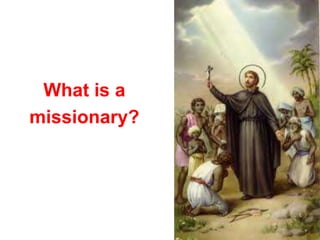
What is a
missionary?
Catholic missionaries
• Read “Catholic Missionaries” on page 573.
1. Many missionaries belonged to what group?
2. Where did they go?
3. Who was seen as the most important
Catholic missionary?
4. Why is he so important?
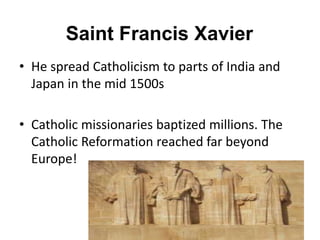
Saint Francis Xavier
• He spread Catholicism to parts of India and
Japan in the mid 1500s
• Catholic missionaries baptized millions. The
Catholic Reformation reached far beyond
Europe!
Spain
• Even before the Catholic Reformation,
Spain’s rulers had been battling to drive
non- Catholics from their lands. In 1492
the king and queen defeated the last
Muslim forces in Spain. They then forced
all the remaining Jews and Muslims to
convert to Catholicism?
• What was this called?
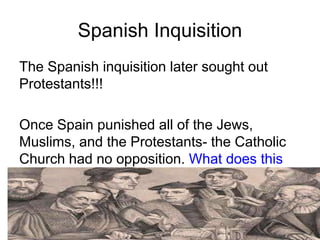
Spanish Inquisition
The Spanish inquisition later sought out
Protestants!!!
Once Spain punished all of the Jews,
Muslims, and the Protestants- the Catholic
Church had no opposition. What does this
mean?
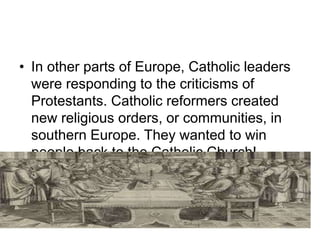
• In other parts of Europe, Catholic leaders
were responding to the criticisms of
Protestants. Catholic reformers created
new religious orders, or communities, in
southern Europe. They wanted to win
people back to the Catholic Church!
Jesuits
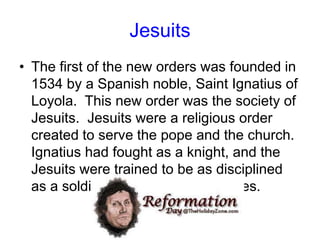
• The first of the new orders was founded in
1534 by a Spanish noble, Saint Ignatius of
Loyola. This new order was the society of
Jesuits. Jesuits were a religious order
created to serve the pope and the church.
Ignatius had fought as a knight, and the
Jesuits were trained to be as disciplined
as a soldiers in their religious duties.
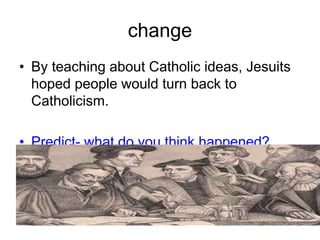
change
• By teaching about Catholic ideas, Jesuits
hoped people would turn back to
Catholicism.
• Predict- what do you think happened?
Council of Trent
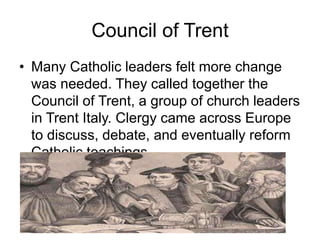
• Many Catholic leaders felt more change
was needed. They called together the
Council of Trent, a group of church leaders
in Trent Italy. Clergy came across Europe
to discuss, debate, and eventually reform
Catholic teachings.
Council of Trent
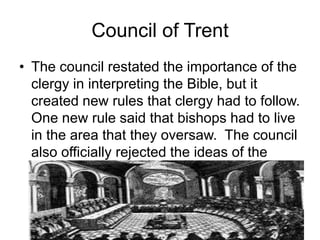
• The council restated the importance of the
clergy in interpreting the Bible, but it
created new rules that clergy had to follow.
One new rule said that bishops had to live
in the area that they oversaw. The council
also officially rejected the ideas of the
Protestant leaders.
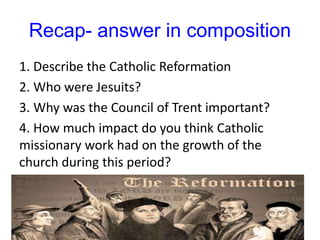
Recap- answer in composition
1. Describe the Catholic Reformation
2. Who were Jesuits?
3. Why was the Council of Trent important?
4. How much impact do you think Catholic
missionary work had on the growth of the
church during this period?
Comparing and Contrasting!
• You and your partner will have 10 minutes to
design a chart/V diagram/rap/poem etc. of
your choice. Be creative! You must do this
quick 10 minutes!
• Task 1: Compare and contrast the Protestant
and Catholic Reformation. Be sure to include
people, councils, vocabulary words, major
events etc. Let’s see who can get the most!
Exit Ticket
• 1. Define the Catholic Reformation
• 2. Draw a Venn Diagram and recall
information you and your partner discovered
while comparing and contrasting the Catholic
and Protestant Reformations!

Catholic Reformation

  • 1.
    Bell Ringer 1/28/15 1.Who is known as the “father of humanism” and stressed the importance of history? 2. How did the invention of the printing press help to spread the ideas of the Reformation? 3. Describe the Medici family. 4. Besides Martin Luther, name 3 other reformers.
  • 4.
    objective • I cancompare and contrast the Catholic and Protestant Reformation. • 7.57 Analyze how the Catholic Counter- Reformation revitalized the Catholic Church and the forces that fostered the movement, including St. Ignatius of Loyola and the Jesuits, and the Council of Trent. (C, H)
  • 5.
    Match it up… •Match the following reformers with their teachings: 1. John Calvin a. Free will 2. Martin Luther b. Salvation by faith 3. Desiderius Erasmus c. Predestination 4. William Tyndale d. Translate new testament
  • 6.
    Think! Image that youare the owner of a multi-million dollar company that has been prosperous for many years. Recently, reports have been circulating that your company has been selling illegal and/or faulty products. Someone within your company decides to leave and start their own company that sells a similar product, but offers it cheaper and with better, more reliable materials. **As the owner of this company, what would you do to fix the situation you currently find yourself in?
  • 7.
    Catholic Reformation • Inan effort to stop the spread of Protestantism, Catholic leaders decide to reform the Catholic Church from within. • New reforms included: – Creating new religious orders to win people back to the church – Jesuits – Council of Trent – clergy met to discuss and debate new Catholic teachings: • Banned indulgences, bishops must live in areas they oversee, Reformation leaders’ ideas are rejected (Also known as the COUNTER REFORMATION)
  • 8.
    Council of Trent •Some Catholic Reformation leaders wanted to punish Protestants as heretics. To lead this campaign, the pope created religious courts to punish any Protestant in Italy. He also made a list of books that were ‘dangerous’ to read. • People reading the books could be excommunicated from the Catholic Church! **What does this remind you of? (think about Spain)
  • 9.
  • 10.
    Catholic missionaries • Read“Catholic Missionaries” on page 573. 1. Many missionaries belonged to what group? 2. Where did they go? 3. Who was seen as the most important Catholic missionary? 4. Why is he so important?
  • 11.
    Saint Francis Xavier •He spread Catholicism to parts of India and Japan in the mid 1500s • Catholic missionaries baptized millions. The Catholic Reformation reached far beyond Europe!
  • 12.
    Spain • Even beforethe Catholic Reformation, Spain’s rulers had been battling to drive non- Catholics from their lands. In 1492 the king and queen defeated the last Muslim forces in Spain. They then forced all the remaining Jews and Muslims to convert to Catholicism? • What was this called?
  • 13.
    Spanish Inquisition The Spanishinquisition later sought out Protestants!!! Once Spain punished all of the Jews, Muslims, and the Protestants- the Catholic Church had no opposition. What does this mean?
  • 14.
    • In otherparts of Europe, Catholic leaders were responding to the criticisms of Protestants. Catholic reformers created new religious orders, or communities, in southern Europe. They wanted to win people back to the Catholic Church!
  • 15.
    Jesuits • The firstof the new orders was founded in 1534 by a Spanish noble, Saint Ignatius of Loyola. This new order was the society of Jesuits. Jesuits were a religious order created to serve the pope and the church. Ignatius had fought as a knight, and the Jesuits were trained to be as disciplined as a soldiers in their religious duties.
  • 16.
    change • By teachingabout Catholic ideas, Jesuits hoped people would turn back to Catholicism. • Predict- what do you think happened?
  • 17.
    Council of Trent •Many Catholic leaders felt more change was needed. They called together the Council of Trent, a group of church leaders in Trent Italy. Clergy came across Europe to discuss, debate, and eventually reform Catholic teachings.
  • 18.
    Council of Trent •The council restated the importance of the clergy in interpreting the Bible, but it created new rules that clergy had to follow. One new rule said that bishops had to live in the area that they oversaw. The council also officially rejected the ideas of the Protestant leaders.
  • 19.
    Recap- answer incomposition 1. Describe the Catholic Reformation 2. Who were Jesuits? 3. Why was the Council of Trent important? 4. How much impact do you think Catholic missionary work had on the growth of the church during this period?
  • 20.
    Comparing and Contrasting! •You and your partner will have 10 minutes to design a chart/V diagram/rap/poem etc. of your choice. Be creative! You must do this quick 10 minutes! • Task 1: Compare and contrast the Protestant and Catholic Reformation. Be sure to include people, councils, vocabulary words, major events etc. Let’s see who can get the most!
  • 21.
    Exit Ticket • 1.Define the Catholic Reformation • 2. Draw a Venn Diagram and recall information you and your partner discovered while comparing and contrasting the Catholic and Protestant Reformations!

Editor's Notes

  • #7 Possible responses: kill the person that is your new competition; fix the problem within your company; fire people and replace with better; etc…