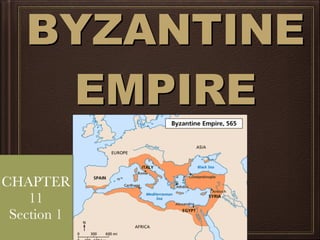
BYZANTINE
EMPIRE
CHAPTER
11
Section 1
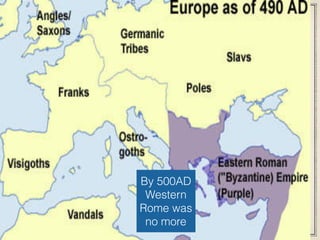
By 500AD
Western
Rome was
no more
Byzantine Empire or Roman Empire?
The Byzantine Empire overlaps in time
with the Roman Empire for 100+ years.
This is due to the fact that the Roman
Empire splits to East and West in the 284.
Therefore, the Byzantine Empire has
several emperors who were in charge of
both the Byzantine and Rome.
Such as
Constantine I
Compare and Contrast
Roman Empire
Byzantine Empire
ROME BYZANTINE
Ruled by emperors
Similar Senate System
Great powers during
their time
Gladiators
Similar laws
Would fall to Islam 

Caliphate, and lose great
amounts of wealth to the
crusades


Language: Greek


Main religion: Christianity


Defensive in battle
Peaks in 555
Similar laws as Roman, but
modified with the Justinian
code.


Language: Latin


Main religion: Pagan
Offensive in battle
Peaks in 177
Many civil wars 


Falls to various nomadic groups.

CONSTANTINE I
Transfers capital from Rome to Byzantium
(renames it to Constantinople).
A significant figure for Christianity, because
of his conversion in religion.
A skilled and intelligent general.
Brutal ruler (For example, tried his eldest son
Crispus in court, and had him executed).
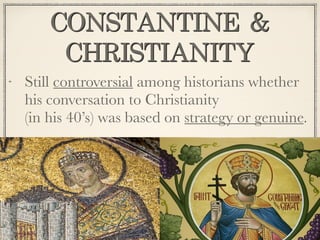
CONSTANTINE	&	
CHRISTIANITY
Still controversial among historians whether
his conversation to Christianity 

(in his 40’s) was based on strategy or genuine.
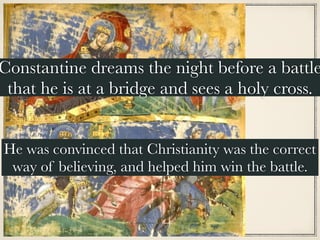
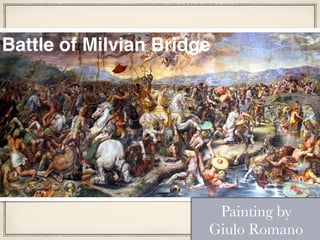
Constantine dreams the night before a battle
that he is at a bridge and sees a holy cross.
He was convinced that Christianity was the correct
way of believing, and helped him win the battle.
Painting by
Giulo Romano
Battle of Milvian Bridge
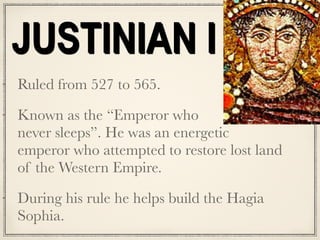
JUSTINIAN I
Ruled from 527 to 565.
Known as the “Emperor who 

never sleeps”. He was an energetic
emperor who attempted to restore lost land
of the Western Empire.
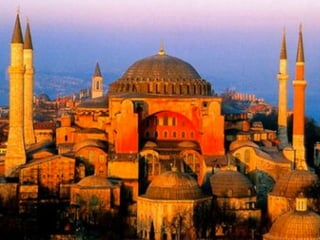
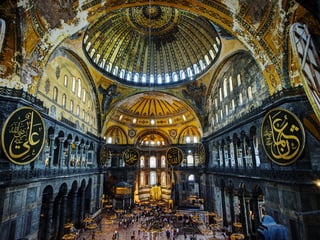
During his rule he helps build the Hagia
Sophia.
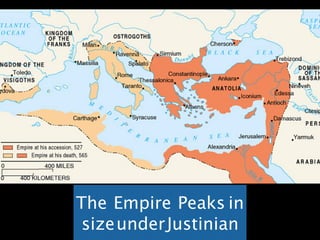
The Empire Peaks in
sizeunderJustinian
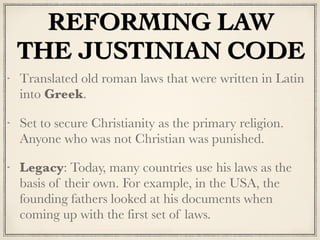
REFORMING LAW
THE JUSTINIAN CODE
Translated old roman laws that were written in Latin
into Greek.
Set to secure Christianity as the primary religion.
Anyone who was not Christian was punished.
Legacy: Today, many countries use his laws as the
basis of their own. For example, in the USA, the
founding fathers looked at his documents when
coming up with the first set of laws.
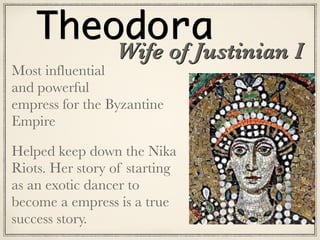
Theodora
Most influential
and powerful 

empress for the Byzantine
Empire
Helped keep down the Nika
Riots. Her story of starting
as an exotic dancer to
become a empress is a true
success story.
Wife of Justinian I
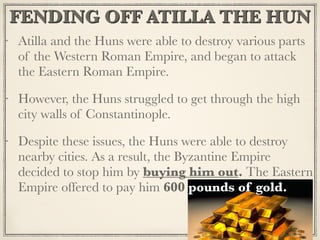
FENDING OFF ATILLA THE HUN
Atilla and the Huns were able to destroy various parts
of the Western Roman Empire, and began to attack
the Eastern Roman Empire.
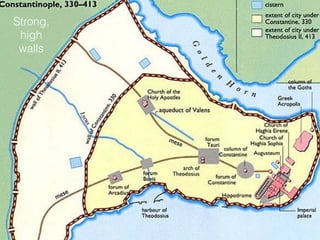
However, the Huns struggled to get through the high
city walls of Constantinople.
Despite these issues, the Huns were able to destroy
nearby cities. As a result, the Byzantine Empire
decided to stop him by buying him out. The Eastern
Empire offered to pay him 600 pounds of gold.
Strong,
high
walls
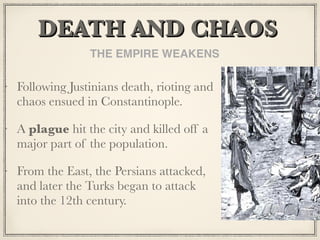
DEATH AND CHAOS	
Following Justinians death, rioting and
chaos ensued in Constantinople.
A plague hit the city and killed off a
major part of the population.
From the East, the Persians attacked,
and later the Turks began to attack
into the 12th century.
THE EMPIRE WEAKENS
ICONOCLASM DISPUTE
There was a period between the 700 and 800s,
where groups quarreled about iconoclasm,
the act of rejecting religious images.
A Byzantine emperor banned the use of icons
(religious images) because he believed people
should worship god - not worship statues or
images of god.
This conflict alienated the West and the East.
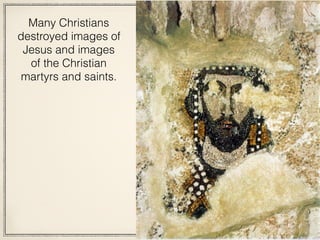
Many Christians
destroyed images of
Jesus and images
of the Christian
martyrs and saints.
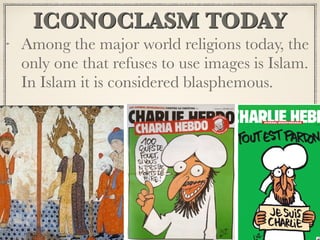
ICONOCLASM TODAY
Among the major world religions today, the
only one that refuses to use images is Islam. 

In Islam it is considered blasphemous.
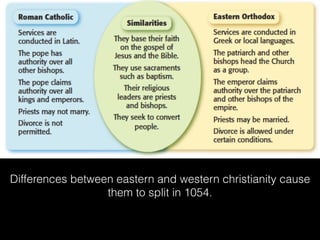
East-West Schism
Differences between eastern and western christianity cause
them to split in 1054.
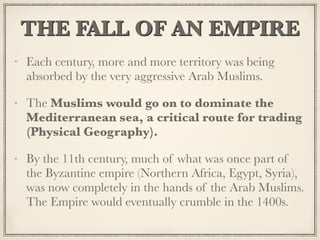
THE FALL OF AN EMPIRE
Each century, more and more territory was being
absorbed by the very aggressive Arab Muslims.
The Muslims would go on to dominate the
Mediterranean sea, a critical route for trading
(Physical Geography).
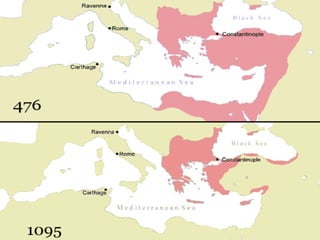
By the 11th century, much of what was once part of
the Byzantine empire (Northern Africa, Egypt, Syria),
was now completely in the hands of the Arab Muslims.
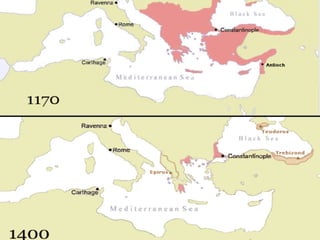
The Empire would eventually crumble in the 1400s.
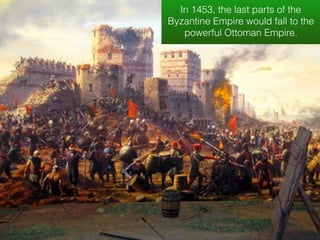
In 1453, the last parts of the
Byzantine Empire would fall to the
powerful Ottoman Empire.
Byzantine Empire
Byzantine Empire

Byzantine Empire

  • 1.
  • 2.
  • 3.
    Byzantine Empire orRoman Empire? The Byzantine Empire overlaps in time with the Roman Empire for 100+ years. This is due to the fact that the Roman Empire splits to East and West in the 284. Therefore, the Byzantine Empire has several emperors who were in charge of both the Byzantine and Rome. Such as Constantine I
  • 4.
    Compare and Contrast RomanEmpire Byzantine Empire ROME BYZANTINE Ruled by emperors Similar Senate System Great powers during their time Gladiators Similar laws Would fall to Islam 
 Caliphate, and lose great amounts of wealth to the crusades 
 Language: Greek 
 Main religion: Christianity
 
 Defensive in battle Peaks in 555 Similar laws as Roman, but modified with the Justinian code. 
 Language: Latin
 
 Main religion: Pagan Offensive in battle Peaks in 177 Many civil wars 
 
 Falls to various nomadic groups.

  • 5.
    CONSTANTINE I Transfers capitalfrom Rome to Byzantium (renames it to Constantinople). A significant figure for Christianity, because of his conversion in religion. A skilled and intelligent general. Brutal ruler (For example, tried his eldest son Crispus in court, and had him executed).
  • 6.
    CONSTANTINE & CHRISTIANITY Still controversial amonghistorians whether his conversation to Christianity 
 (in his 40’s) was based on strategy or genuine.
  • 7.
    Constantine dreams thenight before a battle that he is at a bridge and sees a holy cross. He was convinced that Christianity was the correct way of believing, and helped him win the battle.
  • 8.
  • 9.
    JUSTINIAN I Ruled from527 to 565. Known as the “Emperor who 
 never sleeps”. He was an energetic emperor who attempted to restore lost land of the Western Empire. During his rule he helps build the Hagia Sophia.
  • 12.
    The Empire Peaksin sizeunderJustinian
  • 13.
    REFORMING LAW THE JUSTINIANCODE Translated old roman laws that were written in Latin into Greek. Set to secure Christianity as the primary religion. Anyone who was not Christian was punished. Legacy: Today, many countries use his laws as the basis of their own. For example, in the USA, the founding fathers looked at his documents when coming up with the first set of laws.
  • 14.
    Theodora Most influential and powerful
 empress for the Byzantine Empire Helped keep down the Nika Riots. Her story of starting as an exotic dancer to become a empress is a true success story. Wife of Justinian I
  • 15.
    FENDING OFF ATILLATHE HUN Atilla and the Huns were able to destroy various parts of the Western Roman Empire, and began to attack the Eastern Roman Empire. However, the Huns struggled to get through the high city walls of Constantinople. Despite these issues, the Huns were able to destroy nearby cities. As a result, the Byzantine Empire decided to stop him by buying him out. The Eastern Empire offered to pay him 600 pounds of gold.
  • 16.
  • 17.
    DEATH AND CHAOS FollowingJustinians death, rioting and chaos ensued in Constantinople. A plague hit the city and killed off a major part of the population. From the East, the Persians attacked, and later the Turks began to attack into the 12th century. THE EMPIRE WEAKENS
  • 18.
    ICONOCLASM DISPUTE There wasa period between the 700 and 800s, where groups quarreled about iconoclasm, the act of rejecting religious images. A Byzantine emperor banned the use of icons (religious images) because he believed people should worship god - not worship statues or images of god. This conflict alienated the West and the East.
  • 19.
    Many Christians destroyed imagesof Jesus and images of the Christian martyrs and saints.
  • 20.
    ICONOCLASM TODAY Among themajor world religions today, the only one that refuses to use images is Islam. 
 In Islam it is considered blasphemous.
  • 21.
  • 22.
    Differences between easternand western christianity cause them to split in 1054.
  • 23.
    THE FALL OFAN EMPIRE Each century, more and more territory was being absorbed by the very aggressive Arab Muslims. The Muslims would go on to dominate the Mediterranean sea, a critical route for trading (Physical Geography). By the 11th century, much of what was once part of the Byzantine empire (Northern Africa, Egypt, Syria), was now completely in the hands of the Arab Muslims. The Empire would eventually crumble in the 1400s.
  • 24.
    In 1453, thelast parts of the Byzantine Empire would fall to the powerful Ottoman Empire.