The Role of the Church
in Medieval Europe
Introduction
• Center of religious and social life
• All Christians belonged to one
church – Roman Catholic Church
• Provided leadership in an unstable
time
• The church was as important, if not
more important, than many
kings/queen
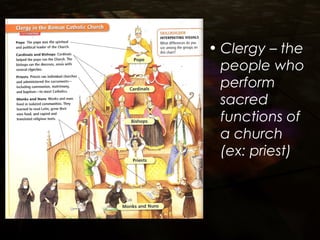
• Clergy – the
people who
perform
sacred
functions of
a church
(ex: priest)
Power of the church
• Owned 1/3 of all land in Europe –
largest landholder in Europe
• Collected a tithe – 1/10 of income
or 1 penny from peasants
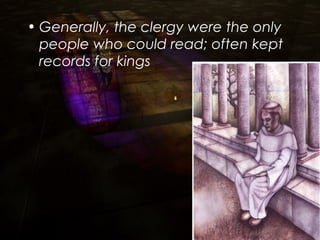
• Generally, the clergy were the only
people who could read; often kept
records for kings
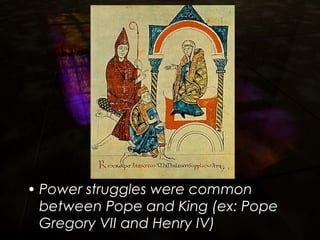
• Power struggles were common
between Pope and King (ex: Pope
Gregory VII and Henry IV)
Sacraments and
Salvation
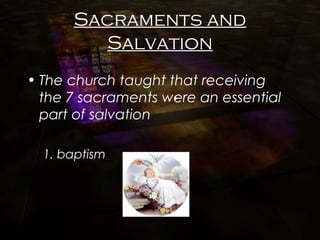
• The church taught that receiving
the 7 sacraments were an essential
part of salvation
1. baptism
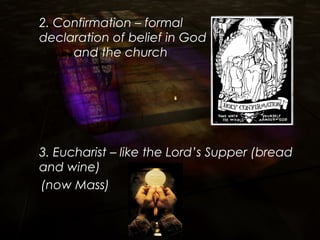
2. Confirmation – formal
declaration of belief in God
and the church
3. Eucharist – like the Lord’s Supper (bread
and wine)
(now Mass)
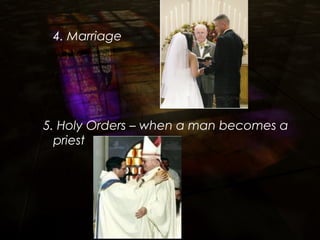
4. Marriage
5. Holy Orders – when a man becomes a
priest
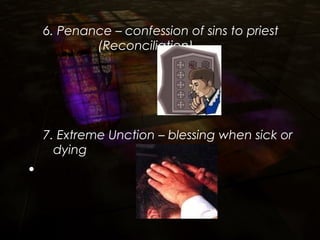
6. Penance – confession of sins to priest
(Reconciliation)
7. Extreme Unction – blessing when sick or
dying
•  
Pilgrimages
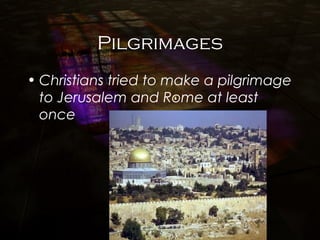
• Christians tried to make a pilgrimage
to Jerusalem and Rome at least
once
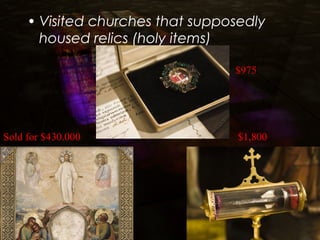
• Visited churches that supposedly
housed relics (holy items)
$975
$1,800Sold for $430.000
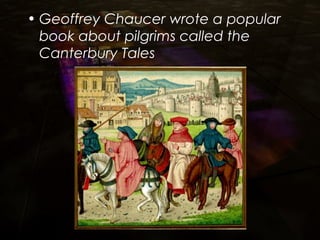
• Geoffrey Chaucer wrote a popular
book about pilgrims called the
Canterbury Tales
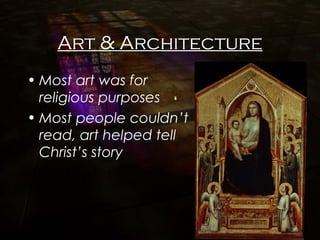
Art & Architecture
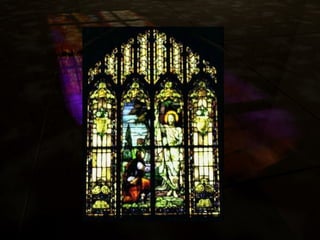
• Most art was for
religious purposes
• Most people couldn’t
read, art helped tell
Christ’s story
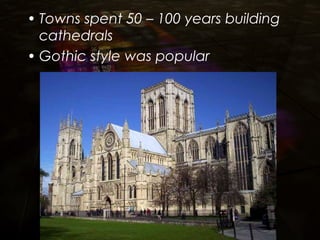
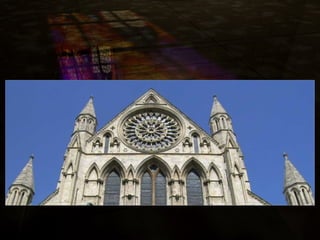
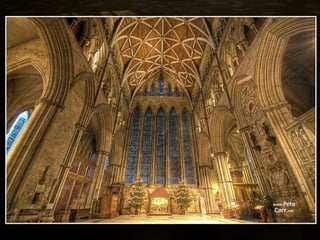
• Towns spent 50 – 100 years building
cathedrals
• Gothic style was popular
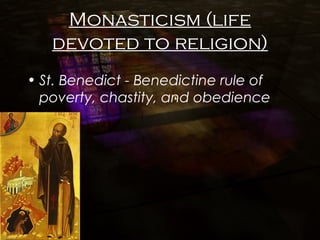
Monasticism (life
devoted to religion)
• St. Benedict - Benedictine rule of
poverty, chastity, and obedience
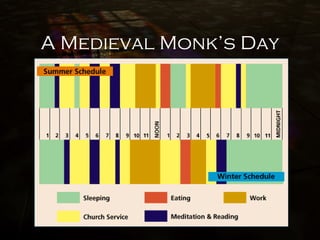
A Medieval Monk’s Day
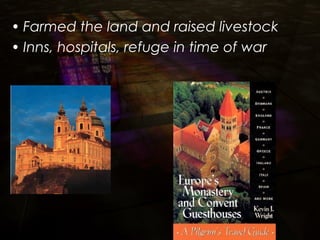
• Farmed the land and raised livestock
• Inns, hospitals, refuge in time of war
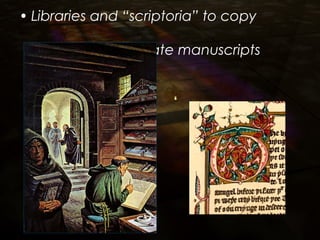
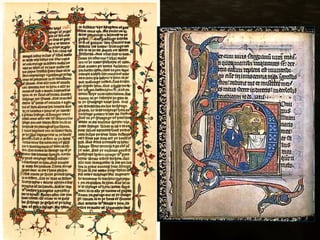
• Libraries and “scriptoria” to copy
books and illuminate manuscripts
• Friar – traveling preacher, took a
vow of poverty, lived by begging
• Provided schools for children of
upper class
• Eventually, monasteries became too
small to teach all who wanted to be
educated
• Began meeting outside monastery
• Those buildings grew into universities
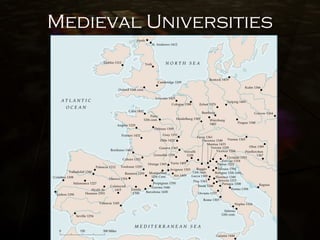
Medieval Universities
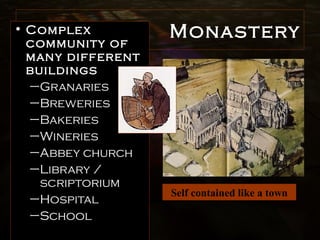
Monastery• Complex
community of
many different
buildings
–Granaries
–Breweries
–Bakeries
–Wineries
–Abbey church
–Library /
scriptorium
–Hospital
–School
Self contained like a town
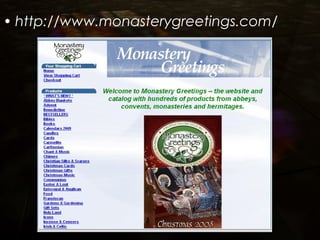
• http://www.monasterygreetings.com/
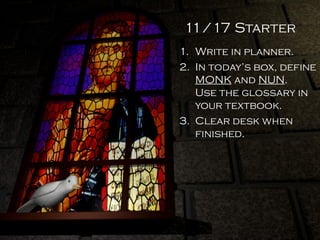
11/17 Starter
1. Write in planner.
2. In today’s box, define
MONK and NUN.
Use the glossary in
your textbook.
3. Clear desk when
finished.

Ppt roleofchurch-090513182504-phpapp02

  • 1.
    The Role ofthe Church in Medieval Europe
  • 2.
    Introduction • Center ofreligious and social life • All Christians belonged to one church – Roman Catholic Church • Provided leadership in an unstable time • The church was as important, if not more important, than many kings/queen
  • 3.
    • Clergy –the people who perform sacred functions of a church (ex: priest)
  • 4.
    Power of thechurch • Owned 1/3 of all land in Europe – largest landholder in Europe • Collected a tithe – 1/10 of income or 1 penny from peasants
  • 5.
    • Generally, theclergy were the only people who could read; often kept records for kings
  • 6.
    • Power struggleswere common between Pope and King (ex: Pope Gregory VII and Henry IV)
  • 7.
    Sacraments and Salvation • Thechurch taught that receiving the 7 sacraments were an essential part of salvation 1. baptism
  • 8.
    2. Confirmation –formal declaration of belief in God and the church 3. Eucharist – like the Lord’s Supper (bread and wine) (now Mass)
  • 9.
    4. Marriage 5. HolyOrders – when a man becomes a priest
  • 10.
    6. Penance –confession of sins to priest (Reconciliation) 7. Extreme Unction – blessing when sick or dying •  
  • 11.
    Pilgrimages • Christians triedto make a pilgrimage to Jerusalem and Rome at least once
  • 12.
    • Visited churchesthat supposedly housed relics (holy items) $975 $1,800Sold for $430.000
  • 13.
    • Geoffrey Chaucerwrote a popular book about pilgrims called the Canterbury Tales
  • 14.
    Art & Architecture •Most art was for religious purposes • Most people couldn’t read, art helped tell Christ’s story
  • 15.
    • Towns spent50 – 100 years building cathedrals • Gothic style was popular
  • 19.
    Monasticism (life devoted toreligion) • St. Benedict - Benedictine rule of poverty, chastity, and obedience
  • 20.
  • 21.
    • Farmed theland and raised livestock • Inns, hospitals, refuge in time of war
  • 22.
    • Libraries and“scriptoria” to copy books and illuminate manuscripts
  • 24.
    • Friar –traveling preacher, took a vow of poverty, lived by begging
  • 25.
    • Provided schoolsfor children of upper class • Eventually, monasteries became too small to teach all who wanted to be educated • Began meeting outside monastery • Those buildings grew into universities
  • 26.
  • 27.
    Monastery• Complex community of manydifferent buildings –Granaries –Breweries –Bakeries –Wineries –Abbey church –Library / scriptorium –Hospital –School Self contained like a town
  • 28.
  • 29.
    11/17 Starter 1. Writein planner. 2. In today’s box, define MONK and NUN. Use the glossary in your textbook. 3. Clear desk when finished.