MEDICATION ERROR
Dr. Ramesh Bhandari
Asst. Professor
Dept. of Pharmacy Practice
KLE College of Pharmacy, Belagavi
What is Medication Error?
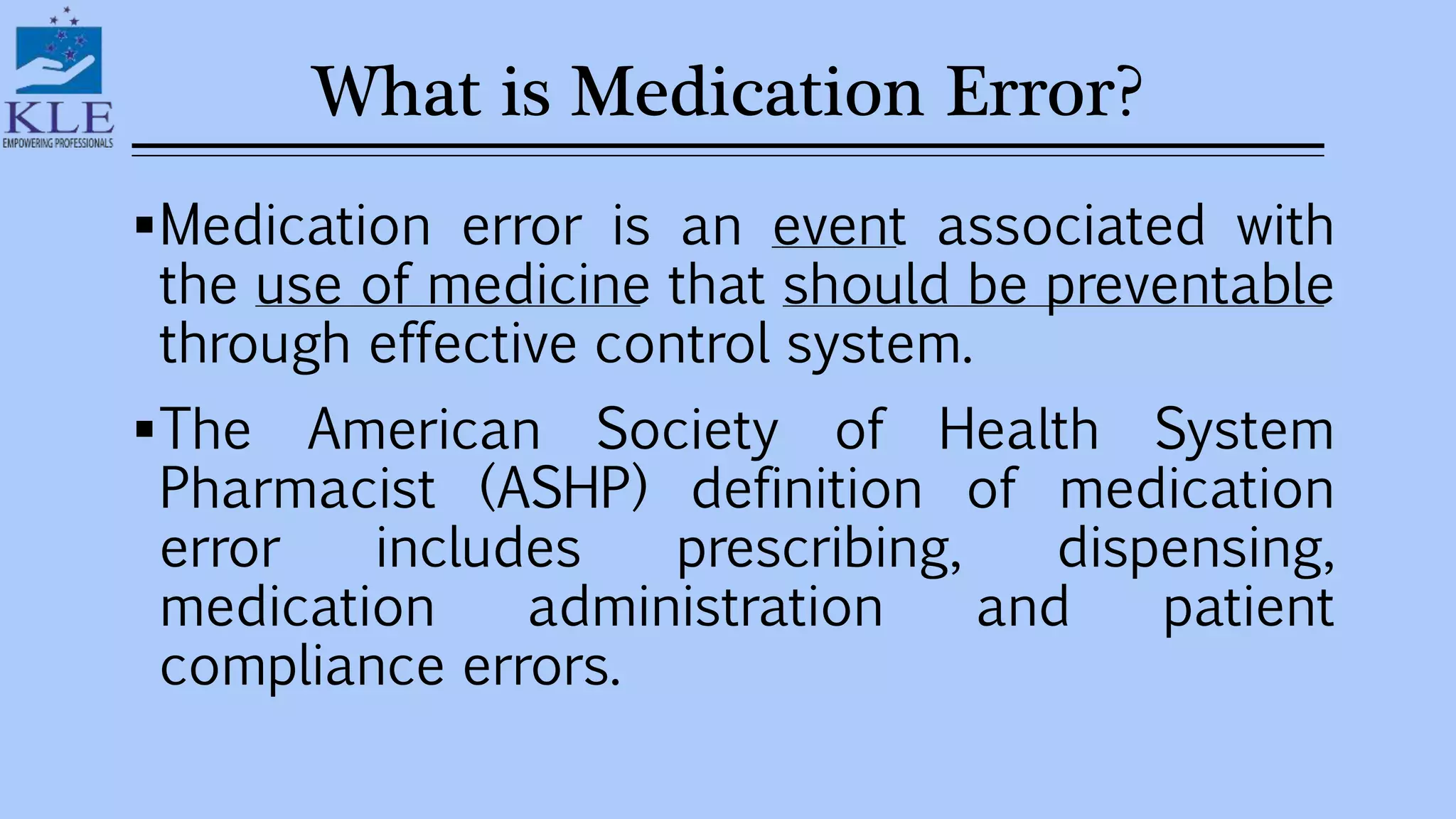
Medication error is an event associated with
the use of medicine that should be preventable
through effective control system.
The American Society of Health System
Pharmacist (ASHP) definition of medication
error includes prescribing, dispensing,
medication administration and patient
compliance errors.
What is Medication Error?
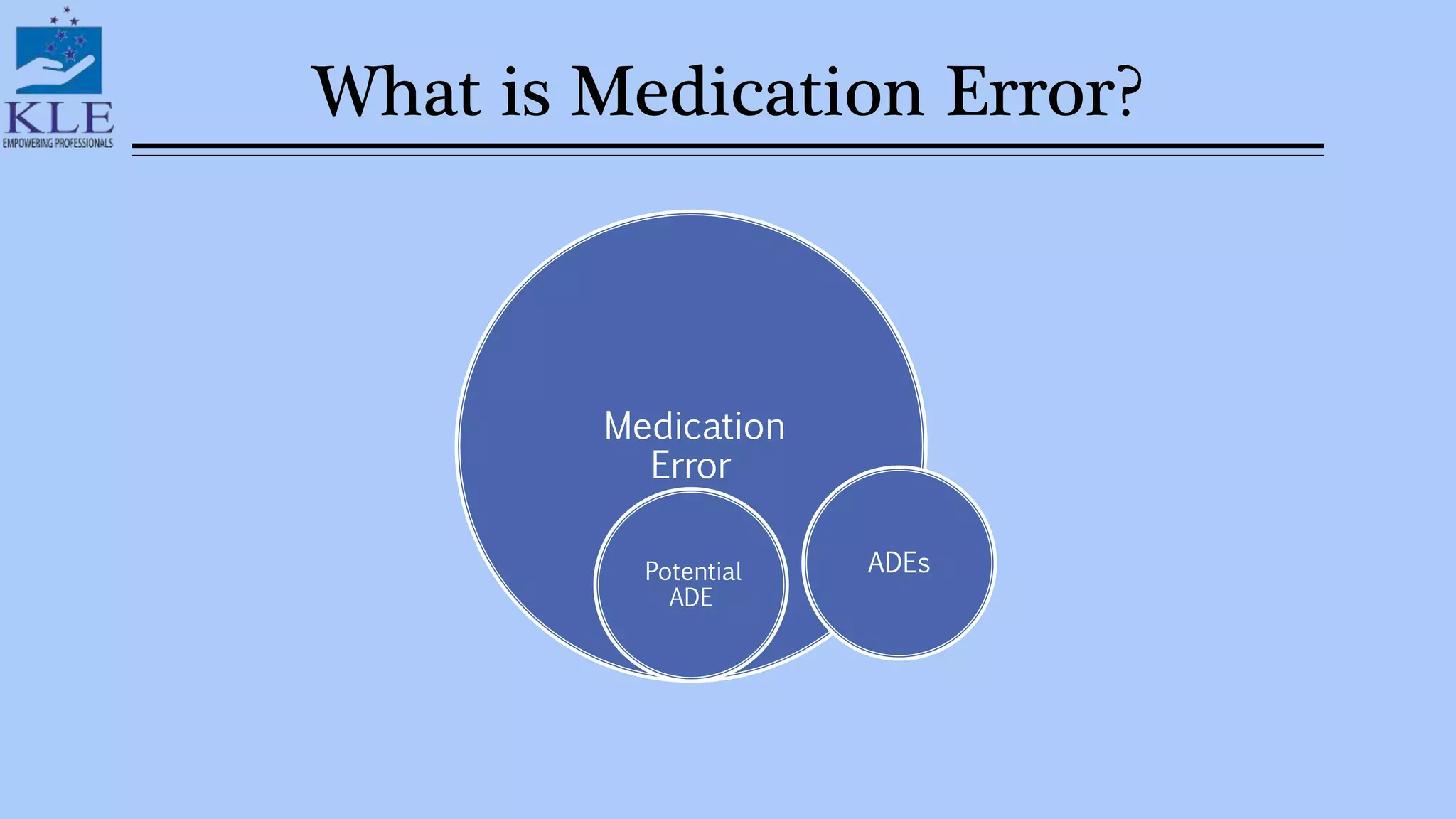
Medication
Error
Potential
ADE
ADEs
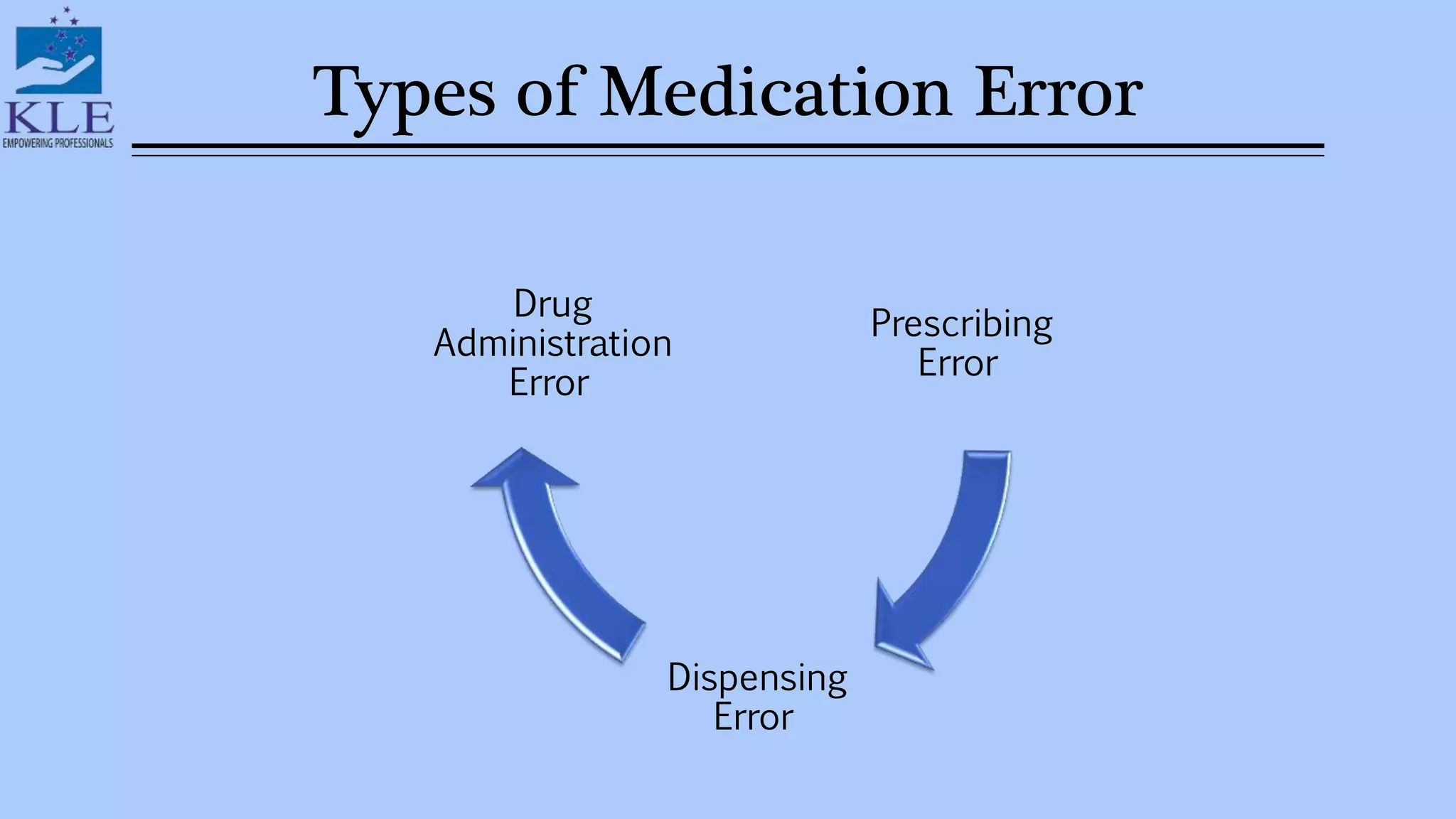
Types of Medication Error
Prescribing
Error
Dispensing
Error
Drug
Administration
Error
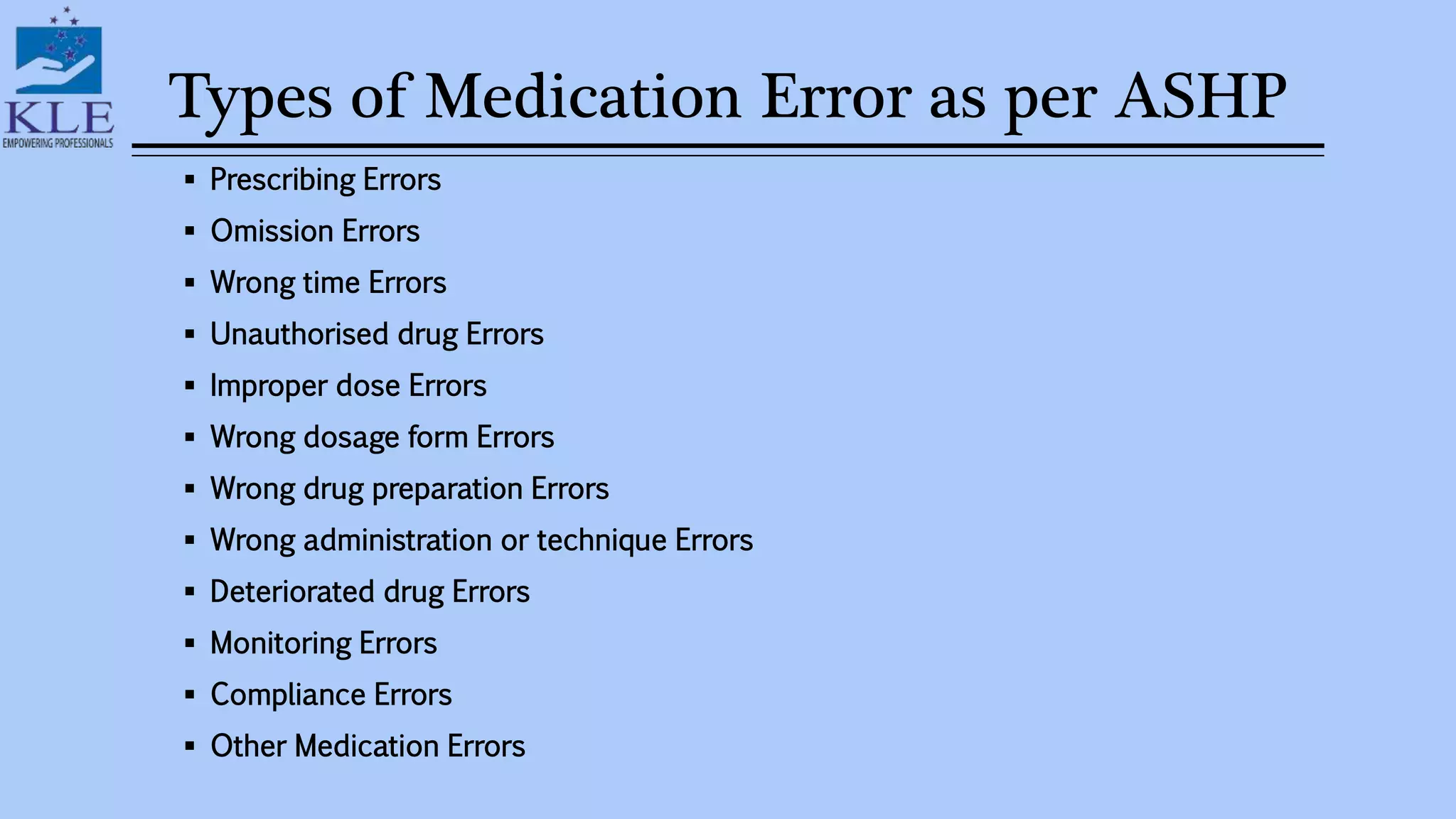
Types of Medication Error as per ASHP
 Prescribing Errors
 Omission Errors
 Wrong time Errors
 Unauthorised drug Errors
 Improper dose Errors
 Wrong dosage form Errors
 Wrong drug preparation Errors
 Wrong administration or technique Errors
 Deteriorated drug Errors
 Monitoring Errors
 Compliance Errors
 Other Medication Errors
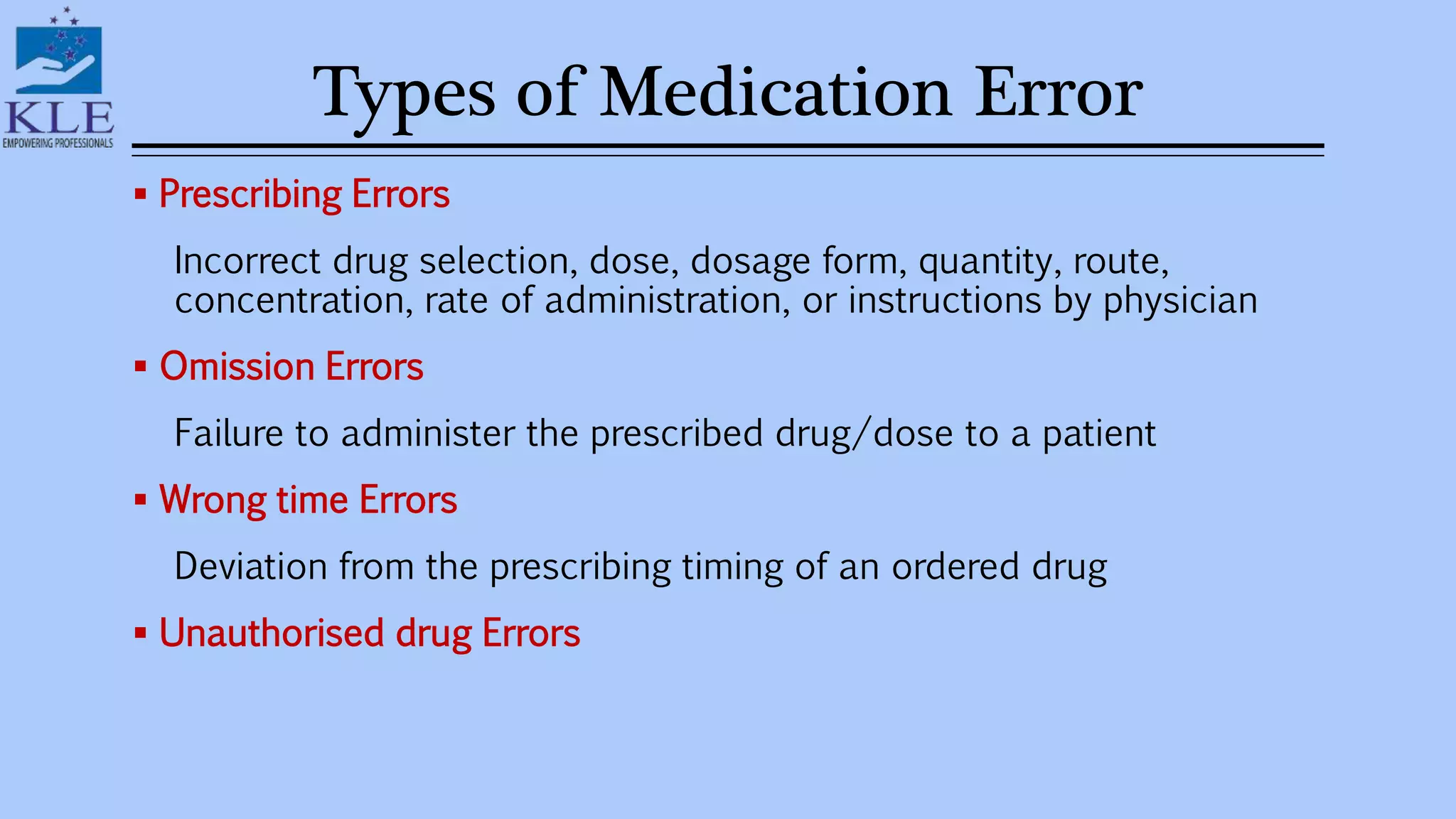
Types of Medication Error
 Prescribing Errors
Incorrect drug selection, dose, dosage form, quantity, route,
concentration, rate of administration, or instructions by physician
 Omission Errors
Failure to administer the prescribed drug/dose to a patient
 Wrong time Errors
Deviation from the prescribing timing of an ordered drug
 Unauthorised drug Errors
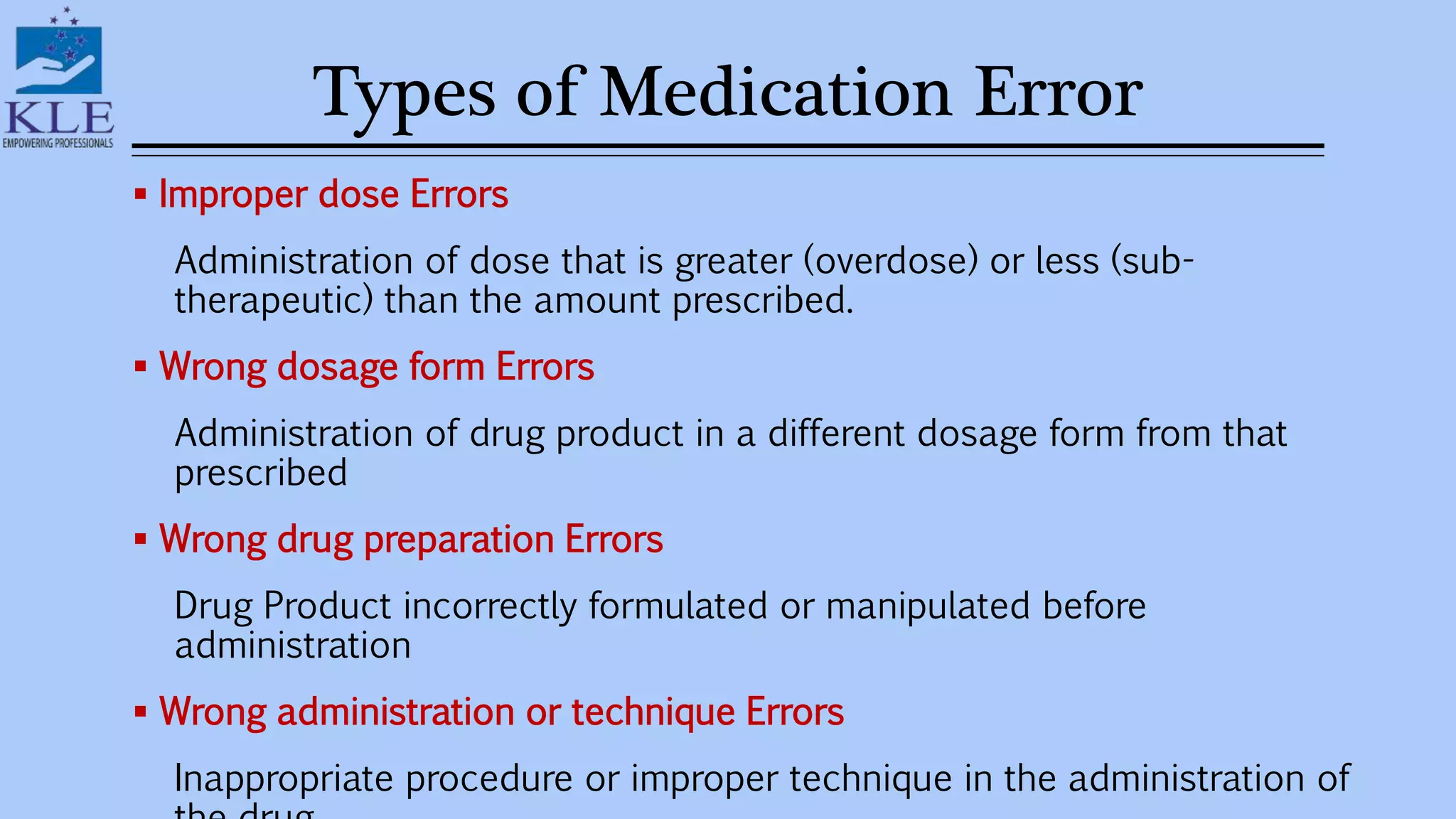
Types of Medication Error
 Improper dose Errors
Administration of dose that is greater (overdose) or less (sub-
therapeutic) than the amount prescribed.
 Wrong dosage form Errors
Administration of drug product in a different dosage form from that
prescribed
 Wrong drug preparation Errors
Drug Product incorrectly formulated or manipulated before
administration
 Wrong administration or technique Errors
Inappropriate procedure or improper technique in the administration of
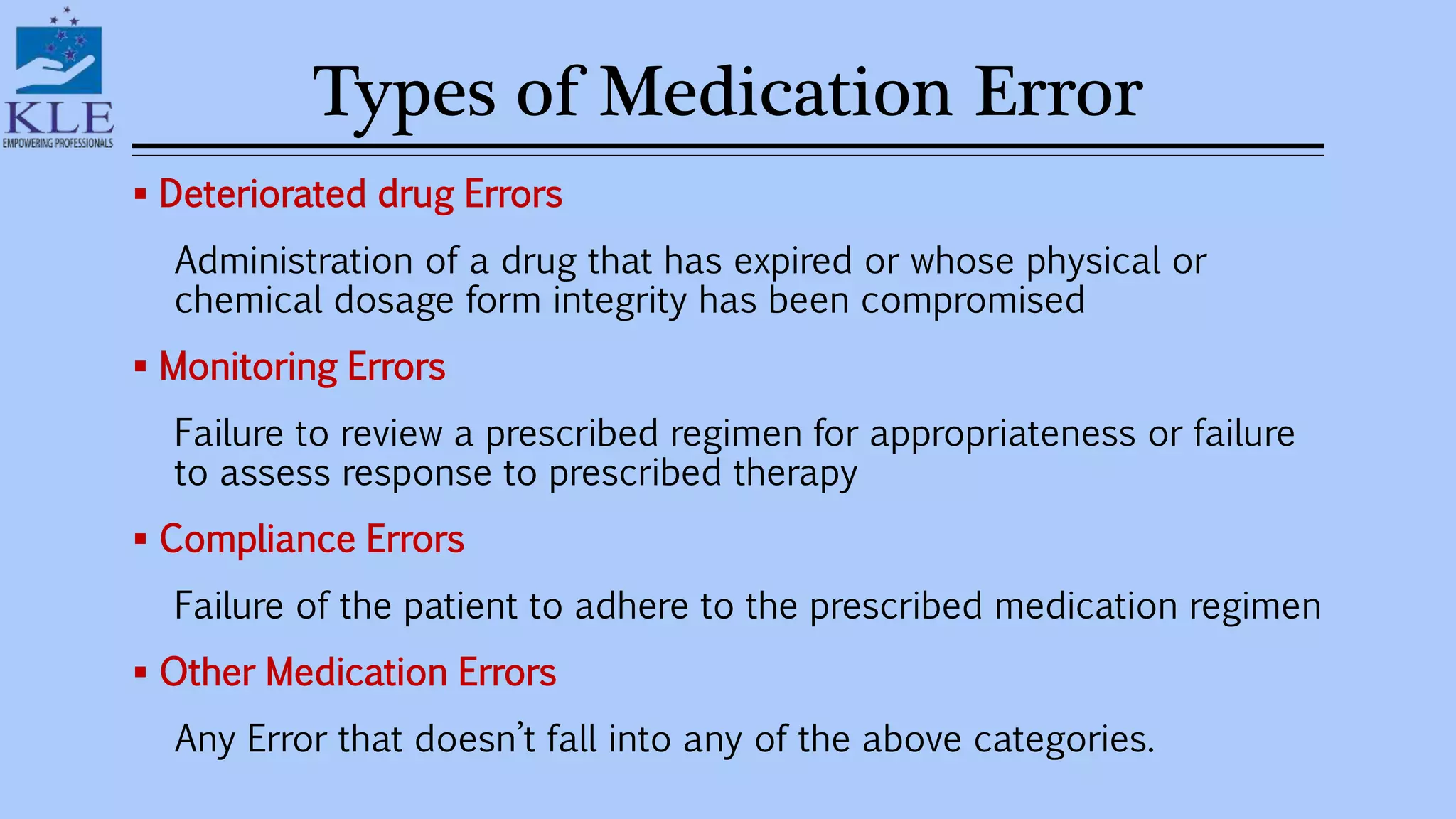
Types of Medication Error
 Deteriorated drug Errors
Administration of a drug that has expired or whose physical or
chemical dosage form integrity has been compromised
 Monitoring Errors
Failure to review a prescribed regimen for appropriateness or failure
to assess response to prescribed therapy
 Compliance Errors
Failure of the patient to adhere to the prescribed medication regimen
 Other Medication Errors
Any Error that doesn’t fall into any of the above categories.
What is Medication Error?
 The National Coordinating Committee on Medication Error
Reporting and Prevention (NCC-MERP) defines Medication
Errors as any preventable event that may cause or lead to
inappropriate medication use or patient harm while the
medicine is in the control of the health care professional,
patient or consumer.
Classification as per NCC-MERP
1) No Error
A. Circumstances or events that have capacity to cause error
2) Error, No harm
B. An Error Occurred but the error did not reach the patient
C. An Error occurred that reach the patient but did not cause patient harm
D. An Error occurred that reach the patient and require monitoring to confirm that it resulted in no harm to the
patient and or required intervention to preclude harm
3) Error, Harm
E. An Error occurred that may have contributed to or resulted in temporary harm to the patient and required
intervention
F. An Error occurred that may have contributed to or resulted in temporary harm to the patient and required initial
or prolonged hospitalization
G. An Error occurred that may have contributed to or resulted in permanent patient harm
H. An Error occurred that required intervention necessary to sustain life
4) Error, Death
I. An Error occurred that may have contributed to or resulted in the patient’s Death
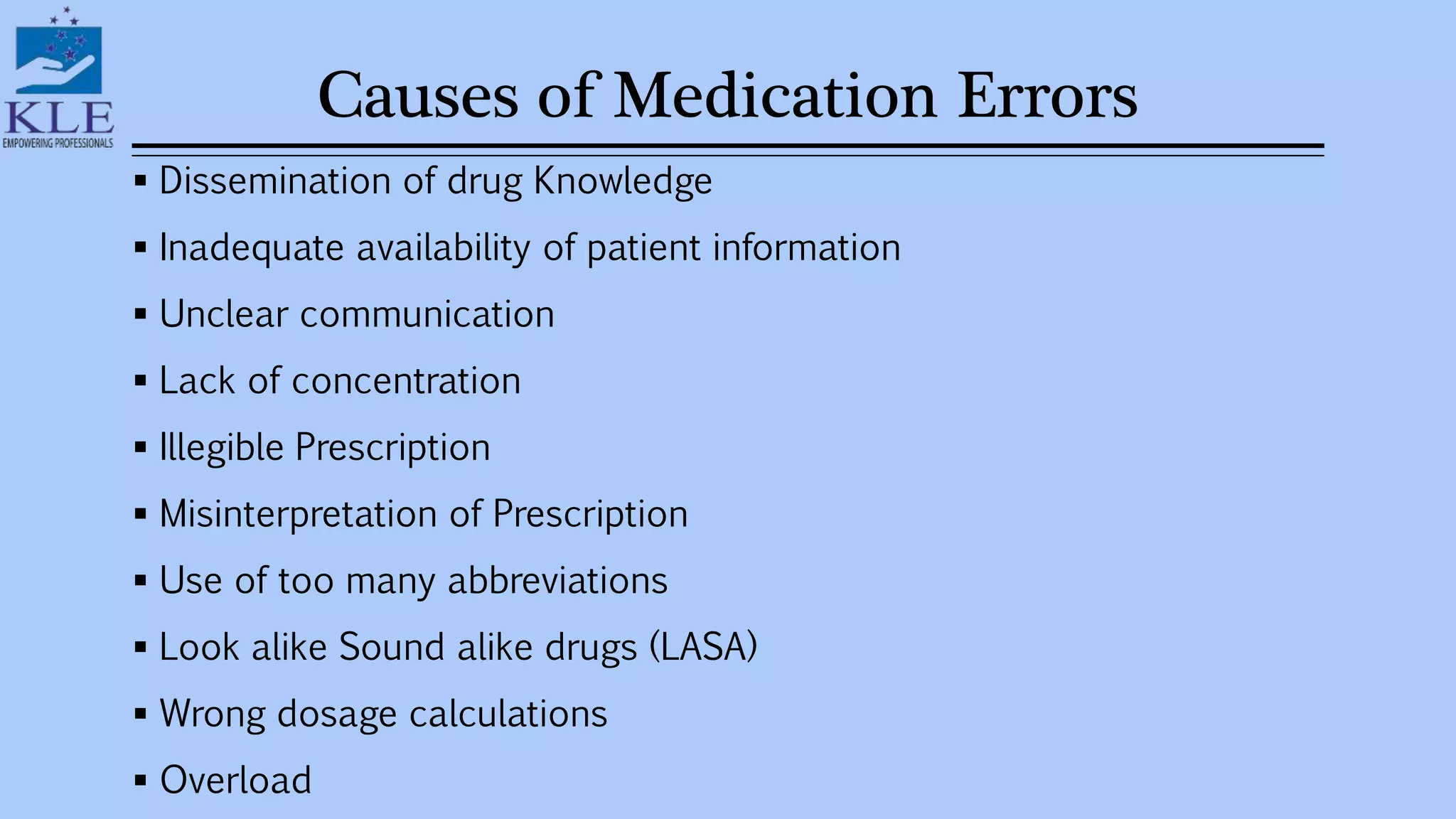
Causes of Medication Errors
 Dissemination of drug Knowledge
 Inadequate availability of patient information
 Unclear communication
 Lack of concentration
 Illegible Prescription
 Misinterpretation of Prescription
 Use of too many abbreviations
 Look alike Sound alike drugs (LASA)
 Wrong dosage calculations
 Overload
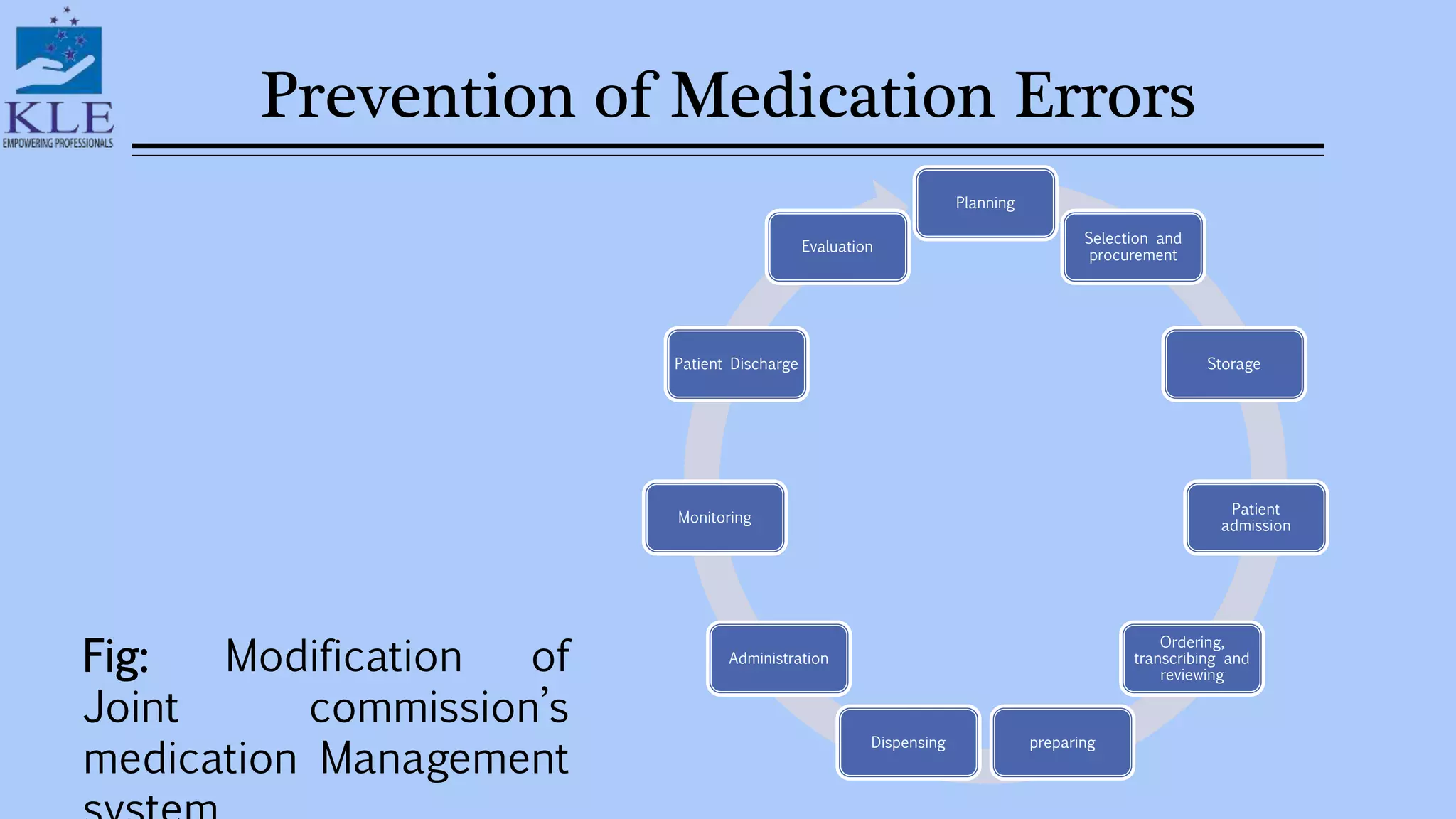
Prevention of Medication Errors
Planning
Selection and
procurement
Storage
Patient
admission
Ordering,
transcribing and
reviewing
preparingDispensing
Administration
Monitoring
Patient Discharge
Evaluation
Fig: Modification of
Joint commission’s
medication Management
Prevention of Medication Errors
 Review floor stock to exclude expired drugs.
 Use of proper labelling of the drugs.
 Look alike sound alike drugs stored separately.
 Perform double check while prescribing, dispensing and administering the drugs.
 Develop strategies to overcome illegible prescribing
 Use Capital Letters while prescribing drugs
 Abbreviations are not permitted
 Specify exact doses of the drug, avoid ranges doses.
 Standardize the prescribing / order entry.
 Computerized prescription order entry (CPOE)
Prevention of Medication Errors
 The ‘5R’ (Right patient, Right drug, Right dose, Right route, Right Time) should be
confirmed before administering the drugs to the patient.
 Patient Education
Computerized Prescriber Order Entry (CPOE)
 Also known as Computerized physician order entry or computerized provider order
entry.
 Is a computer application which accepts the prescriber’s orders for diagnostic and
treatment services electronically rather than recording them in writing on an order
sheet or prescription.
 The CPOE :
 can compare orders against standard dosing,
 Check allergies
 Check Interactions
 Provide Warnings about potential problems
Computerized Prescriber Order Entry (CPOE)
 Advantage :
 Handwriting problems are solved.
 Fewer transcription errors.
 Prescription can be quickly transferred to providers reducing delays
in dispensing and initiating therapy.
“CPOE is a tool not a solution to medication errors”
Medication error

Medication error

  • 1.
    MEDICATION ERROR Dr. RameshBhandari Asst. Professor Dept. of Pharmacy Practice KLE College of Pharmacy, Belagavi
  • 2.
    What is MedicationError? Medication error is an event associated with the use of medicine that should be preventable through effective control system. The American Society of Health System Pharmacist (ASHP) definition of medication error includes prescribing, dispensing, medication administration and patient compliance errors.
  • 3.
    What is MedicationError? Medication Error Potential ADE ADEs
  • 4.
    Types of MedicationError Prescribing Error Dispensing Error Drug Administration Error
  • 5.
    Types of MedicationError as per ASHP  Prescribing Errors  Omission Errors  Wrong time Errors  Unauthorised drug Errors  Improper dose Errors  Wrong dosage form Errors  Wrong drug preparation Errors  Wrong administration or technique Errors  Deteriorated drug Errors  Monitoring Errors  Compliance Errors  Other Medication Errors
  • 6.
    Types of MedicationError  Prescribing Errors Incorrect drug selection, dose, dosage form, quantity, route, concentration, rate of administration, or instructions by physician  Omission Errors Failure to administer the prescribed drug/dose to a patient  Wrong time Errors Deviation from the prescribing timing of an ordered drug  Unauthorised drug Errors
  • 7.
    Types of MedicationError  Improper dose Errors Administration of dose that is greater (overdose) or less (sub- therapeutic) than the amount prescribed.  Wrong dosage form Errors Administration of drug product in a different dosage form from that prescribed  Wrong drug preparation Errors Drug Product incorrectly formulated or manipulated before administration  Wrong administration or technique Errors Inappropriate procedure or improper technique in the administration of
  • 8.
    Types of MedicationError  Deteriorated drug Errors Administration of a drug that has expired or whose physical or chemical dosage form integrity has been compromised  Monitoring Errors Failure to review a prescribed regimen for appropriateness or failure to assess response to prescribed therapy  Compliance Errors Failure of the patient to adhere to the prescribed medication regimen  Other Medication Errors Any Error that doesn’t fall into any of the above categories.
  • 9.
    What is MedicationError?  The National Coordinating Committee on Medication Error Reporting and Prevention (NCC-MERP) defines Medication Errors as any preventable event that may cause or lead to inappropriate medication use or patient harm while the medicine is in the control of the health care professional, patient or consumer.
  • 10.
    Classification as perNCC-MERP 1) No Error A. Circumstances or events that have capacity to cause error 2) Error, No harm B. An Error Occurred but the error did not reach the patient C. An Error occurred that reach the patient but did not cause patient harm D. An Error occurred that reach the patient and require monitoring to confirm that it resulted in no harm to the patient and or required intervention to preclude harm 3) Error, Harm E. An Error occurred that may have contributed to or resulted in temporary harm to the patient and required intervention F. An Error occurred that may have contributed to or resulted in temporary harm to the patient and required initial or prolonged hospitalization G. An Error occurred that may have contributed to or resulted in permanent patient harm H. An Error occurred that required intervention necessary to sustain life 4) Error, Death I. An Error occurred that may have contributed to or resulted in the patient’s Death
  • 11.
    Causes of MedicationErrors  Dissemination of drug Knowledge  Inadequate availability of patient information  Unclear communication  Lack of concentration  Illegible Prescription  Misinterpretation of Prescription  Use of too many abbreviations  Look alike Sound alike drugs (LASA)  Wrong dosage calculations  Overload
  • 12.
    Prevention of MedicationErrors Planning Selection and procurement Storage Patient admission Ordering, transcribing and reviewing preparingDispensing Administration Monitoring Patient Discharge Evaluation Fig: Modification of Joint commission’s medication Management
  • 13.
    Prevention of MedicationErrors  Review floor stock to exclude expired drugs.  Use of proper labelling of the drugs.  Look alike sound alike drugs stored separately.  Perform double check while prescribing, dispensing and administering the drugs.  Develop strategies to overcome illegible prescribing  Use Capital Letters while prescribing drugs  Abbreviations are not permitted  Specify exact doses of the drug, avoid ranges doses.  Standardize the prescribing / order entry.  Computerized prescription order entry (CPOE)
  • 14.
    Prevention of MedicationErrors  The ‘5R’ (Right patient, Right drug, Right dose, Right route, Right Time) should be confirmed before administering the drugs to the patient.  Patient Education
  • 15.
    Computerized Prescriber OrderEntry (CPOE)  Also known as Computerized physician order entry or computerized provider order entry.  Is a computer application which accepts the prescriber’s orders for diagnostic and treatment services electronically rather than recording them in writing on an order sheet or prescription.  The CPOE :  can compare orders against standard dosing,  Check allergies  Check Interactions  Provide Warnings about potential problems
  • 16.
    Computerized Prescriber OrderEntry (CPOE)  Advantage :  Handwriting problems are solved.  Fewer transcription errors.  Prescription can be quickly transferred to providers reducing delays in dispensing and initiating therapy. “CPOE is a tool not a solution to medication errors”