MEDICAL ERRORS
Presented by:
SUHAIL SYED
PHARM - D
SULTAN UL ULOOM COLLEGE OF
PHARMACY, HYD
Guided by:
Dr. S. P. SRINIVAS NAYAK, ASSISTANT
PROFESSOR, SUCP, HYD.
DEFINITION :-
• A medical error is a preventable adverse effect of care, whether or not it is
evident or harmful to the patient.
• May occur at any time, from the prescription to consumption of the
medicines by the patient.
• Problems and sources of medication errors are multidisciplinary and
multifactorial.
• Errors occur from:-
- Lack of knowledge.
- Unclear or erroneous labeling of drugs.
- Misidentification of patient.
- Mental lapses (or)
- Verification errors.
• Medical errors can involve medicines, surgery, diagnosis,
equipment, or lab reports.
Epidemiology :-
• Medical errors can also be lethal as recent studies of medical
errors have estimated errors may account for as many as
251,000 deaths annually in the United States (U.S).
• Making it the third leading cause of death in United States.
• Indian study of intensive care unit reported 68.5% of all errors
were medication errors.
TYPES OF MEDICATION ERRORS :
•Prescribing Error.
•Dispensing Error.
•Documentation Error.
•Indent Error.
•Transcription Error.
•Administration Error.
PRESCRIBING ERROR :
• A prescribing error occurs when, as a result of a prescribing
decision or prescription writing process, there is an
unintentional significant reduction in the probability of
treatment being timely and effective or increase in the risk of
harm when compared with generally accepted practice.
It Includes:
• Incorrect Prescription.
• Illegible Handwriting.
• Drug allergy not identified.
• Irrational combinations.
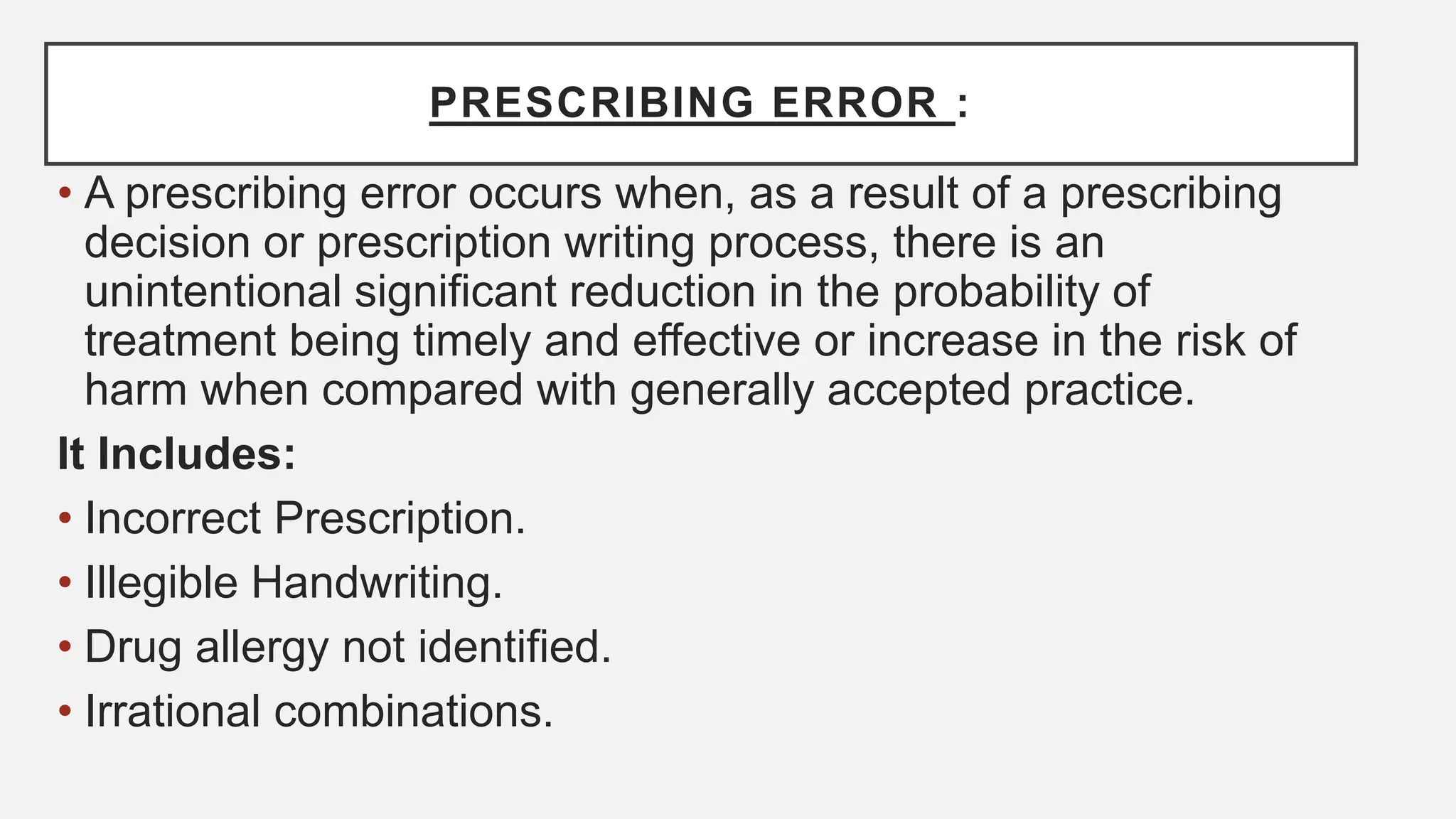
•Out of list abbreviations.
Example: Digoxin 0.5mg
•It is a discrepancy between a prescription and the
medicine that the pharmacy delivers to the patient or
distributes to the ward on the basis of this prescription,
including the dispensing of a medicine with inferior
pharmaceutical or informational quality.
DISPENSING ERROR:
Applications:-
• Wrong quantity (calculation error).
• Wrong concentration (extemporaneous calculation error).
• Compliance aid error (labels don’t match drugs, drugs
dispensed at wrong times, drugs omitted.)
• Right label/wrong drug or versa.
• Right drug; wrong strength.
• Drugs with similar generic names
(procylidine/prochlorperazine,
chlorpromazine/chlorpropamide)
• Drugs with similar packaging(manufacturer branding)
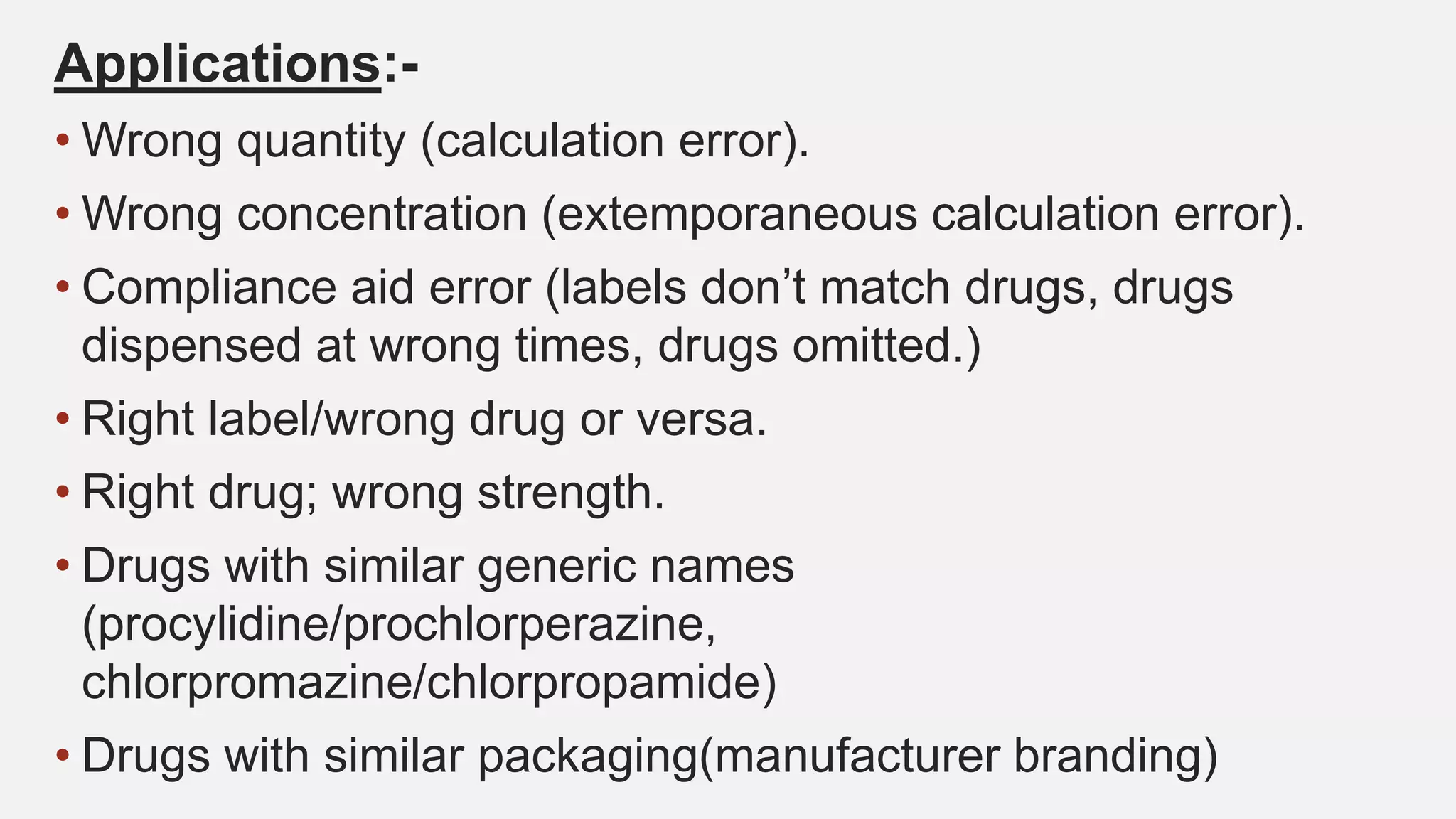
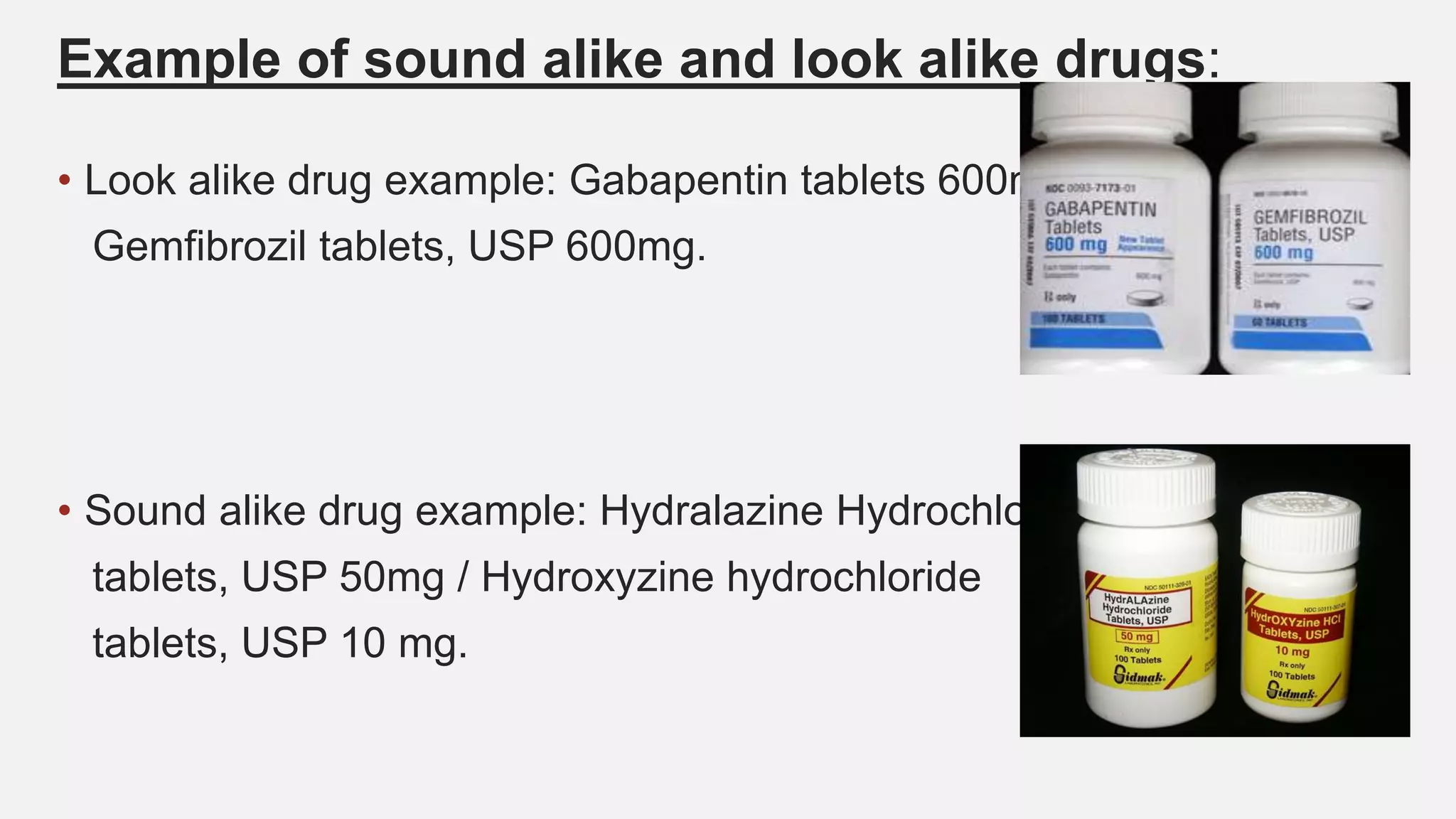
Example of sound alike and look alike drugs:
• Look alike drug example: Gabapentin tablets 600mg/
Gemfibrozil tablets, USP 600mg.
• Sound alike drug example: Hydralazine Hydrochloride
tablets, USP 50mg / Hydroxyzine hydrochloride
tablets, USP 10 mg.
Errors of omission:
•When some transactions are completely omitted
from the books of accounts or entered but not
posted, they are treated as errors of omission.
This includes:
•Failure to counsel the patient.
•Failure to screen for interactions and
contraindications.
ERRORS OF COMMISSION:
•This includes miscalculation of dose, dispensing of
incorrect medication, dosage strength, or dosage
form.
Common causes of Dispensing errors:
•High workload, distraction, work area.
•Use of outdated or incorrect references.
•Look Alike and Sound Alike drugs.
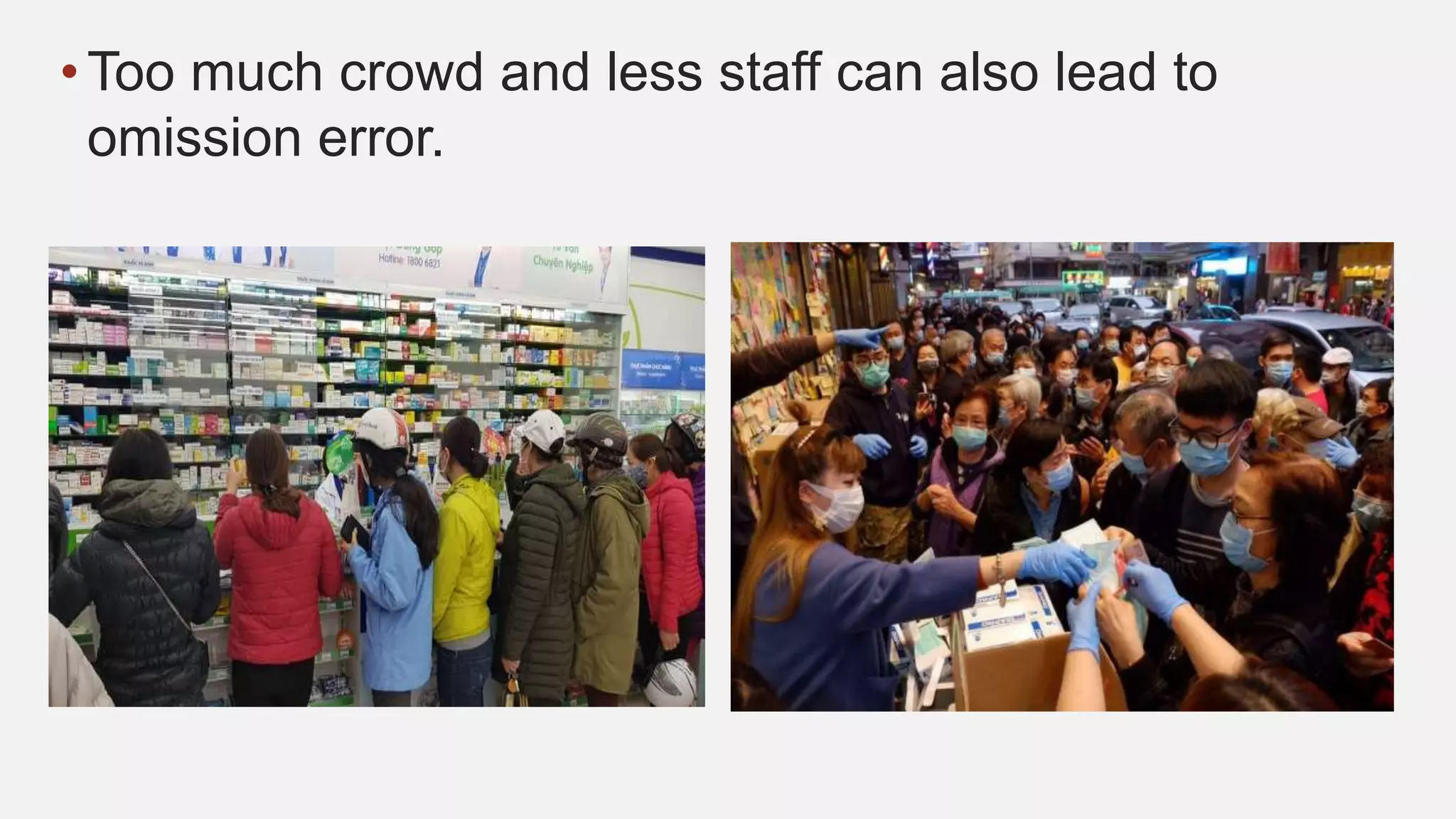
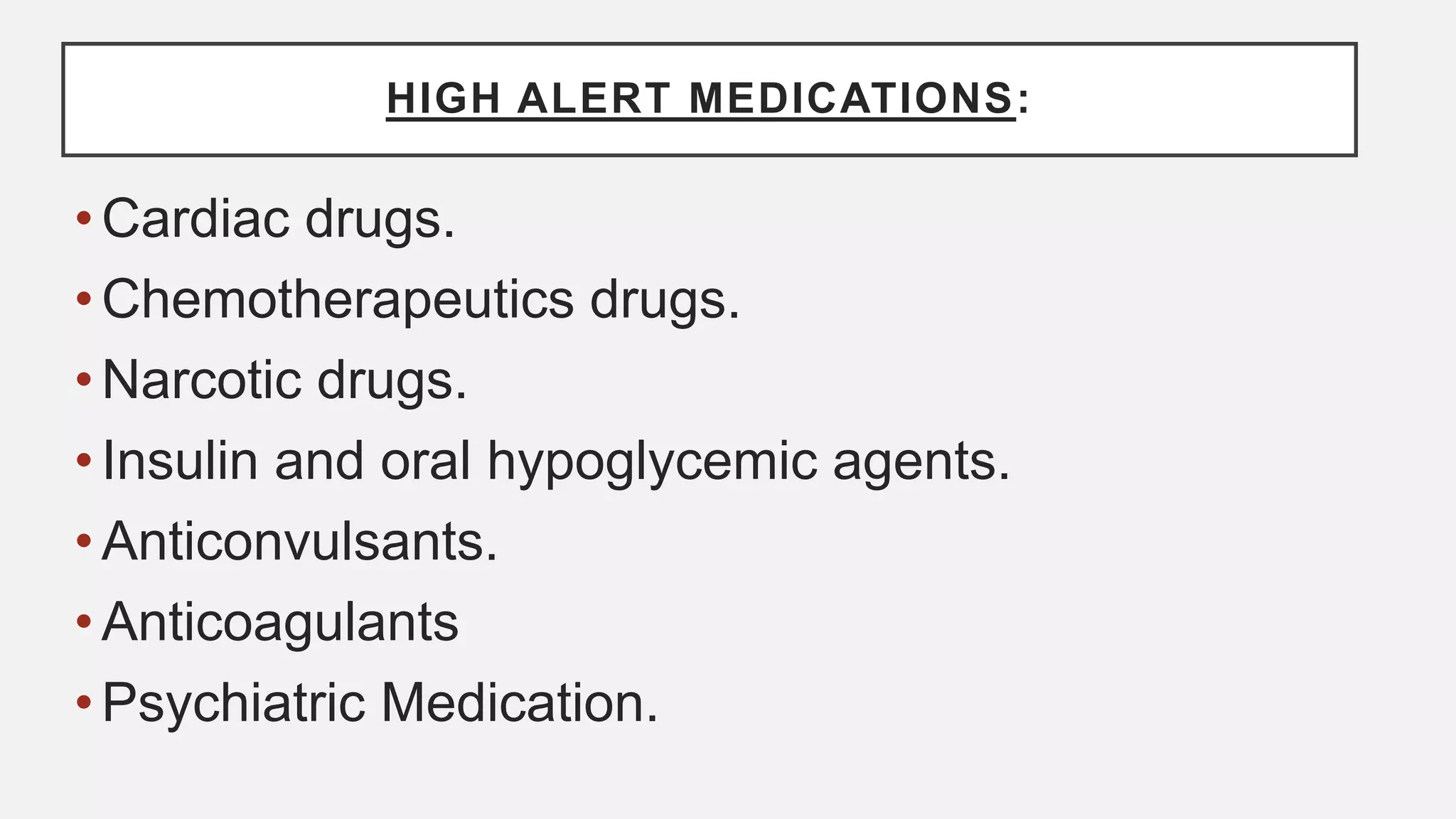
•Too much crowd and less staff can also lead to
omission error.
HIGH ALERT MEDICATIONS:
•Cardiac drugs.
•Chemotherapeutics drugs.
•Narcotic drugs.
•Insulin and oral hypoglycemic agents.
•Anticonvulsants.
•Anticoagulants
•Psychiatric Medication.
INDENT ERROR:
• Error that occurs during the process of indenting. Which
includes wrong dose, wrong drug, wrong route and
frequency.
• Error occurring during the process of making an identical
copy of prescription in the medical record is know as
Transcription Error.
• Contributing factors include incomplete or illegible
prescriber order or incomplete/illegible handwriting, use of
abbreviations and lack of familiarity with drug names.
TRANSCRIPTION ERROR:
ADMINISTRATION ERROR:
• A drug administration error may be defined as a
discrepancy between the drug therapy received by
the patient and the drug therapy intended by the
prescriber.
• Incorrect administration technique and administration
of incorrect or expired preparations.
• It involves wrong patient, wrong route, wrong
administration, wrong drug, wrong time, wrong
method, wrong dose.
Cause:
•Lack of perceived risk.
•Lack of knowledge of preparation or administration
procedures.
•Lack of available technology.
Contributing factors:
• Failure to check patient’s identity prior to administration.
• Wrong calculation to determine the correct dose and
environmental factors such as noise interruptions, poor
lighting.
PREVENTION AND REDUCTION OF
MEDICATION ERRORS:
• No drug Should be administered without a consultants
order.
• Always check patient’s identity.
• Always check the label to identify a drug. Don’t rely on the
drugs color, shape, or location in the medication case.
• Ensure dosage calculations are cross checked
independently with health care professional before drug is
administered.
• Ensuring medication given at correct time.
• Minimizing interruptions during drug rounds.
• If any doubts about the drug you are giving, contact the
doctor or the consultant for the confirmation.
• Check expiration dates of the drugs.
• Don’t try to interpret illegible handwriting and refer with the
consultant.
• Use appropriate documentation on the MAR(Medication
Administration Record) helped to prevent errors.
• Educating health care providers and patients by providing
simple tools to assist primary care providers in safe
medication prescribing and use process.
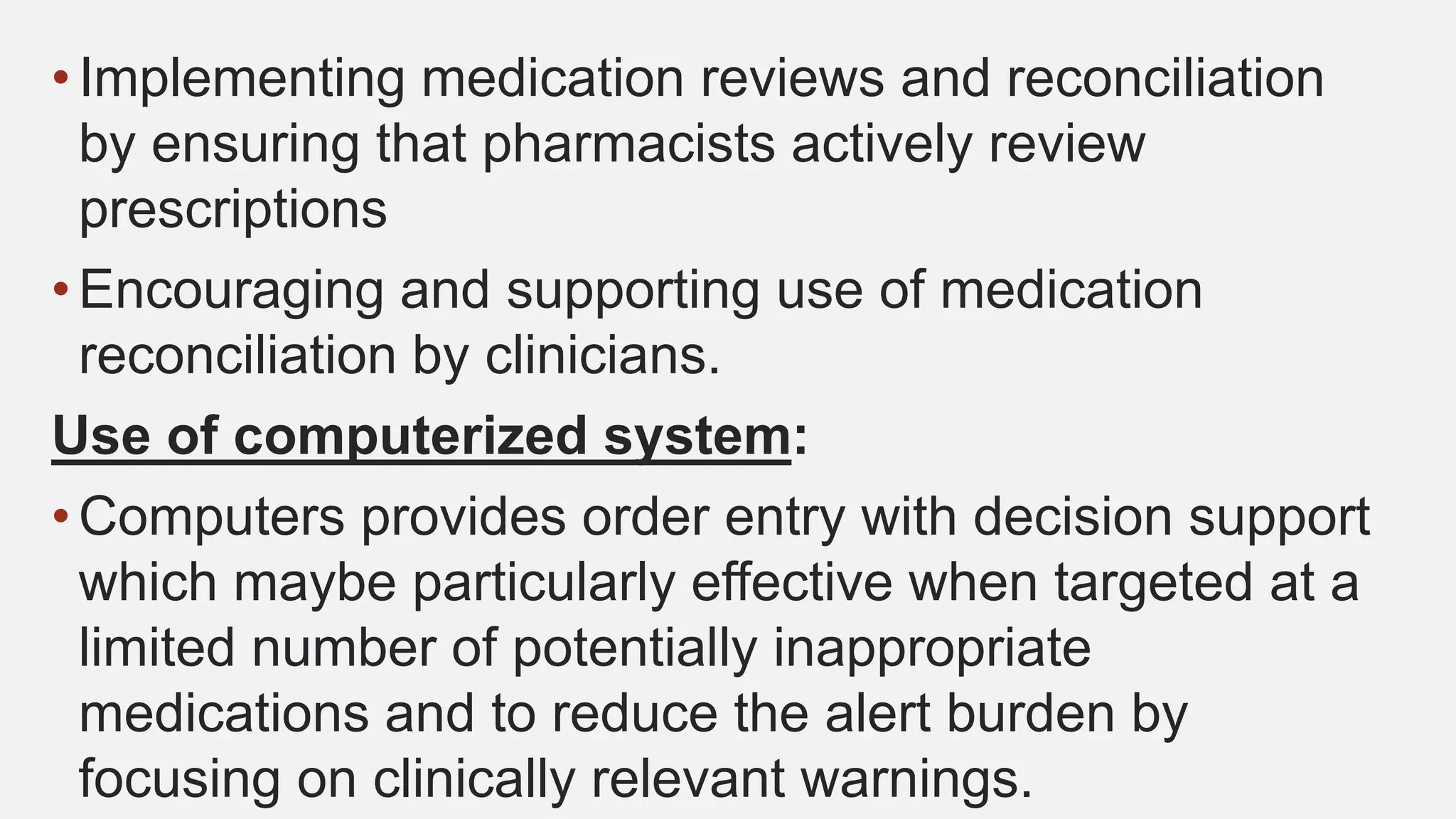
• Implementing medication reviews and reconciliation
by ensuring that pharmacists actively review
prescriptions
• Encouraging and supporting use of medication
reconciliation by clinicians.
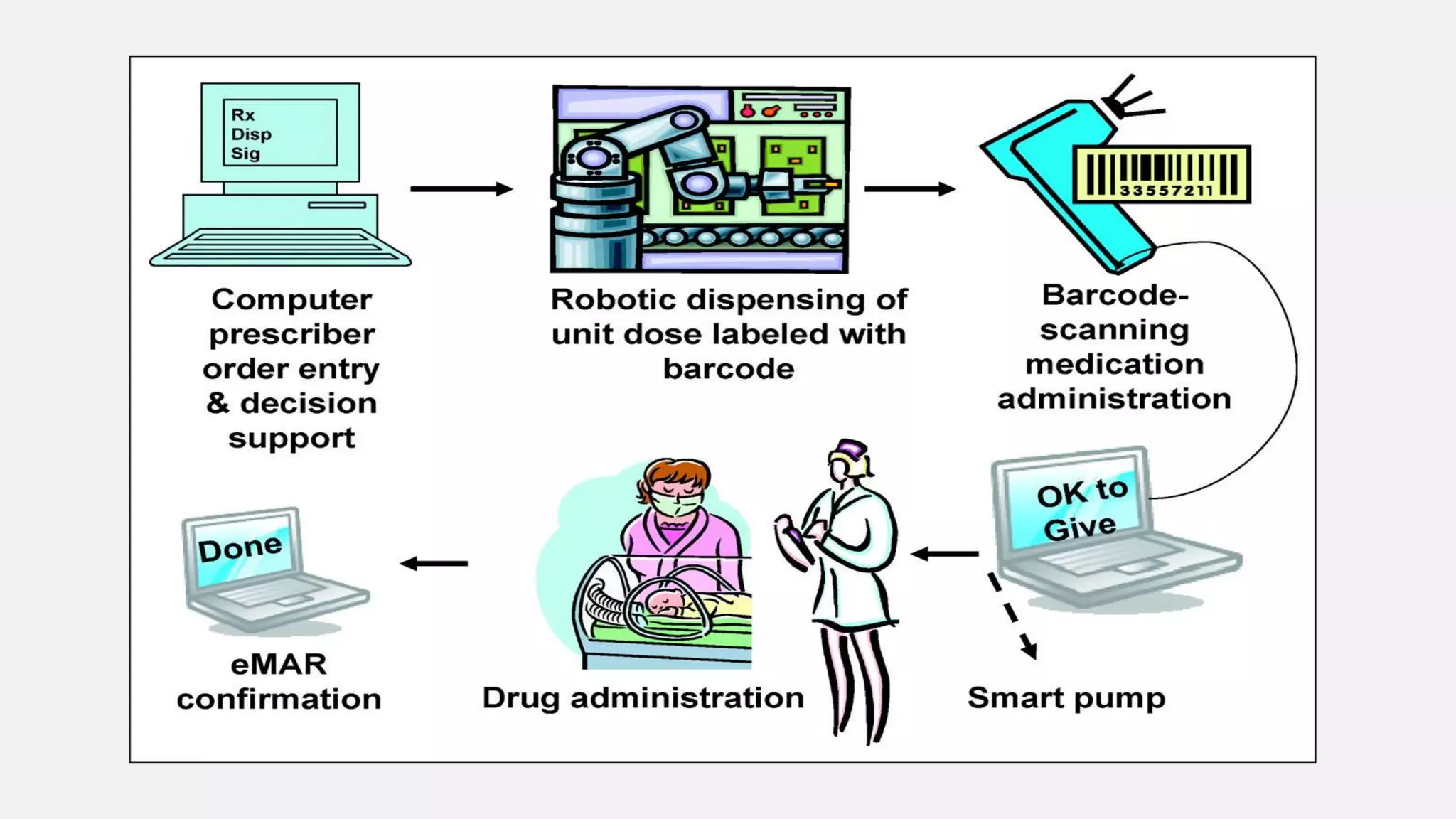
Use of computerized system:
• Computers provides order entry with decision support
which maybe particularly effective when targeted at a
limited number of potentially inappropriate
medications and to reduce the alert burden by
focusing on clinically relevant warnings.
THANK YOU!!!

Medical errors by suhail syed

  • 1.
    MEDICAL ERRORS Presented by: SUHAILSYED PHARM - D SULTAN UL ULOOM COLLEGE OF PHARMACY, HYD Guided by: Dr. S. P. SRINIVAS NAYAK, ASSISTANT PROFESSOR, SUCP, HYD.
  • 2.
    DEFINITION :- • Amedical error is a preventable adverse effect of care, whether or not it is evident or harmful to the patient. • May occur at any time, from the prescription to consumption of the medicines by the patient. • Problems and sources of medication errors are multidisciplinary and multifactorial. • Errors occur from:- - Lack of knowledge. - Unclear or erroneous labeling of drugs. - Misidentification of patient. - Mental lapses (or)
  • 3.
    - Verification errors. •Medical errors can involve medicines, surgery, diagnosis, equipment, or lab reports. Epidemiology :- • Medical errors can also be lethal as recent studies of medical errors have estimated errors may account for as many as 251,000 deaths annually in the United States (U.S). • Making it the third leading cause of death in United States. • Indian study of intensive care unit reported 68.5% of all errors were medication errors.
  • 4.
    TYPES OF MEDICATIONERRORS : •Prescribing Error. •Dispensing Error. •Documentation Error. •Indent Error. •Transcription Error. •Administration Error.
  • 5.
    PRESCRIBING ERROR : •A prescribing error occurs when, as a result of a prescribing decision or prescription writing process, there is an unintentional significant reduction in the probability of treatment being timely and effective or increase in the risk of harm when compared with generally accepted practice. It Includes: • Incorrect Prescription. • Illegible Handwriting. • Drug allergy not identified. • Irrational combinations.
  • 6.
    •Out of listabbreviations. Example: Digoxin 0.5mg •It is a discrepancy between a prescription and the medicine that the pharmacy delivers to the patient or distributes to the ward on the basis of this prescription, including the dispensing of a medicine with inferior pharmaceutical or informational quality. DISPENSING ERROR:
  • 7.
    Applications:- • Wrong quantity(calculation error). • Wrong concentration (extemporaneous calculation error). • Compliance aid error (labels don’t match drugs, drugs dispensed at wrong times, drugs omitted.) • Right label/wrong drug or versa. • Right drug; wrong strength. • Drugs with similar generic names (procylidine/prochlorperazine, chlorpromazine/chlorpropamide) • Drugs with similar packaging(manufacturer branding)
  • 8.
    Example of soundalike and look alike drugs: • Look alike drug example: Gabapentin tablets 600mg/ Gemfibrozil tablets, USP 600mg. • Sound alike drug example: Hydralazine Hydrochloride tablets, USP 50mg / Hydroxyzine hydrochloride tablets, USP 10 mg.
  • 9.
    Errors of omission: •Whensome transactions are completely omitted from the books of accounts or entered but not posted, they are treated as errors of omission. This includes: •Failure to counsel the patient. •Failure to screen for interactions and contraindications.
  • 10.
    ERRORS OF COMMISSION: •Thisincludes miscalculation of dose, dispensing of incorrect medication, dosage strength, or dosage form. Common causes of Dispensing errors: •High workload, distraction, work area. •Use of outdated or incorrect references. •Look Alike and Sound Alike drugs.
  • 11.
    •Too much crowdand less staff can also lead to omission error.
  • 12.
    HIGH ALERT MEDICATIONS: •Cardiacdrugs. •Chemotherapeutics drugs. •Narcotic drugs. •Insulin and oral hypoglycemic agents. •Anticonvulsants. •Anticoagulants •Psychiatric Medication.
  • 13.
    INDENT ERROR: • Errorthat occurs during the process of indenting. Which includes wrong dose, wrong drug, wrong route and frequency. • Error occurring during the process of making an identical copy of prescription in the medical record is know as Transcription Error. • Contributing factors include incomplete or illegible prescriber order or incomplete/illegible handwriting, use of abbreviations and lack of familiarity with drug names. TRANSCRIPTION ERROR:
  • 14.
    ADMINISTRATION ERROR: • Adrug administration error may be defined as a discrepancy between the drug therapy received by the patient and the drug therapy intended by the prescriber. • Incorrect administration technique and administration of incorrect or expired preparations. • It involves wrong patient, wrong route, wrong administration, wrong drug, wrong time, wrong method, wrong dose.
  • 15.
    Cause: •Lack of perceivedrisk. •Lack of knowledge of preparation or administration procedures. •Lack of available technology. Contributing factors: • Failure to check patient’s identity prior to administration. • Wrong calculation to determine the correct dose and environmental factors such as noise interruptions, poor lighting.
  • 16.
    PREVENTION AND REDUCTIONOF MEDICATION ERRORS: • No drug Should be administered without a consultants order. • Always check patient’s identity. • Always check the label to identify a drug. Don’t rely on the drugs color, shape, or location in the medication case. • Ensure dosage calculations are cross checked independently with health care professional before drug is administered. • Ensuring medication given at correct time.
  • 17.
    • Minimizing interruptionsduring drug rounds. • If any doubts about the drug you are giving, contact the doctor or the consultant for the confirmation. • Check expiration dates of the drugs. • Don’t try to interpret illegible handwriting and refer with the consultant. • Use appropriate documentation on the MAR(Medication Administration Record) helped to prevent errors. • Educating health care providers and patients by providing simple tools to assist primary care providers in safe medication prescribing and use process.
  • 18.
    • Implementing medicationreviews and reconciliation by ensuring that pharmacists actively review prescriptions • Encouraging and supporting use of medication reconciliation by clinicians. Use of computerized system: • Computers provides order entry with decision support which maybe particularly effective when targeted at a limited number of potentially inappropriate medications and to reduce the alert burden by focusing on clinically relevant warnings.
  • 20.