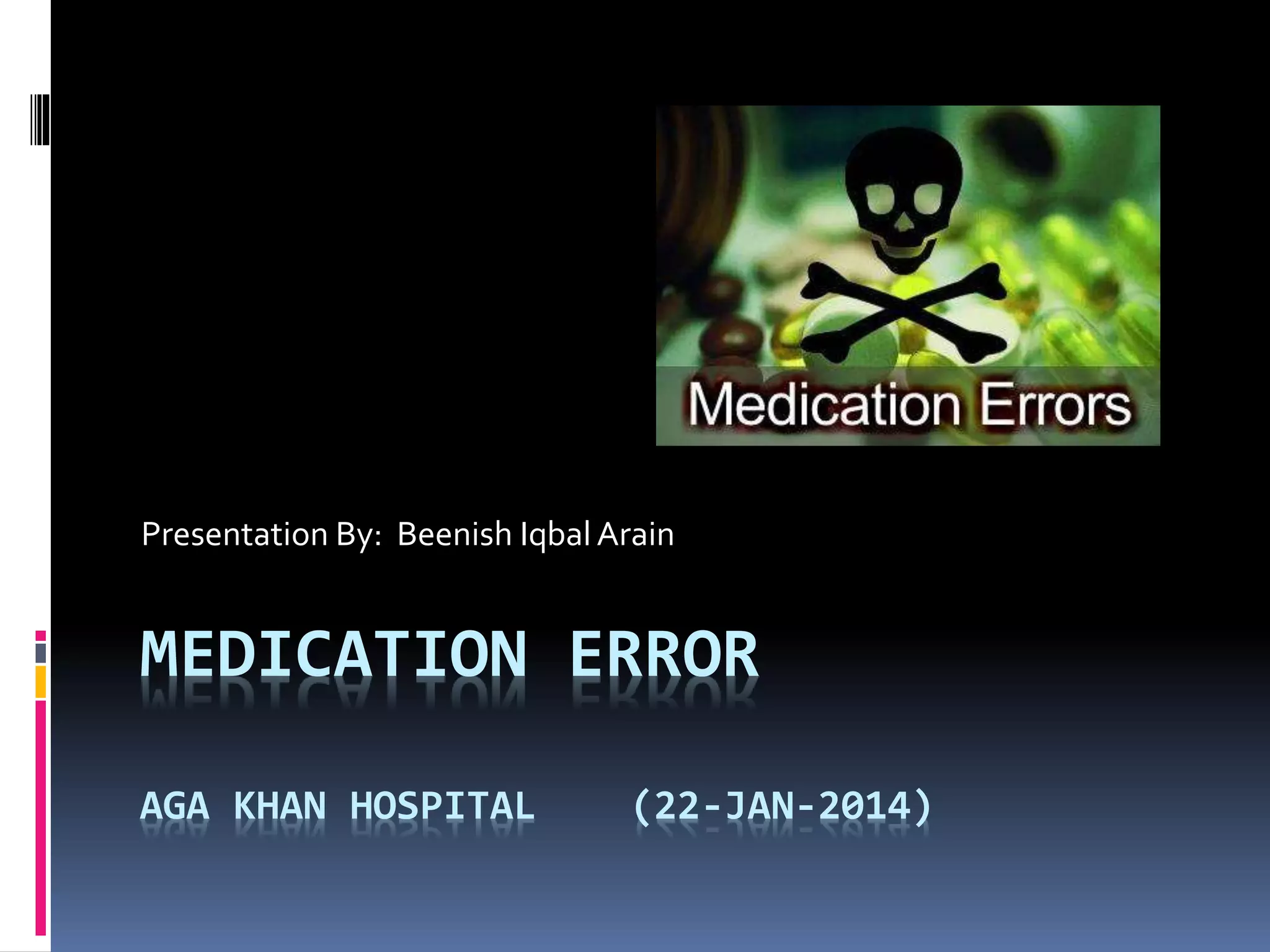
MEDICATION ERROR
AGA KHAN HOSPITAL (22-JAN-2014)
Presentation By: Beenish Iqbal Arain
Objectives
 Definitions
 Causes
 Stages of Medication error
 How to decrease Medication error
Dr:Beenish Iqbal Arain
Medication Error Definition
 Medication errors, broadly defined as any error in the
prescribing, dispensing, or administration of a drug,
 Medical errors are often described as human errors in
healthcare
> Such events may be related to:
1) professional practice
2) health care products
3) Procedures and systems
4) product labeling, packaging, and nomenclature
5) dispensing
6) distribution
7) administration
8) education
9) monitoring
Dr:Beenish Iqbal Arain
Some reasons errors occur
 verbal orders
 poor communications within healthcare team
 poor handwriting
 improper drug selection
 missing medication
 drug interactions
 availability of floor stock (no second check)
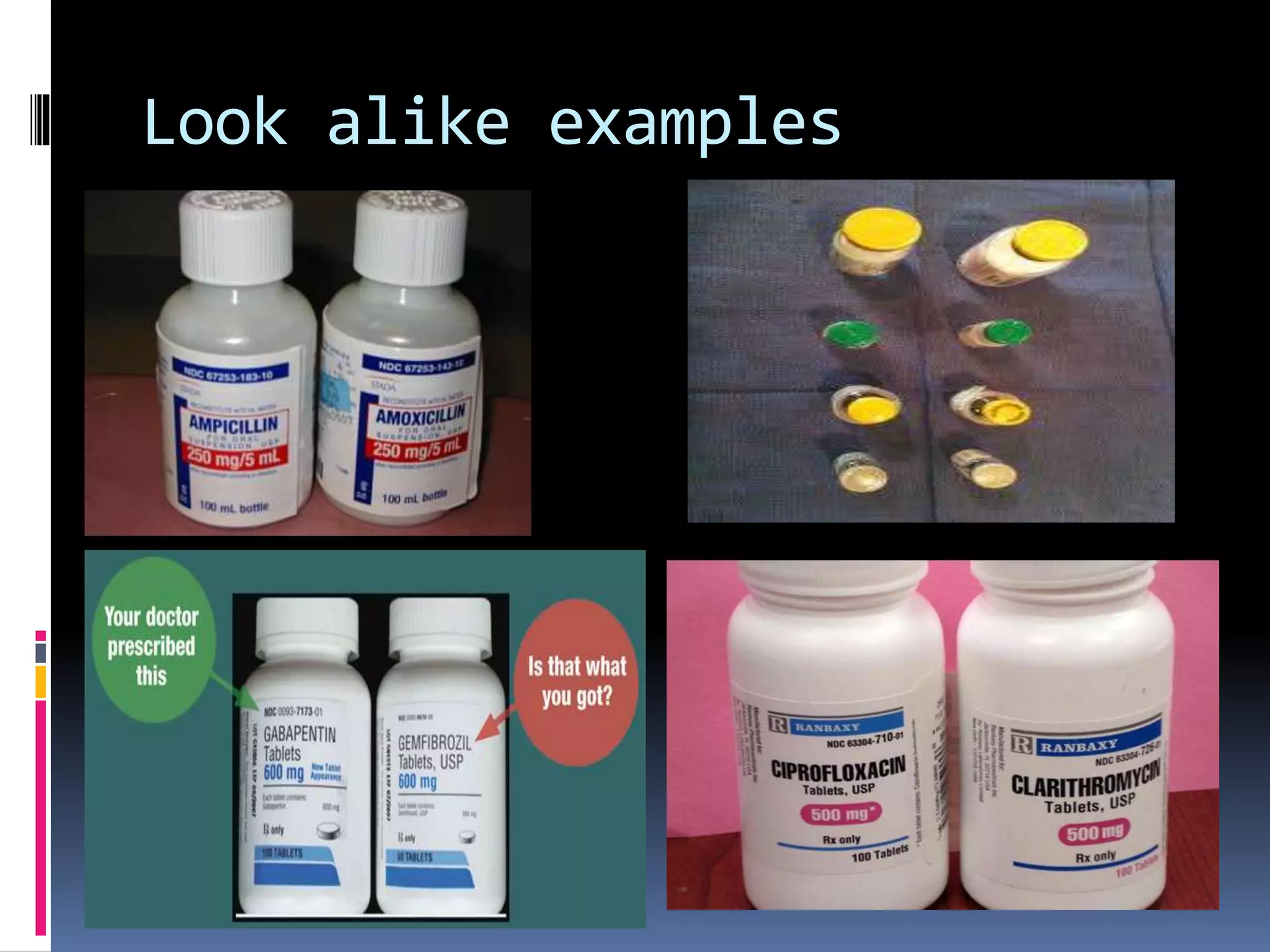
 look alike / sound alike drugs
 hectic work environment
 lack of computer decision support
Dr:Beenish Iqbal Arain
Stages of Medication Error
 Phase 1- Ordering/Prescribing
 Phase 2- Dispensing
 Phase 3- Administration
 Phase 4- Monitoring
DR:Beenish Iqbal Arain
Ordering/prescribing
 inadequate knowledge about drug indications and contraindications
 not considering individual patient factors such as allergies,
pregnancy, co-morbidities, other medications
 wrong patient, wrong dose, wrong time, wrong drug, wrong route
 inadequate communication (written, verbal)
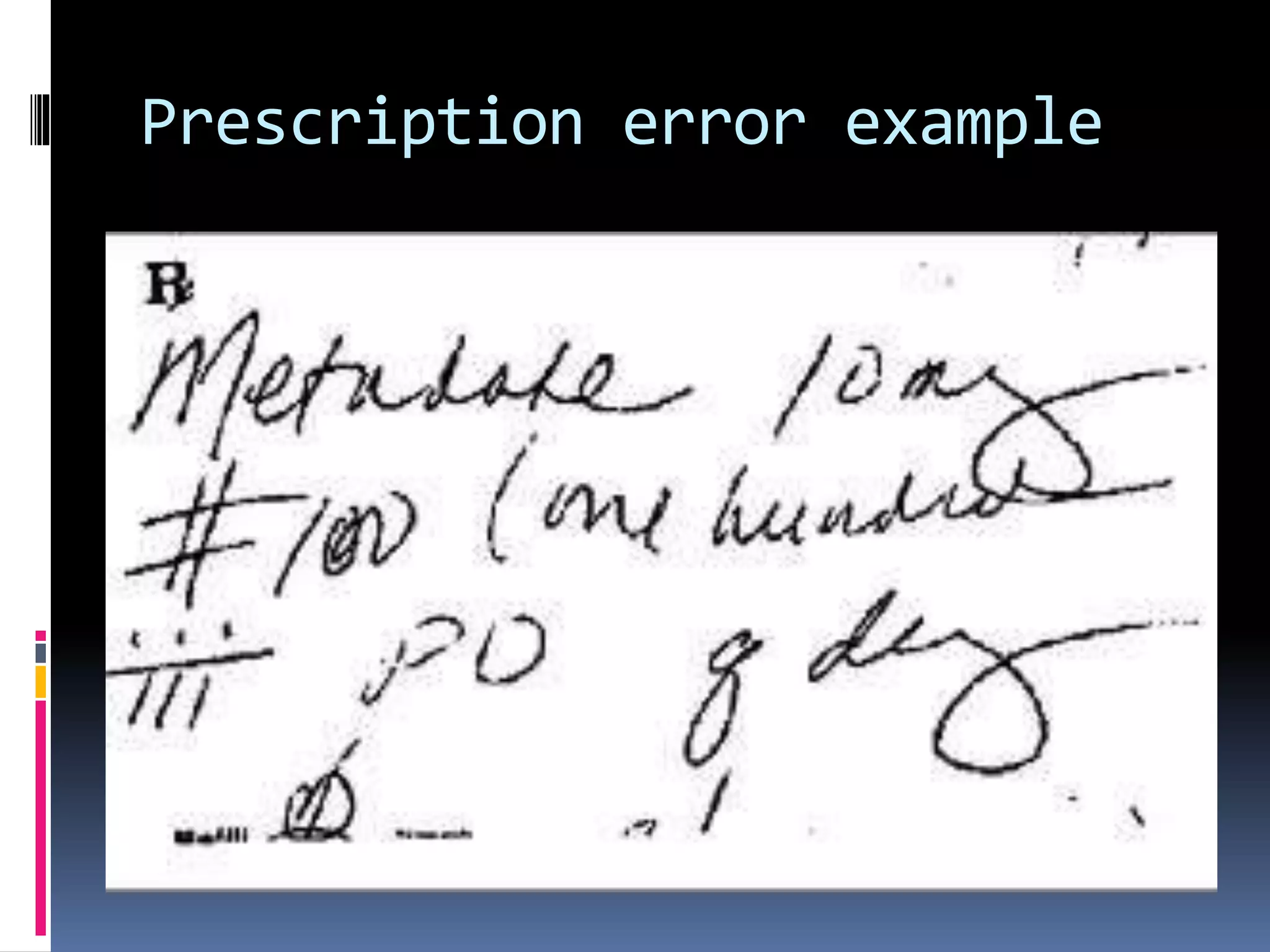
 documentation - illegible, incomplete, ambiguous
 mathematical error when calculating dosage
 incorrect data entry when using computerized prescribing e.g.
duplication, omission, wrong number
 DR:Beenish iqbal Arain
Prescription error example
Dispensing
 inexperience
 rushing
 doing two things at once
 interruptions
 fatigue, boredom, being on “automatic pilot”
leading to failure to check and double-check
 lack of checking and double checking habits
 poor teamwork and/or communication between
colleagues
 Too much phone calls
Dr:Beenish Iqbal Arain
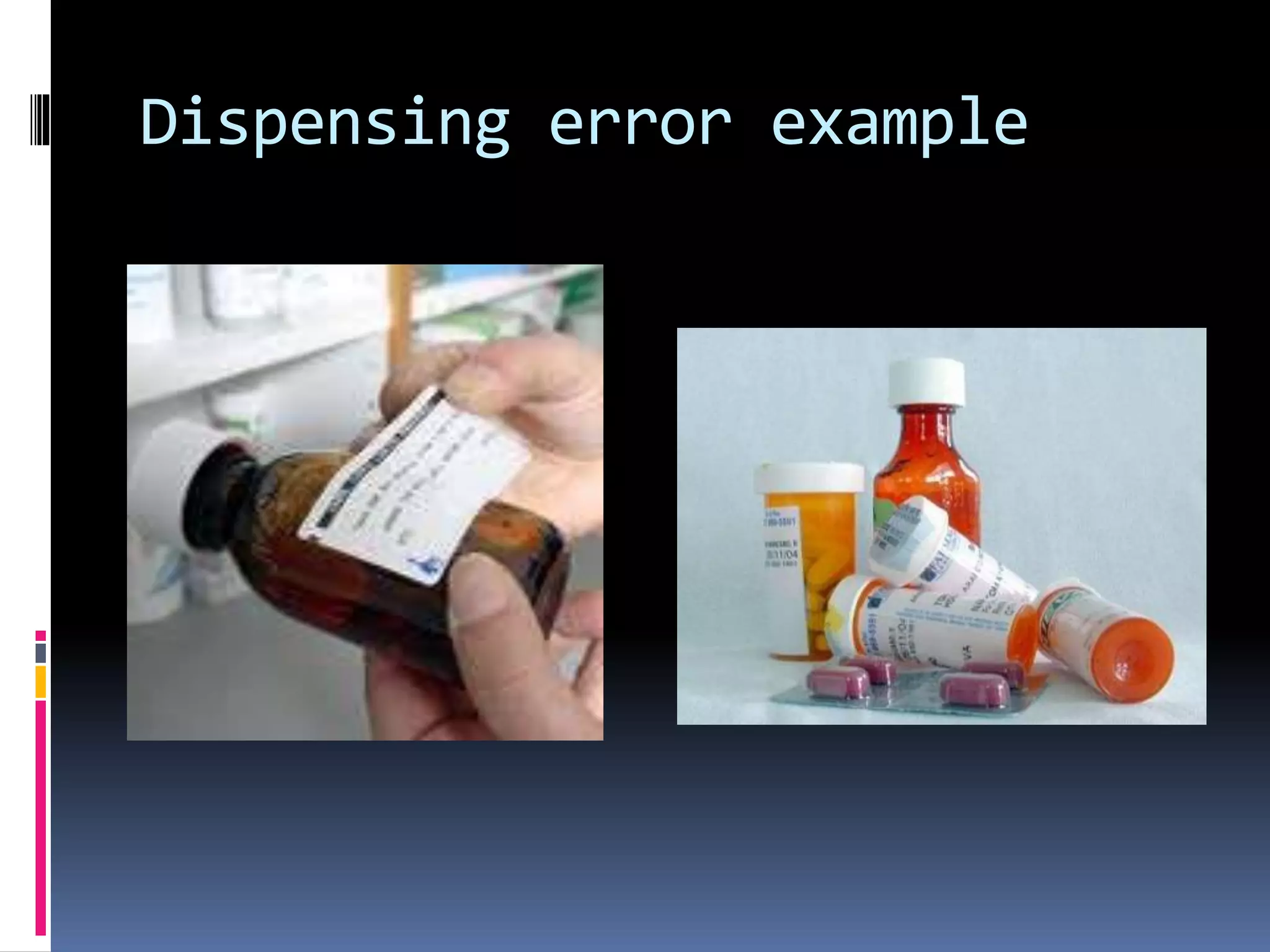
Dispensing error example
Look alike/ sound alike
Sound alike Look alike
 Zantac/Zyrtec
 Rotavir/Ritnovir
 Folic acid/ Folinic acid
 ephederine/ epinephrine
 Doxorubicin/ Daunorubicin
 Celebrex/ cerebryx
DR:Beenish iqbal Arain
 Cyclogest/paracup
Look alike examples
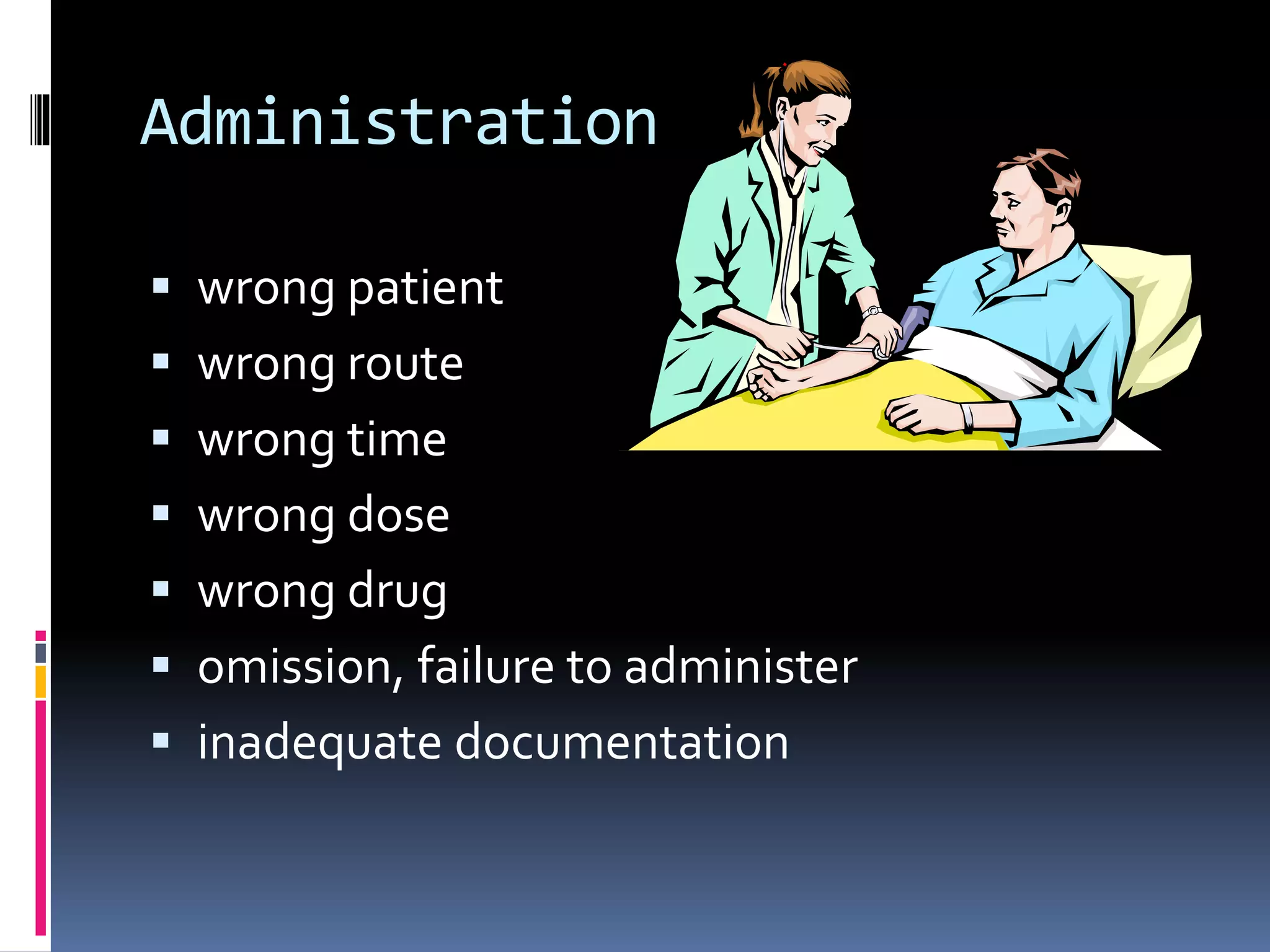
Administration
 wrong patient
 wrong route
 wrong time
 wrong dose
 wrong drug
 omission, failure to administer
 inadequate documentation
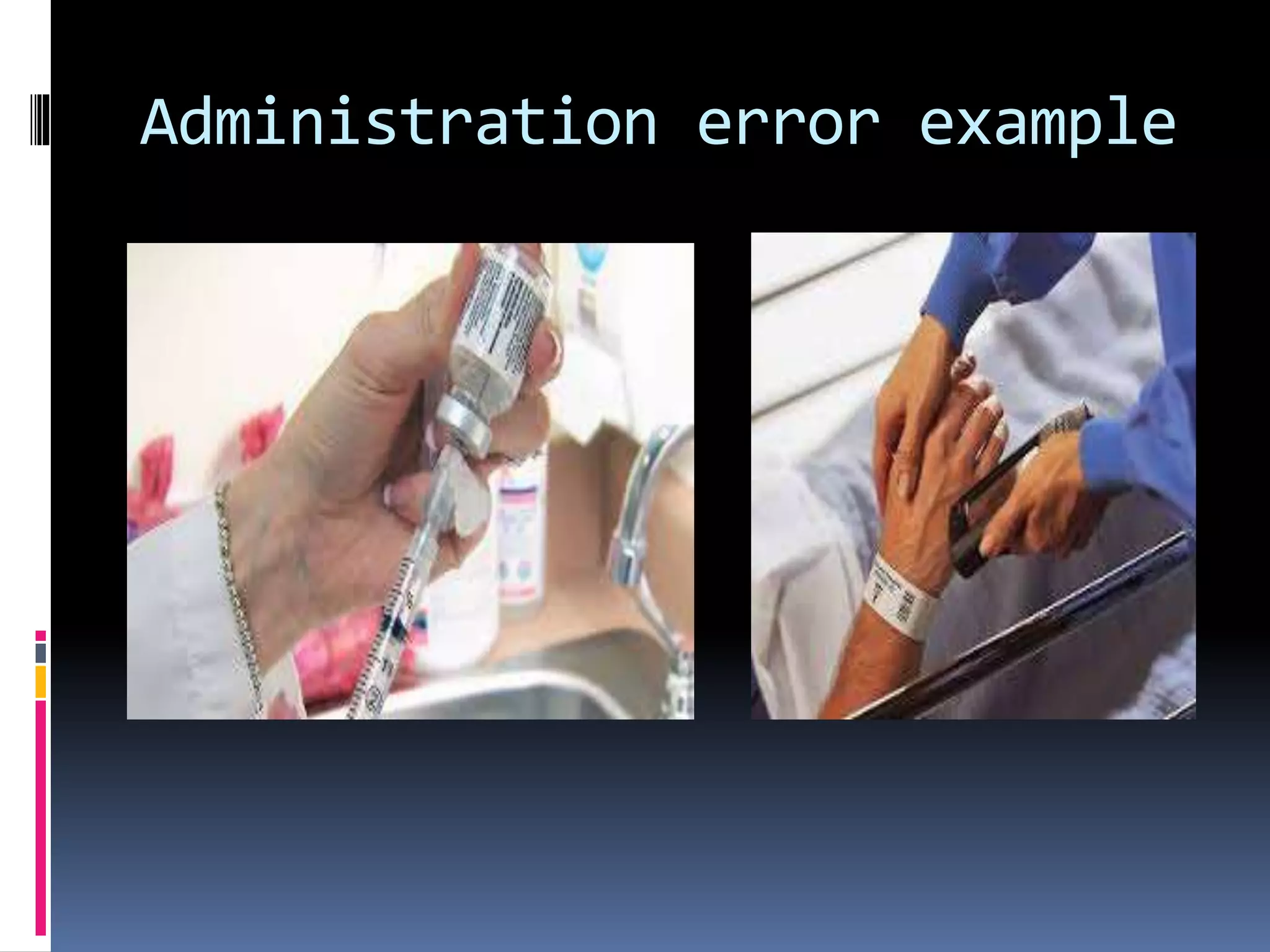
Administration error example
Monitoring
 lack of monitoring for side-effects
 drug not ceased if not working or course
complete
 drug ceased before course completed
 drug levels not measured, or not followed up
on
 communication failures
Dr:Beenish Iqbal Arain
What Can You Do To Decrease Medication
Errors?
 Check and double check, if in doubt check it out, again!
 Follow the 5 R’s: right patient, right drug, right dose, right time, right
route
 Never assume, “pharmacy put the medication in the drawer so this must
be right”, pharmacy makes errors too.
 Never assume, “the resident ordered this large dose so it must be right”,
Residents make errors too.
 Know the correct mg/kg dose of medications you are administering.
 Know why you are giving the medication, the expected action, and any
potential side effects.
DR:Beenish Iqbal Arain
Medication error presentation

Medication error presentation

  • 1.
    MEDICATION ERROR AGA KHANHOSPITAL (22-JAN-2014) Presentation By: Beenish Iqbal Arain
  • 2.
    Objectives  Definitions  Causes Stages of Medication error  How to decrease Medication error Dr:Beenish Iqbal Arain
  • 3.
    Medication Error Definition Medication errors, broadly defined as any error in the prescribing, dispensing, or administration of a drug,  Medical errors are often described as human errors in healthcare > Such events may be related to: 1) professional practice 2) health care products 3) Procedures and systems 4) product labeling, packaging, and nomenclature 5) dispensing 6) distribution 7) administration 8) education 9) monitoring Dr:Beenish Iqbal Arain
  • 4.
    Some reasons errorsoccur  verbal orders  poor communications within healthcare team  poor handwriting  improper drug selection  missing medication  drug interactions  availability of floor stock (no second check)  look alike / sound alike drugs  hectic work environment  lack of computer decision support Dr:Beenish Iqbal Arain
  • 5.
    Stages of MedicationError  Phase 1- Ordering/Prescribing  Phase 2- Dispensing  Phase 3- Administration  Phase 4- Monitoring DR:Beenish Iqbal Arain
  • 6.
    Ordering/prescribing  inadequate knowledgeabout drug indications and contraindications  not considering individual patient factors such as allergies, pregnancy, co-morbidities, other medications  wrong patient, wrong dose, wrong time, wrong drug, wrong route  inadequate communication (written, verbal)  documentation - illegible, incomplete, ambiguous  mathematical error when calculating dosage  incorrect data entry when using computerized prescribing e.g. duplication, omission, wrong number  DR:Beenish iqbal Arain
  • 7.
  • 8.
    Dispensing  inexperience  rushing doing two things at once  interruptions  fatigue, boredom, being on “automatic pilot” leading to failure to check and double-check  lack of checking and double checking habits  poor teamwork and/or communication between colleagues  Too much phone calls Dr:Beenish Iqbal Arain
  • 9.
  • 10.
    Look alike/ soundalike Sound alike Look alike  Zantac/Zyrtec  Rotavir/Ritnovir  Folic acid/ Folinic acid  ephederine/ epinephrine  Doxorubicin/ Daunorubicin  Celebrex/ cerebryx DR:Beenish iqbal Arain  Cyclogest/paracup
  • 11.
  • 12.
    Administration  wrong patient wrong route  wrong time  wrong dose  wrong drug  omission, failure to administer  inadequate documentation
  • 13.
  • 14.
    Monitoring  lack ofmonitoring for side-effects  drug not ceased if not working or course complete  drug ceased before course completed  drug levels not measured, or not followed up on  communication failures Dr:Beenish Iqbal Arain
  • 15.
    What Can YouDo To Decrease Medication Errors?  Check and double check, if in doubt check it out, again!  Follow the 5 R’s: right patient, right drug, right dose, right time, right route  Never assume, “pharmacy put the medication in the drawer so this must be right”, pharmacy makes errors too.  Never assume, “the resident ordered this large dose so it must be right”, Residents make errors too.  Know the correct mg/kg dose of medications you are administering.  Know why you are giving the medication, the expected action, and any potential side effects. DR:Beenish Iqbal Arain