M.SUJA PRADEEPA
COLLEGE:KIT
 Late 19th and Early 20th centuries
 Measuring and recording bio potential
 Electro surgery (incisions by resistive heating)
 Heart stimulation (defibrillator and pacemaker)
 X-Ray (Rontgen 1895)
 Electronic Acquisition of radiographic data
 Radionuclide's (1948 : iodine , thyroid)
 Ultrasound
 MRI
 Principle and chemical application 1946,
 Applied in human 1980.
 Development of Electronics and computers made these
technologies feasible.
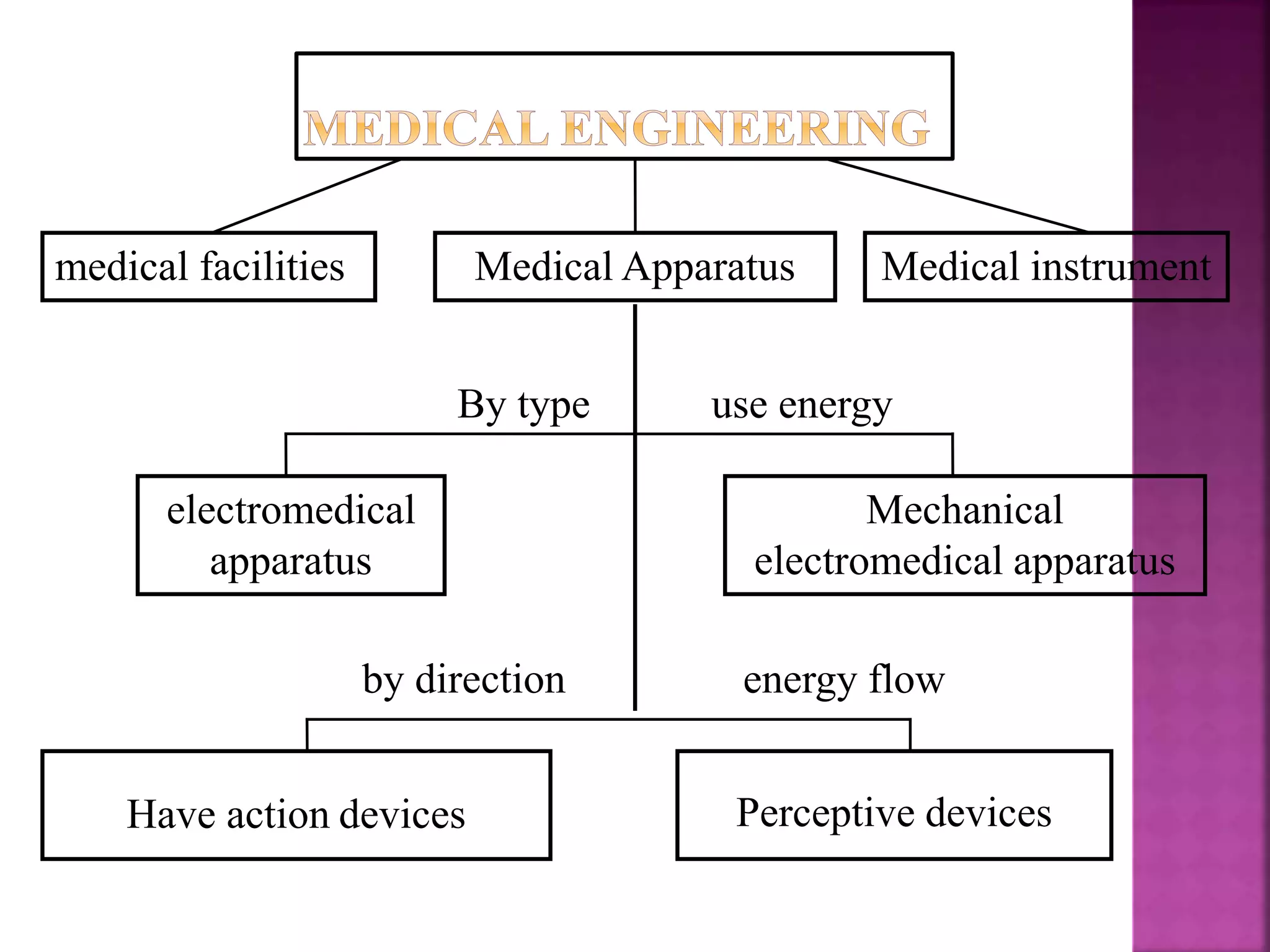
medical facilities Medical Apparatus Medical instrument
By type use energy
electromedical
apparatus
Mechanical
electromedical apparatus
by direction energy flow
Have action devices Perceptive devices
By type energy, perceptive
chemical energylight energy
heat energy electrical energy Mechanical energy
therapeutic diagnostical
electrical
energy
mechanical
energy
mechanical
hydraulic
light - optical
gas
ultra sound
low frequencyX-ray
by function
By type influence
high frequency
 sensor,
 converter,
 Output device
 Power sappy
2004/2005Dr. Mohamed El-Brawany
 Sensors are devices that convert a physical
parameter such as room temperature, blood
pressure or wind speed into a signal that can be
measured electrically. Other sensor outputs are
equally valid (e.g. visual output from a glass
thermometer), but we will confined our coverage
to electrical output sensors as they are more
compatible with electronic measuring devices.
Biomedical Sensor
Chemical Sensor
Automobile Sensor
Mechanical Sensor
Nano Sensor
Agricultural Sensor
Pressure Sensor
Position Sensor
 Biomedical Sensor is an analytical device which converts
a biological response into an electrical signal
 It consists of 3 parts:
a) the sensitive biological element .The sensitive elements
can be created by biological engineering.
b) the transducer or the detector element that transforms
the signal resulting from the interaction of the analyte
with the biological element into another signal (i.e.,
transducers) that can be more easily measured and
quantified.
c) associated electronics or signal processors that are primarily
responsible for the display of the results in a user-friendly
way. This sometimes accounts for the most expensive part of the
sensor device, however it is possible to generate a user friendly
display that includes transducer and sensitive element.
Biomedical Sensors
1. Calorimetric Biosensor
2. Temporary Inserted Biosensor
3. Implantable Biosensor
4. Optical Biosensor
5. Piezo-electric Biosensor
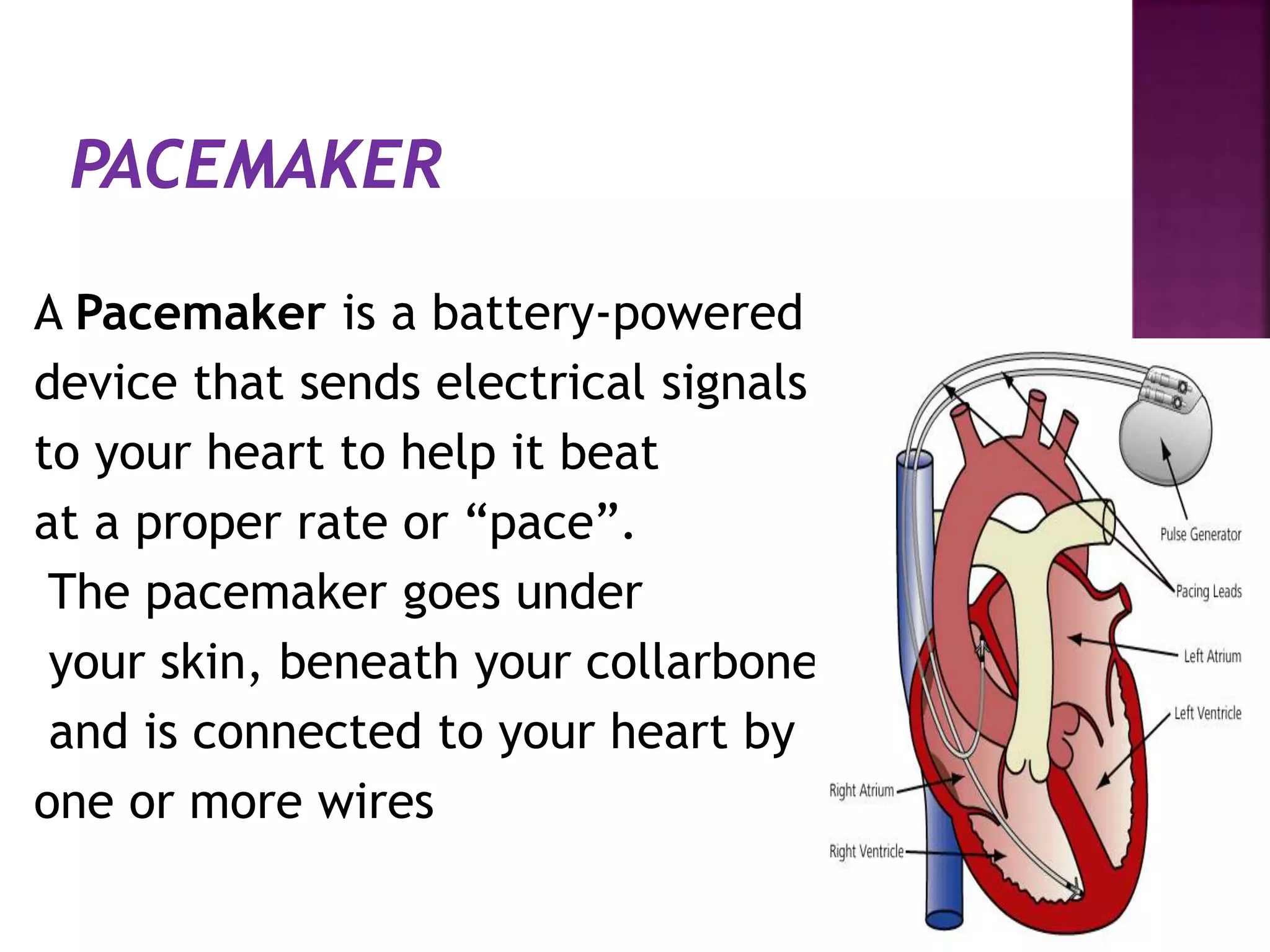
A Pacemaker is a battery-powered
device that sends electrical signals
to your heart to help it beat
at a proper rate or “pace”.
The pacemaker goes under
your skin, beneath your collarbone
and is connected to your heart by
one or more wires
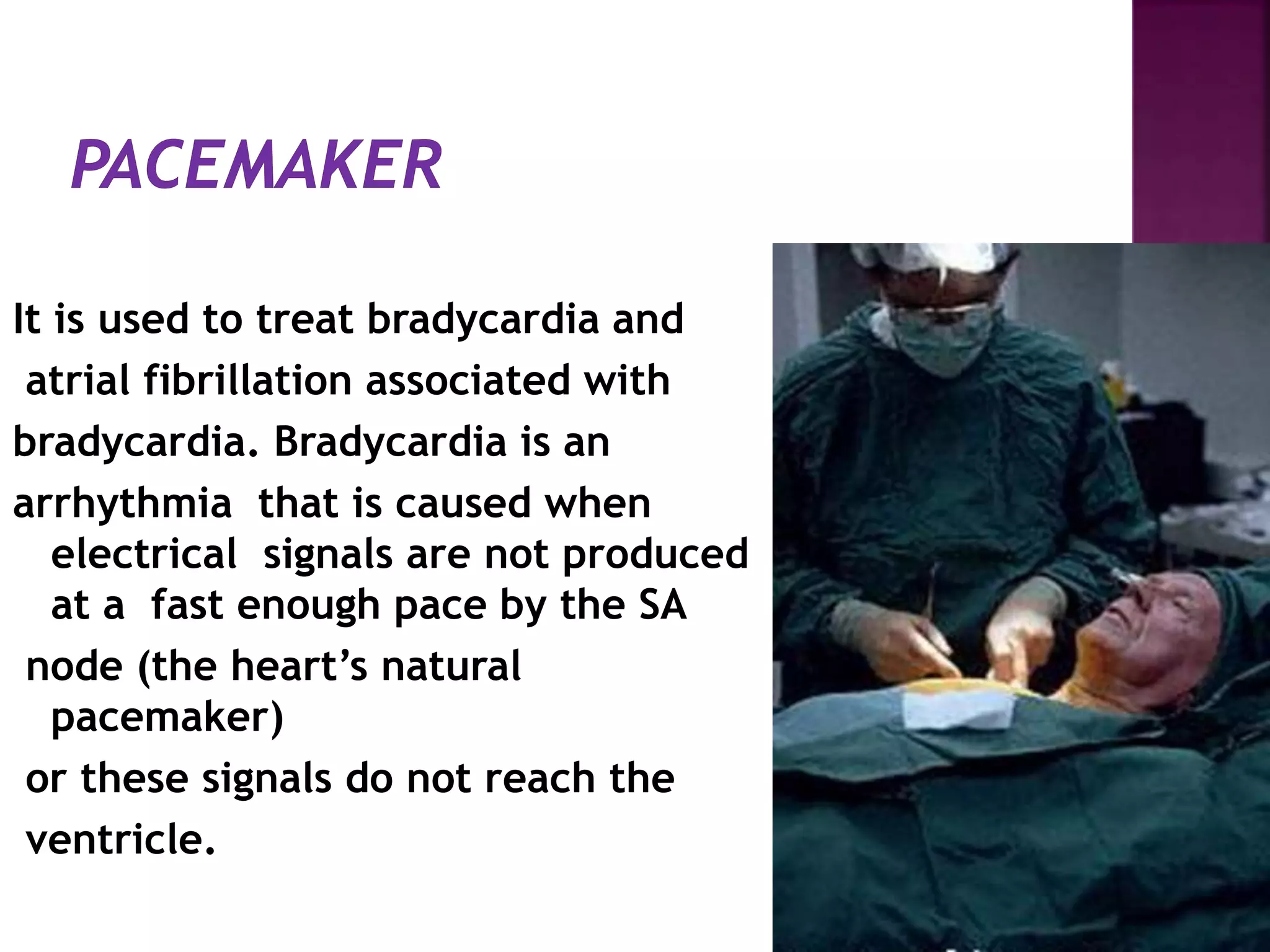
It is used to treat bradycardia and
atrial fibrillation associated with
bradycardia. Bradycardia is an
arrhythmia that is caused when
electrical signals are not produced
at a fast enough pace by the SA
node (the heart’s natural
pacemaker)
or these signals do not reach the
ventricle.
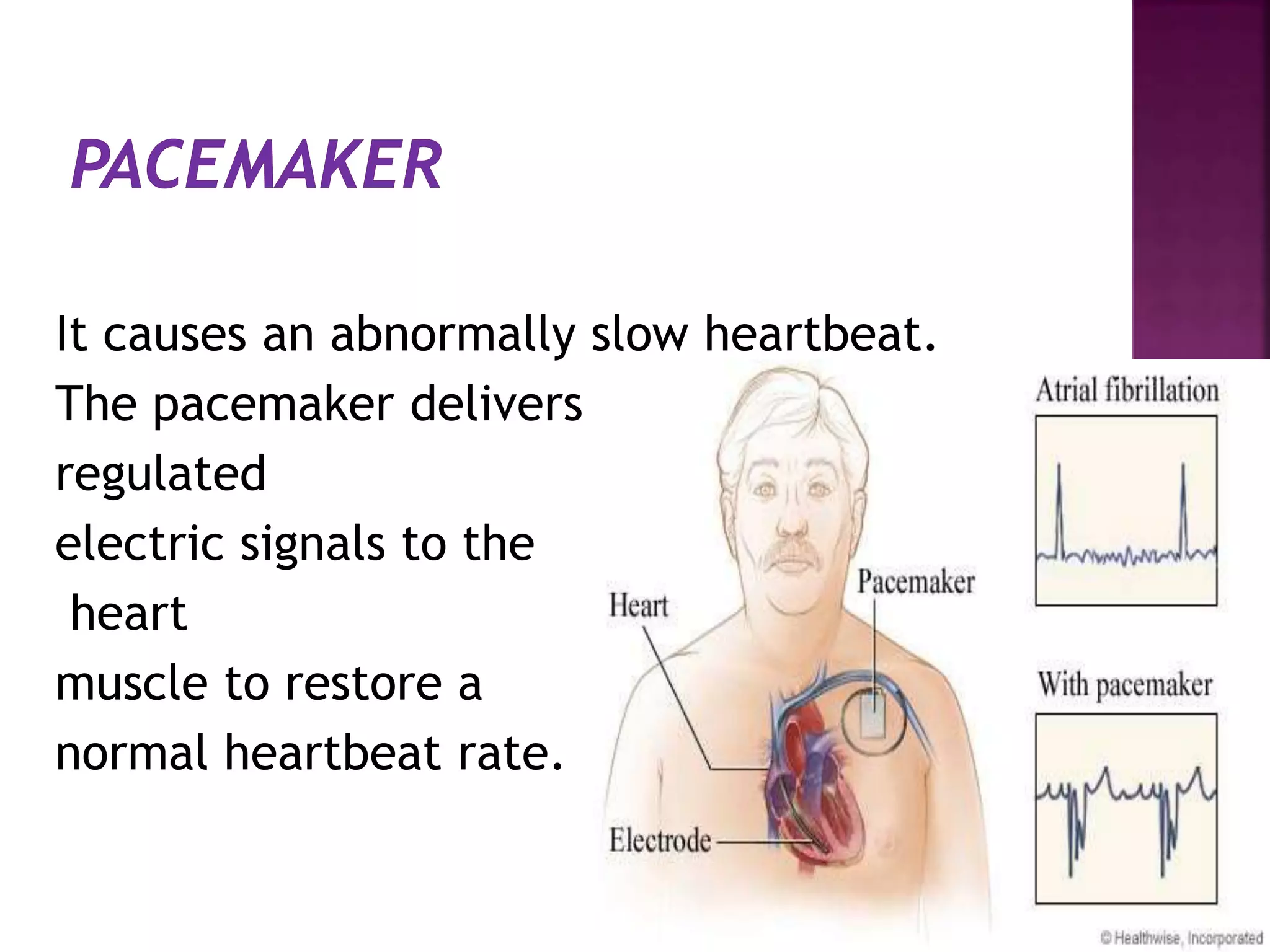
It causes an abnormally slow heartbeat.
The pacemaker delivers
regulated
electric signals to the
heart
muscle to restore a
normal heartbeat rate.
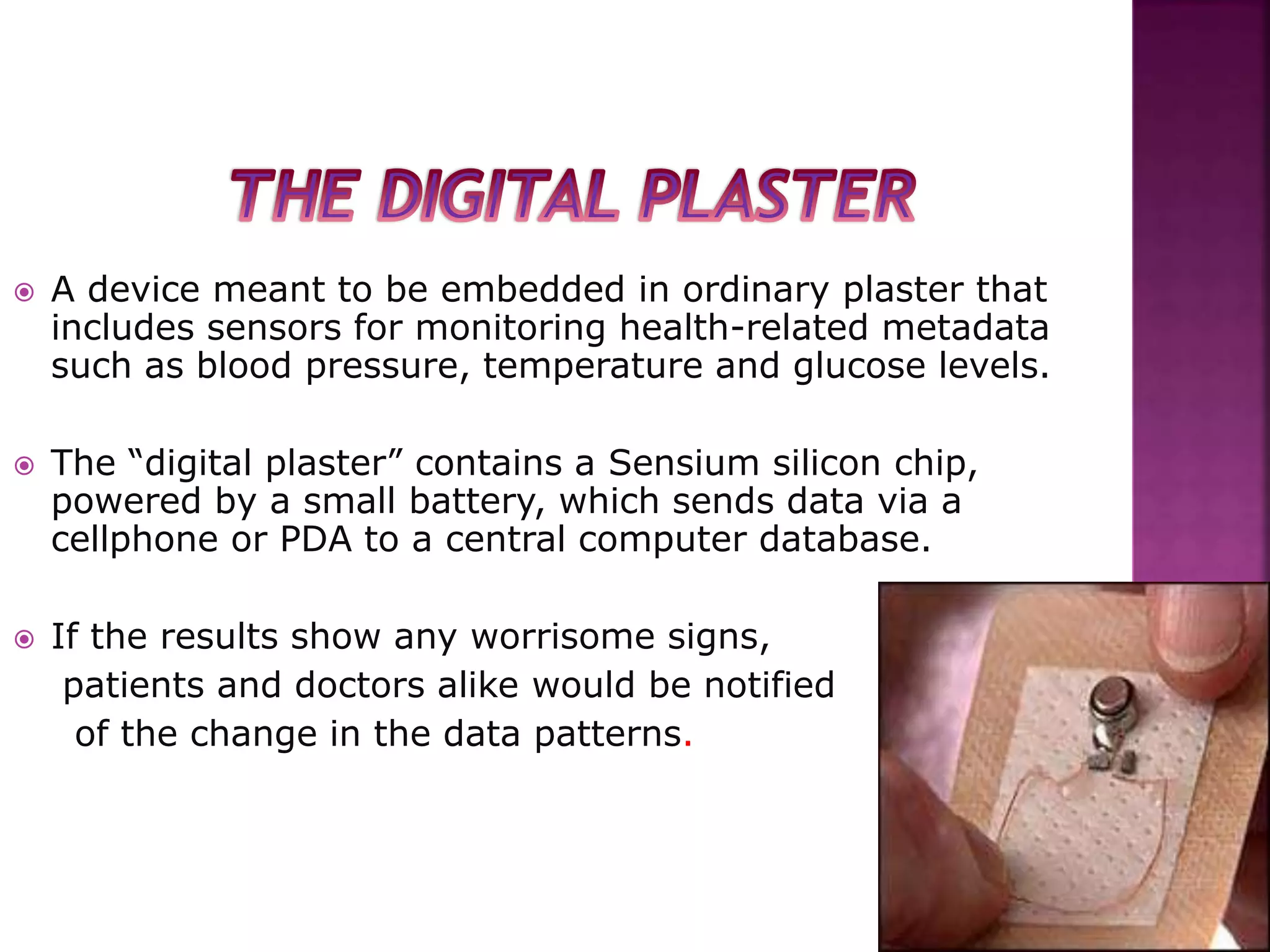
 A device meant to be embedded in ordinary plaster that
includes sensors for monitoring health-related metadata
such as blood pressure, temperature and glucose levels.
 The “digital plaster” contains a Sensium silicon chip,
powered by a small battery, which sends data via a
cellphone or PDA to a central computer database.
 If the results show any worrisome signs,
patients and doctors alike would be notified
of the change in the data patterns.
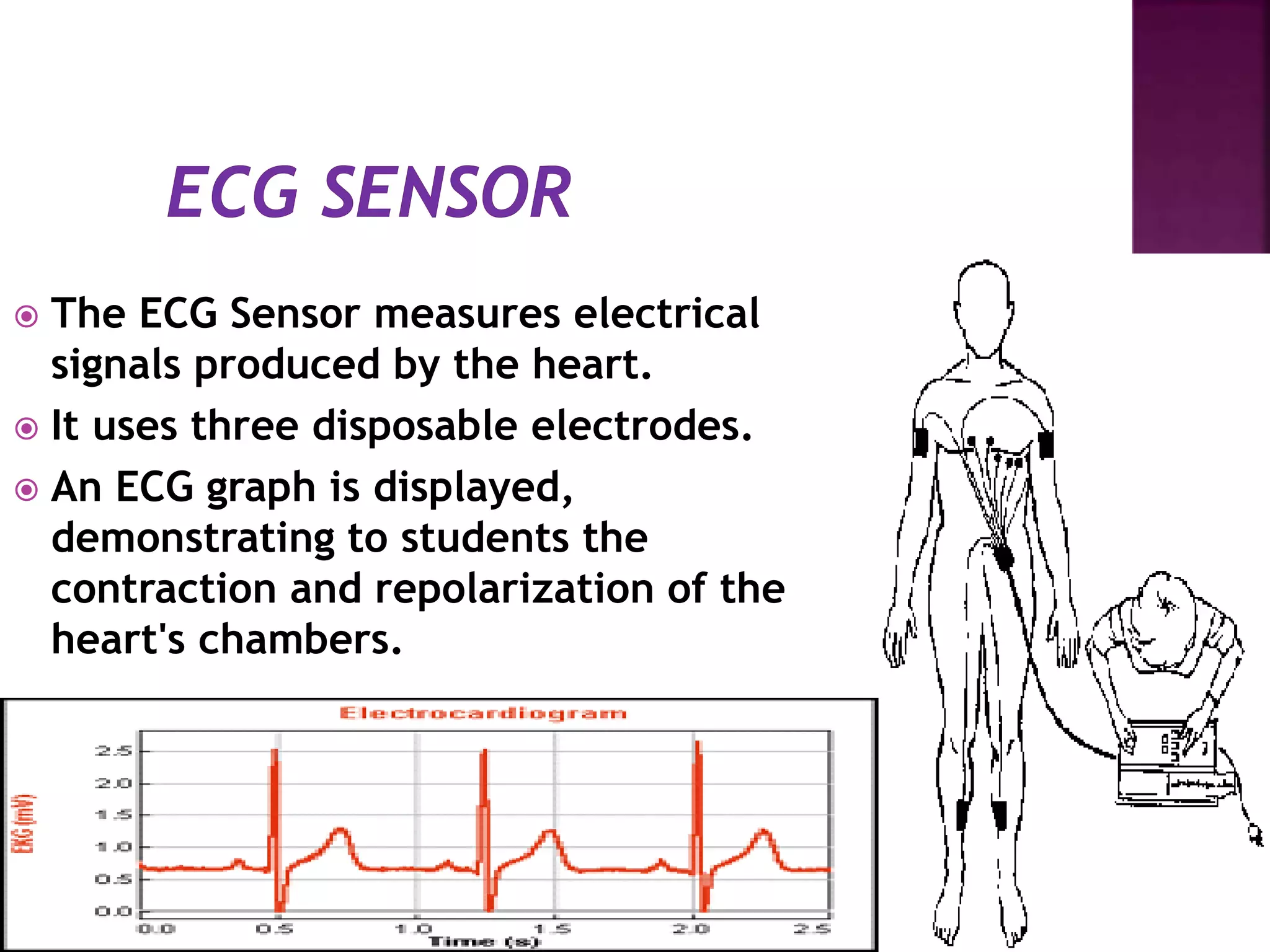
 The ECG Sensor measures electrical
signals produced by the heart.
 It uses three disposable electrodes.
 An ECG graph is displayed,
demonstrating to students the
contraction and repolarization of the
heart's chambers.
 How is an ECG Done
 Ten sensors are attached to your arms,
legs, and chest (around the heart area).
These sensors "listen" to your heartbeat
and make a wave pattern on graph paper.
 Electrical impulses associated with heart
contraction and relaxation are recorded.
 From the pattern on your ECG tracing,
your doctor can check on how your
heart is doing.
A blood glucose meter is an
electronic device for measuring
the blood glucose level. A
relatively small drop of blood is
placed on a disposable test strip
which interfaces with a digital
meter. Within several seconds,
the level of blood glucose will be
shown on the digital display.
Needing only a small drop of blood for
the meter means that the pain
associated with testing is reduced and
the compliance of diabetic people to
their testing regimens is improved.
Although the cost of using blood
glucose meters seems high, it is
believed to be a cost benefit relative
to the avoided medical costs of
the complications of diabetes.
 I/O relationships are not
deterministic
 Accessibility problem
 Interaction among the variables
 Effect of measuring device
 Patient safety
 Pain and discomfort
 Sensors are used in equipment for surgical
procedures,
intensive care units, hospital recuperative
care, and home care.
 Hence we concluded that sensors plays a
very important role in human’s life.
Medical electronics

Medical electronics

  • 1.
  • 2.
     Late 19thand Early 20th centuries  Measuring and recording bio potential  Electro surgery (incisions by resistive heating)  Heart stimulation (defibrillator and pacemaker)  X-Ray (Rontgen 1895)  Electronic Acquisition of radiographic data  Radionuclide's (1948 : iodine , thyroid)
  • 3.
     Ultrasound  MRI Principle and chemical application 1946,  Applied in human 1980.  Development of Electronics and computers made these technologies feasible.
  • 4.
    medical facilities MedicalApparatus Medical instrument By type use energy electromedical apparatus Mechanical electromedical apparatus by direction energy flow Have action devices Perceptive devices
  • 5.
    By type energy,perceptive chemical energylight energy heat energy electrical energy Mechanical energy
  • 6.
    therapeutic diagnostical electrical energy mechanical energy mechanical hydraulic light -optical gas ultra sound low frequencyX-ray by function By type influence high frequency
  • 7.
     sensor,  converter, Output device  Power sappy
  • 8.
  • 9.
     Sensors aredevices that convert a physical parameter such as room temperature, blood pressure or wind speed into a signal that can be measured electrically. Other sensor outputs are equally valid (e.g. visual output from a glass thermometer), but we will confined our coverage to electrical output sensors as they are more compatible with electronic measuring devices.
  • 10.
    Biomedical Sensor Chemical Sensor AutomobileSensor Mechanical Sensor Nano Sensor Agricultural Sensor Pressure Sensor Position Sensor
  • 11.
     Biomedical Sensoris an analytical device which converts a biological response into an electrical signal  It consists of 3 parts: a) the sensitive biological element .The sensitive elements can be created by biological engineering. b) the transducer or the detector element that transforms the signal resulting from the interaction of the analyte with the biological element into another signal (i.e., transducers) that can be more easily measured and quantified.
  • 12.
    c) associated electronicsor signal processors that are primarily responsible for the display of the results in a user-friendly way. This sometimes accounts for the most expensive part of the sensor device, however it is possible to generate a user friendly display that includes transducer and sensitive element. Biomedical Sensors
  • 13.
    1. Calorimetric Biosensor 2.Temporary Inserted Biosensor 3. Implantable Biosensor 4. Optical Biosensor 5. Piezo-electric Biosensor
  • 14.
    A Pacemaker isa battery-powered device that sends electrical signals to your heart to help it beat at a proper rate or “pace”. The pacemaker goes under your skin, beneath your collarbone and is connected to your heart by one or more wires
  • 15.
    It is usedto treat bradycardia and atrial fibrillation associated with bradycardia. Bradycardia is an arrhythmia that is caused when electrical signals are not produced at a fast enough pace by the SA node (the heart’s natural pacemaker) or these signals do not reach the ventricle.
  • 16.
    It causes anabnormally slow heartbeat. The pacemaker delivers regulated electric signals to the heart muscle to restore a normal heartbeat rate.
  • 17.
     A devicemeant to be embedded in ordinary plaster that includes sensors for monitoring health-related metadata such as blood pressure, temperature and glucose levels.  The “digital plaster” contains a Sensium silicon chip, powered by a small battery, which sends data via a cellphone or PDA to a central computer database.  If the results show any worrisome signs, patients and doctors alike would be notified of the change in the data patterns.
  • 18.
     The ECGSensor measures electrical signals produced by the heart.  It uses three disposable electrodes.  An ECG graph is displayed, demonstrating to students the contraction and repolarization of the heart's chambers.
  • 19.
     How isan ECG Done  Ten sensors are attached to your arms, legs, and chest (around the heart area). These sensors "listen" to your heartbeat and make a wave pattern on graph paper.  Electrical impulses associated with heart contraction and relaxation are recorded.  From the pattern on your ECG tracing, your doctor can check on how your heart is doing.
  • 20.
    A blood glucosemeter is an electronic device for measuring the blood glucose level. A relatively small drop of blood is placed on a disposable test strip which interfaces with a digital meter. Within several seconds, the level of blood glucose will be shown on the digital display.
  • 21.
    Needing only asmall drop of blood for the meter means that the pain associated with testing is reduced and the compliance of diabetic people to their testing regimens is improved. Although the cost of using blood glucose meters seems high, it is believed to be a cost benefit relative to the avoided medical costs of the complications of diabetes.
  • 22.
     I/O relationshipsare not deterministic  Accessibility problem  Interaction among the variables  Effect of measuring device  Patient safety  Pain and discomfort
  • 23.
     Sensors areused in equipment for surgical procedures, intensive care units, hospital recuperative care, and home care.  Hence we concluded that sensors plays a very important role in human’s life.