Product Lifecycle of medical
devices
Shri Vishnu College of Pharmacy
(Autonomous)
(Estd: 1997; Affiliated to A.U. Visakhapatnam, Approved by AICTE & PCI)
MRA 203T-Unit 1
Presented by:
Ms.M.Jyothirmai
1st M.Pharm (Regulatory Affairs)
Reg no : 222305
Shri Vishnu College of Pharmacy
Under the guidance of:
Dr.Lakshmi Prashanti Nori
Professor
Department of Regulatory Affairs
INTRODUCTION
 A basic product life cycle includes research, development,
production, and end of life.
 These can certainly be
expanded as needed to
address a specific device
design or manufacturing
procedure, as well as
device class, category,
and classification.
 There can be sub phases during product development, such
as prototype, engineering, build, alpha, beta, and archive, but
the main concern is to define the life cycle that best meets the
overall objective as it tracks various products and versions of
products through development, the marketplace, and archival
after they are discontinued (i.e., the company must still support
those products in the marketplace even though their selling
cycles have ended).
 The concept of a life cycle for medical devices is adopted from
the broader idea of a product life cycle (PLC). Like all
products, medical devices begin their lives in a manufacturing
plant, then sold to the end user and may be used until the
natural end of their life cycle.
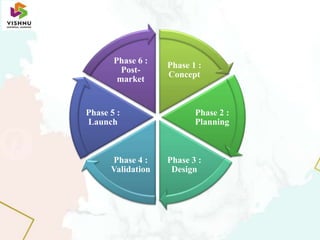
Phase 1 :
Concept
Phase 2 :
Planning
Phase 3 :
Design
Phase 4 :
Validation
Phase 5 :
Launch
Phase 6 :
Post-
market
 In this stage, a medical device developer may begin to
initially define the product, explore funding options and
potential routes to market and begin to establish early
requirements for the device.
 In the concept phase, the medical device exists only as an
idea.
 Each medical device begins as an idea for solving a
medical problem that someone has in an easier, cheaper or
more effective way.
Concept
• This phase specifically includes prototype analysis, initial
testing and initial user feedback to ensure the developed
product is aligned with customer expectations.
• In this phase, regulatory strategy and commercial/market
strategy will need to be define more in details.
Requirements related to Quality Management System need
to be implemented (risk management plan, design and
development plan, etc.).
Planning
 The product will be labelled and regulatory submissions will be
made so that the product can be marketed in the desired areas.
 Risk management documentation will need to be prepared in
this phase, including risk management plan, finalization of the risk
analysis and risk/benefit analysis.
 This phase is related to the development of product design and
of manufacturing process, verification and validation.
Design
 This product life cycle phase includes final validation of
manufacturing process and preparation for product introduction.
 This steps involves different activities such as:
 Process validation, mainly based on the IQ/OQ/PQ technique
 Clinical investigation, based on the claims associated to the device
 Final labelling, including IFU
 Regulatory Submission
 CE marking or other market authorizations
Validation
 Once a medical device company gains approval to market a
medical device, the product enters the launch phase of its life
cycle. The product will be sold to healthcare providers,
hospitals and clinics, and the manufacturer will provide
training and support that enables effective use of the product.
Launch
 The last phase is related to post-market activities. This phase
include post-market surveillance and post-market clinical
follow-up. Among the PMS activities, complaint handling and
vigilance reporting play an Important role in order to
continuously evaluate the safety of the device on the market.
 If the product is successful, it may be launched into new
markets.
 Normally in this phases there are as well
actives related to process improvements and
product improvements and the necessity to
have surveillance audits to actively maintain
the certification.
Post-market
Questions
1. What is a medical device? Explain the
product life cycle of a medical device.
2. Explain about the Post Marketing phase of
Medical device product lifecycle?
Thank you

Medical Devices Product Lifecycle

  • 1.
    Product Lifecycle ofmedical devices Shri Vishnu College of Pharmacy (Autonomous) (Estd: 1997; Affiliated to A.U. Visakhapatnam, Approved by AICTE & PCI) MRA 203T-Unit 1 Presented by: Ms.M.Jyothirmai 1st M.Pharm (Regulatory Affairs) Reg no : 222305 Shri Vishnu College of Pharmacy Under the guidance of: Dr.Lakshmi Prashanti Nori Professor Department of Regulatory Affairs
  • 2.
    INTRODUCTION  A basicproduct life cycle includes research, development, production, and end of life.  These can certainly be expanded as needed to address a specific device design or manufacturing procedure, as well as device class, category, and classification.
  • 3.
     There canbe sub phases during product development, such as prototype, engineering, build, alpha, beta, and archive, but the main concern is to define the life cycle that best meets the overall objective as it tracks various products and versions of products through development, the marketplace, and archival after they are discontinued (i.e., the company must still support those products in the marketplace even though their selling cycles have ended).  The concept of a life cycle for medical devices is adopted from the broader idea of a product life cycle (PLC). Like all products, medical devices begin their lives in a manufacturing plant, then sold to the end user and may be used until the natural end of their life cycle.
  • 4.
    Phase 1 : Concept Phase2 : Planning Phase 3 : Design Phase 4 : Validation Phase 5 : Launch Phase 6 : Post- market
  • 5.
     In thisstage, a medical device developer may begin to initially define the product, explore funding options and potential routes to market and begin to establish early requirements for the device.  In the concept phase, the medical device exists only as an idea.  Each medical device begins as an idea for solving a medical problem that someone has in an easier, cheaper or more effective way. Concept
  • 6.
    • This phasespecifically includes prototype analysis, initial testing and initial user feedback to ensure the developed product is aligned with customer expectations. • In this phase, regulatory strategy and commercial/market strategy will need to be define more in details. Requirements related to Quality Management System need to be implemented (risk management plan, design and development plan, etc.). Planning
  • 7.
     The productwill be labelled and regulatory submissions will be made so that the product can be marketed in the desired areas.  Risk management documentation will need to be prepared in this phase, including risk management plan, finalization of the risk analysis and risk/benefit analysis.  This phase is related to the development of product design and of manufacturing process, verification and validation. Design
  • 8.
     This productlife cycle phase includes final validation of manufacturing process and preparation for product introduction.  This steps involves different activities such as:  Process validation, mainly based on the IQ/OQ/PQ technique  Clinical investigation, based on the claims associated to the device  Final labelling, including IFU  Regulatory Submission  CE marking or other market authorizations Validation
  • 9.
     Once amedical device company gains approval to market a medical device, the product enters the launch phase of its life cycle. The product will be sold to healthcare providers, hospitals and clinics, and the manufacturer will provide training and support that enables effective use of the product. Launch
  • 10.
     The lastphase is related to post-market activities. This phase include post-market surveillance and post-market clinical follow-up. Among the PMS activities, complaint handling and vigilance reporting play an Important role in order to continuously evaluate the safety of the device on the market.  If the product is successful, it may be launched into new markets.  Normally in this phases there are as well actives related to process improvements and product improvements and the necessity to have surveillance audits to actively maintain the certification. Post-market
  • 11.
    Questions 1. What isa medical device? Explain the product life cycle of a medical device. 2. Explain about the Post Marketing phase of Medical device product lifecycle?
  • 12.