SAFETY REPORTS
ADDENDUM TO THE
CLINICAL OVERVIEW (ACO)
INDEX
1. ACO Definition
2. How to prepare an ACO
3. Structure of ACO
ADDENDUM TO THE CLINICAL OVERVIEW (ACO)
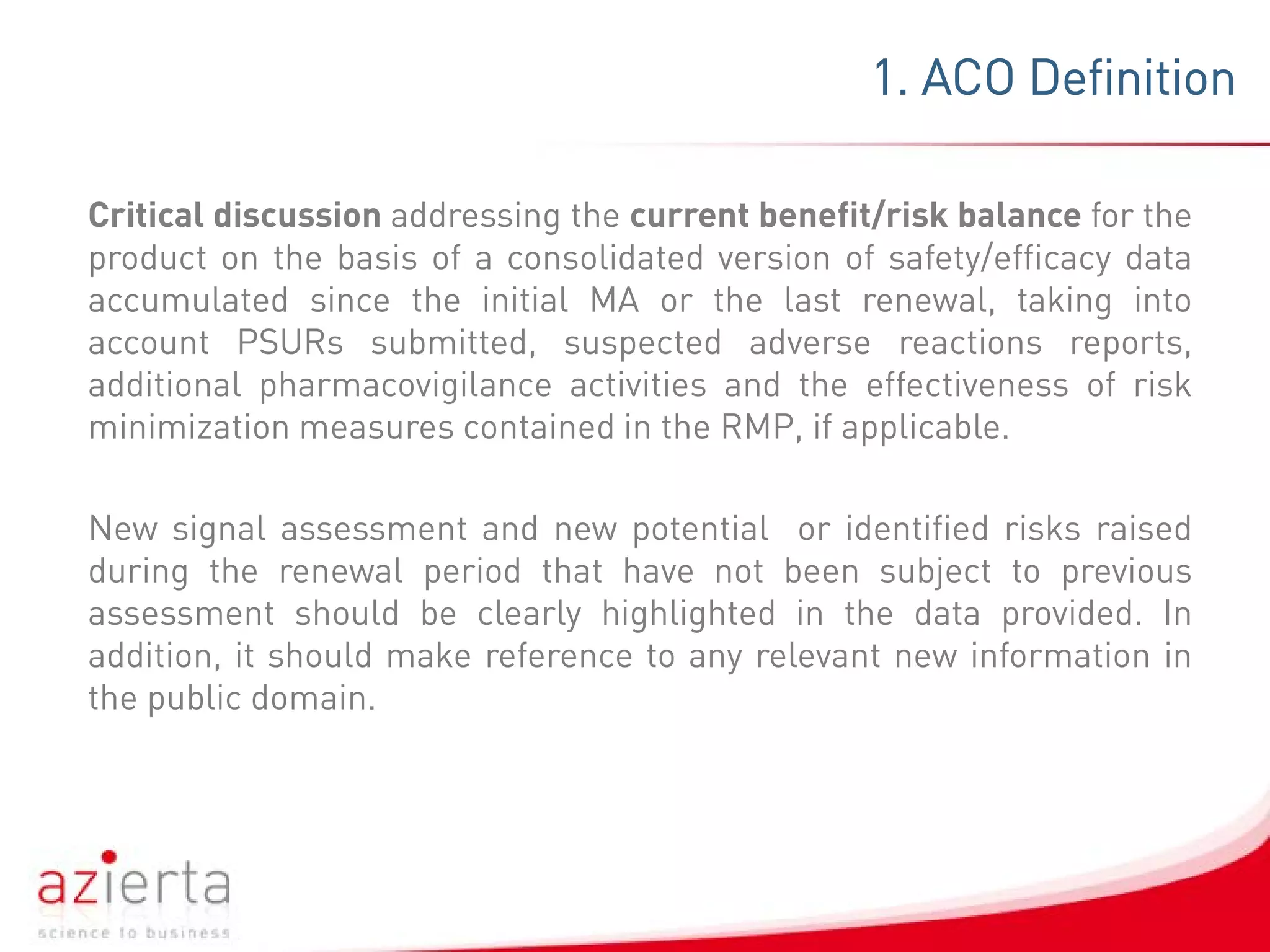
Critical discussion addressing the current benefit/risk balance for the
product on the basis of a consolidated version of safety/efficacy data
accumulated since the initial MA or the last renewal, taking into
account PSURs submitted, suspected adverse reactions reports,
additional pharmacovigilance activities and the effectiveness of risk
minimization measures contained in the RMP, if applicable.
New signal assessment and new potential or identified risks raised
during the renewal period that have not been subject to previous
assessment should be clearly highlighted in the data provided. In
addition, it should make reference to any relevant new information in
the public domain.
1. ACO Definition
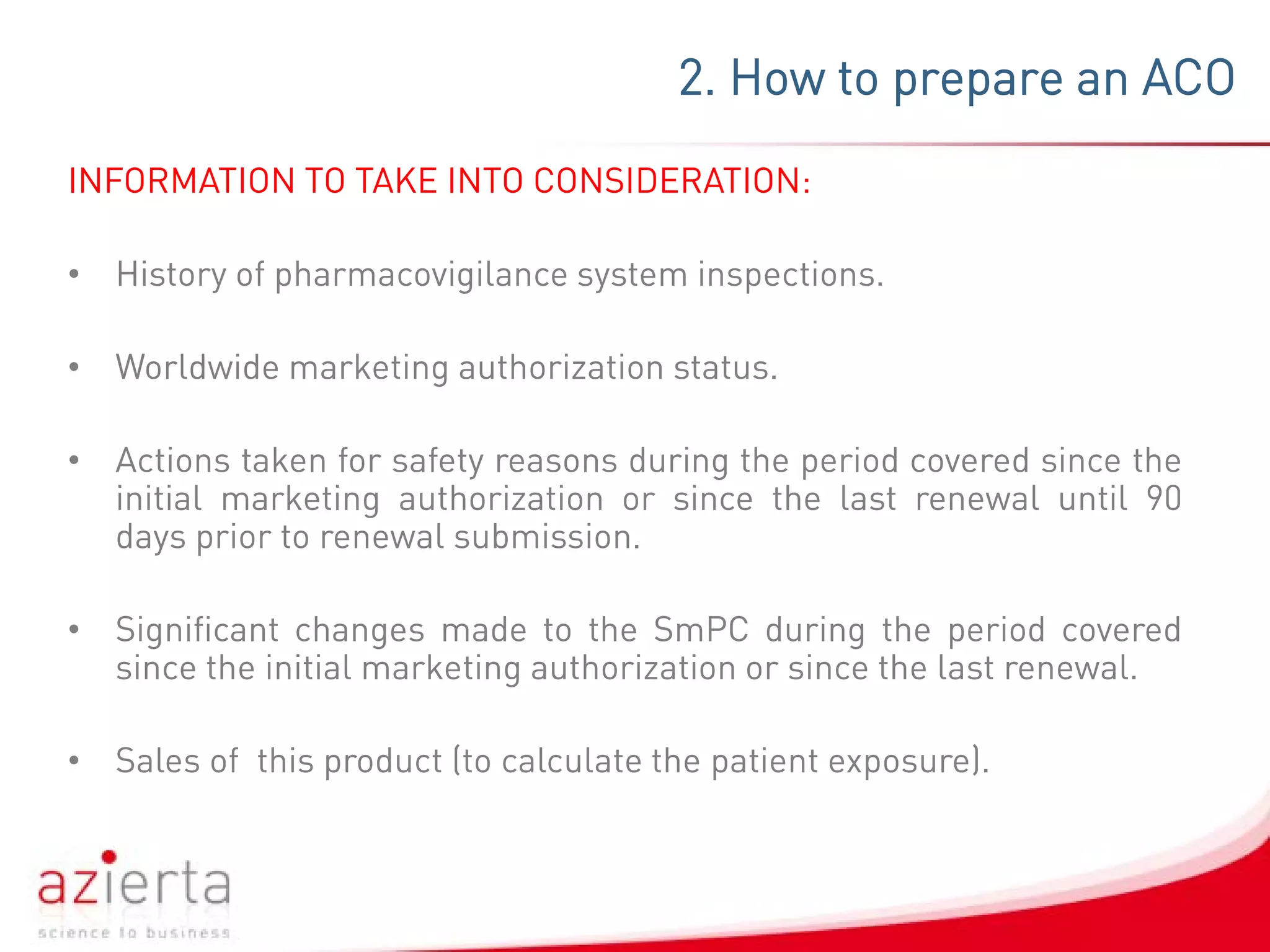
INFORMATION TO TAKE INTO CONSIDERATION:
• History of pharmacovigilance system inspections.
• Worldwide marketing authorization status.
• Actions taken for safety reasons during the period covered since the
initial marketing authorization or since the last renewal until 90
days prior to renewal submission.
• Significant changes made to the SmPC during the period covered
since the initial marketing authorization or since the last renewal.
• Sales of this product (to calculate the patient exposure).
2. How to prepare an ACO
• Data in summary tabulations: Summary tabulations of serious
adverse events from clinical trials as well as of adverse reactions
from post-marketing data sources reported during the period
covered.
• Overview of signals.
• Relevant information on patterns of medication errors and potential
medication errors during the period covered.
• Literature.
• Late-breaking information.
THIS ADDENDUM SHOULD BE SIGNED AND ACCOMPANIED BY THE CV
OF THE EXPERT (MODULE 1.4.3)
2. How to prepare an ACO
Worldwide existing
information
• PSURs
• Actions taken during
last covered period.
• Literature
• Worlwide marketing
authorization status
• Global exposure and
adverse reactions.
Evaluation
Findings
Discussion
and
conclussion
Evidences
Addendum to the
clinical overview
Obtention of the Marketing
Authorization Renewal.
2. How to prepare an ACO
1.History of Pharmacovigilance system inspections
(date, inspecting authority, site inspected, type of inspection and if the
inspection is product specific, the list of products concerned) and an
analysis of the impact of the findings overall on the benefit/risk balance
of the medicinal product.
2.Worldwide marketing authorization status
Overview of number of countries where the product has been
authorized and marketed worldwide.
3. Structure of ACO
3.Actions taken for safety reasons during the period covered since the
initial marketing authorization or since the last renewal until 90 days
prior to renewal submission.
Description of significant actions related to safety that had a potential
influence on the benefit-risk balance of the authorized medicinal
product (e.g. suspension, withdrawal, temporary halt or premature
ending of clinical trial for safety reasons, etc.).
Actions taken from the DLP of the last PSUR up to the DLP of the
renewal should be clearly identified and highlighted.
3. Structure of ACO
4.Significant changes in SmPC
It should be clearly identified the changes included in the PSURs and
the new changes made from the DLP of the last PSUR up to the DLP of
the renewal.
5.Patient exposure
• Data on cumulative exposure of subjects in clinical trials as
well as of patients from worldwide post-marketing exposure
per EU and non EU regions.
• If the MAH becomes aware of a pattern of use of the
medicinal product considered relevant for the interpretation
of the safety data, a brief description should be provided; such
patterns may include in particular off-label use.
3. Structure of ACO
6.Data in summary tabulations
Summary tabulations of serious adverse events from clinical trials as
well as summary tabulations of adverse reactions from post-marketing
data sources reported during the period covered since the initial
marketing authorization or since the last renewal up to the DLP of the
renewal.
7.Findings from clinical trials and non-interventional studies
Summaries of significant safety and efficacy studies.
3. Structure of ACO
8.Literature
Review of important literature references published during the period
covered since the initial marketing authorization or since the last
renewal until 90 days prior to renewal submission that had a potential
impact on the benefit/risk of the medicinal product.
3. Structure of ACO
9.Risk evaluation
MAH should summarize signals for which evaluation was completed
during the reporting period of the renewal. For signals that became
important identified or potential risks or are related to a known risk, a
characterization of the risk should be provided.
The MAH should discuss whether any changes are considered
necessary in the existing safety concerns and whether any additional
risk minimization activities for the product are warranted, considering
the data collected during the period covered by the renewal.
3. Structure of ACO
10.Benefit evaluation
MAH should summarize important efficacy and effectiveness
information (including information on lack of efficacy) for the period
covered since the initial marketing authorization or since the last
renewal until 90 days prior to renewal submission.
11.Benefit-risk balance
A discussion on the benefit-risk balance for the approved indication
should be presented, based on the above information.
12.Conclusion
3. Structure of ACO
We are safety experts, if you want to get to know us better visit us on:
Azierta
O follow us on:
Azierta @Azierta

Safety reports. addendum to the clinical overview. aco

  • 1.
    SAFETY REPORTS ADDENDUM TOTHE CLINICAL OVERVIEW (ACO)
  • 2.
    INDEX 1. ACO Definition 2.How to prepare an ACO 3. Structure of ACO ADDENDUM TO THE CLINICAL OVERVIEW (ACO)
  • 3.
    Critical discussion addressingthe current benefit/risk balance for the product on the basis of a consolidated version of safety/efficacy data accumulated since the initial MA or the last renewal, taking into account PSURs submitted, suspected adverse reactions reports, additional pharmacovigilance activities and the effectiveness of risk minimization measures contained in the RMP, if applicable. New signal assessment and new potential or identified risks raised during the renewal period that have not been subject to previous assessment should be clearly highlighted in the data provided. In addition, it should make reference to any relevant new information in the public domain. 1. ACO Definition
  • 4.
    INFORMATION TO TAKEINTO CONSIDERATION: • History of pharmacovigilance system inspections. • Worldwide marketing authorization status. • Actions taken for safety reasons during the period covered since the initial marketing authorization or since the last renewal until 90 days prior to renewal submission. • Significant changes made to the SmPC during the period covered since the initial marketing authorization or since the last renewal. • Sales of this product (to calculate the patient exposure). 2. How to prepare an ACO
  • 5.
    • Data insummary tabulations: Summary tabulations of serious adverse events from clinical trials as well as of adverse reactions from post-marketing data sources reported during the period covered. • Overview of signals. • Relevant information on patterns of medication errors and potential medication errors during the period covered. • Literature. • Late-breaking information. THIS ADDENDUM SHOULD BE SIGNED AND ACCOMPANIED BY THE CV OF THE EXPERT (MODULE 1.4.3) 2. How to prepare an ACO
  • 6.
    Worldwide existing information • PSURs •Actions taken during last covered period. • Literature • Worlwide marketing authorization status • Global exposure and adverse reactions. Evaluation Findings Discussion and conclussion Evidences Addendum to the clinical overview Obtention of the Marketing Authorization Renewal. 2. How to prepare an ACO
  • 7.
    1.History of Pharmacovigilancesystem inspections (date, inspecting authority, site inspected, type of inspection and if the inspection is product specific, the list of products concerned) and an analysis of the impact of the findings overall on the benefit/risk balance of the medicinal product. 2.Worldwide marketing authorization status Overview of number of countries where the product has been authorized and marketed worldwide. 3. Structure of ACO
  • 8.
    3.Actions taken forsafety reasons during the period covered since the initial marketing authorization or since the last renewal until 90 days prior to renewal submission. Description of significant actions related to safety that had a potential influence on the benefit-risk balance of the authorized medicinal product (e.g. suspension, withdrawal, temporary halt or premature ending of clinical trial for safety reasons, etc.). Actions taken from the DLP of the last PSUR up to the DLP of the renewal should be clearly identified and highlighted. 3. Structure of ACO
  • 9.
    4.Significant changes inSmPC It should be clearly identified the changes included in the PSURs and the new changes made from the DLP of the last PSUR up to the DLP of the renewal. 5.Patient exposure • Data on cumulative exposure of subjects in clinical trials as well as of patients from worldwide post-marketing exposure per EU and non EU regions. • If the MAH becomes aware of a pattern of use of the medicinal product considered relevant for the interpretation of the safety data, a brief description should be provided; such patterns may include in particular off-label use. 3. Structure of ACO
  • 10.
    6.Data in summarytabulations Summary tabulations of serious adverse events from clinical trials as well as summary tabulations of adverse reactions from post-marketing data sources reported during the period covered since the initial marketing authorization or since the last renewal up to the DLP of the renewal. 7.Findings from clinical trials and non-interventional studies Summaries of significant safety and efficacy studies. 3. Structure of ACO
  • 11.
    8.Literature Review of importantliterature references published during the period covered since the initial marketing authorization or since the last renewal until 90 days prior to renewal submission that had a potential impact on the benefit/risk of the medicinal product. 3. Structure of ACO
  • 12.
    9.Risk evaluation MAH shouldsummarize signals for which evaluation was completed during the reporting period of the renewal. For signals that became important identified or potential risks or are related to a known risk, a characterization of the risk should be provided. The MAH should discuss whether any changes are considered necessary in the existing safety concerns and whether any additional risk minimization activities for the product are warranted, considering the data collected during the period covered by the renewal. 3. Structure of ACO
  • 13.
    10.Benefit evaluation MAH shouldsummarize important efficacy and effectiveness information (including information on lack of efficacy) for the period covered since the initial marketing authorization or since the last renewal until 90 days prior to renewal submission. 11.Benefit-risk balance A discussion on the benefit-risk balance for the approved indication should be presented, based on the above information. 12.Conclusion 3. Structure of ACO
  • 14.
    We are safetyexperts, if you want to get to know us better visit us on: Azierta O follow us on: Azierta @Azierta