Media Language (Technical Terms)
Refresher
L/O: to be able to know key terms
and be able to identify them
7th, January 2015
Quiz
• Write down 1-20, single spacing
Write only the answer
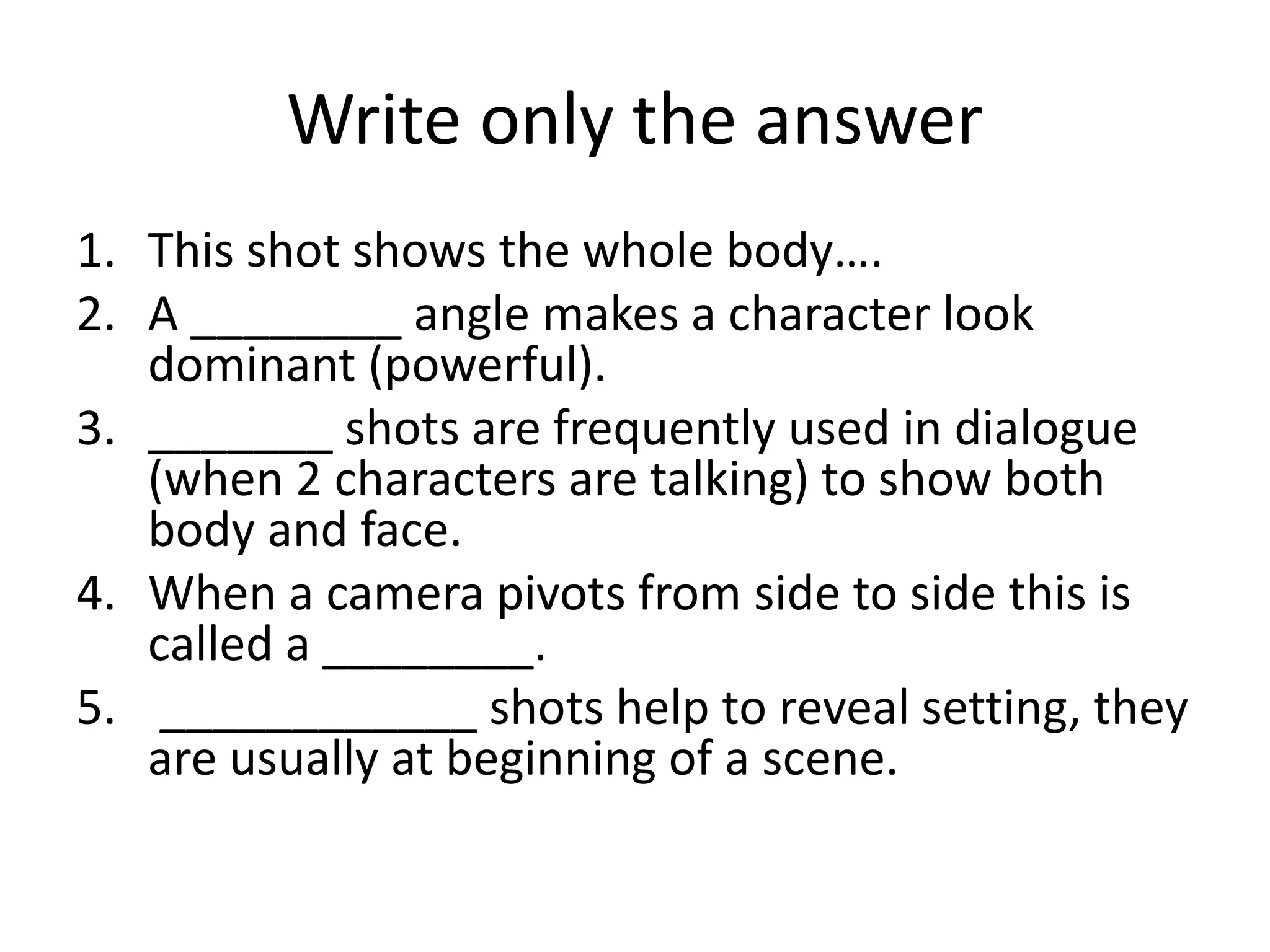
1. This shot shows the whole body….
2. A ________ angle makes a character look
dominant (powerful).
3. _______ shots are frequently used in dialogue
(when 2 characters are talking) to show both
body and face.
4. When a camera pivots from side to side this is
called a ________.
5. ____________ shots help to reveal setting, they
are usually at beginning of a scene.
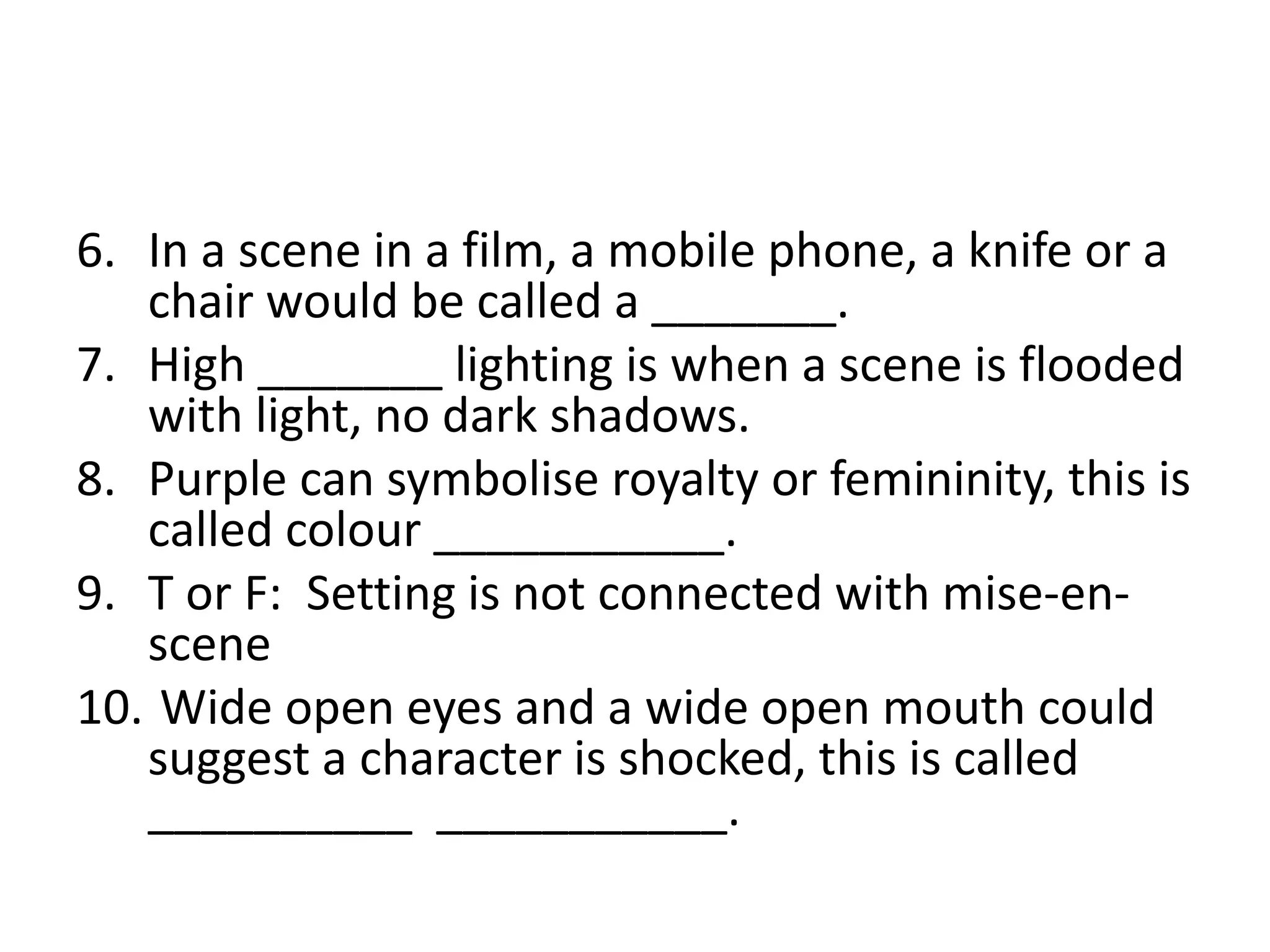
6. In a scene in a film, a mobile phone, a knife or a
chair would be called a _______.
7. High _______ lighting is when a scene is flooded
with light, no dark shadows.
8. Purple can symbolise royalty or femininity, this is
called colour ___________.
9. T or F: Setting is not connected with mise-en-
scene
10. Wide open eyes and a wide open mouth could
suggest a character is shocked, this is called
__________ ___________.
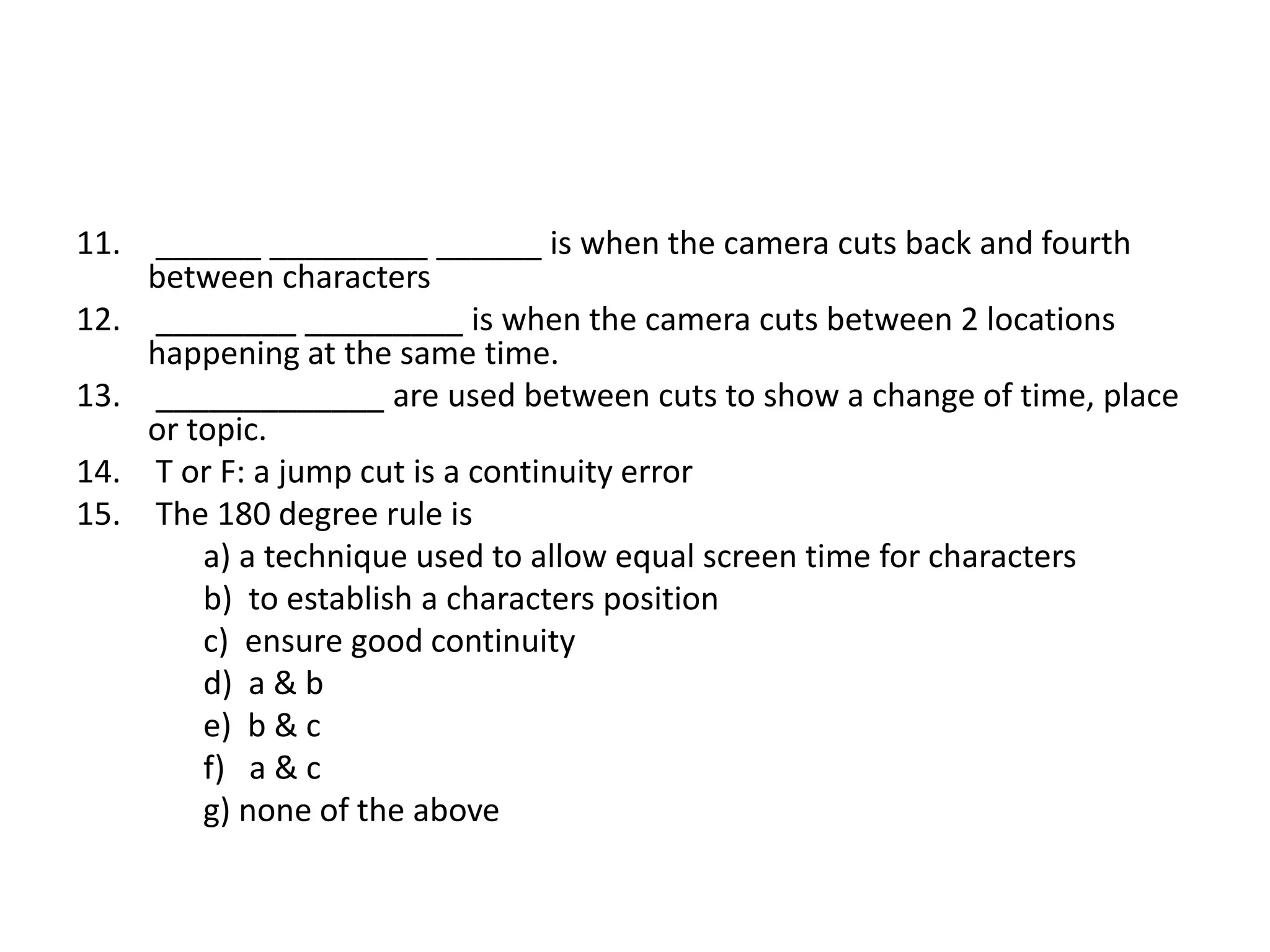
11. ______ _________ ______ is when the camera cuts back and fourth
between characters
12. ________ _________ is when the camera cuts between 2 locations
happening at the same time.
13. _____________ are used between cuts to show a change of time, place
or topic.
14. T or F: a jump cut is a continuity error
15. The 180 degree rule is
a) a technique used to allow equal screen time for characters
b) to establish a characters position
c) ensure good continuity
d) a & b
e) b & c
f) a & c
g) none of the above
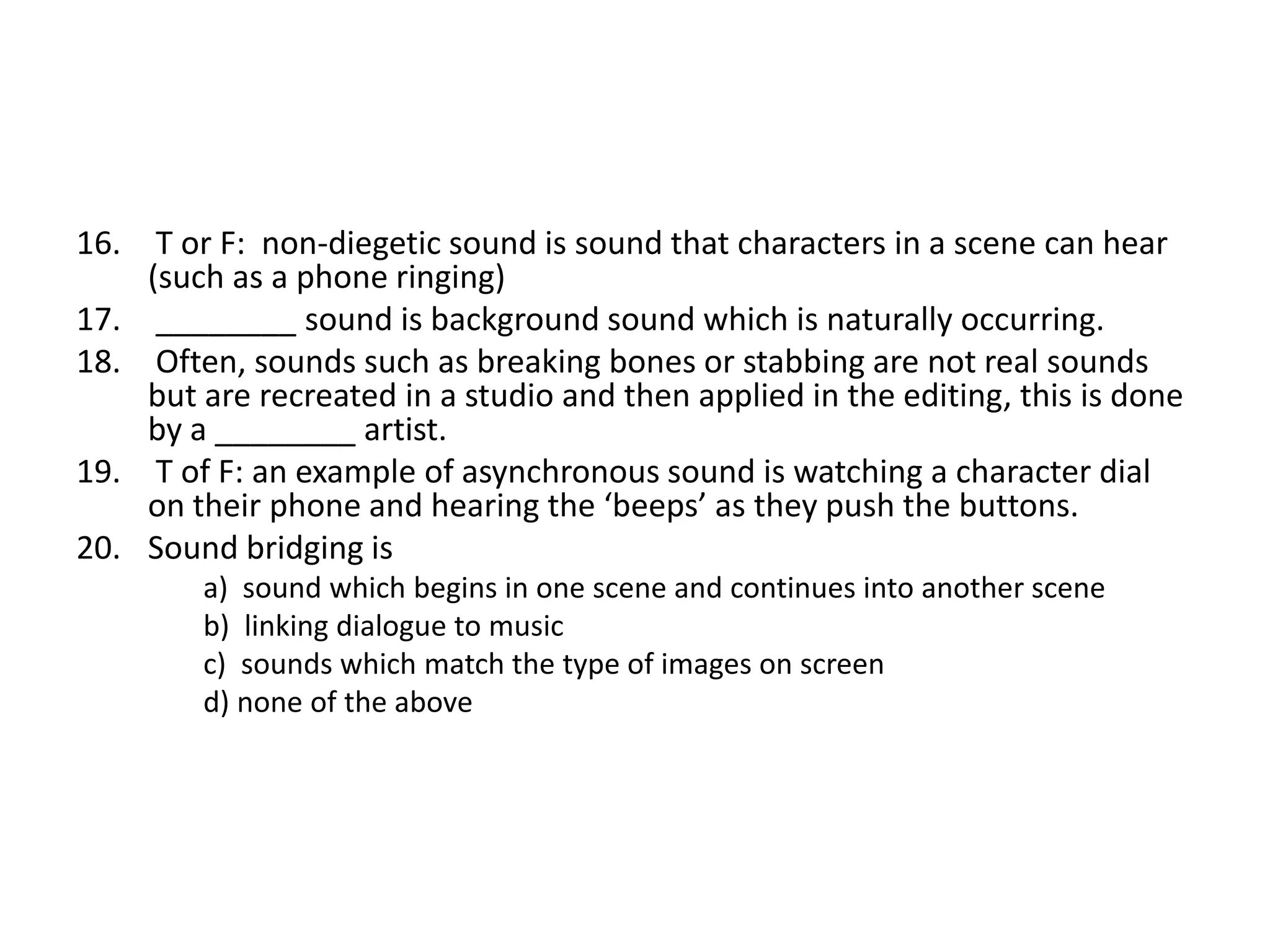
16. T or F: non-diegetic sound is sound that characters in a scene can hear
(such as a phone ringing)
17. ________ sound is background sound which is naturally occurring.
18. Often, sounds such as breaking bones or stabbing are not real sounds
but are recreated in a studio and then applied in the editing, this is done
by a ________ artist.
19. T of F: an example of asynchronous sound is watching a character dial
on their phone and hearing the ‘beeps’ as they push the buttons.
20. Sound bridging is
a) sound which begins in one scene and continues into another scene
b) linking dialogue to music
c) sounds which match the type of images on screen
d) none of the above
Copy the following in book
• ____/20
• ‘Peer assessed by’: ____________
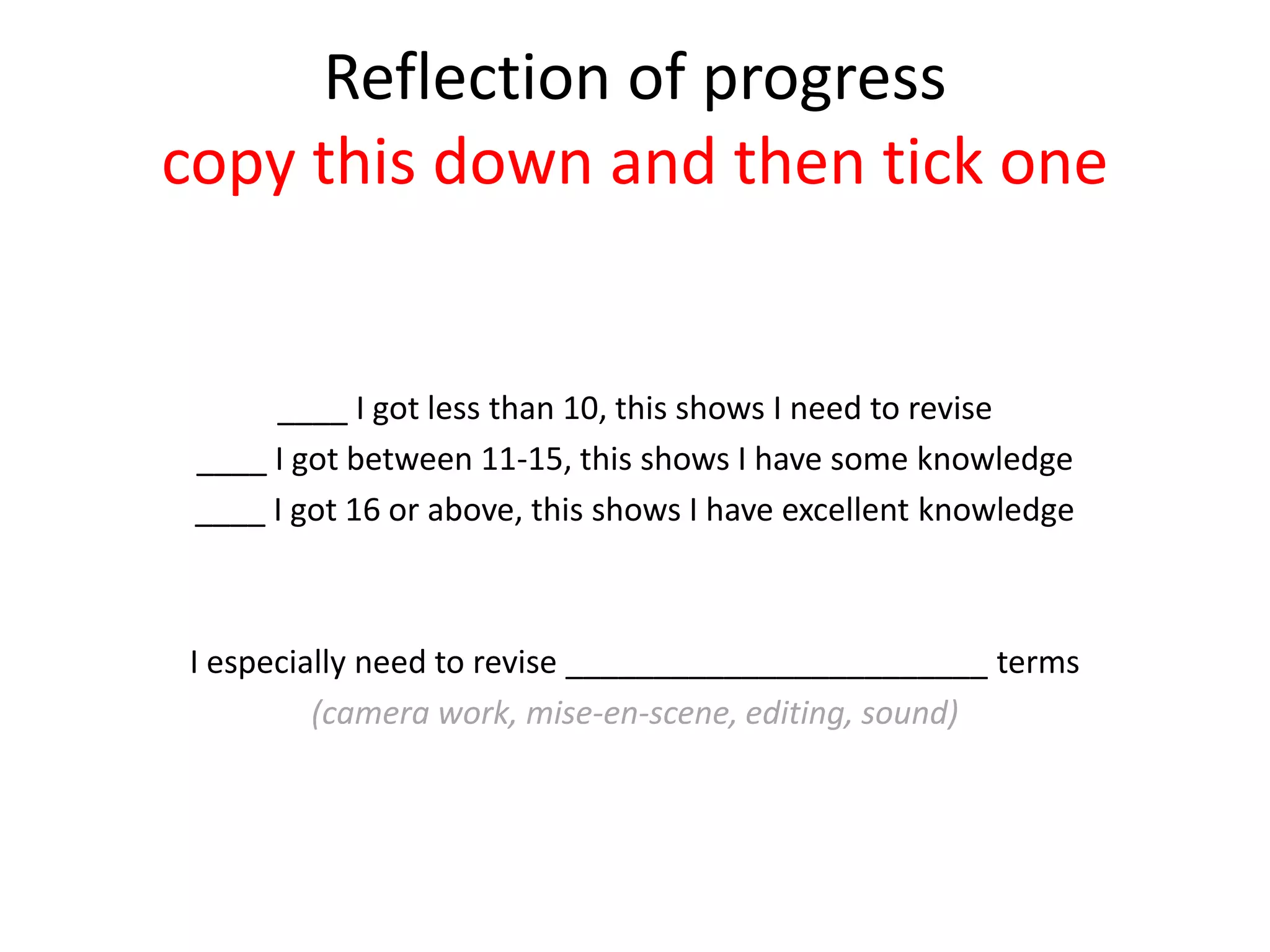
Reflection of progress
copy this down and then tick one
____ I got less than 10, this shows I need to revise
____ I got between 11-15, this shows I have some knowledge
____ I got 16 or above, this shows I have excellent knowledge
I especially need to revise ________________________ terms
(camera work, mise-en-scene, editing, sound)
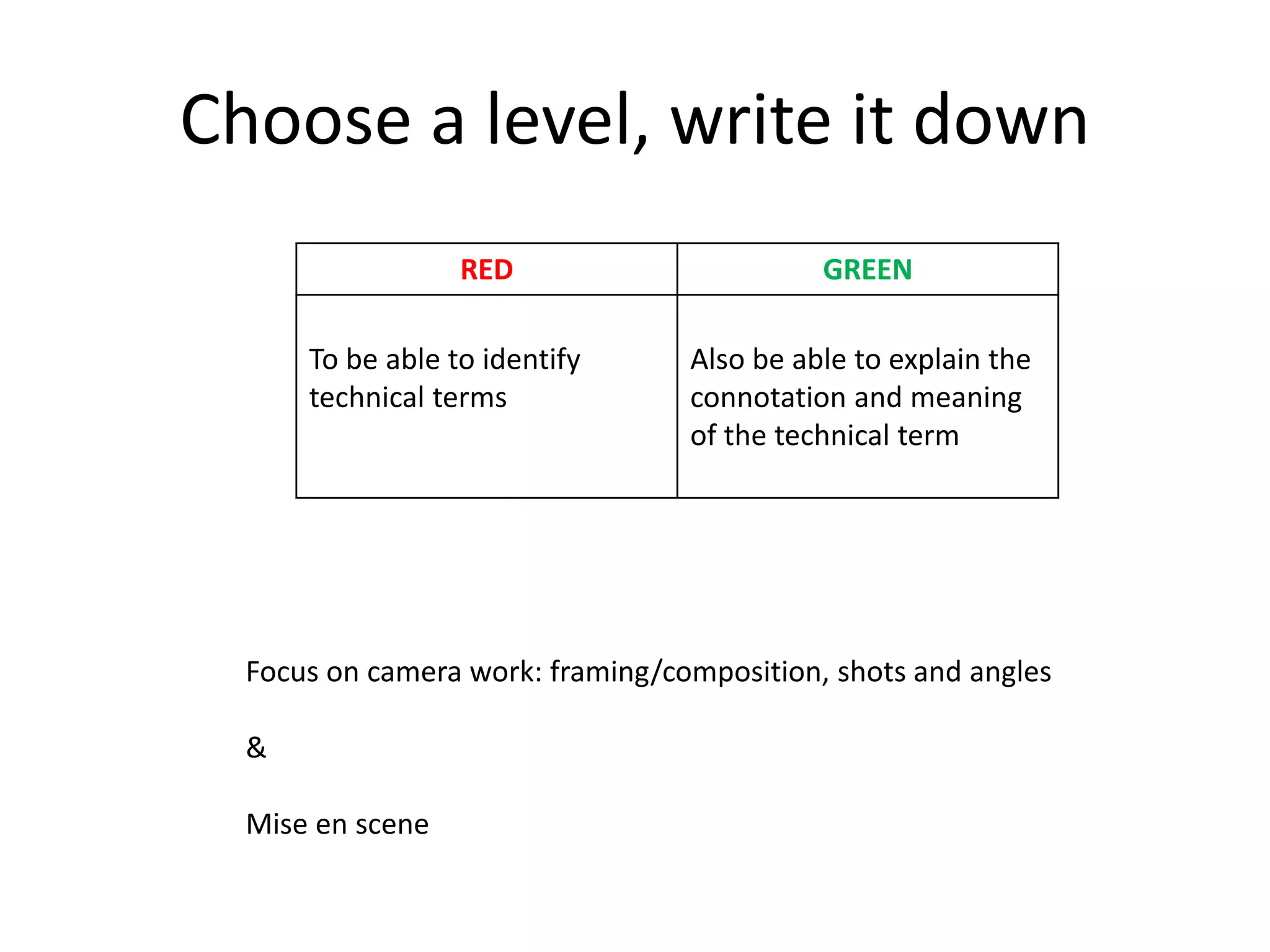
Choose a level, write it down
RED GREEN
To be able to identify
technical terms
Also be able to explain the
connotation and meaning
of the technical term
Focus on camera work: framing/composition, shots and angles
&
Mise en scene
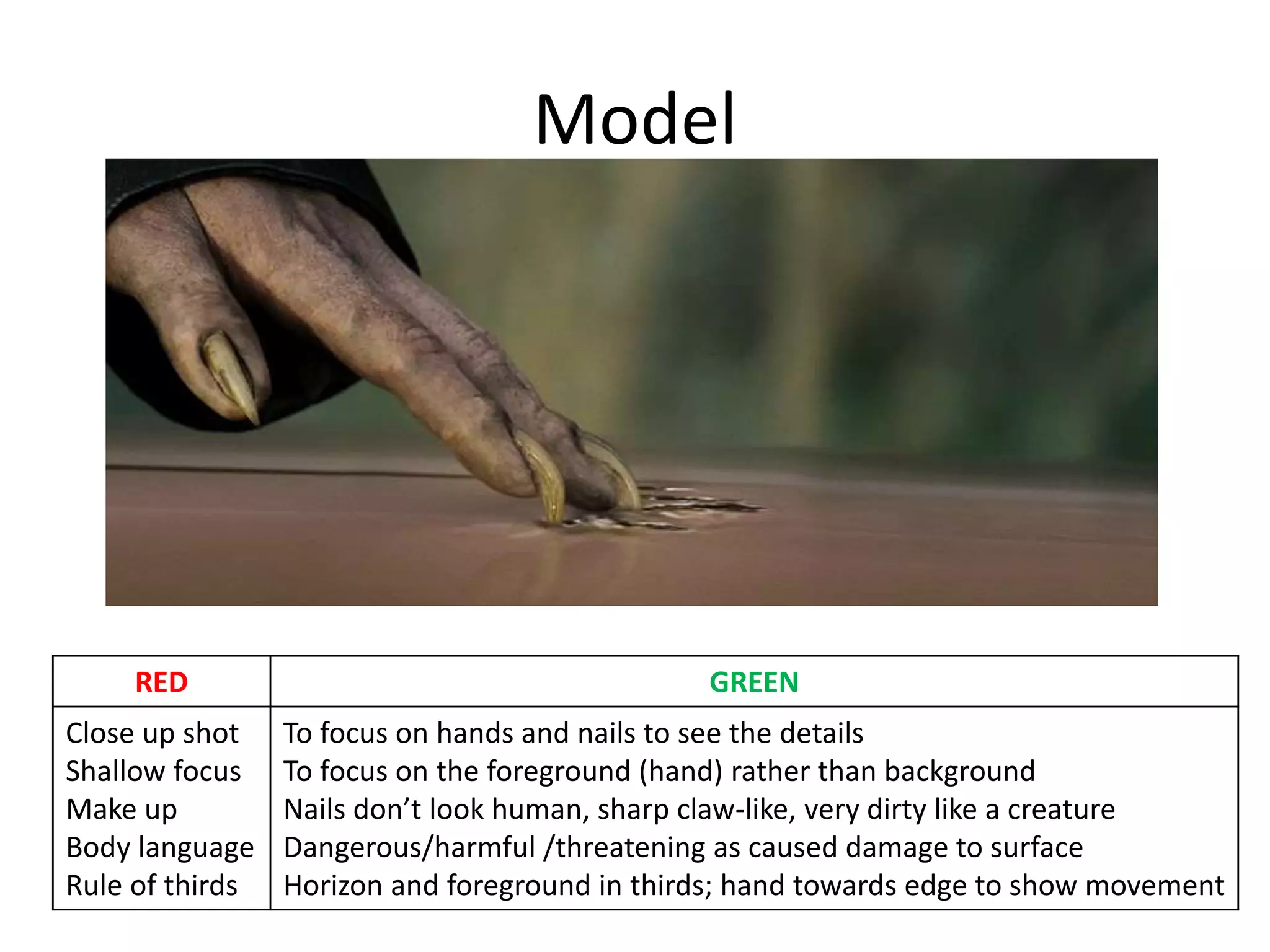
Model
RED GREEN
Close up shot
Shallow focus
Make up
Body language
Rule of thirds
To focus on hands and nails to see the details
To focus on the foreground (hand) rather than background
Nails don’t look human, sharp claw-like, very dirty like a creature
Dangerous/harmful /threatening as caused damage to surface
Horizon and foreground in thirds; hand towards edge to show movement
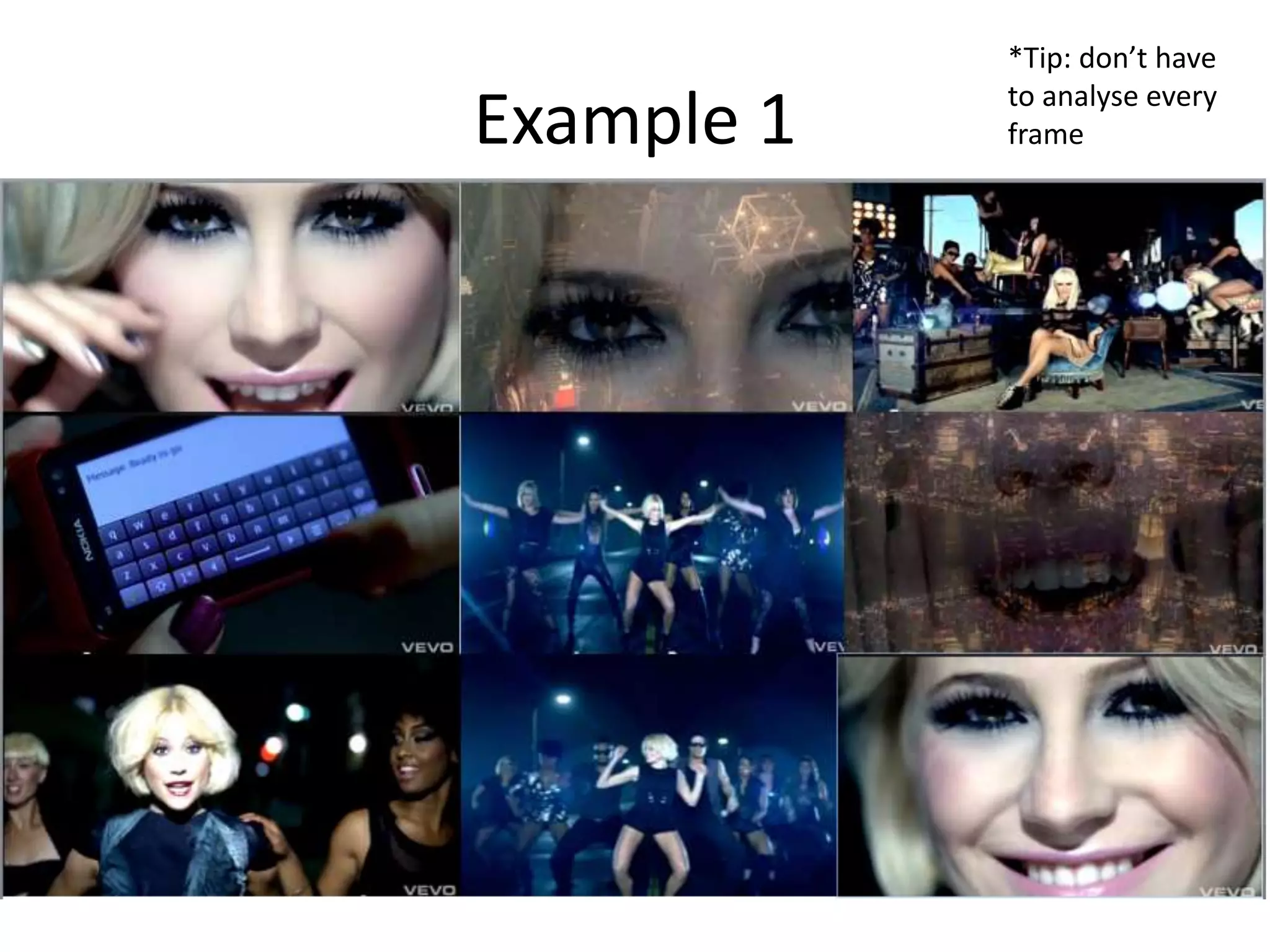
Example 1
*Tip: don’t have
to analyse every
frame
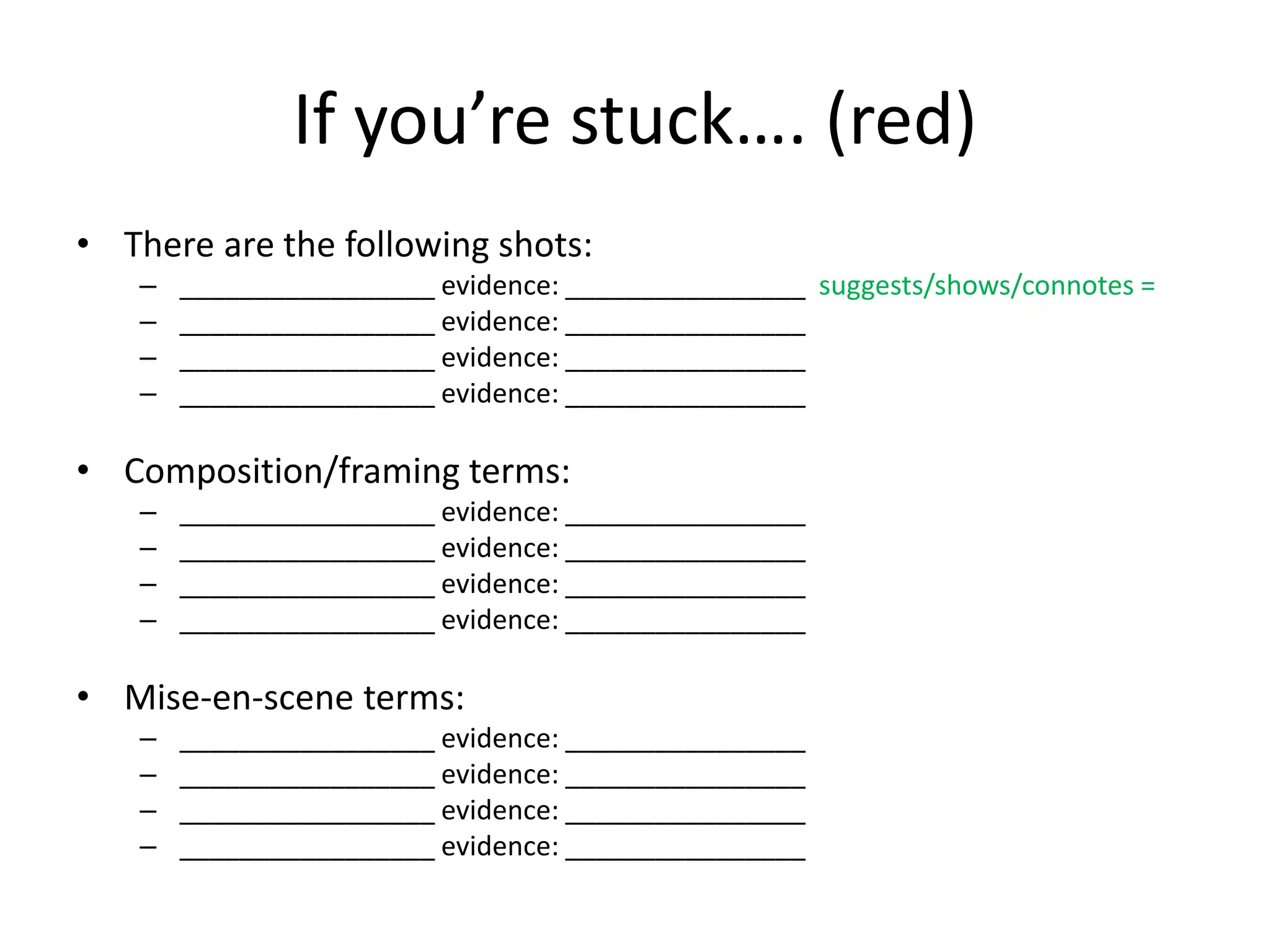
If you’re stuck…. (red)
• There are the following shots:
– _________________ evidence: ________________ suggests/shows/connotes =
– _________________ evidence: ________________
• Composition/framing terms:
– _________________ evidence: ________________
• Mise-en-scene terms:
– _________________ evidence: ________________
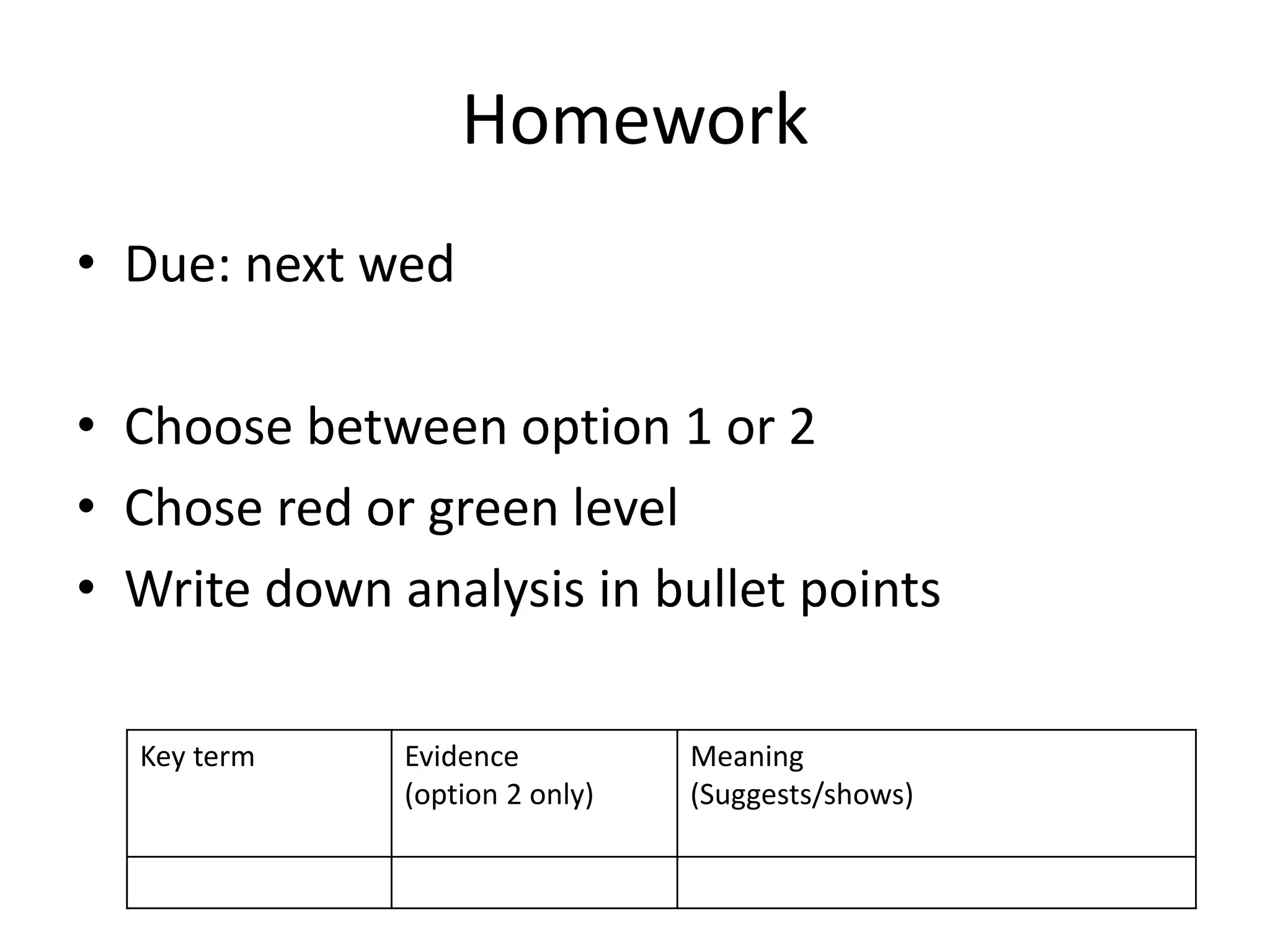
Homework
• Due: next wed
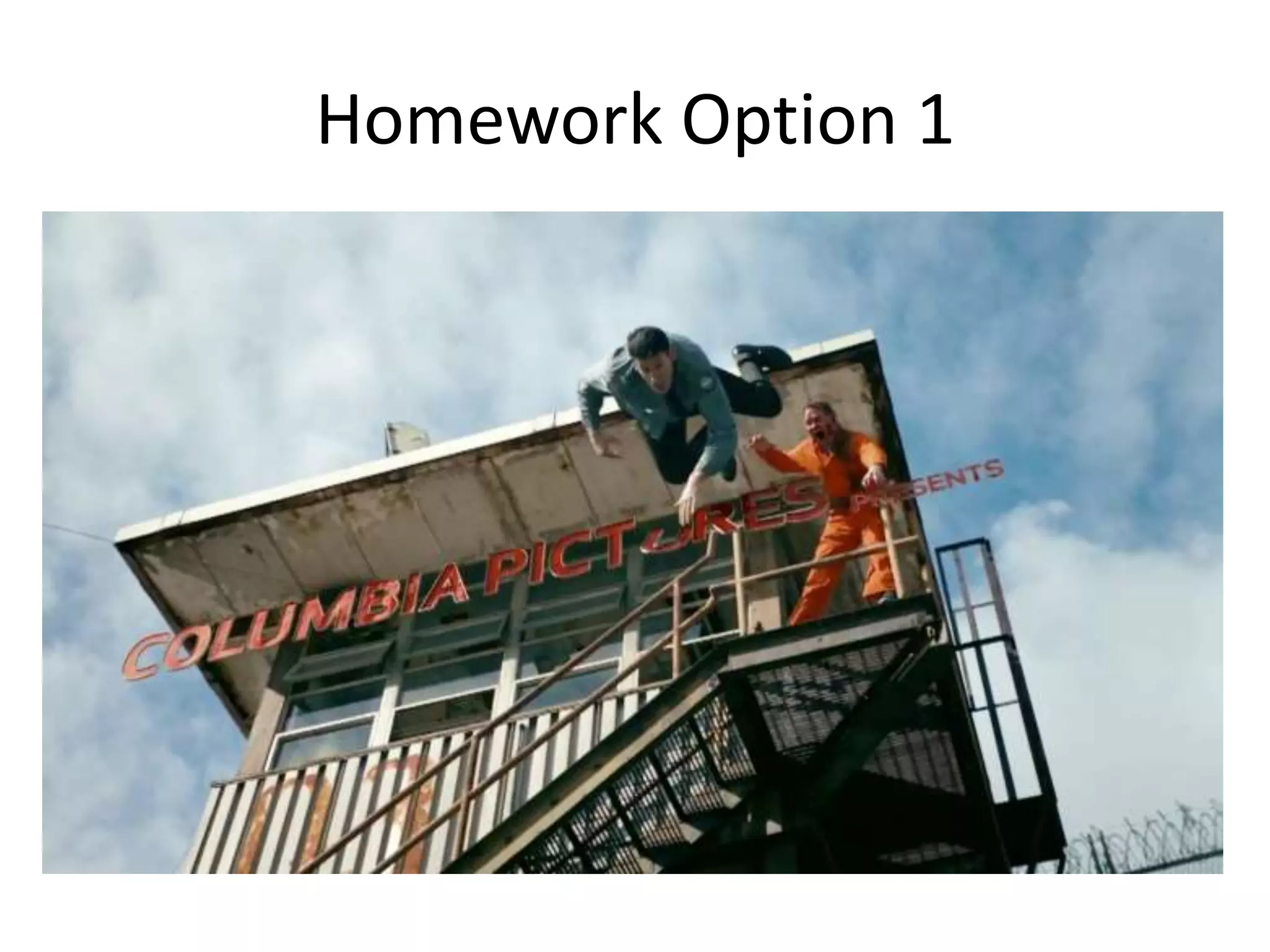
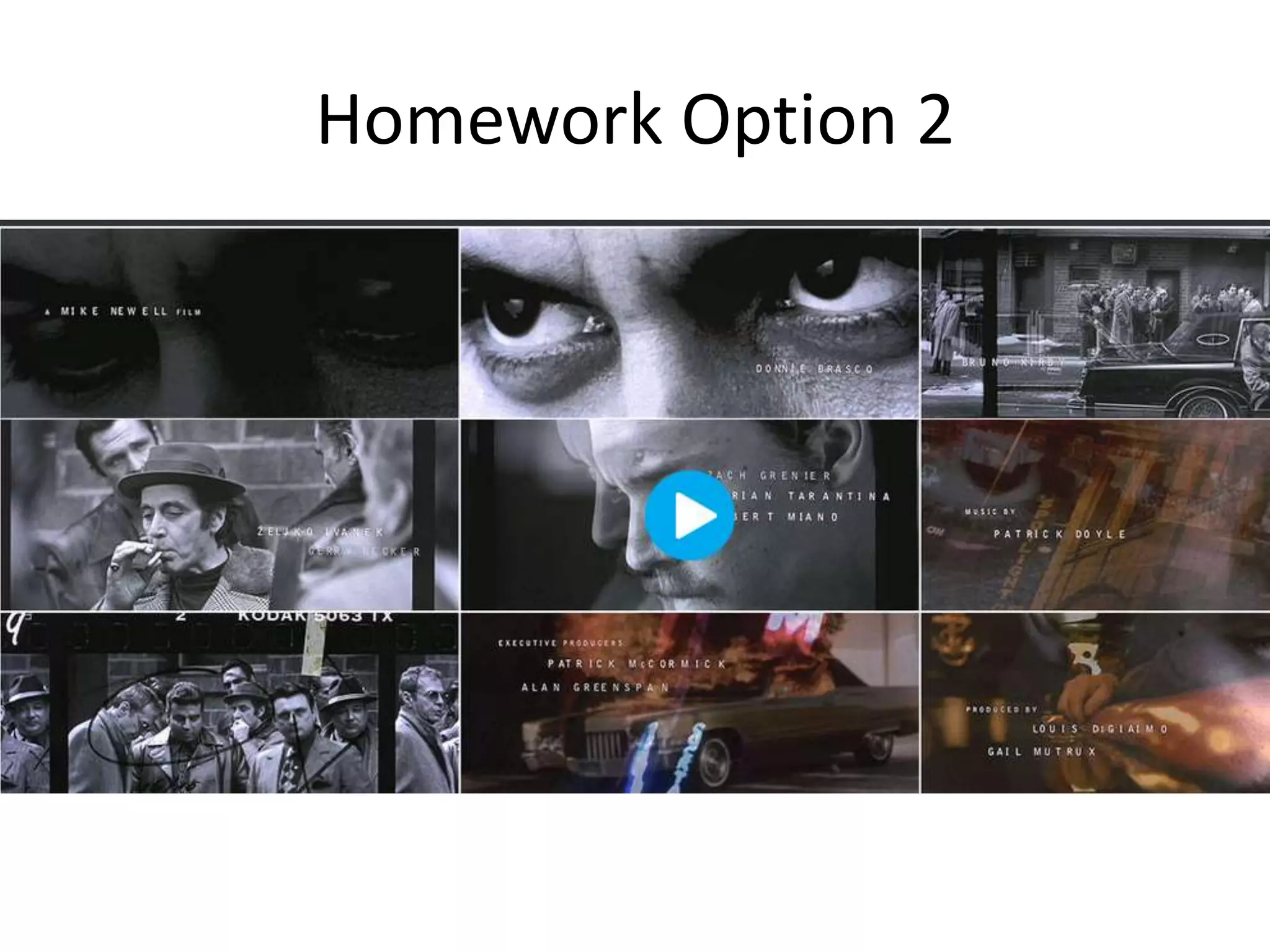
• Choose between option 1 or 2
• Chose red or green level
• Write down analysis in bullet points
Key term Evidence
(option 2 only)
Meaning
(Suggests/shows)
Homework Option 1
Homework Option 2
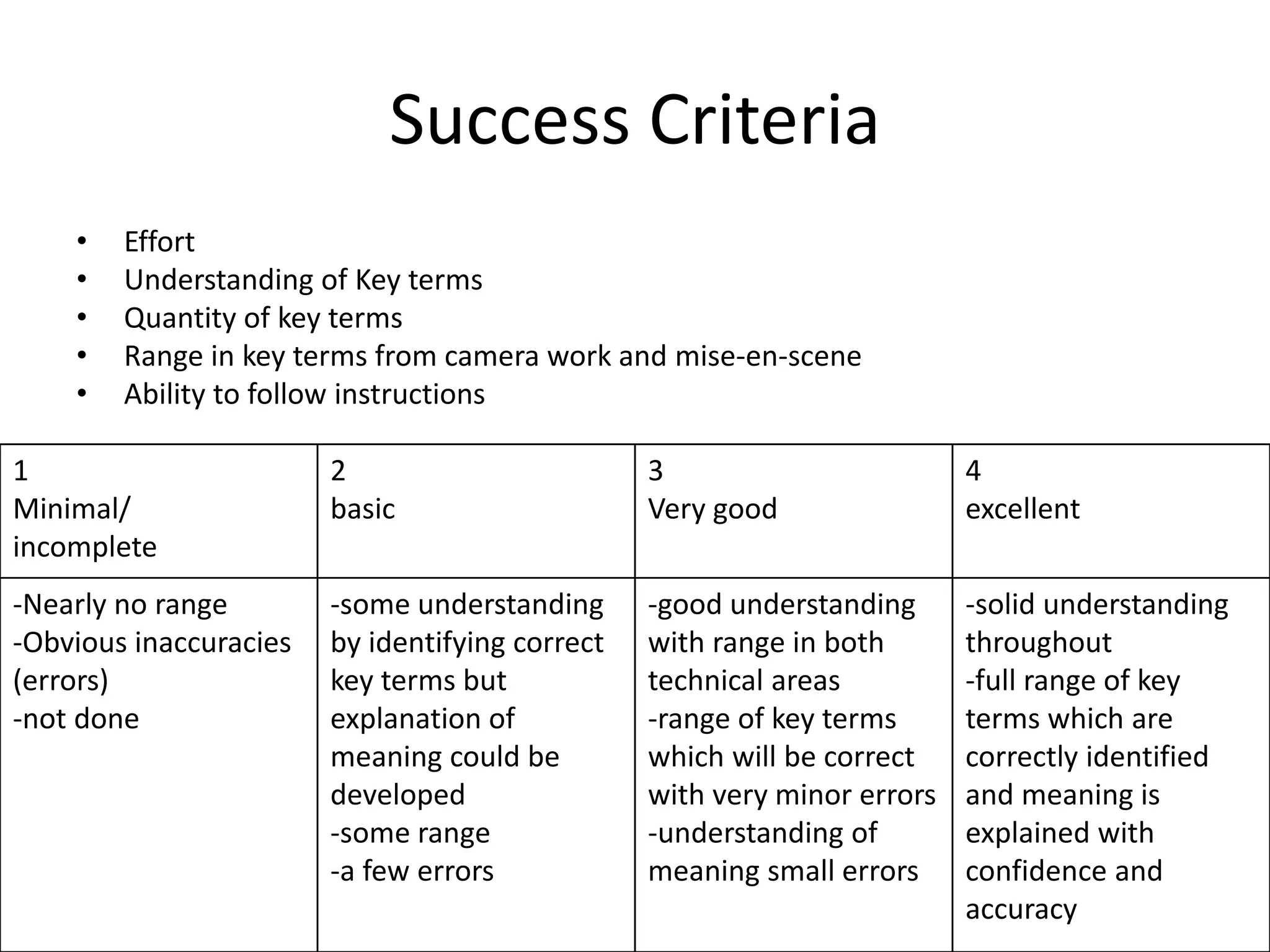
Success Criteria
• Effort
• Understanding of Key terms
• Quantity of key terms
• Range in key terms from camera work and mise-en-scene
• Ability to follow instructions
1
Minimal/
incomplete
2
basic
3
Very good
4
excellent
-Nearly no range
-Obvious inaccuracies
(errors)
-not done
-some understanding
by identifying correct
key terms but
explanation of
meaning could be
developed
-some range
-a few errors
-good understanding
with range in both
technical areas
-range of key terms
which will be correct
with very minor errors
-understanding of
meaning small errors
-solid understanding
throughout
-full range of key
terms which are
correctly identified
and meaning is
explained with
confidence and
accuracy

Media language refresher

  • 1.
    Media Language (TechnicalTerms) Refresher L/O: to be able to know key terms and be able to identify them 7th, January 2015
  • 2.
    Quiz • Write down1-20, single spacing
  • 3.
    Write only theanswer 1. This shot shows the whole body…. 2. A ________ angle makes a character look dominant (powerful). 3. _______ shots are frequently used in dialogue (when 2 characters are talking) to show both body and face. 4. When a camera pivots from side to side this is called a ________. 5. ____________ shots help to reveal setting, they are usually at beginning of a scene.
  • 4.
    6. In ascene in a film, a mobile phone, a knife or a chair would be called a _______. 7. High _______ lighting is when a scene is flooded with light, no dark shadows. 8. Purple can symbolise royalty or femininity, this is called colour ___________. 9. T or F: Setting is not connected with mise-en- scene 10. Wide open eyes and a wide open mouth could suggest a character is shocked, this is called __________ ___________.
  • 5.
    11. ______ _______________ is when the camera cuts back and fourth between characters 12. ________ _________ is when the camera cuts between 2 locations happening at the same time. 13. _____________ are used between cuts to show a change of time, place or topic. 14. T or F: a jump cut is a continuity error 15. The 180 degree rule is a) a technique used to allow equal screen time for characters b) to establish a characters position c) ensure good continuity d) a & b e) b & c f) a & c g) none of the above
  • 6.
    16. T orF: non-diegetic sound is sound that characters in a scene can hear (such as a phone ringing) 17. ________ sound is background sound which is naturally occurring. 18. Often, sounds such as breaking bones or stabbing are not real sounds but are recreated in a studio and then applied in the editing, this is done by a ________ artist. 19. T of F: an example of asynchronous sound is watching a character dial on their phone and hearing the ‘beeps’ as they push the buttons. 20. Sound bridging is a) sound which begins in one scene and continues into another scene b) linking dialogue to music c) sounds which match the type of images on screen d) none of the above
  • 7.
    Copy the followingin book • ____/20 • ‘Peer assessed by’: ____________
  • 8.
    Reflection of progress copythis down and then tick one ____ I got less than 10, this shows I need to revise ____ I got between 11-15, this shows I have some knowledge ____ I got 16 or above, this shows I have excellent knowledge I especially need to revise ________________________ terms (camera work, mise-en-scene, editing, sound)
  • 9.
    Choose a level,write it down RED GREEN To be able to identify technical terms Also be able to explain the connotation and meaning of the technical term Focus on camera work: framing/composition, shots and angles & Mise en scene
  • 10.
    Model RED GREEN Close upshot Shallow focus Make up Body language Rule of thirds To focus on hands and nails to see the details To focus on the foreground (hand) rather than background Nails don’t look human, sharp claw-like, very dirty like a creature Dangerous/harmful /threatening as caused damage to surface Horizon and foreground in thirds; hand towards edge to show movement
  • 11.
    Example 1 *Tip: don’thave to analyse every frame
  • 12.
    If you’re stuck….(red) • There are the following shots: – _________________ evidence: ________________ suggests/shows/connotes = – _________________ evidence: ________________ – _________________ evidence: ________________ – _________________ evidence: ________________ • Composition/framing terms: – _________________ evidence: ________________ – _________________ evidence: ________________ – _________________ evidence: ________________ – _________________ evidence: ________________ • Mise-en-scene terms: – _________________ evidence: ________________ – _________________ evidence: ________________ – _________________ evidence: ________________ – _________________ evidence: ________________
  • 13.
    Homework • Due: nextwed • Choose between option 1 or 2 • Chose red or green level • Write down analysis in bullet points Key term Evidence (option 2 only) Meaning (Suggests/shows)
  • 14.
  • 15.
  • 16.
    Success Criteria • Effort •Understanding of Key terms • Quantity of key terms • Range in key terms from camera work and mise-en-scene • Ability to follow instructions 1 Minimal/ incomplete 2 basic 3 Very good 4 excellent -Nearly no range -Obvious inaccuracies (errors) -not done -some understanding by identifying correct key terms but explanation of meaning could be developed -some range -a few errors -good understanding with range in both technical areas -range of key terms which will be correct with very minor errors -understanding of meaning small errors -solid understanding throughout -full range of key terms which are correctly identified and meaning is explained with confidence and accuracy