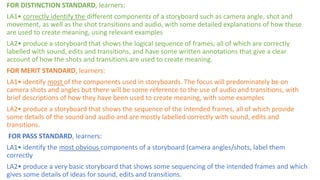
FOR DISTINCTION STANDARD, learners:
LA1• correctly identify the different components of a storyboard such as camera angle, shot and
movement, as well as the shot transitions and audio, with some detailed explanations of how these
are used to create meaning, using relevant examples
LA2• produce a storyboard that shows the logical sequence of frames, all of which are correctly
labelled with sound, edits and transitions, and have some written annotations that give a clear
account of how the shots and transitions are used to create meaning.
FOR MERIT STANDARD, learners:
LA1• identify most of the components used in storyboards. The focus will predominately be on
camera shots and angles but there will be some reference to the use of audio and transitions, with
brief descriptions of how they have been used to create meaning, with some examples
LA2• produce a storyboard that shows the sequence of the intended frames, all of which provide
some details of the sound and audio and are mostly labelled correctly with sound, edits and
transitions.
FOR PASS STANDARD, learners:
LA1• identify the most obvious components of a storyboard (camera angles/shots, label them
correctly
LA2• produce a very basic storyboard that shows some sequencing of the intended frames and which
gives some details of ideas for sound, edits and transitions.
DM5 CREATING A
STORYBOARD
• Learning Outcomes
• To evaluate the
effectiveness of three
different storyboards
• To be able to apply the
mark scheme to three
different storyboards
Overall Unit Aims:
A – Explore the components of
storyboards and how they are
used
B – Produce a storyboard for a
specified media product
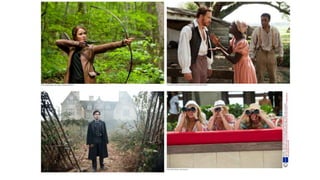
•What genre are these films
from?
•How do you know?
• Key words: mise en scene,
lighting, colour, setting, camera
angle.
Genres
• 5 – The Hunger Games – fantasy/adventure
• 12 Years a Slave – period drama/biographical
• A Woman In Black – horror/gothic
• The Other Woman – comedy/’chick flick’
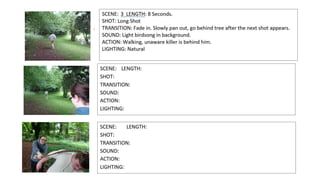
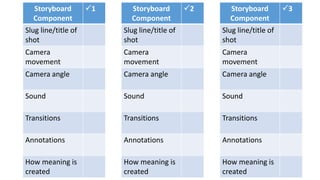
Storyboard
Component
1
Slug line/title of
shot
Camera
movement
Camera angle
Sound
Transitions
Annotations
How meaning is
created
Storyboard
Component
2
Slug line/title of
shot
Camera
movement
Camera angle
Sound
Transitions
Annotations
How meaning is
created
Storyboard
Component
3
Slug line/title of
shot
Camera
movement
Camera angle
Sound
Transitions
Annotations
How meaning is
created
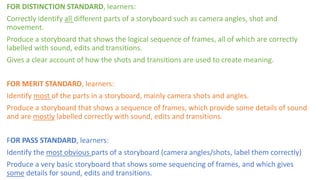
FOR DISTINCTION STANDARD, learners:
Correctly identify all different parts of a storyboard such as camera angles, shot and
movement.
Produce a storyboard that shows the logical sequence of frames, all of which are correctly
labelled with sound, edits and transitions.
Gives a clear account of how the shots and transitions are used to create meaning.
FOR MERIT STANDARD, learners:
Identify most of the parts in a storyboard, mainly camera shots and angles.
Produce a storyboard that shows a sequence of frames, which provide some details of sound
and are mostly labelled correctly with sound, edits and transitions.
FOR PASS STANDARD, learners:
Identify the most obvious parts of a storyboard (camera angles/shots, label them correctly)
Produce a very basic storyboard that shows some sequencing of frames, and which gives
some details for sound, edits and transitions.
What is a
storyboard?
‘a sequence of drawings,
typically with some
directions and dialogue,
representing the shots
planned for a film or
television production’.
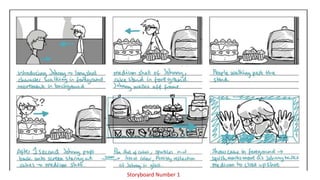
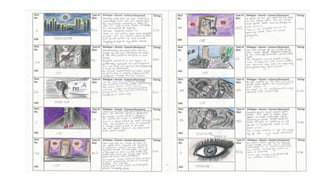
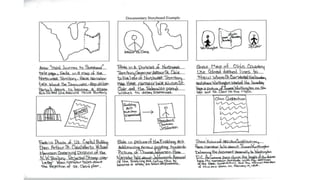
Storyboard Number 1
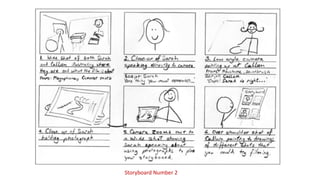
Storyboard Number 2
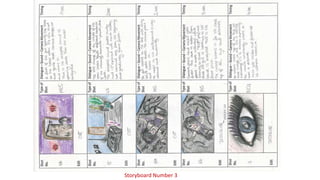
Storyboard Number 3
Types of storyboards and their
uses
What visual
media
products use
storyboards?
Feature Films
Music videos
TV advertisements
Who uses
storyboards?
•Storyboards are used by
the director,
cinematographer and
camera operators to set
up and film sequences,
ensuring that all shots
are covered and
lighting, framing, audio,
timings are correct
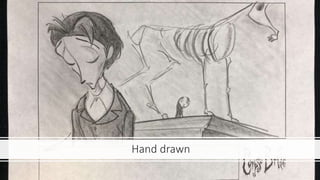
Types of
storyboards
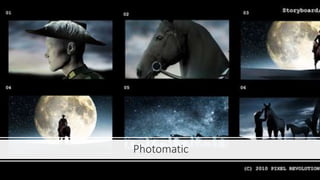
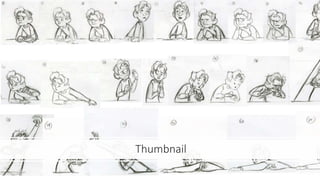
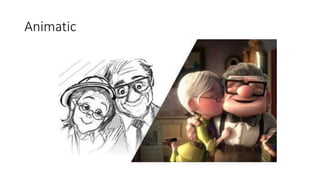
Hand drawn
Photomatic
Thumbnail
Animatic
STORYBOARD
COMPONENTS
(Things on/in a storyboard)
Shot types
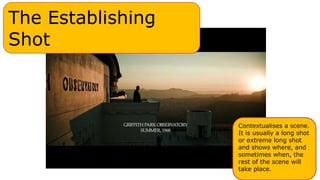
The Establishing
Shot
Contextualises a scene.
It is usually a long shot
or extreme long shot
and shows where, and
sometimes when, the
rest of the scene will
take place.
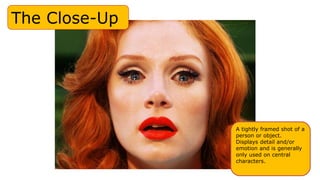
The Close-Up
A tightly framed shot of a
person or object.
Displays detail and/or
emotion and is generally
only used on central
characters.
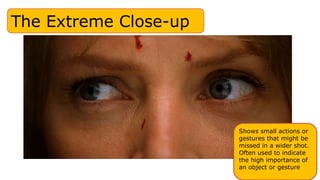
The Extreme Close-up
Shows small actions or
gestures that might be
missed in a wider shot.
Often used to indicate
the high importance of
an object or gesture
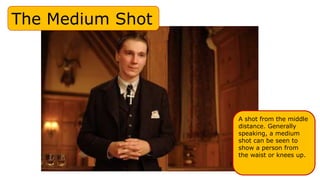
The Medium Shot
A shot from the middle
distance. Generally
speaking, a medium
shot can be seen to
show a person from
the waist or knees up.
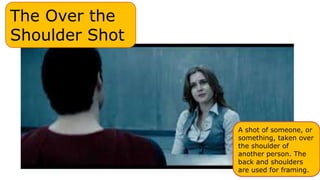
The Over the
Shoulder Shot
A shot of someone, or
something, taken over
the shoulder of
another person. The
back and shoulders
are used for framing.
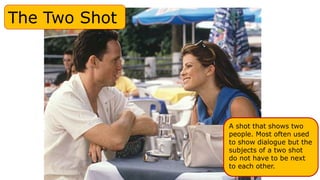
The Two Shot
A shot that shows two
people. Most often used
to show dialogue but the
subjects of a two shot
do not have to be next
to each other.
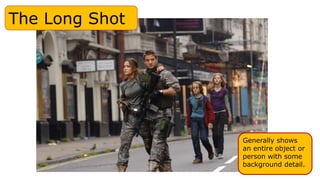
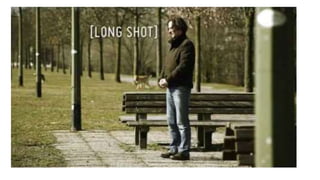
The Long Shot
Generally shows
an entire object or
person with some
background detail.
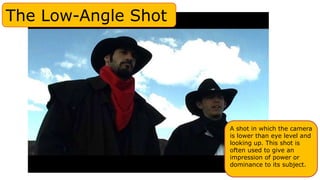
The Low-Angle Shot
A shot in which the camera
is lower than eye level and
looking up. This shot is
often used to give an
impression of power or
dominance to its subject.
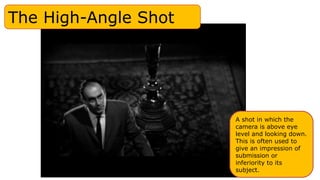
The High-Angle Shot
A shot in which the
camera is above eye
level and looking down.
This is often used to
give an impression of
submission or
inferiority to its
subject.
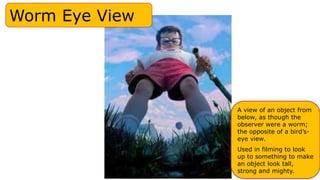
Worm Eye View
A view of an object from
below, as though the
observer were a worm;
the opposite of a bird’s-
eye view.
Used in filming to look
up to something to make
an object look tall,
strong and mighty.
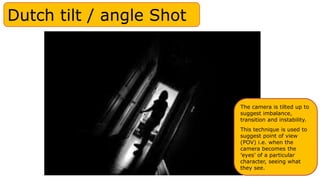
Dutch tilt / angle Shot
The camera is tilted up to
suggest imbalance,
transition and instability.
This technique is used to
suggest point of view
(POV) i.e. when the
camera becomes the
’eyes’ of a particular
character, seeing what
they see.
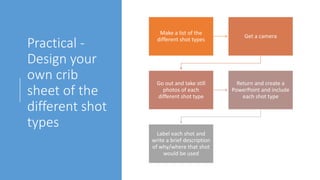
Practical -
Design your
own crib
sheet of the
different shot
types
Make a list of the
different shot types
Get a camera
Go out and take still
photos of each
different shot type
Return and create a
PowerPoint and include
each shot type
Label each shot and
write a brief description
of why/where that shot
would be used
CAMERA
MOVEMENT
To identify the effect of different
camera movement in different scenarios
To understand how directors construct
film with the use of camera movement and
editing.
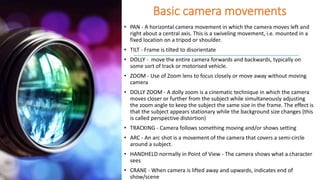
Basic camera movements
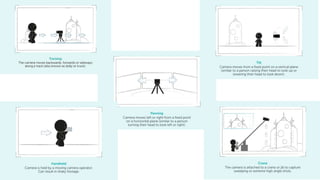
• PAN - A horizontal camera movement in which the camera moves left and
right about a central axis. This is a swiveling movement, i.e. mounted in a
fixed location on a tripod or shoulder.
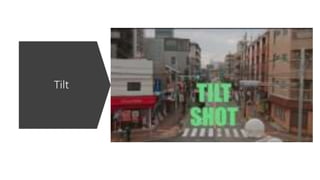
• TILT - Frame is tilted to disorientate
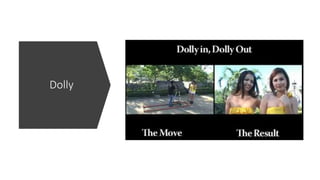
• DOLLY - move the entire camera forwards and backwards, typically on
some sort of track or motorised vehicle.
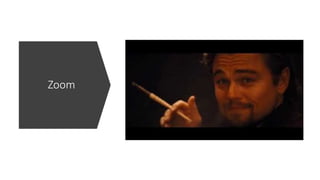
• ZOOM - Use of Zoom lens to focus closely or move away without moving
camera
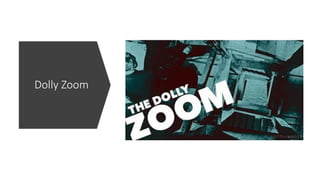
• DOLLY ZOOM - A dolly zoom is a cinematic technique in which the camera
moves closer or further from the subject while simultaneously adjusting
the zoom angle to keep the subject the same size in the frame. The effect is
that the subject appears stationary while the background size changes (this
is called perspective distortion)
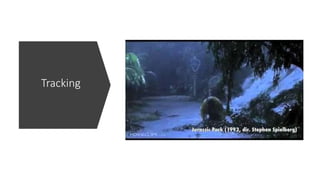
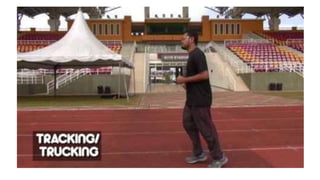
• TRACKING - Camera follows something moving and/or shows setting
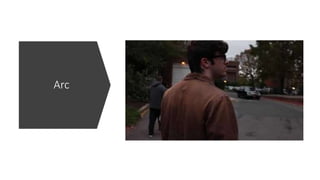
• ARC - An arc shot is a movement of the camera that covers a semi-circle
around a subject.
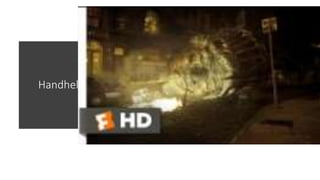
• HANDHELD normally in Point of View - The camera shows what a character
sees
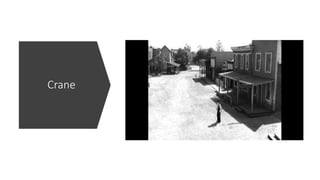
• CRANE - When camera is lifted away and upwards, indicates end of
show/scene
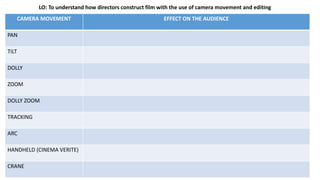
CAMERA MOVEMENT EFFECT ON THE AUDIENCE
PAN
TILT
DOLLY
ZOOM
DOLLY ZOOM
TRACKING
ARC
HANDHELD (CINEMA VERITE)
CRANE
LO: To understand how directors construct film with the use of camera movement and editing
Pan
Tilt
Dolly
Zoom
Dolly Zoom
Tracking
Arc
Handheld
Crane
Practical –
Create your
own video of
the different
camera
movements
Make a list of the different camera movements
Get a camera and tripod/hand held stabiliser
Go out and take moving images of each different
camera movement
Return and save your footage to memory stick
Be ready to edit these later
Edits and transitions between shots
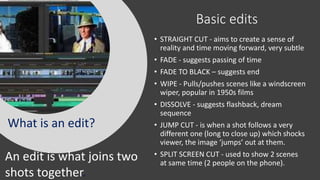
Basic edits
• STRAIGHT CUT - aims to create a sense of
reality and time moving forward, very subtle
• FADE - suggests passing of time
• FADE TO BLACK – suggests end
• WIPE - Pulls/pushes scenes like a windscreen
wiper, popular in 1950s films
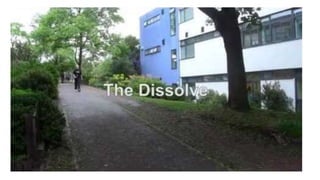
• DISSOLVE - suggests flashback, dream
sequence
• JUMP CUT - is when a shot follows a very
different one (long to close up) which shocks
viewer, the image ‘jumps’ out at them.
• SPLIT SCREEN CUT - used to show 2 scenes
at same time (2 people on the phone).
What is an edit?
An edit is what joins two
shots together.
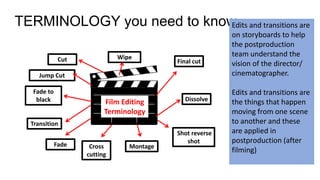
TERMINOLOGY you need to know.....
Film Editing
Terminology
Fade
Fade to
black
Cross
cutting
Final cut
Dissolve
Cut
Shot reverse
shot
Montage
Transition
Wipe
Jump Cut
Edits and transitions are
on storyboards to help
the postproduction
team understand the
vision of the director/
cinematographer.
Edits and transitions are
the things that happen
moving from one scene
to another and these
are applied in
postproduction (after
filming)
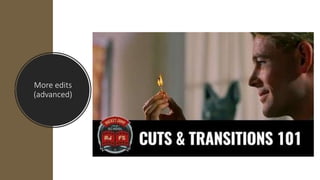
More edits
(advanced)
Film Sound
To be able to identify diegetic and
non-diegetic sound
To understand how sound is used in
to create effect
SOUND
Sound is really important on a storyboard as it
will tell the sound operators what they need to
be recording etc and equipment they will need.
Sound also helps the director convey emotion
and mood
Starter
• Although we think of film as a visual medium, sound is really
important.
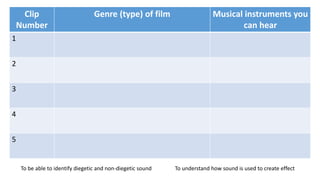
• Listen to the clips. What genre of film are they from?
• https://www.youtube.com/watch?v=Z6ylGHfLrdI
• https://www.youtube.com/watch?v=N0z6YbCHuB0
• https://www.youtube.com/watch?v=D8N7V8U2RpE&list=PLazdWAh3
CCscUAAMBrgd0suxo46PFGndD
• https://www.youtube.com/watch?v=9ZqZ3is9tpk
• https://www.youtube.com/watch?v=xWpnTGmS8-Q
• What instruments can you hear?
Clip
Number
Genre (type) of film Musical instruments you
can hear
1
2
3
4
5
To be able to identify diegetic and non-diegetic sound To understand how sound is used to create effect
Face Off
• Why did the director decide to use Somewhere Over the Rainbow
during this scene?
• What effect does it have on the audience?
• https://www.youtube.com/watch?v=1xni5g8Z6I4
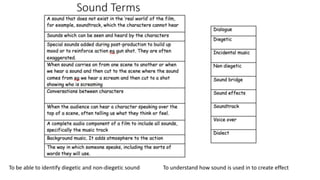
Diegetic Sound
Sound which the characters can hear.
Examples?
Dialogue (speech)
Background sound e.g. a radio/music at
a party.
Sound Effects e.g fighting, snow
crunching
Diegetic Sound
•Diegetic sound is a highly effective at
creating a sense of place and the
nature of events.
•Watch this clip and note down how
many examples of diegetic sound you
can hear.
•Sound Diegetic
•https://www.youtube.com/watch?v=
odSJly9Eog4
Non-diegetic Sound
•Sound which the characters cannot hear - it is added
afterwards (post production). Includes:
•Music
•Voiceovers
Music and Sensation
•Interpret (emotionally) a feeling or
sensation – what genre do these film
belong to?
• https://www.youtube.com/watch?v=kC5AzFc3coo
• https://www.youtube.com/watch?v=LfgNTA-fXz8
Music & Character
•Create or enhance audiences’
understanding of and/or empathy with a
key character.
•What does this music tell us about a
character?
•https://www.youtube.com/watch?v=UKw5
XCVEKAc
Voice Overs
•Position the audience with a particular character
•Understand their mental state
•Give us narrative information
•https://www.youtube.com/watch?v=MCmWfb7bfx
Q
•https://www.youtube.com/watch?v=tvKzyYy6qvY
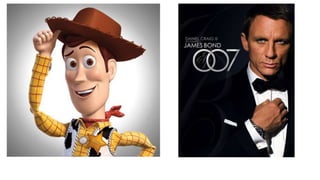
Leitmotif
•Character’s signature tune
•http://www.youtube.com/watch?v=rW
23RsUTb2Y
•https://www.youtube.com/watch?v=b
R2EobBG9wQ
Sound Perspective
• https://www.youtube.com/watch?v=9cm1cEo8SK
M
•How are non-diegetic and diegetic sound used and
to what emotional effect?
•The quality of the sound changes depending on the
audiences’ positioning in events.
•Diegetic & Non-Diegetic can be made to fade into
the background or fore grounded depending on the
need / impact.
To be able to identify diegetic and non-diegetic sound To understand how sound is used in to create effect
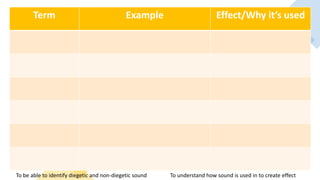
Term Example Effect/Why it’s used
To be able to identify diegetic and non-diegetic sound To understand how sound is used in to create effect
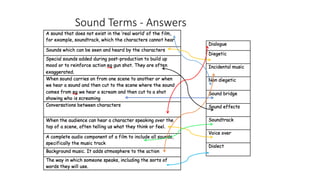
Sound Terms - Answers
• https://www.youtube.com/watch?v=1WE3E-gzHno
• https://www.youtube.com/watch?v=aunJ5HP9LYo
https://www.youtube.com/watch?v=oNhRdK14_ds
• Foley artists recreate the realistic ambient
sounds that the film portrays.
• The props and sets of a film often do not
react the same way acoustically as their
real life counterparts, requiring filmmakers
to Foley the sounds.
• The best Foley art is so well integrated into
a film that it goes unnoticed by the
audience.
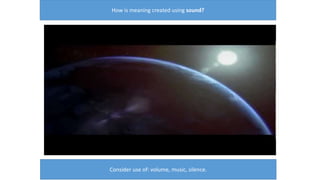
How is meaning created using sound?
Consider use of: volume, music, silence.
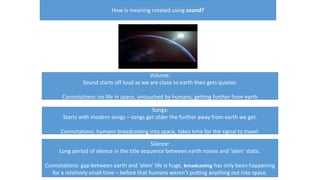
How is meaning created using sound?
Volume:
Sound starts off loud as we are close to earth then gets quieter.
Connotations: no life in space, untouched by humans, getting further from earth
Songs:
Starts with modern songs – songs get older the further away from earth we get.
Connotations: humans broadcasting into space, takes time for the signal to travel.
Silence:
Long period of silence in the title sequence between earth noises and ‘alien’ static.
Connotations: gap between earth and ‘alien’ life is huge, broadcasting has only been happening
for a relatively small time – before that humans weren’t putting anything out into space.
Sound and Setting
Sound may be used to indicate:
• Setting
• Country
• Time
• Atmosphere
Wider Context – AUDIENCE
Think about the popularity of the Bridgerton soundtrack.
How might this unique take on sound and time have attracted a wider audience?
Consider the ‘Stranger Things’ soundtrack – how might the use of music from the
era attracted a wider audience? What was the impact of using this music?
https://www.youtube.com/watch?v=yhUE3wW2irI
Key sentence starters:
“Creates meaning for the audience using…”
“Signifies that…”
“Is used to denote….”
“Another connotation could be…”
“Here the use of ..XXXX…. communicates… YYYYY…. the audience”
“The combination of shots tells the audience…”
“The contrast is designed to connote…”
What
different
sound/audio
might be in a
storyboard
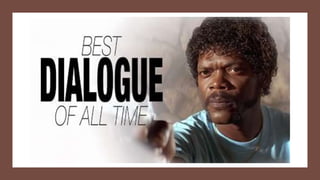
Dialogue
Sound effects
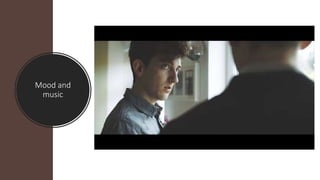
Mood and background music
Sound
Effects
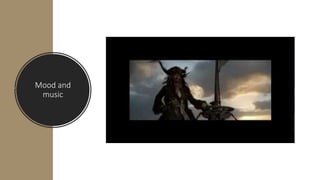
Mood and
music
Mood and
music
• To understand why mise en
scene is essential during
production of a moving image
media text
•
• To evaluate the application of
mise of scene to a moving
image opening scene.
Costume, Make Up & Props
• What can these things tell us about a character or film?
• Mindmap – 5 minutes
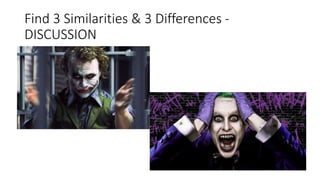
Find 3 Similarities & 3 Differences -
DISCUSSION
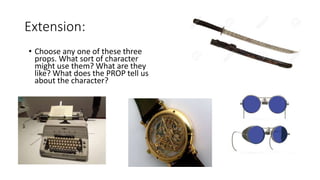
• Choose any one of these three
props. What sort of character
might use them? What are they
like? What does the PROP tell us
about the character?
Extension:
Definition:
Mise En
Scene
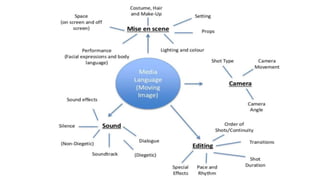
• A French term meaning what is put into a
scene or frame
• Visual information in front of the camera
• Communicates essential information to the
audience
• Made up of 5 elements: Can you guess
what they are?
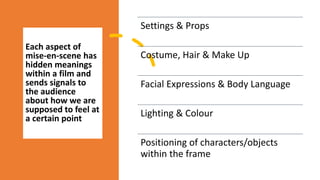
Settings & Props
Costume, Hair & Make Up
Facial Expressions & Body Language
Lighting & Colour
Positioning of characters/objects
within the frame
Each aspect of
mise-en-scene has
hidden meanings
within a film and
sends signals to
the audience
about how we are
supposed to feel at
a certain point
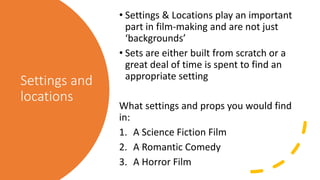
Settings and
locations
• Settings & Locations play an important
part in film-making and are not just
‘backgrounds’
• Sets are either built from scratch or a
great deal of time is spent to find an
appropriate setting
What settings and props you would find
in:
1. A Science Fiction Film
2. A Romantic Comedy
3. A Horror Film
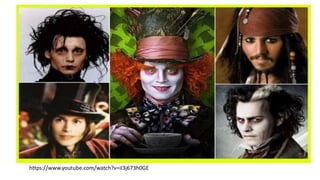
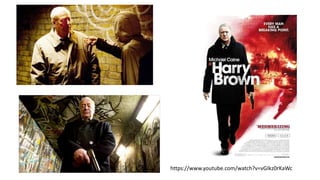
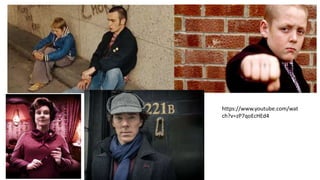
2. Costume,
Hair & Make
Up
• Costume, Hair & Make Up act as an
instant indicator to us of a
character’s personality, status & job
• It tells us immediately whether the
film is set in the present and what
society/or culture it will centre
around
• Certain costumes can signify certain
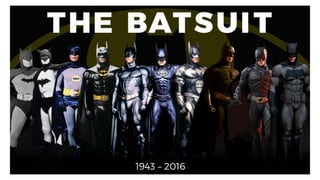
individuals (i.e. black cloak of a
vampire, Spidey’s Spiderman suit)
https://www.youtube.com/watch?v=iI3j673h0GE
https://www.youtube.com/watch?v=vGIkz0rKaWc
https://www.youtube.com/wat
ch?v=zP7qoEcHEd4
3. Facial
Expressions
& Body
Language
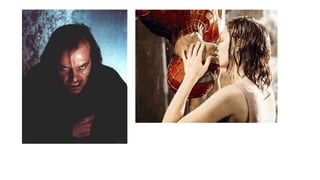
• Facial Expressions provide a clear indicator of how
someone is feeling
• If someone is smiling broadly, we assume they are
happy but we may get a different feeling if this is
accompanied by scary music
• Body Language may also indicate how a character
feels towards another character or may reflect the
state of their relationship
• TASK: What meanings/emotions do the following
images convey:
IMAGE 2
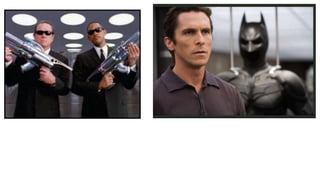
4. Positioning of Characters & Objects within a
frame
• Positioning within a frame can
draw our attention to an
important character/object
• A film-maker can use positioning
to indicate relationships between
people
• What does the positioning in the
following images reveal about the
characters/film?
IMAGE 3
5. Lighting &
Colour
Lighting & Colour can be used to achieve a
variety of effects:
• To highlight important characters or objects
within the frame
• To make characters look mysterious by
shading sections of the face & body
• To reflect a characters mental state/hidden
emotions (i.e. bright = happy, dark =
disturbed, strobe effect = confused
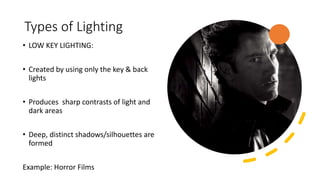
Types of Lighting
• LOW KEY LIGHTING:
• Created by using only the key & back
lights
• Produces sharp contrasts of light and
dark areas
• Deep, distinct shadows/silhouettes are
formed
Example: Horror Films
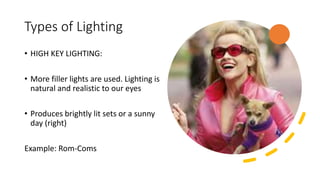
Types of Lighting
• HIGH KEY LIGHTING:
• More filler lights are used. Lighting is
natural and realistic to our eyes
• Produces brightly lit sets or a sunny
day (right)
Example: Rom-Coms
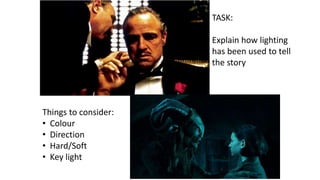
TASK:
Explain how lighting
has been used to tell
the story
Things to consider:
• Colour
• Direction
• Hard/Soft
• Key light
What types of lighting are used in the
following images:
A
F
D
C
E
B
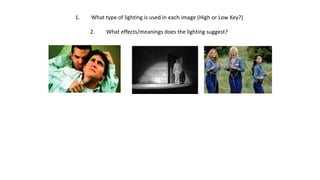
1. What type of lighting is used in each image (High or Low Key?)
2. What effects/meanings does the lighting suggest?
Narrative:
Enigma codes
LO: To be able to understand
what an enigma code is and
why it’s used
To be able to identify enigma
codes in a range of media texts
To consider enigma codes for
your own story
‘It was a bright
cold day in
April, and the
clocks were
striking
thirteen.’
Openings are important. They
are usually intended to grab and
hold the attention of the
receiver of the text. People will
walk out of the cinema, turn
over the TV station and abandon
a novel if it doesn’t capture the
attention immediately.
The extract is from
George Orwell’s Nineteen
Eighty-four. What makes
this sentence intriguing is
that the clocks strike
‘thirteen’. This
immediately sets up a
puzzle or an ENIGMA
CODE.
What is the first
thing that we think
of when we read
this?
I’m Roland Barthes. I
think that media texts
are constructed using a
series of codes. These
codes help the audience
to understand what is
going on.
These are called
‘enigma codes.’
These are plot
elements that raise
questions from the
audience.
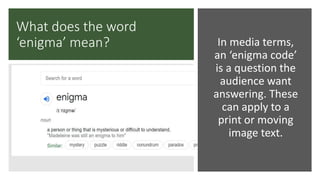
What does the word
‘enigma’ mean? In media terms,
an ‘enigma code’
is a question the
audience want
answering. These
can apply to a
print or moving
image text.
Enigma Code
• In media studies, the opening of any film/TV
show has to orientate the audience quickly,
giving them clear signs about such things as:
• Who is the hero and the villain (using
realistic or believable characters or ‘types’
of characters)
• A recognisable setting
• An understandable style
• A narrative structure
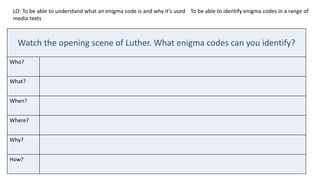
LO: To be able to understand what an enigma code is and why it’s used To be able to identify enigma codes in a range of
media texts
Watch the opening scene of Luther. What enigma codes can you identify?
Who?
What?
When?
Where?
Why?
How?
Ideas for a
good
storyline
LO: To be able to identify key
features in an opening sequence
To be able to label a storyboard for
these opening sequences
Introduce your protagonist
as soon as possible.
• The audience does not necessarily need to
see every part of the character or learn
everything about them, but provide some
idea of who they are quickly.
• This is most effective through action,
reaction or failing this, through dialogue.
• What is key however is that the protagonist
be introduced to the audience quickly.
2. Make sure to establish the genre.
It can be worthwhile to include some references to genre
early on.
Even brief mentions of props or visual signifiers of genre
that are fleeting can help establish setting and expectation
for an audience.
3. Create conflict
immediately.
• Conflict is a key element needed throughout the
entirety of any interesting script.
• Using conflict near the beginning of your script can
be an effective way of establishing pace, tone and
narrative and is widely used in modern filmmaking.
• Conflict need not be ‘large’ and could be used in
something as simple as a character having to make
a decision.
Send your protagonist on a
journey.
Much like conflict, having a protagonist set off on some form of journey
can and should be done throughout a script.
This allows an audience to engage with a quest and therefore a desire,
making things interesting and creating a ‘stake’ for people to be invested
in.
As with conflict, a journey need not be a ‘large’ or especially important
near the start of a script and could be something as straightforward as a
small emotional journey or a quick physical one.
Make it visual.
This one is vital for all aspects of a
script.
The opening, as with all parts of a
script needs to be visual.
Establish the strong visual nature of
the script and do so at the
beginning.
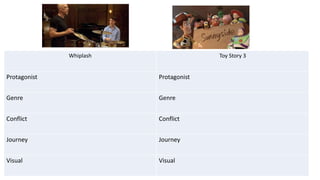
Whiplash Toy Story 3
Protagonist Protagonist
Genre Genre
Conflict Conflict
Journey Journey
Visual Visual
SEQUENCE AND
BRIEF DESCRIPTION
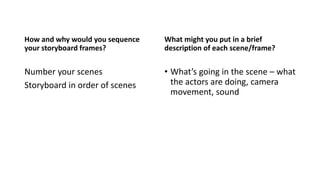
How and why would you sequence
your storyboard frames?
Number your scenes
Storyboard in order of scenes
What might you put in a brief
description of each scene/frame?
• What’s going in the scene – what
the actors are doing, camera
movement, sound
CREATING A STORYBOARD
Things to consider
Genre and
purpose of
media product
Why are these
important to consider
when you are
storyboarding?
FEATURE FILM – different genre’s, e.g
horror, romance, comedy
ADVERTISMENTS – to sell a product
MUSIC VIDEO – to promote the song and
artist
GAME – to be interactive/to entertain
Target
audience
Who will be
watching/consuming the
product, what are they
expecting?
Why is this important?
Accuracy and
clarity
• Your storyboard needs to be clear and concise
so that others can use it and interpret it easily
How to
produce a
storyboard
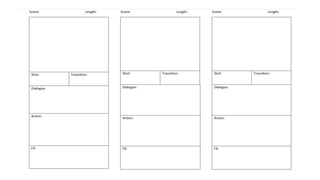
• A common way of producing a
storyboard is using a template.
• Anything between one and six
panels/scenes per page is quite typical.
• Otherwise the layout chosen depends
on the type of product to be created.
• Film storyboards tend to have more
detailed content for camera operators
for example
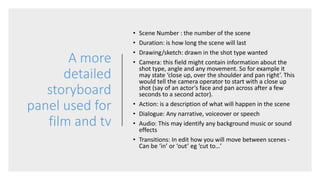
A more
detailed
storyboard
panel used for
film and tv
• Scene Number : the number of the scene
• Duration: is how long the scene will last
• Drawing/sketch: drawn in the shot type wanted
• Camera: this field might contain information about the
shot type, angle and any movement. So for example it
may state ‘close up, over the shoulder and pan right’. This
would tell the camera operator to start with a close up
shot (say of an actor’s face and pan across after a few
seconds to a second actor).
• Action: is a description of what will happen in the scene
• Dialogue: Any narrative, voiceover or speech
• Audio: This may identify any background music or sound
effects
• Transitions: In edit how you will move between scenes -
Can be ‘in’ or ‘out’ eg ‘cut to…’
Learning Aim 2 in Assignment –
Create a storyboard for
intended purpose
Turning a poem into a short film
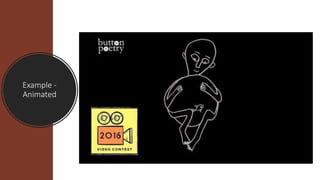
• Animated – hand drawn, stop motion, cgi all ways of visualising a poem without need
of actors
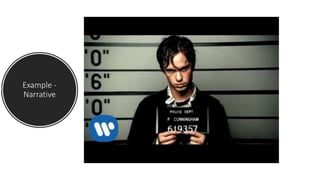
• Narrative - tells the audience a story, the video has an underlying narrative throughout
the video.
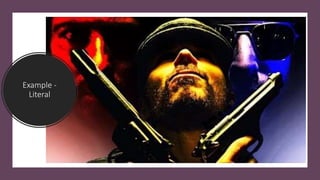
• Lyrical - Literal interpretation of the words
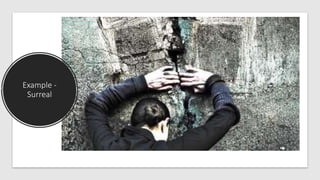
• Surreal – Visual poems can make political statements, disturb, question, and challenge
the world we are in.
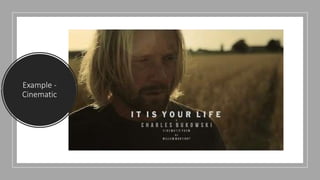
• Cinematic – new genre of film typically will be 5minutes or less in duration; Original
Footage, or Animation, Shot with High Definition (HD) technology; Scored with an
original, classical or orchestrated musical piece; Original Recording/Interview or
Professional Narration from an original and/or written work of prose or poetry.
Example -
Animated
Example -
Narrative
Example -
Literal
Example -
Surreal
Example -
Cinematic
ASSIGNMENT
You are now ready to begin your
assignment
Introduction
• You have been asked to produce some ideas to turn the poem ‘People will always need people’ into a visual
story. They have asked you to consider the meaning behind the words and interpret these into visual story
that will suit a teenage audience.
• You will firstly put together a presentation of camera angles, shot types and movement, editing transitions
and other components that storyboards use to convey meaning to an audience.
Task 1 - Produce a PowerPoint presentation which includes the
following:
 Example storyboards that you have researched
 Examples of shot types and camera movements with annotations
 Examples of editing transitions with annotations
 Examples of different audio that might be used in storyboards with annotations
• Your annotations should identify with descriptions and explanations, how those
components create or convey meaning to an audience.
Task 2
 Using a format of your choice, produce as many different creative
ideas for your visual poem.
 Produce a 12 to 15 frame storyboard sequence that interprets the
poem ‘people will always need people’ into a visual story, with
annotations, which explains your ideas for both visual and audio
content.
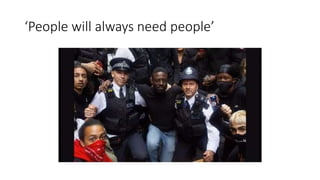
‘People will always need people’
People need people,
To walk to
To talk to
To cry and rely on,
People will always need
people.
To love and to miss
To hug and to kiss,
It’s useful to have other
people.
To whom to moan
If you’re all alone,
It’s so hard to share
When no one is there.
There’s not much to do
When there’s no one but
you.
People will always need
people.
As girlfriends
As boyfriends
From Bombay
To Ostend,
People will always need
people-
To have friendly fights with
And share tasty bites with,
It’s useful to have other
people.
People live in families
Gangs, posses and packs,
Its seems we need company
Before we relax,
So stop making enemies
And let’s face the facts,
People will always need
people,
Yes
People will always need people
To please
To tease
To put you at ease,
People will always need
people.
To make life appealing
And give life some
meaning,
It’s useful to have other
people.
It you need a change
To whom will you turn.
If you need a lesson
From whom will you learn.
If you need to play
You’ll know why I say
People will always need
people.
• People need people,
To walk to
To talk to
To cry and rely on,
People will always need people.
To love and to miss
To hug and to kiss,
It’s useful to have other people.
To whom to moan
If you’re all alone,
It’s so hard to share
When no one is there.
There’s not much to do
When there’s no one but you.
People will always need people.

STORYBOARD.pptx

  • 1.
    FOR DISTINCTION STANDARD,learners: LA1• correctly identify the different components of a storyboard such as camera angle, shot and movement, as well as the shot transitions and audio, with some detailed explanations of how these are used to create meaning, using relevant examples LA2• produce a storyboard that shows the logical sequence of frames, all of which are correctly labelled with sound, edits and transitions, and have some written annotations that give a clear account of how the shots and transitions are used to create meaning. FOR MERIT STANDARD, learners: LA1• identify most of the components used in storyboards. The focus will predominately be on camera shots and angles but there will be some reference to the use of audio and transitions, with brief descriptions of how they have been used to create meaning, with some examples LA2• produce a storyboard that shows the sequence of the intended frames, all of which provide some details of the sound and audio and are mostly labelled correctly with sound, edits and transitions. FOR PASS STANDARD, learners: LA1• identify the most obvious components of a storyboard (camera angles/shots, label them correctly LA2• produce a very basic storyboard that shows some sequencing of the intended frames and which gives some details of ideas for sound, edits and transitions.
  • 2.
  • 3.
    • Learning Outcomes •To evaluate the effectiveness of three different storyboards • To be able to apply the mark scheme to three different storyboards Overall Unit Aims: A – Explore the components of storyboards and how they are used B – Produce a storyboard for a specified media product
  • 5.
    •What genre arethese films from? •How do you know? • Key words: mise en scene, lighting, colour, setting, camera angle.
  • 7.
    Genres • 5 –The Hunger Games – fantasy/adventure • 12 Years a Slave – period drama/biographical • A Woman In Black – horror/gothic • The Other Woman – comedy/’chick flick’
  • 9.
    Storyboard Component 1 Slug line/title of shot Camera movement Cameraangle Sound Transitions Annotations How meaning is created Storyboard Component 2 Slug line/title of shot Camera movement Camera angle Sound Transitions Annotations How meaning is created Storyboard Component 3 Slug line/title of shot Camera movement Camera angle Sound Transitions Annotations How meaning is created
  • 10.
    FOR DISTINCTION STANDARD,learners: Correctly identify all different parts of a storyboard such as camera angles, shot and movement. Produce a storyboard that shows the logical sequence of frames, all of which are correctly labelled with sound, edits and transitions. Gives a clear account of how the shots and transitions are used to create meaning. FOR MERIT STANDARD, learners: Identify most of the parts in a storyboard, mainly camera shots and angles. Produce a storyboard that shows a sequence of frames, which provide some details of sound and are mostly labelled correctly with sound, edits and transitions. FOR PASS STANDARD, learners: Identify the most obvious parts of a storyboard (camera angles/shots, label them correctly) Produce a very basic storyboard that shows some sequencing of frames, and which gives some details for sound, edits and transitions.
  • 11.
    What is a storyboard? ‘asequence of drawings, typically with some directions and dialogue, representing the shots planned for a film or television production’.
  • 12.
  • 13.
  • 15.
  • 16.
    Types of storyboardsand their uses
  • 17.
    What visual media products use storyboards? FeatureFilms Music videos TV advertisements
  • 18.
    Who uses storyboards? •Storyboards areused by the director, cinematographer and camera operators to set up and film sequences, ensuring that all shots are covered and lighting, framing, audio, timings are correct
  • 19.
  • 20.
  • 21.
  • 22.
  • 23.
  • 24.
  • 25.
  • 26.
    The Establishing Shot Contextualises ascene. It is usually a long shot or extreme long shot and shows where, and sometimes when, the rest of the scene will take place.
  • 27.
    The Close-Up A tightlyframed shot of a person or object. Displays detail and/or emotion and is generally only used on central characters.
  • 28.
    The Extreme Close-up Showssmall actions or gestures that might be missed in a wider shot. Often used to indicate the high importance of an object or gesture
  • 29.
    The Medium Shot Ashot from the middle distance. Generally speaking, a medium shot can be seen to show a person from the waist or knees up.
  • 30.
    The Over the ShoulderShot A shot of someone, or something, taken over the shoulder of another person. The back and shoulders are used for framing.
  • 31.
    The Two Shot Ashot that shows two people. Most often used to show dialogue but the subjects of a two shot do not have to be next to each other.
  • 32.
    The Long Shot Generallyshows an entire object or person with some background detail.
  • 33.
    The Low-Angle Shot Ashot in which the camera is lower than eye level and looking up. This shot is often used to give an impression of power or dominance to its subject.
  • 34.
    The High-Angle Shot Ashot in which the camera is above eye level and looking down. This is often used to give an impression of submission or inferiority to its subject.
  • 35.
    Worm Eye View Aview of an object from below, as though the observer were a worm; the opposite of a bird’s- eye view. Used in filming to look up to something to make an object look tall, strong and mighty.
  • 36.
    Dutch tilt /angle Shot The camera is tilted up to suggest imbalance, transition and instability. This technique is used to suggest point of view (POV) i.e. when the camera becomes the ’eyes’ of a particular character, seeing what they see.
  • 39.
    Practical - Design your owncrib sheet of the different shot types Make a list of the different shot types Get a camera Go out and take still photos of each different shot type Return and create a PowerPoint and include each shot type Label each shot and write a brief description of why/where that shot would be used
  • 40.
    CAMERA MOVEMENT To identify theeffect of different camera movement in different scenarios To understand how directors construct film with the use of camera movement and editing.
  • 41.
    Basic camera movements •PAN - A horizontal camera movement in which the camera moves left and right about a central axis. This is a swiveling movement, i.e. mounted in a fixed location on a tripod or shoulder. • TILT - Frame is tilted to disorientate • DOLLY - move the entire camera forwards and backwards, typically on some sort of track or motorised vehicle. • ZOOM - Use of Zoom lens to focus closely or move away without moving camera • DOLLY ZOOM - A dolly zoom is a cinematic technique in which the camera moves closer or further from the subject while simultaneously adjusting the zoom angle to keep the subject the same size in the frame. The effect is that the subject appears stationary while the background size changes (this is called perspective distortion) • TRACKING - Camera follows something moving and/or shows setting • ARC - An arc shot is a movement of the camera that covers a semi-circle around a subject. • HANDHELD normally in Point of View - The camera shows what a character sees • CRANE - When camera is lifted away and upwards, indicates end of show/scene
  • 42.
    CAMERA MOVEMENT EFFECTON THE AUDIENCE PAN TILT DOLLY ZOOM DOLLY ZOOM TRACKING ARC HANDHELD (CINEMA VERITE) CRANE LO: To understand how directors construct film with the use of camera movement and editing
  • 44.
  • 45.
  • 46.
  • 48.
  • 49.
  • 50.
  • 51.
  • 52.
  • 53.
  • 55.
    Practical – Create your ownvideo of the different camera movements Make a list of the different camera movements Get a camera and tripod/hand held stabiliser Go out and take moving images of each different camera movement Return and save your footage to memory stick Be ready to edit these later
  • 56.
    Edits and transitionsbetween shots
  • 57.
    Basic edits • STRAIGHTCUT - aims to create a sense of reality and time moving forward, very subtle • FADE - suggests passing of time • FADE TO BLACK – suggests end • WIPE - Pulls/pushes scenes like a windscreen wiper, popular in 1950s films • DISSOLVE - suggests flashback, dream sequence • JUMP CUT - is when a shot follows a very different one (long to close up) which shocks viewer, the image ‘jumps’ out at them. • SPLIT SCREEN CUT - used to show 2 scenes at same time (2 people on the phone). What is an edit? An edit is what joins two shots together.
  • 58.
    TERMINOLOGY you needto know..... Film Editing Terminology Fade Fade to black Cross cutting Final cut Dissolve Cut Shot reverse shot Montage Transition Wipe Jump Cut Edits and transitions are on storyboards to help the postproduction team understand the vision of the director/ cinematographer. Edits and transitions are the things that happen moving from one scene to another and these are applied in postproduction (after filming)
  • 61.
  • 62.
    Film Sound To beable to identify diegetic and non-diegetic sound To understand how sound is used in to create effect
  • 63.
    SOUND Sound is reallyimportant on a storyboard as it will tell the sound operators what they need to be recording etc and equipment they will need. Sound also helps the director convey emotion and mood
  • 64.
    Starter • Although wethink of film as a visual medium, sound is really important. • Listen to the clips. What genre of film are they from? • https://www.youtube.com/watch?v=Z6ylGHfLrdI • https://www.youtube.com/watch?v=N0z6YbCHuB0 • https://www.youtube.com/watch?v=D8N7V8U2RpE&list=PLazdWAh3 CCscUAAMBrgd0suxo46PFGndD • https://www.youtube.com/watch?v=9ZqZ3is9tpk • https://www.youtube.com/watch?v=xWpnTGmS8-Q • What instruments can you hear?
  • 65.
    Clip Number Genre (type) offilm Musical instruments you can hear 1 2 3 4 5 To be able to identify diegetic and non-diegetic sound To understand how sound is used to create effect
  • 66.
    Face Off • Whydid the director decide to use Somewhere Over the Rainbow during this scene? • What effect does it have on the audience? • https://www.youtube.com/watch?v=1xni5g8Z6I4
  • 67.
    Diegetic Sound Sound whichthe characters can hear. Examples? Dialogue (speech) Background sound e.g. a radio/music at a party. Sound Effects e.g fighting, snow crunching
  • 68.
    Diegetic Sound •Diegetic soundis a highly effective at creating a sense of place and the nature of events. •Watch this clip and note down how many examples of diegetic sound you can hear. •Sound Diegetic •https://www.youtube.com/watch?v= odSJly9Eog4
  • 69.
    Non-diegetic Sound •Sound whichthe characters cannot hear - it is added afterwards (post production). Includes: •Music •Voiceovers
  • 70.
    Music and Sensation •Interpret(emotionally) a feeling or sensation – what genre do these film belong to? • https://www.youtube.com/watch?v=kC5AzFc3coo • https://www.youtube.com/watch?v=LfgNTA-fXz8
  • 71.
    Music & Character •Createor enhance audiences’ understanding of and/or empathy with a key character. •What does this music tell us about a character? •https://www.youtube.com/watch?v=UKw5 XCVEKAc
  • 72.
    Voice Overs •Position theaudience with a particular character •Understand their mental state •Give us narrative information •https://www.youtube.com/watch?v=MCmWfb7bfx Q •https://www.youtube.com/watch?v=tvKzyYy6qvY
  • 73.
  • 75.
    Sound Perspective • https://www.youtube.com/watch?v=9cm1cEo8SK M •Howare non-diegetic and diegetic sound used and to what emotional effect? •The quality of the sound changes depending on the audiences’ positioning in events. •Diegetic & Non-Diegetic can be made to fade into the background or fore grounded depending on the need / impact.
  • 76.
    To be ableto identify diegetic and non-diegetic sound To understand how sound is used in to create effect
  • 77.
    Term Example Effect/Whyit’s used To be able to identify diegetic and non-diegetic sound To understand how sound is used in to create effect
  • 78.
  • 79.
  • 80.
    https://www.youtube.com/watch?v=oNhRdK14_ds • Foley artistsrecreate the realistic ambient sounds that the film portrays. • The props and sets of a film often do not react the same way acoustically as their real life counterparts, requiring filmmakers to Foley the sounds. • The best Foley art is so well integrated into a film that it goes unnoticed by the audience.
  • 81.
    How is meaningcreated using sound? Consider use of: volume, music, silence.
  • 82.
    How is meaningcreated using sound? Volume: Sound starts off loud as we are close to earth then gets quieter. Connotations: no life in space, untouched by humans, getting further from earth Songs: Starts with modern songs – songs get older the further away from earth we get. Connotations: humans broadcasting into space, takes time for the signal to travel. Silence: Long period of silence in the title sequence between earth noises and ‘alien’ static. Connotations: gap between earth and ‘alien’ life is huge, broadcasting has only been happening for a relatively small time – before that humans weren’t putting anything out into space.
  • 83.
    Sound and Setting Soundmay be used to indicate: • Setting • Country • Time • Atmosphere Wider Context – AUDIENCE Think about the popularity of the Bridgerton soundtrack. How might this unique take on sound and time have attracted a wider audience? Consider the ‘Stranger Things’ soundtrack – how might the use of music from the era attracted a wider audience? What was the impact of using this music? https://www.youtube.com/watch?v=yhUE3wW2irI
  • 84.
    Key sentence starters: “Createsmeaning for the audience using…” “Signifies that…” “Is used to denote….” “Another connotation could be…” “Here the use of ..XXXX…. communicates… YYYYY…. the audience” “The combination of shots tells the audience…” “The contrast is designed to connote…”
  • 85.
    What different sound/audio might be ina storyboard Dialogue Sound effects Mood and background music
  • 87.
  • 88.
  • 89.
  • 90.
    • To understandwhy mise en scene is essential during production of a moving image media text • • To evaluate the application of mise of scene to a moving image opening scene.
  • 91.
    Costume, Make Up& Props • What can these things tell us about a character or film? • Mindmap – 5 minutes
  • 92.
    Find 3 Similarities& 3 Differences - DISCUSSION
  • 94.
    • Choose anyone of these three props. What sort of character might use them? What are they like? What does the PROP tell us about the character? Extension:
  • 95.
    Definition: Mise En Scene • AFrench term meaning what is put into a scene or frame • Visual information in front of the camera • Communicates essential information to the audience • Made up of 5 elements: Can you guess what they are?
  • 97.
    Settings & Props Costume,Hair & Make Up Facial Expressions & Body Language Lighting & Colour Positioning of characters/objects within the frame Each aspect of mise-en-scene has hidden meanings within a film and sends signals to the audience about how we are supposed to feel at a certain point
  • 98.
    Settings and locations • Settings& Locations play an important part in film-making and are not just ‘backgrounds’ • Sets are either built from scratch or a great deal of time is spent to find an appropriate setting What settings and props you would find in: 1. A Science Fiction Film 2. A Romantic Comedy 3. A Horror Film
  • 99.
    2. Costume, Hair &Make Up • Costume, Hair & Make Up act as an instant indicator to us of a character’s personality, status & job • It tells us immediately whether the film is set in the present and what society/or culture it will centre around • Certain costumes can signify certain individuals (i.e. black cloak of a vampire, Spidey’s Spiderman suit)
  • 100.
  • 101.
  • 102.
  • 103.
    3. Facial Expressions & Body Language •Facial Expressions provide a clear indicator of how someone is feeling • If someone is smiling broadly, we assume they are happy but we may get a different feeling if this is accompanied by scary music • Body Language may also indicate how a character feels towards another character or may reflect the state of their relationship • TASK: What meanings/emotions do the following images convey:
  • 104.
  • 105.
    4. Positioning ofCharacters & Objects within a frame • Positioning within a frame can draw our attention to an important character/object • A film-maker can use positioning to indicate relationships between people • What does the positioning in the following images reveal about the characters/film?
  • 106.
  • 107.
    5. Lighting & Colour Lighting& Colour can be used to achieve a variety of effects: • To highlight important characters or objects within the frame • To make characters look mysterious by shading sections of the face & body • To reflect a characters mental state/hidden emotions (i.e. bright = happy, dark = disturbed, strobe effect = confused
  • 108.
    Types of Lighting •LOW KEY LIGHTING: • Created by using only the key & back lights • Produces sharp contrasts of light and dark areas • Deep, distinct shadows/silhouettes are formed Example: Horror Films
  • 109.
    Types of Lighting •HIGH KEY LIGHTING: • More filler lights are used. Lighting is natural and realistic to our eyes • Produces brightly lit sets or a sunny day (right) Example: Rom-Coms
  • 110.
    TASK: Explain how lighting hasbeen used to tell the story Things to consider: • Colour • Direction • Hard/Soft • Key light
  • 111.
    What types oflighting are used in the following images: A F D C E B 1. What type of lighting is used in each image (High or Low Key?) 2. What effects/meanings does the lighting suggest?
  • 112.
    Narrative: Enigma codes LO: Tobe able to understand what an enigma code is and why it’s used To be able to identify enigma codes in a range of media texts To consider enigma codes for your own story
  • 113.
    ‘It was abright cold day in April, and the clocks were striking thirteen.’ Openings are important. They are usually intended to grab and hold the attention of the receiver of the text. People will walk out of the cinema, turn over the TV station and abandon a novel if it doesn’t capture the attention immediately. The extract is from George Orwell’s Nineteen Eighty-four. What makes this sentence intriguing is that the clocks strike ‘thirteen’. This immediately sets up a puzzle or an ENIGMA CODE. What is the first thing that we think of when we read this?
  • 114.
    I’m Roland Barthes.I think that media texts are constructed using a series of codes. These codes help the audience to understand what is going on. These are called ‘enigma codes.’ These are plot elements that raise questions from the audience.
  • 115.
    What does theword ‘enigma’ mean? In media terms, an ‘enigma code’ is a question the audience want answering. These can apply to a print or moving image text.
  • 116.
    Enigma Code • Inmedia studies, the opening of any film/TV show has to orientate the audience quickly, giving them clear signs about such things as: • Who is the hero and the villain (using realistic or believable characters or ‘types’ of characters) • A recognisable setting • An understandable style • A narrative structure
  • 117.
    LO: To beable to understand what an enigma code is and why it’s used To be able to identify enigma codes in a range of media texts Watch the opening scene of Luther. What enigma codes can you identify? Who? What? When? Where? Why? How?
  • 121.
    Ideas for a good storyline LO:To be able to identify key features in an opening sequence To be able to label a storyboard for these opening sequences
  • 122.
    Introduce your protagonist assoon as possible. • The audience does not necessarily need to see every part of the character or learn everything about them, but provide some idea of who they are quickly. • This is most effective through action, reaction or failing this, through dialogue. • What is key however is that the protagonist be introduced to the audience quickly.
  • 123.
    2. Make sureto establish the genre. It can be worthwhile to include some references to genre early on. Even brief mentions of props or visual signifiers of genre that are fleeting can help establish setting and expectation for an audience.
  • 124.
    3. Create conflict immediately. •Conflict is a key element needed throughout the entirety of any interesting script. • Using conflict near the beginning of your script can be an effective way of establishing pace, tone and narrative and is widely used in modern filmmaking. • Conflict need not be ‘large’ and could be used in something as simple as a character having to make a decision.
  • 125.
    Send your protagoniston a journey. Much like conflict, having a protagonist set off on some form of journey can and should be done throughout a script. This allows an audience to engage with a quest and therefore a desire, making things interesting and creating a ‘stake’ for people to be invested in. As with conflict, a journey need not be a ‘large’ or especially important near the start of a script and could be something as straightforward as a small emotional journey or a quick physical one.
  • 126.
    Make it visual. Thisone is vital for all aspects of a script. The opening, as with all parts of a script needs to be visual. Establish the strong visual nature of the script and do so at the beginning.
  • 127.
    Whiplash Toy Story3 Protagonist Protagonist Genre Genre Conflict Conflict Journey Journey Visual Visual
  • 128.
  • 129.
    How and whywould you sequence your storyboard frames? Number your scenes Storyboard in order of scenes What might you put in a brief description of each scene/frame? • What’s going in the scene – what the actors are doing, camera movement, sound
  • 130.
  • 131.
    Genre and purpose of mediaproduct Why are these important to consider when you are storyboarding? FEATURE FILM – different genre’s, e.g horror, romance, comedy ADVERTISMENTS – to sell a product MUSIC VIDEO – to promote the song and artist GAME – to be interactive/to entertain
  • 132.
    Target audience Who will be watching/consumingthe product, what are they expecting? Why is this important?
  • 133.
    Accuracy and clarity • Yourstoryboard needs to be clear and concise so that others can use it and interpret it easily
  • 134.
    How to produce a storyboard •A common way of producing a storyboard is using a template. • Anything between one and six panels/scenes per page is quite typical. • Otherwise the layout chosen depends on the type of product to be created. • Film storyboards tend to have more detailed content for camera operators for example
  • 135.
    A more detailed storyboard panel usedfor film and tv • Scene Number : the number of the scene • Duration: is how long the scene will last • Drawing/sketch: drawn in the shot type wanted • Camera: this field might contain information about the shot type, angle and any movement. So for example it may state ‘close up, over the shoulder and pan right’. This would tell the camera operator to start with a close up shot (say of an actor’s face and pan across after a few seconds to a second actor). • Action: is a description of what will happen in the scene • Dialogue: Any narrative, voiceover or speech • Audio: This may identify any background music or sound effects • Transitions: In edit how you will move between scenes - Can be ‘in’ or ‘out’ eg ‘cut to…’
  • 137.
    Learning Aim 2in Assignment – Create a storyboard for intended purpose
  • 138.
    Turning a poeminto a short film • Animated – hand drawn, stop motion, cgi all ways of visualising a poem without need of actors • Narrative - tells the audience a story, the video has an underlying narrative throughout the video. • Lyrical - Literal interpretation of the words • Surreal – Visual poems can make political statements, disturb, question, and challenge the world we are in. • Cinematic – new genre of film typically will be 5minutes or less in duration; Original Footage, or Animation, Shot with High Definition (HD) technology; Scored with an original, classical or orchestrated musical piece; Original Recording/Interview or Professional Narration from an original and/or written work of prose or poetry.
  • 139.
  • 140.
  • 141.
  • 142.
  • 143.
  • 144.
    ASSIGNMENT You are nowready to begin your assignment
  • 145.
    Introduction • You havebeen asked to produce some ideas to turn the poem ‘People will always need people’ into a visual story. They have asked you to consider the meaning behind the words and interpret these into visual story that will suit a teenage audience. • You will firstly put together a presentation of camera angles, shot types and movement, editing transitions and other components that storyboards use to convey meaning to an audience.
  • 146.
    Task 1 -Produce a PowerPoint presentation which includes the following:  Example storyboards that you have researched  Examples of shot types and camera movements with annotations  Examples of editing transitions with annotations  Examples of different audio that might be used in storyboards with annotations • Your annotations should identify with descriptions and explanations, how those components create or convey meaning to an audience.
  • 147.
    Task 2  Usinga format of your choice, produce as many different creative ideas for your visual poem.  Produce a 12 to 15 frame storyboard sequence that interprets the poem ‘people will always need people’ into a visual story, with annotations, which explains your ideas for both visual and audio content.
  • 148.
    ‘People will alwaysneed people’
  • 149.
    People need people, Towalk to To talk to To cry and rely on, People will always need people. To love and to miss To hug and to kiss, It’s useful to have other people. To whom to moan If you’re all alone, It’s so hard to share When no one is there. There’s not much to do When there’s no one but you. People will always need people. As girlfriends As boyfriends From Bombay To Ostend, People will always need people- To have friendly fights with And share tasty bites with, It’s useful to have other people. People live in families Gangs, posses and packs, Its seems we need company Before we relax, So stop making enemies And let’s face the facts, People will always need people, Yes People will always need people To please To tease To put you at ease, People will always need people. To make life appealing And give life some meaning, It’s useful to have other people. It you need a change To whom will you turn. If you need a lesson From whom will you learn. If you need to play You’ll know why I say People will always need people.
  • 150.
    • People needpeople, To walk to To talk to To cry and rely on, People will always need people. To love and to miss To hug and to kiss, It’s useful to have other people. To whom to moan If you’re all alone, It’s so hard to share When no one is there. There’s not much to do When there’s no one but you. People will always need people.