


Mechanical CPR
Humans Optional
Objectives
✤ Why they were developed.
✤ How they work.
✤ Current evidence.
✤ When they are useful.
✤ When they are not so useful.
✤ What next?
01
Why?
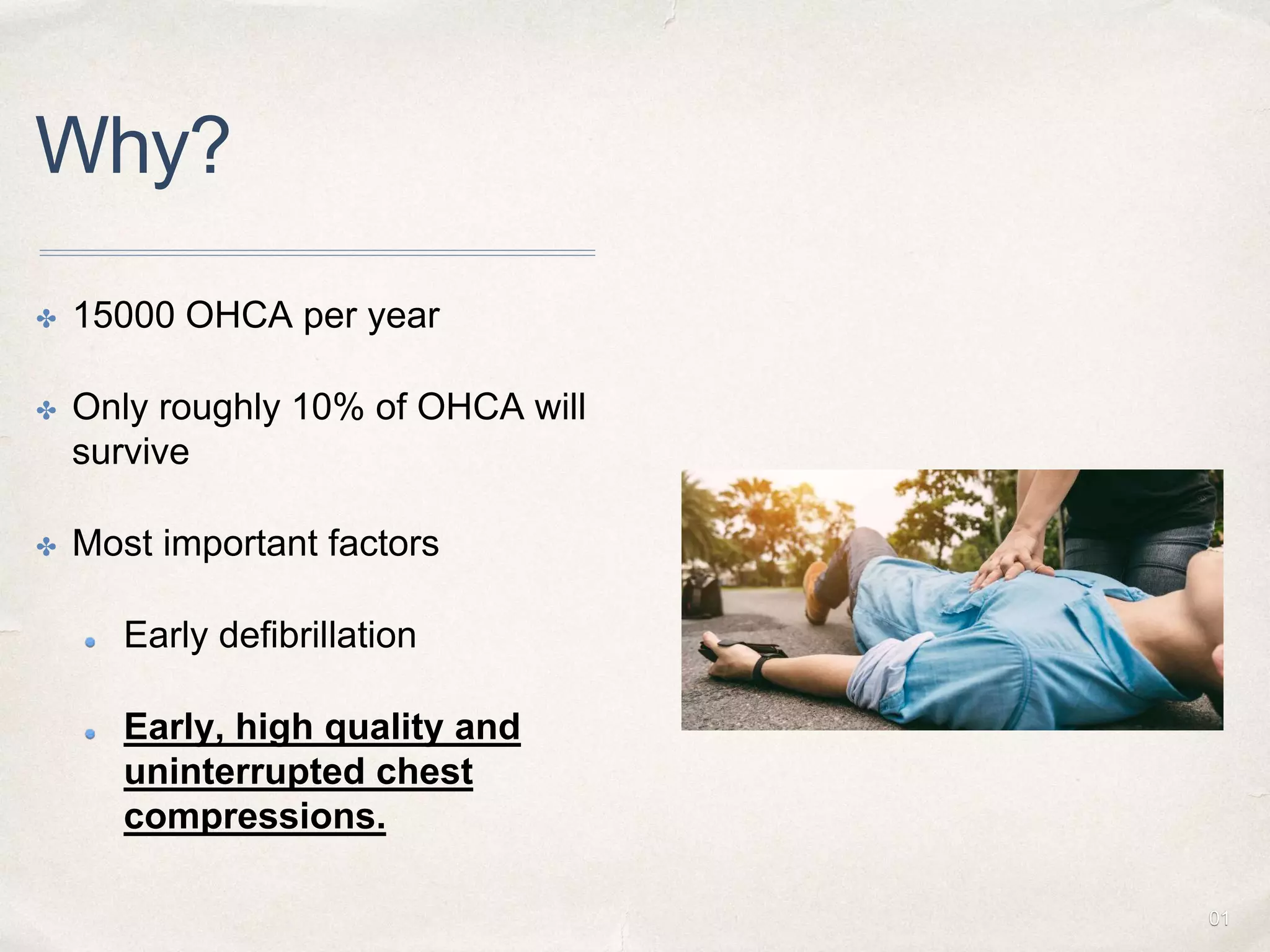
✤ 15000 OHCA per year
✤ Only roughly 10% of OHCA will
survive
✤ Most important factors
Early defibrillation
Early, high quality and
uninterrupted chest
compressions.
01
Chest
Compressions
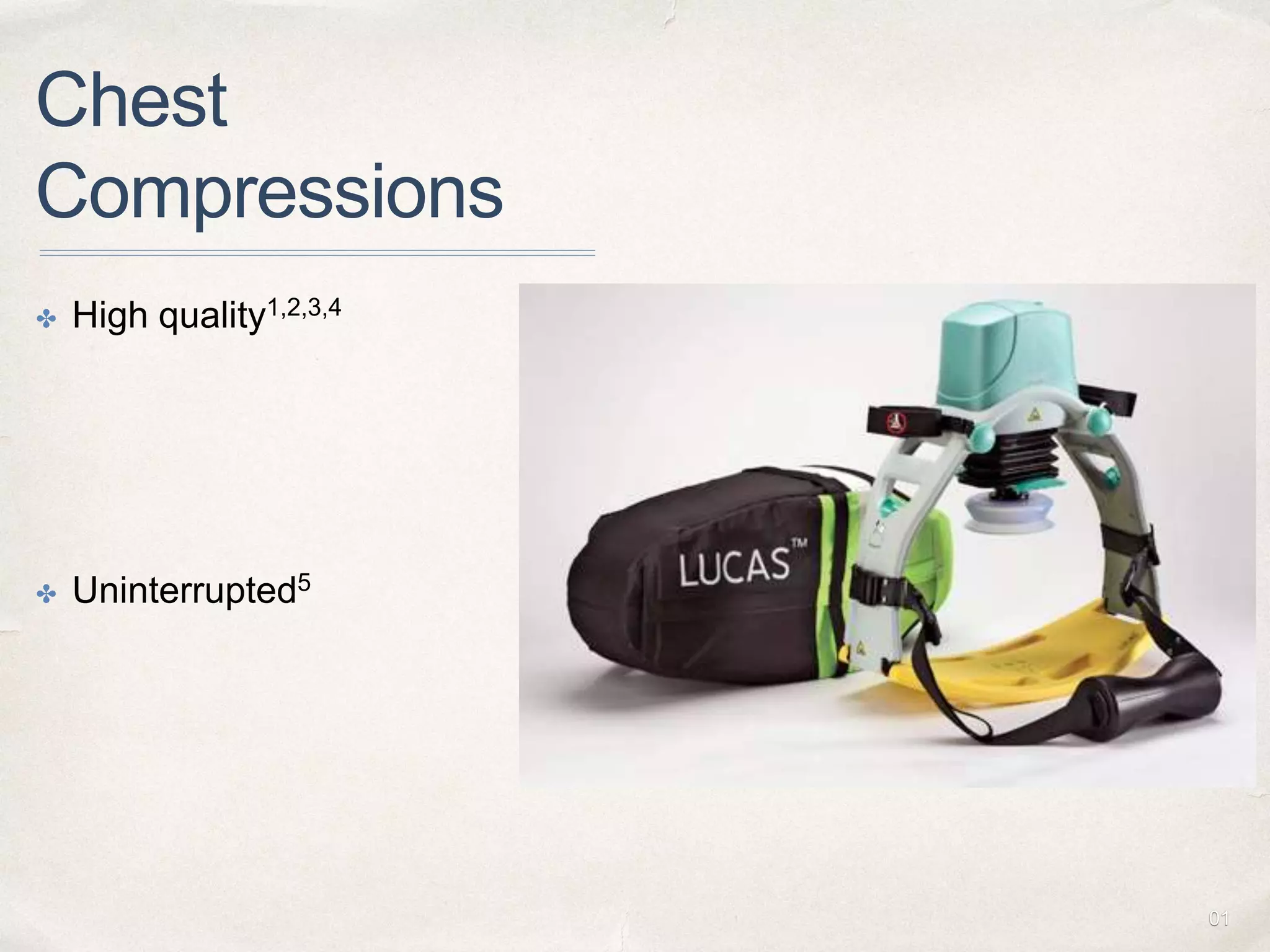
✤ High quality1,2,3,4
✤ Uninterrupted5
01
Mechanical CPR
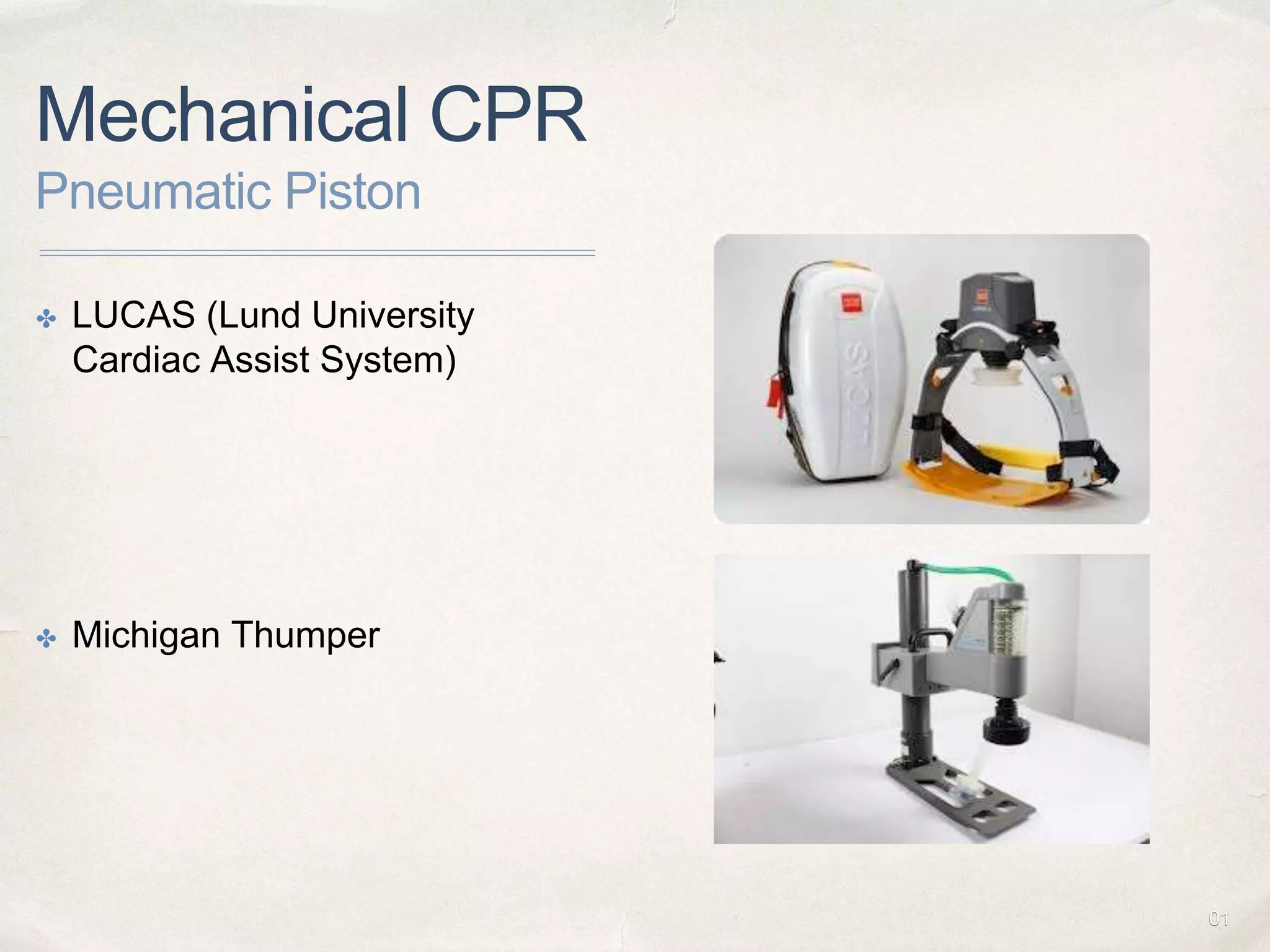
Pneumatic Piston
✤ LUCAS (Lund University
Cardiac Assist System)
✤ Michigan Thumper
01
Mechanical CPR
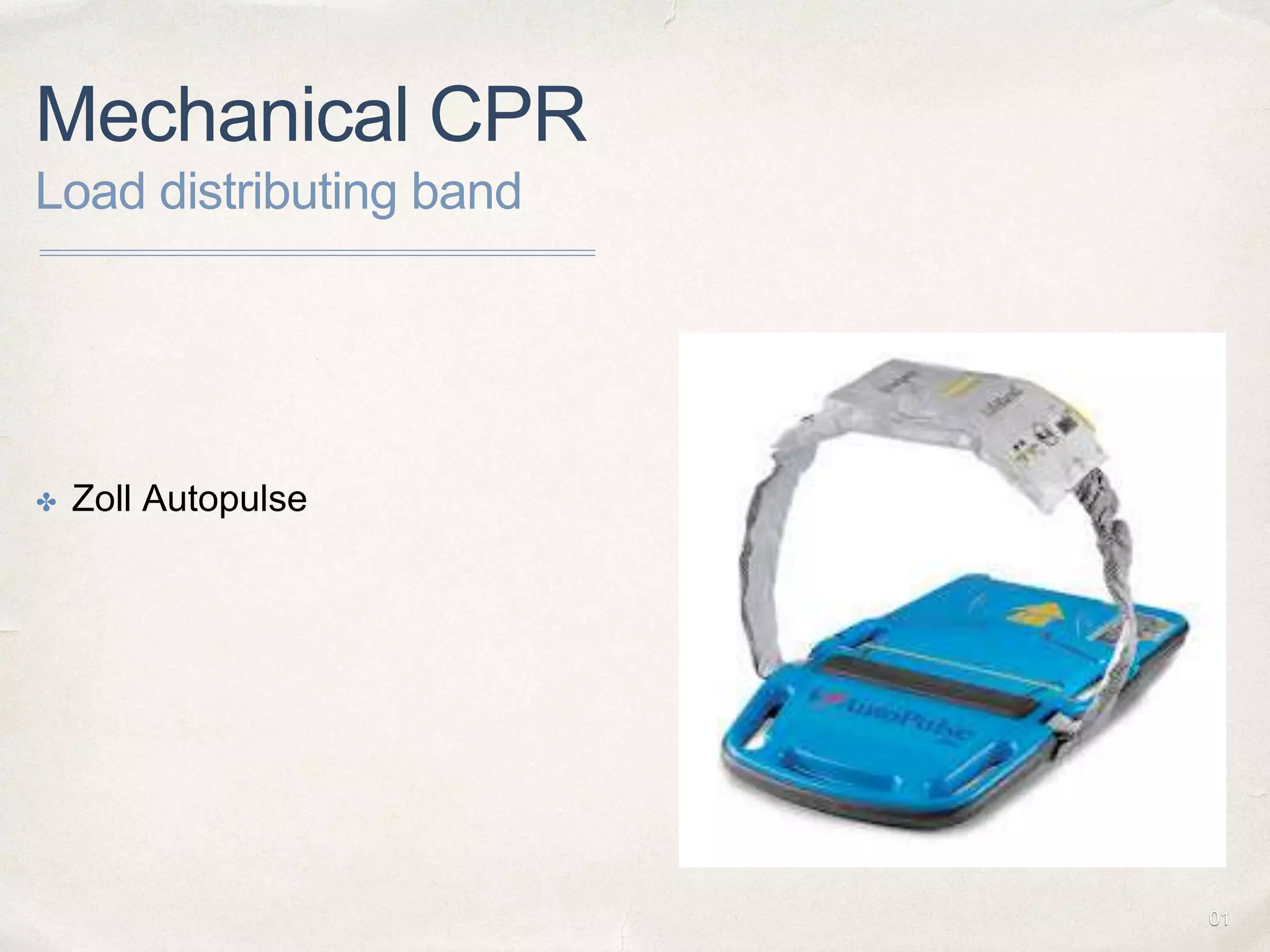
Load distributing band
✤ Zoll Autopulse
01
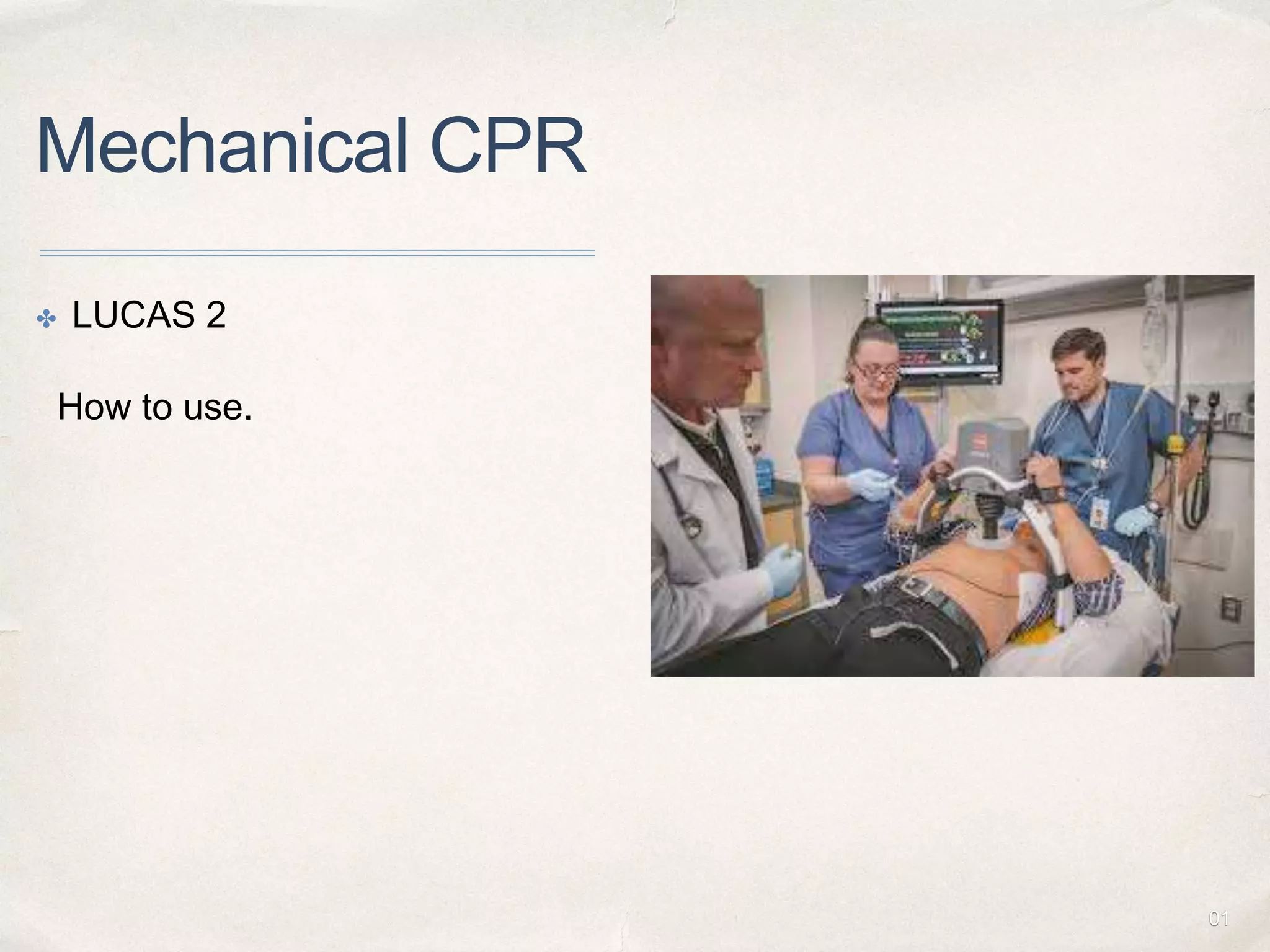
Mechanical CPR
✤ LUCAS 2
How to use.
✤ 2015
✤ Systematic review
✤ RCT’s
✤ Over 10000 patients
✤ OHCA: atraumatic
✤ Comparing manual to
mechanical CPR
Autopulse
✤ ASPIRE
✤ CIRC
LUCAS
✤ Smekal et al.
✤ LINC
✤ PARAMEDIC
ASPIRE 2006 - Autopulse
✤ USA/Canada
✤ Cluster RCT
✤ 767 patients
✤ Trial terminated early
✤ Discharge from hospital
Manual 9.9%
Autopulse 5.8%
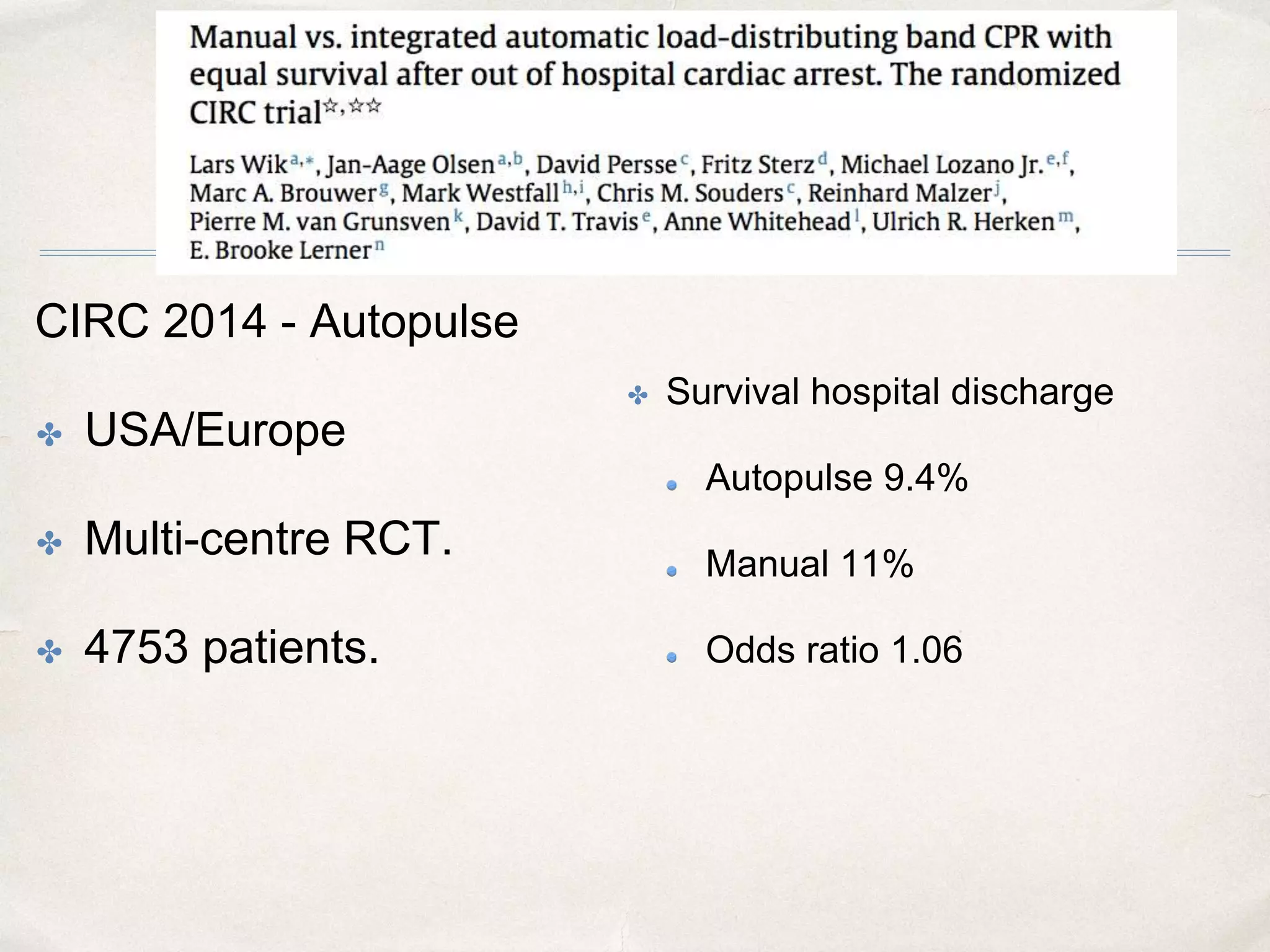
CIRC 2014 - Autopulse
✤ USA/Europe
✤ Multi-centre RCT.
✤ 4753 patients.
✤ Survival hospital discharge
Autopulse 9.4%
Manual 11%
Odds ratio 1.06
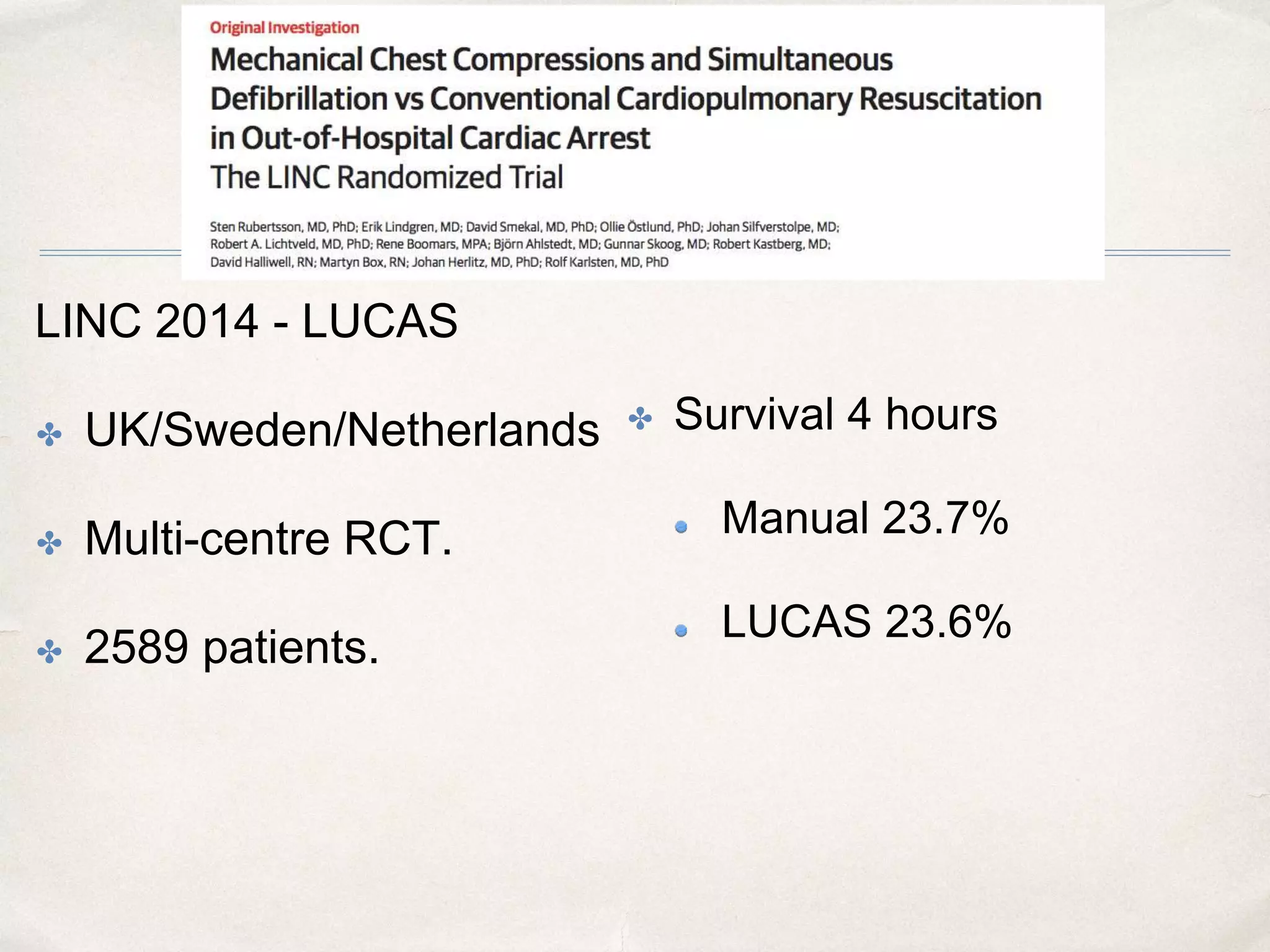
LINC 2014 - LUCAS
✤ UK/Sweden/Netherlands
✤ Multi-centre RCT.
✤ 2589 patients.
✤ Survival 4 hours
Manual 23.7%
LUCAS 23.6%
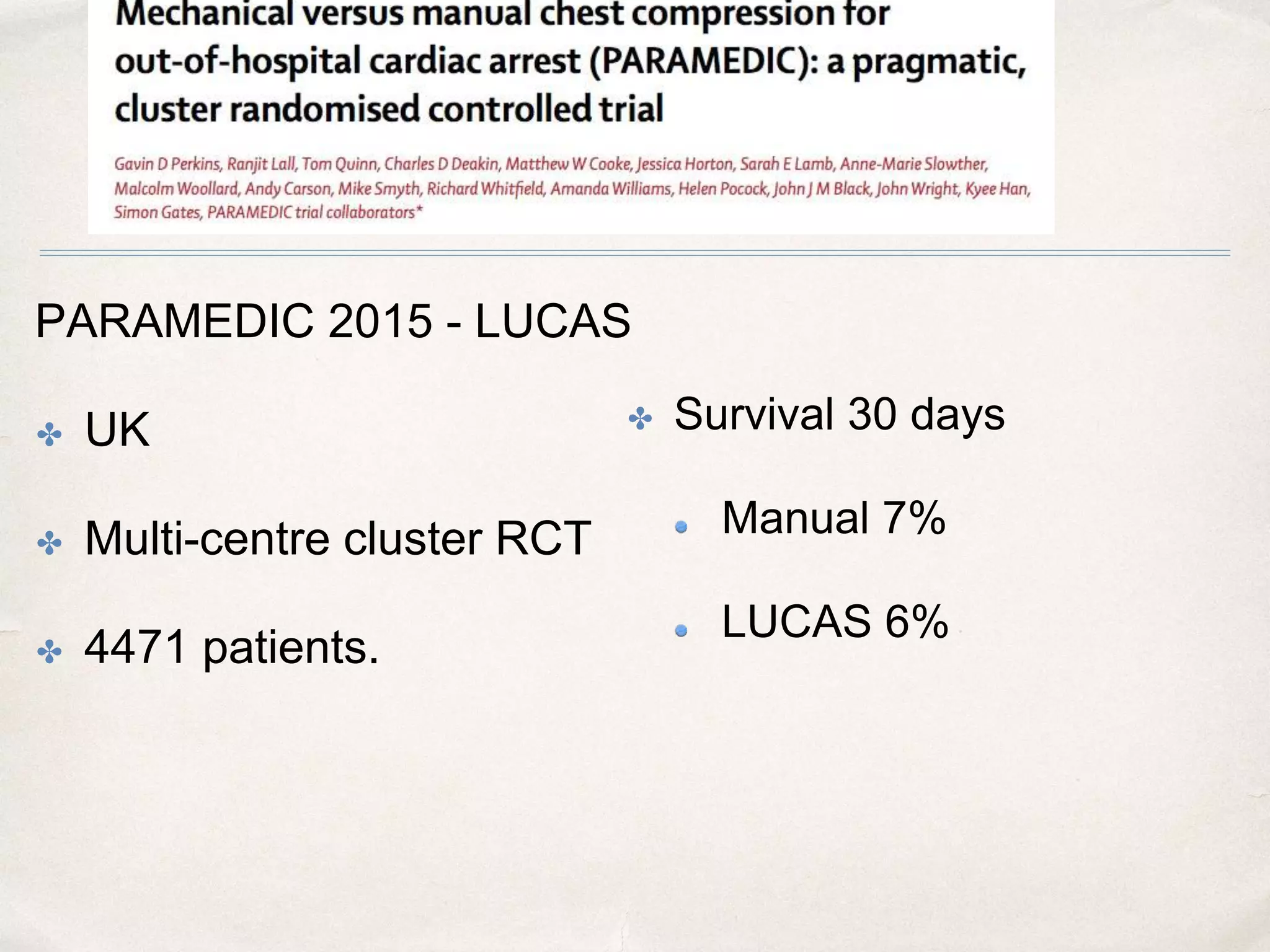
PARAMEDIC 2015 - LUCAS
✤ UK
✤ Multi-centre cluster RCT
✤ 4471 patients.
✤ Survival 30 days
Manual 7%
LUCAS 6%
Meta-analysis
✤ Mechanical CPR showed no
advantage for
ROSC
Survival to discharge
Survival with CPC 1 or 2
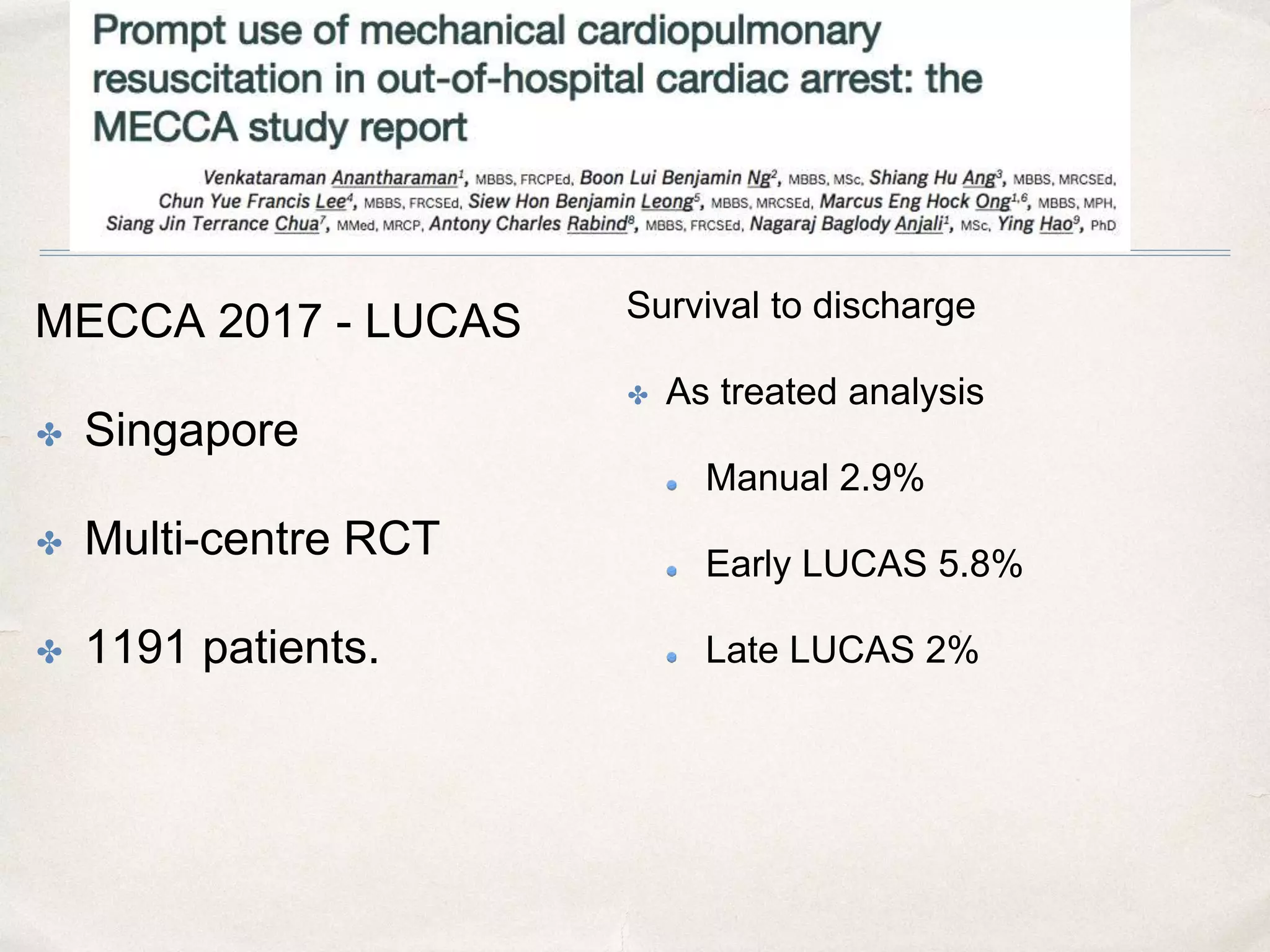
MECCA 2017 - LUCAS
✤ Singapore
✤ Multi-centre RCT
✤ 1191 patients.
Survival to discharge
✤ As treated analysis
Manual 2.9%
Early LUCAS 5.8%
Late LUCAS 2%
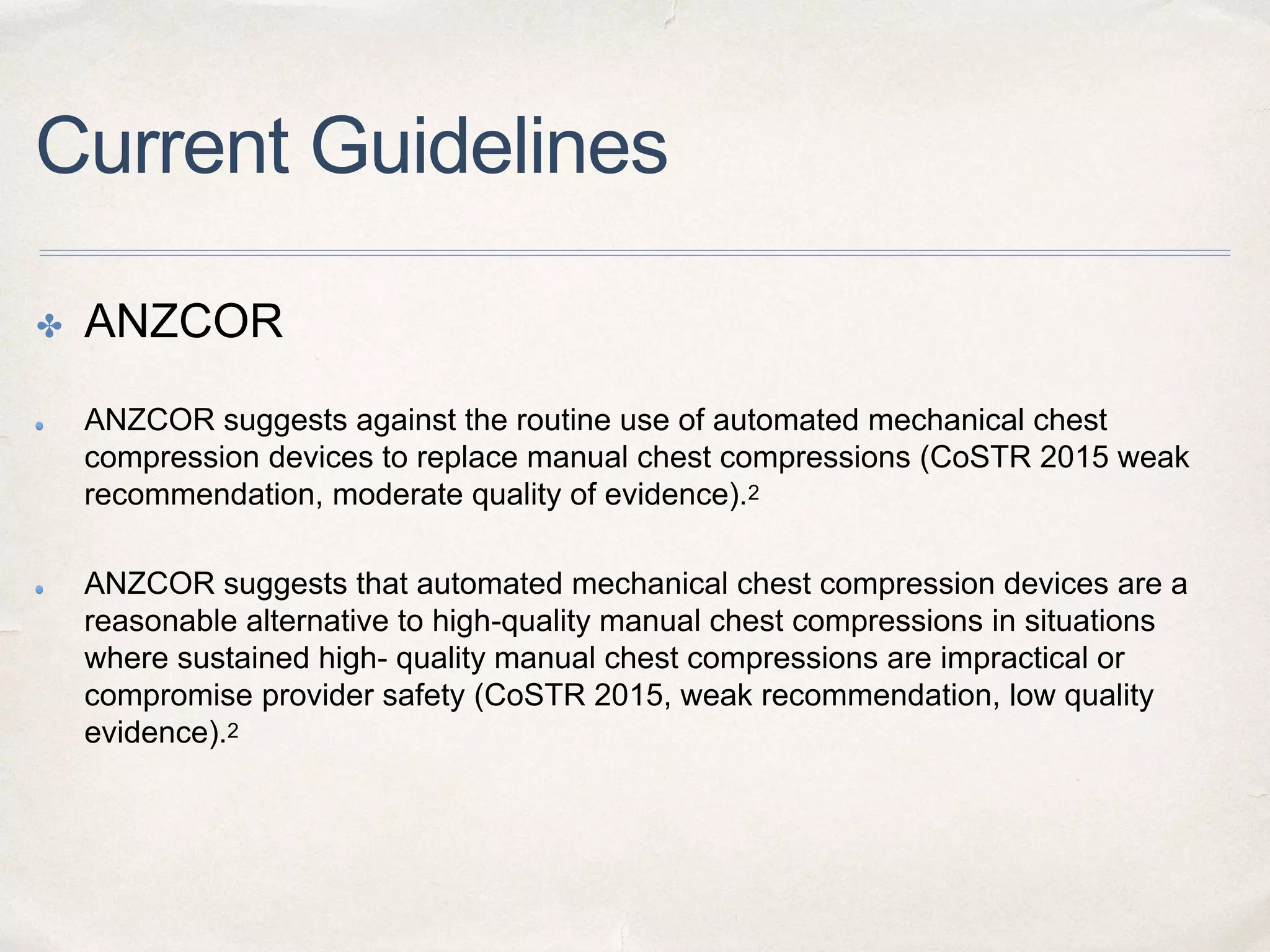
Current Guidelines
✤ ANZCOR
ANZCOR suggests against the routine use of automated mechanical chest
compression devices to replace manual chest compressions (CoSTR 2015 weak
recommendation, moderate quality of evidence).2
ANZCOR suggests that automated mechanical chest compression devices are a
reasonable alternative to high-quality manual chest compressions in situations
where sustained high- quality manual chest compressions are impractical or
compromise provider safety (CoSTR 2015, weak recommendation, low quality
evidence).2
01
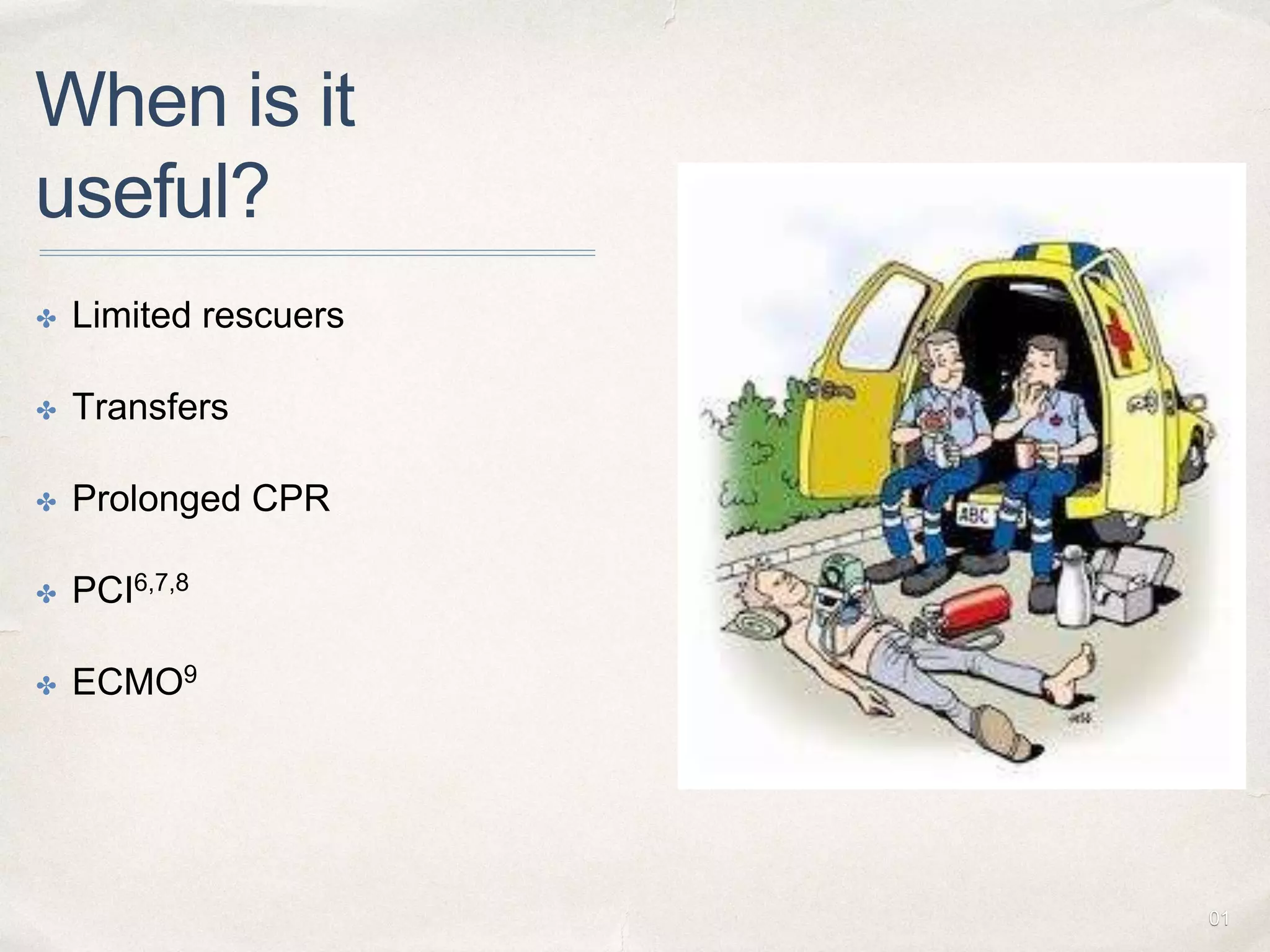
When is it
useful?
✤ Limited rescuers
✤ Transfers
✤ Prolonged CPR
✤ PCI6,7,8
✤ ECMO9
01
When are they
not so useful?
✤ Fat/big
✤ Skinny
✤ Kids
✤ Trauma
✤ Poor placement
01
What next?
✤ Further Research
Early use of mechanical
CPR
In hospital use
References
1. Hightower D, Thomas SH, Stone CK, et al. Decay in quality of closed-chest compressions over time. Annals of emergency medicine. 1995;
26(3):300-3.
2. Ochoa FJ, Ramalle-Gómara E, Lisa V, et al. The effect of rescuer fatigue on the quality of chest compressions. Resuscitation. 1998; 37(3):149-52
3. Idris AH, Guffey D, Pepe PP, et al. Chest compression rates and survival following out-of-hospital cardiac arrest. Crit Care Med 2015;43:840–8.
4. Stiell IG, Brown SP, Christenson J, et al. What is the role of chest compression depth during out-of-hospital cardiac arrest resuscitation? Crit Care
Med 2012;40:1192-8.
5. Cheskes S, Schmicker R, Christenson J et al. Peri-shock pause: an independent predictor of survival from out-of-hospital shockable cardiac arrest.
Circulation. 2011;124(1):58-66.
6. Preethi W, Rao P, Kanakadandi UB, et al. Mechanical cardiopulmonary resuscitation in and on the way to the cardiac catheterization laboratory. Circ
J 2016; 80: 1292–1299.
7. Wagner H, Terkelsen CJ, Friberg H, et al. Cardiac arrest in the catheterisation laboratory: a 5-year experience of using mechanical chest
compressions to facilitate PCI during prolonged resuscitation efforts. Resuscitation 2010; 81: 383–387.
8. Wagner H, Hardig BM, Rundgren M, et al. Mechanical chest compressions in the coronary catheterization laboratory to facilitate coronary
intervention and sur- vival in patients requiring prolonged resuscitation efforts. Scand J Trauma Resusc Emerg Med 2016; 24: 4
9. Stub D, Bernard S, Pellegrino V, et al. Refractory cardiac arrest treated with mechanical CPR, hypothermia, ECMO and early reperfusion (the
CHEER trial). Resus- citation 2015; 86: 88–94.

Mechanical CPR Devices - The current evidence

  • 1.
  • 2.
    Objectives ✤ Why theywere developed. ✤ How they work. ✤ Current evidence. ✤ When they are useful. ✤ When they are not so useful. ✤ What next?
  • 3.
    01 Why? ✤ 15000 OHCAper year ✤ Only roughly 10% of OHCA will survive ✤ Most important factors Early defibrillation Early, high quality and uninterrupted chest compressions.
  • 4.
  • 5.
    01 Mechanical CPR Pneumatic Piston ✤LUCAS (Lund University Cardiac Assist System) ✤ Michigan Thumper
  • 6.
    01 Mechanical CPR Load distributingband ✤ Zoll Autopulse
  • 7.
  • 8.
    ✤ 2015 ✤ Systematicreview ✤ RCT’s ✤ Over 10000 patients ✤ OHCA: atraumatic ✤ Comparing manual to mechanical CPR
  • 9.
    Autopulse ✤ ASPIRE ✤ CIRC LUCAS ✤Smekal et al. ✤ LINC ✤ PARAMEDIC
  • 10.
    ASPIRE 2006 -Autopulse ✤ USA/Canada ✤ Cluster RCT ✤ 767 patients ✤ Trial terminated early ✤ Discharge from hospital Manual 9.9% Autopulse 5.8%
  • 11.
    CIRC 2014 -Autopulse ✤ USA/Europe ✤ Multi-centre RCT. ✤ 4753 patients. ✤ Survival hospital discharge Autopulse 9.4% Manual 11% Odds ratio 1.06
  • 12.
    LINC 2014 -LUCAS ✤ UK/Sweden/Netherlands ✤ Multi-centre RCT. ✤ 2589 patients. ✤ Survival 4 hours Manual 23.7% LUCAS 23.6%
  • 13.
    PARAMEDIC 2015 -LUCAS ✤ UK ✤ Multi-centre cluster RCT ✤ 4471 patients. ✤ Survival 30 days Manual 7% LUCAS 6%
  • 14.
    Meta-analysis ✤ Mechanical CPRshowed no advantage for ROSC Survival to discharge Survival with CPC 1 or 2
  • 15.
    MECCA 2017 -LUCAS ✤ Singapore ✤ Multi-centre RCT ✤ 1191 patients. Survival to discharge ✤ As treated analysis Manual 2.9% Early LUCAS 5.8% Late LUCAS 2%
  • 16.
    Current Guidelines ✤ ANZCOR ANZCORsuggests against the routine use of automated mechanical chest compression devices to replace manual chest compressions (CoSTR 2015 weak recommendation, moderate quality of evidence).2 ANZCOR suggests that automated mechanical chest compression devices are a reasonable alternative to high-quality manual chest compressions in situations where sustained high- quality manual chest compressions are impractical or compromise provider safety (CoSTR 2015, weak recommendation, low quality evidence).2
  • 17.
    01 When is it useful? ✤Limited rescuers ✤ Transfers ✤ Prolonged CPR ✤ PCI6,7,8 ✤ ECMO9
  • 18.
    01 When are they notso useful? ✤ Fat/big ✤ Skinny ✤ Kids ✤ Trauma ✤ Poor placement
  • 19.
    01 What next? ✤ FurtherResearch Early use of mechanical CPR In hospital use
  • 20.
    References 1. Hightower D,Thomas SH, Stone CK, et al. Decay in quality of closed-chest compressions over time. Annals of emergency medicine. 1995; 26(3):300-3. 2. Ochoa FJ, Ramalle-Gómara E, Lisa V, et al. The effect of rescuer fatigue on the quality of chest compressions. Resuscitation. 1998; 37(3):149-52 3. Idris AH, Guffey D, Pepe PP, et al. Chest compression rates and survival following out-of-hospital cardiac arrest. Crit Care Med 2015;43:840–8. 4. Stiell IG, Brown SP, Christenson J, et al. What is the role of chest compression depth during out-of-hospital cardiac arrest resuscitation? Crit Care Med 2012;40:1192-8. 5. Cheskes S, Schmicker R, Christenson J et al. Peri-shock pause: an independent predictor of survival from out-of-hospital shockable cardiac arrest. Circulation. 2011;124(1):58-66. 6. Preethi W, Rao P, Kanakadandi UB, et al. Mechanical cardiopulmonary resuscitation in and on the way to the cardiac catheterization laboratory. Circ J 2016; 80: 1292–1299. 7. Wagner H, Terkelsen CJ, Friberg H, et al. Cardiac arrest in the catheterisation laboratory: a 5-year experience of using mechanical chest compressions to facilitate PCI during prolonged resuscitation efforts. Resuscitation 2010; 81: 383–387. 8. Wagner H, Hardig BM, Rundgren M, et al. Mechanical chest compressions in the coronary catheterization laboratory to facilitate coronary intervention and sur- vival in patients requiring prolonged resuscitation efforts. Scand J Trauma Resusc Emerg Med 2016; 24: 4 9. Stub D, Bernard S, Pellegrino V, et al. Refractory cardiac arrest treated with mechanical CPR, hypothermia, ECMO and early reperfusion (the CHEER trial). Resus- citation 2015; 86: 88–94.