Download to read offline

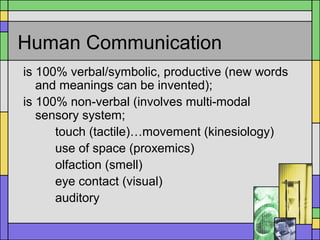
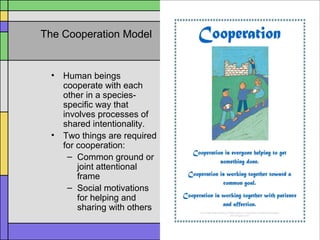
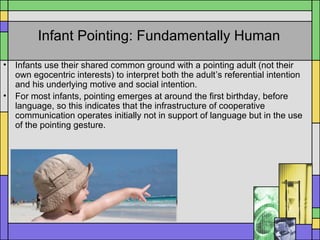
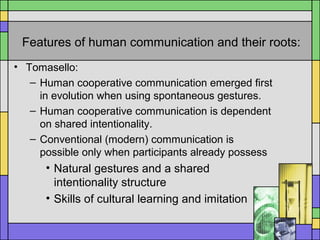
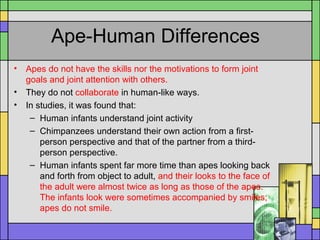
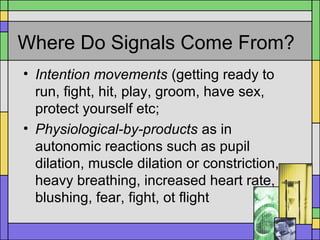

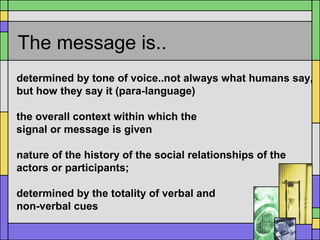

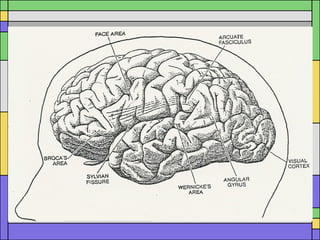

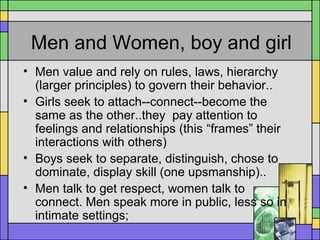
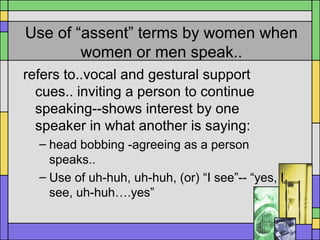
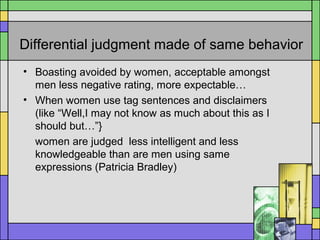
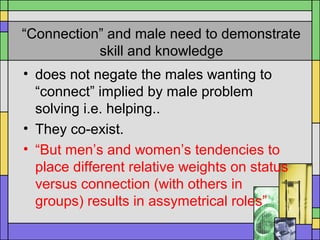




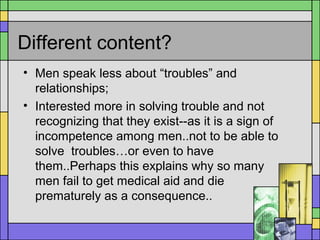
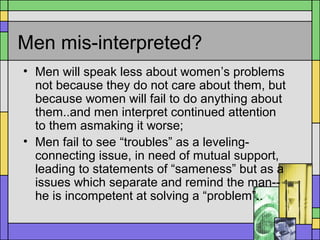
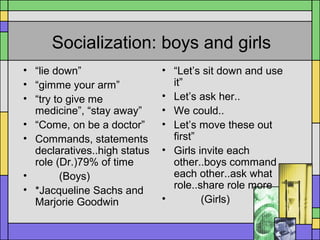
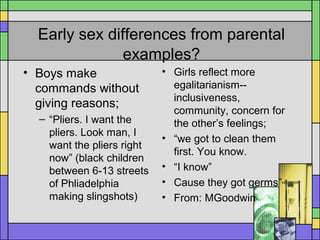




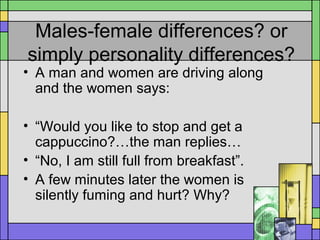
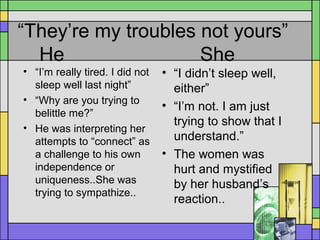
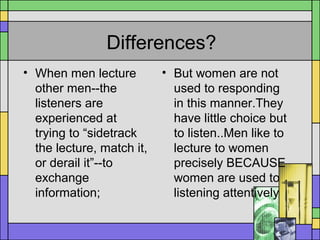
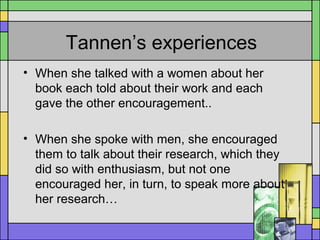

Human communication is uniquely human and evolved from early hominins' abilities to cooperate and share intentionality through gestures and joint attention. Key aspects of human communication include its symbolic and verbal nature, reliance on shared intentionality, and use of multi-modal signals like gestures, eye contact, touch and smell. While apes communicate, humans have a greater capacity for collaboration, understanding others' perspectives, and forming common goals. Language emerged from early gestural communication but now influences how humans experience the world. Differences in how men and women communicate can arise from biological tendencies to connect versus demonstrate status, but are also shaped by cultural norms and expectations.


![Communication and gender[1]](https://cdn.slidesharecdn.com/ss_thumbnails/communicationandgender1-110328020506-phpapp02-thumbnail.jpg?width=640&height=640&fit=bounds)


