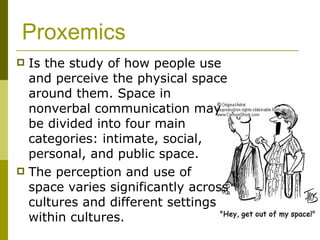
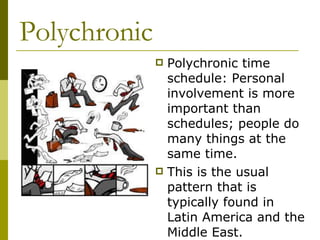
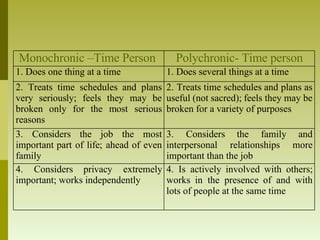
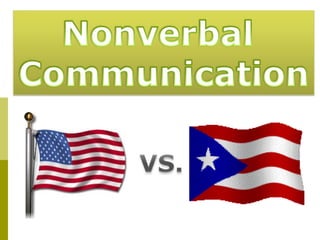
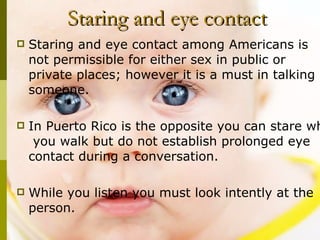
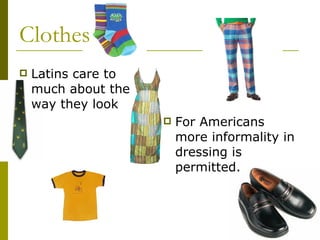
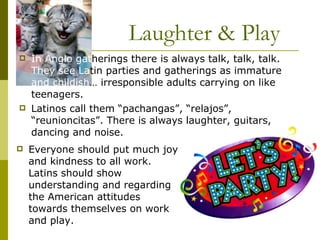
1. The document discusses differences in nonverbal communication across cultures, focusing on Latin American and American cultures. It highlights differences in uses of space, eye contact, smiling, gestures, and views of time, work, play, and money.
2. Teachers are advised to help students learn to adapt their nonverbal behaviors to different contexts rather than replace their own cultural practices. Role playing can help students become aware of cultural differences in communication.
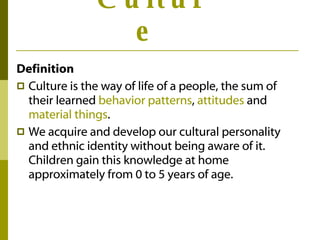
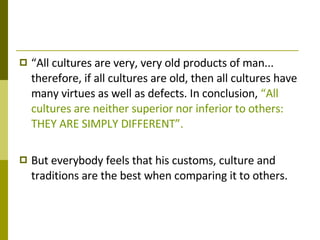
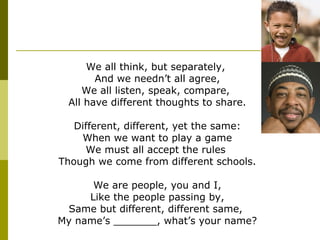
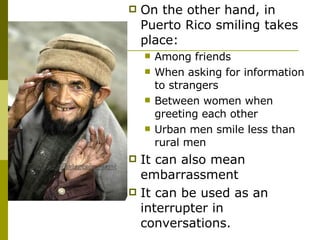
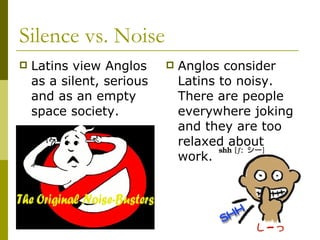
3. While smiling, eye contact, and views of noise vs. silence differ between Latin and American cultures, all cultures have virtues and flaws, and nonverbal behaviors should be understood in cultural context rather than judged as superior or inferior.








![2bd4 nonverbalcommunicationmodern sample[1]](https://cdn.slidesharecdn.com/ss_thumbnails/2bd4nonverbalcommunicationmodernsample1-110929081155-phpapp02-thumbnail.jpg?width=640&height=640&fit=bounds)


