ToolsThe struck end: This the end that the hammer hits. Traditionally the struck end is smaller than the rest of the tool. This helps keep the force of the blow in alignment with the working endThe different types of tools you may useLiners: These punches are used to outline the shapes that are later given shape and dimension with the other punches. The end of the tool is often shaped like a wedge but softened with your sandpaper so it won’t cut into the metal. You can also make liners with a gentle curve or arch so that you can line curved edges.
Modeling or forming punches: These punches are basically the punches you use to raise and push the metal around. These tools are shaped to the shape you need for your design and are usually polished.  An example of these tools could be a doming punch you use from the workshop, a dap or a tool you shape yourself for a specific area of your design.Planishing punches: These punches are used to smooth the relief (the raised background). These punches are always highly polished. You can makes these any shape; they just need to be able to fit neatly in into any corners or thinner edges of your design.
Matting Punches: These punches have a texture or pattern inscribed on the punch. This texture will be left on the metal as well as matt finish instead of the polished finish the other punches should leave. You can file, saw, carve, scribe or sand a pattern or texture onto your punch to create a series of patterns or textures on your metal. This technique can be very effective if you want to areas to contrast or stand out against each other.
Setting punches: These punches are made with the end being set at an angle. When used on the line between your design and the flat base of the metal that has not been raised it makes the line very clear. Defining your design, almost like outlying your design. You also get hollow punches, Jig punches and stamps. These are more specialized tools and are usually bought from suppliers rather than being self made.
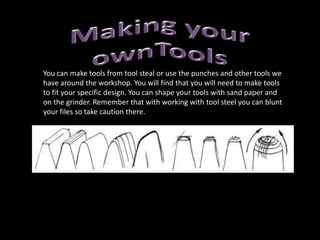
Making your ownToolsYou can make tools from tool steal or use the punches and other tools we have around the workshop. You will find that you will need to make tools to fit your specific design. You can shape your tools with sand paper and on the grinder. Remember that with working with tool steel you can blunt your files so take caution there.
How to Repoussè1. The first important step is preparing the metal. If the metal is hard from cold working, anneal it.  Cut the metal to a size for your design but leave a decent rim around your design. It has been suggested in some sources to coat one side(the side that will be going into the picth) with vasceline or a mineral based oil. This will help you remove the metal from the pitch. 2. The second step is transferring the design. There are several ways of doing this and you will need to find one that works for you. Carbon paper can be used, be sure to have the carbon paper with the appropriate side down. Then put your design on top of the carbon paper and then simply trace over your design transferring onto your metal. You can also use normal pencils or permanent markers if you feel confident to redraw your design free hand onto the metal. 3. Heat the pitch with a soft flame until goes soft then place the metal in the middle of the pitch bowl. Press gently to force out any air pockets trapped between the pitch and the metal. The pitch will also flow over the edges and keep the metal securely in place. Then allow the pitch to dry so that your piece is securely held in place.
4. Go over your design lightly with one of your tracer punches.5. Lift your metal out of the pitch by heating lightly and then lifting with tweezers. Remove any excess pitch on your piece by burning it away or better removing it with turpentine. 6. Turn your piece over and set it back into the pitch. Then start working your design with the tools you have prepared. When you metal starts to feel stiff you need to take the piece out of the pitch again, clean and anneal. 7. Work your piece in the pitch on both the front and the back till you are happy with your design. Finishing touches like using your setting punches round the outside of  your design are done at this stage. Remove from pitch and clean for the last time. Your piece is now ready to be made into a piece of jewellery, whether set in a frame or made into a bangle like the example pictures.
Things that can go worng!Over working the metal- making the metal too thin
Over heating the metal- Be careful as you anneal.
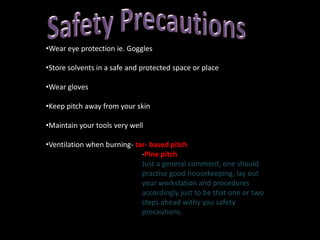
Molten pitch can splash or spill

Repousse information

  • 1.
    ToolsThe struck end:This the end that the hammer hits. Traditionally the struck end is smaller than the rest of the tool. This helps keep the force of the blow in alignment with the working endThe different types of tools you may useLiners: These punches are used to outline the shapes that are later given shape and dimension with the other punches. The end of the tool is often shaped like a wedge but softened with your sandpaper so it won’t cut into the metal. You can also make liners with a gentle curve or arch so that you can line curved edges.
  • 2.
    Modeling or formingpunches: These punches are basically the punches you use to raise and push the metal around. These tools are shaped to the shape you need for your design and are usually polished. An example of these tools could be a doming punch you use from the workshop, a dap or a tool you shape yourself for a specific area of your design.Planishing punches: These punches are used to smooth the relief (the raised background). These punches are always highly polished. You can makes these any shape; they just need to be able to fit neatly in into any corners or thinner edges of your design.
  • 3.
    Matting Punches: Thesepunches have a texture or pattern inscribed on the punch. This texture will be left on the metal as well as matt finish instead of the polished finish the other punches should leave. You can file, saw, carve, scribe or sand a pattern or texture onto your punch to create a series of patterns or textures on your metal. This technique can be very effective if you want to areas to contrast or stand out against each other.
  • 4.
    Setting punches: Thesepunches are made with the end being set at an angle. When used on the line between your design and the flat base of the metal that has not been raised it makes the line very clear. Defining your design, almost like outlying your design. You also get hollow punches, Jig punches and stamps. These are more specialized tools and are usually bought from suppliers rather than being self made.
  • 5.
    Making your ownToolsYoucan make tools from tool steal or use the punches and other tools we have around the workshop. You will find that you will need to make tools to fit your specific design. You can shape your tools with sand paper and on the grinder. Remember that with working with tool steel you can blunt your files so take caution there.
  • 6.
    How to Repoussè1.The first important step is preparing the metal. If the metal is hard from cold working, anneal it. Cut the metal to a size for your design but leave a decent rim around your design. It has been suggested in some sources to coat one side(the side that will be going into the picth) with vasceline or a mineral based oil. This will help you remove the metal from the pitch. 2. The second step is transferring the design. There are several ways of doing this and you will need to find one that works for you. Carbon paper can be used, be sure to have the carbon paper with the appropriate side down. Then put your design on top of the carbon paper and then simply trace over your design transferring onto your metal. You can also use normal pencils or permanent markers if you feel confident to redraw your design free hand onto the metal. 3. Heat the pitch with a soft flame until goes soft then place the metal in the middle of the pitch bowl. Press gently to force out any air pockets trapped between the pitch and the metal. The pitch will also flow over the edges and keep the metal securely in place. Then allow the pitch to dry so that your piece is securely held in place.
  • 7.
    4. Go overyour design lightly with one of your tracer punches.5. Lift your metal out of the pitch by heating lightly and then lifting with tweezers. Remove any excess pitch on your piece by burning it away or better removing it with turpentine. 6. Turn your piece over and set it back into the pitch. Then start working your design with the tools you have prepared. When you metal starts to feel stiff you need to take the piece out of the pitch again, clean and anneal. 7. Work your piece in the pitch on both the front and the back till you are happy with your design. Finishing touches like using your setting punches round the outside of your design are done at this stage. Remove from pitch and clean for the last time. Your piece is now ready to be made into a piece of jewellery, whether set in a frame or made into a bangle like the example pictures.
  • 8.
    Things that cango worng!Over working the metal- making the metal too thin
  • 9.
    Over heating themetal- Be careful as you anneal.
  • 10.
    Molten pitch cansplash or spill