Taps and Dies
Taps and Dies
-are used to create screw
threads, which is called
threading. Many are
cutting tools; others are
forming tools.
Tap
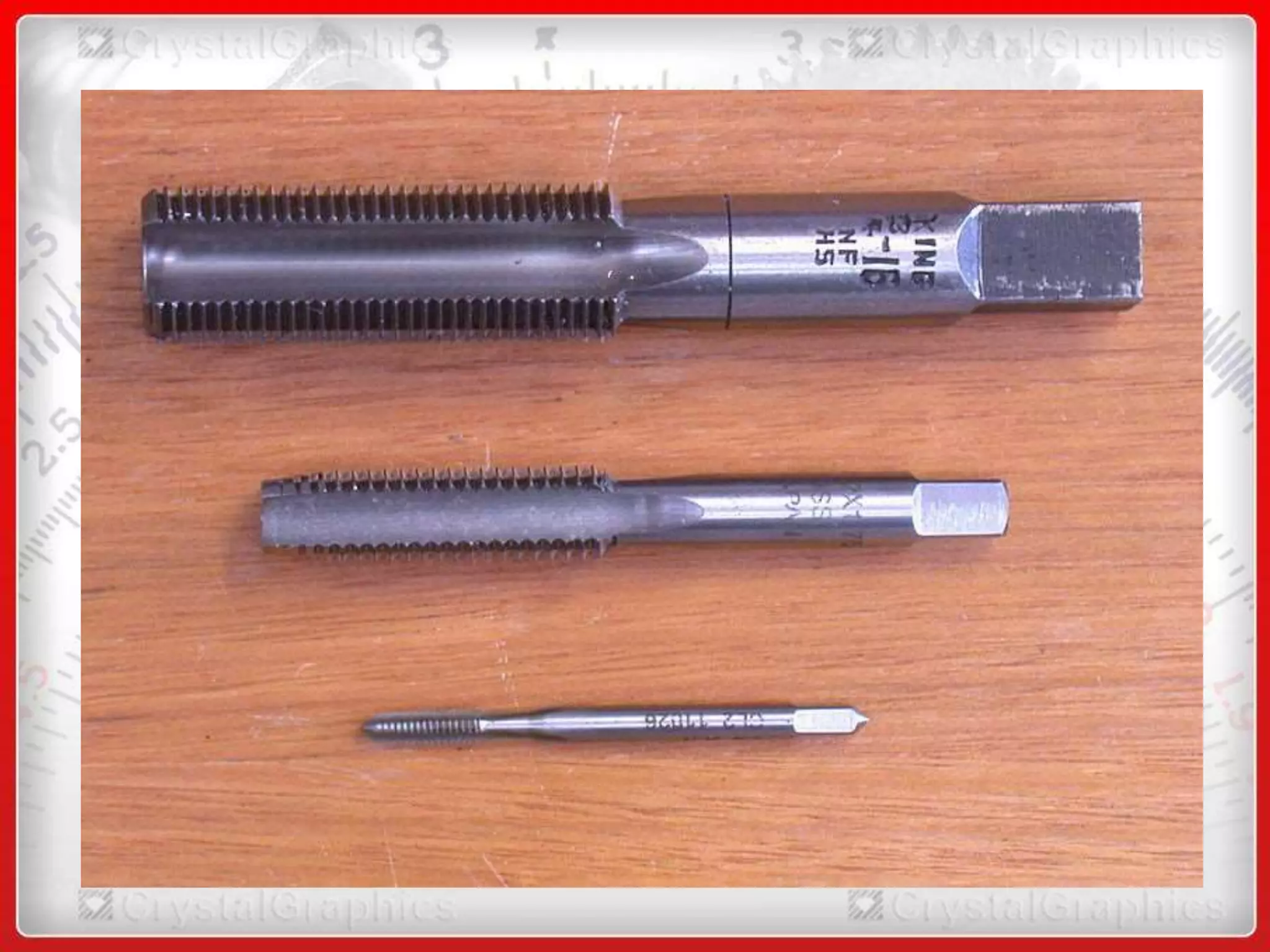
-a tap is used to cut or
form the female portion of
the mating pair.
(e.g. Nut)
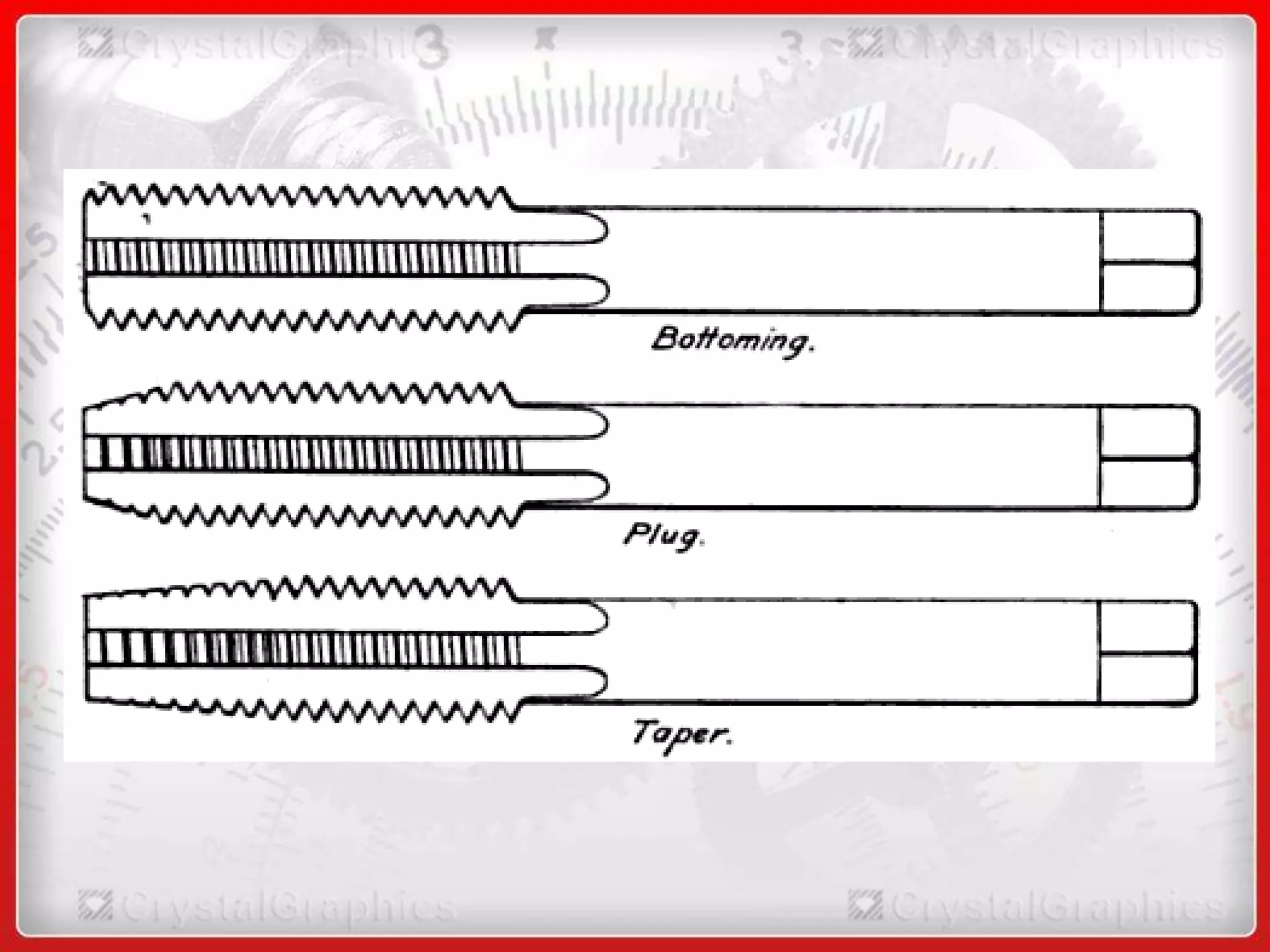
The three basic types of taps
 Bottoming tap
• -used to cut threads in a hole that
has already been partially threaded
using one of the more tapered types
of tap.
 Intermediate tap or plug tap
• -it has tapered cutting edges,
which assist in aligning and starting
the tap into an untapped hole. The
number of tapered threads typically
ranges from 3-5.
 Taper tap
• - is similar to intermediate tap but
has more pronounced taper to the
cutting edges.
• The number of tapered threads
typically ranges from 8-10.
• - it is most often used when the
material to be tapped is difficult to
work.
The most common type of
power driven tap is the
“Spiral point” plug tap,
whose cutting edges are
angularly displaced relative
to the tap centerline.
Die
Is used to cut or form the
male portion. (e.g. bolt)
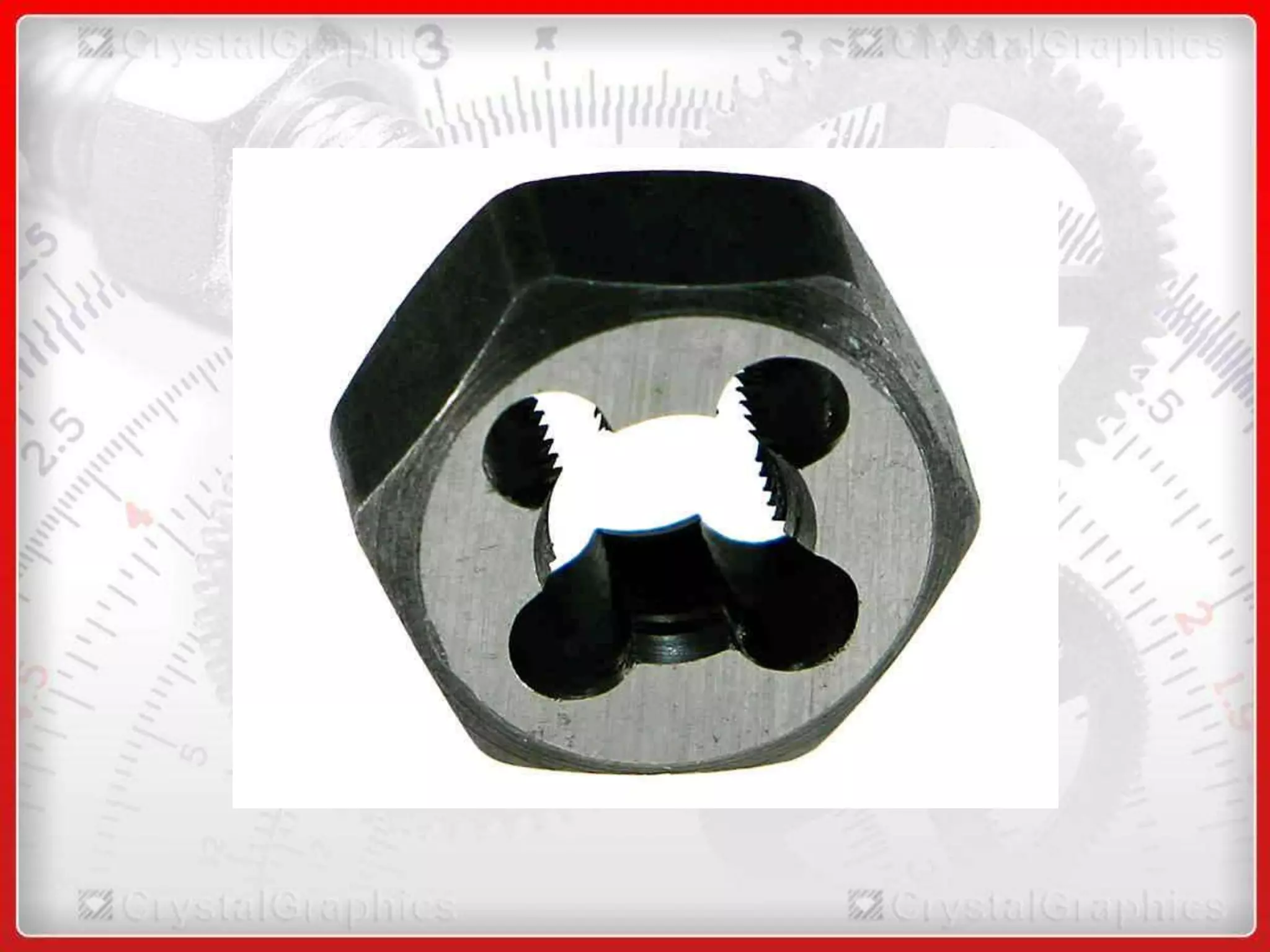
Rethreading dies (die nuts) –
are dies made for cleaning up
damaged threads, have no split
for resizing and are made from
a hexagonal bar so that a
wrench can be used to turn
them. Die nuts cannot be used
to cut new threads.
Process
• the process of cutting or forming
threads using a tap is called tapping.
• whereas using a die is called
threading.
• Both tools can be used to clean up a
thread which is called chasing.
Process of Tapping
Begins with forming (drilling)
and slightly countersinking a hole to
the diameter smaller than the tap’s
major diameter.
If the hole is to be drilled,
the proper diameter is called the
tap drill size.
The correct tap drill diameter (in inch)
computation is as follows:
TD= MD -
𝟏
𝑵
Where TD is the tap drill size, MD is
the major diameter and N is the thread
pitch.
The correct tap drill diameter for
metric sized taps is computed as
follows:
TD= MD – pitch
Where TD is the tap drill size, MD is
the major diameter and the pitch is the
pitch of the thread.
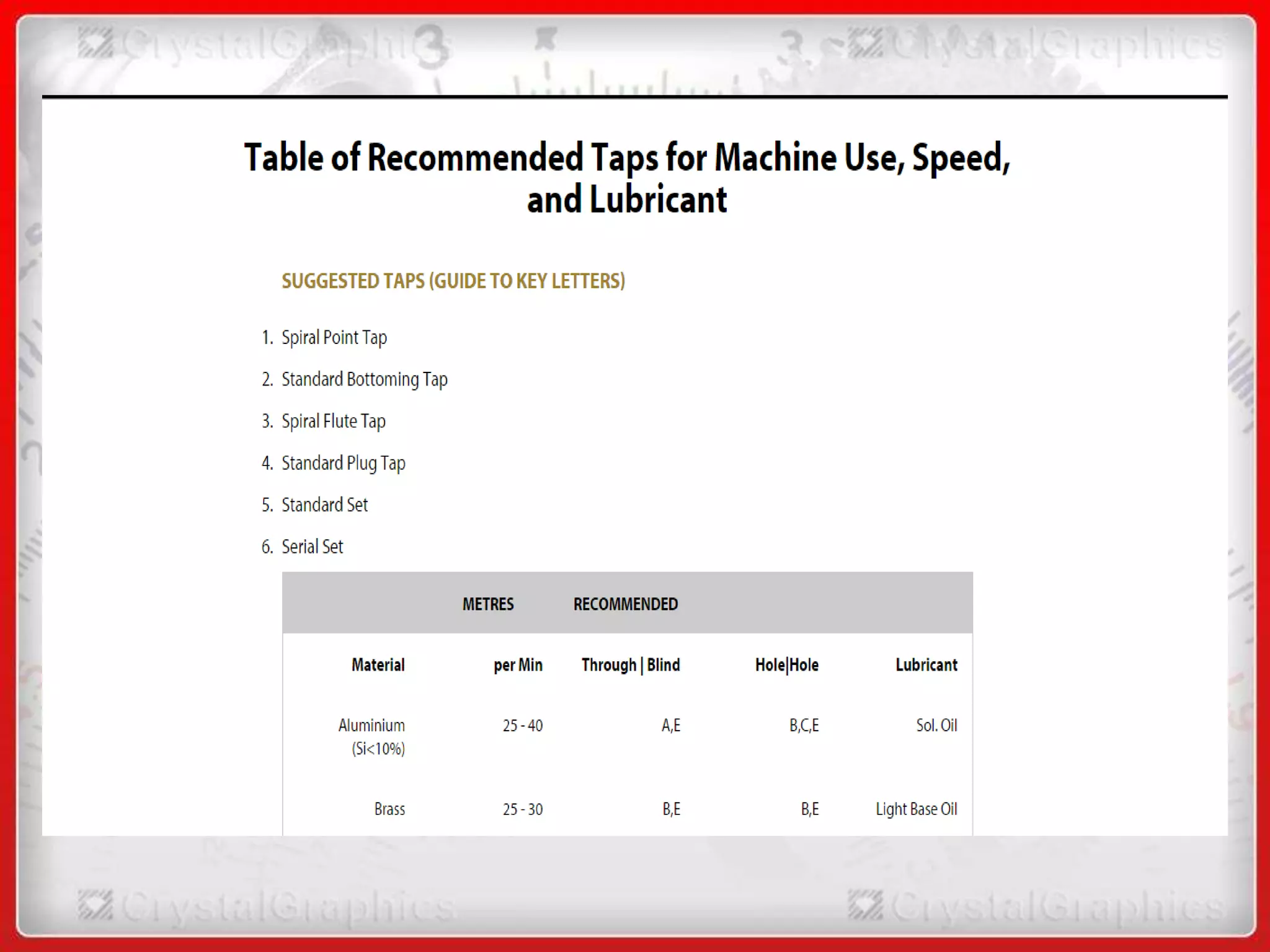
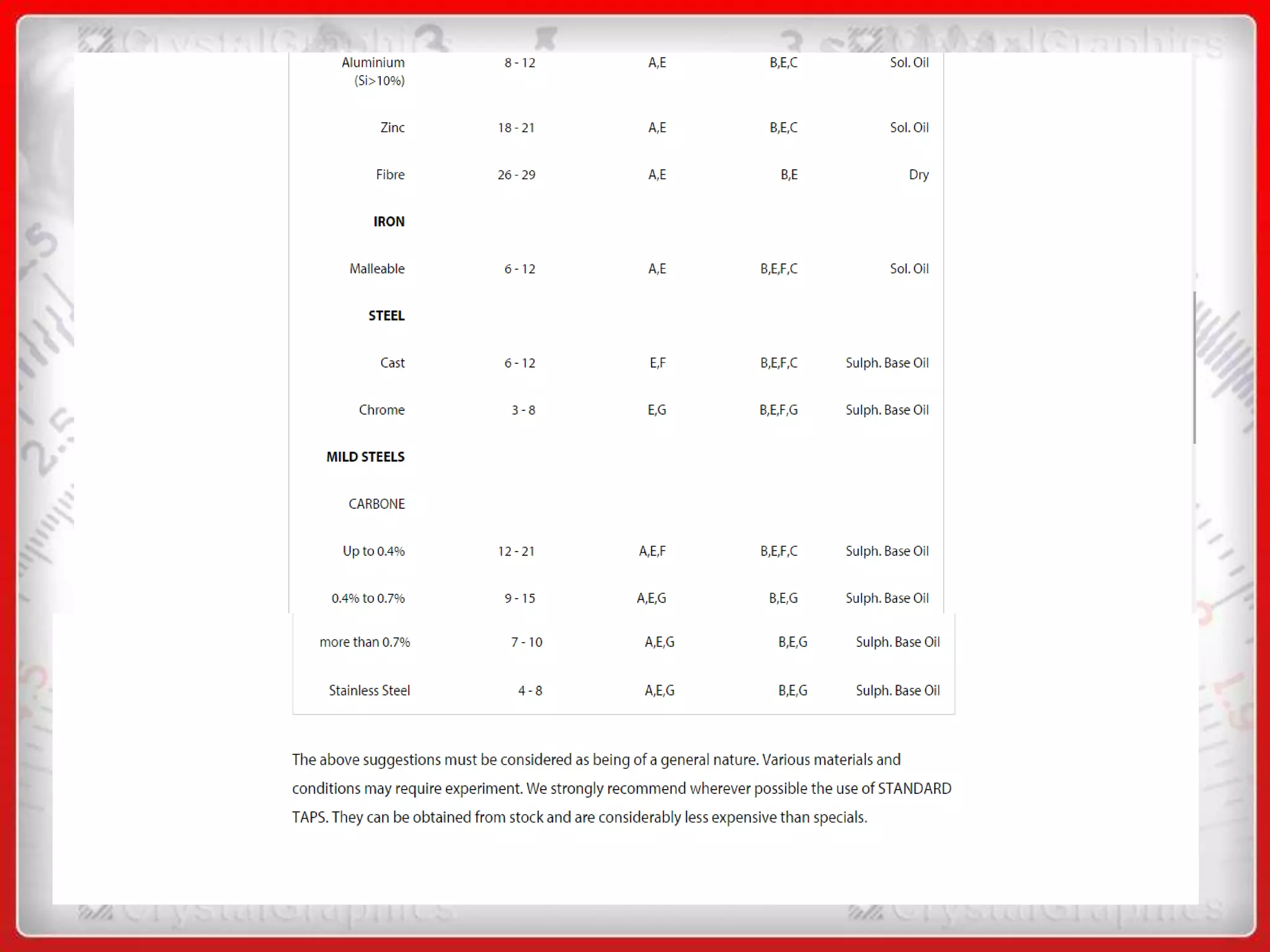
Lubricants
Recommended lubricants for some
common materials are as follows:
Taps and Dies (introduction)

Taps and Dies (introduction)

  • 1.
  • 2.
    Taps and Dies -areused to create screw threads, which is called threading. Many are cutting tools; others are forming tools.
  • 3.
    Tap -a tap isused to cut or form the female portion of the mating pair. (e.g. Nut)
  • 5.
    The three basictypes of taps  Bottoming tap • -used to cut threads in a hole that has already been partially threaded using one of the more tapered types of tap.  Intermediate tap or plug tap • -it has tapered cutting edges, which assist in aligning and starting the tap into an untapped hole. The number of tapered threads typically ranges from 3-5.
  • 6.
     Taper tap •- is similar to intermediate tap but has more pronounced taper to the cutting edges. • The number of tapered threads typically ranges from 8-10. • - it is most often used when the material to be tapped is difficult to work.
  • 9.
    The most commontype of power driven tap is the “Spiral point” plug tap, whose cutting edges are angularly displaced relative to the tap centerline.
  • 11.
    Die Is used tocut or form the male portion. (e.g. bolt)
  • 13.
    Rethreading dies (dienuts) – are dies made for cleaning up damaged threads, have no split for resizing and are made from a hexagonal bar so that a wrench can be used to turn them. Die nuts cannot be used to cut new threads.
  • 15.
    Process • the processof cutting or forming threads using a tap is called tapping. • whereas using a die is called threading. • Both tools can be used to clean up a thread which is called chasing.
  • 16.
    Process of Tapping Beginswith forming (drilling) and slightly countersinking a hole to the diameter smaller than the tap’s major diameter. If the hole is to be drilled, the proper diameter is called the tap drill size.
  • 17.
    The correct tapdrill diameter (in inch) computation is as follows: TD= MD - 𝟏 𝑵 Where TD is the tap drill size, MD is the major diameter and N is the thread pitch.
  • 18.
    The correct tapdrill diameter for metric sized taps is computed as follows: TD= MD – pitch Where TD is the tap drill size, MD is the major diameter and the pitch is the pitch of the thread.
  • 22.
    Lubricants Recommended lubricants forsome common materials are as follows: