
EQUILIBRIUM
CONCEPTUAL FRAMEWORK
19/02/15
MEANING
 It is a state of maximum satisfaction from a consumption.
A producer will obtain the stage of equilibrium when he will get maximum
profit from his production.
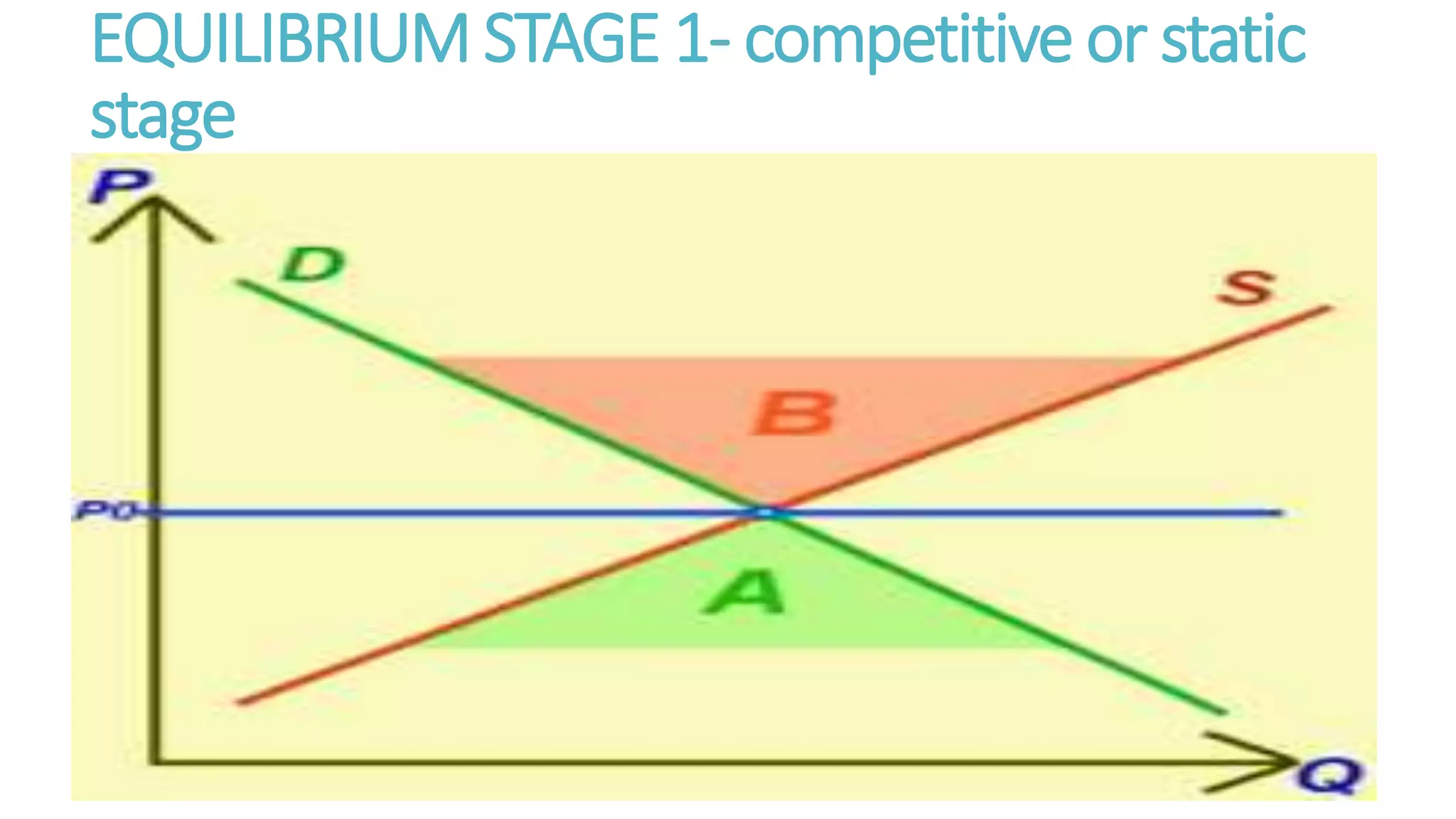
 In economics, economic equilibrium is a state where economic forces such
as supply and demand are balanced and in the absence of external influences
the (equilibrium) values of economic variables will not change.
Equilibrium occurs at the point at which quantity demanded and quantity
supplied are equal. Market equilibrium in this case refers to a condition
where a market price is established through competition.
 This price is often called the competitive price or market clearing price and
will tend not to change unless demand or supply changes and the quantity is
called "competitive quantity" or market clearing quantity.
FEATURES
The behaviour of agents is consistent.
 No agent has an incentive to change its behaviour.
Equilibrium is the outcome of some dynamic process (stability).
NOTE: Agents here means the responsible factors
EQUILIBRIUM STAGE 1- competitive or static
stage
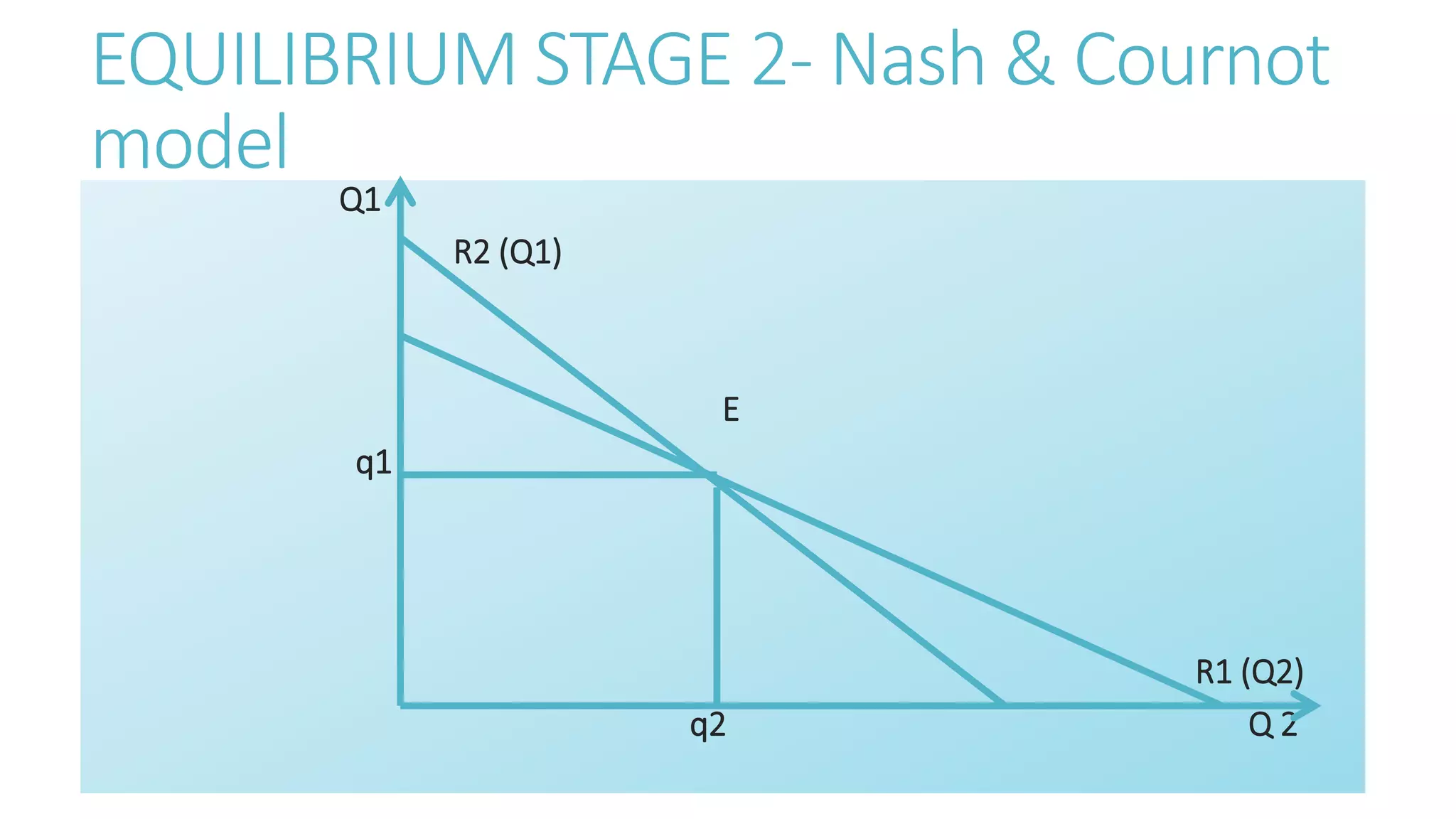
EQUILIBRIUM STAGE 2- Nash & Cournot
model
Q1
R2 (Q1)
E
q1
R1 (Q2)
q2 Q 2
EXCEPTIONS
It cannot take place at a high equilibrium price of commodities.
FMCG products, products of daily use.
Conditions of natural calamity like famine, flood, tsunami etc.
It is a stage which is usually not seen in daily life. As the
assumption of micro economics says ‘ other things being equal’.
EXAMPLE
Price ( Rs.) Demand (in units) Supply (in units)
800 6,000 18,000
700 8,000 16,000
600 10,000 14,000
500 12,000 12,000
400 14,000 10,000
300 16,000 8,000
200 18,000 6,000
100 20,000 4,000
GENERALISATIONS
The set of prices and allocation of resources to consumers from firms is
said to be in equilibrium when every firm set up the inputs used and
outputs produced at a set price to maximize profit (given the firms
technology is constant)
For each consumer the consumption bundle is maximal for the budget
set defined by the initial endowment (valued at the equilibrium prices)
and their share of the profits of the firms in the economy.
The total consumption of products by consumers is equal to initial
endowments plus the net output of firms.

Equilibrium

  • 1.
  • 2.
    MEANING  It isa state of maximum satisfaction from a consumption. A producer will obtain the stage of equilibrium when he will get maximum profit from his production.  In economics, economic equilibrium is a state where economic forces such as supply and demand are balanced and in the absence of external influences the (equilibrium) values of economic variables will not change. Equilibrium occurs at the point at which quantity demanded and quantity supplied are equal. Market equilibrium in this case refers to a condition where a market price is established through competition.  This price is often called the competitive price or market clearing price and will tend not to change unless demand or supply changes and the quantity is called "competitive quantity" or market clearing quantity.
  • 3.
    FEATURES The behaviour ofagents is consistent.  No agent has an incentive to change its behaviour. Equilibrium is the outcome of some dynamic process (stability). NOTE: Agents here means the responsible factors
  • 4.
    EQUILIBRIUM STAGE 1-competitive or static stage
  • 5.
    EQUILIBRIUM STAGE 2-Nash & Cournot model Q1 R2 (Q1) E q1 R1 (Q2) q2 Q 2
  • 6.
    EXCEPTIONS It cannot takeplace at a high equilibrium price of commodities. FMCG products, products of daily use. Conditions of natural calamity like famine, flood, tsunami etc. It is a stage which is usually not seen in daily life. As the assumption of micro economics says ‘ other things being equal’.
  • 7.
    EXAMPLE Price ( Rs.)Demand (in units) Supply (in units) 800 6,000 18,000 700 8,000 16,000 600 10,000 14,000 500 12,000 12,000 400 14,000 10,000 300 16,000 8,000 200 18,000 6,000 100 20,000 4,000
  • 8.
    GENERALISATIONS The set ofprices and allocation of resources to consumers from firms is said to be in equilibrium when every firm set up the inputs used and outputs produced at a set price to maximize profit (given the firms technology is constant) For each consumer the consumption bundle is maximal for the budget set defined by the initial endowment (valued at the equilibrium prices) and their share of the profits of the firms in the economy. The total consumption of products by consumers is equal to initial endowments plus the net output of firms.