Downloaded 12 times


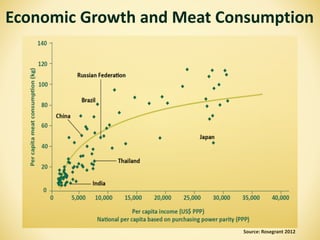


This document outlines challenges for water and food security, scenario modeling methodology, and alternative food and water scenarios to 2050. It discusses challenges including increasing population, rising incomes and diet changes, economic growth and meat consumption, supply drivers like climate change and competition with biofuels. It presents scenario modeling using IMPACT and alternative scenarios like climate change business as usual and a bioeconomy scenario. The bioeconomy scenario results in lower total water use, higher irrigation supply reliability, and reduced hunger. The document concludes with policies needed for water and food security like accelerating agricultural R&D, complementary policies and investments, economic reforms, and new water policies.


![Eau Et Crise Alimentaire Paris 18 Nov 09[1]](https://cdn.slidesharecdn.com/ss_thumbnails/eauetcrisealimentaire-paris18nov091-091123091825-phpapp01-thumbnail.jpg?width=640&height=640&fit=bounds)


