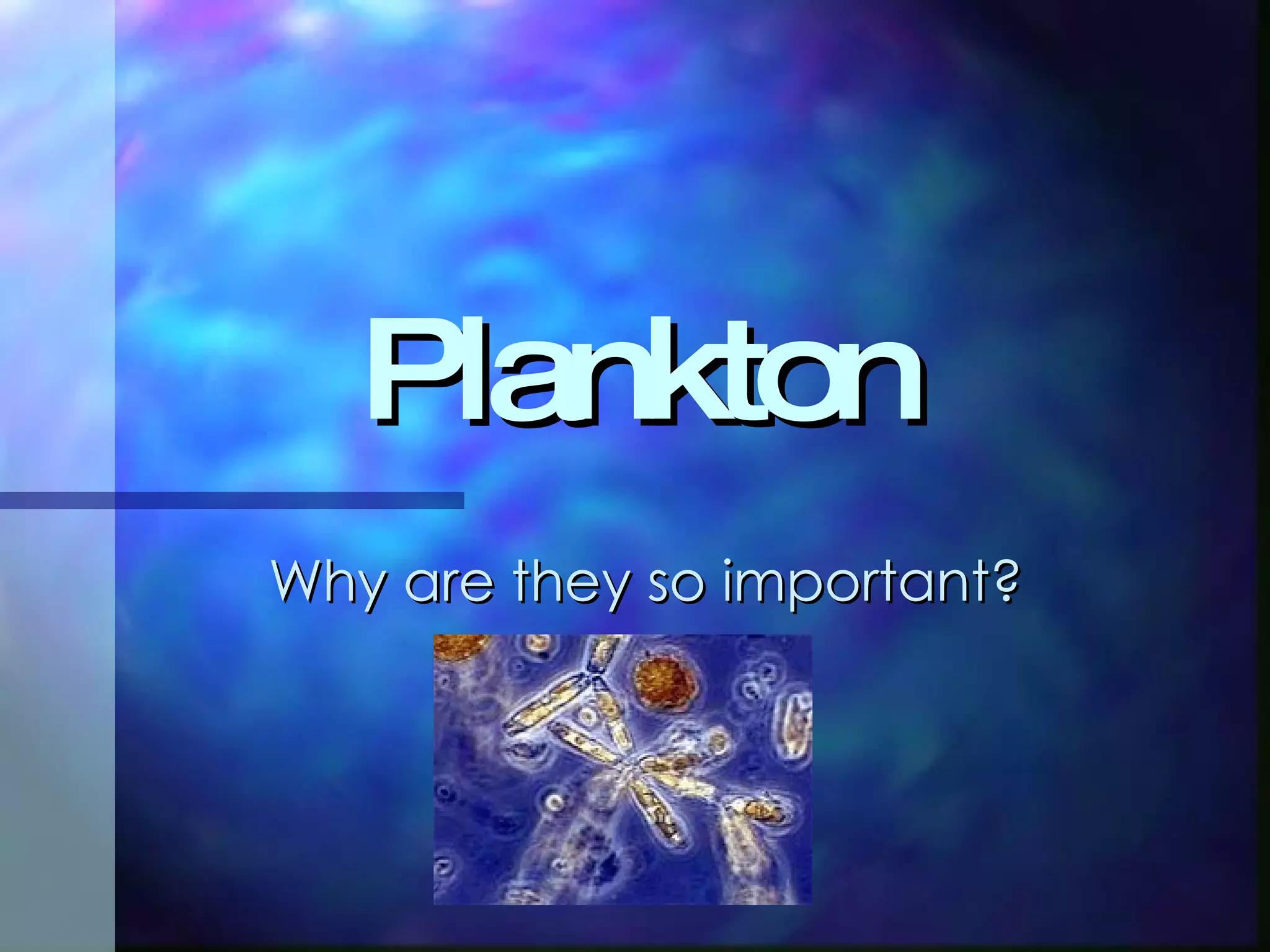
Plankton Why are they so important?
PLANKTON Plants -  Phyto plankton Animals –  Zoo plankton Comes from the Greek word “ planktos ” which means drifting
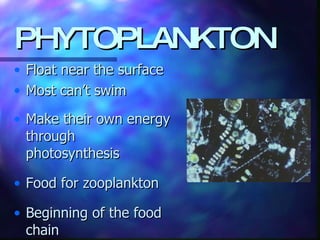
PHYTOPLANKTON Float near the surface  Most can’t swim Make their own energy through photosynthesis Food for zooplankton Beginning of the food chain
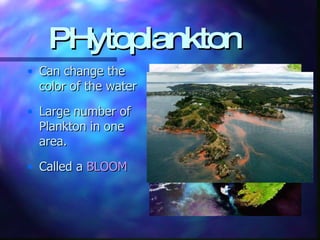
PHytoplankton Can change the color of the water Large number of Plankton in one area. Called a  BLOOM
PHytoplankton Where you find  lots  of  plankton: Ocean provides large amounts of nutrients Where you find  little   plankton: Poisons in the water, prevents growth Changes in water temperature, colder water has more nutrients
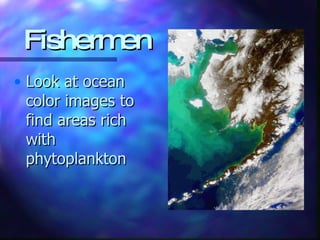
Fishermen Look at ocean color images to find areas rich with phytoplankton
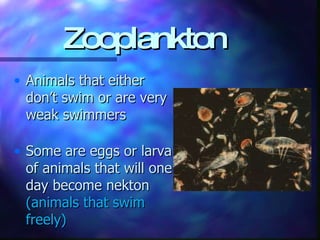
Zooplankton Animals that either don’t swim or are very weak swimmers Some are eggs or larva of animals that will one day become nekton  (animals that swim freely)
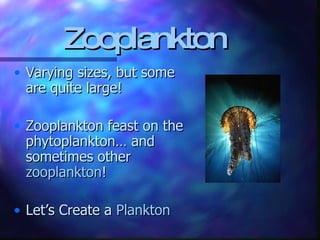
Zooplankton Varying sizes, but some are quite large! Zooplankton feast on the phytoplankton… and sometimes other  zooplankton ! Let’s Create a  Plankton
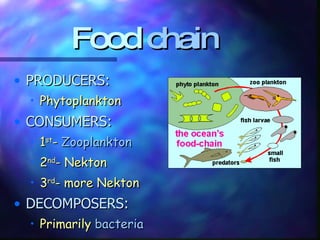
Food  chain PRODUCERS:  Phytoplankton CONSUMERS: 1 st -  Zooplankton 2 nd - Nekton 3 rd - more Nekton DECOMPOSERS: Primarily  bacteria
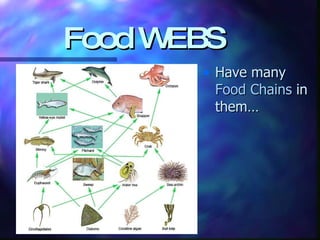
Food WEBS Have many  Food Chains  in them…

Plankton

  • 1.
    Plankton Why arethey so important?
  • 2.
    PLANKTON Plants - Phyto plankton Animals – Zoo plankton Comes from the Greek word “ planktos ” which means drifting
  • 3.
    PHYTOPLANKTON Float nearthe surface Most can’t swim Make their own energy through photosynthesis Food for zooplankton Beginning of the food chain
  • 4.
    PHytoplankton Can changethe color of the water Large number of Plankton in one area. Called a BLOOM
  • 5.
    PHytoplankton Where youfind lots of plankton: Ocean provides large amounts of nutrients Where you find little plankton: Poisons in the water, prevents growth Changes in water temperature, colder water has more nutrients
  • 6.
    Fishermen Look atocean color images to find areas rich with phytoplankton
  • 7.
    Zooplankton Animals thateither don’t swim or are very weak swimmers Some are eggs or larva of animals that will one day become nekton (animals that swim freely)
  • 8.
    Zooplankton Varying sizes,but some are quite large! Zooplankton feast on the phytoplankton… and sometimes other zooplankton ! Let’s Create a Plankton
  • 9.
    Food chainPRODUCERS: Phytoplankton CONSUMERS: 1 st - Zooplankton 2 nd - Nekton 3 rd - more Nekton DECOMPOSERS: Primarily bacteria
  • 10.
    Food WEBS Havemany Food Chains in them…

Editor's Notes

  • #10 Try the link first to see what they already know about food chains. Complete sketches for food chain with printed cards after this slide is shown.