A CONCEPT ON MARANA


             By
          Dr.Nimisha.S
         2nd yr P.G scholar
         Dept.of Rasa Shastra
   Mri      – to kill/to die
   Marayati – act of killing
   Marana – vadha /process of killing1
   VEDIC PERIOD-evidence of therapeutic use
    of metals. Atharva veda has mentioned the
    use of swarna for internal use

   SAMHITA PERIOD
   Use of Ayaskriti
   Charaka has mentioned use of tamra churna
    incase of garavisha for hridyavishodana
   Use of swarna churna will give instant result
 7th
    to 14th century – Rasarnava has described
 Marana of different metals and minerals and
 various equipments like musha and puta.
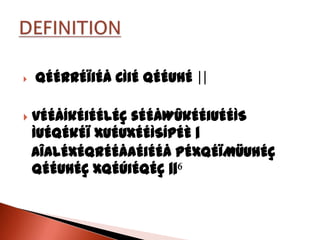
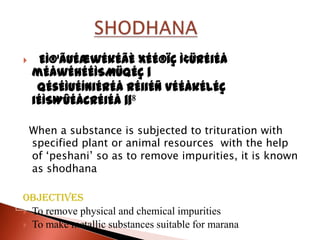
   qÉÉrrÉïiÉå CÌiÉ qÉÉUhÉ ||

   vÉÉåÍkÉiÉÉlÉç sÉÉåWûkÉÉiuÉÉÌS
    ÌuÉqÉkÉï xuÉUxÉÉÌSÍpÉÈ |
    AÎalÉxÉqrÉÉåaÉiÉÉå pÉxqÉÏMüUhÉÇ
    qÉÉUhÉÇ xqÉÚiÉqÉç ||6
In Amarakosha – 30

   Avasana-death/end
   Alamba –tearing off/killing
   Nirharata-killing
   Parivarjana-killing/leaving
   Pramapana-killing
   Ujjasana-killing
   Unmandana-throwing off/killing7
   Reduction in particle size
   Transformation into suitable compound
    form
   To make the material non irritant to G.I
   To increase the potency and quality of the
    drug
   Conversion into absorbable,adaptable,and
    assimilable form
   To make material suitable for therapeutic
    uses
PURVA KARMA
3   PRADHANA KARMA
    PASHCAT KARMA
 Collection of grahya drugs
 Shodhana
 Bhavana
 Chakrikarana
 Samputikarana
[Note: jarana is intermediate step for
  putilohas
Danyabhraka – abhraka]
     EÌ®¹ãUÉæwÉkÉãÈ xÉÉ®ïÇ Ì¢ürÉiÉå
    mÉåwÉhÉÉÌSMüqÉç |
     qÉsÉÌuÉÍNiÉrÉå rÉiiÉÑ vÉÉåkÉlÉÇ
    iÉÌSWûÉåcrÉiÉå ||8

    When a substance is subjected to trituration with
    specified plant or animal resources with the help
    of ‘peshani’ so as to remove impurities, it is known
    as shodhana

Objectives
 To remove physical and chemical impurities
 To make metallic substances suitable for marana
     rÉccÉÔÍhÉïiÉxrÉ kÉÉiuÉÉSåSìïuÉÈ
    xÉÇmÉåwrÉ vÉÉåwÉhÉqÉç
       pÉÉuÉlÉÇ iÉlqÉiÉÇ ÌuɥɿpÉÉïuÉlÉ cÉ
    ÌlÉaÉkrÉiÉå 9||

A liquid is added to the powder and is triturated till
 all the liquid portion is absorbed. This procedure is
 known as bhavana.



Carried out for 7 days

   Quantity of liquid-Powder should just
    become wet
   If done with kwatha -1/8th 10
xÉÑpÉÉÌuÉiÉÇ ÌWû AsmÉqÉÌmÉ SìurÉÇ xrÉÉiÉç
  oÉWÒûMüqÉïMÚiÉç ||
 A less potent drug can be converted into
  more potent
    Objectives

•Particle size becomes smaller after each bhavana
•Shodita material and bhavana dravyas come in close
contact to make a homogenous mixture
•Acts as a binding material for the coming chakrika
stage
 Chakrika and golaka
Objectives
 Facilitates drying process so that the
  duration will be less
 Can adjust higher amount of materials in a
  limited space of saravas
 Helps to spread homogenous heat to each
  particle
 Enhances the surface area of materials to
  allow maximum heat transfer during puta
Types
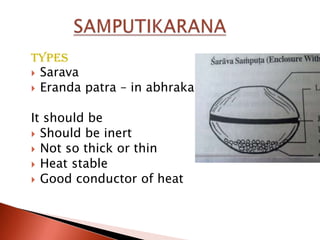
 Sarava
 Eranda patra – in abhraka


It should be
 Should be inert
 Not so thick or thin
 Heat stable
 Good conductor of heat
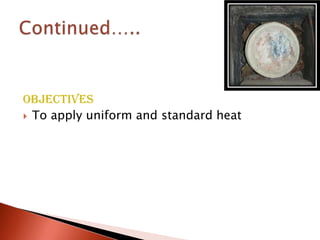
Objectives
 To apply uniform and standard heat
PUTA

    UxÉÌS SìurÉmÉÉMüÉlÉÉÇ
    mÉëqÉÉhÉ¥ÉÉmÉlÉÇ mÉÑOûqÉç
     lÉå¹Éã lrÉÔlÉÉÍkÉMüÈ mÉÉMüÈ xÉÑmÉÉMüÇ
    ÌWûiÉqÉÉæwÉkÉqÉç ||


   It is the process in which the degree of heat which
    is necessary for paka of Rasa, uparasa,maharasa or
    metals. The degree of heat is neither less nor more
    than necessary because the medicines which are
    prepared by using proper required application of
    heat is considered as hitha11
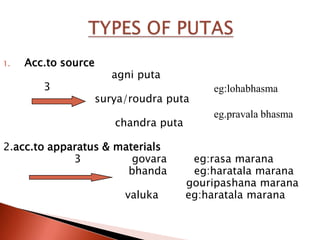
1.   Acc.to source
                        agni puta
        3                                  eg:lohabhasma
                     surya/roudra puta
                                           eg.pravala bhasma
                        chandra puta

2.acc.to apparatus & materials
             3          govara          eg:rasa marana
                       bhanda           eg:haratala marana
                                       gouripashana marana
                          valuka       eg:haratala marana
xuÉhÉïÂmrÉuÉkÉå ¥ÉårÉÇ mÉÑOûÇ
 MÑüYMÑüOûÉÌSMüqÉç |
 iÉÉqÉëå MüɸÉÌShÉÉqÉç uÉÎlWûsÉÉæWåû
 aÉeÉmÉÑOûÉÌlÉ cÉ |
 cÉÉpÉëå qÉWûÉmÉÑOûÇ SkrÉÉiÉç lÉÉaÉç
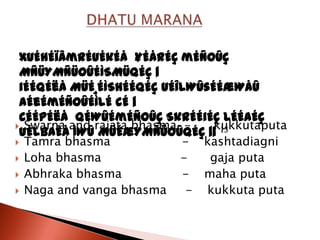
 Swarna and rajata bhasma -   kukkutaputa
 uÉlbaÉå ÌWû MüÉæYMÑüOûqÉç || 13
 Tamra bhasma             - kashtadiagni
 Loha bhasma              -  gaja puta
 Abhraka bhasma           - maha puta
 Naga and vanga bhasma     - kukkuta puta
 sÉÉåWûSåUmÉÑlÉpÉÉïuÉÉ
 aÉÑhÉÍkÉYrÉ iÉiÉÉåaÉëiÉÉ
 AlÉÑmxÉÑ qÉeeÉlÉÇ
 UåZÉÉmÉÑhÉïiÉÉ mÉÑOûiÉÉå pÉuÉåiÉç
 mÉÑOûÉSè aÉëÉwhÉÉã sÉbÉÑiuÉÇ
 vÉÏbÉëurÉÉÎmiÉ¶É SÏmÉlÉqÉç
 eÉÉËUiÉÉSÌmÉ xÉÑiÉålSì
  sÉÉåWûÉlÉÉqÉÍkÉMüÉå aÉÑhÉÉ 12
 rÉjÉÉvqÉÌlÉ ÌuÉvÉåw²ÎlWûÈ
  xrÉmÉÑOûrÉÉåaÉiÉÈ|
 cÉÔhÉïiuÉÉÍkÉ aÉÑhÉÉÅÅuÉÉÎmiÉxiÉjÉÉ
  sÉÉåWåûwÉÑ ÌlÉͶÉiÉqÉç 12 ||
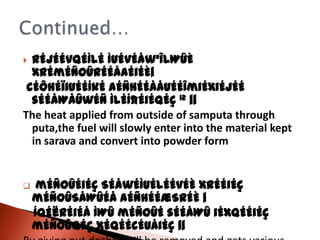
The heat applied from outside of samputa through
  puta,the fuel will slowly enter into the material kept
  in sarava and convert into powder form


    mÉÑOûÉiÉç SÉåwÉÌuÉlÉÉvÉÈ xrÉÉiÉç
    mÉÑOûSåWûÉå aÉÑhÉÉæSrÉÈ |
    ÍqÉërÉiÉå ÌWû mÉÑOûÉ sÉÉåWû iÉxqÉÉiÉç
    mÉÑOûqÉç xÉqÉÉcÉUåiÉç ||
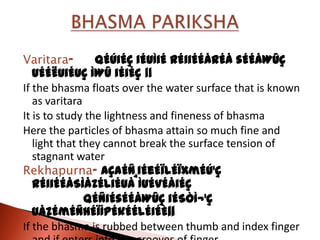
   Bhasma pariksha
Varitara-        qÉÚiÉÇ iÉUÌiÉ rÉiiÉÉårÉå sÉÉåWûÇ
   uÉÉËUiÉUÇ ÌWû iÉiÉç ||
If the bhasma floats over the water surface that is known
   as varitara
It is to study the lightness and fineness of bhasma
Here the particles of bhasma attain so much fine and
   light that they cannot break the surface tension of
   stagnant water
Rekhapurna- AÇaÉѸiÉeÉïlÉÏxmÉÚ¹Ç
   rÉiiÉÉåSìåZÉliÉUå ÌuÉvÉåiÉç
               qÉÑiÉsÉÉåWûÇ iÉSÒ̬¹Ç
   UåZÉmÉÑhÉïÍpÉkÉÉlÉiÉÈ||
If the bhasma is rubbed between thumb and index finger
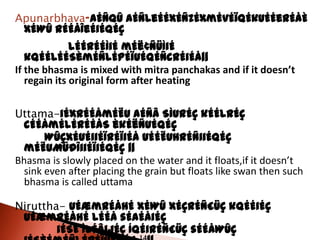
Apunarbhava-aÉÑQû aÉÑleÉÉxÉÑZÉxmÉvÉïqÉkuÉÉerÉåÈ
 xÉWû rÉÉåÎeÉiÉqÉç
              lÉÉrÉÉÌiÉ mÉë¢ÑüÌiÉ
   kqÉÉlÉÉSèmÉÑlÉpÉïuÉqÉÑcrÉiÉå||
If the bhasma is mixed with mitra panchakas and if it doesn’t
   regain its original form after heating


Uttama-iÉxrÉÉåmÉËU aÉÑÂ SìurÉÇ kÉÉlrÉÇ
  cÉÉåmÉlÉrÉÉåS èkÉëÑuÉqÉç
       WûÇxÉuÉiiÉÏrÉïiÉå uÉÉËUhrÉÑiiÉqÉÇ
  mÉËUMüÐÎiiÉïiÉqÉç ||
Bhasma is slowly placed on the water and it floats,if it doesn’t
  sink even after placing the grain but floats like swan then such
  bhasma is called uttama

Niruttha- UÉæmrÉåhÉ xÉWû xÉÇrÉÑ£üÇ kqÉÉiÉÇ
 UÉæmrÉåhÉ lÉÉå sÉaÉåiÉç
        iÉSÉ ÌlÉÂijÉÇ ÍqÉirÉÑ£üÇ sÉÉåWûÇ
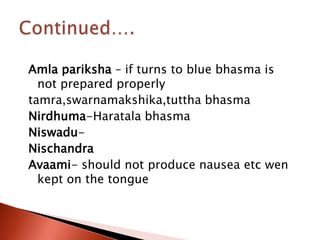
Amla pariksha – if turns to blue bhasma is
  not prepared properly
tamra,swarnamakshika,tuttha bhasma
Nirdhuma-Haratala bhasma
Niswadu-
Nischandra
Avaami- should not produce nausea etc wen
  kept on the tongue
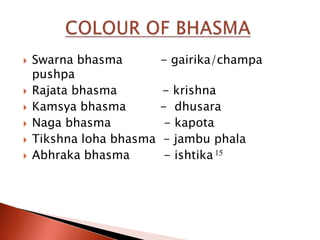
   Swarna bhasma         - gairika/champa
    pushpa
   Rajata bhasma         - krishna
   Kamsya bhasma         - dhusara
   Naga bhasma            - kapota
   Tikshna loha bhasma   - jambu phala
   Abhraka bhasma         - ishtika 15
sÉÉåWûÉlÉÉÇ qÉÉUhÉçÉå¸Ç xÉuÉåïwÉÉÇ
    UxÉpÉxqÉlÉÉÇ |
       qÉÔÍsÉÍpÉqÉkrÉçïqÉÇ mÉëÉWÒûÈ MüÌlɸÇ
    aÉlkÉMüÉÌSÍpÉÈ |
       AËUsÉÉåWåûlÉ sÉÉåWûxrÉ qÉÉUhÉÇ
    SÒaÉÑïhÉmÉëSqÉ ||16

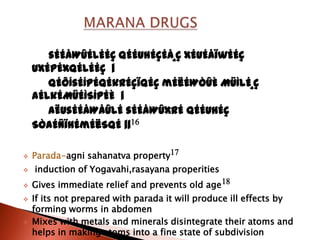
   Parada-agni sahanatva property17
   induction of Yogavahi,rasayana properities
   Gives immediate relief and prevents old age 18
   If its not prepared with parada it will produce ill effects by
    forming worms in abdomen
   Mixes with metals and minerals disintegrate their atoms and
    helps in making atoms into a fine state of subdivision
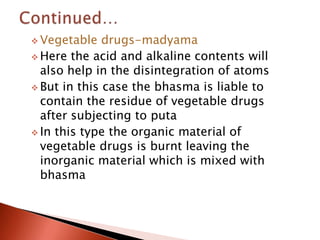
 Vegetable   drugs-madyama
 Here the acid and alkaline contents will
  also help in the disintegration of atoms
 But in this case the bhasma is liable to
  contain the residue of vegetable drugs
  after subjecting to puta
 In this type the organic material of
  vegetable drugs is burnt leaving the
  inorganic material which is mixed with
  bhasma
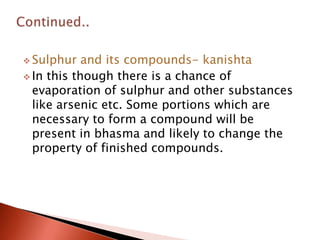
 Sulphur   and its compounds- kanishta
 In this though there is a chance of
  evaporation of sulphur and other substances
  like arsenic etc. Some portions which are
  necessary to form a compound will be
  present in bhasma and likely to change the
  property of finished compounds.
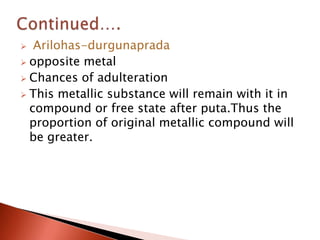
  Arilohas-durgunaprada
 opposite metal
 Chances of adulteration
 This metallic substance will remain with it in
  compound or free state after puta.Thus the
  proportion of original metallic compound will
  be greater.
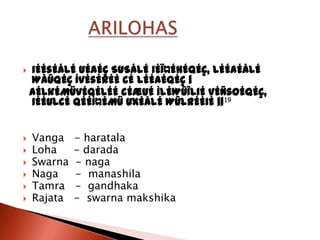
   iÉÉsÉålÉ uÉaÉÇ SUSålÉ iÉϤÉhÉqÉç, lÉÉaÉålÉ
    WåûqÉÇ ÍvÉsÉrÉÉ cÉ lÉÉaÉqÉç |
    aÉlkÉMüvÉqÉlÉÉ cÉæuÉ ÌlÉWûÎliÉ vÉÑsoÉqÉç,
    iÉÉUlcÉ qÉÉͤÉMü UxÉålÉ WûlrÉÉiÉ || 19


   Vanga    - haratala
   Loha     - darada
   Swarna   - naga
   Naga     - manashila
   Tamra    - gandhaka
   Rajata   - swarna makshika
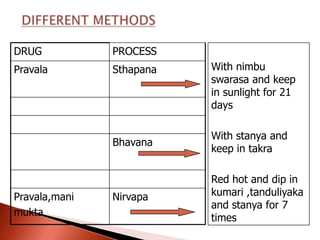
DRUG           PROCESS
Pravala        Sthapana   With nimbu
                          swarasa and keep
                          in sunlight for 21
                          days

                          With stanya and
               Bhavana
                          keep in takra

                          Red hot and dip in
Pravala,mani   Nirvapa    kumari ,tanduliyaka
                          and stanya for 7
mukta
                          times
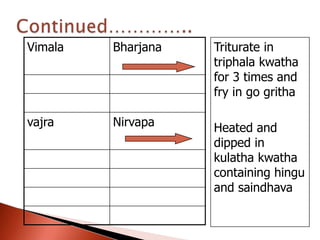
Vimala   Bharjana   Triturate in
                    triphala kwatha
                    for 3 times and
                    fry in go gritha

vajra    Nirvapa    Heated and
                    dipped in
                    kulatha kwatha
                    containing hingu
                    and saindhava
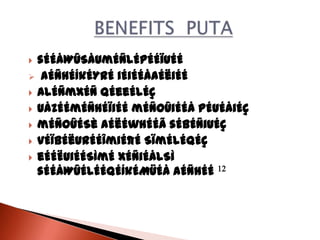
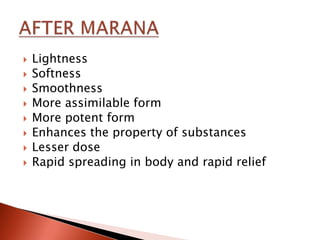
   Lightness
   Softness
   Smoothness
   More assimilable form
   More potent form
   Enhances the property of substances
   Lesser dose
   Rapid spreading in body and rapid relief
marana

marana

  • 2.
    A CONCEPT ONMARANA By Dr.Nimisha.S 2nd yr P.G scholar Dept.of Rasa Shastra
  • 3.
    Mri – to kill/to die  Marayati – act of killing  Marana – vadha /process of killing1
  • 4.
    VEDIC PERIOD-evidence of therapeutic use of metals. Atharva veda has mentioned the use of swarna for internal use  SAMHITA PERIOD  Use of Ayaskriti  Charaka has mentioned use of tamra churna incase of garavisha for hridyavishodana  Use of swarna churna will give instant result
  • 5.
     7th to 14th century – Rasarnava has described Marana of different metals and minerals and various equipments like musha and puta.
  • 6.
    qÉÉrrÉïiÉå CÌiÉ qÉÉUhÉ ||  vÉÉåÍkÉiÉÉlÉç sÉÉåWûkÉÉiuÉÉÌS ÌuÉqÉkÉï xuÉUxÉÉÌSÍpÉÈ | AÎalÉxÉqrÉÉåaÉiÉÉå pÉxqÉÏMüUhÉÇ qÉÉUhÉÇ xqÉÚiÉqÉç ||6
  • 7.
    In Amarakosha –30  Avasana-death/end  Alamba –tearing off/killing  Nirharata-killing  Parivarjana-killing/leaving  Pramapana-killing  Ujjasana-killing  Unmandana-throwing off/killing7
  • 8.
    Reduction in particle size  Transformation into suitable compound form  To make the material non irritant to G.I  To increase the potency and quality of the drug  Conversion into absorbable,adaptable,and assimilable form  To make material suitable for therapeutic uses
  • 9.
    PURVA KARMA 3 PRADHANA KARMA PASHCAT KARMA
  • 10.
     Collection ofgrahya drugs  Shodhana  Bhavana  Chakrikarana  Samputikarana [Note: jarana is intermediate step for putilohas Danyabhraka – abhraka]
  • 11.
    EÌ®¹ãUÉæwÉkÉãÈ xÉÉ®ïÇ Ì¢ürÉiÉå mÉåwÉhÉÉÌSMüqÉç | qÉsÉÌuÉÍNiÉrÉå rÉiiÉÑ vÉÉåkÉlÉÇ iÉÌSWûÉåcrÉiÉå ||8 When a substance is subjected to trituration with specified plant or animal resources with the help of ‘peshani’ so as to remove impurities, it is known as shodhana Objectives  To remove physical and chemical impurities  To make metallic substances suitable for marana
  • 12.
    rÉccÉÔÍhÉïiÉxrÉ kÉÉiuÉÉSåSìïuÉÈ xÉÇmÉåwrÉ vÉÉåwÉhÉqÉç pÉÉuÉlÉÇ iÉlqÉiÉÇ ÌuɥɿpÉÉïuÉlÉ cÉ ÌlÉaÉkrÉiÉå 9|| A liquid is added to the powder and is triturated till all the liquid portion is absorbed. This procedure is known as bhavana.
  • 13.
     Carried out for7 days  Quantity of liquid-Powder should just become wet  If done with kwatha -1/8th 10
  • 14.
    xÉÑpÉÉÌuÉiÉÇ ÌWû AsmÉqÉÌmÉSìurÉÇ xrÉÉiÉç oÉWÒûMüqÉïMÚiÉç ||  A less potent drug can be converted into more potent Objectives •Particle size becomes smaller after each bhavana •Shodita material and bhavana dravyas come in close contact to make a homogenous mixture •Acts as a binding material for the coming chakrika stage
  • 15.
     Chakrika andgolaka Objectives  Facilitates drying process so that the duration will be less  Can adjust higher amount of materials in a limited space of saravas  Helps to spread homogenous heat to each particle  Enhances the surface area of materials to allow maximum heat transfer during puta
  • 16.
    Types  Sarava  Erandapatra – in abhraka It should be  Should be inert  Not so thick or thin  Heat stable  Good conductor of heat
  • 17.
    Objectives  To applyuniform and standard heat
  • 18.
    PUTA  UxÉÌS SìurÉmÉÉMüÉlÉÉÇ mÉëqÉÉhÉ¥ÉÉmÉlÉÇ mÉÑOûqÉç lÉå¹Éã lrÉÔlÉÉÍkÉMüÈ mÉÉMüÈ xÉÑmÉÉMüÇ ÌWûiÉqÉÉæwÉkÉqÉç ||  It is the process in which the degree of heat which is necessary for paka of Rasa, uparasa,maharasa or metals. The degree of heat is neither less nor more than necessary because the medicines which are prepared by using proper required application of heat is considered as hitha11
  • 19.
    1. Acc.to source agni puta 3 eg:lohabhasma surya/roudra puta eg.pravala bhasma chandra puta 2.acc.to apparatus & materials 3 govara eg:rasa marana bhanda eg:haratala marana gouripashana marana valuka eg:haratala marana
  • 20.
    xuÉhÉïÂmrÉuÉkÉå ¥ÉårÉÇ mÉÑOûÇ MÑüYMÑüOûÉÌSMüqÉç | iÉÉqÉëå MüɸÉÌShÉÉqÉç uÉÎlWûsÉÉæWåû aÉeÉmÉÑOûÉÌlÉ cÉ | cÉÉpÉëå qÉWûÉmÉÑOûÇ SkrÉÉiÉç lÉÉaÉç  Swarna and rajata bhasma - kukkutaputa uÉlbaÉå ÌWû MüÉæYMÑüOûqÉç || 13  Tamra bhasma - kashtadiagni  Loha bhasma - gaja puta  Abhraka bhasma - maha puta  Naga and vanga bhasma - kukkuta puta
  • 21.
     sÉÉåWûSåUmÉÑlÉpÉÉïuÉÉ  aÉÑhÉÍkÉYrÉiÉiÉÉåaÉëiÉÉ  AlÉÑmxÉÑ qÉeeÉlÉÇ  UåZÉÉmÉÑhÉïiÉÉ mÉÑOûiÉÉå pÉuÉåiÉç  mÉÑOûÉSè aÉëÉwhÉÉã sÉbÉÑiuÉÇ  vÉÏbÉëurÉÉÎmiÉ¶É SÏmÉlÉqÉç  eÉÉËUiÉÉSÌmÉ xÉÑiÉålSì sÉÉåWûÉlÉÉqÉÍkÉMüÉå aÉÑhÉÉ 12
  • 22.
     rÉjÉÉvqÉÌlÉ ÌuÉvÉåw²ÎlWûÈ xrÉmÉÑOûrÉÉåaÉiÉÈ| cÉÔhÉïiuÉÉÍkÉ aÉÑhÉÉÅÅuÉÉÎmiÉxiÉjÉÉ sÉÉåWåûwÉÑ ÌlÉͶÉiÉqÉç 12 || The heat applied from outside of samputa through puta,the fuel will slowly enter into the material kept in sarava and convert into powder form  mÉÑOûÉiÉç SÉåwÉÌuÉlÉÉvÉÈ xrÉÉiÉç mÉÑOûSåWûÉå aÉÑhÉÉæSrÉÈ | ÍqÉërÉiÉå ÌWû mÉÑOûÉ sÉÉåWû iÉxqÉÉiÉç mÉÑOûqÉç xÉqÉÉcÉUåiÉç ||
  • 23.
    Bhasma pariksha
  • 24.
    Varitara- qÉÚiÉÇ iÉUÌiÉ rÉiiÉÉårÉå sÉÉåWûÇ uÉÉËUiÉUÇ ÌWû iÉiÉç || If the bhasma floats over the water surface that is known as varitara It is to study the lightness and fineness of bhasma Here the particles of bhasma attain so much fine and light that they cannot break the surface tension of stagnant water Rekhapurna- AÇaÉѸiÉeÉïlÉÏxmÉÚ¹Ç rÉiiÉÉåSìåZÉliÉUå ÌuÉvÉåiÉç qÉÑiÉsÉÉåWûÇ iÉSÒ̬¹Ç UåZÉmÉÑhÉïÍpÉkÉÉlÉiÉÈ|| If the bhasma is rubbed between thumb and index finger
  • 25.
    Apunarbhava-aÉÑQû aÉÑleÉÉxÉÑZÉxmÉvÉïqÉkuÉÉerÉåÈ xÉWûrÉÉåÎeÉiÉqÉç lÉÉrÉÉÌiÉ mÉë¢ÑüÌiÉ kqÉÉlÉÉSèmÉÑlÉpÉïuÉqÉÑcrÉiÉå|| If the bhasma is mixed with mitra panchakas and if it doesn’t regain its original form after heating Uttama-iÉxrÉÉåmÉËU aÉÑ SìurÉÇ kÉÉlrÉÇ cÉÉåmÉlÉrÉÉåS èkÉëÑuÉqÉç WûÇxÉuÉiiÉÏrÉïiÉå uÉÉËUhrÉÑiiÉqÉÇ mÉËUMüÐÎiiÉïiÉqÉç || Bhasma is slowly placed on the water and it floats,if it doesn’t sink even after placing the grain but floats like swan then such bhasma is called uttama Niruttha- UÉæmrÉåhÉ xÉWû xÉÇrÉÑ£üÇ kqÉÉiÉÇ UÉæmrÉåhÉ lÉÉå sÉaÉåiÉç iÉSÉ ÌlÉÂijÉÇ ÍqÉirÉÑ£üÇ sÉÉåWûÇ
  • 26.
    Amla pariksha –if turns to blue bhasma is not prepared properly tamra,swarnamakshika,tuttha bhasma Nirdhuma-Haratala bhasma Niswadu- Nischandra Avaami- should not produce nausea etc wen kept on the tongue
  • 27.
    Swarna bhasma - gairika/champa pushpa  Rajata bhasma - krishna  Kamsya bhasma - dhusara  Naga bhasma - kapota  Tikshna loha bhasma - jambu phala  Abhraka bhasma - ishtika 15
  • 28.
    sÉÉåWûÉlÉÉÇ qÉÉUhÉçÉå¸Ç xÉuÉåïwÉÉÇ UxÉpÉxqÉlÉÉÇ | qÉÔÍsÉÍpÉqÉkrÉçïqÉÇ mÉëÉWÒûÈ MüÌlÉ¸Ç aÉlkÉMüÉÌSÍpÉÈ | AËUsÉÉåWåûlÉ sÉÉåWûxrÉ qÉÉUhÉÇ SÒaÉÑïhÉmÉëSqÉ ||16  Parada-agni sahanatva property17  induction of Yogavahi,rasayana properities  Gives immediate relief and prevents old age 18  If its not prepared with parada it will produce ill effects by forming worms in abdomen  Mixes with metals and minerals disintegrate their atoms and helps in making atoms into a fine state of subdivision
  • 29.
     Vegetable drugs-madyama  Here the acid and alkaline contents will also help in the disintegration of atoms  But in this case the bhasma is liable to contain the residue of vegetable drugs after subjecting to puta  In this type the organic material of vegetable drugs is burnt leaving the inorganic material which is mixed with bhasma
  • 30.
     Sulphur and its compounds- kanishta  In this though there is a chance of evaporation of sulphur and other substances like arsenic etc. Some portions which are necessary to form a compound will be present in bhasma and likely to change the property of finished compounds.
  • 31.
     Arilohas-durgunaprada opposite metal  Chances of adulteration  This metallic substance will remain with it in compound or free state after puta.Thus the proportion of original metallic compound will be greater.
  • 32.
    iÉÉsÉålÉ uÉaÉÇ SUSålÉ iÉϤÉhÉqÉç, lÉÉaÉålÉ WåûqÉÇ ÍvÉsÉrÉÉ cÉ lÉÉaÉqÉç | aÉlkÉMüvÉqÉlÉÉ cÉæuÉ ÌlÉWûÎliÉ vÉÑsoÉqÉç, iÉÉUlcÉ qÉÉͤÉMü UxÉålÉ WûlrÉÉiÉ || 19  Vanga - haratala  Loha - darada  Swarna - naga  Naga - manashila  Tamra - gandhaka  Rajata - swarna makshika
  • 33.
    DRUG PROCESS Pravala Sthapana With nimbu swarasa and keep in sunlight for 21 days With stanya and Bhavana keep in takra Red hot and dip in Pravala,mani Nirvapa kumari ,tanduliyaka and stanya for 7 mukta times
  • 34.
    Vimala Bharjana Triturate in triphala kwatha for 3 times and fry in go gritha vajra Nirvapa Heated and dipped in kulatha kwatha containing hingu and saindhava
  • 35.
    Lightness  Softness  Smoothness  More assimilable form  More potent form  Enhances the property of substances  Lesser dose  Rapid spreading in body and rapid relief