THE
MANAGER
LEARNING OBJECTIVES
Identify the main functions of management
Determine the roles of managers
Discuss the key skills of managers; and
Describe and compare the levels of
management
The conventional definition of management
is getting work done through people, but
real management is developing people
through work.
-Agha Hasan Abedi
MANAGER
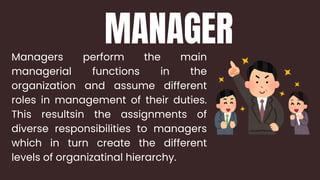
Managers perform the main
managerial functions in the
organization and assume different
roles in management of their duties.
This resultsin the assignments of
diverse responsibilities to managers
which in turn create the different
levels of organizatinal hierarchy.
DIFFERENT TYPES OF MANAGERS
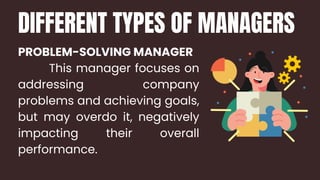
PROBLEM-SOLVING MANAGER
This manager focuses on
addressing company
problems and achieving goals,
but may overdo it, negatively
impacting their overall
performance.
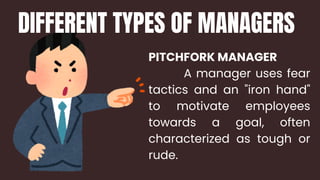
PITCHFORK MANAGER
A manager uses fear
tactics and an "iron hand"
to motivate employees
towards a goal, often
characterized as tough or
rude.
DIFFERENT TYPES OF MANAGERS
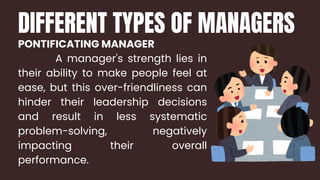
PONTIFICATING MANAGER
A manager's strength lies in
their ability to make people feel at
ease, but this over-friendliness can
hinder their leadership decisions
and result in less systematic
problem-solving, negatively
impacting their overall
performance.
DIFFERENT TYPES OF MANAGERS
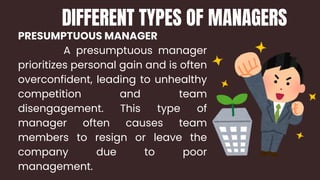
PRESUMPTUOUS MANAGER
A presumptuous manager
prioritizes personal gain and is often
overconfident, leading to unhealthy
competition and team
disengagement. This type of
manager often causes team
members to resign or leave the
company due to poor
management.
DIFFERENT TYPES OF MANAGERS
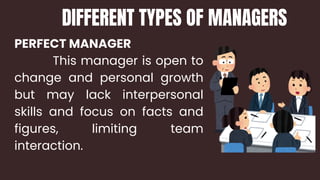
PERFECT MANAGER
This manager is open to
change and personal growth
but may lack interpersonal
skills and focus on facts and
figures, limiting team
interaction.
DIFFERENT TYPES OF MANAGERS
PASSIVE MANAGER
These types of managers
aim to keep everyone happy
and be their friend. This can be
frustrating for employees
because they tend not to
provide constructive criticism.
DIFFERENT TYPES OF MANAGERS
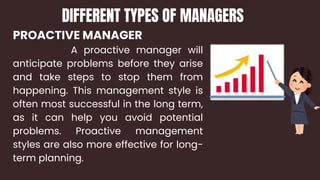
PROACTIVE MANAGER
A proactive manager will
anticipate problems before they arise
and take steps to stop them from
happening. This management style is
often most successful in the long term,
as it can help you avoid potential
problems. Proactive management
styles are also more effective for long-
term planning.
DIFFERENT TYPES OF MANAGERS
PLANNING - In the planning stage,
managers establish organizational goals,
make strategic decisions, brainstorm
alternatives, and analyze the
organization's current state, vision,
mission, and available resources to
determine the best course of action.
MAIN MANAGEMENT FUNCTIONS
ORGANIZING - Organizing involves
distributing resources and delegating
tasks to achieve planning goals, often
collaborating with finance and HR
departments. Managers aim to create a
productive work environment, considering
employees' motivation and aptitude.
MAIN MANAGEMENT FUNCTIONS
LEADING - Leading involves motivating
employees and influencing behavior to
achieve organizational objectives.
Successful leaders use interpersonal skills
to connect with team members,
encouraging them to perform to their best
abilities.
MAIN MANAGEMENT FUNCTIONS
CONTROLLING - Controlling involves
evaluating plan execution and making
adjustments to achieve organizational
goals. Managers manage tasks like
employee training, deadlines,
performance appraisals, feedback, and
pay raises, ensuring the quality of work
and achieving organizational goals.
MAIN MANAGEMENT FUNCTIONS
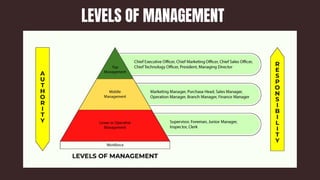
LEVELS OF MANAGEMENT
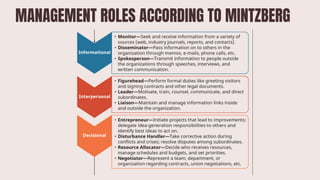
MANAGEMENT ROLES ACCORDING TO MINTZBERG
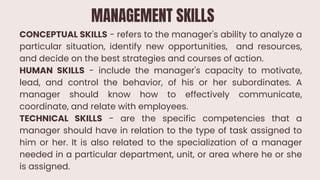
MANAGEMENT SKILLS
CONCEPTUAL SKILLS - refers to the manager's ability to analyze a
particular situation, identify new opportunities, and resources,
and decide on the best strategies and courses of action.
HUMAN SKILLS - include the manager's capacity to motivate,
lead, and control the behavior, of his or her subordinates. A
manager should know how to effectively communicate,
coordinate, and relate with employees.
TECHNICAL SKILLS - are the specific competencies that a
manager should have in relation to the type of task assigned to
him or her. It is also related to the specialization of a manager
needed in a particular department, unit, or area where he or she
is assigned.
THANK
YOU
GRADE 11
- GAS!

THE MANAGER - WEEK 2 DAY 1 LESSON 4 .pdf

  • 1.
  • 2.
    LEARNING OBJECTIVES Identify themain functions of management Determine the roles of managers Discuss the key skills of managers; and Describe and compare the levels of management
  • 3.
    The conventional definitionof management is getting work done through people, but real management is developing people through work. -Agha Hasan Abedi
  • 4.
    MANAGER Managers perform themain managerial functions in the organization and assume different roles in management of their duties. This resultsin the assignments of diverse responsibilities to managers which in turn create the different levels of organizatinal hierarchy.
  • 5.
    DIFFERENT TYPES OFMANAGERS PROBLEM-SOLVING MANAGER This manager focuses on addressing company problems and achieving goals, but may overdo it, negatively impacting their overall performance.
  • 6.
    PITCHFORK MANAGER A manageruses fear tactics and an "iron hand" to motivate employees towards a goal, often characterized as tough or rude. DIFFERENT TYPES OF MANAGERS
  • 7.
    PONTIFICATING MANAGER A manager'sstrength lies in their ability to make people feel at ease, but this over-friendliness can hinder their leadership decisions and result in less systematic problem-solving, negatively impacting their overall performance. DIFFERENT TYPES OF MANAGERS
  • 8.
    PRESUMPTUOUS MANAGER A presumptuousmanager prioritizes personal gain and is often overconfident, leading to unhealthy competition and team disengagement. This type of manager often causes team members to resign or leave the company due to poor management. DIFFERENT TYPES OF MANAGERS
  • 9.
    PERFECT MANAGER This manageris open to change and personal growth but may lack interpersonal skills and focus on facts and figures, limiting team interaction. DIFFERENT TYPES OF MANAGERS
  • 10.
    PASSIVE MANAGER These typesof managers aim to keep everyone happy and be their friend. This can be frustrating for employees because they tend not to provide constructive criticism. DIFFERENT TYPES OF MANAGERS
  • 11.
    PROACTIVE MANAGER A proactivemanager will anticipate problems before they arise and take steps to stop them from happening. This management style is often most successful in the long term, as it can help you avoid potential problems. Proactive management styles are also more effective for long- term planning. DIFFERENT TYPES OF MANAGERS
  • 12.
    PLANNING - Inthe planning stage, managers establish organizational goals, make strategic decisions, brainstorm alternatives, and analyze the organization's current state, vision, mission, and available resources to determine the best course of action. MAIN MANAGEMENT FUNCTIONS
  • 13.
    ORGANIZING - Organizinginvolves distributing resources and delegating tasks to achieve planning goals, often collaborating with finance and HR departments. Managers aim to create a productive work environment, considering employees' motivation and aptitude. MAIN MANAGEMENT FUNCTIONS
  • 14.
    LEADING - Leadinginvolves motivating employees and influencing behavior to achieve organizational objectives. Successful leaders use interpersonal skills to connect with team members, encouraging them to perform to their best abilities. MAIN MANAGEMENT FUNCTIONS
  • 15.
    CONTROLLING - Controllinginvolves evaluating plan execution and making adjustments to achieve organizational goals. Managers manage tasks like employee training, deadlines, performance appraisals, feedback, and pay raises, ensuring the quality of work and achieving organizational goals. MAIN MANAGEMENT FUNCTIONS
  • 16.
  • 17.
  • 18.
    MANAGEMENT SKILLS CONCEPTUAL SKILLS- refers to the manager's ability to analyze a particular situation, identify new opportunities, and resources, and decide on the best strategies and courses of action. HUMAN SKILLS - include the manager's capacity to motivate, lead, and control the behavior, of his or her subordinates. A manager should know how to effectively communicate, coordinate, and relate with employees. TECHNICAL SKILLS - are the specific competencies that a manager should have in relation to the type of task assigned to him or her. It is also related to the specialization of a manager needed in a particular department, unit, or area where he or she is assigned.
  • 19.