Management of Poor Or Hyper Ovarian response
Ovarian Reserve Every girl is born with a finite number of eggs, and their number progressively declines with age.  A measure of the remaining number of eggs in the ovary is called the "ovarian reserve"; and as the woman ages, her ovarian reserve gets depleted.
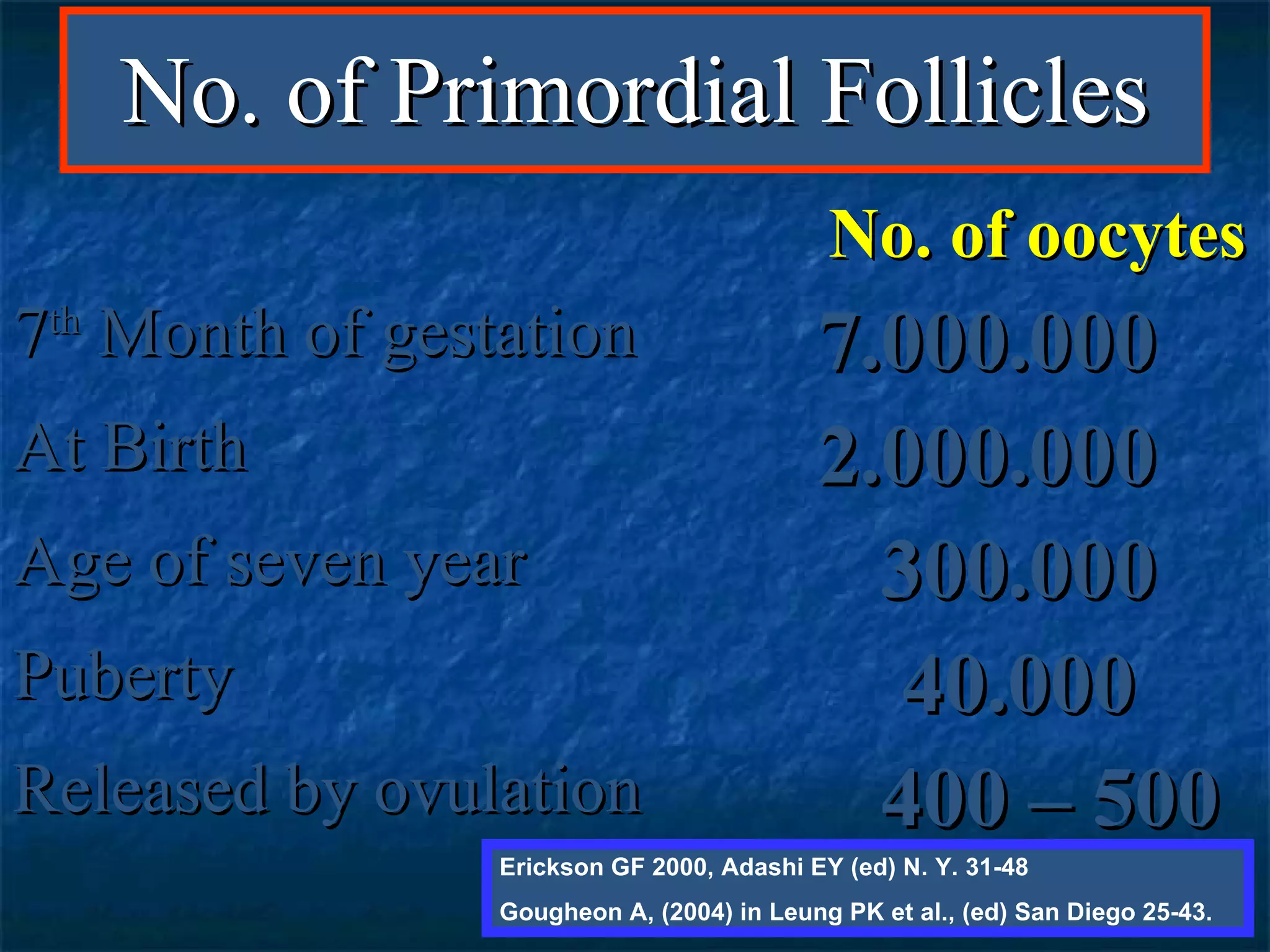
No. of Primordial Follicles Erickson GF 2000, Adashi EY (ed) N. Y. 31-48 Gougheon A, (2004) in Leung PK et al., (ed) San Diego 25-43. No. of oocytes 7 th  Month of gestation 7.000.000 At Birth 2.000.000 Age of seven year 300.000 Puberty 40.000 Released by ovulation 400 – 500
Prediction age  History of previous poor response History of previous OHSS FSH Estradiol Inhibin anti-Müllerian hormone PCOS  antral follicle count
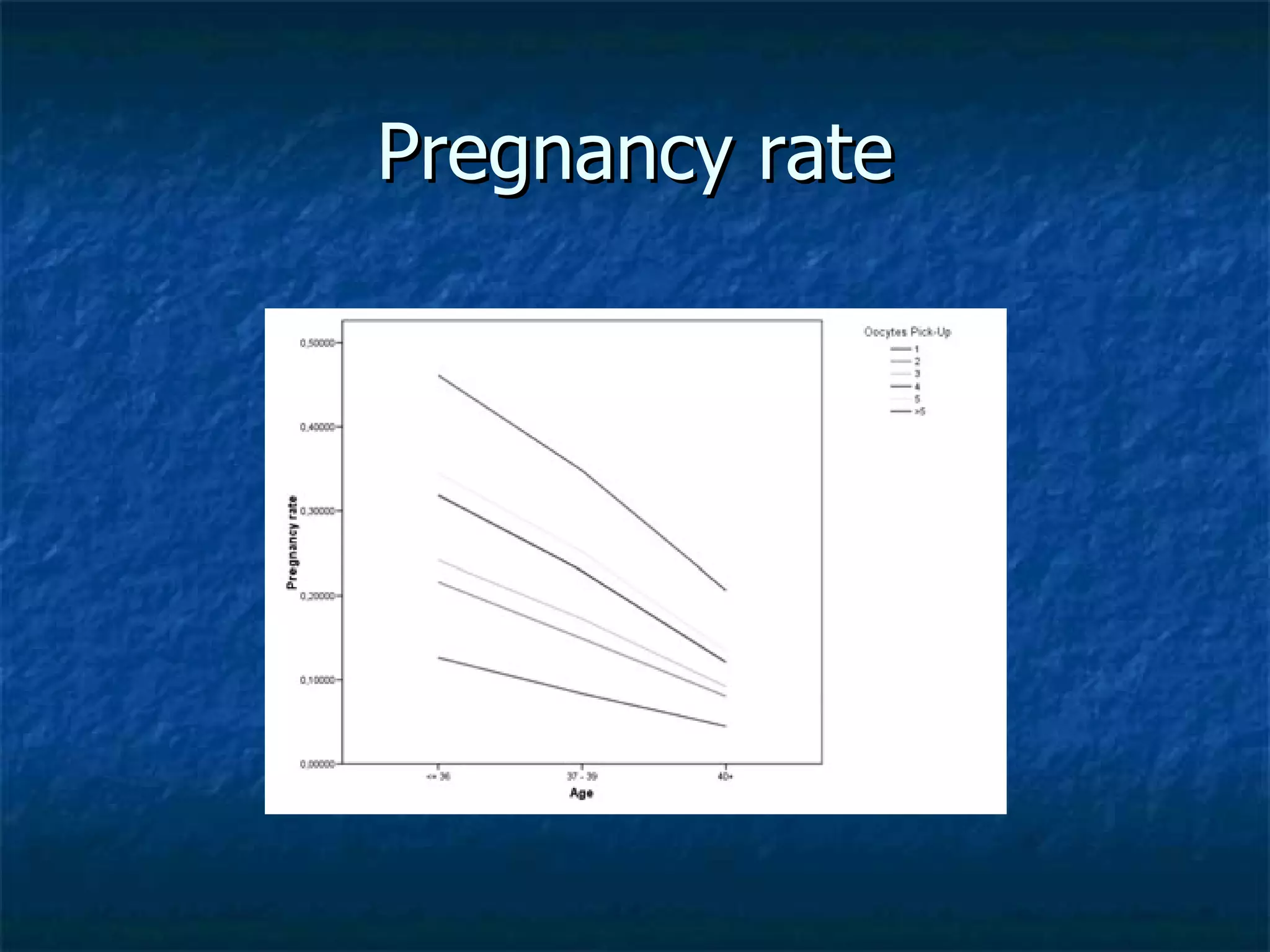
Pregnancy rate
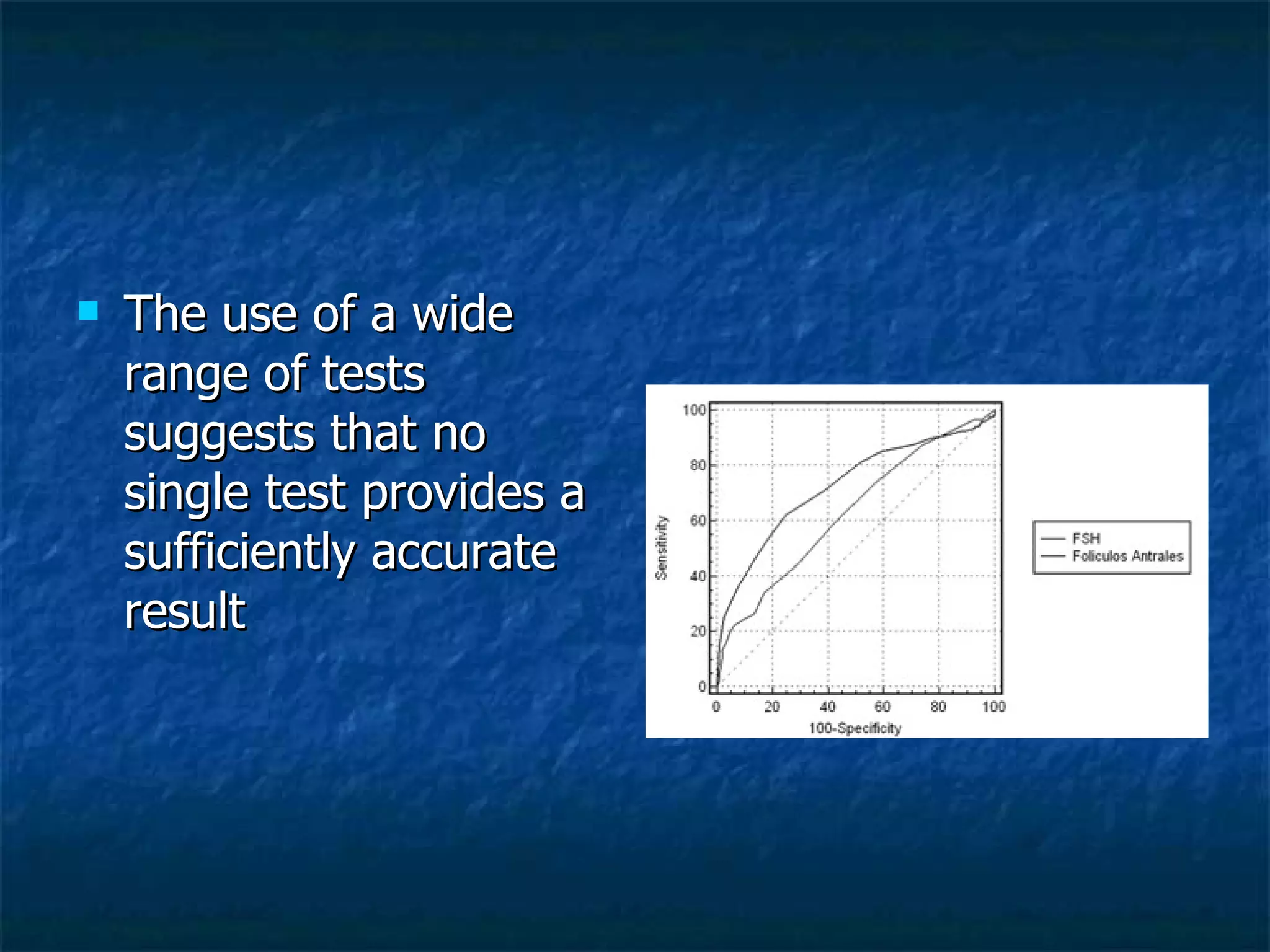
The use of a wide range of tests suggests that no single test provides a sufficiently accurate result
AMH If kits are available, AMH measurement could be the most useful in the prediction of ovarian response in anovulatory women. It is done at any day of cycle It is too expensive Exact normal levels not yet well agreed upon
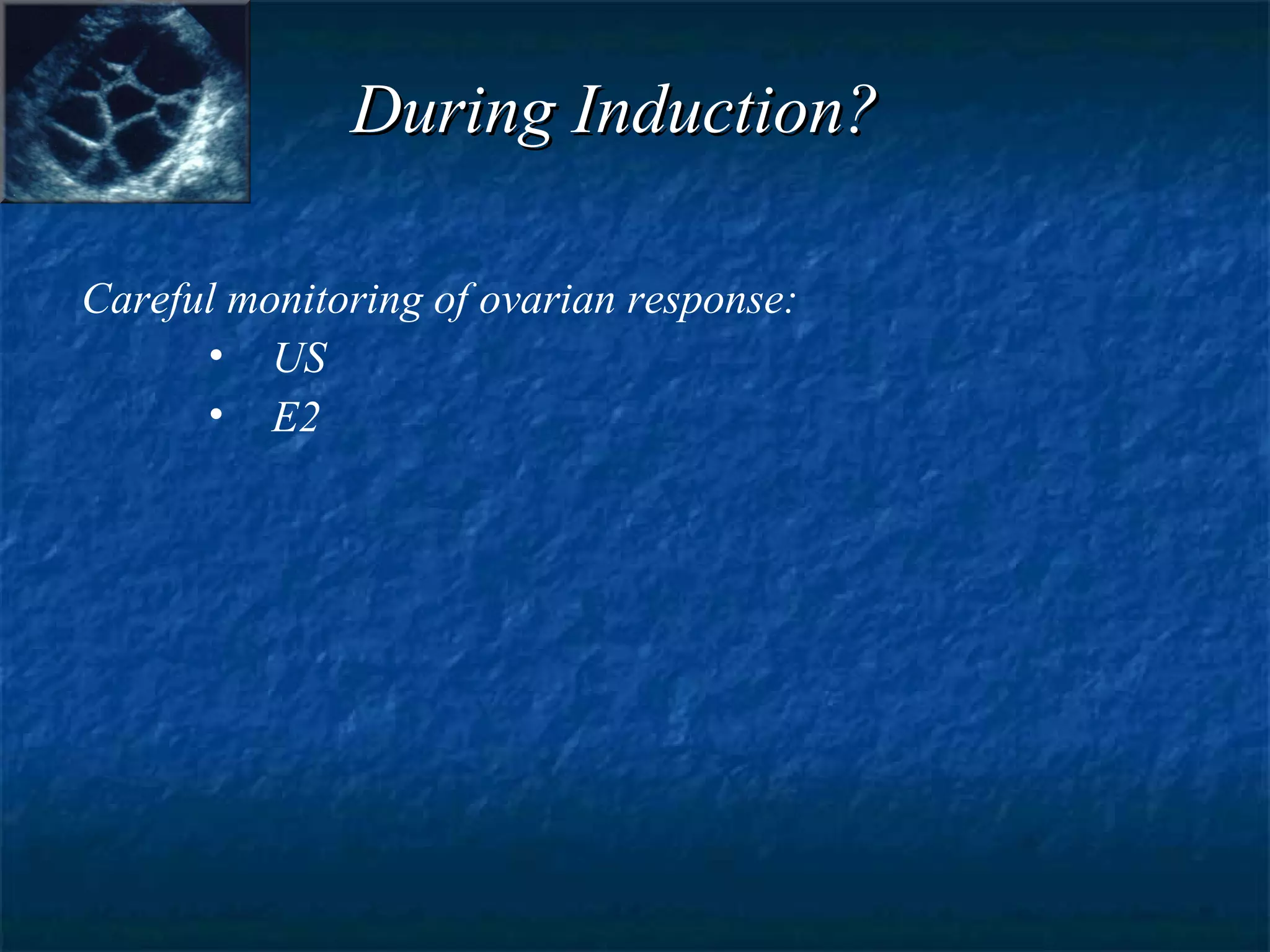
During Induction? Careful monitoring of ovarian response: US E2
Poor Response No universal definition General consensus: women with poor response to ovarian stimulation  OR   those with low ovarian reserve
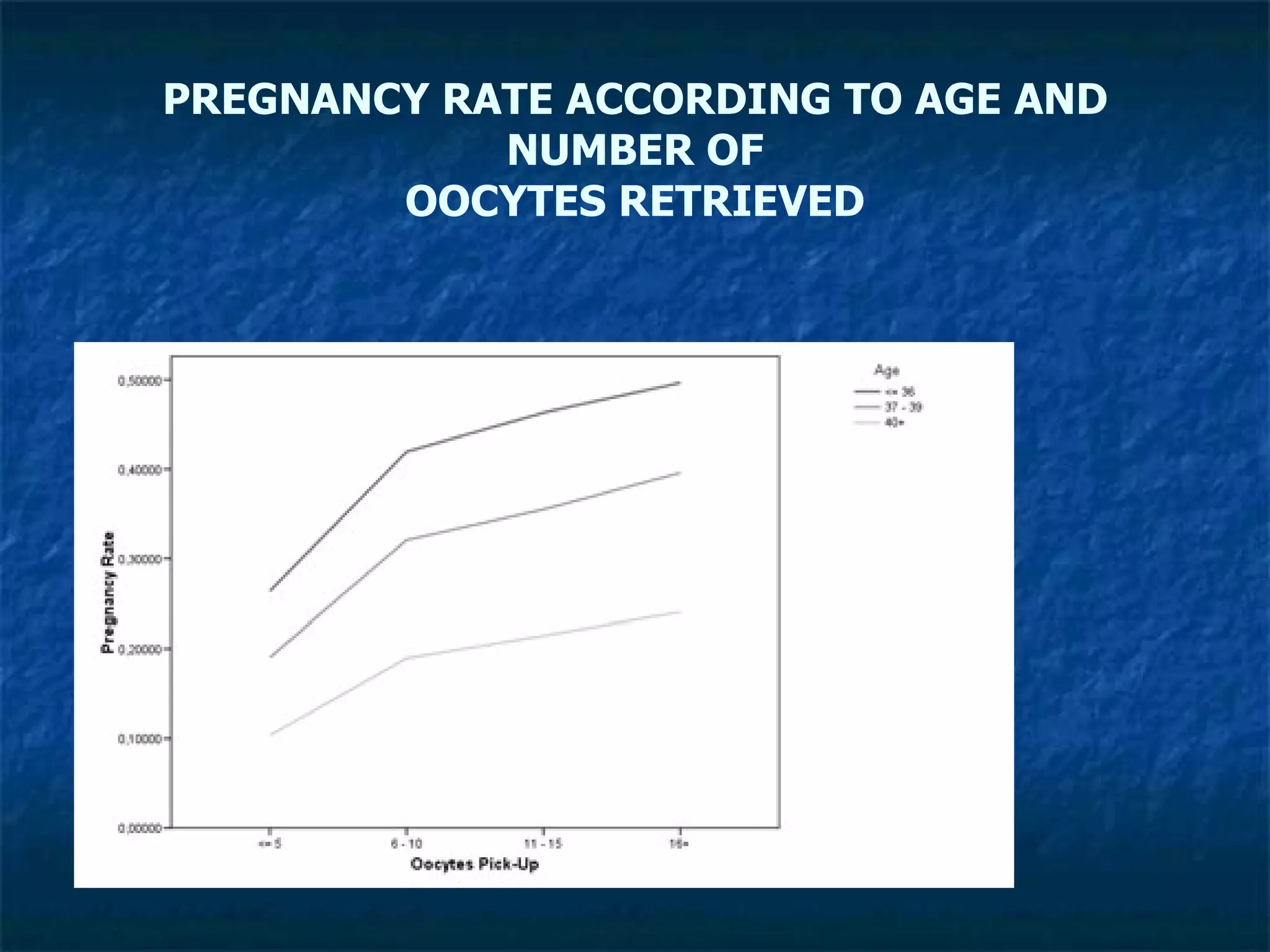
PREGNANCY RATE ACCORDING TO AGE AND NUMBER OF OOCYTES RETRIEVED
What is poor response in IVF Less than 5 follicles from both ovaries Oocyte quality is not related to number of oocytes but to women age Young women with poor response has good quality embryos and better chance of getting pregnant
LOW RESPONDERS CLASSIFICATION 1) Elderly patients with an abnormal endocrinological profile. 2) Young patients with an altered endocrinological profile. 3) Young patients with a normal basal hormonal profile.
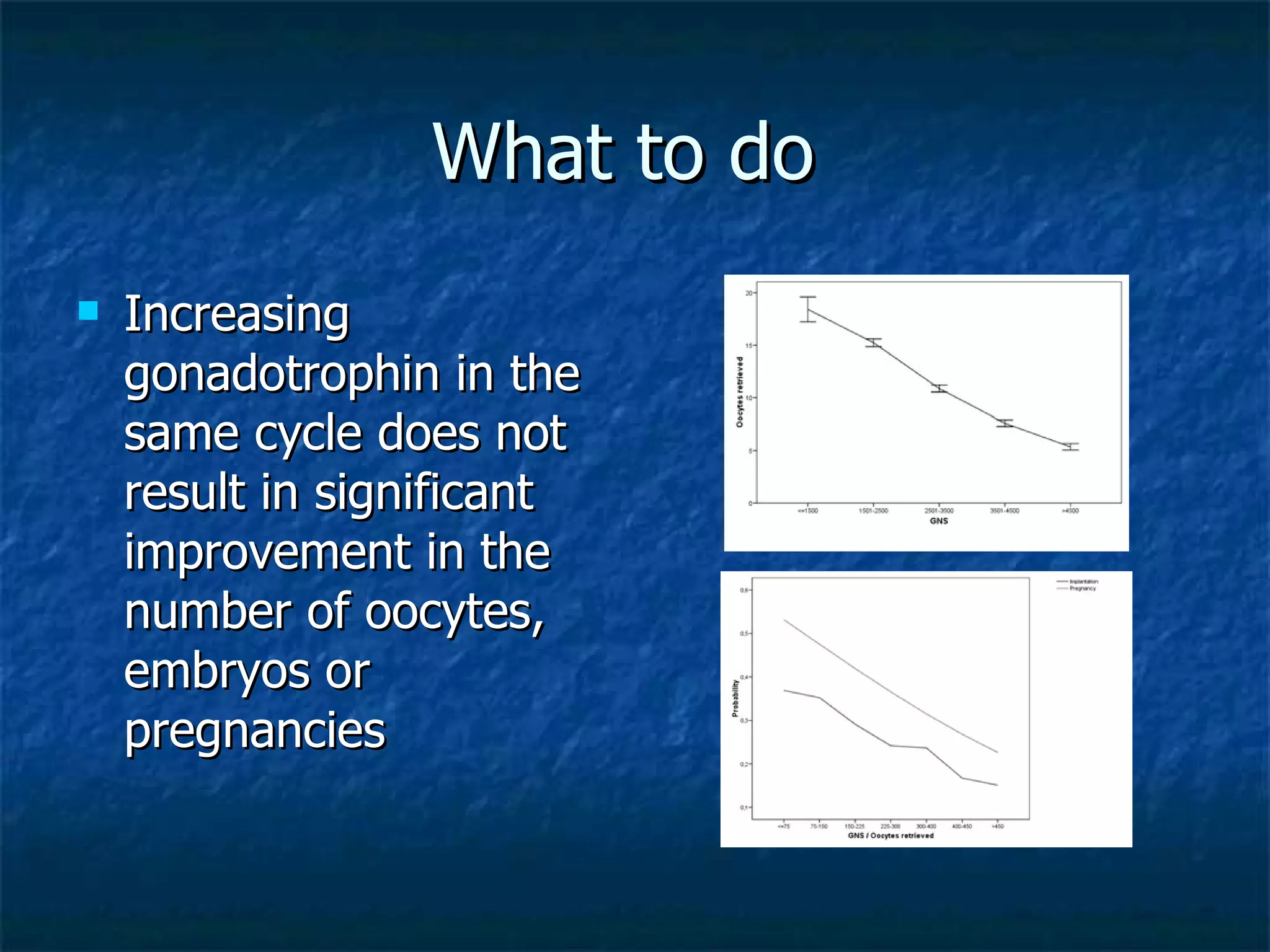
What to do  Increasing gonadotrophin in the same cycle does not result in significant improvement in the number of oocytes, embryos or pregnancies
Cancellation Is a very good option in this cycle Based on counselling the couples Decision to continue is still valid especially with advanced age (more than 38 years old women)
In subsequent cycles Increasing gonadotrophin in the subsequent cycle does not seem to result in significant improvement in the number of pregnancies obtained but may improve number of ooctes
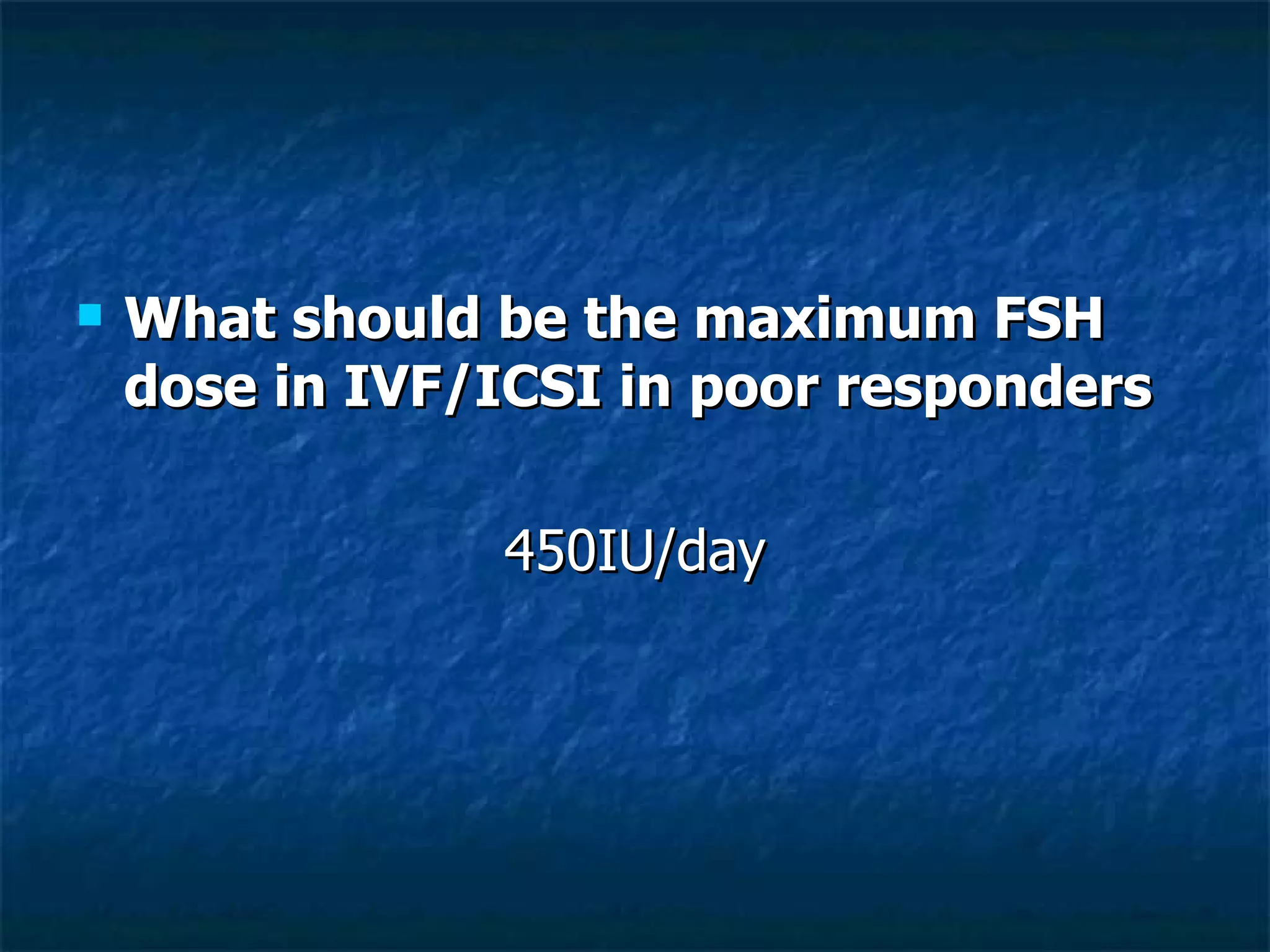
What should be the maximum FSH dose in IVF/ICSI in poor responders   450IU/day
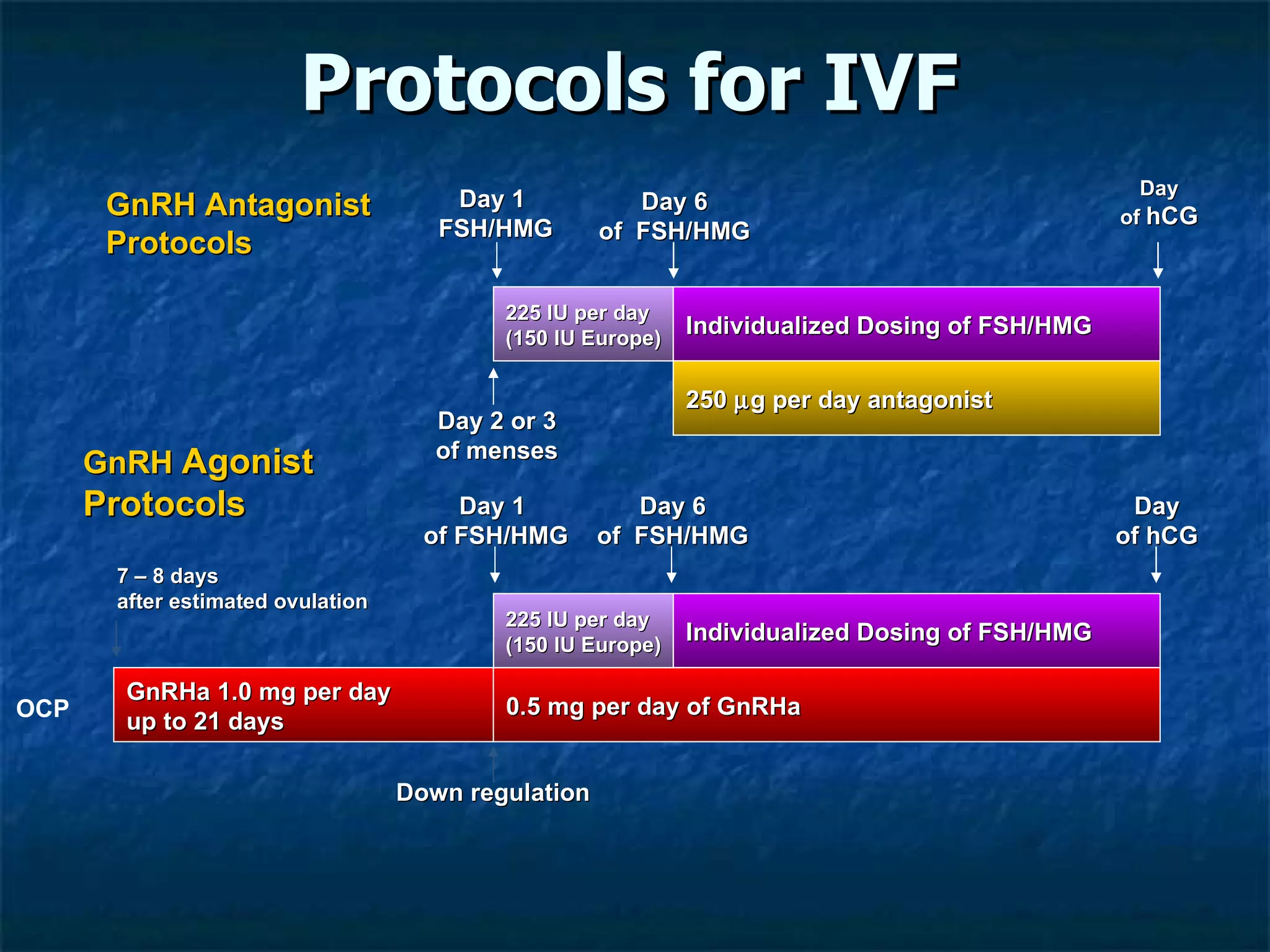
Protocols for IVF  GnRH Antagonist Protocols GnRH  Agonist Protocols   225 IU per day (150 IU Europe) Individualized Dosing of FSH/HMG 250   g per day antagonist Individualized Dosing of FSH/HMG GnRHa 1.0 mg per day  up to 21 days 0.5 mg per day of GnRHa 225 IU per day (150 IU Europe) Day 6 of  FSH/HMG Day of  hCG Day 1  of FSH/HMG Day 6 of  FSH/HMG Day of hCG 7 – 8 days after estimated ovulation Down regulation Day 2 or 3 of menses Day 1  FSH/HMG OCP
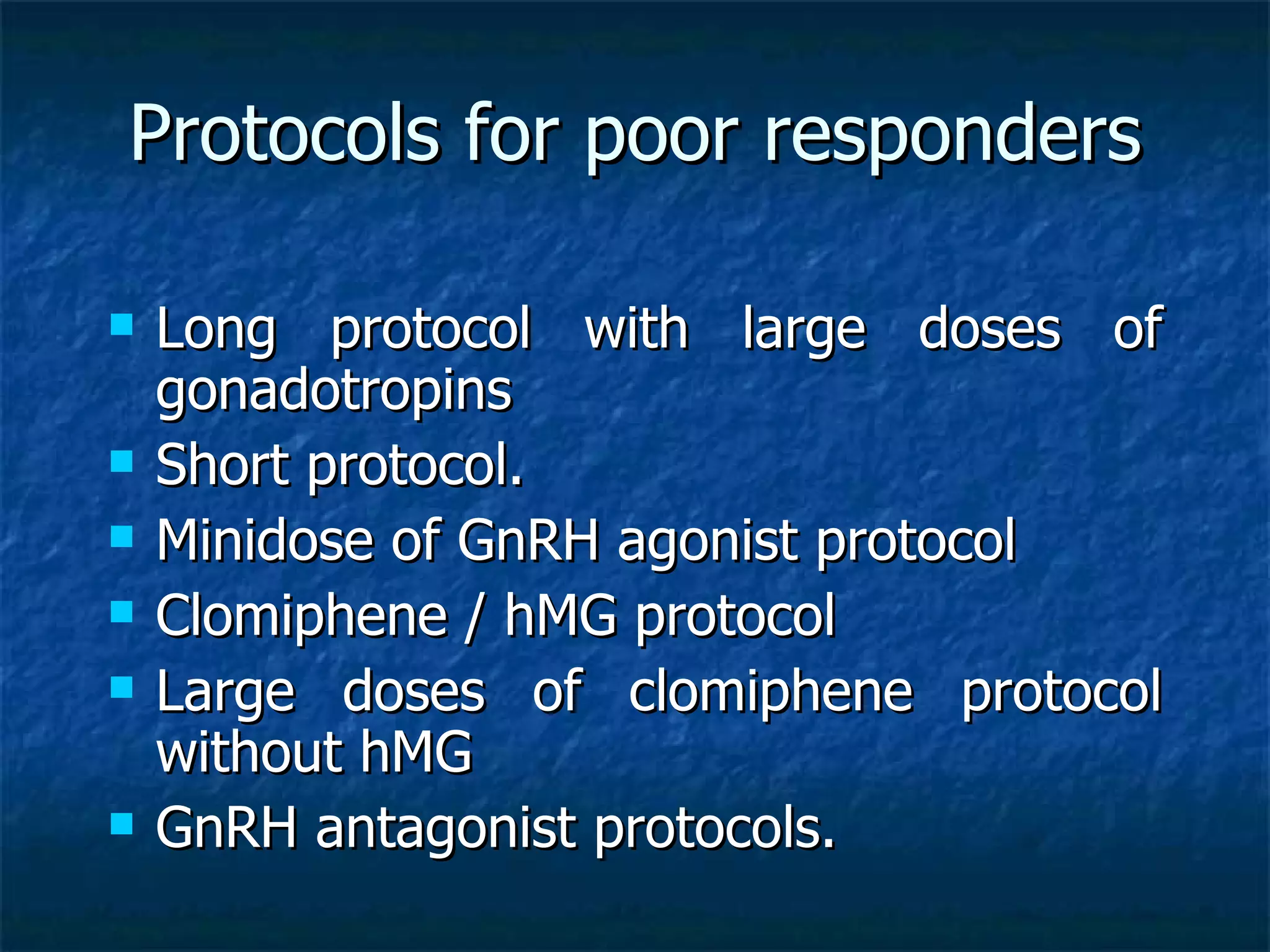
Protocols for poor responders Long protocol with large doses of gonadotropins Short protocol. Minidose of GnRH agonist protocol Clomiphene / hMG protocol Large doses of clomiphene protocol without hMG GnRH antagonist protocols.
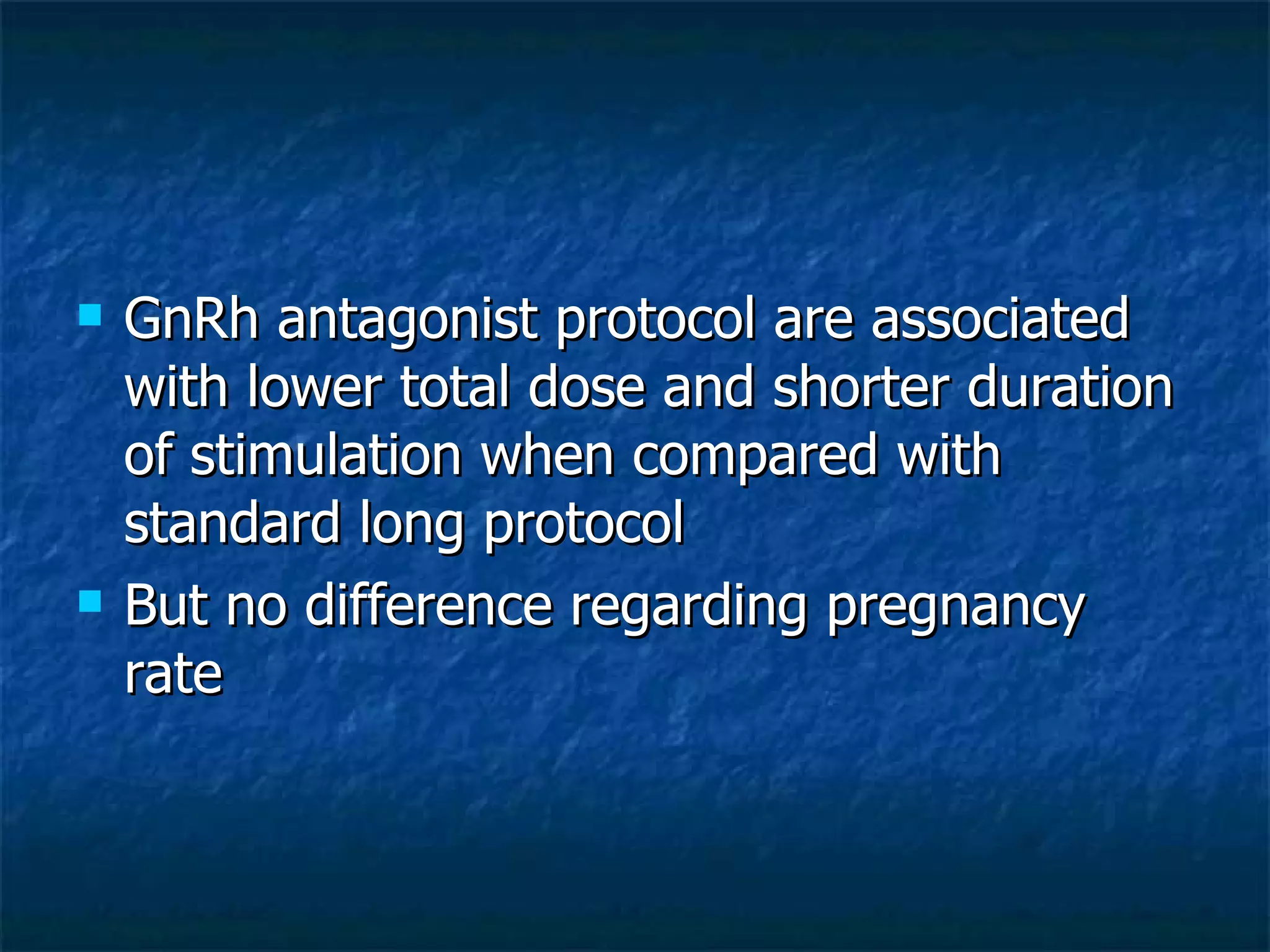
GnRh antagonist protocol are associated with lower total dose and shorter duration of stimulation when compared with standard long protocol But no difference regarding pregnancy rate
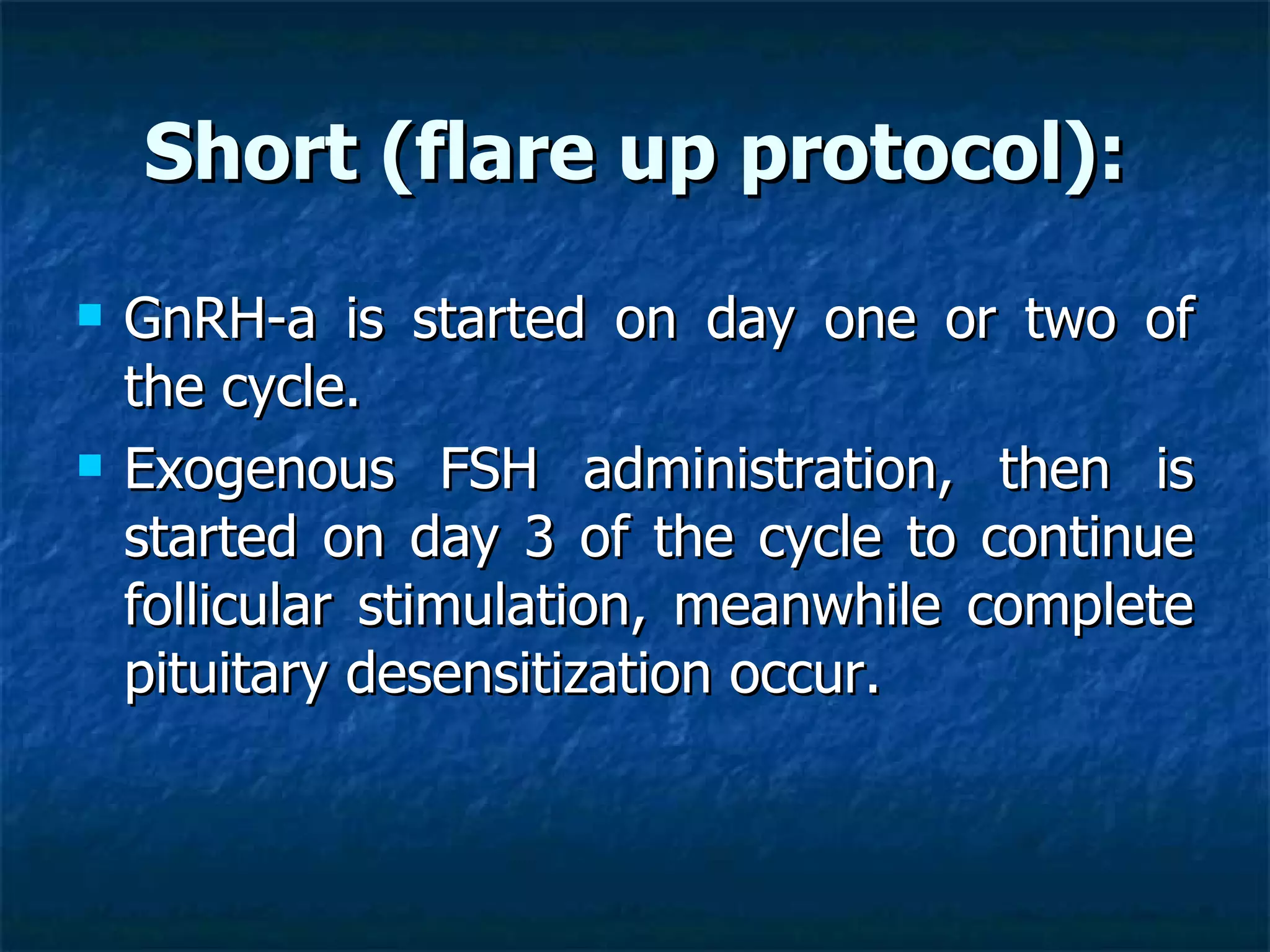
Short (flare up protocol): GnRH-a is started on day one or two of the cycle.  Exogenous FSH administration, then is started on day 3 of the cycle to continue follicular stimulation, meanwhile complete pituitary desensitization occur.
Ultra-short protocol GnRHa is given for only three days with the flare up technique  LH could be suppressed till the mid cycle This protocol will help to retrieve more oocytes with a minimal risk of premature LH surge.
lower cancellation rates in the long protocol treatment group (versus stop and GnRHa flare-up protocols).
Growth hormone Growth hormone may improve the number of oocytes but no difference in pregnancy rate However, they are expensive and routine use can not be justified
NC Minimal stimulation and natural cycle protocols are gaining interests in low responders The have comparable results with standard IVF ovarian stimulation They are simple and cheaper
There is no single best protocol that can transform a low responder into a high responders The expectations should be discussed with the patients. It is preferable to opt for a simpler and less expensive regimen for ovarian stimulation (Sunkara et al, 2007)
the efficacy of natural cycle IVF is hampered by high cancellation rates mainly due to untimely LH surge
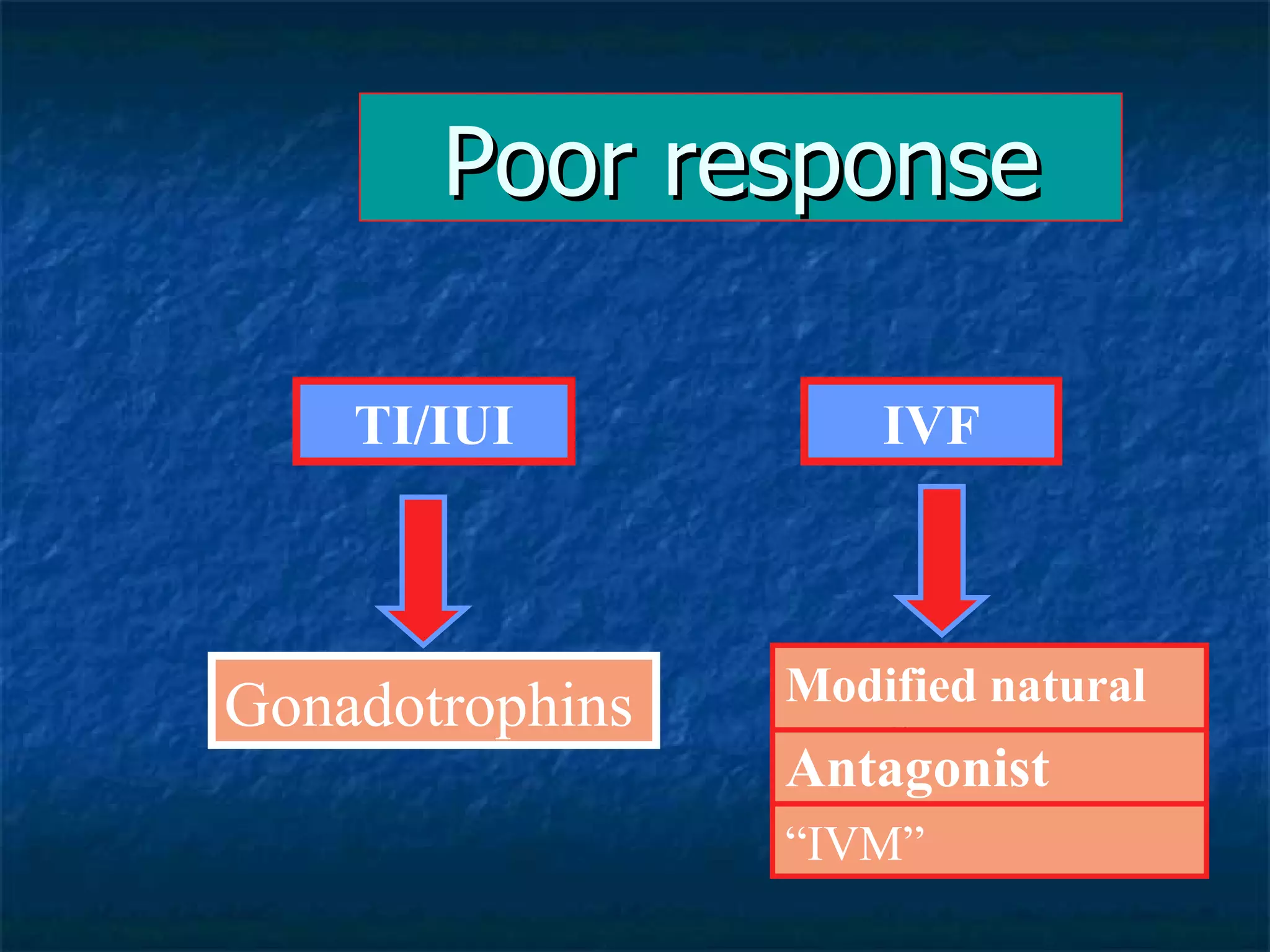
Poor response TI/IUI Gonadotrophins Modified natural cycle ” Antagonist “ IVM” IVF
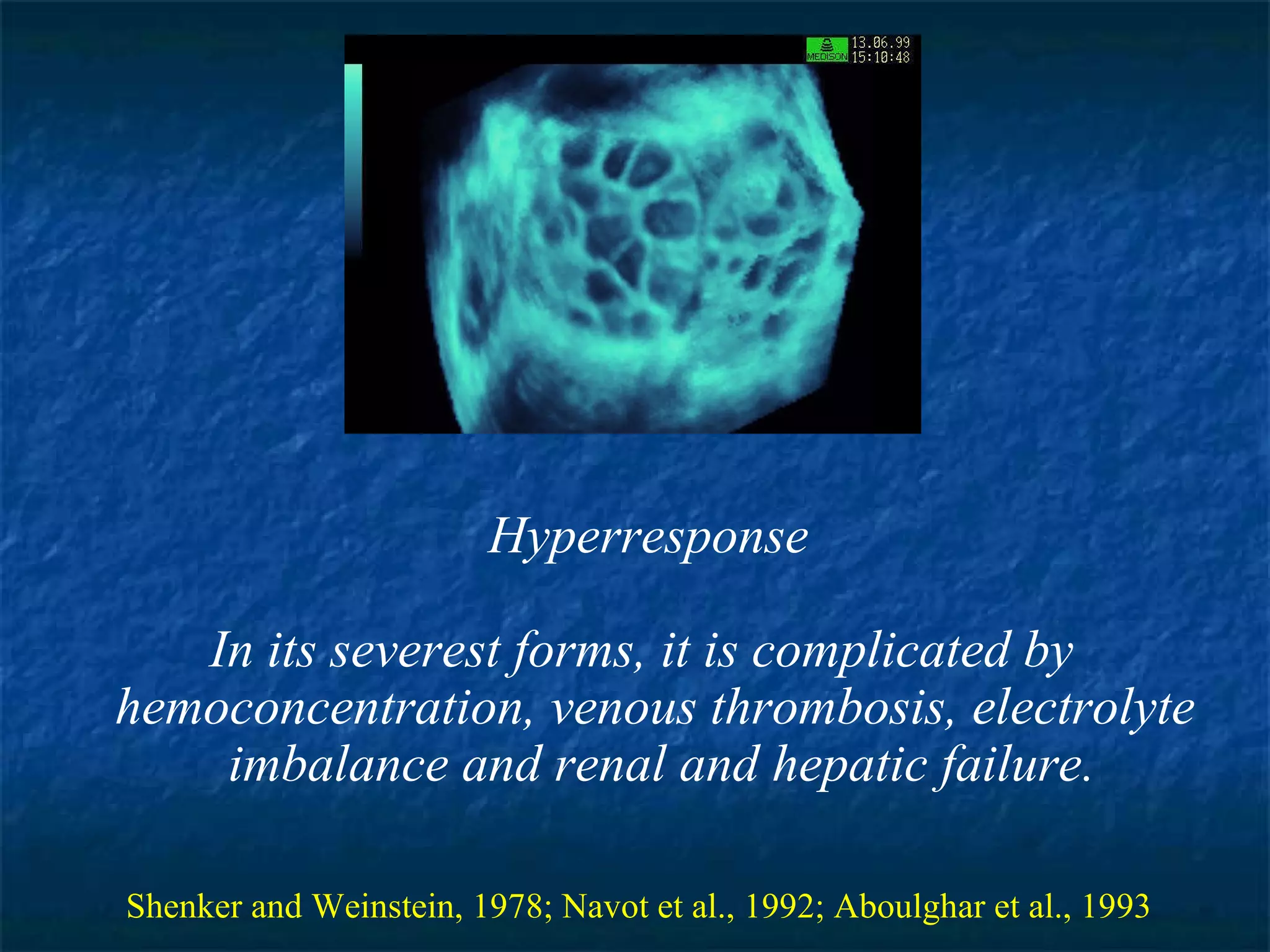
Hyperresponse In its severest forms, it is complicated by  hemoconcentration, venous thrombosis, electrolyte  imbalance and renal and hepatic failure. Shenker and Weinstein, 1978; Navot et al., 1992; Aboulghar et al., 1993
Stop hMG and continue down regulation.  This is the only complete prevention. (Navot et al., 1992; Rizk and Aboulghar 1999; Aboulghar and Mansour, 2003) Coasting: HCG dose and other alternatives Luteal phase : progesterone only.
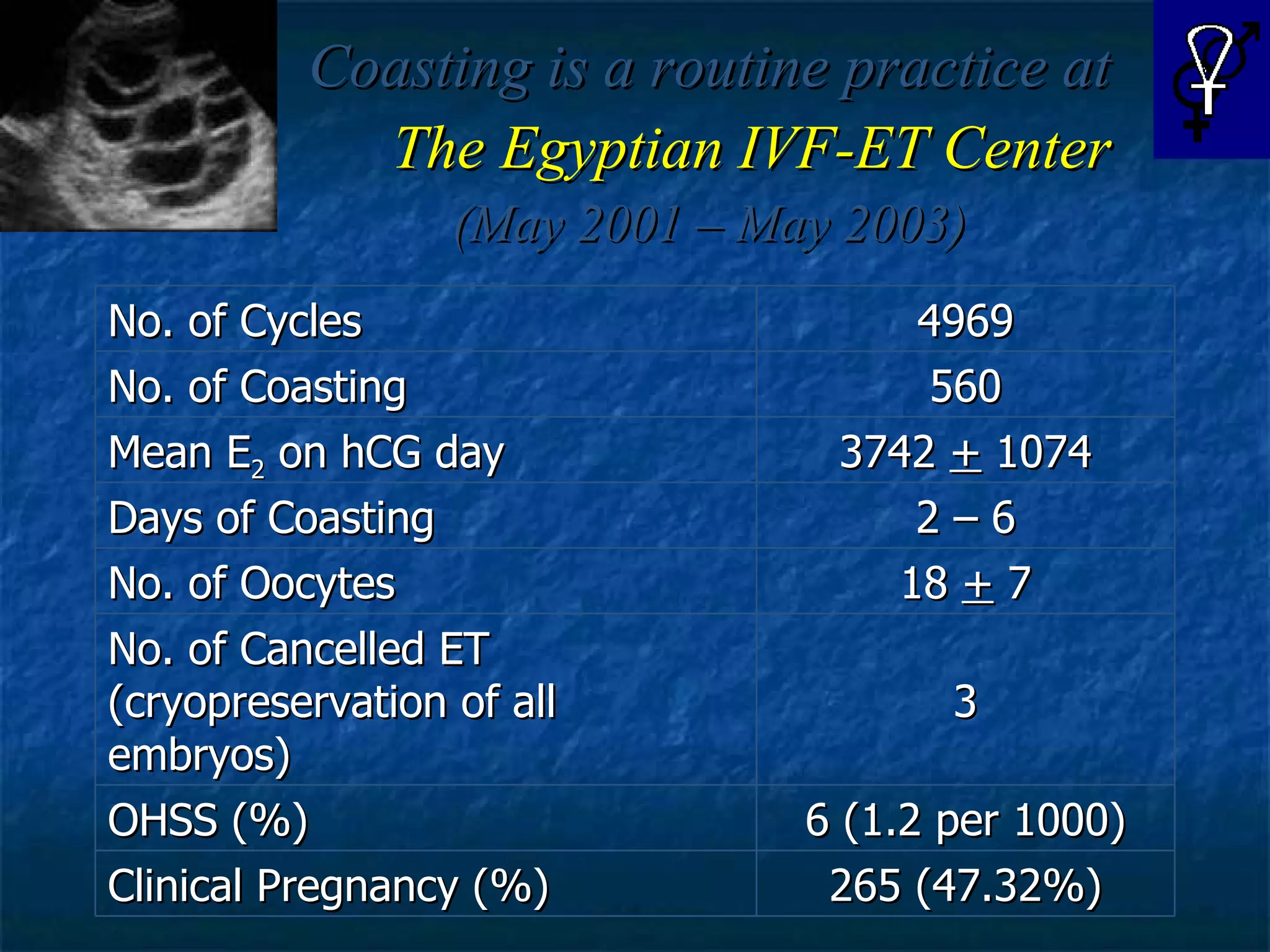
Coasting is a routine practice at  The   Egyptian IVF-ET Center (May 2001 – May 2003) No. of Cycles  4969 No. of Coasting  560 Mean E 2  on hCG day   3742  +  1074 Days of Coasting 2 – 6 No. of Oocytes 18  +  7 No. of Cancelled ET (cryopreservation of all embryos) 3 OHSS (%) 6 (1.2 per 1000) Clinical Pregnancy (%) 265 (47.32%)
Coasting   Clinical and practical aspects The Egyptian IVF-ET Center Experience When to stop gonadotropins? When the leading follicles reach 16mm how many days? Till the E2 drops to  <  3000 pg/ml (Sher et al., 1995; Benavida et al., 1997; Tortoriello et al., 1998;  Egbase et al., 1999; Fluker et al., 2000; Ohata et al., 2000) Dose of hCG? 5000 IU is enough Special laboratory aspects? Extra time to identify the oocytes from the follicular fluid
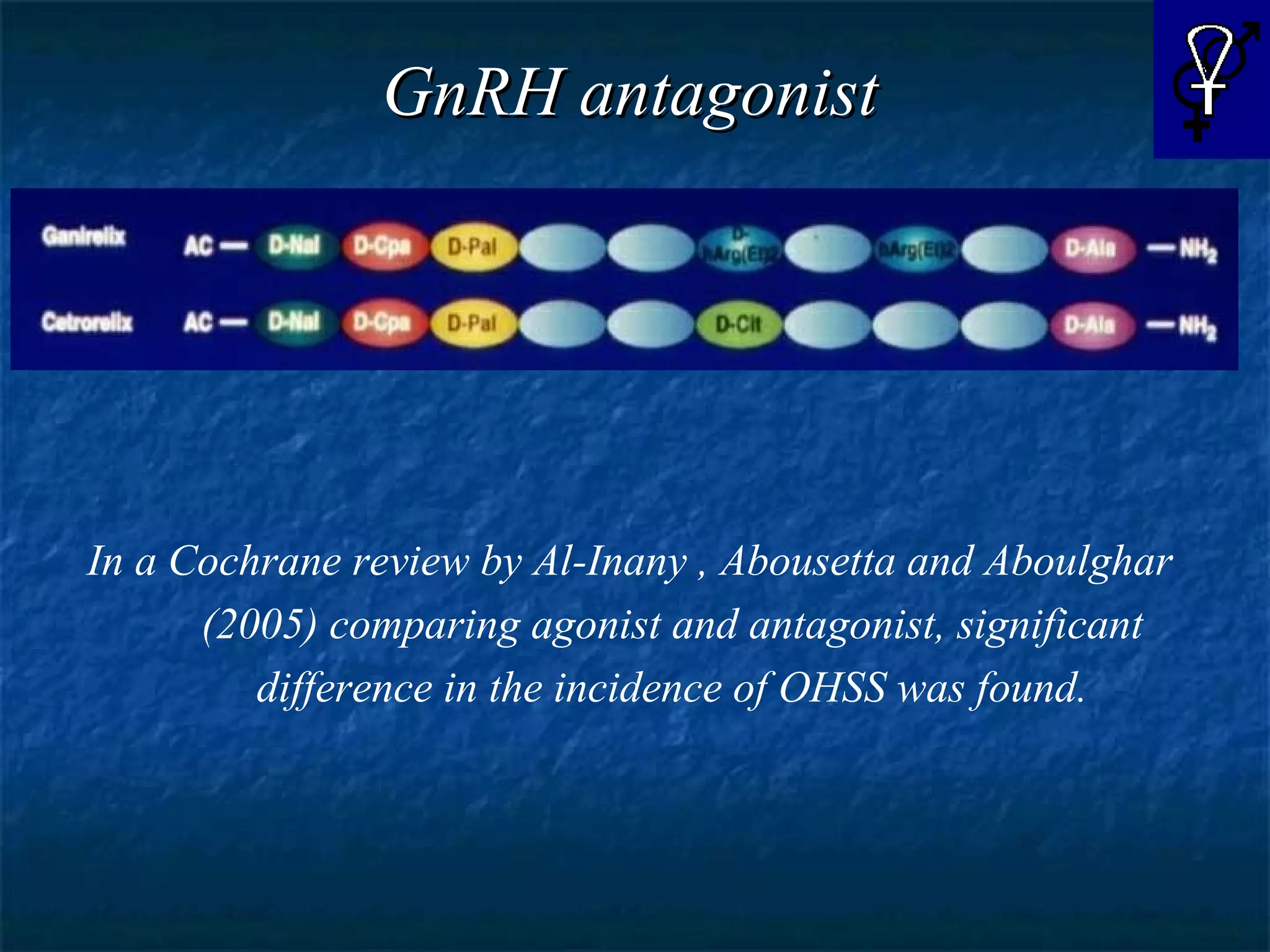
GnRH antagonist In a Cochrane review by Al-Inany , Abousetta and Aboulghar (2005) comparing agonist and antagonist, significant difference in the incidence of OHSS was found.
Novel Approach Coasting + Antagonist If E2 >6000 Pg/ml Reduce duration of coasting Extremely efficient  Allow for continuing hMG at minimal dose Oocyte quality is high
THANK YOU

Management of poor ovarian response

  • 1.
    Management of PoorOr Hyper Ovarian response
  • 2.
    Ovarian Reserve Everygirl is born with a finite number of eggs, and their number progressively declines with age. A measure of the remaining number of eggs in the ovary is called the &quot;ovarian reserve&quot;; and as the woman ages, her ovarian reserve gets depleted.
  • 3.
    No. of PrimordialFollicles Erickson GF 2000, Adashi EY (ed) N. Y. 31-48 Gougheon A, (2004) in Leung PK et al., (ed) San Diego 25-43. No. of oocytes 7 th Month of gestation 7.000.000 At Birth 2.000.000 Age of seven year 300.000 Puberty 40.000 Released by ovulation 400 – 500
  • 4.
    Prediction age History of previous poor response History of previous OHSS FSH Estradiol Inhibin anti-Müllerian hormone PCOS antral follicle count
  • 5.
  • 6.
    The use ofa wide range of tests suggests that no single test provides a sufficiently accurate result
  • 7.
    AMH If kitsare available, AMH measurement could be the most useful in the prediction of ovarian response in anovulatory women. It is done at any day of cycle It is too expensive Exact normal levels not yet well agreed upon
  • 8.
    During Induction? Carefulmonitoring of ovarian response: US E2
  • 9.
    Poor Response Nouniversal definition General consensus: women with poor response to ovarian stimulation OR those with low ovarian reserve
  • 10.
    PREGNANCY RATE ACCORDINGTO AGE AND NUMBER OF OOCYTES RETRIEVED
  • 11.
    What is poorresponse in IVF Less than 5 follicles from both ovaries Oocyte quality is not related to number of oocytes but to women age Young women with poor response has good quality embryos and better chance of getting pregnant
  • 12.
    LOW RESPONDERS CLASSIFICATION1) Elderly patients with an abnormal endocrinological profile. 2) Young patients with an altered endocrinological profile. 3) Young patients with a normal basal hormonal profile.
  • 13.
    What to do Increasing gonadotrophin in the same cycle does not result in significant improvement in the number of oocytes, embryos or pregnancies
  • 14.
    Cancellation Is avery good option in this cycle Based on counselling the couples Decision to continue is still valid especially with advanced age (more than 38 years old women)
  • 15.
    In subsequent cyclesIncreasing gonadotrophin in the subsequent cycle does not seem to result in significant improvement in the number of pregnancies obtained but may improve number of ooctes
  • 16.
    What should bethe maximum FSH dose in IVF/ICSI in poor responders 450IU/day
  • 17.
    Protocols for IVF GnRH Antagonist Protocols GnRH Agonist Protocols 225 IU per day (150 IU Europe) Individualized Dosing of FSH/HMG 250  g per day antagonist Individualized Dosing of FSH/HMG GnRHa 1.0 mg per day up to 21 days 0.5 mg per day of GnRHa 225 IU per day (150 IU Europe) Day 6 of FSH/HMG Day of hCG Day 1 of FSH/HMG Day 6 of FSH/HMG Day of hCG 7 – 8 days after estimated ovulation Down regulation Day 2 or 3 of menses Day 1 FSH/HMG OCP
  • 18.
    Protocols for poorresponders Long protocol with large doses of gonadotropins Short protocol. Minidose of GnRH agonist protocol Clomiphene / hMG protocol Large doses of clomiphene protocol without hMG GnRH antagonist protocols.
  • 19.
    GnRh antagonist protocolare associated with lower total dose and shorter duration of stimulation when compared with standard long protocol But no difference regarding pregnancy rate
  • 20.
    Short (flare upprotocol): GnRH-a is started on day one or two of the cycle. Exogenous FSH administration, then is started on day 3 of the cycle to continue follicular stimulation, meanwhile complete pituitary desensitization occur.
  • 21.
    Ultra-short protocol GnRHais given for only three days with the flare up technique LH could be suppressed till the mid cycle This protocol will help to retrieve more oocytes with a minimal risk of premature LH surge.
  • 22.
    lower cancellation ratesin the long protocol treatment group (versus stop and GnRHa flare-up protocols).
  • 23.
    Growth hormone Growthhormone may improve the number of oocytes but no difference in pregnancy rate However, they are expensive and routine use can not be justified
  • 24.
    NC Minimal stimulationand natural cycle protocols are gaining interests in low responders The have comparable results with standard IVF ovarian stimulation They are simple and cheaper
  • 25.
    There is nosingle best protocol that can transform a low responder into a high responders The expectations should be discussed with the patients. It is preferable to opt for a simpler and less expensive regimen for ovarian stimulation (Sunkara et al, 2007)
  • 26.
    the efficacy ofnatural cycle IVF is hampered by high cancellation rates mainly due to untimely LH surge
  • 27.
    Poor response TI/IUIGonadotrophins Modified natural cycle ” Antagonist “ IVM” IVF
  • 28.
    Hyperresponse In itsseverest forms, it is complicated by hemoconcentration, venous thrombosis, electrolyte imbalance and renal and hepatic failure. Shenker and Weinstein, 1978; Navot et al., 1992; Aboulghar et al., 1993
  • 29.
    Stop hMG andcontinue down regulation. This is the only complete prevention. (Navot et al., 1992; Rizk and Aboulghar 1999; Aboulghar and Mansour, 2003) Coasting: HCG dose and other alternatives Luteal phase : progesterone only.
  • 30.
    Coasting is aroutine practice at The Egyptian IVF-ET Center (May 2001 – May 2003) No. of Cycles 4969 No. of Coasting 560 Mean E 2 on hCG day 3742 + 1074 Days of Coasting 2 – 6 No. of Oocytes 18 + 7 No. of Cancelled ET (cryopreservation of all embryos) 3 OHSS (%) 6 (1.2 per 1000) Clinical Pregnancy (%) 265 (47.32%)
  • 31.
    Coasting Clinical and practical aspects The Egyptian IVF-ET Center Experience When to stop gonadotropins? When the leading follicles reach 16mm how many days? Till the E2 drops to < 3000 pg/ml (Sher et al., 1995; Benavida et al., 1997; Tortoriello et al., 1998; Egbase et al., 1999; Fluker et al., 2000; Ohata et al., 2000) Dose of hCG? 5000 IU is enough Special laboratory aspects? Extra time to identify the oocytes from the follicular fluid
  • 32.
    GnRH antagonist Ina Cochrane review by Al-Inany , Abousetta and Aboulghar (2005) comparing agonist and antagonist, significant difference in the incidence of OHSS was found.
  • 33.
    Novel Approach Coasting+ Antagonist If E2 >6000 Pg/ml Reduce duration of coasting Extremely efficient Allow for continuing hMG at minimal dose Oocyte quality is high
  • 34.