Effective safe superovulation
Mahmoud Abdel-Aleem
Professor of Obstetrics and Gynecology, Assiut university.
N.B.
• Many many studies with different designs (metanalysis, RCTs,
Retropsective, cohort) with different endpoints and contradictory
conclusions. It is a very dynamic area of research.
• Occurrence of pregnancy is a complex issue that involves many
factors; some are seen while many are unknown.
• Not every logic thing is applicable in IVF world
So, it is difficult to access this subject
Ovarian cycle and its control
There is a close synchrony between oocyte and the
surrounding somatic cells within the ovary.
Ovarian cycle and its control
Introduction
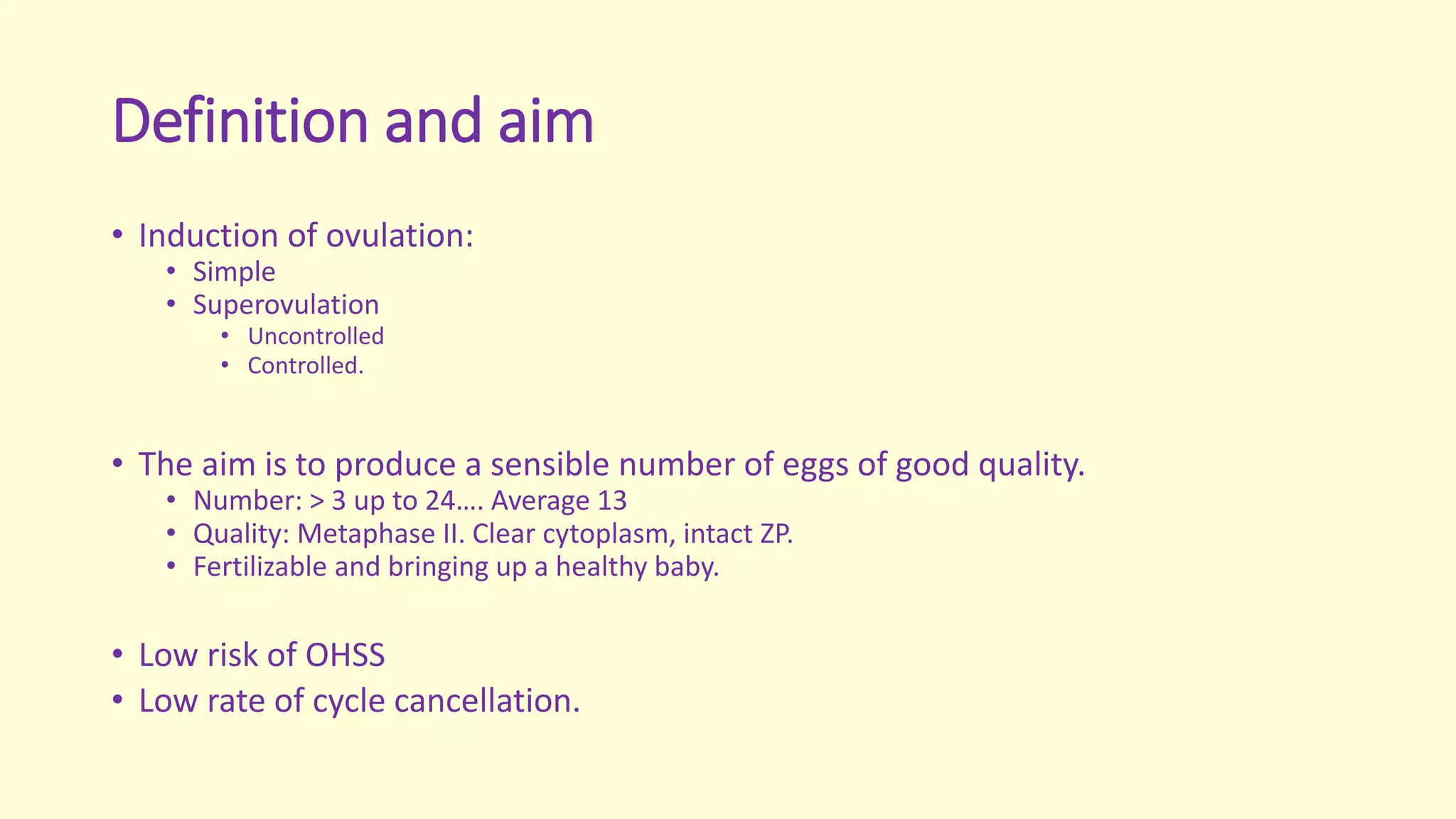
Definition and aim
• Induction of ovulation:
• Simple
• Superovulation
• Uncontrolled
• Controlled.
• The aim is to produce a sensible number of eggs of good quality.
• Number: > 3 up to 24…. Average 13
• Quality: Metaphase II. Clear cytoplasm, intact ZP.
• Fertilizable and bringing up a healthy baby.
• Low risk of OHSS
• Low rate of cycle cancellation.
Components of ovarian stimulation protocol
• The principal structure of the protocol (e.g. type, initiation and
duration of agonist or antagonist).
• The chosen gonadotrophin (e.g. r-FSH or u-FSH, with or without
additional r-h luteinizing hormone [LH]).
• The selected means of final maturation and trigger (either u-hCG or r-
hCG).
• The selected means of luteal phase support.
Principles of Superovulation
1. Different protocols must be selected to achieve the principal aim for
each group of patients.
2. Defining optimal FSH and LH relationships and establishing optimal
LH ranges for ovarian stimulation of various clinical categories.
3. Minimal side effects to reduce cancellations and improve patient
compliance.
4. Complications of a protocol may be related to the protocol itself or,
more generally, to the administration of the drugs.
5. A protocol must be safe for the children born, since the birth of a
single healthy child is the final goal of each infertility treatment
Gonadotophins
hpG
Urinary
(low specific activity)
hMG
100- 150 IU
FSH/mg protein
Purified FSH
100- 150 IU
FSH/mg protein
Ultra-purified
FSH
9000 IU FSH/mg
protein
Recombinant
High specific activity
10 000 IU/mg of
protein
r-FSH
Follitropin Alpha
More acidic
More stable
Less variation
Follitropin B
Less acidic
Less stable
More variation
r-LH
hCG
Recombinant
Urinary
What are the controlling drugs?
• Drugs that prevents release of endogenous FSH and LH from the pituitary
(GnRh analogues)
• Preventing FSH= synchronous follicular growth
• Preventing LH=
• Preventing premature luteinisation of follicles.
• Preventing spontaneous LH surge and spontaneous release of follicles.
• Members:
• Agonists: slow onset and slow offset. 1984
• Daily use.
• Depot use.
• Antagonists: rapid onset and rapid offset.
• Cetrorelix: 1999
• Single 3 mg dose.
• Multiple 0.25 mg use
• Ganirelix : 2000
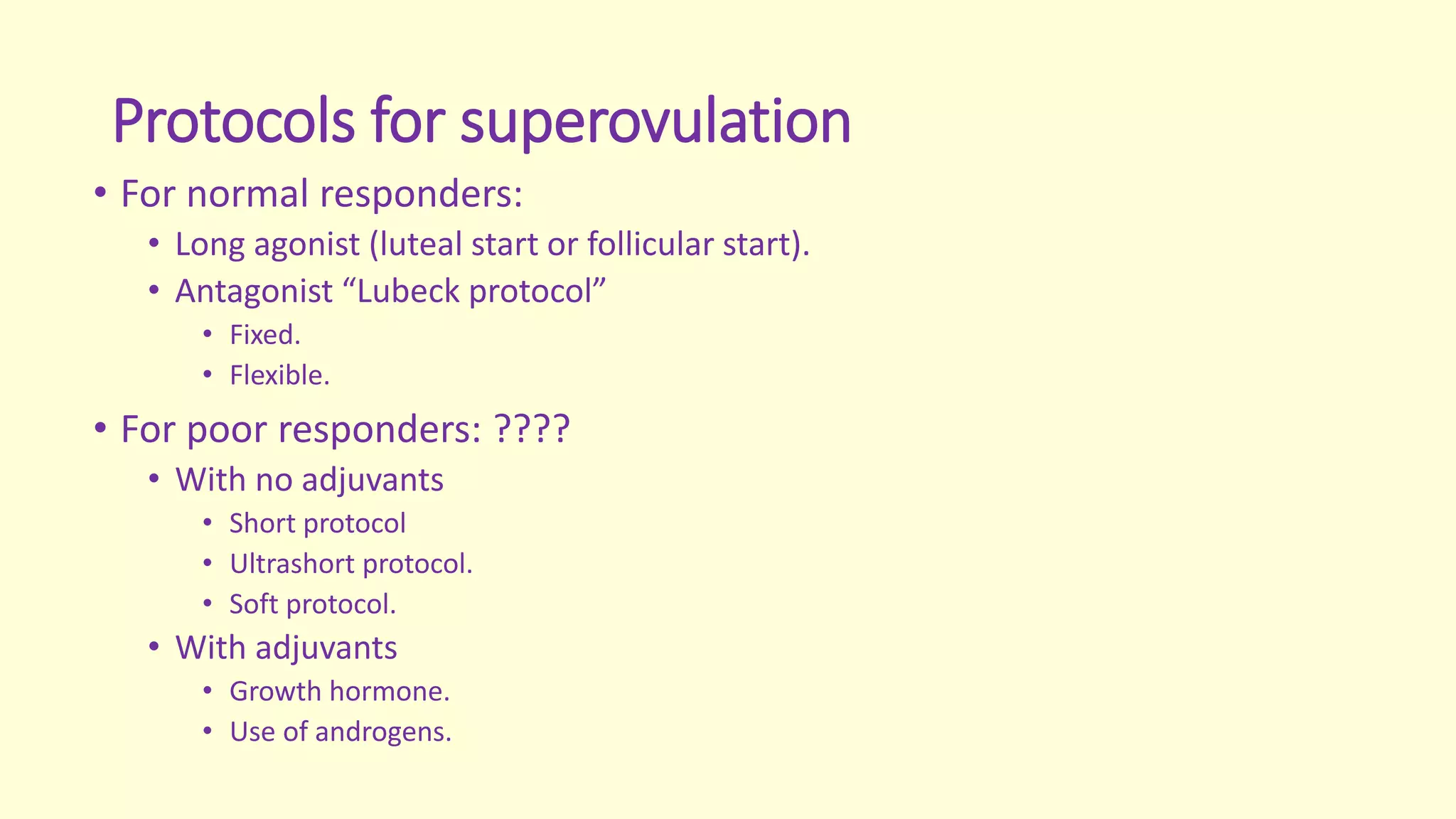
Protocols for superovulation
• For normal responders:
• Long agonist (luteal start or follicular start).
• Antagonist “Lubeck protocol”
• Fixed.
• Flexible.
• For poor responders: ????
• With no adjuvants
• Short protocol
• Ultrashort protocol.
• Soft protocol.
• With adjuvants
• Growth hormone.
• Use of androgens.
10 Questions to answer
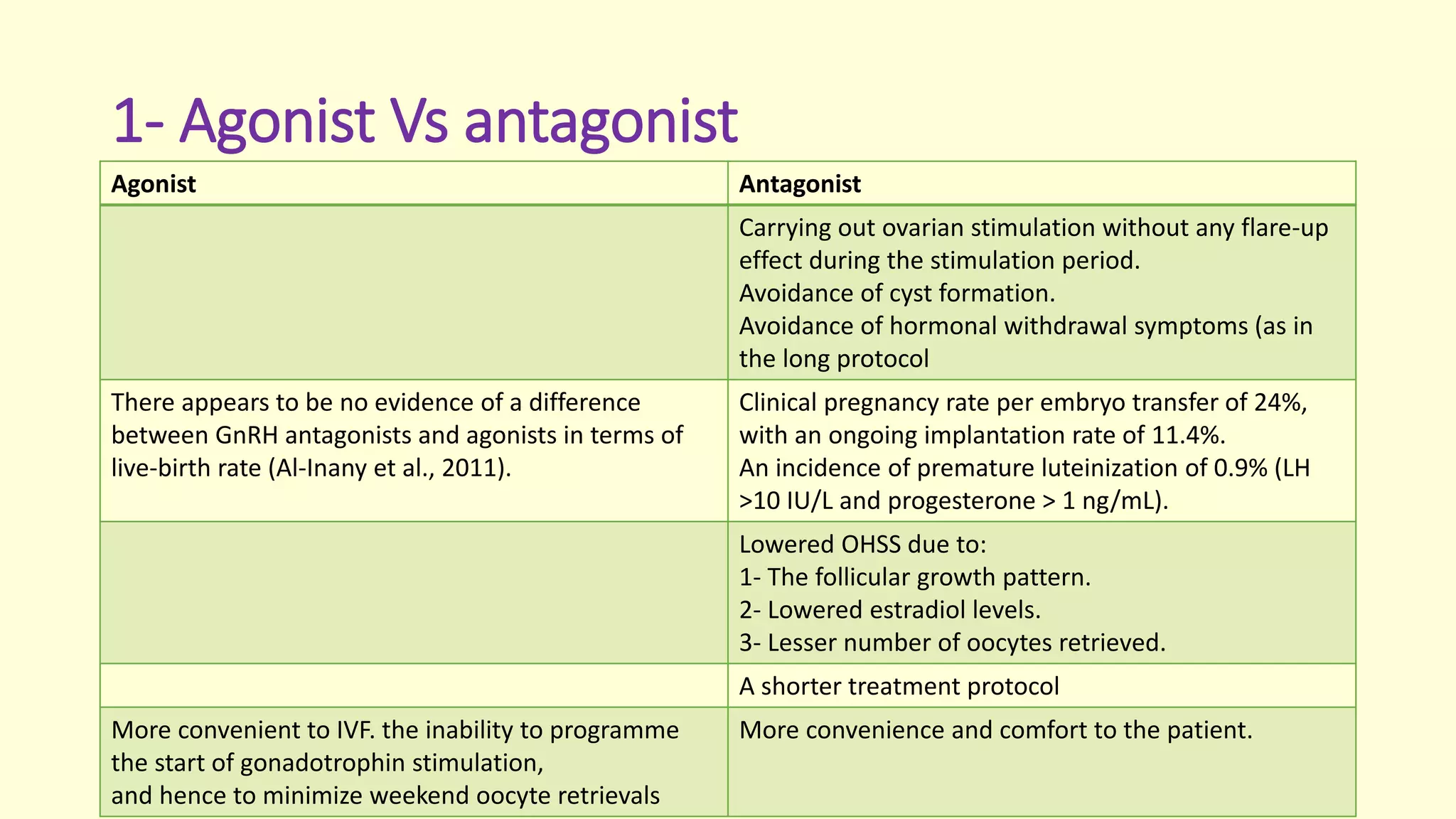
1- Agonist Vs antagonist
Agonist Antagonist
Carrying out ovarian stimulation without any flare-up
effect during the stimulation period.
Avoidance of cyst formation.
Avoidance of hormonal withdrawal symptoms (as in
the long protocol
There appears to be no evidence of a difference
between GnRH antagonists and agonists in terms of
live-birth rate (Al-Inany et al., 2011).
Clinical pregnancy rate per embryo transfer of 24%,
with an ongoing implantation rate of 11.4%.
An incidence of premature luteinization of 0.9% (LH
>10 IU/L and progesterone > 1 ng/mL).
Lowered OHSS due to:
1- The follicular growth pattern.
2- Lowered estradiol levels.
3- Lesser number of oocytes retrieved.
A shorter treatment protocol
More convenient to IVF. the inability to programme
the start of gonadotrophin stimulation,
and hence to minimize weekend oocyte retrievals
More convenience and comfort to the patient.
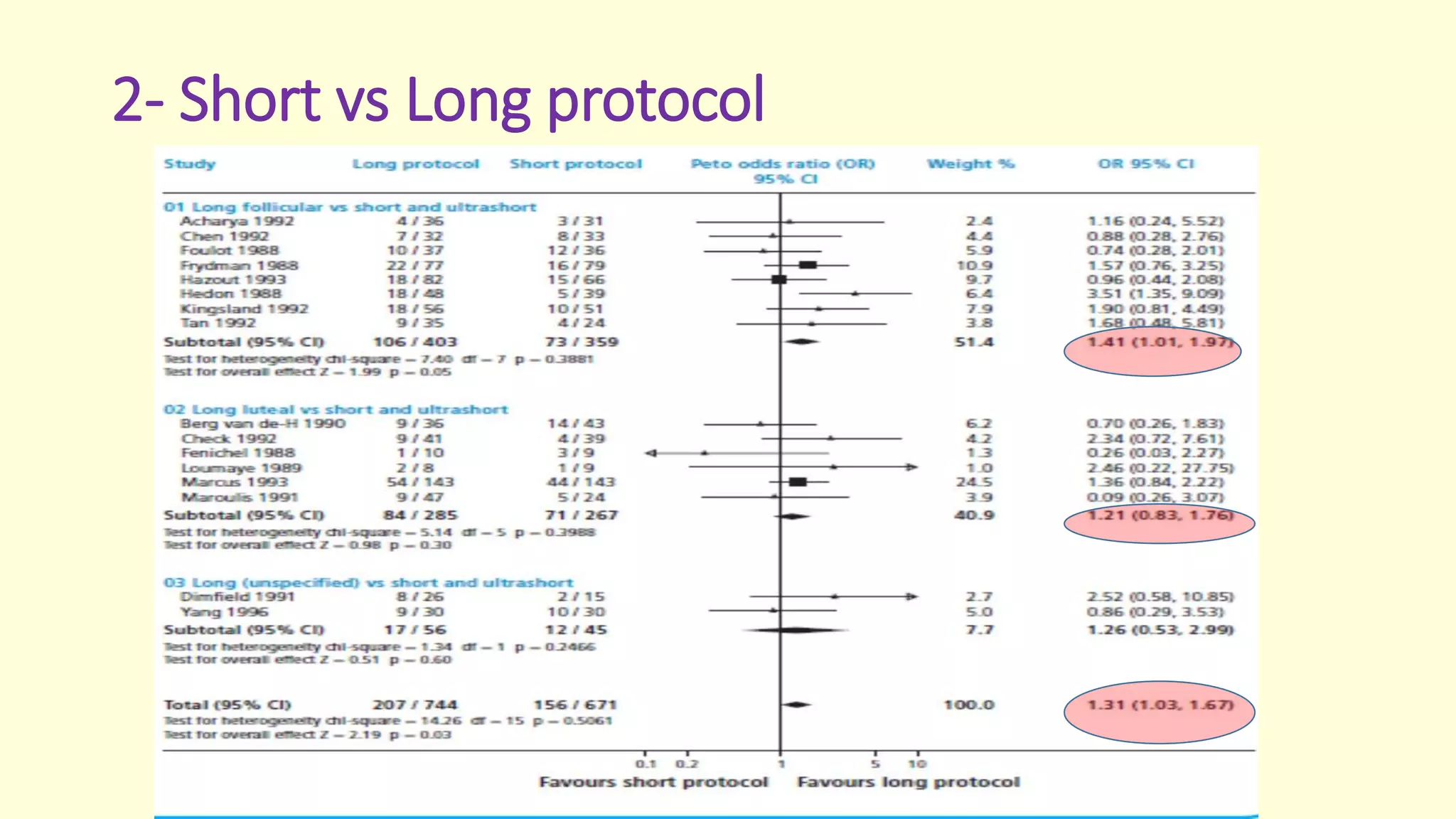
2- Short vs Long protocol
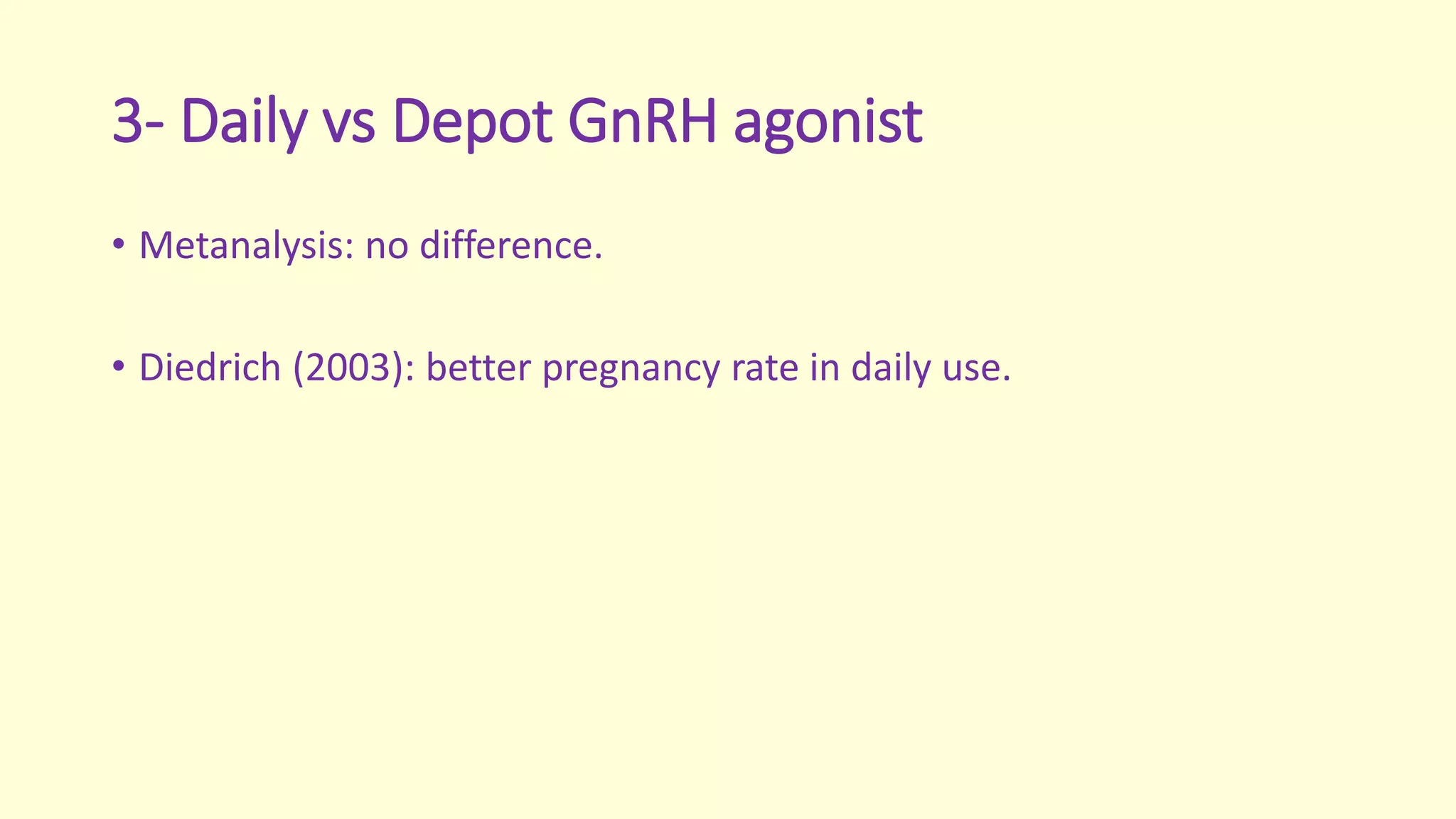
3- Daily vs Depot GnRH agonist
• Metanalysis: no difference.
• Diedrich (2003): better pregnancy rate in daily use.
4- Fixed vs flexible antagonist protocol
4- OCPs? To pill or not to pill ?
• Aim:
• Agonist: scheduling the cycle. Decreasing the risk of residual cyst.
• Antagonist: lowering LH, facilitate scheduling of the start of FSH therapy.
• What type?
• What duration: 18-28 days. Stop on Sunday then start stimulation on
Friday.
To pill Not to pill
 Equal distribution of work load
in large busy units and staff
distribution.
 Avoiding weekend retrievals in
small units.
 Synchronization of follicular
cohort.
 Avoiding excessive incubator
openings
 Higher FSH consumption
 Longer duration of the
stimulation
 May affect endometrial
receptivity
 In Antagonist protocol: lower
pregnancy rates (Griesinger et
al., 2008, 2010).
Alternative to OCP
• Treatment protocol with oestradiol valerate administration during 6–
10 consecutive days (from cycle day 25 onwards) prior to the start of
recombinant FSH (rFSH) stimulation, so that the first day of
stimulation occurs between a Friday to Sunday.
5- hMG vs uFSH (Daya, 1995)
• The use of FSH in ovarian stimulation produces better results than
the use of hMG.
• > 50% improvement in all three outcomes used for calculation of
clinical pregnancy rates.
• Level of endogenous LH is sufficient in most cases.
• PR: odds ratio (OR) 1.71 (95% CI 1.12 – 2.62; p = 0.013)
6- hMG vs r-FSH
• No difference but the metanalysis was flawed
1. Heterogeneity in the use of hMG prep, outcome assessment, IVF and ICSI.
2. Absence of the outcome measure in the 5/8 studies.
3. To detect difference., there should be a sample size of 2200 patients. What
was in the metanalysis was (only 547 and 487).
Ludwig study: 56,589 cycles
1. The birth rate per cycle is higher in the r-hFSH group (16.9%) than the hMG group (14.5%; p < 0.0001),
a relative risk of 1.16 for r-hFSH versus hMG.
2. A mean of 31.1 and 37.7 ampoules were needed per cycle in the r-hFSH and hMG groups, respectively
(p < 0.0001). This resulted in a relative difference of 39.5%.
3. The birth rate per cycle differed more in the group of patients ≥35 years of age (12.7% vs. 9.3%; p =
0.0013) compared with those patients younger than 35 years of age (18.4 vs. 17.3%; p = 0.0013).
Costs per ongoing pregnancy are significantly lower when r-hFSH is used compared with u-FSH.
Therefore, the higher cost per single ampoule of r-hFSH does not equate to a higher cost per successful
treatment.
7- r-FSH Vs u-FSH
• Theoretically
• Contaminant human proteins have been eliminated.
• The level of purity has increased.
• Tolerability has been improved.
• Specific activity has drastically improved
• Batch-to-batch consistency has increased. It is now by mass not by immunoassay
(5.5 μg is equivalent to 75 IU).
• Unlimited sources of gonadotrophins are available.
• Practically: rFSH is:
• More effective: Higher rates of clinical pregnancy per cycle started.
• More efficient: because the total dose of gonadotrophin required is lower.
8- Follitropin A vs Follitropin B
9- Inducement of final maturation (trigger)
• When:
• 3 eggs 17 mm or more.
• If delay by 2 days : lower pregnancy rate (Kolibianakis et al., 2004).
• How:
• Exogenous LH as the ‘physiological’ trigger.
• Exogenous hCG as the ‘quasi-physiological’ trigger.
• Urinary.
• Recombinant.
10- Adding LH in FSH cycles
Physiology: During the normal menstrual cycle, a basal concentration of LH
is secreted throughout the early to mid follicular phases of the cycle, with a
mid-cycle peak that triggers final oocyte maturation (Howles, 2000).
The ceiling level of
LH should be
about 1.0 U/L
(Daya et al.,1995)
0.91 ± 0.5 U/L in
the u-FSH group.
1.30 ± 0.5 U/L in
the hMG-treated
group.
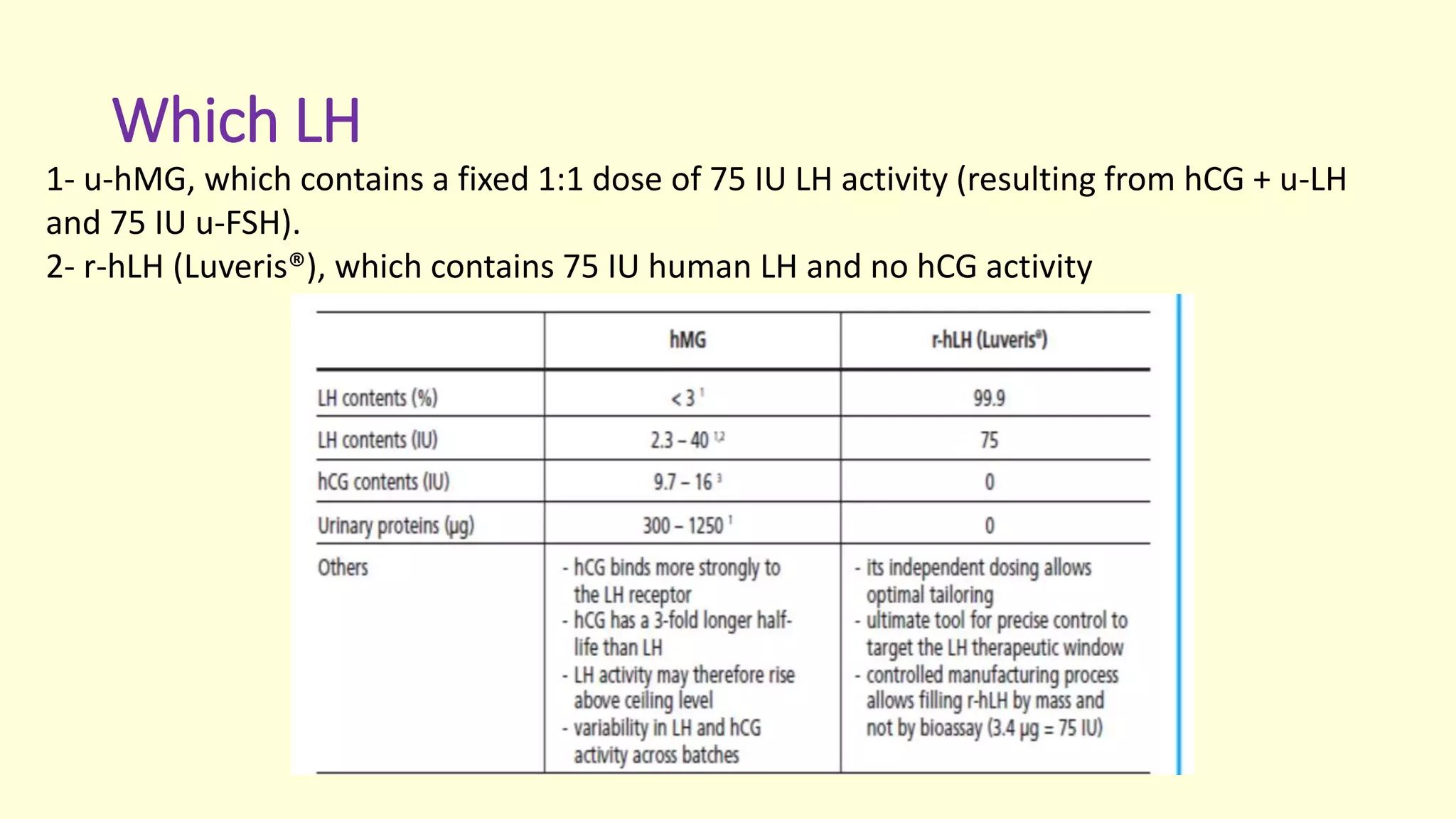
Which LH
1- u-hMG, which contains a fixed 1:1 dose of 75 IU LH activity (resulting from hCG + u-LH
and 75 IU u-FSH).
2- r-hLH (Luveris®), which contains 75 IU human LH and no hCG activity
Is it a must?
• No need as assessed in the majority of studies.
• Subgroup of patients:
• Patients aged 35 years or older (increasing the number of mature
oocytes retrieved) and improved implantation and pregnancy
rates.
• Hypogonadotrophic hypogonadism
• Ultralong protocol for IVF, such as those suffering from severe
endometriosis.
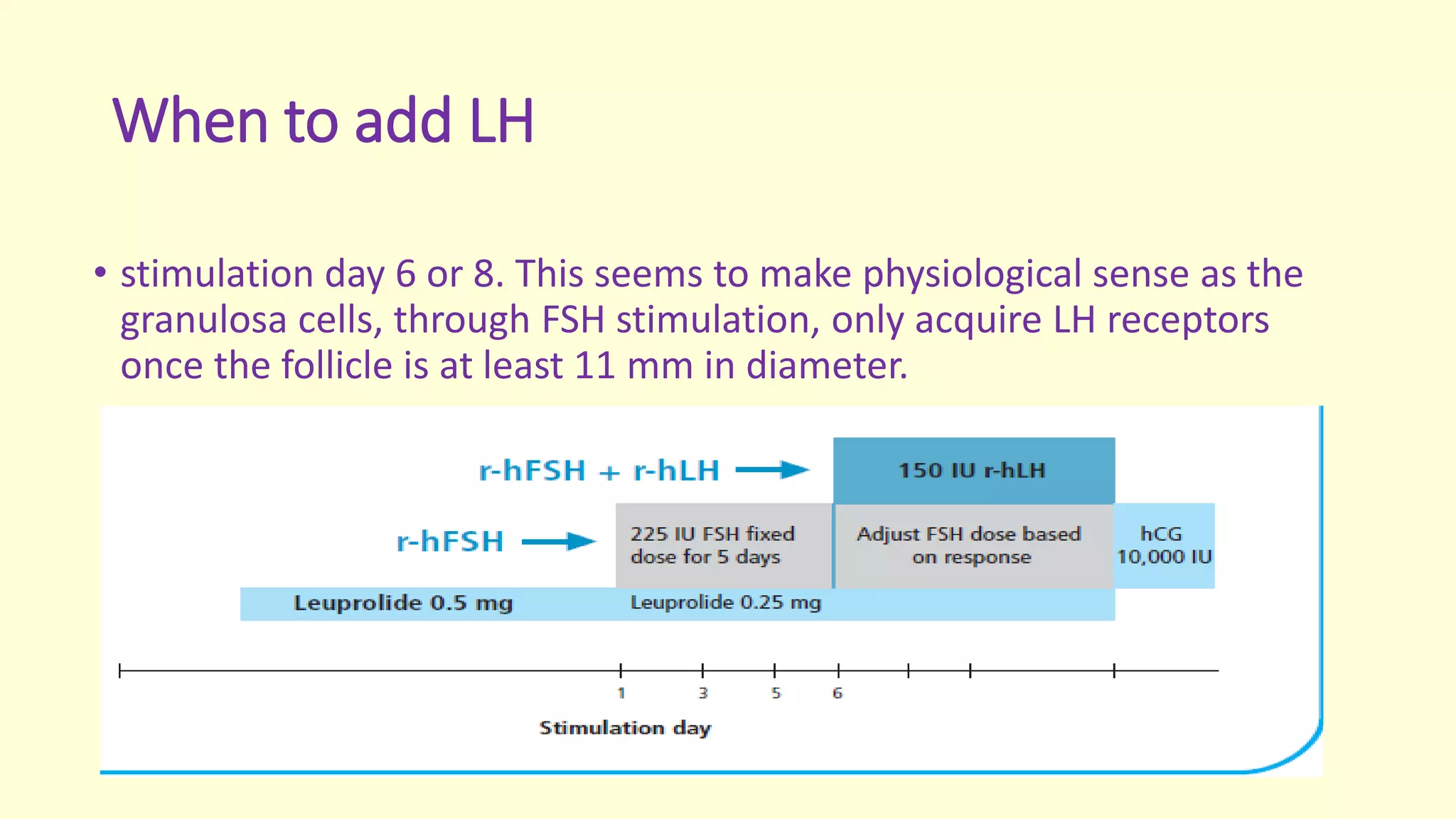
When to add LH
• stimulation day 6 or 8. This seems to make physiological sense as the
granulosa cells, through FSH stimulation, only acquire LH receptors
once the follicle is at least 11 mm in diameter.
Clinical value: LH is the ovarian “ABS brake
system”
Minimize the number of preovulatory follicles to reduce multiple
pregnancy rates.
A dose of 225 IU r-hLH in combination with 150 IU r-hFSH/day had
fewer follicles on the day of hCG than women who were administered
75 IU r-hLH/day.
In patients who over-respond to FSH during ovulation induction,
doses of up to 30 μg r-hLH/day appear to increase the proportion of
patients developing a single dominant follicle (≥16 mm).
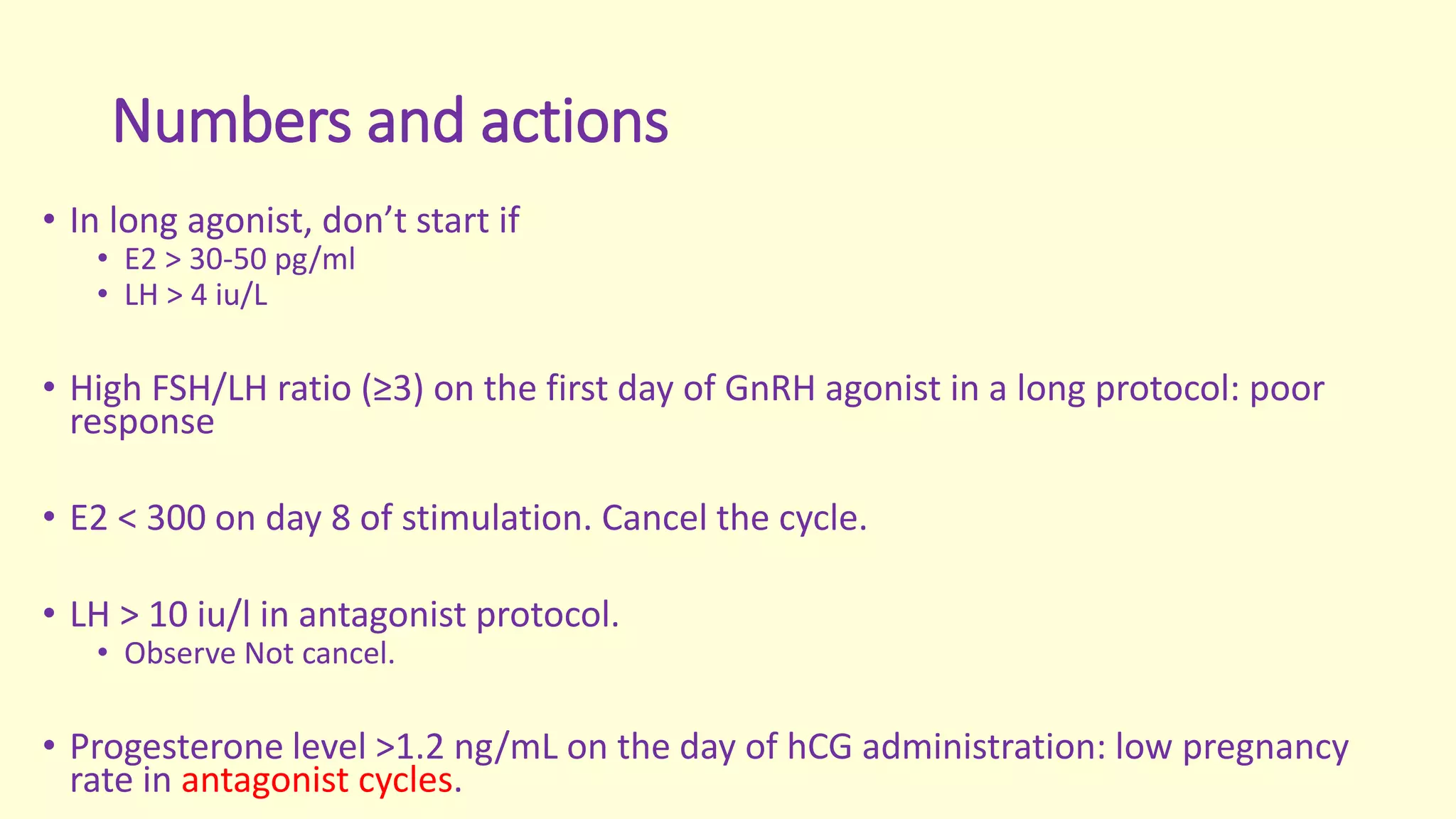
Numbers and actions
• In long agonist, don’t start if
• E2 > 30-50 pg/ml
• LH > 4 iu/L
• High FSH/LH ratio (≥3) on the first day of GnRH agonist in a long protocol: poor
response
• E2 < 300 on day 8 of stimulation. Cancel the cycle.
• LH > 10 iu/l in antagonist protocol.
• Observe Not cancel.
• Progesterone level >1.2 ng/mL on the day of hCG administration: low pregnancy
rate in antagonist cycles.
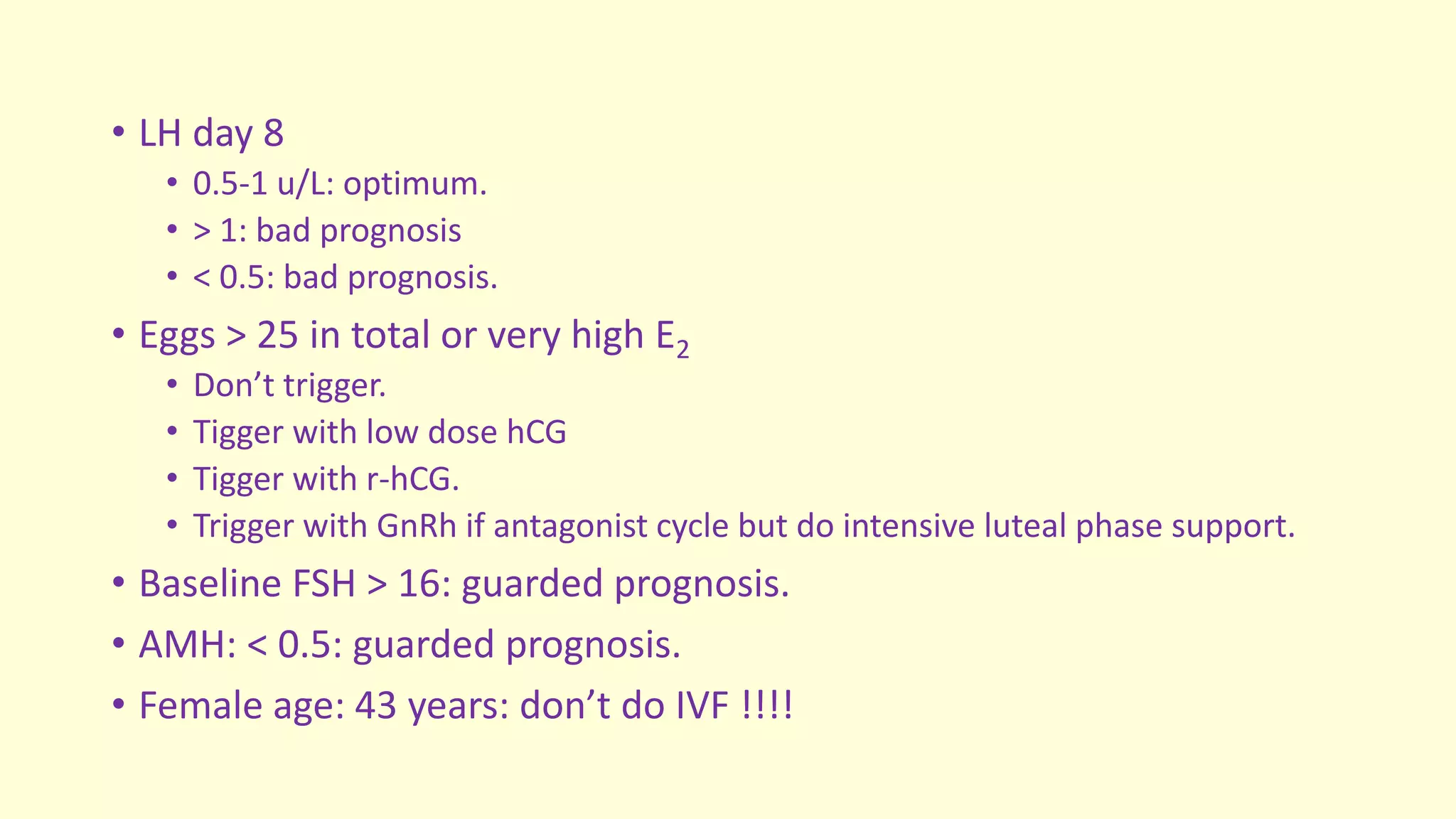
• LH day 8
• 0.5-1 u/L: optimum.
• > 1: bad prognosis
• < 0.5: bad prognosis.
• Eggs > 25 in total or very high E2
• Don’t trigger.
• Tigger with low dose hCG
• Tigger with r-hCG.
• Trigger with GnRh if antagonist cycle but do intensive luteal phase support.
• Baseline FSH > 16: guarded prognosis.
• AMH: < 0.5: guarded prognosis.
• Female age: 43 years: don’t do IVF !!!!
Final recommendations
• Prepare yourself well.
• Learn from others’ experiences and ask other colleagues in difficult cases.
• Prepare your patient well.
• Baseline investigations.
• Put a plan that tailors to patient conditions.
• Always provide a success rate for your patient.
• Play with all types of drugs putting in mind
• World is changing more towards recombinant products.
• World is moving more towards antagonist protocols.
• Both patient safety and economic state are priorities.
• Antagonist may have some merits over long protocol and both have
same live birth rate.
• Flexible antagonist is better than fixed antagonist protocol.
• Short protocol isn’t so inferior to long protocol.
• In terms of live birth rate: e-FSH then u-FSH then u-hMG.
• LH supplementation is indicated in some cases.
Since every patient is
unique, the ideal
ovarian stimulation
protocol for every
patient does not exist
Effective Safe Superovulation.

Effective Safe Superovulation.

  • 1.
    Effective safe superovulation MahmoudAbdel-Aleem Professor of Obstetrics and Gynecology, Assiut university.
  • 2.
    N.B. • Many manystudies with different designs (metanalysis, RCTs, Retropsective, cohort) with different endpoints and contradictory conclusions. It is a very dynamic area of research. • Occurrence of pregnancy is a complex issue that involves many factors; some are seen while many are unknown. • Not every logic thing is applicable in IVF world So, it is difficult to access this subject
  • 3.
    Ovarian cycle andits control There is a close synchrony between oocyte and the surrounding somatic cells within the ovary.
  • 4.
    Ovarian cycle andits control
  • 5.
  • 6.
    Definition and aim •Induction of ovulation: • Simple • Superovulation • Uncontrolled • Controlled. • The aim is to produce a sensible number of eggs of good quality. • Number: > 3 up to 24…. Average 13 • Quality: Metaphase II. Clear cytoplasm, intact ZP. • Fertilizable and bringing up a healthy baby. • Low risk of OHSS • Low rate of cycle cancellation.
  • 7.
    Components of ovarianstimulation protocol • The principal structure of the protocol (e.g. type, initiation and duration of agonist or antagonist). • The chosen gonadotrophin (e.g. r-FSH or u-FSH, with or without additional r-h luteinizing hormone [LH]). • The selected means of final maturation and trigger (either u-hCG or r- hCG). • The selected means of luteal phase support.
  • 8.
    Principles of Superovulation 1.Different protocols must be selected to achieve the principal aim for each group of patients. 2. Defining optimal FSH and LH relationships and establishing optimal LH ranges for ovarian stimulation of various clinical categories. 3. Minimal side effects to reduce cancellations and improve patient compliance. 4. Complications of a protocol may be related to the protocol itself or, more generally, to the administration of the drugs. 5. A protocol must be safe for the children born, since the birth of a single healthy child is the final goal of each infertility treatment
  • 9.
    Gonadotophins hpG Urinary (low specific activity) hMG 100-150 IU FSH/mg protein Purified FSH 100- 150 IU FSH/mg protein Ultra-purified FSH 9000 IU FSH/mg protein Recombinant High specific activity 10 000 IU/mg of protein r-FSH Follitropin Alpha More acidic More stable Less variation Follitropin B Less acidic Less stable More variation r-LH hCG Recombinant Urinary
  • 10.
    What are thecontrolling drugs? • Drugs that prevents release of endogenous FSH and LH from the pituitary (GnRh analogues) • Preventing FSH= synchronous follicular growth • Preventing LH= • Preventing premature luteinisation of follicles. • Preventing spontaneous LH surge and spontaneous release of follicles. • Members: • Agonists: slow onset and slow offset. 1984 • Daily use. • Depot use. • Antagonists: rapid onset and rapid offset. • Cetrorelix: 1999 • Single 3 mg dose. • Multiple 0.25 mg use • Ganirelix : 2000
  • 11.
    Protocols for superovulation •For normal responders: • Long agonist (luteal start or follicular start). • Antagonist “Lubeck protocol” • Fixed. • Flexible. • For poor responders: ???? • With no adjuvants • Short protocol • Ultrashort protocol. • Soft protocol. • With adjuvants • Growth hormone. • Use of androgens.
  • 12.
  • 13.
    1- Agonist Vsantagonist Agonist Antagonist Carrying out ovarian stimulation without any flare-up effect during the stimulation period. Avoidance of cyst formation. Avoidance of hormonal withdrawal symptoms (as in the long protocol There appears to be no evidence of a difference between GnRH antagonists and agonists in terms of live-birth rate (Al-Inany et al., 2011). Clinical pregnancy rate per embryo transfer of 24%, with an ongoing implantation rate of 11.4%. An incidence of premature luteinization of 0.9% (LH >10 IU/L and progesterone > 1 ng/mL). Lowered OHSS due to: 1- The follicular growth pattern. 2- Lowered estradiol levels. 3- Lesser number of oocytes retrieved. A shorter treatment protocol More convenient to IVF. the inability to programme the start of gonadotrophin stimulation, and hence to minimize weekend oocyte retrievals More convenience and comfort to the patient.
  • 15.
    2- Short vsLong protocol
  • 16.
    3- Daily vsDepot GnRH agonist • Metanalysis: no difference. • Diedrich (2003): better pregnancy rate in daily use.
  • 17.
    4- Fixed vsflexible antagonist protocol
  • 18.
    4- OCPs? Topill or not to pill ? • Aim: • Agonist: scheduling the cycle. Decreasing the risk of residual cyst. • Antagonist: lowering LH, facilitate scheduling of the start of FSH therapy. • What type? • What duration: 18-28 days. Stop on Sunday then start stimulation on Friday.
  • 19.
    To pill Notto pill  Equal distribution of work load in large busy units and staff distribution.  Avoiding weekend retrievals in small units.  Synchronization of follicular cohort.  Avoiding excessive incubator openings  Higher FSH consumption  Longer duration of the stimulation  May affect endometrial receptivity  In Antagonist protocol: lower pregnancy rates (Griesinger et al., 2008, 2010).
  • 20.
    Alternative to OCP •Treatment protocol with oestradiol valerate administration during 6– 10 consecutive days (from cycle day 25 onwards) prior to the start of recombinant FSH (rFSH) stimulation, so that the first day of stimulation occurs between a Friday to Sunday.
  • 21.
    5- hMG vsuFSH (Daya, 1995) • The use of FSH in ovarian stimulation produces better results than the use of hMG. • > 50% improvement in all three outcomes used for calculation of clinical pregnancy rates. • Level of endogenous LH is sufficient in most cases. • PR: odds ratio (OR) 1.71 (95% CI 1.12 – 2.62; p = 0.013)
  • 22.
    6- hMG vsr-FSH • No difference but the metanalysis was flawed 1. Heterogeneity in the use of hMG prep, outcome assessment, IVF and ICSI. 2. Absence of the outcome measure in the 5/8 studies. 3. To detect difference., there should be a sample size of 2200 patients. What was in the metanalysis was (only 547 and 487).
  • 23.
    Ludwig study: 56,589cycles 1. The birth rate per cycle is higher in the r-hFSH group (16.9%) than the hMG group (14.5%; p < 0.0001), a relative risk of 1.16 for r-hFSH versus hMG. 2. A mean of 31.1 and 37.7 ampoules were needed per cycle in the r-hFSH and hMG groups, respectively (p < 0.0001). This resulted in a relative difference of 39.5%. 3. The birth rate per cycle differed more in the group of patients ≥35 years of age (12.7% vs. 9.3%; p = 0.0013) compared with those patients younger than 35 years of age (18.4 vs. 17.3%; p = 0.0013). Costs per ongoing pregnancy are significantly lower when r-hFSH is used compared with u-FSH. Therefore, the higher cost per single ampoule of r-hFSH does not equate to a higher cost per successful treatment.
  • 24.
    7- r-FSH Vsu-FSH • Theoretically • Contaminant human proteins have been eliminated. • The level of purity has increased. • Tolerability has been improved. • Specific activity has drastically improved • Batch-to-batch consistency has increased. It is now by mass not by immunoassay (5.5 μg is equivalent to 75 IU). • Unlimited sources of gonadotrophins are available. • Practically: rFSH is: • More effective: Higher rates of clinical pregnancy per cycle started. • More efficient: because the total dose of gonadotrophin required is lower.
  • 25.
    8- Follitropin Avs Follitropin B
  • 26.
    9- Inducement offinal maturation (trigger) • When: • 3 eggs 17 mm or more. • If delay by 2 days : lower pregnancy rate (Kolibianakis et al., 2004). • How: • Exogenous LH as the ‘physiological’ trigger. • Exogenous hCG as the ‘quasi-physiological’ trigger. • Urinary. • Recombinant.
  • 27.
    10- Adding LHin FSH cycles Physiology: During the normal menstrual cycle, a basal concentration of LH is secreted throughout the early to mid follicular phases of the cycle, with a mid-cycle peak that triggers final oocyte maturation (Howles, 2000). The ceiling level of LH should be about 1.0 U/L (Daya et al.,1995) 0.91 ± 0.5 U/L in the u-FSH group. 1.30 ± 0.5 U/L in the hMG-treated group.
  • 28.
    Which LH 1- u-hMG,which contains a fixed 1:1 dose of 75 IU LH activity (resulting from hCG + u-LH and 75 IU u-FSH). 2- r-hLH (Luveris®), which contains 75 IU human LH and no hCG activity
  • 29.
    Is it amust? • No need as assessed in the majority of studies. • Subgroup of patients: • Patients aged 35 years or older (increasing the number of mature oocytes retrieved) and improved implantation and pregnancy rates. • Hypogonadotrophic hypogonadism • Ultralong protocol for IVF, such as those suffering from severe endometriosis.
  • 30.
    When to addLH • stimulation day 6 or 8. This seems to make physiological sense as the granulosa cells, through FSH stimulation, only acquire LH receptors once the follicle is at least 11 mm in diameter.
  • 31.
    Clinical value: LHis the ovarian “ABS brake system” Minimize the number of preovulatory follicles to reduce multiple pregnancy rates. A dose of 225 IU r-hLH in combination with 150 IU r-hFSH/day had fewer follicles on the day of hCG than women who were administered 75 IU r-hLH/day. In patients who over-respond to FSH during ovulation induction, doses of up to 30 μg r-hLH/day appear to increase the proportion of patients developing a single dominant follicle (≥16 mm).
  • 32.
    Numbers and actions •In long agonist, don’t start if • E2 > 30-50 pg/ml • LH > 4 iu/L • High FSH/LH ratio (≥3) on the first day of GnRH agonist in a long protocol: poor response • E2 < 300 on day 8 of stimulation. Cancel the cycle. • LH > 10 iu/l in antagonist protocol. • Observe Not cancel. • Progesterone level >1.2 ng/mL on the day of hCG administration: low pregnancy rate in antagonist cycles.
  • 33.
    • LH day8 • 0.5-1 u/L: optimum. • > 1: bad prognosis • < 0.5: bad prognosis. • Eggs > 25 in total or very high E2 • Don’t trigger. • Tigger with low dose hCG • Tigger with r-hCG. • Trigger with GnRh if antagonist cycle but do intensive luteal phase support. • Baseline FSH > 16: guarded prognosis. • AMH: < 0.5: guarded prognosis. • Female age: 43 years: don’t do IVF !!!!
  • 34.
    Final recommendations • Prepareyourself well. • Learn from others’ experiences and ask other colleagues in difficult cases. • Prepare your patient well. • Baseline investigations. • Put a plan that tailors to patient conditions. • Always provide a success rate for your patient. • Play with all types of drugs putting in mind • World is changing more towards recombinant products. • World is moving more towards antagonist protocols. • Both patient safety and economic state are priorities.
  • 35.
    • Antagonist mayhave some merits over long protocol and both have same live birth rate. • Flexible antagonist is better than fixed antagonist protocol. • Short protocol isn’t so inferior to long protocol. • In terms of live birth rate: e-FSH then u-FSH then u-hMG. • LH supplementation is indicated in some cases.
  • 36.
    Since every patientis unique, the ideal ovarian stimulation protocol for every patient does not exist