Management Functions Cooperative Management & Governance SeminarNueva Segovia Consortium of CooperativeCaoayan, Ilocos SurOctober 5-7, 2011
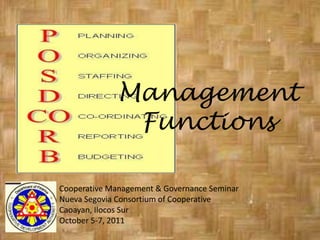
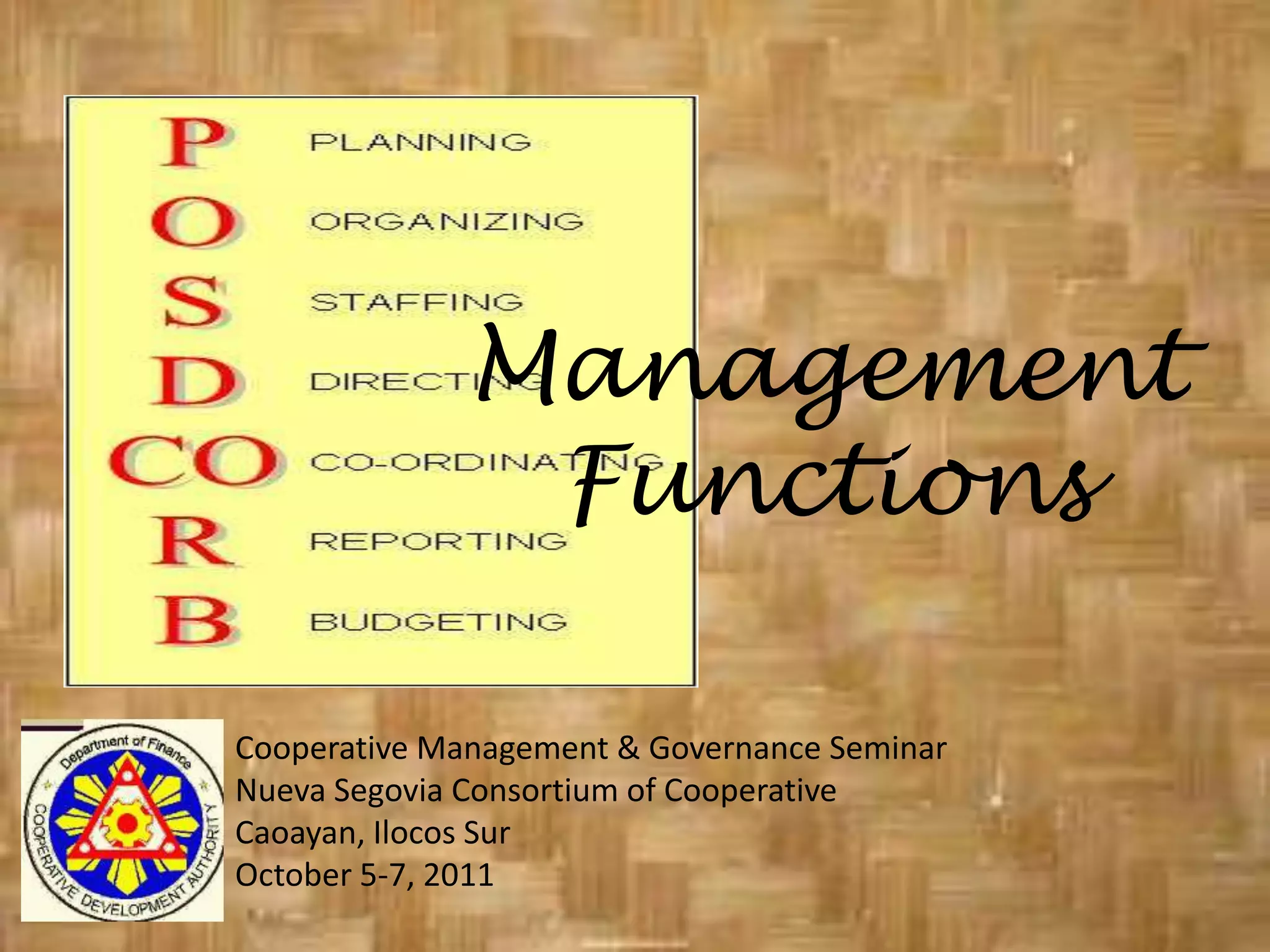
POSDCORB is a word composed of the initials of the functions of the executives. POSDCORB is developed by Luther Gulick.POSDCORB lists the functions of the executives according to Luther Gulick who was a well known member of the classical school. POSDCORB includes seven functions.
POSDCORBPOSDCORB is an acronym created by Luther Gulick and LyndallUrwick in their “Papers on the Science of Administration” (1937).  Developed as a means to structure and analyze management activities, it set a new paradigm in Public Administration.
Based on the theories of Henri Fayol’s 14 Principles of Management, Gulick and  LyndallUrwick disputed the prevailing thinking that there was a dichotomy between politics and administration. Instead that it was impossible to separate the two. It has been called the “high noon of orthodoxy,” due to the assumption that it was the principles that were important and not where they were applied
The acronym which formulates the responsibility of a chief executive or administrator stands for: Planning, Organizing, Staffing, Direction, Coordinating, Reporting, and Budgeting.PlanningIs defining goals, establishing strategy to meet them, establish plans to coordinate activities, outline methods for doing them to accomplish purpose set by the cooperative.
OrganizingDetermining what tasks are to be done, establish the formal structure  which work are arranged, defined and coordinated for the defined objective
StaffingStaffing is the whole personnel function of bringing in and training the staff and maintaining favorable conditions of work
DirectingMotivating, selecting most effective communication channels and resolving conflictsDirecting is the continuous task of making decisions and embodying them in specific and general orders and instructions and serving as the leader of the cooperative
CoordinatingCoordinating is the all-important duty of interrelating the various parts of the work
BudgetingBudgeting, with all that goes with budgeting in the form of fiscal planning, accounting and control.  Referencehttp:// www.vectorstudy.com/management theories/POSDORB.htm
ReportingReporting is keeping those to whom the executive is responsible informed as to what is going on, which thus includes keeping himself and his subordinates informed through records, research and inspections
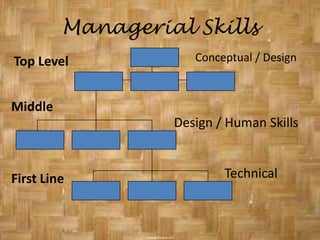
Manager SkillsConceptual TechnicalHumanDecision makingProblem Solving
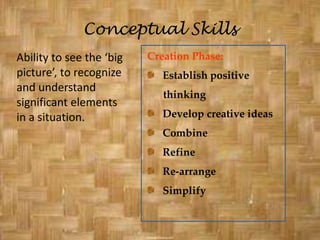
Conceptual SkillsAbility to see the ‘big picture’, to recognize and understand significant elements in a situation.Creation Phase:   Establish positive       thinking   Develop creative ideas   Combine   Refine   Re-arrangeSimplify
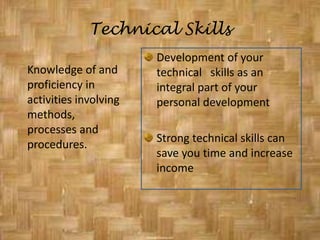
Technical SkillsDevelopment of your technical   skills as an integral part of your personal developmentStrong technical skills can save you time and increase incomeKnowledge of and proficiency in activities involving methods, processes and procedures.
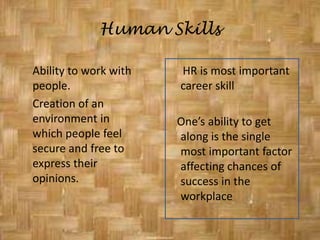
Human SkillsAbility to work with people. Creation of an environment in which people feel secure and free to express their opinions.     HR is most important career skill   One’s ability to get along is the single  most important factor affecting chances of success in the workplace
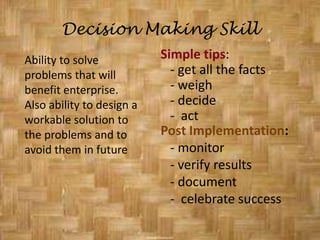
Decision Making SkillSimple tips:   - get all the facts   - weigh   - decide   -  actAbility to solve problems that will benefit enterprise. Also ability to design a workable solution to the problems and to avoid them in futurePost Implementation:   - monitor   - verify results   - document   -  celebrate success
Problem SolvingPrevention PrincipleSolve problem @ the source.                         Live by the 1 – 10 – 100 rulePractice Principle
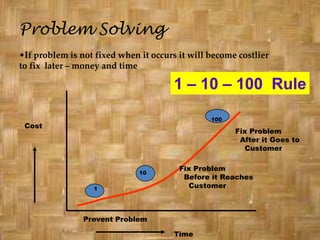
Problem SolvingIf problem is not fixed when it occurs it will become costlier to fix  later – money and time1 – 10 – 100Rule100CostFix Problem  After it Goes to    CustomerFix Problem  Before it Reaches    Customer101Prevent ProblemTime
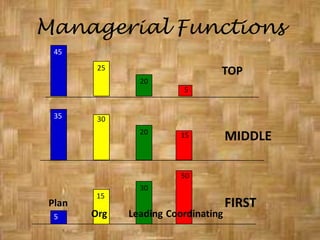
Managerial Function1PlanningOrganizing
Staffing
Directing/Influencing
Coordinating
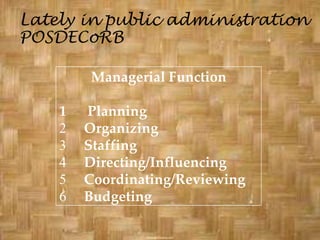
BudgetingLately in public administrationPOSDECoRBManagerial Function1      Planning     Organizing
     Staffing
     Directing/Influencing
     Coordinating/Reviewing
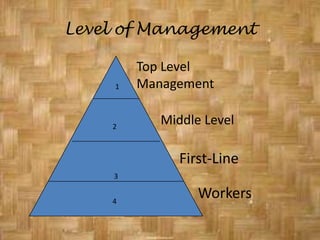
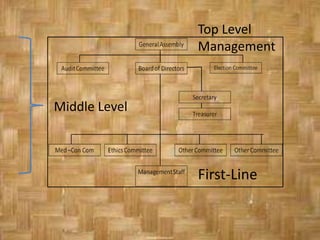
     BudgetingLevel of Management3Top Level Management1Middle Level2First-LineWorkers4
Top Level ManagementMiddle LevelFirst-Line

Management Functions jbb 3

  • 1.
    Management Functions CooperativeManagement & Governance SeminarNueva Segovia Consortium of CooperativeCaoayan, Ilocos SurOctober 5-7, 2011
  • 2.
    POSDCORB is a wordcomposed of the initials of the functions of the executives. POSDCORB is developed by Luther Gulick.POSDCORB lists the functions of the executives according to Luther Gulick who was a well known member of the classical school. POSDCORB includes seven functions.
  • 3.
    POSDCORBPOSDCORB is an acronymcreated by Luther Gulick and LyndallUrwick in their “Papers on the Science of Administration” (1937). Developed as a means to structure and analyze management activities, it set a new paradigm in Public Administration.
  • 4.
    Based on thetheories of Henri Fayol’s 14 Principles of Management, Gulick and  LyndallUrwick disputed the prevailing thinking that there was a dichotomy between politics and administration. Instead that it was impossible to separate the two. It has been called the “high noon of orthodoxy,” due to the assumption that it was the principles that were important and not where they were applied
  • 5.
    The acronym whichformulates the responsibility of a chief executive or administrator stands for: Planning, Organizing, Staffing, Direction, Coordinating, Reporting, and Budgeting.PlanningIs defining goals, establishing strategy to meet them, establish plans to coordinate activities, outline methods for doing them to accomplish purpose set by the cooperative.
  • 6.
    OrganizingDetermining what tasksare to be done, establish the formal structure which work are arranged, defined and coordinated for the defined objective
  • 7.
    StaffingStaffing is thewhole personnel function of bringing in and training the staff and maintaining favorable conditions of work
  • 8.
    DirectingMotivating, selecting mosteffective communication channels and resolving conflictsDirecting is the continuous task of making decisions and embodying them in specific and general orders and instructions and serving as the leader of the cooperative
  • 9.
    CoordinatingCoordinating is theall-important duty of interrelating the various parts of the work
  • 10.
    BudgetingBudgeting, with allthat goes with budgeting in the form of fiscal planning, accounting and control. Referencehttp:// www.vectorstudy.com/management theories/POSDORB.htm
  • 11.
    ReportingReporting is keepingthose to whom the executive is responsible informed as to what is going on, which thus includes keeping himself and his subordinates informed through records, research and inspections
  • 12.
  • 13.
    Conceptual SkillsAbility tosee the ‘big picture’, to recognize and understand significant elements in a situation.Creation Phase: Establish positive thinking Develop creative ideas Combine Refine Re-arrangeSimplify
  • 14.
    Technical SkillsDevelopment ofyour technical skills as an integral part of your personal developmentStrong technical skills can save you time and increase incomeKnowledge of and proficiency in activities involving methods, processes and procedures.
  • 15.
    Human SkillsAbility towork with people. Creation of an environment in which people feel secure and free to express their opinions. HR is most important career skill One’s ability to get along is the single most important factor affecting chances of success in the workplace
  • 16.
    Decision Making SkillSimpletips: - get all the facts - weigh - decide - actAbility to solve problems that will benefit enterprise. Also ability to design a workable solution to the problems and to avoid them in futurePost Implementation: - monitor - verify results - document - celebrate success
  • 17.
    Problem SolvingPrevention PrincipleSolveproblem @ the source. Live by the 1 – 10 – 100 rulePractice Principle
  • 18.
    Problem SolvingIf problemis not fixed when it occurs it will become costlier to fix later – money and time1 – 10 – 100Rule100CostFix Problem After it Goes to CustomerFix Problem Before it Reaches Customer101Prevent ProblemTime
  • 19.
  • 20.
  • 21.
  • 22.
  • 23.
    BudgetingLately in publicadministrationPOSDECoRBManagerial Function1 Planning Organizing
  • 24.
    Staffing
  • 25.
    Directing/Influencing
  • 26.
    Coordinating/Reviewing
  • 27.
    BudgetingLevel of Management3Top Level Management1Middle Level2First-LineWorkers4
  • 28.