MADE BY:PRATEEK 
MBBS 2011 1
Definition: 
-It is a state arising from abnormality in absorption 
of food nutrients across the gastrointestinal 
tract(GIT). 
-Impairment can be of single or multiple nutrients 
depending on the abnormality. 
2 
-This may lead to malnutrition and a variety of 
anaemias.
ď‚—Malabsorption constitutes the 
pathological interference with the 
normal physiological sequence of body 
such as: 
ď‚— Digestion(intraluminal process), 
ď‚—Absorption (mucosal process) and 
ď‚— Transport (postmucosal events) of 
nutrients. 
3
Causes of malabsorption: 
ď‚—Intestinal malabsorption can be due to: 
1. digestive failure caused by enzyme 
deficiencies 
2. structural defects 
3. mucosal abnormality 
4. infective agents 
5. systemic diseases affecting GIT 
4
5 
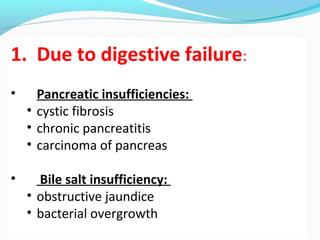
1. Due to digestive failure: 
• Pancreatic insufficiencies: 
• cystic fibrosis 
• chronic pancreatitis 
• carcinoma of pancreas 
• Bile salt insufficiency: 
• obstructive jaundice 
• bacterial overgrowth
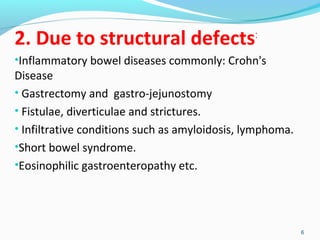
2. Due to structural defects: 
•Inflammatory bowel diseases commonly: Crohn's 
Disease 
• Gastrectomy and gastro-jejunostomy 
• Fistulae, diverticulae and strictures. 
• Infiltrative conditions such as amyloidosis, lymphoma. 
•Short bowel syndrome. 
•Eosinophilic gastroenteropathy etc. 
6
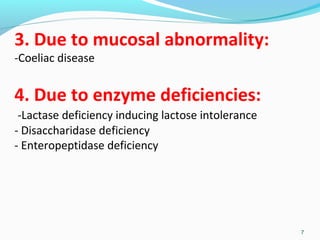
3. Due to mucosal abnormality: 
-Coeliac disease 
4. Due to enzyme deficiencies: 
-Lactase deficiency inducing lactose intolerance 
- Disaccharidase deficiency 
- Enteropeptidase deficiency 
7
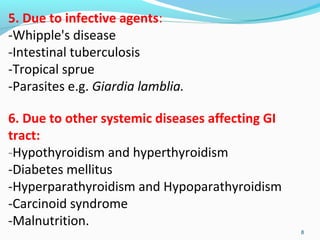
5. Due to infective agents: 
-Whipple's disease 
-Intestinal tuberculosis 
-Tropical sprue 
-Parasites e.g. Giardia lamblia. 
6. Due to other systemic diseases affecting GI 
tract: 
-Hypothyroidism and hyperthyroidism 
-Diabetes mellitus 
-Hyperparathyroidism and Hypoparathyroidism 
-Carcinoid syndrome 
-Malnutrition. 
8
Symptoms of malabsorption 
ď‚—Symptoms can abe 
1.Extraintestinal 
2.Intraintestinal 
ď‚—Diarrhoea, often steatorrhoea is the most common feature. It is 
due to impaired water, carbohydrate and electrolyte absorption. 
ď‚—Othersymptoms include: 
- Weight loss 
-Growth retardation 
-Swelling or edema 
-Anaemias 
-Muscle cramps and bleeding tendencies. 
9
10
1.Celiac sprue 
- common cause of malabsorption 
- Age: ranging from first year of life 
through the eighth decade. 
Etiology: not known. 
But three factors can contribute: 
1. environmental. 
2. immunologic. 
3. genetic factors. 
11
1. Environmental factor: 
- There is association of the disease with gliadin, 
a component of gluten that is present in wheat. 
2. Immunologic factor: 
- Serum antibodies are detected such as anti-gliadin. 
3. Genetic factor: 
- Almost all patients express the HLA-DQ2 allele 
12
Diagnosis: 
- A small-intestinal biopsy should be done 
for suspected patients. 
- The hallmark of celiac sprue is the 
presence of an abnormal small-intestinal 
biopsy. 
13
2.Tropical Sprue 
- Caused by infectious agents including 
Giardia lamblia, Yersinia enterocolitica, 
Clostridum difficile. 
-it tends to involve the distal small bowel. 
-total villous atrophy is uncommon. 
14
3.Crohn’s Disease 
ď‚—It is an inflammatory bowel disease 
ď‚— Marked by patchy areas of 
inflammation anywhere in GIT 
from mouth to anus . 
Body’s immune system attacks GIT 
leading to chronic inflammation. 
15
4. Short Bowel Syndrome 
-Following resection, diarrhea and/or 
steatorrhea can appear due to decrease 
in the area of the absorptive surface area. 
-Other symptoms include cramping, 
bloating and heartburn. 
16
5.Bacterial Overgrowth Syndrome 
- There is proliferation of colonic-type 
bacteria within the small intestine. 
- Due to stasis caused by impaired 
peristalsis . This lead to diarrhea and 
malabsorption. 
17
Pathophysiology: 
* Bacterial over growth leads to: 
1. Metabolize bile salt resulting in deconjugation of bile 
salts; 
®  ¯ Bile Salt and malabsorption of fat. 
2. Damage of the intestinal villi by: 
· Bacterial invasion 
· Toxin/. 
· Metabolic products 
® Damaged villi ® cause total villous atrophy. 
18
6. Whipple's Disease 
Cause: by the bacteria Tropheryma whipplei. 
Effect: 
Chronic multisystem disease associated with diarrhea, 
steatorrhea, weight loss, arthralgia, and central nervous 
system (CNS) and cardiac problems . 
Diagnosis: 
- identification of T. whipplei by polymerase chain reaction 
(PCR). 
- PAS-positive macrophages in the small intestine and other 
organs with evidence of disease. 
19
* Management of malabsorption 
syndrome: 
ď‚—Replacement of nutrients, electrolytes and fluid may 
be necessary. 
ď‚—In severe deficiency, hospital admission may be 
required for parenteral administration. 
ď‚—Pancreatic enzymes are supplemented orally in 
pancreatic insufficiency. 
ď‚—Dietary modification is important in some conditions: 
ď‚—Gluten-free diet in coeliac disease. 
ď‚—Lactose avoidance in lactose intolerance. 
ď‚—Antibiotic therapy will treat Small Bowel Bacterial 
overgrowth. 
20
21

Malabsorption syndrome

  • 1.
  • 2.
    Definition: -It isa state arising from abnormality in absorption of food nutrients across the gastrointestinal tract(GIT). -Impairment can be of single or multiple nutrients depending on the abnormality. 2 -This may lead to malnutrition and a variety of anaemias.
  • 3.
    ď‚—Malabsorption constitutes the pathological interference with the normal physiological sequence of body such as: ď‚— Digestion(intraluminal process), ď‚—Absorption (mucosal process) and ď‚— Transport (postmucosal events) of nutrients. 3
  • 4.
    Causes of malabsorption: ď‚—Intestinal malabsorption can be due to: 1. digestive failure caused by enzyme deficiencies 2. structural defects 3. mucosal abnormality 4. infective agents 5. systemic diseases affecting GIT 4
  • 5.
    5 1. Dueto digestive failure: • Pancreatic insufficiencies: • cystic fibrosis • chronic pancreatitis • carcinoma of pancreas • Bile salt insufficiency: • obstructive jaundice • bacterial overgrowth
  • 6.
    2. Due tostructural defects: •Inflammatory bowel diseases commonly: Crohn's Disease • Gastrectomy and gastro-jejunostomy • Fistulae, diverticulae and strictures. • Infiltrative conditions such as amyloidosis, lymphoma. •Short bowel syndrome. •Eosinophilic gastroenteropathy etc. 6
  • 7.
    3. Due tomucosal abnormality: -Coeliac disease 4. Due to enzyme deficiencies: -Lactase deficiency inducing lactose intolerance - Disaccharidase deficiency - Enteropeptidase deficiency 7
  • 8.
    5. Due toinfective agents: -Whipple's disease -Intestinal tuberculosis -Tropical sprue -Parasites e.g. Giardia lamblia. 6. Due to other systemic diseases affecting GI tract: -Hypothyroidism and hyperthyroidism -Diabetes mellitus -Hyperparathyroidism and Hypoparathyroidism -Carcinoid syndrome -Malnutrition. 8
  • 9.
    Symptoms of malabsorption ď‚—Symptoms can abe 1.Extraintestinal 2.Intraintestinal ď‚—Diarrhoea, often steatorrhoea is the most common feature. It is due to impaired water, carbohydrate and electrolyte absorption. ď‚—Othersymptoms include: - Weight loss -Growth retardation -Swelling or edema -Anaemias -Muscle cramps and bleeding tendencies. 9
  • 10.
  • 11.
    1.Celiac sprue -common cause of malabsorption - Age: ranging from first year of life through the eighth decade. Etiology: not known. But three factors can contribute: 1. environmental. 2. immunologic. 3. genetic factors. 11
  • 12.
    1. Environmental factor: - There is association of the disease with gliadin, a component of gluten that is present in wheat. 2. Immunologic factor: - Serum antibodies are detected such as anti-gliadin. 3. Genetic factor: - Almost all patients express the HLA-DQ2 allele 12
  • 13.
    Diagnosis: - Asmall-intestinal biopsy should be done for suspected patients. - The hallmark of celiac sprue is the presence of an abnormal small-intestinal biopsy. 13
  • 14.
    2.Tropical Sprue -Caused by infectious agents including Giardia lamblia, Yersinia enterocolitica, Clostridum difficile. -it tends to involve the distal small bowel. -total villous atrophy is uncommon. 14
  • 15.
    3.Crohn’s Disease Itis an inflammatory bowel disease  Marked by patchy areas of inflammation anywhere in GIT from mouth to anus . Body’s immune system attacks GIT leading to chronic inflammation. 15
  • 16.
    4. Short BowelSyndrome -Following resection, diarrhea and/or steatorrhea can appear due to decrease in the area of the absorptive surface area. -Other symptoms include cramping, bloating and heartburn. 16
  • 17.
    5.Bacterial Overgrowth Syndrome - There is proliferation of colonic-type bacteria within the small intestine. - Due to stasis caused by impaired peristalsis . This lead to diarrhea and malabsorption. 17
  • 18.
    Pathophysiology: * Bacterialover growth leads to: 1. Metabolize bile salt resulting in deconjugation of bile salts; ® ¯ Bile Salt and malabsorption of fat. 2. Damage of the intestinal villi by: · Bacterial invasion · Toxin/. · Metabolic products ® Damaged villi ® cause total villous atrophy. 18
  • 19.
    6. Whipple's Disease Cause: by the bacteria Tropheryma whipplei. Effect: Chronic multisystem disease associated with diarrhea, steatorrhea, weight loss, arthralgia, and central nervous system (CNS) and cardiac problems . Diagnosis: - identification of T. whipplei by polymerase chain reaction (PCR). - PAS-positive macrophages in the small intestine and other organs with evidence of disease. 19
  • 20.
    * Management ofmalabsorption syndrome: ď‚—Replacement of nutrients, electrolytes and fluid may be necessary. ď‚—In severe deficiency, hospital admission may be required for parenteral administration. ď‚—Pancreatic enzymes are supplemented orally in pancreatic insufficiency. ď‚—Dietary modification is important in some conditions: ď‚—Gluten-free diet in coeliac disease. ď‚—Lactose avoidance in lactose intolerance. ď‚—Antibiotic therapy will treat Small Bowel Bacterial overgrowth. 20
  • 21.