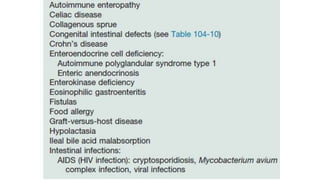
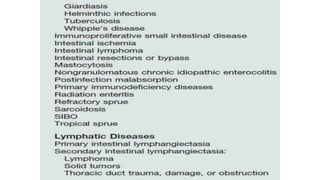
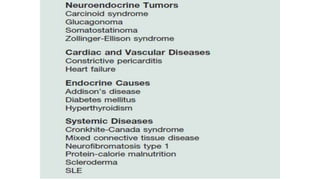
APPROACH TO MALABSORPTION
SYNDROME
• DR. SUBODH KUMAR MAHTO
• PGIMER,DR.RML HOSPITAL.
• NEW Delhi
•
Introduction
• Maldigestion: Defective intraluminal hydrolysis of
nutrients.
Impaired breakdown of nutrients (carbohydrates,
protein, fat) to absorbable split-products (mono-, di-, or
oligosaccharides; aminoacids; oligopeptides; fatty acids;
monoglycerides)
• Malabsorption: Defective mucosal uptake and transport
of adequately digested nutrients including vitamins and
trace elements.
S.A. Riley, M.N. Marsh: Maldigestion and Malabsorption; Chapter 88, pages 1501- 1522
In: Sleisenger and Fordtran's, Gastrointestinal and Liver Disease,
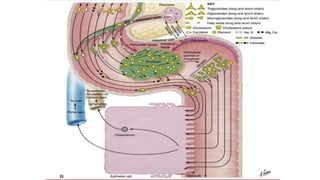
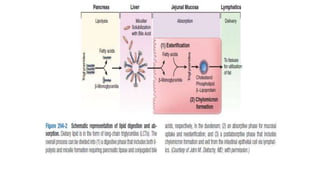
Mechanisms of malabsorption
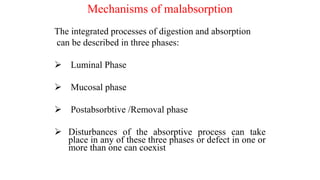
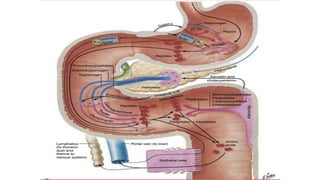
The integrated processes of digestion and absorption
can be described in three phases:
 Luminal Phase
 Mucosal phase
 Postabsorbtive /Removal phase
 Disturbances of the absorptive process can take
place in any of these three phases or defect in one or
more than one can coexist
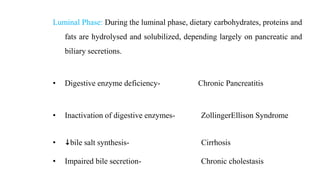
Luminal Phase: During the luminal phase, dietary carbohydrates, proteins and
fats are hydrolysed and solubilized, depending largely on pancreatic and
biliary secretions.
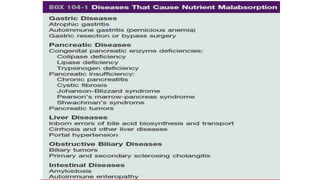
• Digestive enzyme deficiency- Chronic Pancreatitis
• Inactivation of digestive enzymes- ZollingerEllison Syndrome
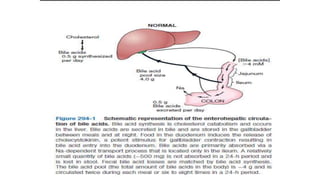
• bile salt synthesis- Cirrhosis
• Impaired bile secretion- Chronic cholestasis
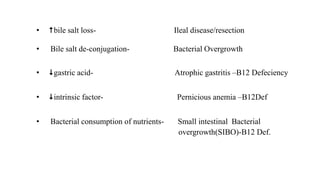
• bile salt loss- Ileal disease/resection
• Bile salt de-conjugation- Bacterial Overgrowth
• gastric acid- Atrophic gastritis –B12 Defeciency
• intrinsic factor- Pernicious anemia –B12Def
• Bacterial consumption of nutrients- Small intestinal Bacterial
overgrowth(SIBO)-B12 Def.
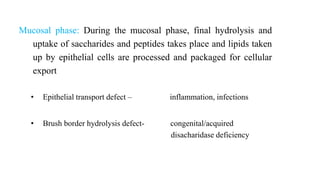
Mucosal phase: During the mucosal phase, final hydrolysis and
uptake of saccharides and peptides takes place and lipids taken
up by epithelial cells are processed and packaged for cellular
export
• Epithelial transport defect – inflammation, infections
• Brush border hydrolysis defect- congenital/acquired
disacharidase deficiency
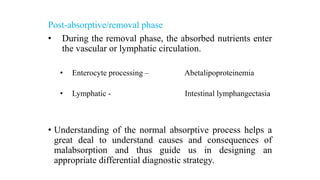
Post-absorptive/removal phase
• During the removal phase, the absorbed nutrients enter
the vascular or lymphatic circulation.
• Enterocyte processing – Abetalipoproteinemia
• Lymphatic - Intestinal lymphangectasia
• Understanding of the normal absorptive process helps a
great deal to understand causes and consequences of
malabsorption and thus guide us in designing an
appropriate differential diagnostic strategy.
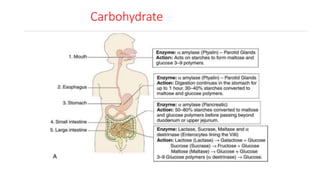
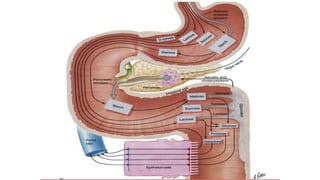
Carbohydrate
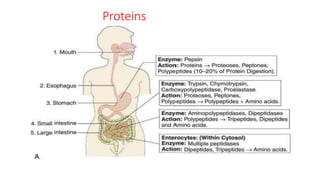
Proteins
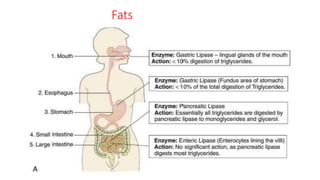
Fats
•Malabsorptive disorders can be categorized into-
1-Global malabsorption- Generalized mucosal abnormalities or
reduced absorptive surface resulting in multiple nutrient
malabsorption.
• The classic manifestations are diarrhea with pale, greasy,
voluminous, foul smelling stools and weight loss despite
adequate food intake.
• This spectrum of findings is relatively uncommon, even with
generalized mucosal disease.
• The majority of patients have relatively mild Gastrointestinal
symptoms, which often mimic more common disorders such as
irritable bowel syndrome.
• Anorexia, flatulence, abdominal distension and borborygmi may
be the only complaints suggesting malabsorption; other patients
may be asymptomatic.
2- Partial or isolated malabsorption
• Results from diseases that interfere with the absorption of specific
nutrients.
• Eg-- Defective cobalamin absorption can be seen in patients with
pernicious anemia or those with disease (or resection) of the
terminal ileum such as patients with Crohn's disease or helminthic
Infection.
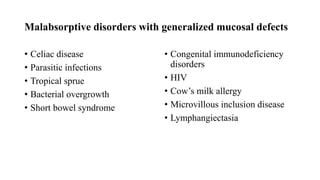
Malabsorptive disorders with generalized mucosal defects
• Celiac disease
• Parasitic infections
• Tropical sprue
• Bacterial overgrowth
• Short bowel syndrome
• Congenital immunodeficiency
disorders
• HIV
• Cow’s milk allergy
• Microvillous inclusion disease
• Lymphangiectasia
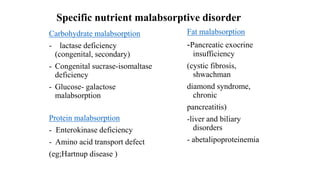
Specific nutrient malabsorptive disorder
Carbohydrate malabsorption
- lactase deficiency
(congenital, secondary)
- Congenital sucrase-isomaltase
deficiency
- Glucose- galactose
malabsorption
Protein malabsorption
- Enterokinase deficiency
- Amino acid transport defect
(eg;Hartnup disease )
Fat malabsorption
-Pancreatic exocrine
insufficiency
(cystic fibrosis,
shwachman
diamond syndrome,
chronic
pancreatitis)
-liver and biliary
disorders
- abetalipoproteinemia
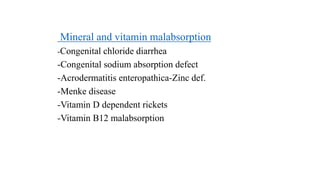
Mineral and vitamin malabsorption
-Congenital chloride diarrhea
-Congenital sodium absorption defect
-Acrodermatitis enteropathica-Zinc def.
-Menke disease
-Vitamin D dependent rickets
-Vitamin B12 malabsorption
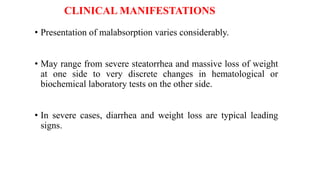
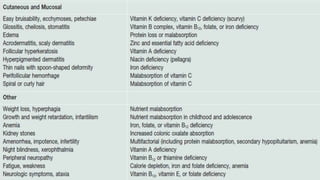
CLINICAL MANIFESTATIONS
• Presentation of malabsorption varies considerably.
• May range from severe steatorrhea and massive loss of weight
at one side to very discrete changes in hematological or
biochemical laboratory tests on the other side.
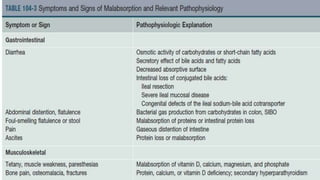
• In severe cases, diarrhea and weight loss are typical leading
signs.
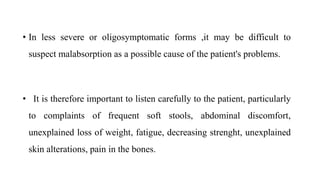
• In less severe or oligosymptomatic forms ,it may be difficult to
suspect malabsorption as a possible cause of the patient's problems.
• It is therefore important to listen carefully to the patient, particularly
to complaints of frequent soft stools, abdominal discomfort,
unexplained loss of weight, fatigue, decreasing strenght, unexplained
skin alterations, pain in the bones.
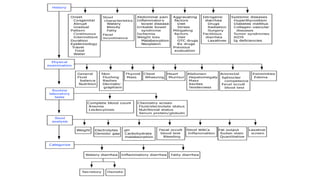
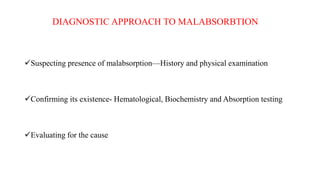
DIAGNOSTIC APPROACH TO MALABSORBTION
Suspecting presence of malabsorption—History and physical examination
Confirming its existence- Hematological, Biochemistry and Absorption testing
Evaluating for the cause
HISTORY
• Previous surgery of the GI-tract or partial or total gastrectomy or small bowel resections or
partial or total resection of the pancreas
• Fever , weight loss, anorexia, contact with T.B pt.
• Recent travel to endemic areas –tropical sprue, giardiasis
• Drug abuse/ ethanol abuse
• History s/o of chronic pancreatitis or pancreatic tumor
• History or evidence of chronic cholestasis ,CLD
• History of irradiation treatment.
• High risk behaviour -HIV
• H/O associated chronic lung disease - cystic fibrosis
• H/S/O thyrotoxicosis/Addison’s disease
• H/O absorbable carbohydrate (sorbitol, fructose) or unbalanced diet
• Family History :
• Celiac disease
• Crohn's disease
• Cystic fibrosis
• Disaccharides deficiencies (lactase)
•
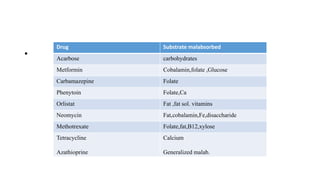
Drug Substrate malabsorbed
Acarbose carbohydrates
Metformin Cobalamin,folate ,Glucose
Carbamazepine Folate
Phenytoin Folate,Ca
Orlistat Fat ,fat sol. vitamins
Neomycin Fat,cobalamin,Fe,disaccharide
Methotrexate Folate,fat,B12,xylose
Tetracycline
Azathioprine
Calcium
Generalized malab.
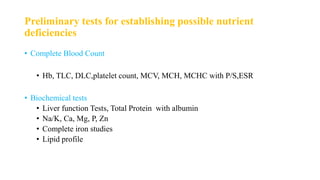
Preliminary tests for establishing possible nutrient
deficiencies
• Complete Blood Count
• Hb, TLC, DLC,platelet count, MCV, MCH, MCHC with P/S,ESR
• Biochemical tests
• Liver function Tests, Total Protein with albumin
• Na/K, Ca, Mg, P, Zn
• Complete iron studies
• Lipid profile
• Other Serum tests
• Serum B12 and Folic acid
• PT and INR, Serum Immunoglobulins
• Stool test-
• Stool volume, appearance, mucus/blood
• pH, occult blood
• stool for ova , cysts & parasites x 3 samples minimum
• Fat, Elastase, chymotrypsin
• HIV,if indicated
• AntiTTG and Antiendomysial Ab, if indicated
• The order of testing and choice of a particular test should be individualized while
considering the availability and expertise needed for specialized test
ULTRASONOGRAPHY
To look for:
• Small bowel thickening to rule out inflammatory disease of small intestine like,
crohn’s disease, mycobacterial disease ,celiac ds and whipple’s disease.
• Pancreases to rule out pancreatic tumour, calcification, dilatation of the pancreatic
duct or stone in pancreatic duct
• Lymphadenopathy, ascitis
• Hepatobiliary System
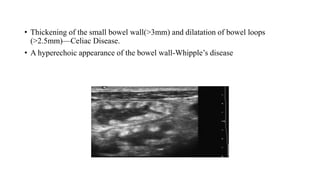
• Thickening of the small bowel wall(>3mm) and dilatation of bowel loops
(>2.5mm)—Celiac Disease.
• A hyperechoic appearance of the bowel wall-Whipple’s disease
Small bowel follow –through (BaMFT)
• To identify focal or diffuse abnormalities –
• Diverticula
• stagnant loops of intestine
• intestine fistula and tumours
Abdominal CT
• To rule out
• Intestinal lymphoma
• Intestinal fistula
• Thickening of small bowel wall in crohn’s disease
• Enlarged lymph node
• Pancreatic diseases
MRI OF THE SMALL INTESTINE
• Indicated in
• Refractory celiac disease
• Complications of Crohn’s disease
• Lymphoma or carcinoma
Tests to confirm malabsorption
• Fat
• Carbohydrate
• Protein
• B12
Test for fat malabsorption(Steatorrhoea)
• Malabsorption of fat -indicator of global malabsorption for two
reasons:
• (1) among the macronutrients, the process by which fat is absorbed is
the most complex and, therefore, it tends to be the most sensitive to
interference from disease processes
• (2) it is the most calorically dense macronutrient and, therefore, its
malabsorption is a critical factor in the weight loss that often
accompanies malabsorptive disorders.
• Qualitative Fecal Fat Analysis -
• Fat analysis by microscopic examination of random stool samples
• Upto 100 globules and diameter less than 4 mm/hpf is normal
• Sudan staining of spot stool samples had a sensitivity of 78% and a specificity
of 70% for the detection of steatorrhea.
• Quantitative Fecal Fat Analysis
• .The van de Kamer method is the quantitative titration of fatty acid
equivalents in which the results are expressed as fecal output of fat in
grams per 24 hours. This method is considered the gold standard for
fecal fat analysis
• Patients should consume 70 to 120 g/day of dietary fat.
• Also allows the estimation of daily stool weight, which is usually
greater than 200 g/day in patients with steatorrhea.
• Stool collection done for 3-5 days.
• Fecal fat excretion of less than 7 g per day with a fat intake of 100 g
per day usually is considered normal
• More than 7g/day of fat in stool is pathologic, although patients with
steatorrhea usually have more than 20 g/day.
• LIMITATIONS
Elevated fecal fat level can not differentiate among biliary, pancreatic and
enteric cause of malabsorption
Tests for carbohydrates malabsorption
• The Hydrogen Breath Test
• Using different carbohydrates, (lactose or fructose), the hydrogen breath test can be
used to detect malabsorption of these carbohydrates.
• Lactose malabsorption:
• Ingestion 50gm of lactose.
• Breath hydrogen measurements obtained before and at 30,60,90,180 and 240 minutes
• Diagnosis- ↑ in breath hydrogen concentration ≥20 parts per million over baseline
• Drawback-
• 18% of people are hydrogen nonexcretors, and in these persons, hydrogen
breath test results may be falsely negative because hydrogen is metabolized by
bacteria to methane.
• Lactose tolerance test —
• Following oral administration of a 50 g test dose, blood glucose levels are
monitored at 0, 60, and 120 minutes.
• Diagnosis -↑ in blood glucose by ≤20 mg/dL (1.1mmol/L) plus the development of
symptoms is diagnostic.
• False negative results can occur in patients with diabetes or bacterial overgrowth.
D-Xylose Test
• Measures the absorptive capacity of the proximal small intestine
• Determine whether defects in the intestinal epithelium are responsible for
malabsorption.
• D xylose is a pentose monosaccharide that can be absorbed both by an active
sodium transporter and by passive diffusion..
• Approximately 50% of the absorbed d-xylose is metabolized, and the remainder is
excreted in urine.
• After an overnight fast, a 25-g dose of d-xylose is swallowed, and the patient is
encouraged to drink sufficient volumes of fluid to maintain good urine output.
• Urine is collected for the next five hours. As an alternative, one hour after
ingestion of d-xylose, a venous sample may be obtained.
• Less than 4 grams (16% excretion) of d-xylose in the urine collection or a serum
xylose concentration below 20 mg/dL indicates abnormal intestinal absorption
• The traditional urine test appears to be more reliable than the one-hour blood test.
• False positive-
• Urine collection too short
• Renal dysfunction
• Significant ascites, delayed gastric emptying,portal hypertension
Tests for Protein malabsorption
• Routine testing generally not performed in the clinic setting.
• Tests are technically difficult and intestinal protein loss is more commonly a result
of either bacterial overgrowth or protein losing gastroenteropathy.
• Enteral protein loss directly demonstrable by measurement of the alpha-1
antitrypsin clearance.
• In massive enteral protein loss, xact site of protein leakage localized by the
infusion of 99mTc-albumin and gamma camera scintigraphy.
•ADDITIONAL TESTS OF MALABSORPTION
TESTS FOR B12 MALABSORPTION
• The Schilling test
• Identifies the cause of vitamin B12 malabsorption
• Rarely performed given the availability of serum B12 and
methylmalonic acid to diagnose B12 deficiency and the easy use of
oral crystalline or parenteral injection of B12.
• Nevertheless, there may be occasional patients in whom it can be
informative.
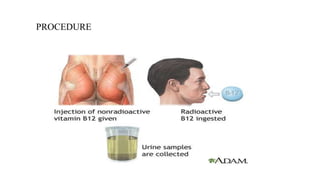
PROCEDURE
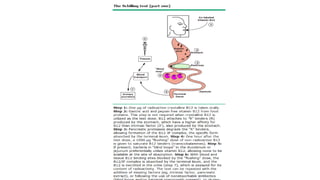
• Stage 1
• Administer a small oral dose1ug of radiolabeled vitamin B12 and, and within one
or two hours, a large intramuscular flushing dose of nonradiolabeled vitamin B12
• The unlabeled B12 saturates vitamin B12 carriers; thus, any radioactive vitamin
B12 absorbed by the intestine is excreted in the urine
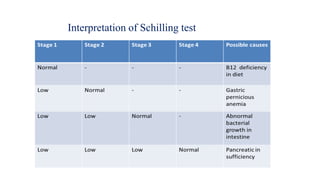
• If less than 7% to 10% of the administered dose is recovered in urine within 24 hours,
vitamin B12 malabsorption is confirmed
• Stage 2—
• To specify the site of vitamin B12 malabsorption, oral administration of intrinsic factor
done.
• In patients with pernicious anemia, the results of the Schilling test normalize after oral
administration of intrinsic factor
• Stage 3- In small bowel bacterial overgrowth(SIBO), the results of the Schilling
test can improve after antibiotic therapy
• Stage 4-Patients with pancreatic exocrine insufficiency might have an abnormal
result on the Schilling test, with or without added intrinsic factor, but results
normalize with addition of pancreatic enzymes
• False positive of schilling test-
• Renal dysfunction
• Inadequate urine collection
Interpretation of Schilling test
Tests for pancreatic insufficiency
• Direct tests
• Stimulation of the pancreas through the administration of a meal or hormonal
secretagogues
• Duodenal fluid is collected and analyzed to quantify normal pancreatic secretory
content (ie, enzymes, and bicarbonate)
• Two hormones have been used : cholecystokinin and secretin.
• Cholecystokinin (CCK) tests measure the ability of acinar-cells to secreted
digestive enzymes .
• Secretin tests measures the ability of ductal cells to produce bicarbonate
• Indirect Tests
• Measure the consequence of exocrine insufficiency (maldigestion).
• Simpler and easier to perform than direct tests
• Less sensitive than direct tests for diagnosis of earlier stages of
Pancreatic Insufficiency.
• Tests are:
• S.Trypsinogen
• Fecal fat
• Fecal elastase 1
Tests to confirm etiology of malabsorption
Endoscopic exam of stomach, duodenum/ jejunum or ileum and histologic
examination of mucosal biopsy
Endoscopic aspiration of intestinal secretions to look for parasites and culture for
Small intestinal bacterial overgrowth(SIB O)
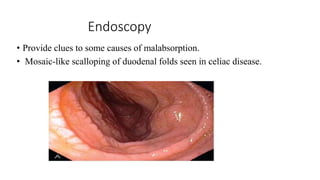
Endoscopy
• Provide clues to some causes of malabsorption.
• Mosaic-like scalloping of duodenal folds seen in celiac disease.
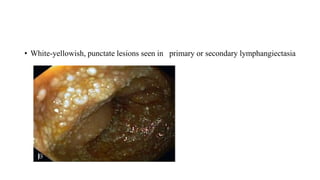
• White-yellowish, punctate lesions seen in primary or secondary lymphangiectasia
• Also detected endocrine tumours causing malabsorption like
duodenal gastrinomas
somatostatinomas
ampullary tumours.
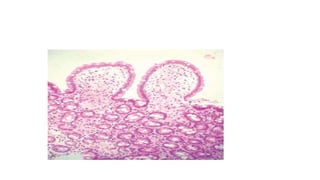
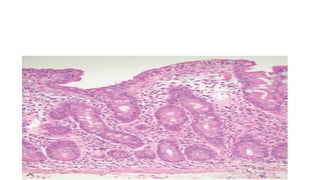
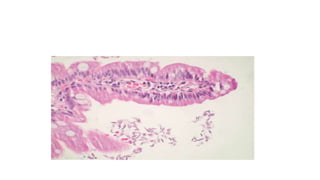
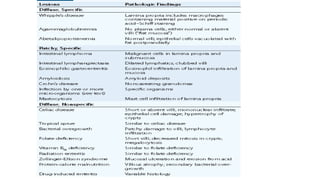
Biopsy
• INDICATIONS:-
• Documented or suspected steatorrhea or with chronic diarrhoea
• Diffuse or focal abnormalities of the small intestine
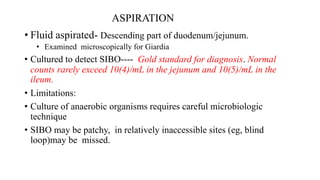
ASPIRATION
• Fluid aspirated- Descending part of duodenum/jejunum.
• Examined microscopically for Giardia
• Cultured to detect SIBO---- Gold standard for diagnosis. Normal
counts rarely exceed 10(4)/mL in the jejunum and 10(5)/mL in the
ileum.
• Limitations:
• Culture of anaerobic organisms requires careful microbiologic
technique
• SIBO may be patchy, in relatively inaccessible sites (eg, blind
loop)may be missed.
Video capsule endoscopy(VCE)
• Used to diagnose a wider range of disease such as crohn’s ds, celiac disease and
other malabsorptive disease.
• In refractory celiac disease, VCE can detect changes such as ulcerations and
strictures that suggest T- cell lymphoma.
Balloon Enteroscopy
• In some case of malabsorption, balloon enteroscopy with biopsies of the jejunum
and ileum can be helpful to establish the diagnosis.
• Comparison of VCE and BE
• Advantage-biopsy from altered mucosa area
• Disadvantage- time consuming and uncomfortable for the patients
TROPICAL MALABSORPTION
• Important clinical problem both in visitors to the tropics and in native residents of tropical
countries like India.
• Infections of the small intestine are the most important cause of tropical malabsorption.
• Helminth infections occasionally cause malabsorption or protein‐losing enteropathy.
• Intestinal tuberculosis, chronic pancreatitis and small‐bowel bacterial overgrowth are important
causes of tropical malabsorption.
• In recent years, inflammatory bowel disease and coeliac disease have become major causes of
malabsorption in the tropics. Sporadic tropical sprue is still an important cause of malabsorption in
adults and in children in South Asia.
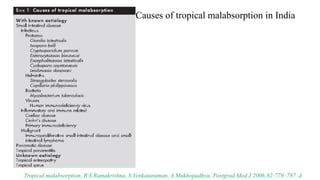
Causes of tropical malabsorption in India
Tropical malabsorption, B S Ramakrishna, S Venkataraman, A Mukhopadhya. Postgrad Med J 2006;82:779–787. d
Indian literature
• Celiac disease (65%)
• Tropical sprue (22%)
• Other (13%) includes cyclosporiasis, Crohn's disease , common variable
immunodeficiency , lymphangiectasia , William's syndrome and idiopathic
malabsorption
• Current spectrum of malabsorption syndrome in adults in India; Yadav P, Das P, Mirdha BR,Gupta
SD,Bhatnagar S, Pandey RM, Makharia GK. Indian J Gastroenterol. 2011 Feb;30(1):22-8. doi:
10.1007/s12664-011-0081-0. Epub 2011 Mar 3.
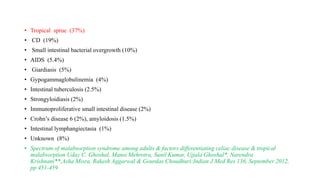
• Tropical sprue (37%)
• CD (19%)
• Small intestinal bacterial overgrowth (10%)
• AIDS (5.4%)
• Giardiasis (5%)
• Gypogammaglobulinemia (4%)
• Intestinal tuberculosis (2.5%)
• Strongyloidiasis (2%)
• Immunoproliferative small intestinal disease (2%)
• Crohn’s disease 6 (2%), amyloidosis (1.5%)
• Intestinal lymphangiectasia (1%)
• Unknown (8%)
• Spectrum of malabsorption syndrome among adults & factors differentiating celiac disease & tropical
malabsorption Uday C. Ghoshal, Mansi Mehrotra, Sunil Kumar, Ujjala Ghoshal*, Narendra
Krishnani**,Asha Misra, Rakesh Aggarwal & Gourdas Choudhuri:Indian J Med Res 136, September 2012,
pp 451-459
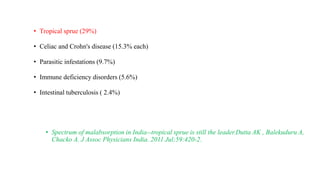
• Tropical sprue (29%)
• Celiac and Crohn's disease (15.3% each)
• Parasitic infestations (9.7%)
• Immune deficiency disorders (5.6%)
• Intestinal tuberculosis ( 2.4%)
• Spectrum of malabsorption in India--tropical sprue is still the leader.Dutta AK , Balekuduru A,
Chacko A. J Assoc Physicians India. 2011 Jul;59:420-2.
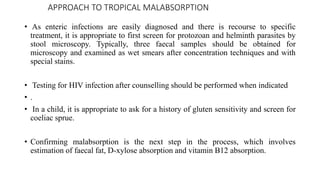
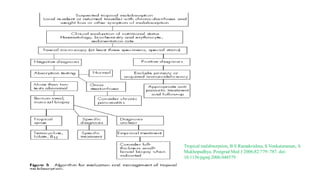
APPROACH TO TROPICAL MALABSORPTION
• As enteric infections are easily diagnosed and there is recourse to specific
treatment, it is appropriate to first screen for protozoan and helminth parasites by
stool microscopy. Typically, three faecal samples should be obtained for
microscopy and examined as wet smears after concentration techniques and with
special stains.
• Testing for HIV infection after counselling should be performed when indicated
• .
• In a child, it is appropriate to ask for a history of gluten sensitivity and screen for
coeliac sprue.
• Confirming malabsorption is the next step in the process, which involves
estimation of faecal fat, D-xylose absorption and vitamin B12 absorption.
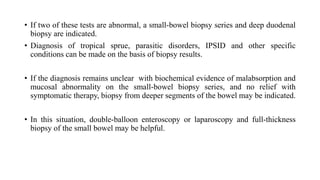
• If two of these tests are abnormal, a small-bowel biopsy series and deep duodenal
biopsy are indicated.
• Diagnosis of tropical sprue, parasitic disorders, IPSID and other specific
conditions can be made on the basis of biopsy results.
• If the diagnosis remains unclear with biochemical evidence of malabsorption and
mucosal abnormality on the small-bowel biopsy series, and no relief with
symptomatic therapy, biopsy from deeper segments of the bowel may be indicated.
• In this situation, double-balloon enteroscopy or laparoscopy and full-thickness
biopsy of the small bowel may be helpful.
Tropical malabsorption, B S Ramakrishna, S Venkataraman, A
Mukhopadhya. Postgrad Med J 2006;82:779–787. doi:
10.1136/pgmj.2006.048579
Tropical sprue
• Acquired disease of unknown aetiology
• Characterised by malabsorption, multiple nutritional deficiencies and mucosal
abnormalities in the small bowel.
• Baker and Klipstein suggested that the diagnosis be made only when there is
malabsorption of two or more unrelated nutrient groups (eg, fat and carbohydrate),
and after other known causes of malabsorption have been excluded
• The need for prolonged residence in the tropics and the response to antibiotics
suggested that persistent intestinal infection was responsible
• Baker SJ, Klipstein FA. Regarding the definition of tropical sprue. Gastroenterology
1970;58:717–21.
Treatment of tropical sprue
• Treat deficiencies ofCa, Mg,K,vitamins A ,B, D.
•
• Parenteral vitamin B12, oral folate and iron replacement result in prompt
resolution of symptoms of anaemia, glossitis and anorexia, and result in weight
gain even before improvement in intestinal absorption.
• Folate supplementation improves villous atrophy.
•
• Antimicrobial agents :Tetracycline 250 mg four times dail (or doxycycline 100 mg
once daily) for 3–6 months.
•
• Complete recovery is the rule in the returned traveller.
• In endemic sprue, relapses are common, occurring in 50% of affected people.
Conclusion
• Etiology of MAS in tropical areas differs from that in temperate countries
• Tropical sprue ,tuberculosis - a common cause of MAS in India
• Celiac disease and inflammatory bowel disorders are emerging as
important causes
• Detailed history ,physical examination mandatory
• The order of testing and choice of a particular test should be individualized
while considering the availability and expertise needed for specialized
testing.
• Emphasis should be put on defining an underlying disease entity which then
provides the basis for appropriate treatment.
References:
• Sleisenger and Fordtran’s Gastrointestinal And Liver Disease,10th edn
• Harrison’s Principles Of Internal Medicine,19th edn
• Gut 2003;52:v1v15 doi:10.1136/gut.52.suppl_5.v1
• WGO Practice Guideline: Malabsorption

Malabsorption syndrome

  • 1.
    APPROACH TO MALABSORPTION SYNDROME •DR. SUBODH KUMAR MAHTO • PGIMER,DR.RML HOSPITAL. • NEW Delhi •
  • 2.
    Introduction • Maldigestion: Defectiveintraluminal hydrolysis of nutrients. Impaired breakdown of nutrients (carbohydrates, protein, fat) to absorbable split-products (mono-, di-, or oligosaccharides; aminoacids; oligopeptides; fatty acids; monoglycerides) • Malabsorption: Defective mucosal uptake and transport of adequately digested nutrients including vitamins and trace elements. S.A. Riley, M.N. Marsh: Maldigestion and Malabsorption; Chapter 88, pages 1501- 1522 In: Sleisenger and Fordtran's, Gastrointestinal and Liver Disease,
  • 3.
    Mechanisms of malabsorption Theintegrated processes of digestion and absorption can be described in three phases:  Luminal Phase  Mucosal phase  Postabsorbtive /Removal phase  Disturbances of the absorptive process can take place in any of these three phases or defect in one or more than one can coexist
  • 4.
    Luminal Phase: Duringthe luminal phase, dietary carbohydrates, proteins and fats are hydrolysed and solubilized, depending largely on pancreatic and biliary secretions. • Digestive enzyme deficiency- Chronic Pancreatitis • Inactivation of digestive enzymes- ZollingerEllison Syndrome • bile salt synthesis- Cirrhosis • Impaired bile secretion- Chronic cholestasis
  • 5.
    • bile saltloss- Ileal disease/resection • Bile salt de-conjugation- Bacterial Overgrowth • gastric acid- Atrophic gastritis –B12 Defeciency • intrinsic factor- Pernicious anemia –B12Def • Bacterial consumption of nutrients- Small intestinal Bacterial overgrowth(SIBO)-B12 Def.
  • 6.
    Mucosal phase: Duringthe mucosal phase, final hydrolysis and uptake of saccharides and peptides takes place and lipids taken up by epithelial cells are processed and packaged for cellular export • Epithelial transport defect – inflammation, infections • Brush border hydrolysis defect- congenital/acquired disacharidase deficiency
  • 7.
    Post-absorptive/removal phase • Duringthe removal phase, the absorbed nutrients enter the vascular or lymphatic circulation. • Enterocyte processing – Abetalipoproteinemia • Lymphatic - Intestinal lymphangectasia • Understanding of the normal absorptive process helps a great deal to understand causes and consequences of malabsorption and thus guide us in designing an appropriate differential diagnostic strategy.
  • 8.
  • 10.
  • 12.
  • 20.
    •Malabsorptive disorders canbe categorized into- 1-Global malabsorption- Generalized mucosal abnormalities or reduced absorptive surface resulting in multiple nutrient malabsorption. • The classic manifestations are diarrhea with pale, greasy, voluminous, foul smelling stools and weight loss despite adequate food intake. • This spectrum of findings is relatively uncommon, even with generalized mucosal disease.
  • 21.
    • The majorityof patients have relatively mild Gastrointestinal symptoms, which often mimic more common disorders such as irritable bowel syndrome. • Anorexia, flatulence, abdominal distension and borborygmi may be the only complaints suggesting malabsorption; other patients may be asymptomatic.
  • 22.
    2- Partial orisolated malabsorption • Results from diseases that interfere with the absorption of specific nutrients. • Eg-- Defective cobalamin absorption can be seen in patients with pernicious anemia or those with disease (or resection) of the terminal ileum such as patients with Crohn's disease or helminthic Infection.
  • 23.
    Malabsorptive disorders withgeneralized mucosal defects • Celiac disease • Parasitic infections • Tropical sprue • Bacterial overgrowth • Short bowel syndrome • Congenital immunodeficiency disorders • HIV • Cow’s milk allergy • Microvillous inclusion disease • Lymphangiectasia
  • 24.
    Specific nutrient malabsorptivedisorder Carbohydrate malabsorption - lactase deficiency (congenital, secondary) - Congenital sucrase-isomaltase deficiency - Glucose- galactose malabsorption Protein malabsorption - Enterokinase deficiency - Amino acid transport defect (eg;Hartnup disease ) Fat malabsorption -Pancreatic exocrine insufficiency (cystic fibrosis, shwachman diamond syndrome, chronic pancreatitis) -liver and biliary disorders - abetalipoproteinemia
  • 25.
    Mineral and vitaminmalabsorption -Congenital chloride diarrhea -Congenital sodium absorption defect -Acrodermatitis enteropathica-Zinc def. -Menke disease -Vitamin D dependent rickets -Vitamin B12 malabsorption
  • 26.
    CLINICAL MANIFESTATIONS • Presentationof malabsorption varies considerably. • May range from severe steatorrhea and massive loss of weight at one side to very discrete changes in hematological or biochemical laboratory tests on the other side. • In severe cases, diarrhea and weight loss are typical leading signs.
  • 27.
    • In lesssevere or oligosymptomatic forms ,it may be difficult to suspect malabsorption as a possible cause of the patient's problems. • It is therefore important to listen carefully to the patient, particularly to complaints of frequent soft stools, abdominal discomfort, unexplained loss of weight, fatigue, decreasing strenght, unexplained skin alterations, pain in the bones.
  • 31.
    DIAGNOSTIC APPROACH TOMALABSORBTION Suspecting presence of malabsorption—History and physical examination Confirming its existence- Hematological, Biochemistry and Absorption testing Evaluating for the cause
  • 32.
    HISTORY • Previous surgeryof the GI-tract or partial or total gastrectomy or small bowel resections or partial or total resection of the pancreas • Fever , weight loss, anorexia, contact with T.B pt. • Recent travel to endemic areas –tropical sprue, giardiasis • Drug abuse/ ethanol abuse • History s/o of chronic pancreatitis or pancreatic tumor • History or evidence of chronic cholestasis ,CLD • History of irradiation treatment. • High risk behaviour -HIV
  • 33.
    • H/O associatedchronic lung disease - cystic fibrosis • H/S/O thyrotoxicosis/Addison’s disease • H/O absorbable carbohydrate (sorbitol, fructose) or unbalanced diet • Family History : • Celiac disease • Crohn's disease • Cystic fibrosis • Disaccharides deficiencies (lactase)
  • 34.
    • Drug Substrate malabsorbed Acarbosecarbohydrates Metformin Cobalamin,folate ,Glucose Carbamazepine Folate Phenytoin Folate,Ca Orlistat Fat ,fat sol. vitamins Neomycin Fat,cobalamin,Fe,disaccharide Methotrexate Folate,fat,B12,xylose Tetracycline Azathioprine Calcium Generalized malab.
  • 35.
    Preliminary tests forestablishing possible nutrient deficiencies • Complete Blood Count • Hb, TLC, DLC,platelet count, MCV, MCH, MCHC with P/S,ESR • Biochemical tests • Liver function Tests, Total Protein with albumin • Na/K, Ca, Mg, P, Zn • Complete iron studies • Lipid profile
  • 36.
    • Other Serumtests • Serum B12 and Folic acid • PT and INR, Serum Immunoglobulins • Stool test- • Stool volume, appearance, mucus/blood • pH, occult blood • stool for ova , cysts & parasites x 3 samples minimum • Fat, Elastase, chymotrypsin
  • 37.
    • HIV,if indicated •AntiTTG and Antiendomysial Ab, if indicated • The order of testing and choice of a particular test should be individualized while considering the availability and expertise needed for specialized test
  • 40.
    ULTRASONOGRAPHY To look for: •Small bowel thickening to rule out inflammatory disease of small intestine like, crohn’s disease, mycobacterial disease ,celiac ds and whipple’s disease. • Pancreases to rule out pancreatic tumour, calcification, dilatation of the pancreatic duct or stone in pancreatic duct • Lymphadenopathy, ascitis • Hepatobiliary System
  • 41.
    • Thickening ofthe small bowel wall(>3mm) and dilatation of bowel loops (>2.5mm)—Celiac Disease. • A hyperechoic appearance of the bowel wall-Whipple’s disease
  • 42.
    Small bowel follow–through (BaMFT) • To identify focal or diffuse abnormalities – • Diverticula • stagnant loops of intestine • intestine fistula and tumours
  • 43.
    Abdominal CT • Torule out • Intestinal lymphoma • Intestinal fistula • Thickening of small bowel wall in crohn’s disease • Enlarged lymph node • Pancreatic diseases
  • 44.
    MRI OF THESMALL INTESTINE • Indicated in • Refractory celiac disease • Complications of Crohn’s disease • Lymphoma or carcinoma
  • 45.
    Tests to confirmmalabsorption • Fat • Carbohydrate • Protein • B12
  • 46.
    Test for fatmalabsorption(Steatorrhoea) • Malabsorption of fat -indicator of global malabsorption for two reasons: • (1) among the macronutrients, the process by which fat is absorbed is the most complex and, therefore, it tends to be the most sensitive to interference from disease processes • (2) it is the most calorically dense macronutrient and, therefore, its malabsorption is a critical factor in the weight loss that often accompanies malabsorptive disorders.
  • 47.
    • Qualitative FecalFat Analysis - • Fat analysis by microscopic examination of random stool samples • Upto 100 globules and diameter less than 4 mm/hpf is normal • Sudan staining of spot stool samples had a sensitivity of 78% and a specificity of 70% for the detection of steatorrhea.
  • 48.
    • Quantitative FecalFat Analysis • .The van de Kamer method is the quantitative titration of fatty acid equivalents in which the results are expressed as fecal output of fat in grams per 24 hours. This method is considered the gold standard for fecal fat analysis • Patients should consume 70 to 120 g/day of dietary fat. • Also allows the estimation of daily stool weight, which is usually greater than 200 g/day in patients with steatorrhea.
  • 49.
    • Stool collectiondone for 3-5 days. • Fecal fat excretion of less than 7 g per day with a fat intake of 100 g per day usually is considered normal • More than 7g/day of fat in stool is pathologic, although patients with steatorrhea usually have more than 20 g/day. • LIMITATIONS Elevated fecal fat level can not differentiate among biliary, pancreatic and enteric cause of malabsorption
  • 50.
    Tests for carbohydratesmalabsorption • The Hydrogen Breath Test • Using different carbohydrates, (lactose or fructose), the hydrogen breath test can be used to detect malabsorption of these carbohydrates. • Lactose malabsorption: • Ingestion 50gm of lactose. • Breath hydrogen measurements obtained before and at 30,60,90,180 and 240 minutes • Diagnosis- ↑ in breath hydrogen concentration ≥20 parts per million over baseline
  • 51.
    • Drawback- • 18%of people are hydrogen nonexcretors, and in these persons, hydrogen breath test results may be falsely negative because hydrogen is metabolized by bacteria to methane.
  • 52.
    • Lactose tolerancetest — • Following oral administration of a 50 g test dose, blood glucose levels are monitored at 0, 60, and 120 minutes. • Diagnosis -↑ in blood glucose by ≤20 mg/dL (1.1mmol/L) plus the development of symptoms is diagnostic. • False negative results can occur in patients with diabetes or bacterial overgrowth.
  • 53.
    D-Xylose Test • Measuresthe absorptive capacity of the proximal small intestine • Determine whether defects in the intestinal epithelium are responsible for malabsorption. • D xylose is a pentose monosaccharide that can be absorbed both by an active sodium transporter and by passive diffusion.. • Approximately 50% of the absorbed d-xylose is metabolized, and the remainder is excreted in urine.
  • 54.
    • After anovernight fast, a 25-g dose of d-xylose is swallowed, and the patient is encouraged to drink sufficient volumes of fluid to maintain good urine output. • Urine is collected for the next five hours. As an alternative, one hour after ingestion of d-xylose, a venous sample may be obtained. • Less than 4 grams (16% excretion) of d-xylose in the urine collection or a serum xylose concentration below 20 mg/dL indicates abnormal intestinal absorption
  • 55.
    • The traditionalurine test appears to be more reliable than the one-hour blood test. • False positive- • Urine collection too short • Renal dysfunction • Significant ascites, delayed gastric emptying,portal hypertension
  • 56.
    Tests for Proteinmalabsorption • Routine testing generally not performed in the clinic setting. • Tests are technically difficult and intestinal protein loss is more commonly a result of either bacterial overgrowth or protein losing gastroenteropathy. • Enteral protein loss directly demonstrable by measurement of the alpha-1 antitrypsin clearance. • In massive enteral protein loss, xact site of protein leakage localized by the infusion of 99mTc-albumin and gamma camera scintigraphy.
  • 57.
  • 58.
    TESTS FOR B12MALABSORPTION • The Schilling test • Identifies the cause of vitamin B12 malabsorption • Rarely performed given the availability of serum B12 and methylmalonic acid to diagnose B12 deficiency and the easy use of oral crystalline or parenteral injection of B12. • Nevertheless, there may be occasional patients in whom it can be informative.
  • 59.
  • 61.
    • Stage 1 •Administer a small oral dose1ug of radiolabeled vitamin B12 and, and within one or two hours, a large intramuscular flushing dose of nonradiolabeled vitamin B12 • The unlabeled B12 saturates vitamin B12 carriers; thus, any radioactive vitamin B12 absorbed by the intestine is excreted in the urine
  • 62.
    • If lessthan 7% to 10% of the administered dose is recovered in urine within 24 hours, vitamin B12 malabsorption is confirmed • Stage 2— • To specify the site of vitamin B12 malabsorption, oral administration of intrinsic factor done. • In patients with pernicious anemia, the results of the Schilling test normalize after oral administration of intrinsic factor
  • 63.
    • Stage 3-In small bowel bacterial overgrowth(SIBO), the results of the Schilling test can improve after antibiotic therapy • Stage 4-Patients with pancreatic exocrine insufficiency might have an abnormal result on the Schilling test, with or without added intrinsic factor, but results normalize with addition of pancreatic enzymes • False positive of schilling test- • Renal dysfunction • Inadequate urine collection
  • 64.
  • 65.
    Tests for pancreaticinsufficiency • Direct tests • Stimulation of the pancreas through the administration of a meal or hormonal secretagogues • Duodenal fluid is collected and analyzed to quantify normal pancreatic secretory content (ie, enzymes, and bicarbonate) • Two hormones have been used : cholecystokinin and secretin. • Cholecystokinin (CCK) tests measure the ability of acinar-cells to secreted digestive enzymes . • Secretin tests measures the ability of ductal cells to produce bicarbonate
  • 66.
    • Indirect Tests •Measure the consequence of exocrine insufficiency (maldigestion). • Simpler and easier to perform than direct tests • Less sensitive than direct tests for diagnosis of earlier stages of Pancreatic Insufficiency. • Tests are: • S.Trypsinogen • Fecal fat • Fecal elastase 1
  • 67.
    Tests to confirmetiology of malabsorption Endoscopic exam of stomach, duodenum/ jejunum or ileum and histologic examination of mucosal biopsy Endoscopic aspiration of intestinal secretions to look for parasites and culture for Small intestinal bacterial overgrowth(SIB O)
  • 68.
    Endoscopy • Provide cluesto some causes of malabsorption. • Mosaic-like scalloping of duodenal folds seen in celiac disease.
  • 69.
    • White-yellowish, punctatelesions seen in primary or secondary lymphangiectasia
  • 70.
    • Also detectedendocrine tumours causing malabsorption like duodenal gastrinomas somatostatinomas ampullary tumours.
  • 71.
    Biopsy • INDICATIONS:- • Documentedor suspected steatorrhea or with chronic diarrhoea • Diffuse or focal abnormalities of the small intestine
  • 76.
    ASPIRATION • Fluid aspirated-Descending part of duodenum/jejunum. • Examined microscopically for Giardia • Cultured to detect SIBO---- Gold standard for diagnosis. Normal counts rarely exceed 10(4)/mL in the jejunum and 10(5)/mL in the ileum. • Limitations: • Culture of anaerobic organisms requires careful microbiologic technique • SIBO may be patchy, in relatively inaccessible sites (eg, blind loop)may be missed.
  • 77.
    Video capsule endoscopy(VCE) •Used to diagnose a wider range of disease such as crohn’s ds, celiac disease and other malabsorptive disease. • In refractory celiac disease, VCE can detect changes such as ulcerations and strictures that suggest T- cell lymphoma.
  • 78.
    Balloon Enteroscopy • Insome case of malabsorption, balloon enteroscopy with biopsies of the jejunum and ileum can be helpful to establish the diagnosis. • Comparison of VCE and BE • Advantage-biopsy from altered mucosa area • Disadvantage- time consuming and uncomfortable for the patients
  • 79.
    TROPICAL MALABSORPTION • Importantclinical problem both in visitors to the tropics and in native residents of tropical countries like India. • Infections of the small intestine are the most important cause of tropical malabsorption. • Helminth infections occasionally cause malabsorption or protein‐losing enteropathy. • Intestinal tuberculosis, chronic pancreatitis and small‐bowel bacterial overgrowth are important causes of tropical malabsorption. • In recent years, inflammatory bowel disease and coeliac disease have become major causes of malabsorption in the tropics. Sporadic tropical sprue is still an important cause of malabsorption in adults and in children in South Asia.
  • 80.
    Causes of tropicalmalabsorption in India Tropical malabsorption, B S Ramakrishna, S Venkataraman, A Mukhopadhya. Postgrad Med J 2006;82:779–787. d
  • 81.
    Indian literature • Celiacdisease (65%) • Tropical sprue (22%) • Other (13%) includes cyclosporiasis, Crohn's disease , common variable immunodeficiency , lymphangiectasia , William's syndrome and idiopathic malabsorption • Current spectrum of malabsorption syndrome in adults in India; Yadav P, Das P, Mirdha BR,Gupta SD,Bhatnagar S, Pandey RM, Makharia GK. Indian J Gastroenterol. 2011 Feb;30(1):22-8. doi: 10.1007/s12664-011-0081-0. Epub 2011 Mar 3.
  • 82.
    • Tropical sprue(37%) • CD (19%) • Small intestinal bacterial overgrowth (10%) • AIDS (5.4%) • Giardiasis (5%) • Gypogammaglobulinemia (4%) • Intestinal tuberculosis (2.5%) • Strongyloidiasis (2%) • Immunoproliferative small intestinal disease (2%) • Crohn’s disease 6 (2%), amyloidosis (1.5%) • Intestinal lymphangiectasia (1%) • Unknown (8%) • Spectrum of malabsorption syndrome among adults & factors differentiating celiac disease & tropical malabsorption Uday C. Ghoshal, Mansi Mehrotra, Sunil Kumar, Ujjala Ghoshal*, Narendra Krishnani**,Asha Misra, Rakesh Aggarwal & Gourdas Choudhuri:Indian J Med Res 136, September 2012, pp 451-459
  • 83.
    • Tropical sprue(29%) • Celiac and Crohn's disease (15.3% each) • Parasitic infestations (9.7%) • Immune deficiency disorders (5.6%) • Intestinal tuberculosis ( 2.4%) • Spectrum of malabsorption in India--tropical sprue is still the leader.Dutta AK , Balekuduru A, Chacko A. J Assoc Physicians India. 2011 Jul;59:420-2.
  • 84.
    APPROACH TO TROPICALMALABSORPTION • As enteric infections are easily diagnosed and there is recourse to specific treatment, it is appropriate to first screen for protozoan and helminth parasites by stool microscopy. Typically, three faecal samples should be obtained for microscopy and examined as wet smears after concentration techniques and with special stains. • Testing for HIV infection after counselling should be performed when indicated • . • In a child, it is appropriate to ask for a history of gluten sensitivity and screen for coeliac sprue. • Confirming malabsorption is the next step in the process, which involves estimation of faecal fat, D-xylose absorption and vitamin B12 absorption.
  • 85.
    • If twoof these tests are abnormal, a small-bowel biopsy series and deep duodenal biopsy are indicated. • Diagnosis of tropical sprue, parasitic disorders, IPSID and other specific conditions can be made on the basis of biopsy results. • If the diagnosis remains unclear with biochemical evidence of malabsorption and mucosal abnormality on the small-bowel biopsy series, and no relief with symptomatic therapy, biopsy from deeper segments of the bowel may be indicated. • In this situation, double-balloon enteroscopy or laparoscopy and full-thickness biopsy of the small bowel may be helpful.
  • 86.
    Tropical malabsorption, BS Ramakrishna, S Venkataraman, A Mukhopadhya. Postgrad Med J 2006;82:779–787. doi: 10.1136/pgmj.2006.048579
  • 87.
    Tropical sprue • Acquireddisease of unknown aetiology • Characterised by malabsorption, multiple nutritional deficiencies and mucosal abnormalities in the small bowel. • Baker and Klipstein suggested that the diagnosis be made only when there is malabsorption of two or more unrelated nutrient groups (eg, fat and carbohydrate), and after other known causes of malabsorption have been excluded • The need for prolonged residence in the tropics and the response to antibiotics suggested that persistent intestinal infection was responsible • Baker SJ, Klipstein FA. Regarding the definition of tropical sprue. Gastroenterology 1970;58:717–21.
  • 88.
    Treatment of tropicalsprue • Treat deficiencies ofCa, Mg,K,vitamins A ,B, D. • • Parenteral vitamin B12, oral folate and iron replacement result in prompt resolution of symptoms of anaemia, glossitis and anorexia, and result in weight gain even before improvement in intestinal absorption. • Folate supplementation improves villous atrophy. • • Antimicrobial agents :Tetracycline 250 mg four times dail (or doxycycline 100 mg once daily) for 3–6 months. • • Complete recovery is the rule in the returned traveller. • In endemic sprue, relapses are common, occurring in 50% of affected people.
  • 89.
    Conclusion • Etiology ofMAS in tropical areas differs from that in temperate countries • Tropical sprue ,tuberculosis - a common cause of MAS in India • Celiac disease and inflammatory bowel disorders are emerging as important causes • Detailed history ,physical examination mandatory • The order of testing and choice of a particular test should be individualized while considering the availability and expertise needed for specialized testing. • Emphasis should be put on defining an underlying disease entity which then provides the basis for appropriate treatment.
  • 90.
    References: • Sleisenger andFordtran’s Gastrointestinal And Liver Disease,10th edn • Harrison’s Principles Of Internal Medicine,19th edn • Gut 2003;52:v1v15 doi:10.1136/gut.52.suppl_5.v1 • WGO Practice Guideline: Malabsorption