LOISA J. INDEFENZO
BEEd III- Student
MRS. NORMA CALLEJA
Instructress
 Semantic webbing is a method that students
can use to organize information from a
reading passage or other source as part of the
prewriting process. Another term for a
semantic web is a graphic organizer; the
purpose is to give students a visual sense of
the organization of their ideas to help them
outline those ideas in their writing.
 A graphic organizer is a visual and graphic display that
depicts the relationships between facts, terms, and or
ideas within a learning task.
 Graphic organizers are also sometimes referred to as
knowledge maps, concept maps, story maps, cognitive
organizers, advance organizers, or concept diagrams.
graphic organizer, also known as knowledge map,
concept map, story map, cognitive organizer, advance
organizer, or concept diagram, is a communication tool
that uses visual symbols to express knowledge, concepts,
thoughts, or ideas, and the relationships between them.
 The main purpose of a graphic organizer is to provide a
visual aid to facilitate learning and instruction.
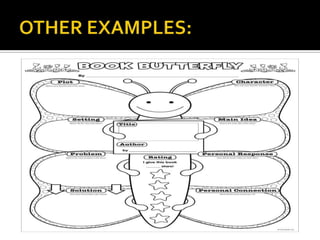
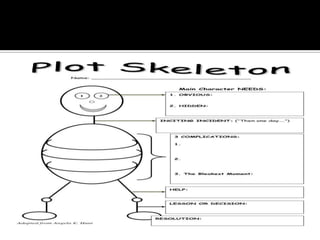
 Graphic organizers come in many different
forms, each one best suited to organizing a
particular type of information. The following
examples are merely a sampling of the
different types and uses of graphic
organizers.
1. A Descriptive
or Thematic Map
works well for
mapping generic
information, but
particularly well
for mapping
hierarchical
relationships.
2. Organizing a
hierarchical set
of information,
reflecting super
ordinate or
subordinate
elements, is
made easier by
constructing a
NetworkTree.
3. When the
information
relating to a
main idea or
theme does not
fit into a
hierarchy, a
Spider Map
can help with
organization.
4.When
information
contains cause
and effect
problems and
solutions, a
Problem and
Solution Map
can be useful
for organizing.
5. A Problem-
Solution
Outline helps
students to
compare
different
solutions to a
problem.
6. A Sequential
Episodic Map is
useful for
mapping cause
and effect.
7.When cause-
effect
relationships
are complex
and non-
redundant a
Fishbone Map
may be
particularly
useful.
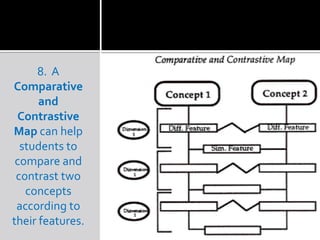
8. A
Comparative
and
Contrastive
Map can help
students to
compare and
contrast two
concepts
according to
their features.
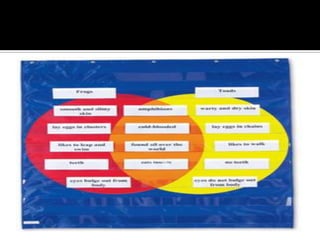
 9. Another
way to
compare
concepts'
attributes is
to construct
a Compare-
Contrast
Matrix
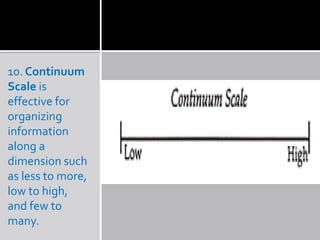
10. Continuum
Scale is
effective for
organizing
information
along a
dimension such
as less to more,
low to high,
and few to
many.
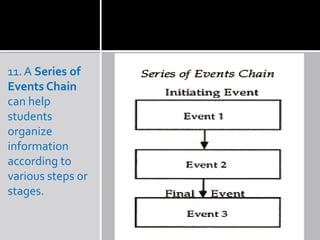
11. A Series of
Events Chain
can help
students
organize
information
according to
various steps or
stages.
12.A Cycle Map
is useful for
organizing
information
that is circular
or cyclical, with
no absolute
beginning or
ending.
13.A Human
Interaction
Outline is
effective for
organizing events
in terms of a chain
of action and
reaction (useful in
social sciences
and humanities)
Makabayan
Makabayan
Makabayan
Makabayan
Makabayan

Makabayan

  • 1.
    LOISA J. INDEFENZO BEEdIII- Student MRS. NORMA CALLEJA Instructress
  • 2.
     Semantic webbingis a method that students can use to organize information from a reading passage or other source as part of the prewriting process. Another term for a semantic web is a graphic organizer; the purpose is to give students a visual sense of the organization of their ideas to help them outline those ideas in their writing.
  • 3.
     A graphicorganizer is a visual and graphic display that depicts the relationships between facts, terms, and or ideas within a learning task.  Graphic organizers are also sometimes referred to as knowledge maps, concept maps, story maps, cognitive organizers, advance organizers, or concept diagrams. graphic organizer, also known as knowledge map, concept map, story map, cognitive organizer, advance organizer, or concept diagram, is a communication tool that uses visual symbols to express knowledge, concepts, thoughts, or ideas, and the relationships between them.  The main purpose of a graphic organizer is to provide a visual aid to facilitate learning and instruction.
  • 4.
     Graphic organizerscome in many different forms, each one best suited to organizing a particular type of information. The following examples are merely a sampling of the different types and uses of graphic organizers.
  • 5.
    1. A Descriptive orThematic Map works well for mapping generic information, but particularly well for mapping hierarchical relationships.
  • 6.
    2. Organizing a hierarchicalset of information, reflecting super ordinate or subordinate elements, is made easier by constructing a NetworkTree.
  • 7.
    3. When the information relatingto a main idea or theme does not fit into a hierarchy, a Spider Map can help with organization.
  • 8.
    4.When information contains cause and effect problemsand solutions, a Problem and Solution Map can be useful for organizing.
  • 9.
    5. A Problem- Solution Outlinehelps students to compare different solutions to a problem.
  • 10.
    6. A Sequential EpisodicMap is useful for mapping cause and effect.
  • 11.
    7.When cause- effect relationships are complex andnon- redundant a Fishbone Map may be particularly useful.
  • 12.
    8. A Comparative and Contrastive Map canhelp students to compare and contrast two concepts according to their features.
  • 13.
     9. Another wayto compare concepts' attributes is to construct a Compare- Contrast Matrix
  • 14.
    10. Continuum Scale is effectivefor organizing information along a dimension such as less to more, low to high, and few to many.
  • 15.
    11. A Seriesof Events Chain can help students organize information according to various steps or stages.
  • 16.
    12.A Cycle Map isuseful for organizing information that is circular or cyclical, with no absolute beginning or ending.
  • 17.
    13.A Human Interaction Outline is effectivefor organizing events in terms of a chain of action and reaction (useful in social sciences and humanities)