
Represented by: Rabia shehzadi
Presented to :Dr. Mubashir Hussain
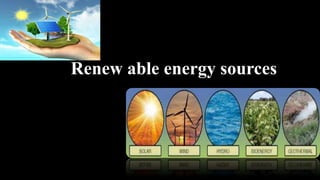
Renew able energy sources
•Renewable energy
• Energy from a source that is not depleted when used, such as wind or
solar power.
What is renewable energy sources?
Renewable Energy Sources:
• A renewable resource is a resource which can be used repeatedly and
replaced naturally.
• Examples include oxygen, fresh water, solar energy and biomass
• wood, paper and leather.
• Gasoline, coal, natural gas, diesel, plastics and other fossil fuels are
not renewable.
Renewable Energy Sources
• Radiant solar energy
• Solar heating (passive and active), solar power plants, photovoltaic cells
• Biomass energy
• Wind energy
• Hydro energy
• Geothermal energy
Hydro energy
• Process
• Hydropower plants capture the energy of falling water to generate
electricity.
• A turbine converts the kinetic energy of falling water into mechanical
energy.
• Then a generator converts the mechanical energy from the turbine into
electrical energy.
Hydro Energy
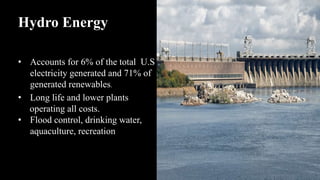
• Accounts for 6% of the total U.S
electricity generated and 71% of
generated renewables.
• Long life and lower plants
operating all costs.
• Flood control, drinking water,
aquaculture, recreation
Disadvantages:
• Human population displacement and more significant breeding ground
for disease
• Reduces availability of water downstream
• Barriers to migrating fish and loss of biodiversity both upstream and
downstream
Wind energy
• Wind turbines operate on a simple principle.
• The energy in the wind turns two or three propeller-like blades around
a rotor. The rotor is connected to the main shaft, which spins a
generator to create electricity.
Wind energy
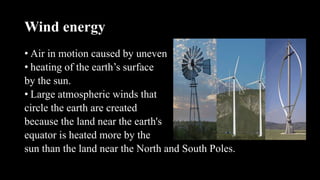
• Air in motion caused by uneven
• heating of the earth’s surface
by the sun.
• Large atmospheric winds that
circle the earth are created
because the land near the earth's
equator is heated more by the
sun than the land near the North and South Poles.
Wind machines
• Two types of wind machines (turbines) used today based on
the direction of the rotating shaft (axis)
• Horizontal-axis (most common)
• Vertical-axis
• Clusters of wind machines are called Wind Farms
Advantage
• Wind turbines directly generate
electricity
Quite efficient (not a heat
engine)
Wind energy
• Wind Energy Potential
• shading gives potential for in-state
electrical needs
• numbers give total potential for total
US needs
•Advantages
• High net energy yield
• Renewable and free
• Very clean source of energy
• No pollution (air or water) during operation Low operating/maintenance
costs can be quickly built; not too expensive
Disadvantages
• Energy storage issues
• An intermittent source of energy; need backup (eg stored energy) for
low-wind days or must be connected to the electrical grid
• Only practical in areas that are windy enough
• Visual pollution and danger to birds
Geothermal energy-process
• Water or working fluid is heated (or used directly incase of geothermal
dry steam power plants).
• sent through a steam turbine where the thermal energy (heat) is
converted to electricity with a generator through a phenomenon called
electromagnetic induction.
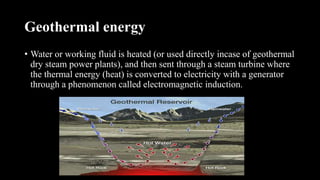
Geothermal energy
• Water or working fluid is heated (or used directly incase of geothermal
dry steam power plants), and then sent through a steam turbine where
the thermal energy (heat) is converted to electricity with a generator
through a phenomenon called electromagnetic induction.
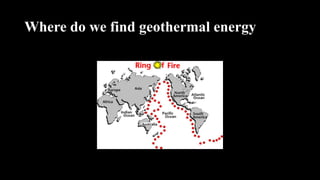
Where do we find geothermal energy
Uses
1. Direct Use and District Heating Systems
2. Electricity Generation
3. Geothermal Heat Pumps
Geothermal plants and heat pump
• Types of Geothermal Plants
• Dry Steam Plants
• Flash Steam Plants
• Binary Power Plants
• Geothermal heat pumps are the most energy-efficient,
environmentally clean, and cost-effective systems for
temperature control.
Advantages
• Renewable
• Easy to exploit in some cases
• CO2 production less than with fossil fuels
• High net energy yield
Disadvantages
• Not available everywhere
• H2S pollution
• Produces some water pollution (somewhat similar to mining)
Biomass energy -process
• In a direct combustion system, biomass is burned in a combustor or
furnace to generate hot gas, which is fed into a boiler to generate
steam, which is expanded through a steam turbine or steam engine to
produce mechanical or electrical energy.
Biomass energy
• Biomass is organic material made from plants and animals.
• Biomass can be converted to other usable forms of energy
like methane gas or transportation fuels like ethanol and
biodiesel.
• Biomass energy is the use of living and recently dead
biological material as an energy source
• Ultimately dependent on the capture of solar energy and
conversion to a chemical (carbohydrate) fuel
• Theoretically it is a carbon neutral and renewable source of
energy
Forms of biomass
• Wood and wood waste are the most common forms.
• Municipal solid waste, landfill gas and biogas are other
forms.
How it works?
• Traditional: forest management, using wood as fuel
• Use of biodegradable waste
• Examples: manure, crop residue, sewage, municipal solid
waste
• Recent interest in agricultural production of energy crops
• Should be high yield and low maintenance
• Examples: corn, sugarcane, hemp, willow, palm oil,
rapeseed, and many others
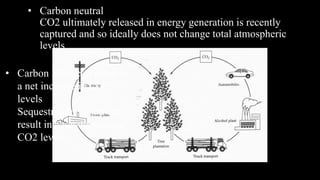
• Carbon neutral
CO2 ultimately released in energy generation is recently
captured and so ideally does not change total atmospheric
levels
• Carbon leaks can result in
a net increase in CO2
levels
Sequestration in soil can
result in a net decrease in
CO2 levels
Advantages
• Versatile
• Renewable
• No net CO2 emissions (ideally)
• Emits less SO2 and NOx than fossil fuels
Disadvantages
• Low energy density/yield
• In some cases (e.g., corn-derived bioethanol) may yield no
net energy
• Land conversion
• Biodiversity loss
• Possible decrease in agricultural food productivity
Biofuels
• Biofuels don’t burn as much as fossil fuels.
• Biofuels are cleaner burning and produce fewer air pollutants
than fossil fuels.
• Types of biofuels:
• Ethanol
• Biodiesel
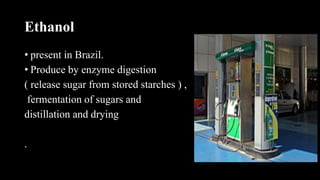
Ethanol
• present in Brazil.
• Produce by enzyme digestion
( release sugar from stored starches ) ,
fermentation of sugars and
distillation and drying
.
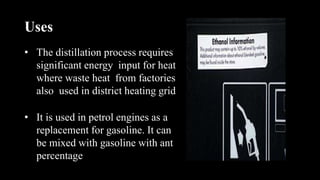
Uses
• The distillation process requires
significant energy input for heat
where waste heat from factories
also used in district heating grid
• It is used in petrol engines as a
replacement for gasoline. It can
be mixed with gasoline with ant
percentage
Biodiesel
• Biodiesel can be used in any diesel engine when mixed with
mineral diesel.
• BUTANOL will produce more energy and allegedly can be
burned "straight" in existing gasoline engines
Radiant solar energy
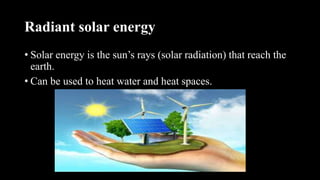
• Solar energy is the sun’s rays (solar radiation) that reach the
earth.
• Can be used to heat water and heat spaces.
Conversion to solar energy
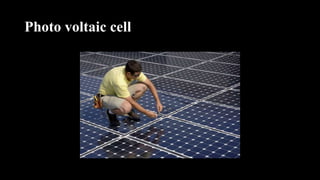
• Photovoltaic (PV devices) or “solar cells” – change sunlight
directly into electricity.
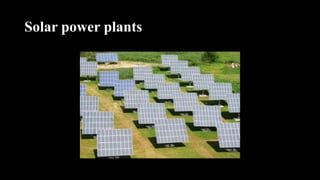
• Solar Power Plants - indirectly generates electricity when
the heat from solar thermal collectors is used to heat a fluid
which produces steam that is used to power a generator.
Photo voltaic cell
Advantages
• Renewable and free
• High energy yield
• A very clean source of energy
• No air/water pollution during operation
• Low operating costs
• Will pay for themselves over time
Solar power plants
Disadvantages
• Intermittent source
• Energy storage issues
• Low energy density
• Requires pretty much land
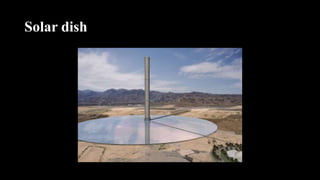
Solar dish
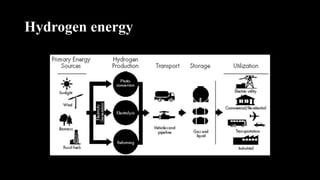
Hydrogen energy
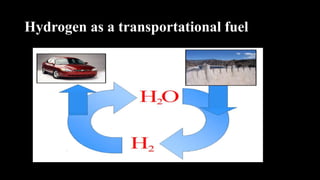
Hydrogen as a transportational fuel
Hydrogen production
• Fossil Fuels
• Steam Reforming of Natural Gas
• Combination of methane and steam produces hydrogen gas
• Carbon monoxide is also produced
• The “water gas shift” reaction can produce further hydrogen
from the carbon monoxide. Carbon dioxide is produced too.
• Most economical; main current method
• Carbon sequestration one method to reduce CO2 emission
• Partial Oxidation (POX) of Hydrocarbons
• HC partially oxidized to produce hydrogen and carbon
monoxide
• Coal Gasification
• Gasified at high temps, then processed
• Can also be used to get hydrogen from biomass
Renewable energy resources

Renewable energy resources

  • 1.
    Represented by: Rabiashehzadi Presented to :Dr. Mubashir Hussain
  • 2.
  • 3.
    •Renewable energy • Energyfrom a source that is not depleted when used, such as wind or solar power.
  • 4.
    What is renewableenergy sources? Renewable Energy Sources: • A renewable resource is a resource which can be used repeatedly and replaced naturally. • Examples include oxygen, fresh water, solar energy and biomass • wood, paper and leather. • Gasoline, coal, natural gas, diesel, plastics and other fossil fuels are not renewable.
  • 5.
    Renewable Energy Sources •Radiant solar energy • Solar heating (passive and active), solar power plants, photovoltaic cells • Biomass energy • Wind energy • Hydro energy • Geothermal energy
  • 6.
    Hydro energy • Process •Hydropower plants capture the energy of falling water to generate electricity. • A turbine converts the kinetic energy of falling water into mechanical energy. • Then a generator converts the mechanical energy from the turbine into electrical energy.
  • 7.
    Hydro Energy • Accountsfor 6% of the total U.S electricity generated and 71% of generated renewables. • Long life and lower plants operating all costs. • Flood control, drinking water, aquaculture, recreation
  • 8.
    Disadvantages: • Human populationdisplacement and more significant breeding ground for disease • Reduces availability of water downstream • Barriers to migrating fish and loss of biodiversity both upstream and downstream
  • 9.
    Wind energy • Windturbines operate on a simple principle. • The energy in the wind turns two or three propeller-like blades around a rotor. The rotor is connected to the main shaft, which spins a generator to create electricity.
  • 10.
    Wind energy • Airin motion caused by uneven • heating of the earth’s surface by the sun. • Large atmospheric winds that circle the earth are created because the land near the earth's equator is heated more by the sun than the land near the North and South Poles.
  • 11.
    Wind machines • Twotypes of wind machines (turbines) used today based on the direction of the rotating shaft (axis) • Horizontal-axis (most common) • Vertical-axis • Clusters of wind machines are called Wind Farms
  • 12.
    Advantage • Wind turbinesdirectly generate electricity Quite efficient (not a heat engine) Wind energy • Wind Energy Potential • shading gives potential for in-state electrical needs • numbers give total potential for total US needs
  • 13.
    •Advantages • High netenergy yield • Renewable and free • Very clean source of energy • No pollution (air or water) during operation Low operating/maintenance costs can be quickly built; not too expensive
  • 14.
    Disadvantages • Energy storageissues • An intermittent source of energy; need backup (eg stored energy) for low-wind days or must be connected to the electrical grid • Only practical in areas that are windy enough • Visual pollution and danger to birds
  • 15.
    Geothermal energy-process • Wateror working fluid is heated (or used directly incase of geothermal dry steam power plants). • sent through a steam turbine where the thermal energy (heat) is converted to electricity with a generator through a phenomenon called electromagnetic induction.
  • 16.
    Geothermal energy • Wateror working fluid is heated (or used directly incase of geothermal dry steam power plants), and then sent through a steam turbine where the thermal energy (heat) is converted to electricity with a generator through a phenomenon called electromagnetic induction.
  • 17.
    Where do wefind geothermal energy
  • 18.
    Uses 1. Direct Useand District Heating Systems 2. Electricity Generation 3. Geothermal Heat Pumps
  • 19.
    Geothermal plants andheat pump • Types of Geothermal Plants • Dry Steam Plants • Flash Steam Plants • Binary Power Plants • Geothermal heat pumps are the most energy-efficient, environmentally clean, and cost-effective systems for temperature control.
  • 20.
    Advantages • Renewable • Easyto exploit in some cases • CO2 production less than with fossil fuels • High net energy yield
  • 21.
    Disadvantages • Not availableeverywhere • H2S pollution • Produces some water pollution (somewhat similar to mining)
  • 22.
    Biomass energy -process •In a direct combustion system, biomass is burned in a combustor or furnace to generate hot gas, which is fed into a boiler to generate steam, which is expanded through a steam turbine or steam engine to produce mechanical or electrical energy.
  • 23.
    Biomass energy • Biomassis organic material made from plants and animals. • Biomass can be converted to other usable forms of energy like methane gas or transportation fuels like ethanol and biodiesel.
  • 24.
    • Biomass energyis the use of living and recently dead biological material as an energy source • Ultimately dependent on the capture of solar energy and conversion to a chemical (carbohydrate) fuel • Theoretically it is a carbon neutral and renewable source of energy
  • 25.
    Forms of biomass •Wood and wood waste are the most common forms. • Municipal solid waste, landfill gas and biogas are other forms.
  • 26.
    How it works? •Traditional: forest management, using wood as fuel • Use of biodegradable waste • Examples: manure, crop residue, sewage, municipal solid waste • Recent interest in agricultural production of energy crops • Should be high yield and low maintenance • Examples: corn, sugarcane, hemp, willow, palm oil, rapeseed, and many others
  • 27.
    • Carbon neutral CO2ultimately released in energy generation is recently captured and so ideally does not change total atmospheric levels • Carbon leaks can result in a net increase in CO2 levels Sequestration in soil can result in a net decrease in CO2 levels
  • 28.
    Advantages • Versatile • Renewable •No net CO2 emissions (ideally) • Emits less SO2 and NOx than fossil fuels
  • 29.
    Disadvantages • Low energydensity/yield • In some cases (e.g., corn-derived bioethanol) may yield no net energy • Land conversion • Biodiversity loss • Possible decrease in agricultural food productivity
  • 30.
    Biofuels • Biofuels don’tburn as much as fossil fuels. • Biofuels are cleaner burning and produce fewer air pollutants than fossil fuels. • Types of biofuels: • Ethanol • Biodiesel
  • 31.
    Ethanol • present inBrazil. • Produce by enzyme digestion ( release sugar from stored starches ) , fermentation of sugars and distillation and drying .
  • 32.
    Uses • The distillationprocess requires significant energy input for heat where waste heat from factories also used in district heating grid • It is used in petrol engines as a replacement for gasoline. It can be mixed with gasoline with ant percentage
  • 33.
    Biodiesel • Biodiesel canbe used in any diesel engine when mixed with mineral diesel. • BUTANOL will produce more energy and allegedly can be burned "straight" in existing gasoline engines
  • 34.
    Radiant solar energy •Solar energy is the sun’s rays (solar radiation) that reach the earth. • Can be used to heat water and heat spaces.
  • 35.
    Conversion to solarenergy • Photovoltaic (PV devices) or “solar cells” – change sunlight directly into electricity. • Solar Power Plants - indirectly generates electricity when the heat from solar thermal collectors is used to heat a fluid which produces steam that is used to power a generator.
  • 36.
  • 37.
    Advantages • Renewable andfree • High energy yield • A very clean source of energy • No air/water pollution during operation • Low operating costs • Will pay for themselves over time
  • 38.
  • 39.
    Disadvantages • Intermittent source •Energy storage issues • Low energy density • Requires pretty much land
  • 40.
  • 41.
  • 42.
    Hydrogen as atransportational fuel
  • 43.
    Hydrogen production • FossilFuels • Steam Reforming of Natural Gas • Combination of methane and steam produces hydrogen gas • Carbon monoxide is also produced • The “water gas shift” reaction can produce further hydrogen from the carbon monoxide. Carbon dioxide is produced too.
  • 45.
    • Most economical;main current method • Carbon sequestration one method to reduce CO2 emission • Partial Oxidation (POX) of Hydrocarbons • HC partially oxidized to produce hydrogen and carbon monoxide • Coal Gasification • Gasified at high temps, then processed • Can also be used to get hydrogen from biomass