Is there a successful ID model?
A practitioner's perspective on working with models in
designing eLearning environments


National Seminar on eLearning and eLearning Technologies
(ELELTECH INDIA-2005), Hyderabad.


                                                  Madhuri Dubey, Ph.D
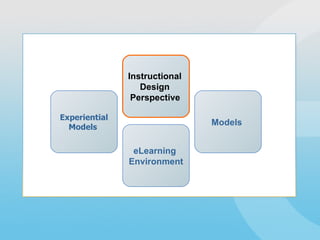
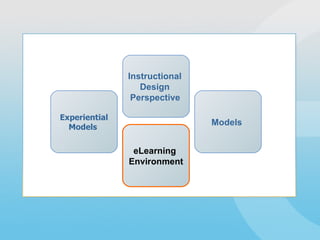
Instructional
                  Design
                Perspective

Experiential
                               Models
  Models


                eLearning
               Environment
Instructional
                  Design
                Perspective

Experiential
                               Models
  Models


                eLearning
               Environment
The Instructional Design perspective


   An instructional designer designs learnscapes
    by formulating and implementing appropriate
    learning strategies.

   This involves making design decisions under
    different circumstances to facilitate successful
    learning.
Some examples


                Repurposing


                Learning Objects


                Blended Learning
What guides our decisions


   Formal training
   Theories
   Experience
   Models
   Case studies
   Informal knowledge
    sharing
Instructional
                  Design
                Perspective

Experiential
                               Models
  Models


                eLearning
               Environment
ID Models


 ADDIE
 Dick and Carey

 Gagne and Briggs Model

These models are built on theories like:
       Behaviorist theories
       Cognitive theories
       Constructivist theories
Why Models


   Simplify a process
   Gain from generic and universal knowledge
   Based on certain principles
   Exemplary, theoretical constructs
   Models can be customized
   …
ADDIE Model


                                    Content, context and learner,
                                    prepare the course structure,
                                    develop instructional strategy


Course evaluation by the
learners, strategies for               Design (instructional and
feedback                               visual) is validated by the SME


                                             Storyboarding, graphics,
    Deployment of the                        authoring,
    course, user testing, beta
    release and review
                                 Review of authored
                                 lessons, learning objects
Practicing a discipline is different from
emulating a model.

                                          Peter M Senge
                                        The Fifth Discipline
Instructional
                  Design
                Perspective

Experiential
                               Models
  Models


                eLearning
               Environment
Elearning environment


     Content              Context


               Learners
                                    Learning
                                    experiences
The Context


   Where is the learning taking place?
       Home, office, informal situation

   When is the learner accessing the content?
       Time, occasion

   How is the learner learning the content?
       Self-learning, community, with colleagues

   Infrastructure
       Internet, CD, LMS, kiosk, other delivery media
The Content


   What is the content?
   How is it taught, learnt?
   What are the course goals?
The Learners


   What is the detailed learner profile?
   What is the purpose of learning?
   What are the preferred learning styles?
Applying theory to practice


                               Cognitivis
                 Behaviorism
                               m
                                             Constructivism


Adult learning
theory
(Andragogy)                                 Design Principles
                                                •Information design
                                                •Interaction design
Questions for Instructional
Designers


   What is the type of content?
   Why are we designing the course?
   Who are the learners?
   When would they learn?
   Where would they learn?
   How would they access the course?
Instructional
                  Design
                Perspective

Experiential
                               Models
  Models


                eLearning
               Environment
Experiential models


   Practical and eclectic knowledge
   Getting the big picture
   Making sense of information
   Qualitative evaluation
   Emphasis on team synergies
Practical and eclectic knowledge


   Action and reflection
      Asking questions - What, When, Why,

       Where, Who, How
   Documenting learning experiences from each
    project
   Any other systematic efforts at capturing
    processes
Getting the BIG picture


   Evolve holistic approaches to
    Instructional Design
   Understand the interdependencies
   Look for patterns and relationships
Making sense of information


   Inundated with information on elearning
    design and technology
   Meaningful application of knowledge
   Strategic value from information
Sample grid for information capture

        Important points


        new ideas


        what I know


        where can I apply it


        example of an
        application
Qualitative evaluation


   Blend quantitative and qualitative techniques
    of learner / course evaluation
   Build an on-going feedback mechanism
   Seek opportunities for informal interactions
    and inputs
Emphasis on team synergies


Working towards synergies with other team members

      Instructional Design
      Visual Design
      Technology
      Subject Expertise
Thank You

 Questions?

Madhuri presentation

  • 1.
    Is there asuccessful ID model? A practitioner's perspective on working with models in designing eLearning environments National Seminar on eLearning and eLearning Technologies (ELELTECH INDIA-2005), Hyderabad. Madhuri Dubey, Ph.D
  • 2.
    Instructional Design Perspective Experiential Models Models eLearning Environment
  • 3.
    Instructional Design Perspective Experiential Models Models eLearning Environment
  • 4.
    The Instructional Designperspective  An instructional designer designs learnscapes by formulating and implementing appropriate learning strategies.  This involves making design decisions under different circumstances to facilitate successful learning.
  • 5.
    Some examples Repurposing Learning Objects Blended Learning
  • 6.
    What guides ourdecisions  Formal training  Theories  Experience  Models  Case studies  Informal knowledge sharing
  • 7.
    Instructional Design Perspective Experiential Models Models eLearning Environment
  • 8.
    ID Models  ADDIE Dick and Carey  Gagne and Briggs Model These models are built on theories like:  Behaviorist theories  Cognitive theories  Constructivist theories
  • 9.
    Why Models  Simplify a process  Gain from generic and universal knowledge  Based on certain principles  Exemplary, theoretical constructs  Models can be customized  …
  • 10.
    ADDIE Model Content, context and learner, prepare the course structure, develop instructional strategy Course evaluation by the learners, strategies for Design (instructional and feedback visual) is validated by the SME Storyboarding, graphics, Deployment of the authoring, course, user testing, beta release and review Review of authored lessons, learning objects
  • 11.
    Practicing a disciplineis different from emulating a model. Peter M Senge The Fifth Discipline
  • 12.
    Instructional Design Perspective Experiential Models Models eLearning Environment
  • 13.
    Elearning environment Content Context Learners Learning experiences
  • 14.
    The Context  Where is the learning taking place?  Home, office, informal situation  When is the learner accessing the content?  Time, occasion  How is the learner learning the content?  Self-learning, community, with colleagues  Infrastructure  Internet, CD, LMS, kiosk, other delivery media
  • 15.
    The Content  What is the content?  How is it taught, learnt?  What are the course goals?
  • 16.
    The Learners  What is the detailed learner profile?  What is the purpose of learning?  What are the preferred learning styles?
  • 17.
    Applying theory topractice Cognitivis Behaviorism m Constructivism Adult learning theory (Andragogy) Design Principles •Information design •Interaction design
  • 18.
    Questions for Instructional Designers  What is the type of content?  Why are we designing the course?  Who are the learners?  When would they learn?  Where would they learn?  How would they access the course?
  • 19.
    Instructional Design Perspective Experiential Models Models eLearning Environment
  • 20.
    Experiential models  Practical and eclectic knowledge  Getting the big picture  Making sense of information  Qualitative evaluation  Emphasis on team synergies
  • 21.
    Practical and eclecticknowledge  Action and reflection  Asking questions - What, When, Why, Where, Who, How  Documenting learning experiences from each project  Any other systematic efforts at capturing processes
  • 22.
    Getting the BIGpicture  Evolve holistic approaches to Instructional Design  Understand the interdependencies  Look for patterns and relationships
  • 23.
    Making sense ofinformation  Inundated with information on elearning design and technology  Meaningful application of knowledge  Strategic value from information
  • 24.
    Sample grid forinformation capture Important points new ideas what I know where can I apply it example of an application
  • 25.
    Qualitative evaluation  Blend quantitative and qualitative techniques of learner / course evaluation  Build an on-going feedback mechanism  Seek opportunities for informal interactions and inputs
  • 26.
    Emphasis on teamsynergies Working towards synergies with other team members  Instructional Design  Visual Design  Technology  Subject Expertise
  • 27.