

Developing a sound instructional
strategy for digital learning

Presentation delivered at “Digital
Convergence for Quality Education” hosted by
CSI, Hyderabad Dec 19-20, 2003.


                           Madhuri Dubey
“Learning involves a fundamental shift of
mind… It does not mean acquiring more
information, but expanding the ability to
produce the results we want in life.”

Peter Senge The Fifth Discipline
Learning in the age digital
convergence involves
   Computers
   Internet

   Video

   Audio

   Animation

   Text
Convergence = blend
 Learning in the age of convergent
  digital technologies
 Significance of blending strategies for
  effective learning
 New challenges for designing learning
  environments
Characteristics of digital media
 Interactive
 Hyperlinked
 Synchronous
 Asynchronous
 Collaborative
Instructional Design

 systematic process of designing,
  developing and implementing and
  evaluating instruction.
 begins with the perception of a learning
  need, it proceeds with the creation of a
  learning experience and a learning
  environment
 ends with an evaluation of the learning
  solution.
Design = strategy

Design is that area of human experience, skill
  and knowledge which is concerned with
  man’s ability to mould his environment to suit
  his material and spiritual needs.
     Archer, B (1973) “The Need for Design Education.” Royal College of Art


A strategy can be defined as a plan or
approach for successful achievement of a goal.
Strategizing involves
   Understanding
       The learning context
            How people learn, why and when they are
             learning, how will they use learning
       The learning content
            What is being learnt
       The learners
            Who are the learners, how do they prefer to
             learn
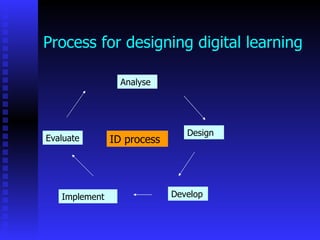
Process for designing digital learning

                 Analyse


                               Design
Evaluate       ID process


   Implement                Develop
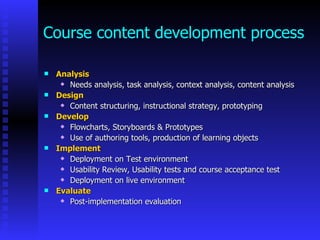
Course content development process

   Analysis
      Needs analysis, task analysis, context analysis, content analysis

   Design
      Content structuring, instructional strategy, prototyping

   Develop
      Flowcharts, Storyboards & Prototypes

      Use of authoring tools, production of learning objects

   Implement
      Deployment on Test environment

      Usability Review, Usability tests and course acceptance test

      Deployment on live environment

   Evaluate
      Post-implementation evaluation
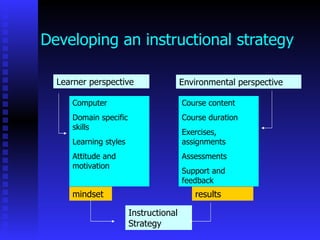
Developing an instructional strategy

  Learner perspective                  Environmental perspective

     Computer                          Course content
     Domain specific                   Course duration
     skills
                                       Exercises,
     Learning styles                   assignments
     Attitude and                      Assessments
     motivation
                                       Support and
                                       feedback
     mindset                              results

                       Instructional
                       Strategy
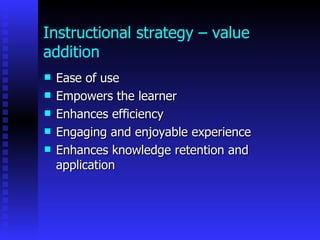
Instructional strategy – value
addition
   Ease of use
   Empowers the learner
   Enhances efficiency
   Engaging and enjoyable experience
   Enhances knowledge retention and
    application
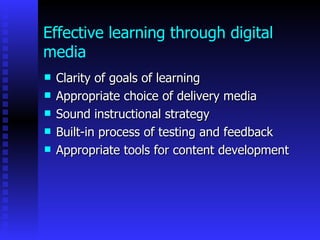
Effective learning through digital
media
   Clarity of goals of learning
   Appropriate choice of delivery media
   Sound instructional strategy
   Built-in process of testing and feedback
   Appropriate tools for content development
Questions
Thank you

Csi presentation2003

  • 1.
    Developing a soundinstructional strategy for digital learning Presentation delivered at “Digital Convergence for Quality Education” hosted by CSI, Hyderabad Dec 19-20, 2003. Madhuri Dubey
  • 2.
    “Learning involves afundamental shift of mind… It does not mean acquiring more information, but expanding the ability to produce the results we want in life.” Peter Senge The Fifth Discipline
  • 3.
    Learning in theage digital convergence involves  Computers  Internet  Video  Audio  Animation  Text
  • 4.
    Convergence = blend Learning in the age of convergent digital technologies  Significance of blending strategies for effective learning  New challenges for designing learning environments
  • 5.
    Characteristics of digitalmedia  Interactive  Hyperlinked  Synchronous  Asynchronous  Collaborative
  • 6.
    Instructional Design  systematicprocess of designing, developing and implementing and evaluating instruction.  begins with the perception of a learning need, it proceeds with the creation of a learning experience and a learning environment  ends with an evaluation of the learning solution.
  • 7.
    Design = strategy Designis that area of human experience, skill and knowledge which is concerned with man’s ability to mould his environment to suit his material and spiritual needs. Archer, B (1973) “The Need for Design Education.” Royal College of Art A strategy can be defined as a plan or approach for successful achievement of a goal.
  • 8.
    Strategizing involves  Understanding  The learning context  How people learn, why and when they are learning, how will they use learning  The learning content  What is being learnt  The learners  Who are the learners, how do they prefer to learn
  • 9.
    Process for designingdigital learning Analyse Design Evaluate ID process Implement Develop
  • 10.
    Course content developmentprocess  Analysis  Needs analysis, task analysis, context analysis, content analysis  Design  Content structuring, instructional strategy, prototyping  Develop  Flowcharts, Storyboards & Prototypes  Use of authoring tools, production of learning objects  Implement  Deployment on Test environment  Usability Review, Usability tests and course acceptance test  Deployment on live environment  Evaluate  Post-implementation evaluation
  • 11.
    Developing an instructionalstrategy Learner perspective Environmental perspective Computer Course content Domain specific Course duration skills Exercises, Learning styles assignments Attitude and Assessments motivation Support and feedback mindset results Instructional Strategy
  • 12.
    Instructional strategy –value addition  Ease of use  Empowers the learner  Enhances efficiency  Engaging and enjoyable experience  Enhances knowledge retention and application
  • 13.
    Effective learning throughdigital media  Clarity of goals of learning  Appropriate choice of delivery media  Sound instructional strategy  Built-in process of testing and feedback  Appropriate tools for content development
  • 14.
  • 15.