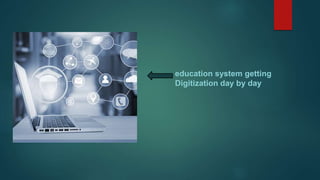
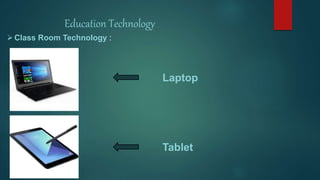
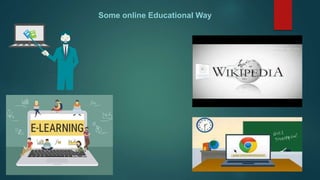
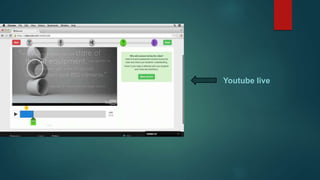
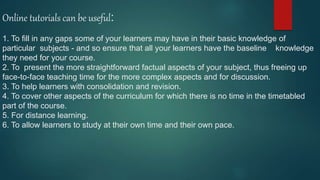
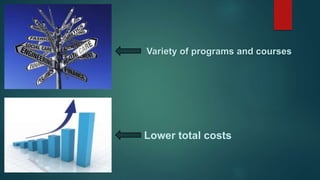
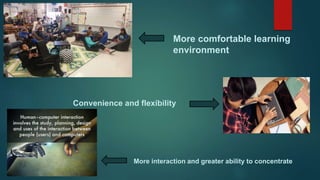
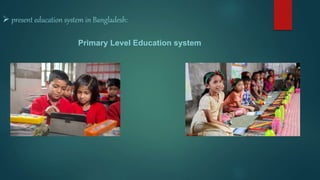
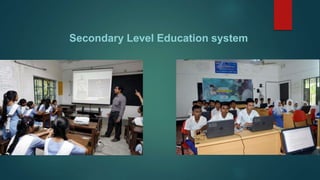
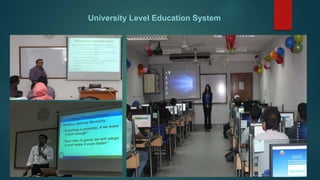
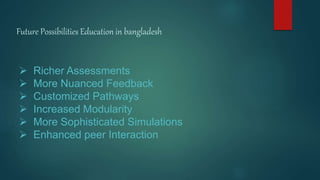
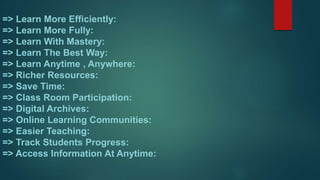
Digital education involves the digitization of educational systems and resources. It provides features like automatic attendance monitoring, timetable generation, audio/visual lesson editing, online practice exams, and centralized data storage. Digital education uses technologies like laptops, tablets, smart boards, virtual reality, and mobile learning. It allows online tutorials, open educational resources, and virtual classes through platforms like YouTube and Facebook Live. Digital education provides benefits like convenience, flexibility, improved technical skills, and the ability to learn efficiently from richer resources anywhere and anytime. While introducing challenges, digital education also offers possibilities to enhance assessments, feedback, learning pathways, and peer interaction for education systems in Bangladesh and worldwide.