BASICS OF
COMPILER DESIGN
Presentation
By
Preeti katiyar
Department of CSE
1
OUTLINE
 What is compiler
 Why do we need a compiler
 Different type of translator
 Difference between compiler and interpreter
 Compiler architecture
 Phases of compiler
 Exercise Questions
2
COMPILER
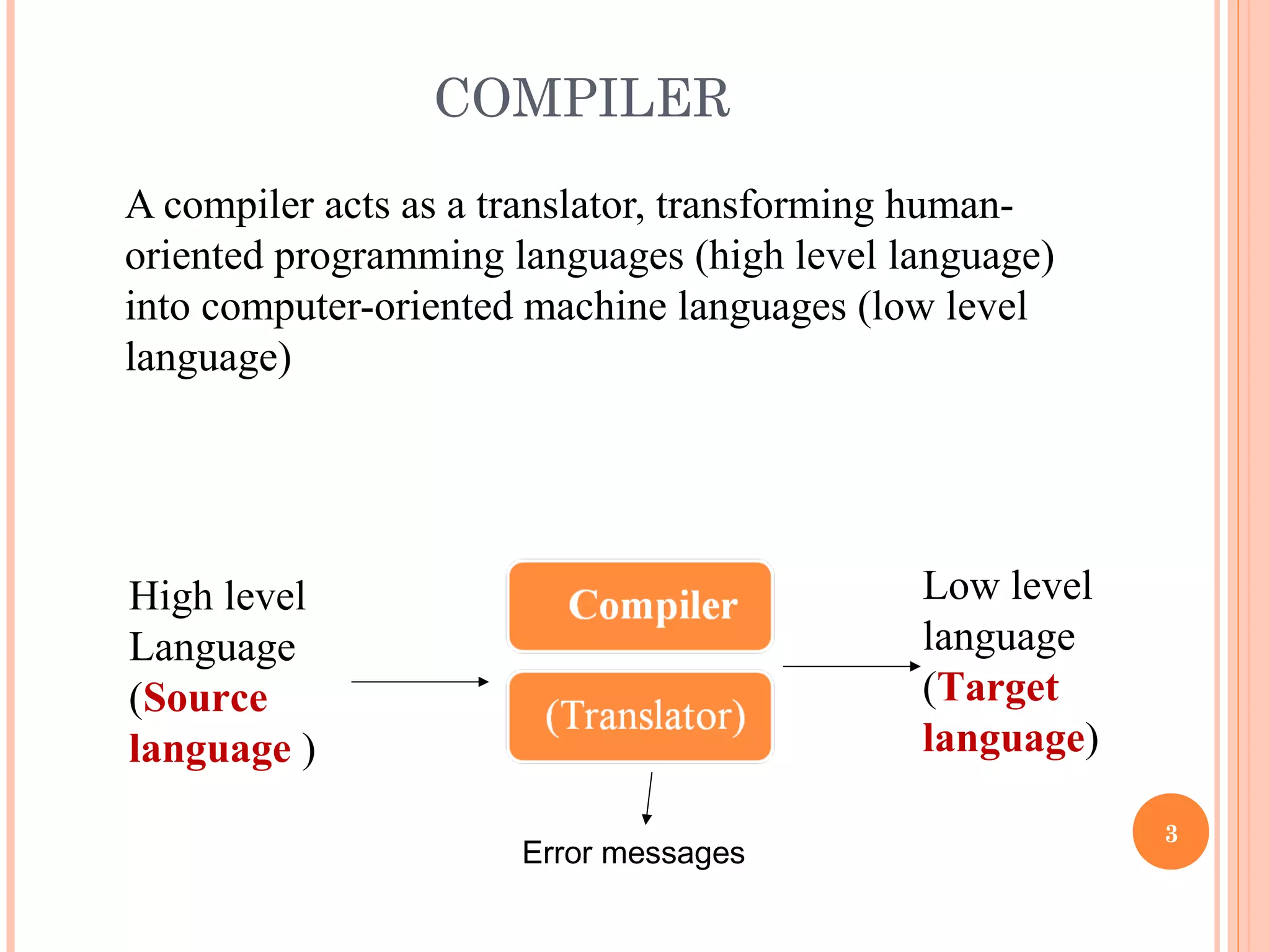
A compiler acts as a translator, transforming human-
oriented programming languages (high level language)
into computer-oriented machine languages (low level
language)
3
High level
Language
(Source
language )
Low level
language
(Target
language)
Error messages
 We need compiler' because computers cannot understand
human language, and humans cannot understand computer
language.
 Compilers are like translators that convert human-
readable/writable code into assembly code, which is very
difficult to understand and use. The compiler then converts the
assembly code into binary code
4
WHY DO WE NEED A COMPILER
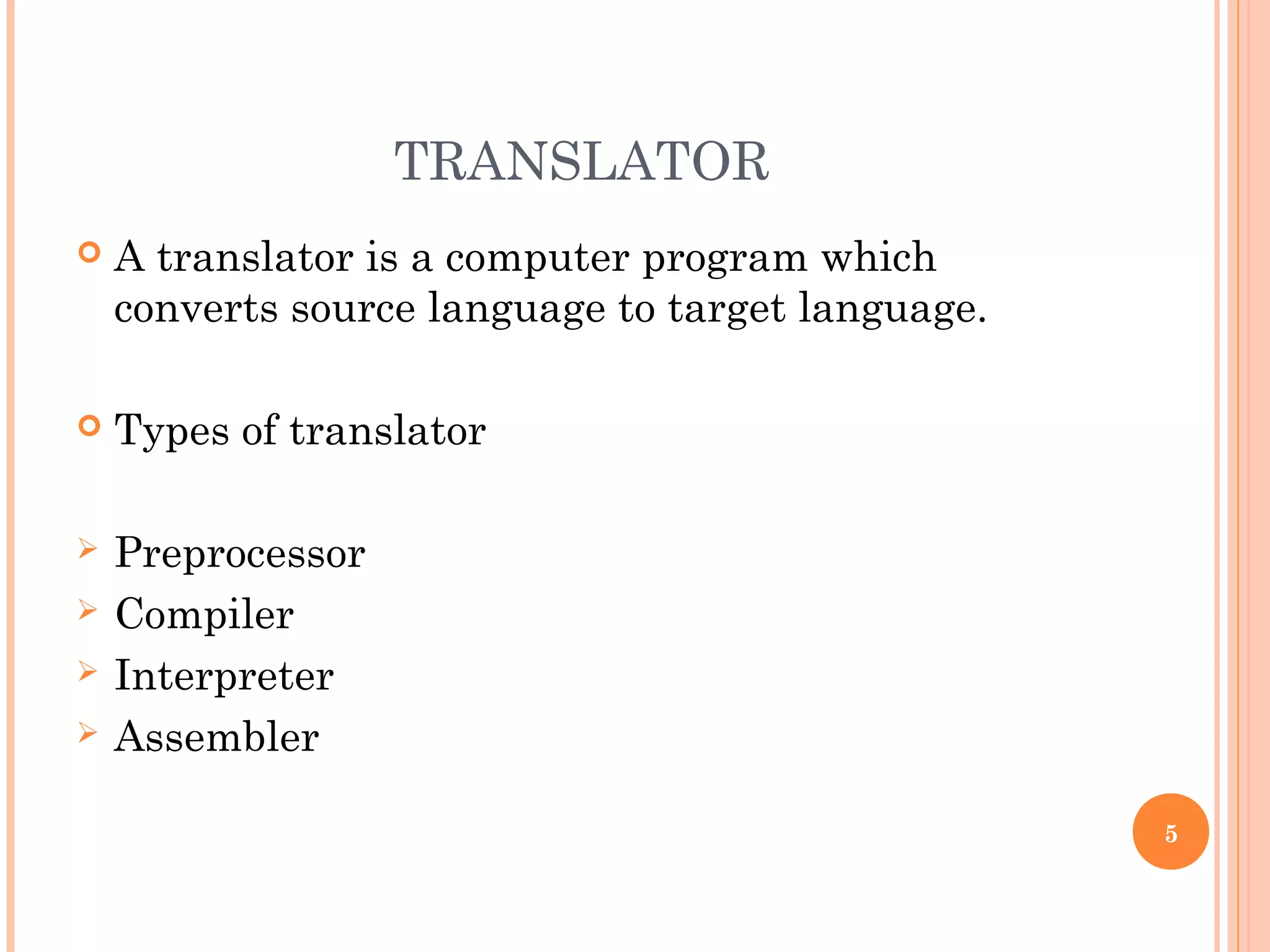
TRANSLATOR
 A translator is a computer program which
converts source language to target language.
 Types of translator
 Preprocessor
 Compiler
 Interpreter
 Assembler
5
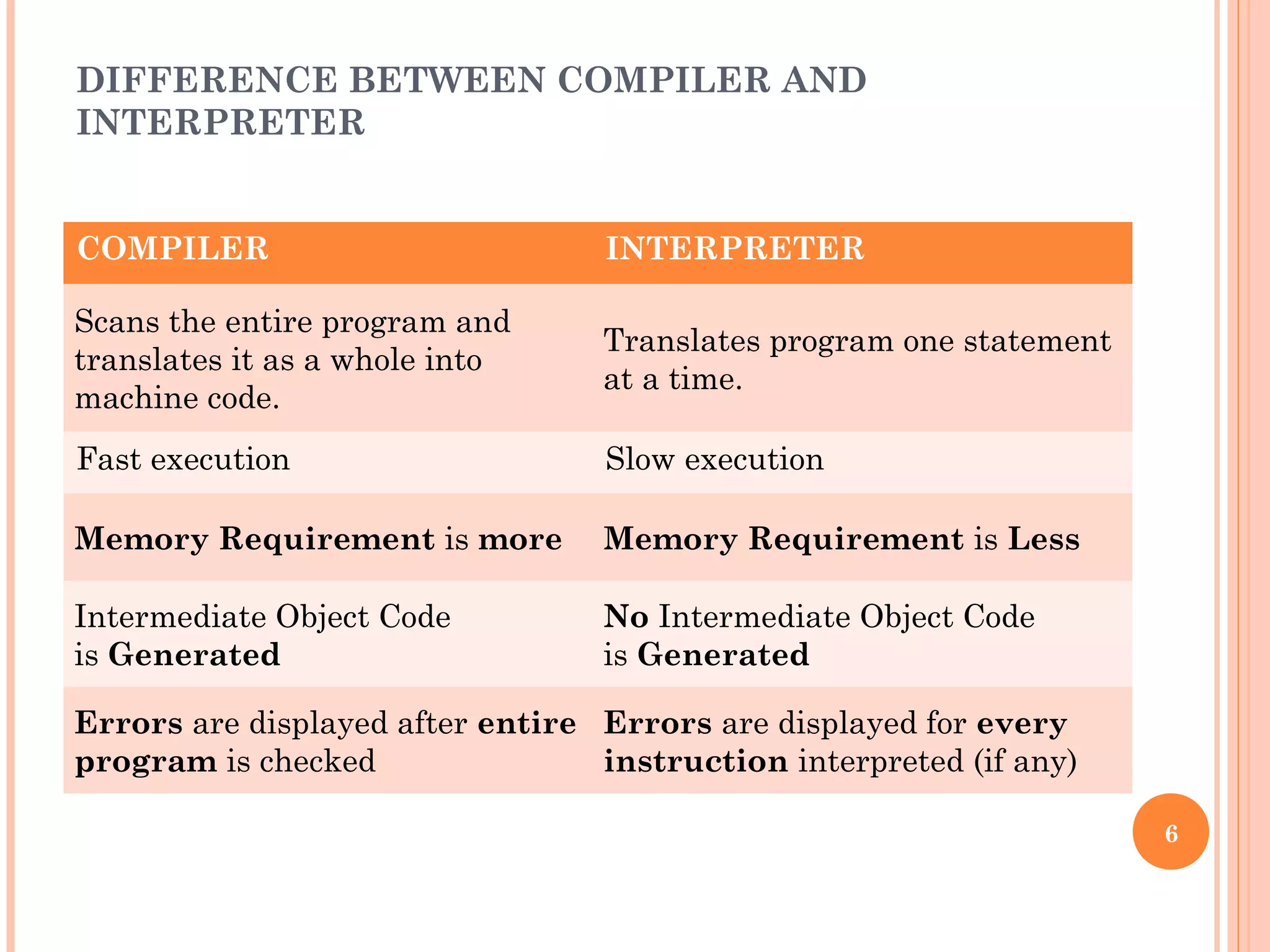
DIFFERENCE BETWEEN COMPILER AND
INTERPRETER
COMPILER INTERPRETER
Scans the entire program and
translates it as a whole into
machine code.
Translates program one statement
at a time.
Fast execution Slow execution
Memory Requirement is more Memory Requirement is Less
Intermediate Object Code
is Generated
No Intermediate Object Code
is Generated
Errors are displayed after entire
program is checked
Errors are displayed for every
instruction interpreted (if any)
6
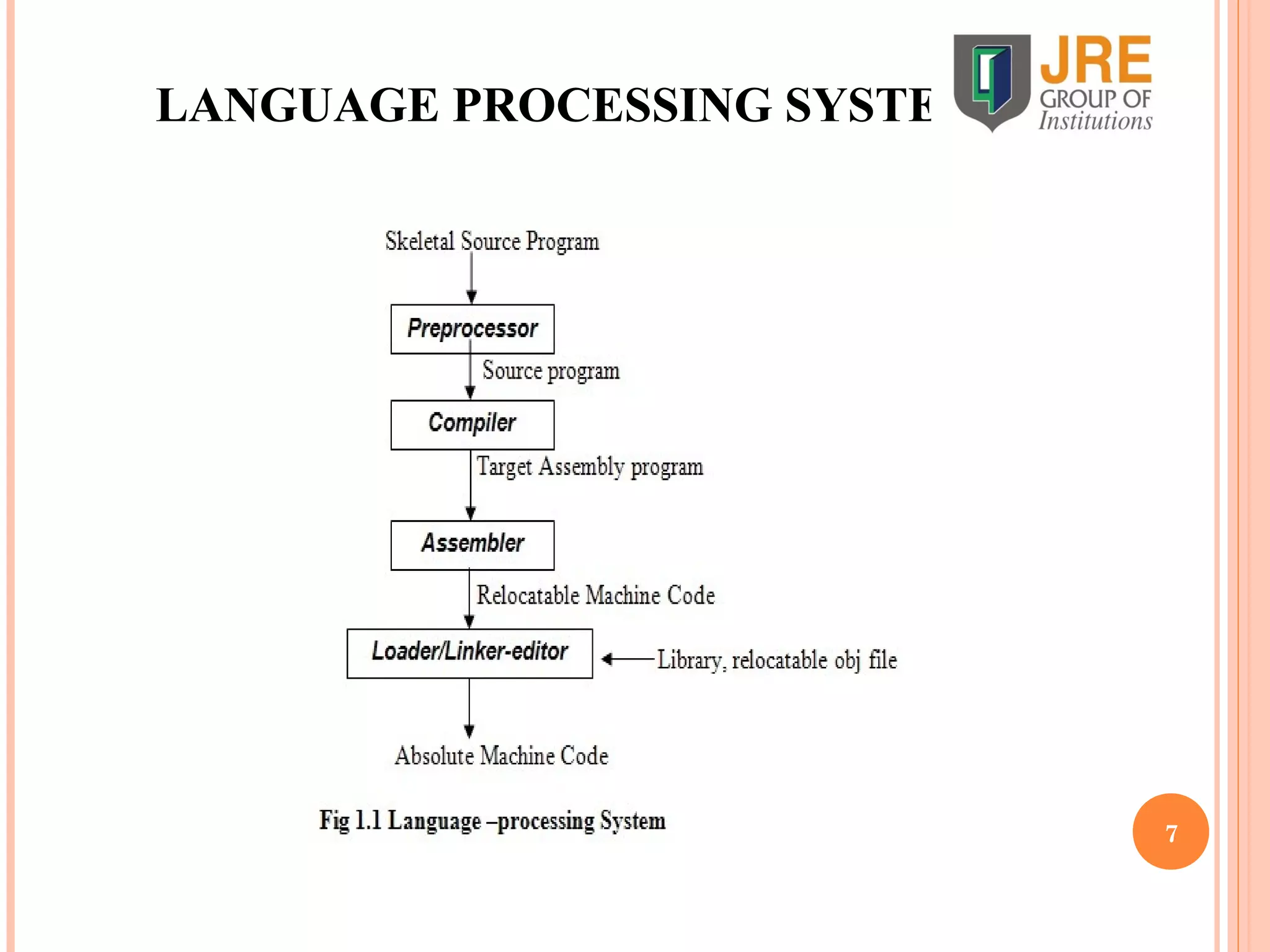
LANGUAGE PROCESSING SYSTEM
7
Expanded
source code
PROGRAM EXECUTION STEPS
 User writes a program in C language high − level
language.
 The C compiler, compiles the program and translates it
to assembly program low − level language.
 An assembler then translates the assembly program into
machine code object.
 A linker tool is used to link all the parts of the program
together for execution
 Executable machine code.
 A loader loads all of them into memory and then the
program is executed. 8
COMPILER ARCHITECTURE
Any compiler must perform two major tasks
 Analysis of the source program (machine independent)
 Synthesis of a machine-language program (machine
dependent)
9
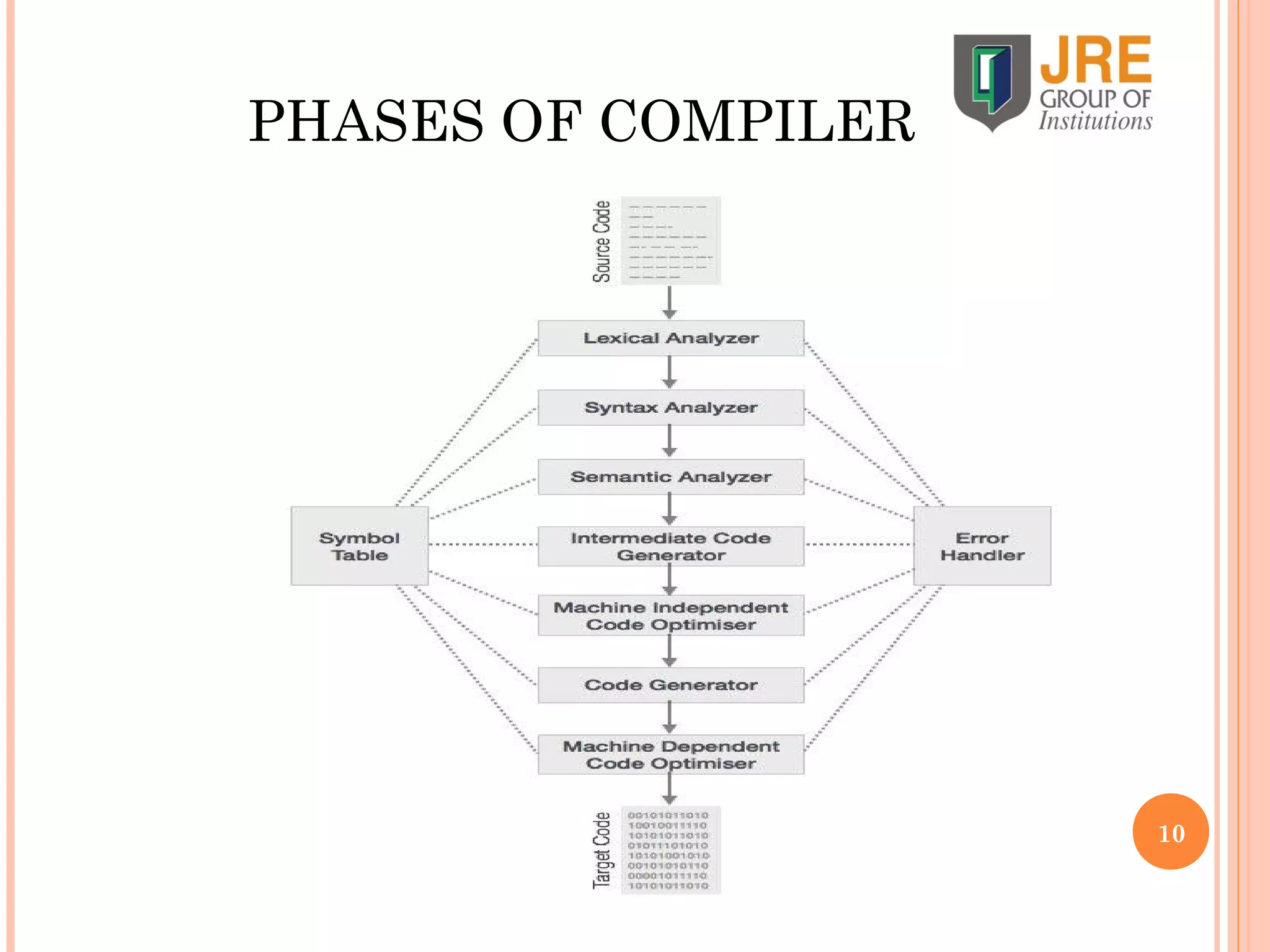
Compiler
PHASES OF COMPILER
10
THE STRUCTURE OF A
COMPILER
11
Scanner
[Lexical Analyzer]
Parser
[Syntax Analyzer]
Semantic Process
[Semantic analyzer]
Code Generator
[Intermediate Code Generator]
Code Optimizer
Tokens
Parse
tree
Abstract Syntax Tree w/
Attributes
Non-optimized Intermediate
Code
Optimized Intermediate Code
Code Optimizer
Target machine code
THE PHASES OF A COMPILER
Phase Output Sample
Programmer (source code producer) Source string A=B+C;
Scanner (performs lexical analysis) Token string ‘A’, ‘=’, ‘B’, ‘+’, ‘C’, ‘;’
And symbol table with names
Parser (performs syntax analysis
based on the grammar of the
programming language)
Parse tree or abstract syntax tree ;
|
=
/ 
A +
/ 
B C
Semantic analyzer (type checking,
etc)
Annotated parse tree or abstract
syntax tree
Intermediate code generator Three-address code, quads, or
RTL
int2fp B t1
+ t1 C t2
:= t2 A
Optimizer Three-address code, quads, or
RTL
int2fp B t1
+ t1 #2.3 A
Code generator Assembly code MOVF #2.3,r1
ADDF2 r1,r2
MOVF r2,A
Peephole optimizer Assembly code ADDF2 #2.3,r2
12
COP
5621
Fall
2009
EXERCISE QUESTIONS
 What is the difference between compiler and
interpreter?
 Which phase performs type checking?
 In which phase scanning is used?
 Which phase generate parse tree?
 Why we design compiler ? can we write a
program in low level language?
13
Thank you
14

basics of compiler design

  • 1.
  • 2.
    OUTLINE  What iscompiler  Why do we need a compiler  Different type of translator  Difference between compiler and interpreter  Compiler architecture  Phases of compiler  Exercise Questions 2
  • 3.
    COMPILER A compiler actsas a translator, transforming human- oriented programming languages (high level language) into computer-oriented machine languages (low level language) 3 High level Language (Source language ) Low level language (Target language) Error messages
  • 4.
     We needcompiler' because computers cannot understand human language, and humans cannot understand computer language.  Compilers are like translators that convert human- readable/writable code into assembly code, which is very difficult to understand and use. The compiler then converts the assembly code into binary code 4 WHY DO WE NEED A COMPILER
  • 5.
    TRANSLATOR  A translatoris a computer program which converts source language to target language.  Types of translator  Preprocessor  Compiler  Interpreter  Assembler 5
  • 6.
    DIFFERENCE BETWEEN COMPILERAND INTERPRETER COMPILER INTERPRETER Scans the entire program and translates it as a whole into machine code. Translates program one statement at a time. Fast execution Slow execution Memory Requirement is more Memory Requirement is Less Intermediate Object Code is Generated No Intermediate Object Code is Generated Errors are displayed after entire program is checked Errors are displayed for every instruction interpreted (if any) 6
  • 7.
  • 8.
    PROGRAM EXECUTION STEPS User writes a program in C language high − level language.  The C compiler, compiles the program and translates it to assembly program low − level language.  An assembler then translates the assembly program into machine code object.  A linker tool is used to link all the parts of the program together for execution  Executable machine code.  A loader loads all of them into memory and then the program is executed. 8
  • 9.
    COMPILER ARCHITECTURE Any compilermust perform two major tasks  Analysis of the source program (machine independent)  Synthesis of a machine-language program (machine dependent) 9 Compiler
  • 10.
  • 11.
    THE STRUCTURE OFA COMPILER 11 Scanner [Lexical Analyzer] Parser [Syntax Analyzer] Semantic Process [Semantic analyzer] Code Generator [Intermediate Code Generator] Code Optimizer Tokens Parse tree Abstract Syntax Tree w/ Attributes Non-optimized Intermediate Code Optimized Intermediate Code Code Optimizer Target machine code
  • 12.
    THE PHASES OFA COMPILER Phase Output Sample Programmer (source code producer) Source string A=B+C; Scanner (performs lexical analysis) Token string ‘A’, ‘=’, ‘B’, ‘+’, ‘C’, ‘;’ And symbol table with names Parser (performs syntax analysis based on the grammar of the programming language) Parse tree or abstract syntax tree ; | = / A + / B C Semantic analyzer (type checking, etc) Annotated parse tree or abstract syntax tree Intermediate code generator Three-address code, quads, or RTL int2fp B t1 + t1 C t2 := t2 A Optimizer Three-address code, quads, or RTL int2fp B t1 + t1 #2.3 A Code generator Assembly code MOVF #2.3,r1 ADDF2 r1,r2 MOVF r2,A Peephole optimizer Assembly code ADDF2 #2.3,r2 12 COP 5621 Fall 2009
  • 13.
    EXERCISE QUESTIONS  Whatis the difference between compiler and interpreter?  Which phase performs type checking?  In which phase scanning is used?  Which phase generate parse tree?  Why we design compiler ? can we write a program in low level language? 13
  • 14.

Editor's Notes

  • #2 <number>