EN5535: Research & Study Methods for English


Working Practices
       Session 2:
Session Aims    Increased awareness of the practical and conceptual
               skills required for postgraduate literary studies

                Understanding of the application of essential literary
               research methods, analytical techniques and theoretical
               approaches

                Appreciation of the dynamic relationship between the
               researcher, the research topic and the methods employed
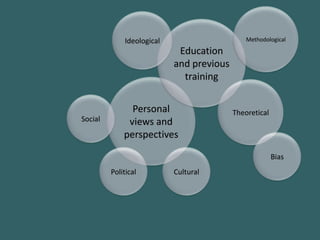
What sort of researcher are you?


        Or, why do you
      read and think in
       the way you do?
Ideological                      Methodological

                            Education
                           and previous
                             training


               Personal                   Theoretical
Social        views and
             perspectives

                                                        Bias
         Political         Cultural
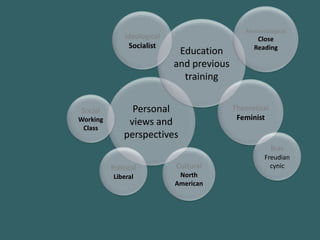
Methodological
              Ideological                         Close
               Socialist                         Reading
                             Education
                            and previous
                              training


Social          Personal                   Theoretical
Working                                     Feminist
               views and
 Class
              perspectives
                                                         Bias
                                                     Freudian
          Political         Cultural                   cynic
          Liberal            North
                            American
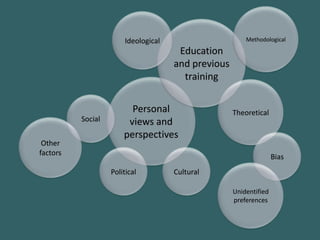
Ideological                      Methodological

                                      Education
                                     and previous
                                       training


                         Personal                   Theoretical
          Social        views and
                       perspectives
 Other
factors
                                                                   Bias
                   Political         Cultural

                                                    Unidentified
                                                    preferences
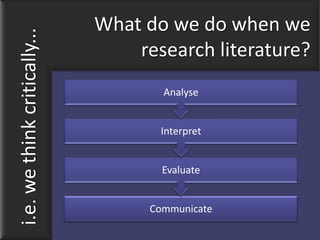
i.e. we think critically...   What do we do when we
                                  research literature?
                                      Analyse


                                     Interpret


                                      Evaluate


                                    Communicate
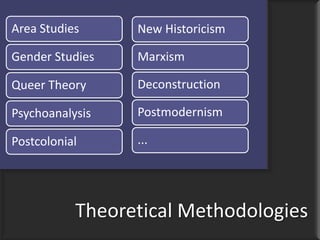
Area Studies     New Historicism

Gender Studies   Marxism

Queer Theory     Deconstruction

Psychoanalysis   Postmodernism

Postcolonial     ...


           Theoretical Methodologies
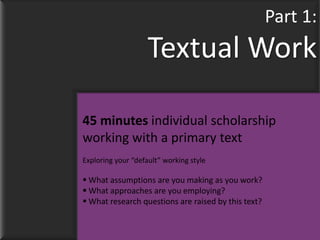
Part 1:
                    Textual Work

45 minutes individual scholarship
working with a primary text
Exploring your “default” working style

 What assumptions are you making as you work?
 What approaches are you employing?
 What research questions are raised by this text?
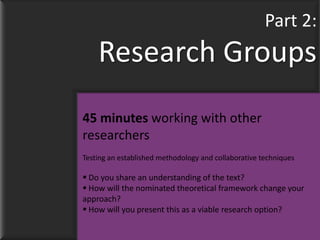
Part 2:
    Research Groups
45 minutes working with other
researchers
Testing an established methodology and collaborative techniques

 Do you share an understanding of the text?
 How will the nominated theoretical framework change your
approach?
 How will you present this as a viable research option?
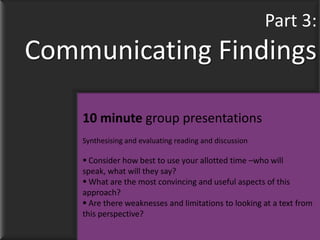
Part 3:
Communicating Findings

    10 minute group presentations
    Synthesising and evaluating reading and discussion

     Consider how best to use your allotted time –who will
    speak, what will they say?
     What are the most convincing and useful aspects of this
    approach?
     Are there weaknesses and limitations to looking at a text from
    this perspective?
Summary    Critical analysis requires analysing, synthesising
          and evaluating (not describing) primary and
          secondary materials

           Ask questions of your material and of your own
          approach to it

           Consider whether different approaches and
          methodologies might be required
Next Session
                        Session 3:

               Dissemination
                         Week 12

MA Research Methods 2: Working Practices

  • 1.
    EN5535: Research &Study Methods for English Working Practices Session 2:
  • 2.
    Session Aims  Increased awareness of the practical and conceptual skills required for postgraduate literary studies  Understanding of the application of essential literary research methods, analytical techniques and theoretical approaches  Appreciation of the dynamic relationship between the researcher, the research topic and the methods employed
  • 3.
    What sort ofresearcher are you? Or, why do you read and think in the way you do?
  • 4.
    Ideological Methodological Education and previous training Personal Theoretical Social views and perspectives Bias Political Cultural
  • 5.
    Methodological Ideological Close Socialist Reading Education and previous training Social Personal Theoretical Working Feminist views and Class perspectives Bias Freudian Political Cultural cynic Liberal North American
  • 6.
    Ideological Methodological Education and previous training Personal Theoretical Social views and perspectives Other factors Bias Political Cultural Unidentified preferences
  • 7.
    i.e. we thinkcritically... What do we do when we research literature? Analyse Interpret Evaluate Communicate
  • 8.
    Area Studies New Historicism Gender Studies Marxism Queer Theory Deconstruction Psychoanalysis Postmodernism Postcolonial ... Theoretical Methodologies
  • 9.
    Part 1: Textual Work 45 minutes individual scholarship working with a primary text Exploring your “default” working style  What assumptions are you making as you work?  What approaches are you employing?  What research questions are raised by this text?
  • 10.
    Part 2: Research Groups 45 minutes working with other researchers Testing an established methodology and collaborative techniques  Do you share an understanding of the text?  How will the nominated theoretical framework change your approach?  How will you present this as a viable research option?
  • 11.
    Part 3: Communicating Findings 10 minute group presentations Synthesising and evaluating reading and discussion  Consider how best to use your allotted time –who will speak, what will they say?  What are the most convincing and useful aspects of this approach?  Are there weaknesses and limitations to looking at a text from this perspective?
  • 12.
    Summary  Critical analysis requires analysing, synthesising and evaluating (not describing) primary and secondary materials  Ask questions of your material and of your own approach to it  Consider whether different approaches and methodologies might be required
  • 13.
    Next Session Session 3: Dissemination Week 12

Editor's Notes

  • #9 Modes of thinking which problematises and challenge assumed values. The application of a system of interpretation. Consider the terminology