LYMPHORETICULAR
SYSTEM
Dr. Umme Kulsum Munmun
Assistant Professor
Department of Pathology
Chandpur Medical College
HAEMATOPOIESIS
NICE TO KNOW
Bone marrow- B
cells
Thymus – T cells
Circulate
through
blood
Secondary lymphoid
organs eg. Lymph node,
spleen, tonsil , Peyer’s
patches
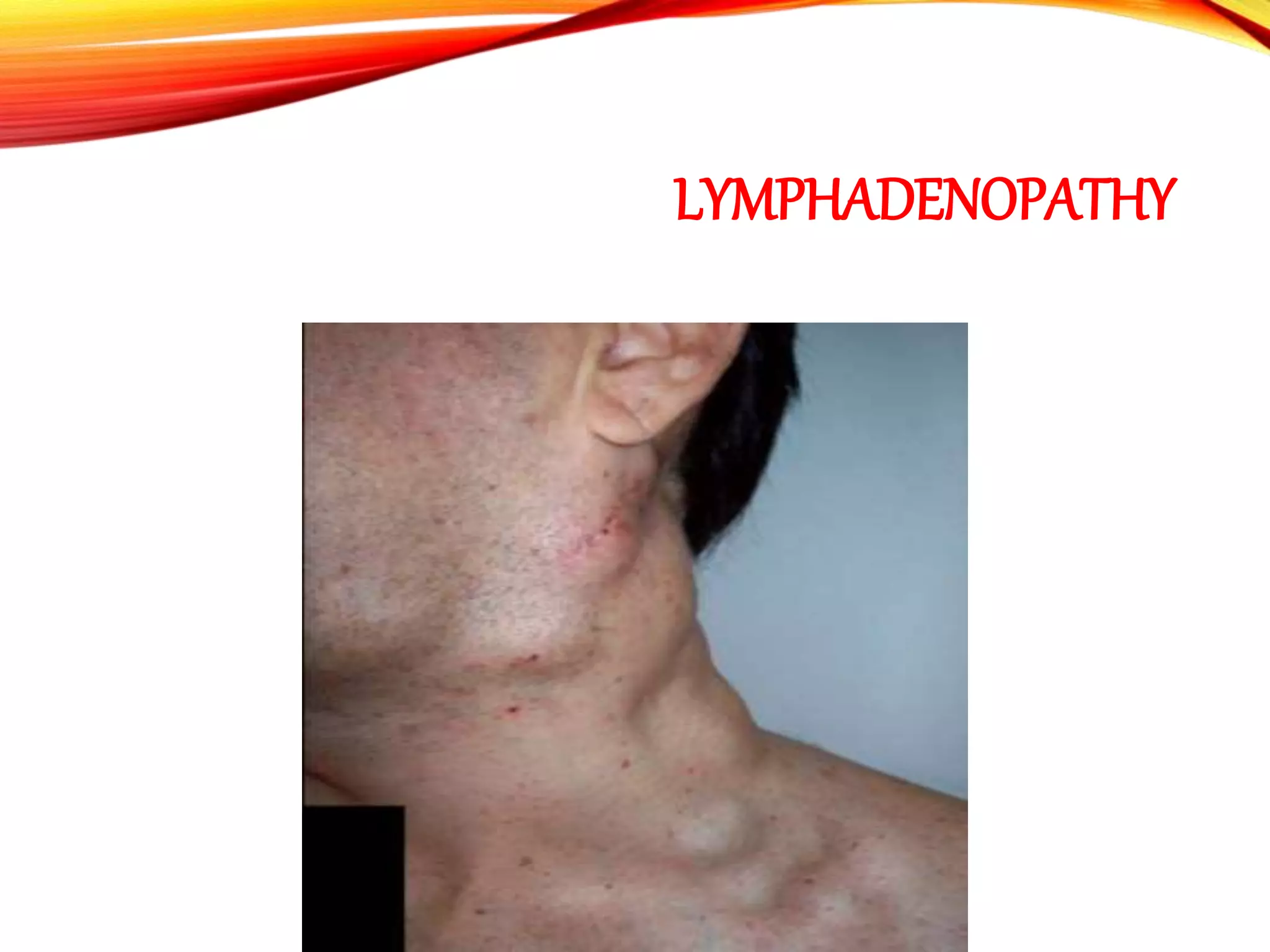
LYMPHADENOPATHY
Antigenic
stimulation
Activation of
resident
immune cells
Primary lymphoid
follicles enlarge
(germinal center)
Enlargement of Lymph node
LYMPHADENOPATHY
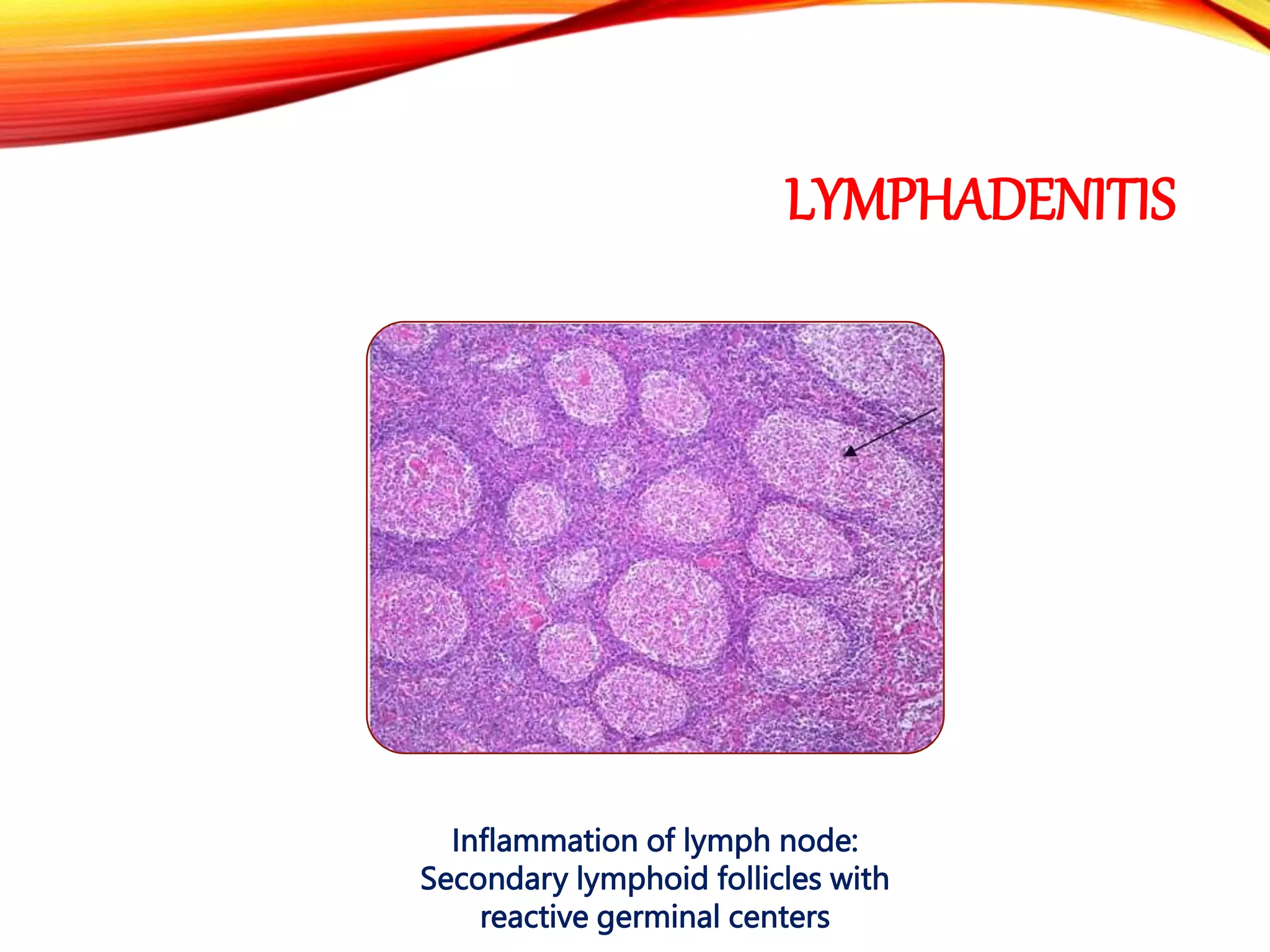
LYMPHADENITIS
Inflammation of lymph node:
Secondary lymphoid follicles with
reactive germinal centers
LYMPHADENITIS
CAUSES OF LYMPHEDENOPATHY
• Viral (EBV, CMV, HIV etc)
• Bacterial (Streptococcus, Staphylococcus,
Mycobacterium, Cat- scratch disease etc)
• Fungal
• Parasitic
Infectious
Diseases
• Castleman disease
• Sarcoidosis etc
Immune
Diseases
CAUSES OF LYMPHEDENOPATHY
• Lymphoma
• Leukemia
• Metastatic cancers
Malignancies
• Rheumatoid arthritis
• SLE
• Drug reactions
Others
GENERALIZED LYMHADENOPATHY
More than two non – contiguous group of lymph
nodes
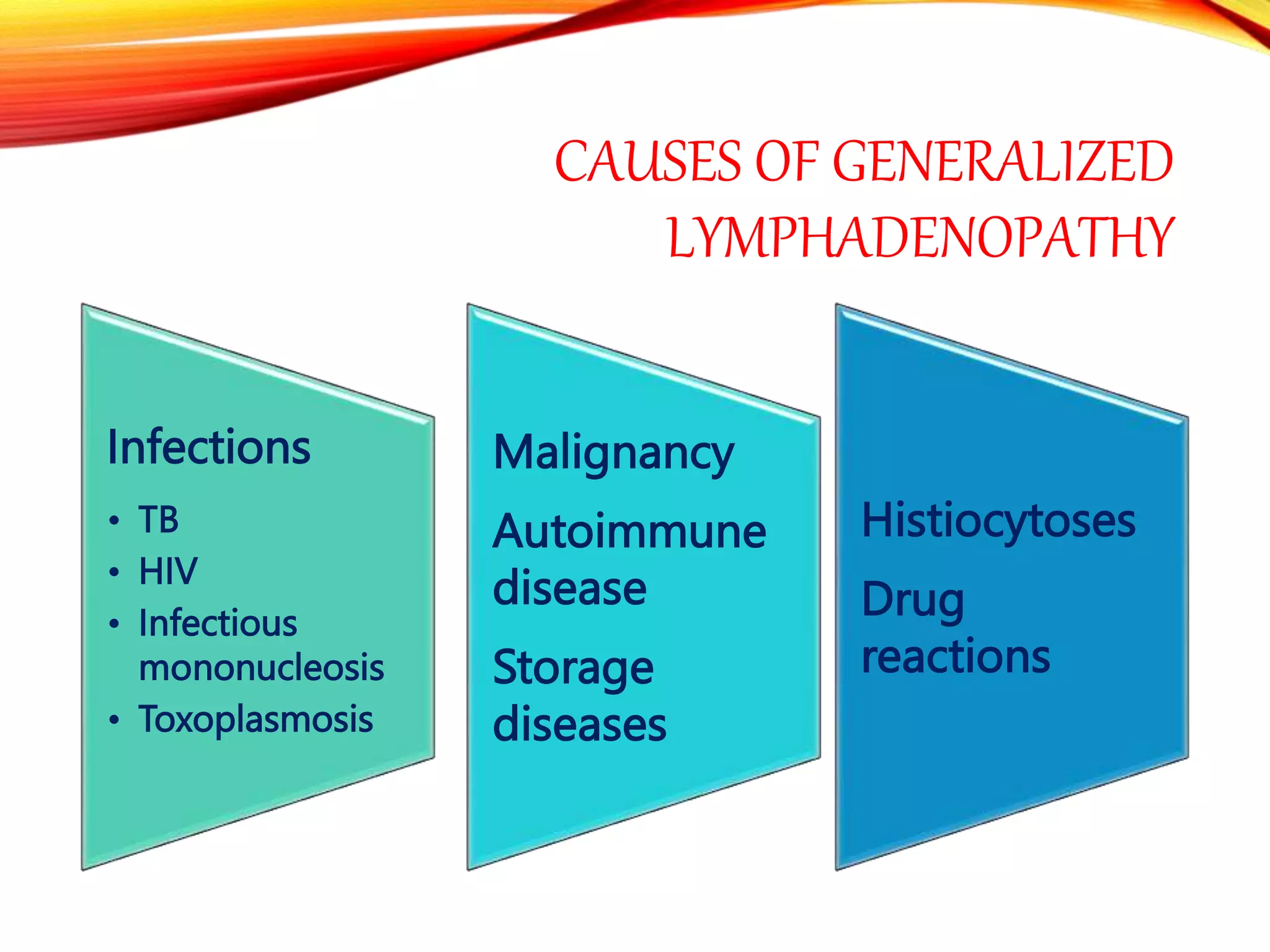
CAUSES OF GENERALIZED
LYMPHADENOPATHY
Infections
• TB
• HIV
• Infectious
mononucleosis
• Toxoplasmosis
Malignancy
Autoimmune
disease
Storage
diseases
Histiocytoses
Drug
reactions
NEOPLASTIC PROLIFERATIONS OF
WHITE BLOOD CELLS
• Present with widespread involvement of bone marrow
peripheral blood
• Liquid malignancy of either lymphoid or myeloid series
Leukemia
• Proliferations that arise as discrete mass
• Solid malignancy of lymphoid series
• Begins as malignant transformation of lymphocytes in
lymphatic system
Lymphoma
NEOPLASTIC PROLIFERATIONS OF
WHITE BLOOD CELLS
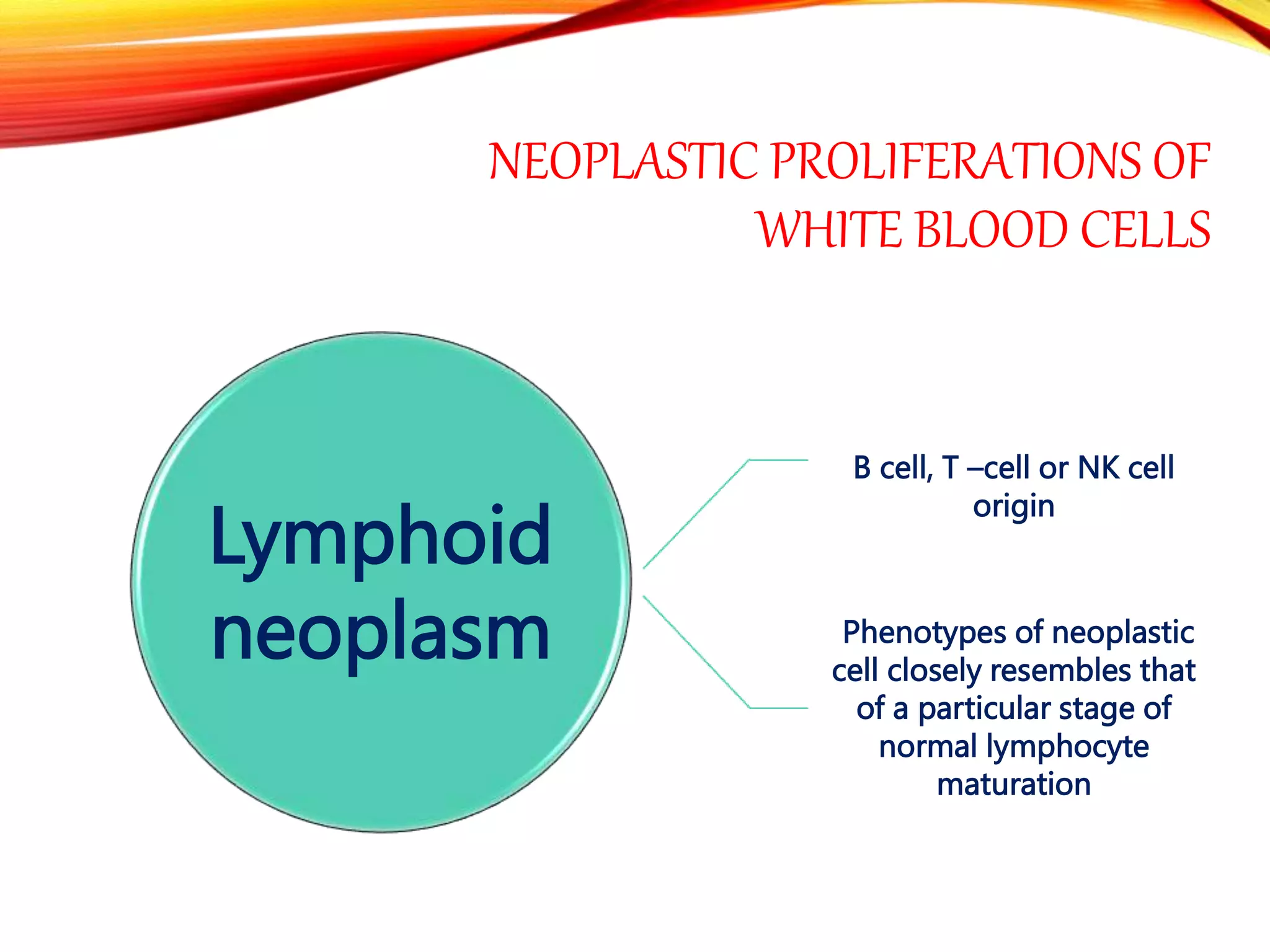
Lymphoid
neoplasm
B cell, T –cell or NK cell
origin
Phenotypes of neoplastic
cell closely resembles that
of a particular stage of
normal lymphocyte
maturation
NEOPLASTIC PROLIFERATIONS OF
WHITE BLOOD CELLS
Myeloid
neoplas
Arise from
haemopoietic
progenitors
LYMPHOMA
A malignant
tumour of
lymphoid
tissue
LYMPHOMA
Hodgkin Lymphoma
Non-Hodgkin
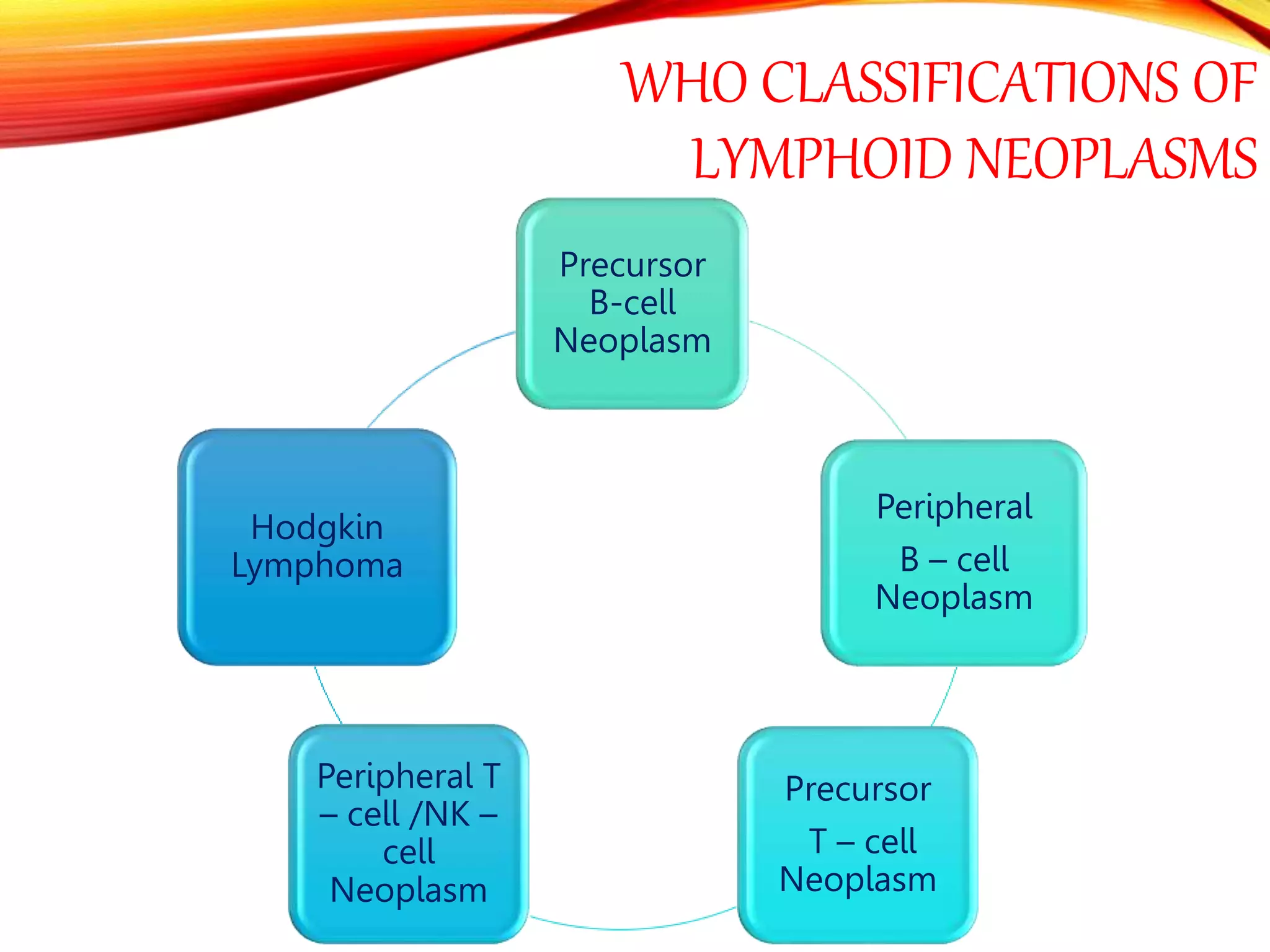
WHO CLASSIFICATIONS OF
LYMPHOID NEOPLASMS
Precursor
B-cell
Neoplasm
Peripheral
B – cell
Neoplasm
Precursor
T – cell
Neoplasm
Peripheral T
– cell /NK –
cell
Neoplasm
Hodgkin
Lymphoma
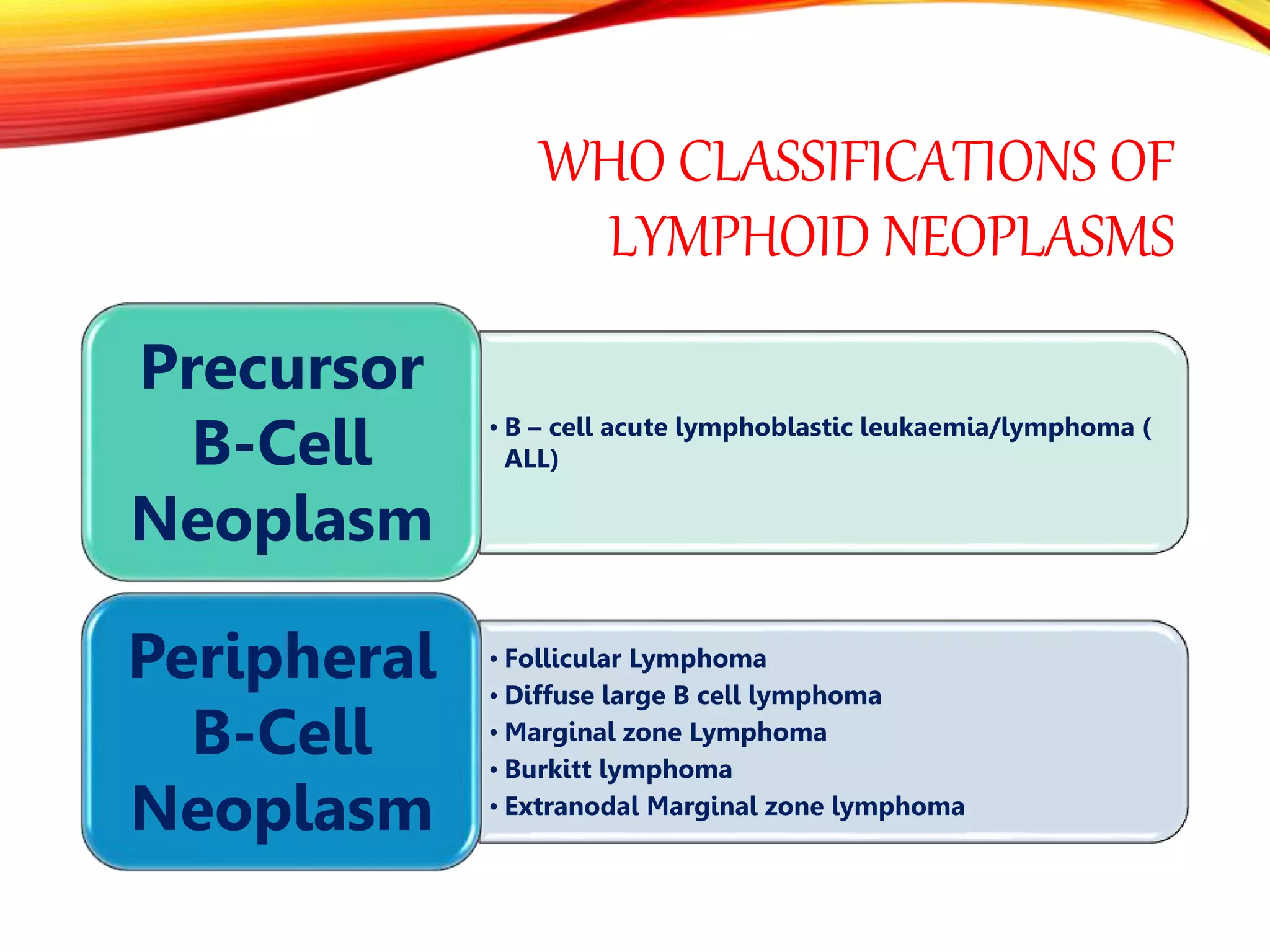
WHO CLASSIFICATIONS OF
LYMPHOID NEOPLASMS
• B – cell acute lymphoblastic leukaemia/lymphoma (
ALL)
Precursor
B-Cell
Neoplasm
• Follicular Lymphoma
• Diffuse large B cell lymphoma
• Marginal zone Lymphoma
• Burkitt lymphoma
• Extranodal Marginal zone lymphoma
Peripheral
B-Cell
Neoplasm
WHO CLASSIFICATIONS OF
LYMPHOID NEOPLASMS
• T –Cell acute lymphoblastic leukaemia/lymphoma (
ALL)
Precursor
T-Cell
Neoplasm
• Peripheral T-Cell Lymphoma
• Anaplastic Large cell lymphoma
• Mycosis fungoides
• Extranodal NK/Tcell lymphoma
• Angioimmunoblastic T Cell lymphoma
Peripheral
Cell
Neoplasm
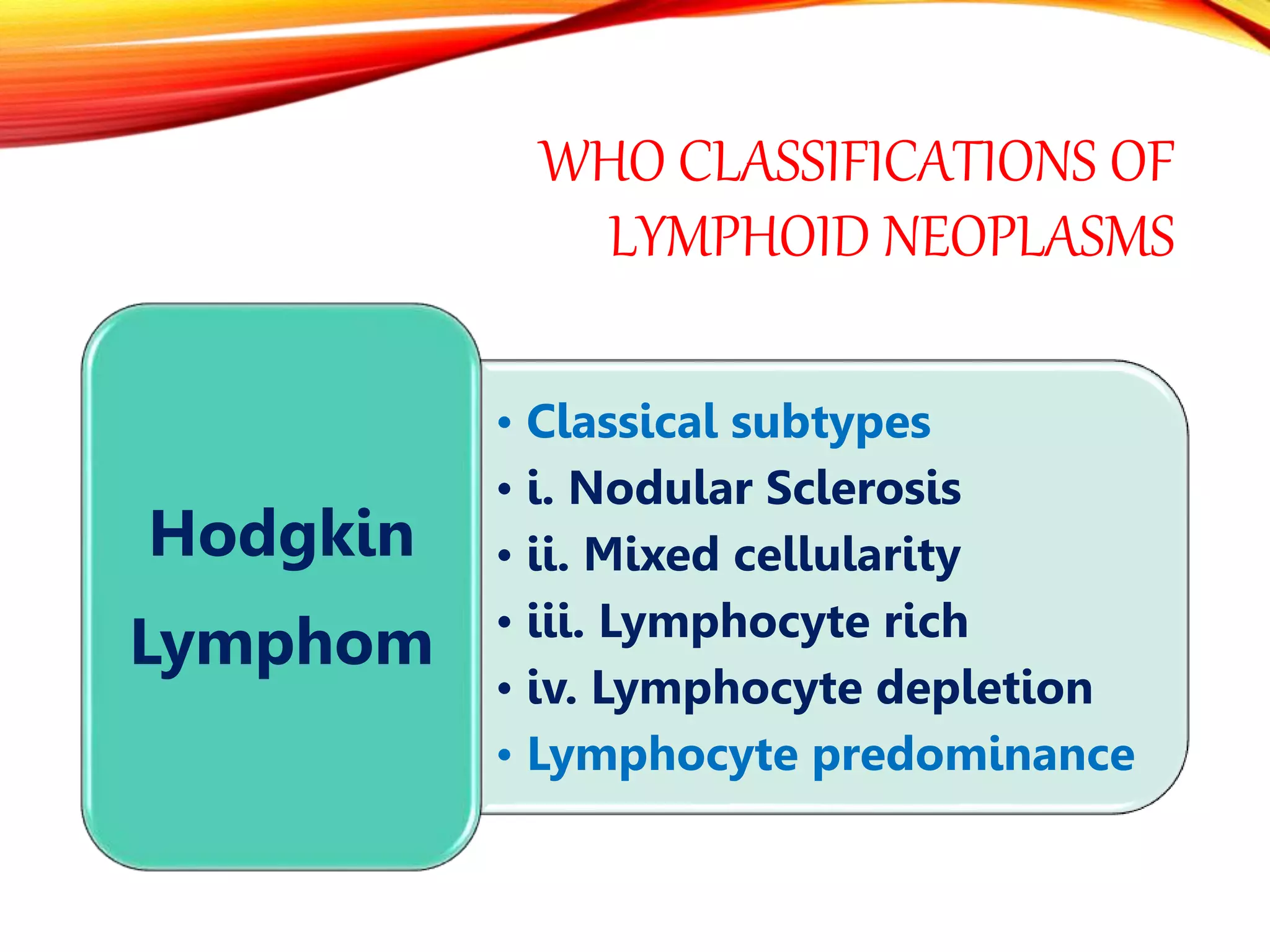
WHO CLASSIFICATIONS OF
LYMPHOID NEOPLASMS
• Classical subtypes
• i. Nodular Sclerosis
• ii. Mixed cellularity
• iii. Lymphocyte rich
• iv. Lymphocyte depletion
• Lymphocyte predominance
Hodgkin
Lymphom
WORKING FORMULATION
• An obsolete classification of non-Hodgkin lymphomas,
first proposed in 1982.
 Low Grade
 Intermediate grade
 High grade
NICE TO KNOW
CINICAL PRESENTATIONS
Enlarged non-tender lymph
nodes (often > 2 cm)
Symotoms related to
involvement of extranodal
sites
(skin, stomach, brain etc)
Systemic symptoms (“B
symptoms”)
Fever, night sweats, weight
loss
Symptoms related to
hepatosplenomegaly
Symptoms related to
complications of bone
marrow infiltration
(Infections, anaemia, bleeding
and coagulopathies)
ETIOLOGY
• Exposure to radiation and certain chemicals (benzene etc)
• Infections (EBV in HL, H. pylori in gastric MALToma)
• Immunodeficiency
• Autoimmune disease
• Older age group
HODGKIN LYMPHOMA
• First described by Thomas Hodgkin in 1832
• Characteristic features:
 Arises in a single node or chain of nodes (esp.
cervical)
 Contains rare neoplastic distinctive giant cells
(“Reed Sternberg cells”), in a background of
abundant reactive inflammatory cells
 One of the most common cancers in young adults
HODGKIN LYMPHOMA
VARIANTS OF RS CELL
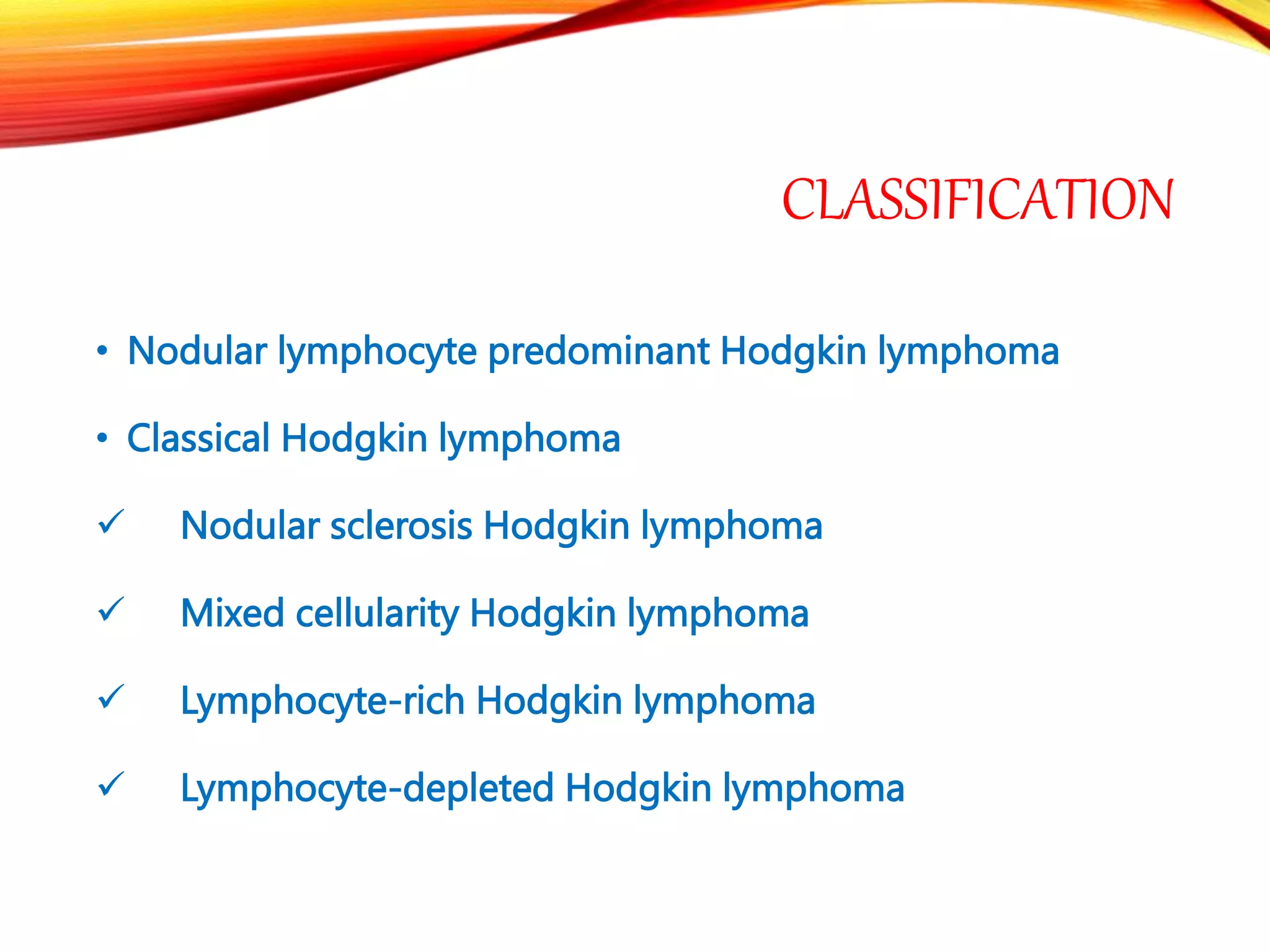
CLASSIFICATION
• Nodular lymphocyte predominant Hodgkin lymphoma
• Classical Hodgkin lymphoma
 Nodular sclerosis Hodgkin lymphoma
 Mixed cellularity Hodgkin lymphoma
 Lymphocyte-rich Hodgkin lymphoma
 Lymphocyte-depleted Hodgkin lymphoma
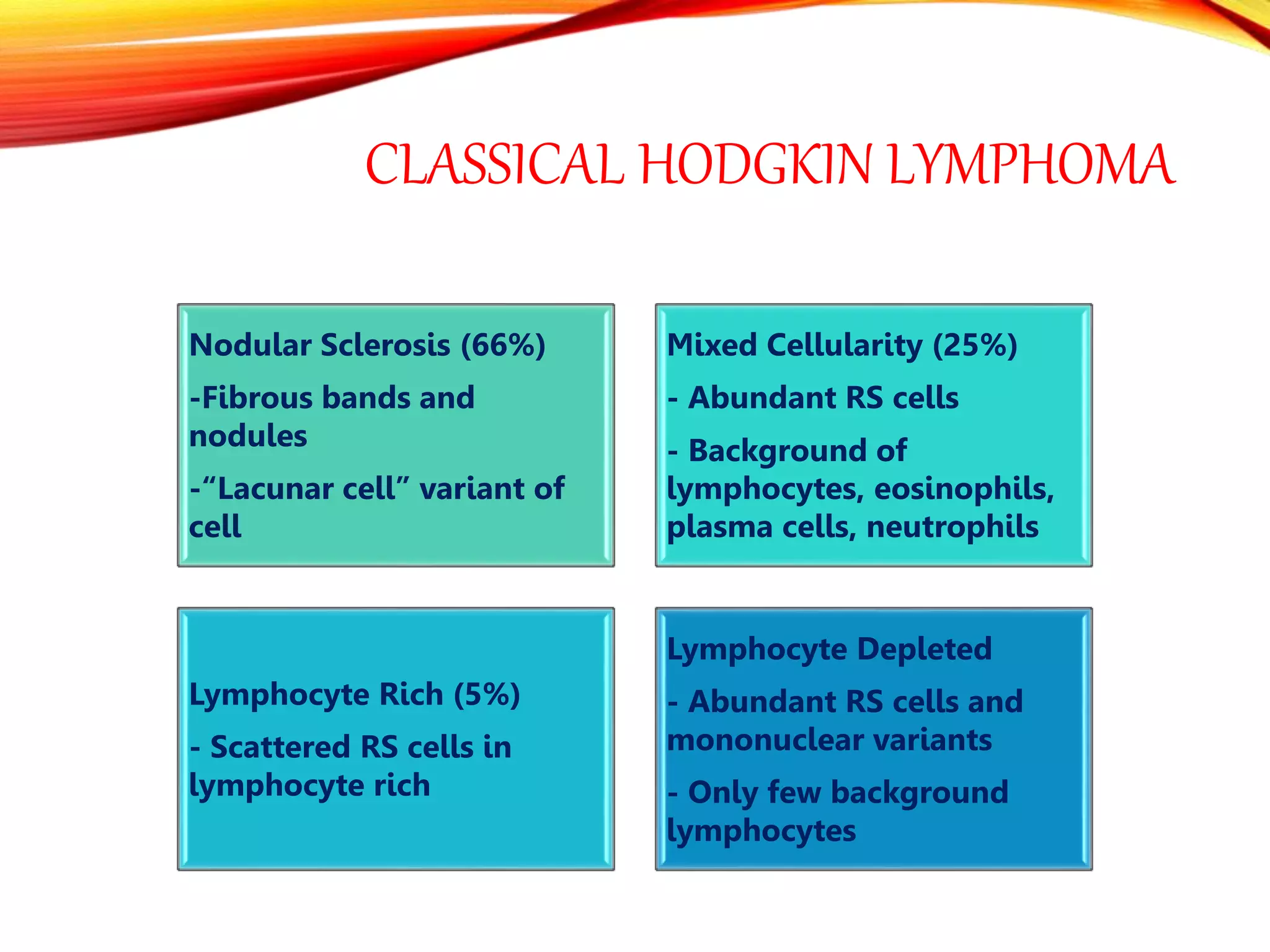
CLASSICAL HODGKIN LYMPHOMA
Nodular Sclerosis (66%)
-Fibrous bands and
nodules
-“Lacunar cell” variant of
cell
Mixed Cellularity (25%)
- Abundant RS cells
- Background of
lymphocytes, eosinophils,
plasma cells, neutrophils
Lymphocyte Rich (5%)
- Scattered RS cells in
lymphocyte rich
Lymphocyte Depleted
- Abundant RS cells and
mononuclear variants
- Only few background
lymphocytes
NODULAR LP HODGKIN
LYMPHOMA
• 5% of all Hodgkin lymphoma
• “Popcorn cells” / “L&H cells” rather than RS cells
• Background of small B-lymphocyte
• Distinction between Classical HL and Nodular LP
HL is based partly on immunophenotype
 Classical: CD15+ CD30+ CD45- CD20-
 NLPHL: CD15- CD30- CD45+ CD20+
ANN ARBOR STAGING SYSTEM
• I – Involvement of a single lymph node region or
lymphoid structure
• II – Involvement of two or more lymph node regions on
the same side of the diaphragm
• III – Involvement of lymph node regions or structures on
both sides of diaphragm
• IV – Involvement of extranodal sites
Prognosis of Hodgkin Lymphoma
• Generally better than non-Hodgkin lymphomas
• Depends greatly on stage (more so than histological
subtype)
• 90-100% of Stage IA and IIA curable
DIFFERENCES
NON - HODGKIN LYMPHOMA
• Very diverse group of disorders
• Unimodal age distribution, with increasnig
incidence with age
• Many arise in extranodal sites (although the
majority are nodal)
Divided clinically into
 Low grade
- Indolent, slow-growing, but resistant to therapy and rarely
curable
- Often present with painless generalized lymphadenopathy
 High grade
- Aggressive, rapidly progressive, but sensitive to treatment and
potentially curable
- Often present with solitary rapidly enlarging mass
CAUSES OF SPLENOMEGALY
• Liver disease (cirrhosis, hepatitis, portal hypertension)
• Haematologic malignancy (lymphoma, leukaemia,
myeloproliferative disorders)
• Portal or hepatic vein thrombosis
• Congestive cardiac failure
• ITP, haemolytic anaemia, thalassemia
DIAGNOSTIC APPROACH FOR
LYMPHADENOPATHY
• History and evaluation (Size, site, duration, tenderness,
localized/generalized, ‘B’ symptoms)
• CBC
• Mantoux test
• Microbiological test
• Serology: CMV, HIV, toxoplasmosis
• ANA, Rheumatoid factor
DIAGNOSTIC APPROACH FOR
LYMPHADENOPATHY
• LDH
• Imaging test
• FNA
• Biopsy and histopathology (to confirm malignancy)
• Immunohistochemistry to categorize
 Hodgkin/ Non- Hodgkin lymphoma
 B/T cell lymphoma etc
• Flowcytometry
CAUSES OF SPLENOMEGALY
• Infections ( malaria, TB, HIV, infectious mononucleosis
etc)
• Connective tissue disease (SLE, rheumatoid arthritis etc)
• Infiltrative disorders (sarcoidosis, amyloidosis, glycogen
storage diseases).
• Focal lesions (hemangiomas, abscess, cysts, metastasis).
THANK YOU

Lymphoreticular .pptx

  • 1.
    LYMPHORETICULAR SYSTEM Dr. Umme KulsumMunmun Assistant Professor Department of Pathology Chandpur Medical College
  • 2.
  • 5.
  • 6.
    Bone marrow- B cells Thymus– T cells Circulate through blood Secondary lymphoid organs eg. Lymph node, spleen, tonsil , Peyer’s patches
  • 7.
    LYMPHADENOPATHY Antigenic stimulation Activation of resident immune cells Primarylymphoid follicles enlarge (germinal center) Enlargement of Lymph node
  • 8.
  • 9.
    LYMPHADENITIS Inflammation of lymphnode: Secondary lymphoid follicles with reactive germinal centers
  • 10.
  • 11.
    CAUSES OF LYMPHEDENOPATHY •Viral (EBV, CMV, HIV etc) • Bacterial (Streptococcus, Staphylococcus, Mycobacterium, Cat- scratch disease etc) • Fungal • Parasitic Infectious Diseases • Castleman disease • Sarcoidosis etc Immune Diseases
  • 12.
    CAUSES OF LYMPHEDENOPATHY •Lymphoma • Leukemia • Metastatic cancers Malignancies • Rheumatoid arthritis • SLE • Drug reactions Others
  • 13.
    GENERALIZED LYMHADENOPATHY More thantwo non – contiguous group of lymph nodes
  • 14.
    CAUSES OF GENERALIZED LYMPHADENOPATHY Infections •TB • HIV • Infectious mononucleosis • Toxoplasmosis Malignancy Autoimmune disease Storage diseases Histiocytoses Drug reactions
  • 15.
    NEOPLASTIC PROLIFERATIONS OF WHITEBLOOD CELLS • Present with widespread involvement of bone marrow peripheral blood • Liquid malignancy of either lymphoid or myeloid series Leukemia • Proliferations that arise as discrete mass • Solid malignancy of lymphoid series • Begins as malignant transformation of lymphocytes in lymphatic system Lymphoma
  • 16.
    NEOPLASTIC PROLIFERATIONS OF WHITEBLOOD CELLS Lymphoid neoplasm B cell, T –cell or NK cell origin Phenotypes of neoplastic cell closely resembles that of a particular stage of normal lymphocyte maturation
  • 17.
    NEOPLASTIC PROLIFERATIONS OF WHITEBLOOD CELLS Myeloid neoplas Arise from haemopoietic progenitors
  • 18.
  • 19.
  • 20.
    WHO CLASSIFICATIONS OF LYMPHOIDNEOPLASMS Precursor B-cell Neoplasm Peripheral B – cell Neoplasm Precursor T – cell Neoplasm Peripheral T – cell /NK – cell Neoplasm Hodgkin Lymphoma
  • 21.
    WHO CLASSIFICATIONS OF LYMPHOIDNEOPLASMS • B – cell acute lymphoblastic leukaemia/lymphoma ( ALL) Precursor B-Cell Neoplasm • Follicular Lymphoma • Diffuse large B cell lymphoma • Marginal zone Lymphoma • Burkitt lymphoma • Extranodal Marginal zone lymphoma Peripheral B-Cell Neoplasm
  • 22.
    WHO CLASSIFICATIONS OF LYMPHOIDNEOPLASMS • T –Cell acute lymphoblastic leukaemia/lymphoma ( ALL) Precursor T-Cell Neoplasm • Peripheral T-Cell Lymphoma • Anaplastic Large cell lymphoma • Mycosis fungoides • Extranodal NK/Tcell lymphoma • Angioimmunoblastic T Cell lymphoma Peripheral Cell Neoplasm
  • 23.
    WHO CLASSIFICATIONS OF LYMPHOIDNEOPLASMS • Classical subtypes • i. Nodular Sclerosis • ii. Mixed cellularity • iii. Lymphocyte rich • iv. Lymphocyte depletion • Lymphocyte predominance Hodgkin Lymphom
  • 24.
    WORKING FORMULATION • Anobsolete classification of non-Hodgkin lymphomas, first proposed in 1982.  Low Grade  Intermediate grade  High grade
  • 25.
  • 26.
    CINICAL PRESENTATIONS Enlarged non-tenderlymph nodes (often > 2 cm) Symotoms related to involvement of extranodal sites (skin, stomach, brain etc) Systemic symptoms (“B symptoms”) Fever, night sweats, weight loss Symptoms related to hepatosplenomegaly Symptoms related to complications of bone marrow infiltration (Infections, anaemia, bleeding and coagulopathies)
  • 27.
    ETIOLOGY • Exposure toradiation and certain chemicals (benzene etc) • Infections (EBV in HL, H. pylori in gastric MALToma) • Immunodeficiency • Autoimmune disease • Older age group
  • 28.
    HODGKIN LYMPHOMA • Firstdescribed by Thomas Hodgkin in 1832 • Characteristic features:  Arises in a single node or chain of nodes (esp. cervical)  Contains rare neoplastic distinctive giant cells (“Reed Sternberg cells”), in a background of abundant reactive inflammatory cells  One of the most common cancers in young adults
  • 29.
  • 30.
  • 31.
    CLASSIFICATION • Nodular lymphocytepredominant Hodgkin lymphoma • Classical Hodgkin lymphoma  Nodular sclerosis Hodgkin lymphoma  Mixed cellularity Hodgkin lymphoma  Lymphocyte-rich Hodgkin lymphoma  Lymphocyte-depleted Hodgkin lymphoma
  • 32.
    CLASSICAL HODGKIN LYMPHOMA NodularSclerosis (66%) -Fibrous bands and nodules -“Lacunar cell” variant of cell Mixed Cellularity (25%) - Abundant RS cells - Background of lymphocytes, eosinophils, plasma cells, neutrophils Lymphocyte Rich (5%) - Scattered RS cells in lymphocyte rich Lymphocyte Depleted - Abundant RS cells and mononuclear variants - Only few background lymphocytes
  • 33.
    NODULAR LP HODGKIN LYMPHOMA •5% of all Hodgkin lymphoma • “Popcorn cells” / “L&H cells” rather than RS cells • Background of small B-lymphocyte
  • 34.
    • Distinction betweenClassical HL and Nodular LP HL is based partly on immunophenotype  Classical: CD15+ CD30+ CD45- CD20-  NLPHL: CD15- CD30- CD45+ CD20+
  • 35.
    ANN ARBOR STAGINGSYSTEM • I – Involvement of a single lymph node region or lymphoid structure • II – Involvement of two or more lymph node regions on the same side of the diaphragm • III – Involvement of lymph node regions or structures on both sides of diaphragm • IV – Involvement of extranodal sites
  • 36.
    Prognosis of HodgkinLymphoma • Generally better than non-Hodgkin lymphomas • Depends greatly on stage (more so than histological subtype) • 90-100% of Stage IA and IIA curable
  • 37.
  • 38.
    NON - HODGKINLYMPHOMA • Very diverse group of disorders • Unimodal age distribution, with increasnig incidence with age • Many arise in extranodal sites (although the majority are nodal)
  • 39.
    Divided clinically into Low grade - Indolent, slow-growing, but resistant to therapy and rarely curable - Often present with painless generalized lymphadenopathy  High grade - Aggressive, rapidly progressive, but sensitive to treatment and potentially curable - Often present with solitary rapidly enlarging mass
  • 40.
    CAUSES OF SPLENOMEGALY •Liver disease (cirrhosis, hepatitis, portal hypertension) • Haematologic malignancy (lymphoma, leukaemia, myeloproliferative disorders) • Portal or hepatic vein thrombosis • Congestive cardiac failure • ITP, haemolytic anaemia, thalassemia
  • 41.
    DIAGNOSTIC APPROACH FOR LYMPHADENOPATHY •History and evaluation (Size, site, duration, tenderness, localized/generalized, ‘B’ symptoms) • CBC • Mantoux test • Microbiological test • Serology: CMV, HIV, toxoplasmosis • ANA, Rheumatoid factor
  • 42.
    DIAGNOSTIC APPROACH FOR LYMPHADENOPATHY •LDH • Imaging test • FNA • Biopsy and histopathology (to confirm malignancy) • Immunohistochemistry to categorize  Hodgkin/ Non- Hodgkin lymphoma  B/T cell lymphoma etc • Flowcytometry
  • 43.
    CAUSES OF SPLENOMEGALY •Infections ( malaria, TB, HIV, infectious mononucleosis etc) • Connective tissue disease (SLE, rheumatoid arthritis etc) • Infiltrative disorders (sarcoidosis, amyloidosis, glycogen storage diseases). • Focal lesions (hemangiomas, abscess, cysts, metastasis).
  • 44.