Lung Volume And Capacities
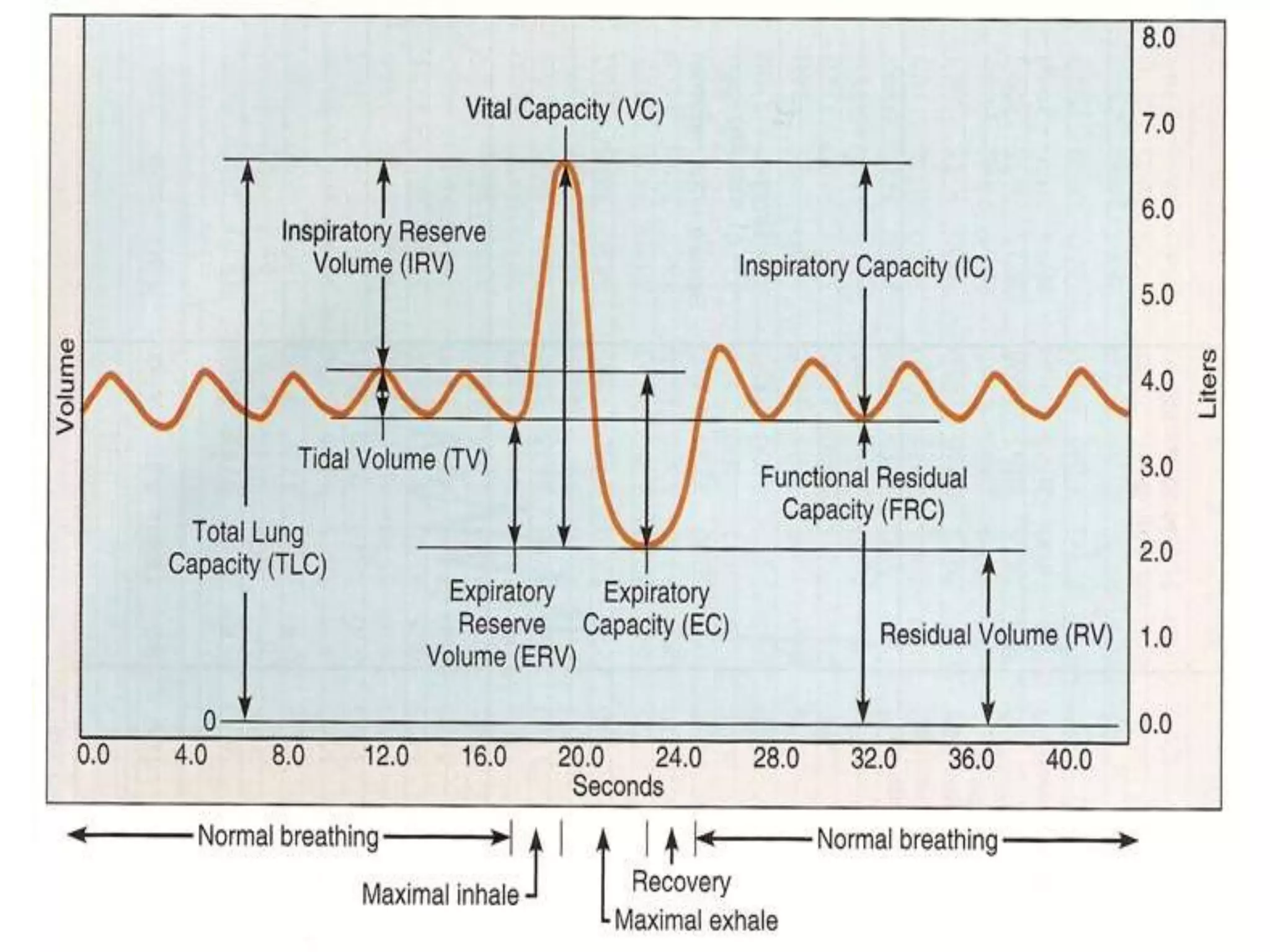
Spirometer
• The apparatus used to measure
– Volume of air exchanged during breathing
– Respiratory rate
• The record is called a spirogram
• Upward deflection inhalation
• Downward deflection exhalation
• Healthy adult averages R/R of 12 breaths/min
• Tidal Volume(VT)
– Amount of air inhaled and exhaled in and out of the
lungs is 500ml/breath
• Minute Ventilation:
– The total volume of air inhaled and exhaled each
minute
• Calculated by:
– MV = VT × R/R
= 500 breaths/ml × 12 breaths/min
= 6 litres/min
• In a typical adult
– 70% of the tidal volume i.e. 350ml reaches the
respiratory portion of the system
– Respiratory bronchioles, alveolar ducts, alveolar
sacs and alveoli
– 30% remains in non-respiratory passageways or
conducting airways of the system
• Anatomic Dead Space
– Nose, pharynx, larynx, trachea, bronchi,
bronchioles and terminal bronchioles
• Alveolar Ventilation Rate:
– Volume of air per minute that reaches the alveoli
and other respiratory portions
• 350ml/breath × 12 breaths/min = 4200ml/min
Lung Volumes
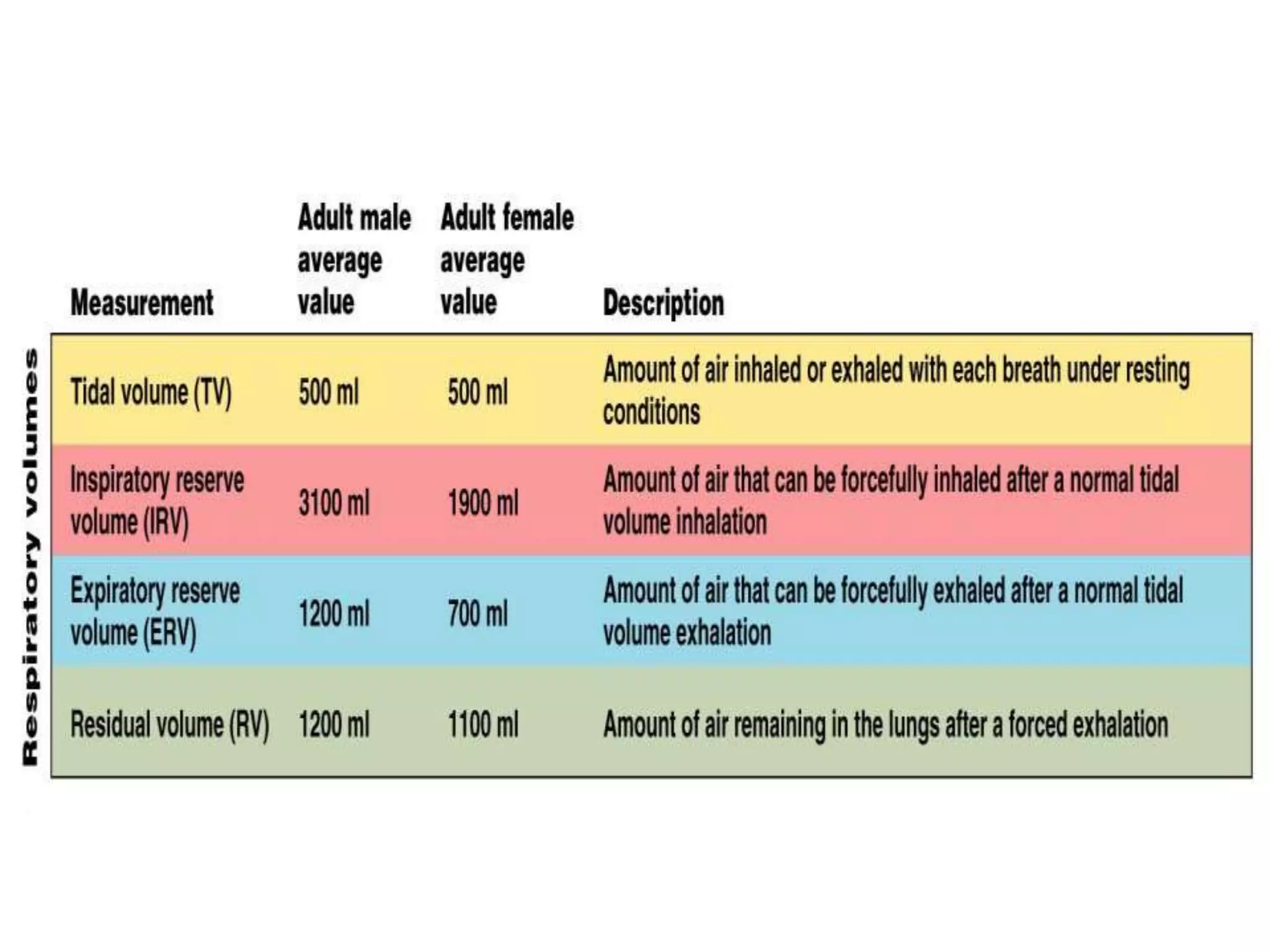
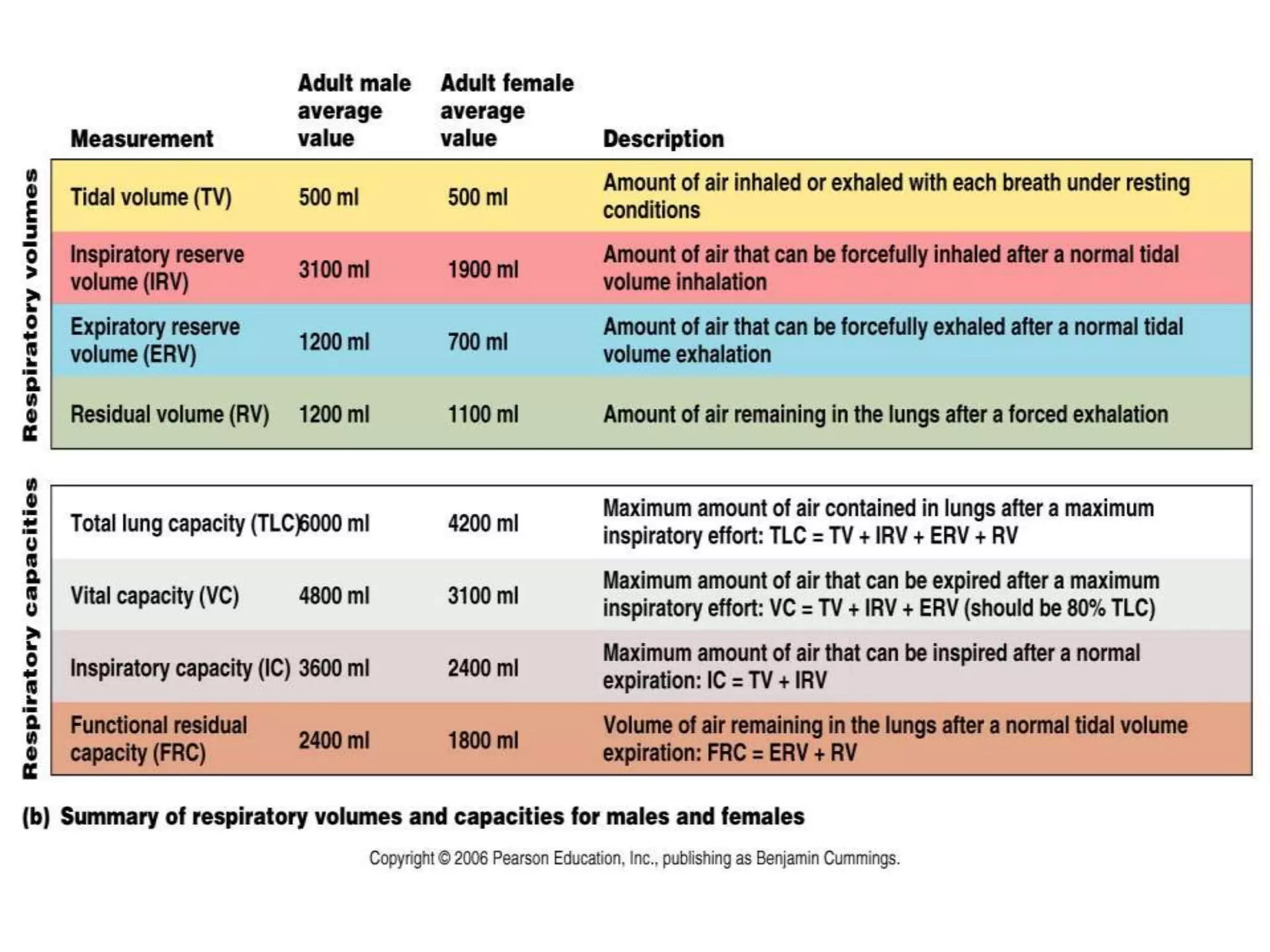
• 4 volumes
• Tidal Volume (VT)
• Amount of air inhaled and exhaled every breath
• Inspiratory Reserve Volume (IRV)
• The amount of air that can be forcefully inspired over
and above normal inspiration
• Expiratory Reserve Volume (ERV)
• The amount of air that can be forcefully exhaled after
normal exhalation
• Residual Volume (RV)
• The amount of air remaining in the lung even after
forced expiration
Lung Capacities
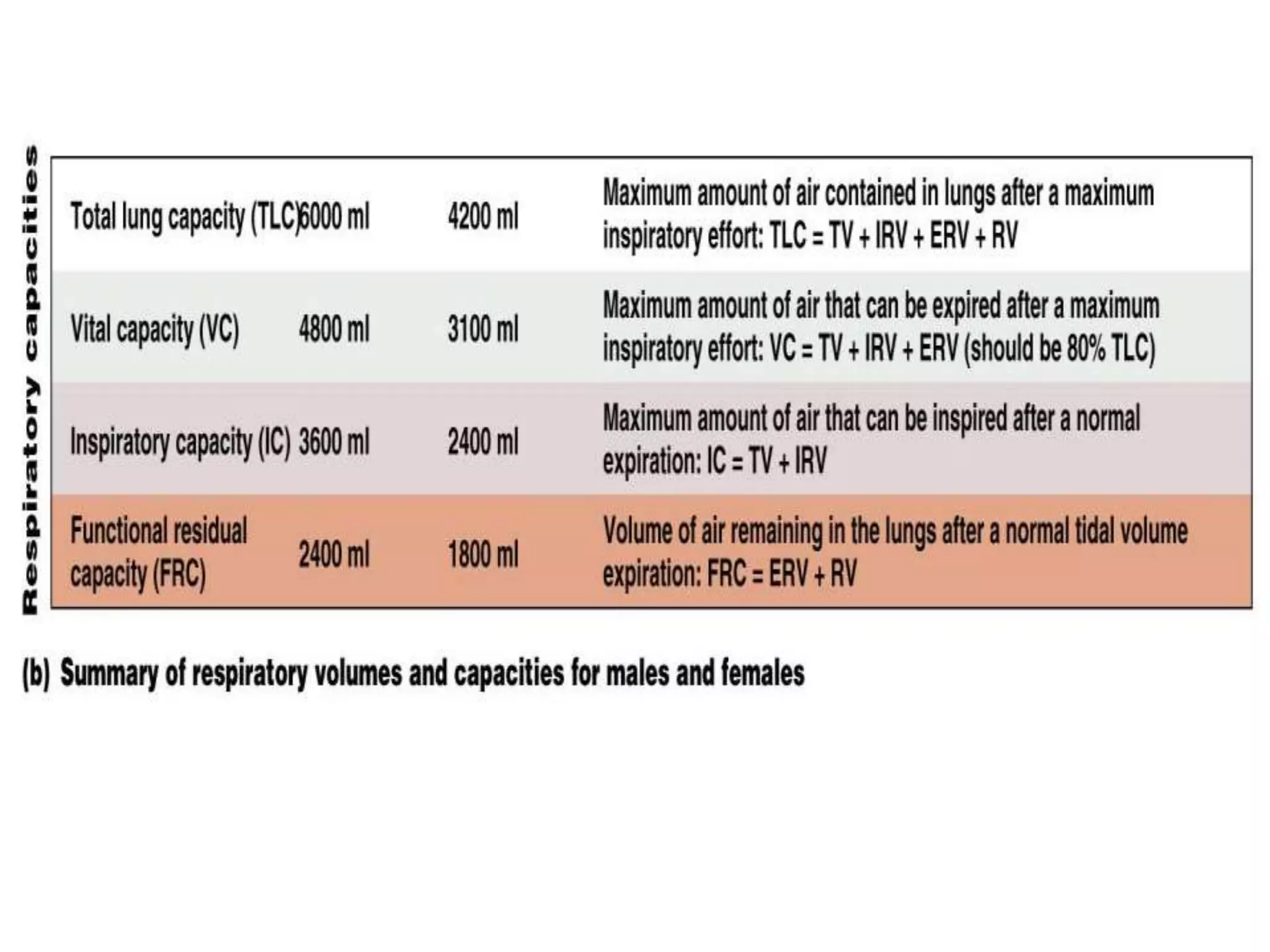
• Inspiratory capacity (IC)
– Represents the maximum volume that can be inspired
– Tidal volume plus inspiratory reserve volume
• VT + IRV
• Functional residual capacity (FRC)
– Represents the volume of air left in the lungs after normal
expiration
– Expiratory reserve volume plus the residual volume
• ERV + RV
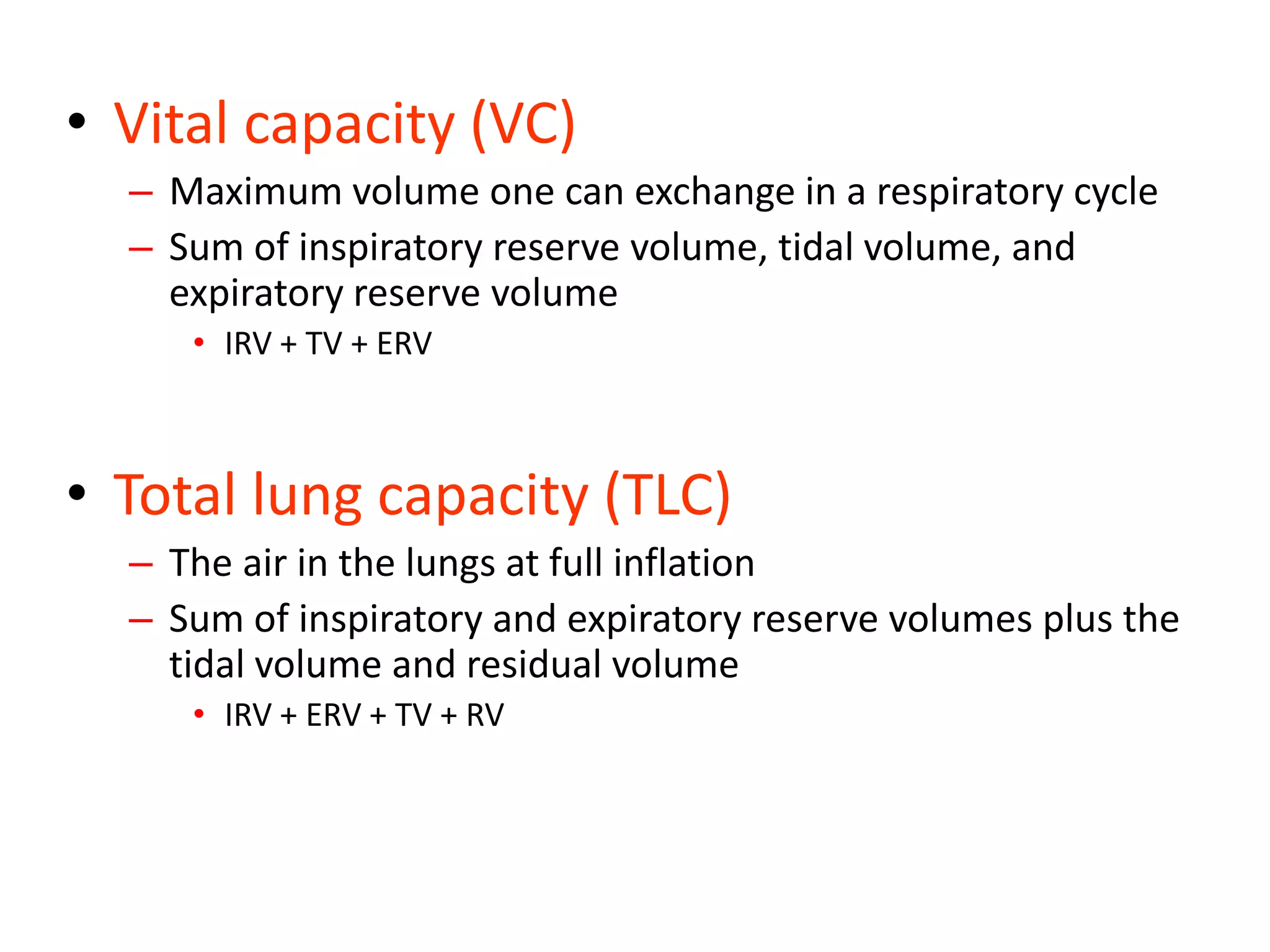
• Vital capacity (VC)
– Maximum volume one can exchange in a respiratory cycle
– Sum of inspiratory reserve volume, tidal volume, and
expiratory reserve volume
• IRV + TV + ERV
• Total lung capacity (TLC)
– The air in the lungs at full inflation
– Sum of inspiratory and expiratory reserve volumes plus the
tidal volume and residual volume
• IRV + ERV + TV + RV
Factors That Reduce VC
• Loss of Distensible Tissue
– e.g. pneumonectomy, atelectasis.
• Decreased Compliance
– e.g. respiratory distress syndrome, alveolar
edema, or infiltrative interstitial lung diseases.
• Increased Residual Volume
– e.g. emphysema, asthma, or lung cyst
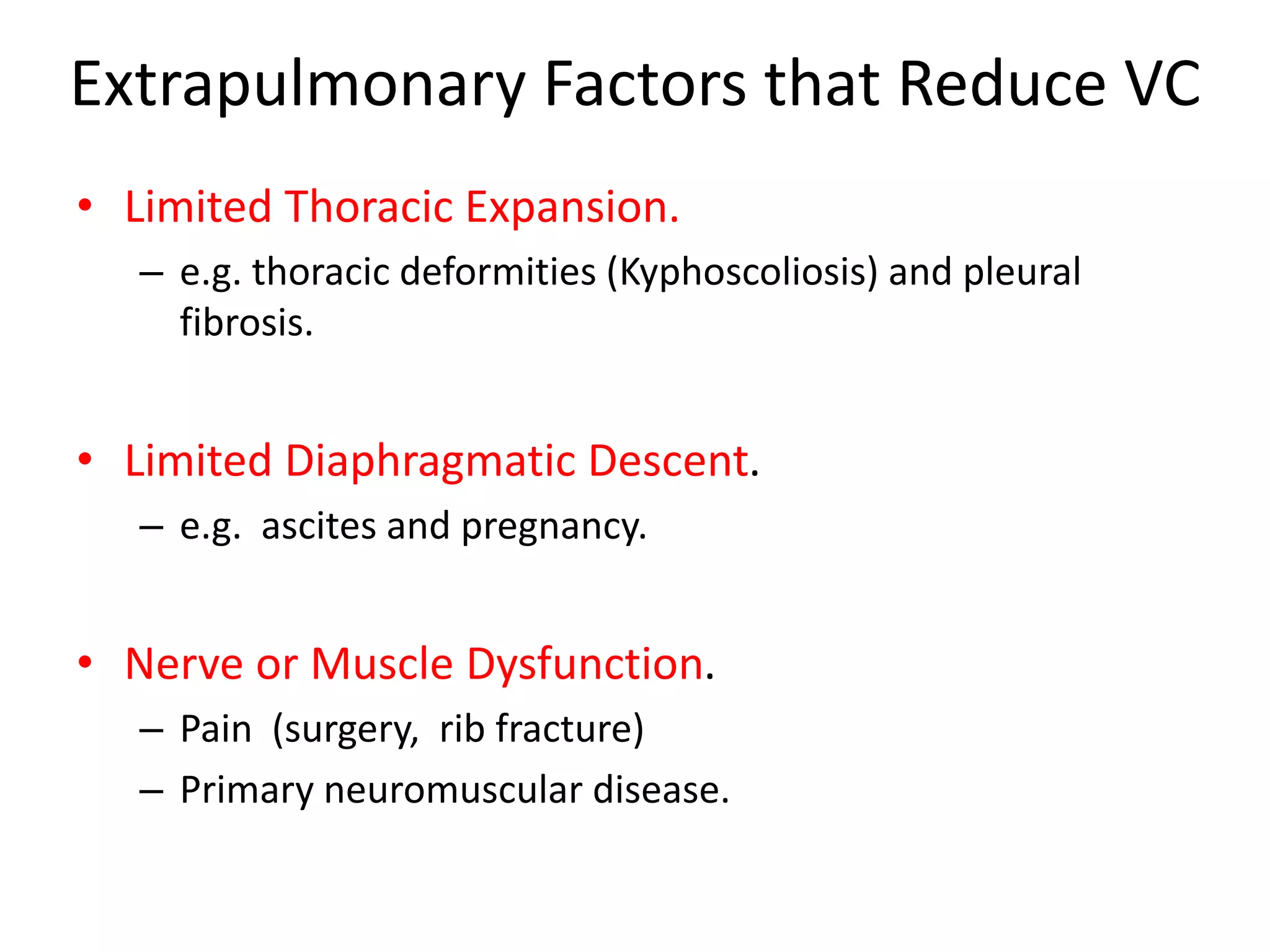
Extrapulmonary Factors that Reduce VC
• Limited Thoracic Expansion.
– e.g. thoracic deformities (Kyphoscoliosis) and pleural
fibrosis.
• Limited Diaphragmatic Descent.
– e.g. ascites and pregnancy.
• Nerve or Muscle Dysfunction.
– Pain (surgery, rib fracture)
– Primary neuromuscular disease.
Lung volume and capacities

Lung volume and capacities

  • 1.
    Lung Volume AndCapacities
  • 2.
    Spirometer • The apparatusused to measure – Volume of air exchanged during breathing – Respiratory rate • The record is called a spirogram • Upward deflection inhalation • Downward deflection exhalation
  • 3.
    • Healthy adultaverages R/R of 12 breaths/min • Tidal Volume(VT) – Amount of air inhaled and exhaled in and out of the lungs is 500ml/breath • Minute Ventilation: – The total volume of air inhaled and exhaled each minute • Calculated by: – MV = VT × R/R = 500 breaths/ml × 12 breaths/min = 6 litres/min
  • 4.
    • In atypical adult – 70% of the tidal volume i.e. 350ml reaches the respiratory portion of the system – Respiratory bronchioles, alveolar ducts, alveolar sacs and alveoli – 30% remains in non-respiratory passageways or conducting airways of the system • Anatomic Dead Space – Nose, pharynx, larynx, trachea, bronchi, bronchioles and terminal bronchioles
  • 5.
    • Alveolar VentilationRate: – Volume of air per minute that reaches the alveoli and other respiratory portions • 350ml/breath × 12 breaths/min = 4200ml/min
  • 6.
    Lung Volumes • 4volumes • Tidal Volume (VT) • Amount of air inhaled and exhaled every breath • Inspiratory Reserve Volume (IRV) • The amount of air that can be forcefully inspired over and above normal inspiration
  • 7.
    • Expiratory ReserveVolume (ERV) • The amount of air that can be forcefully exhaled after normal exhalation • Residual Volume (RV) • The amount of air remaining in the lung even after forced expiration
  • 10.
    Lung Capacities • Inspiratorycapacity (IC) – Represents the maximum volume that can be inspired – Tidal volume plus inspiratory reserve volume • VT + IRV • Functional residual capacity (FRC) – Represents the volume of air left in the lungs after normal expiration – Expiratory reserve volume plus the residual volume • ERV + RV
  • 11.
    • Vital capacity(VC) – Maximum volume one can exchange in a respiratory cycle – Sum of inspiratory reserve volume, tidal volume, and expiratory reserve volume • IRV + TV + ERV • Total lung capacity (TLC) – The air in the lungs at full inflation – Sum of inspiratory and expiratory reserve volumes plus the tidal volume and residual volume • IRV + ERV + TV + RV
  • 14.
    Factors That ReduceVC • Loss of Distensible Tissue – e.g. pneumonectomy, atelectasis. • Decreased Compliance – e.g. respiratory distress syndrome, alveolar edema, or infiltrative interstitial lung diseases. • Increased Residual Volume – e.g. emphysema, asthma, or lung cyst
  • 15.
    Extrapulmonary Factors thatReduce VC • Limited Thoracic Expansion. – e.g. thoracic deformities (Kyphoscoliosis) and pleural fibrosis. • Limited Diaphragmatic Descent. – e.g. ascites and pregnancy. • Nerve or Muscle Dysfunction. – Pain (surgery, rib fracture) – Primary neuromuscular disease.