Control Of Breathing 
By- Anindya Jana 
B. Pharm 2nd year
What Is Breathing? 
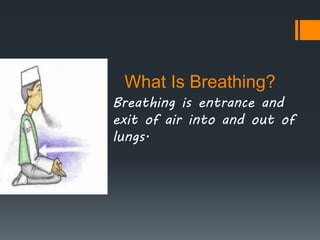
Breathing is entrance and 
exit of air into and out of 
lungs.
Mechanics Of Breathing 
Breathing, called ventilation consists of two phases :- 
1st – Inspiration 
2nd - Expiration 
Inspiration 
→ To increase temporarily the activity of 
respiratory center causes: 
● Contraction of the Diaphragm (downwards) and 
intercostal muscle (up and outwards) 
● This increase the volume of thoracic cavity and 
decrease the pressure in the lungs. 
● Air pressure is greater than the pressure in the 
lungs and alveoli fill with air.
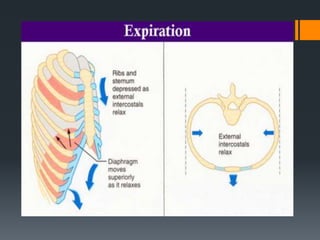
Expiration 
→ Inhibition of respiratory center (due to full 
alveoli) causes:- 
● Relaxation of the intercostal muscle and the 
diaphragm. 
● This decrease the volume of the thoracic cavity 
and increase the pressure in the lung. 
● Air pressure is less than the pressure in the 
lung so air is forced out of the lungs.
What is the difference between 
breathing and respiration? 
Generally, breathing and respiration are often 
considered the same; however there is a big 
difference in the meaning of the two. 
Breathing is when you consistently breathing air in 
and out. It is the process of taking in oxygen and 
expelling carbon dioxide. 
Respiration is a process in which the C-H bonds 
(carbon-hydrogen bonds) in food are broken down 
by oxidation reduction reactions and the energy is 
transformed in to ATP
Control Of Breathing 
●Breathing is under the control of the Autonomic 
Nervous System. This means it is a involuntary 
action. 
An involuntary action is one which occurs without the 
conscious choice of an organism. 
●We can control the rate and depth of breathing 
voluntarily. 
→Nervous system includes :- 
•Chemoreceptors (Sensitive to CO2 and H+) 
•Respiratory center of Medulla Oblongata. 
•Stretch Receptors in Alveoli.
Primary Nervous control 
●When the CO2 and subsequently H+ concentration 
in the blood increases, the activity of Medulla 
Oblongata is temporarily increases. 
The medulla oblongata is the most vital part of the brain because it is 
the control center for breathing, blood pressure and heart beat among 
other involuntary body functions under all unconscious control. 
What happens to CO2 in the blood!! 
CO2 + H2O ———→ H2CO3 
Then, 
H2CO3 ———→ H+ + HCO3 
- 
This is why CO2 level in the blood lead to an 
increase in H+ level.
Secondary Nervous Control 
●Chemoreceptors located in the carotid arteries and the 
aorta respond O2 level in the blood. 
A chemoreceptor, also known as chemo sensor, is 
a sensory receptor that produce a chemical signal into 
an action potential. 
●When O2 level in the blood are low, a nerve impulse is 
stimulate the respiratory center of medulla oblongata.
Alveolar Control 
● The alveoli contain stretch receptors. 
Stretch Receptors: 
They are the mechanoreceptors responsive to various 
organs and muscles, and are neurologically linked to 
the medulla in the brain via afferent nerve fibers. 
● When the alveoli are full, the stretch receptors sent a 
signal to the respiratory center. 
●This signal inhibits the respiratory center (negative 
feedback).
Control of breathing

Control of breathing

  • 1.
    Control Of Breathing By- Anindya Jana B. Pharm 2nd year
  • 2.
    What Is Breathing? Breathing is entrance and exit of air into and out of lungs.
  • 3.
    Mechanics Of Breathing Breathing, called ventilation consists of two phases :- 1st – Inspiration 2nd - Expiration Inspiration → To increase temporarily the activity of respiratory center causes: ● Contraction of the Diaphragm (downwards) and intercostal muscle (up and outwards) ● This increase the volume of thoracic cavity and decrease the pressure in the lungs. ● Air pressure is greater than the pressure in the lungs and alveoli fill with air.
  • 4.
    Expiration → Inhibitionof respiratory center (due to full alveoli) causes:- ● Relaxation of the intercostal muscle and the diaphragm. ● This decrease the volume of the thoracic cavity and increase the pressure in the lung. ● Air pressure is less than the pressure in the lung so air is forced out of the lungs.
  • 6.
    What is thedifference between breathing and respiration? Generally, breathing and respiration are often considered the same; however there is a big difference in the meaning of the two. Breathing is when you consistently breathing air in and out. It is the process of taking in oxygen and expelling carbon dioxide. Respiration is a process in which the C-H bonds (carbon-hydrogen bonds) in food are broken down by oxidation reduction reactions and the energy is transformed in to ATP
  • 7.
    Control Of Breathing ●Breathing is under the control of the Autonomic Nervous System. This means it is a involuntary action. An involuntary action is one which occurs without the conscious choice of an organism. ●We can control the rate and depth of breathing voluntarily. →Nervous system includes :- •Chemoreceptors (Sensitive to CO2 and H+) •Respiratory center of Medulla Oblongata. •Stretch Receptors in Alveoli.
  • 8.
    Primary Nervous control ●When the CO2 and subsequently H+ concentration in the blood increases, the activity of Medulla Oblongata is temporarily increases. The medulla oblongata is the most vital part of the brain because it is the control center for breathing, blood pressure and heart beat among other involuntary body functions under all unconscious control. What happens to CO2 in the blood!! CO2 + H2O ———→ H2CO3 Then, H2CO3 ———→ H+ + HCO3 - This is why CO2 level in the blood lead to an increase in H+ level.
  • 9.
    Secondary Nervous Control ●Chemoreceptors located in the carotid arteries and the aorta respond O2 level in the blood. A chemoreceptor, also known as chemo sensor, is a sensory receptor that produce a chemical signal into an action potential. ●When O2 level in the blood are low, a nerve impulse is stimulate the respiratory center of medulla oblongata.
  • 10.
    Alveolar Control ●The alveoli contain stretch receptors. Stretch Receptors: They are the mechanoreceptors responsive to various organs and muscles, and are neurologically linked to the medulla in the brain via afferent nerve fibers. ● When the alveoli are full, the stretch receptors sent a signal to the respiratory center. ●This signal inhibits the respiratory center (negative feedback).