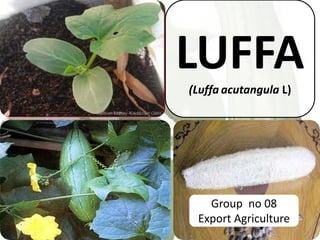
LUFFA 
(Luffa acutangula L) 
Group no 08 
Export Agriculture
Scientific Classification 
• Kingdom: Plantae 
• Division: Magnoliophyta 
• Class: Magnoliopsida 
• Order: Cucurbitales 
• Family: Cucurbitaceae 
• Species : Luffa acutangula L
Introduction 
• Belongs to cucurbit family 
• Native to Asia and believed to be originated in India 
• Can only be eaten when young because mature fruits 
become very bitter due to the development of 
purgative chemicals 
• An annual climbing herb
• It is well grown in low country dry zone, 
intermediate zone as well as wet zone
Uses 
• Edible - cooked or fried 
Stem tops with young leaves and flower 
buds used as leafy vegetable. 
Young fruits of cultivars, eaten raw or 
pickled. 
• Unripe fruit is a good source of calcium, iron , 
phosphorus, vitamin B
• Used in indigenous medicine 
• Mature fruit used as a bath brush or sponge 
• Used as a pesticide in some countries
Climatic requirements 
• Temperatures 25- 30 0C 
– for reasonable (50%) seed germination 
– early growth in L. acutangula 
• Long days and high temperatures favored the 
development of more female flowers 
.
• Luffa can be cultivated up to 500 AMSL 
• Heavy rain is not suitable for the cultivation
Soil Reqirements 
• Prefers - deep well drained 
sandy loam soils 
rich in organic matter 
• pH - 6.5 to 7.5. 
• Adequate soil moisture is essential 
• Excessive water can result in poor growth and 
root disease
Improved verities 
LA 33 
• Long 
• Ovoid in shape 
• Dull dark green in 
colour 
• 10 ridges.
Asiri 
• oblong in Shape 
• About 30 cm long 
• 10 ridges 
• Medium green in colour
Planting & Spacing 
• The seeds are sown on flat beds or ridges 
• 2–3 seeds per hole 
• 50–60 cm apart in the row and 200 cm 
between the rows. 
• Alternatively, seedlings may be raised in 
containers and transplanted 
• About 1.5 kg of seeds is required for a hectare
Irrigation & water Management 
• Irrigate the beds before planting the seeds 
• Daily irrigation requires at seedling stage 
• Thereafter irrigate once in a week 
• Required more during dry conditions at 
regular intervals, particularly before the 
flowering period 
• At commercial level – Drip irrigation
Fertilizer Management 
• NPK fertilizer is applied to:- enhance growth, 
flowering and fruit formation 
• Apply a dose of 250:100:100 kg NPK/ha 
throughout the cropping period
Other management practices 
• Normally grown on supports or trellises up to 
3 m high 
• Lateral stems are pruned if they grow too 
abundantly 
• It promote flower and fruit development, 
resulting in a higher yield 
• For optimal production, the number of fruits 
per stem may be limited to 20–25
Pollination 
• Natural pollination –cross pollination through 
bees 
• If it is does not occur manual pollination is done, 
-picking up male flowers and transferring 
pollens to female flowers 
- using cotton buds
• This process should be carried out when 
flowering is active during the daytime
Pests and Diseases 
• Most of the time, Luffa is not very susceptible to 
diseases and pests 
• Some diseases are; 
Powdery mildew (Erysiphe cichoracearum) 
Downy mildew (Pseudoperonospora cubensis) 
• Some reported pests are; 
cucurbit beetle 
trips 
caterpillars 
leaf miners and aphid
Cucumber beetle 
Powderly mildew 
Downy mildew
Control measures 
• For pests- 
– Continuous inspection 
– Use of pesticides (ex:- Malathion) 
• For diseases 
-Application of fungicides ( ex:- Captan) 
-Destroy host plants of vectors
Harvesting 
For vegetable :- 
• Young immature fruits of 300–400 g are 
picked 12–15 days after fruit set 
• Fruits can be picked every 3 days throughout 
the fruiting season 
-by hand or with a knife 
• Individual plants may produce 15–20 fruits 
• Yield declines after 8–13 weeks of harvesting
For sponge production :- 
• The fruits are left for two months on the vines 
till turning brown 
.
For seed production : - 
• The seeds are shaken out of the completely 
dry fruits
Current Status 
• Introduction of Makandura variety 
–Found from Makandura 
–Perform as well as DOA recommended 
verities 
–Resistance to some pests 
• As a export vegetable 
–By International Food Stuff Company 
–To New Zealand
THANK YOU 
Presented by : 
A.M.N.S.K.Abeysinghe UWU/EAG/11/0005 
A.P.Kariyawasam UWU/EAG/11/0006 
Export Agriculture

Luffa

  • 1.
    LUFFA (Luffa acutangulaL) Group no 08 Export Agriculture
  • 2.
    Scientific Classification •Kingdom: Plantae • Division: Magnoliophyta • Class: Magnoliopsida • Order: Cucurbitales • Family: Cucurbitaceae • Species : Luffa acutangula L
  • 3.
    Introduction • Belongsto cucurbit family • Native to Asia and believed to be originated in India • Can only be eaten when young because mature fruits become very bitter due to the development of purgative chemicals • An annual climbing herb
  • 4.
    • It iswell grown in low country dry zone, intermediate zone as well as wet zone
  • 5.
    Uses • Edible- cooked or fried Stem tops with young leaves and flower buds used as leafy vegetable. Young fruits of cultivars, eaten raw or pickled. • Unripe fruit is a good source of calcium, iron , phosphorus, vitamin B
  • 6.
    • Used inindigenous medicine • Mature fruit used as a bath brush or sponge • Used as a pesticide in some countries
  • 7.
    Climatic requirements •Temperatures 25- 30 0C – for reasonable (50%) seed germination – early growth in L. acutangula • Long days and high temperatures favored the development of more female flowers .
  • 8.
    • Luffa canbe cultivated up to 500 AMSL • Heavy rain is not suitable for the cultivation
  • 9.
    Soil Reqirements •Prefers - deep well drained sandy loam soils rich in organic matter • pH - 6.5 to 7.5. • Adequate soil moisture is essential • Excessive water can result in poor growth and root disease
  • 10.
    Improved verities LA33 • Long • Ovoid in shape • Dull dark green in colour • 10 ridges.
  • 11.
    Asiri • oblongin Shape • About 30 cm long • 10 ridges • Medium green in colour
  • 12.
    Planting & Spacing • The seeds are sown on flat beds or ridges • 2–3 seeds per hole • 50–60 cm apart in the row and 200 cm between the rows. • Alternatively, seedlings may be raised in containers and transplanted • About 1.5 kg of seeds is required for a hectare
  • 13.
    Irrigation & waterManagement • Irrigate the beds before planting the seeds • Daily irrigation requires at seedling stage • Thereafter irrigate once in a week • Required more during dry conditions at regular intervals, particularly before the flowering period • At commercial level – Drip irrigation
  • 14.
    Fertilizer Management •NPK fertilizer is applied to:- enhance growth, flowering and fruit formation • Apply a dose of 250:100:100 kg NPK/ha throughout the cropping period
  • 15.
    Other management practices • Normally grown on supports or trellises up to 3 m high • Lateral stems are pruned if they grow too abundantly • It promote flower and fruit development, resulting in a higher yield • For optimal production, the number of fruits per stem may be limited to 20–25
  • 17.
    Pollination • Naturalpollination –cross pollination through bees • If it is does not occur manual pollination is done, -picking up male flowers and transferring pollens to female flowers - using cotton buds
  • 18.
    • This processshould be carried out when flowering is active during the daytime
  • 19.
    Pests and Diseases • Most of the time, Luffa is not very susceptible to diseases and pests • Some diseases are; Powdery mildew (Erysiphe cichoracearum) Downy mildew (Pseudoperonospora cubensis) • Some reported pests are; cucurbit beetle trips caterpillars leaf miners and aphid
  • 20.
    Cucumber beetle Powderlymildew Downy mildew
  • 21.
    Control measures •For pests- – Continuous inspection – Use of pesticides (ex:- Malathion) • For diseases -Application of fungicides ( ex:- Captan) -Destroy host plants of vectors
  • 22.
    Harvesting For vegetable:- • Young immature fruits of 300–400 g are picked 12–15 days after fruit set • Fruits can be picked every 3 days throughout the fruiting season -by hand or with a knife • Individual plants may produce 15–20 fruits • Yield declines after 8–13 weeks of harvesting
  • 23.
    For sponge production:- • The fruits are left for two months on the vines till turning brown .
  • 24.
    For seed production: - • The seeds are shaken out of the completely dry fruits
  • 26.
    Current Status •Introduction of Makandura variety –Found from Makandura –Perform as well as DOA recommended verities –Resistance to some pests • As a export vegetable –By International Food Stuff Company –To New Zealand
  • 27.
    THANK YOU Presentedby : A.M.N.S.K.Abeysinghe UWU/EAG/11/0005 A.P.Kariyawasam UWU/EAG/11/0006 Export Agriculture