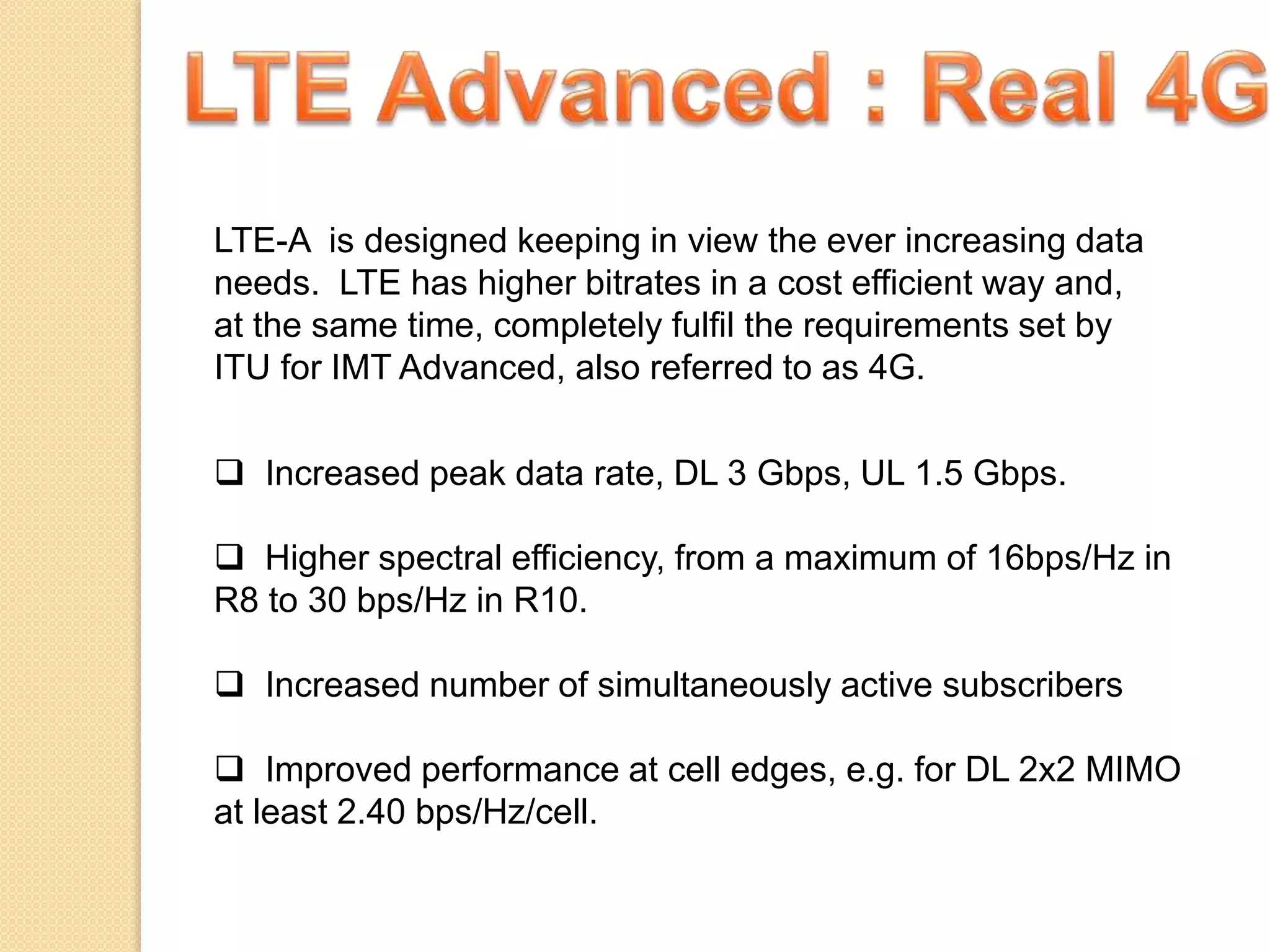
LTE-A is designed keeping in view the ever increasing data
needs. LTE has higher bitrates in a cost efficient way and,
at the same time, completely fulfil the requirements set by
ITU for IMT Advanced, also referred to as 4G.
 Increased peak data rate, DL 3 Gbps, UL 1.5 Gbps.
 Higher spectral efficiency, from a maximum of 16bps/Hz in
R8 to 30 bps/Hz in R10.
 Increased number of simultaneously active subscribers
 Improved performance at cell edges, e.g. for DL 2x2 MIMO
at least 2.40 bps/Hz/cell.
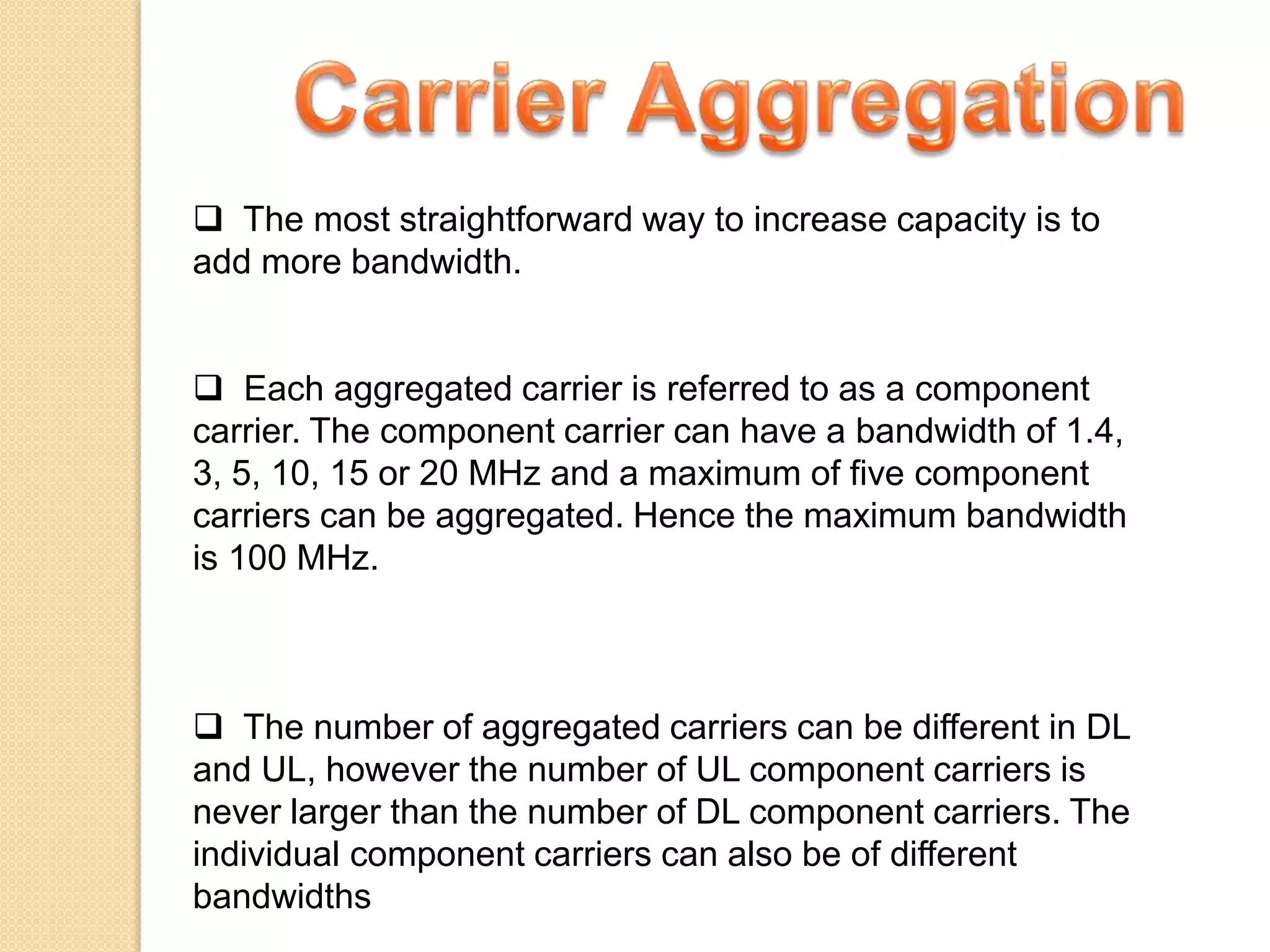
 The most straightforward way to increase capacity is to
add more bandwidth.
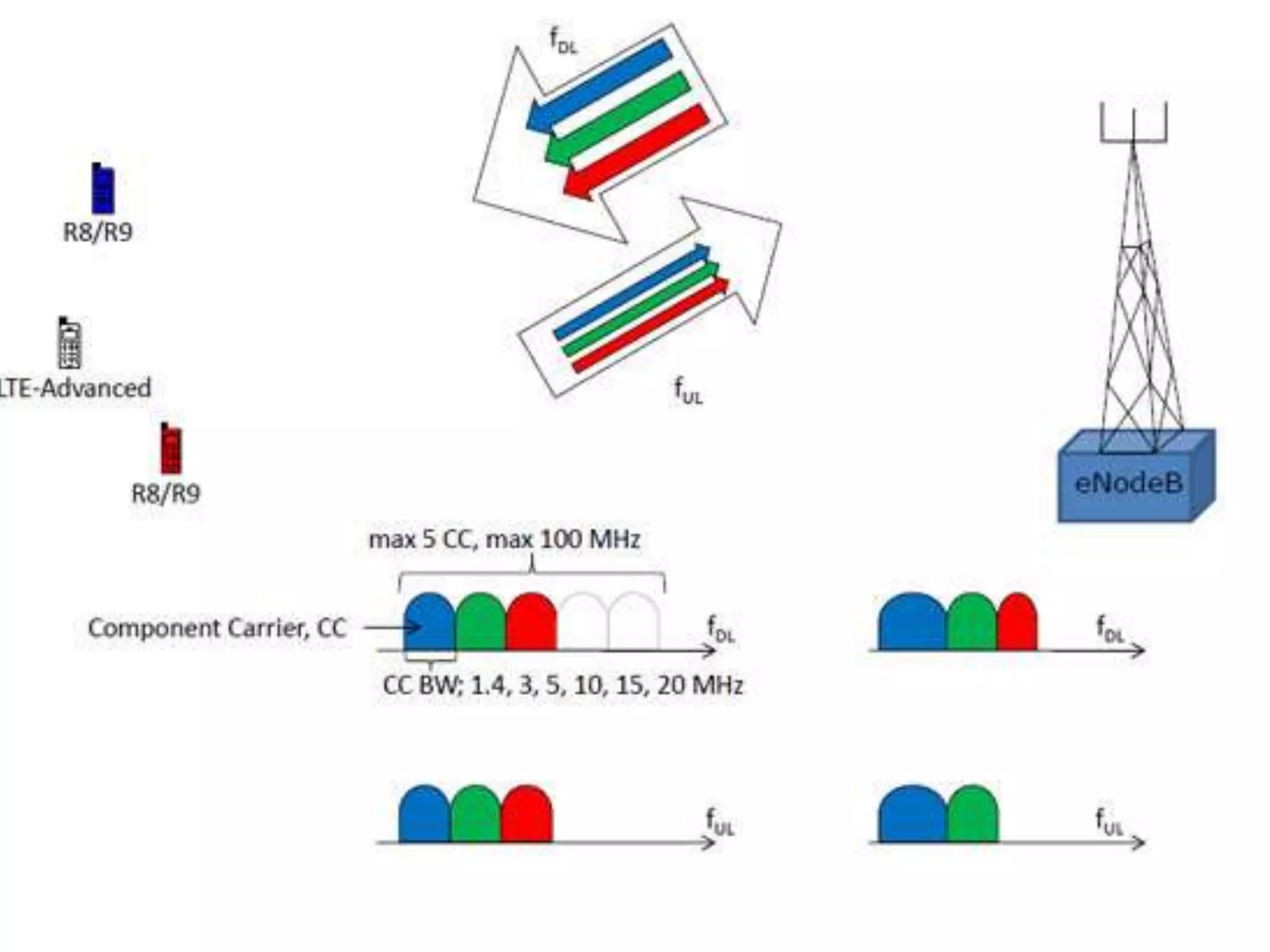
 Each aggregated carrier is referred to as a component
carrier. The component carrier can have a bandwidth of 1.4,
3, 5, 10, 15 or 20 MHz and a maximum of five component
carriers can be aggregated. Hence the maximum bandwidth
is 100 MHz.
 The number of aggregated carriers can be different in DL
and UL, however the number of UL component carriers is
never larger than the number of DL component carriers. The
individual component carriers can also be of different
bandwidths
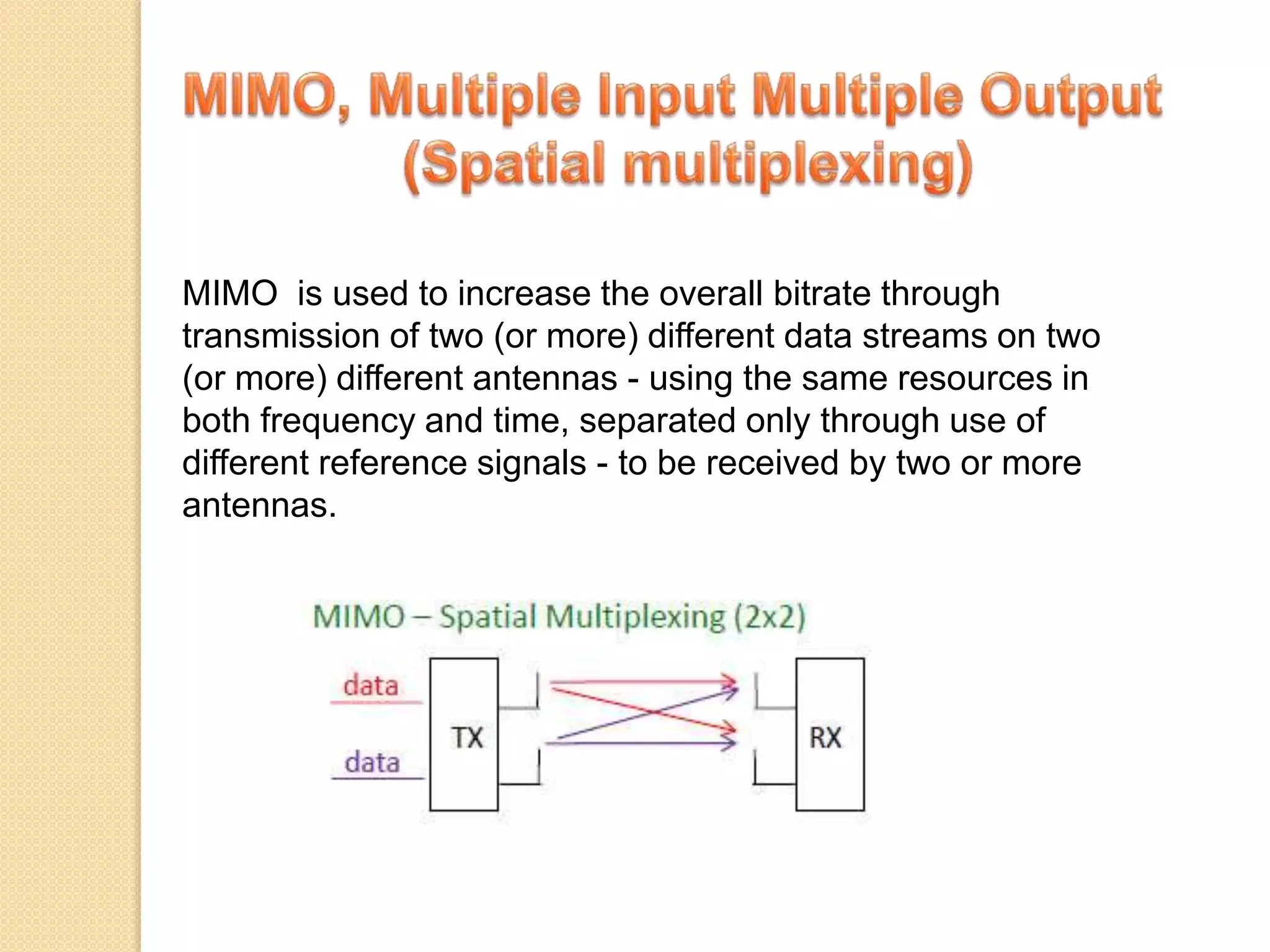
MIMO is used to increase the overall bitrate through
transmission of two (or more) different data streams on two
(or more) different antennas - using the same resources in
both frequency and time, separated only through use of
different reference signals - to be received by two or more
antennas.
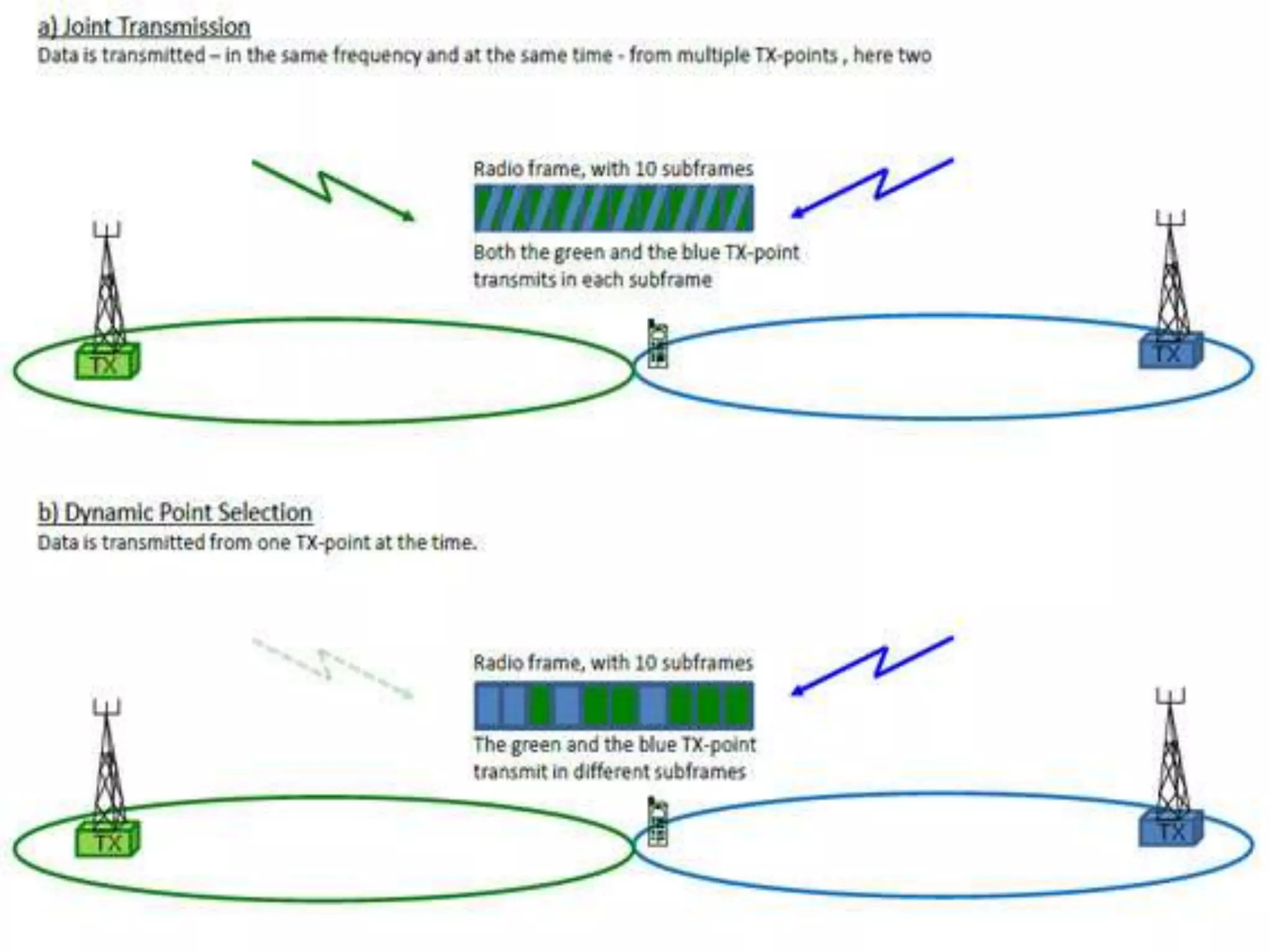
 The main reason to introduce CoMP is to improve network
performance at cell edges.
 In CoMP a number of TX (transmit) points provide
coordinated transmission in the DL, and a number of RX
(receive) points provide coordinated reception in the UL.
It is of two types :
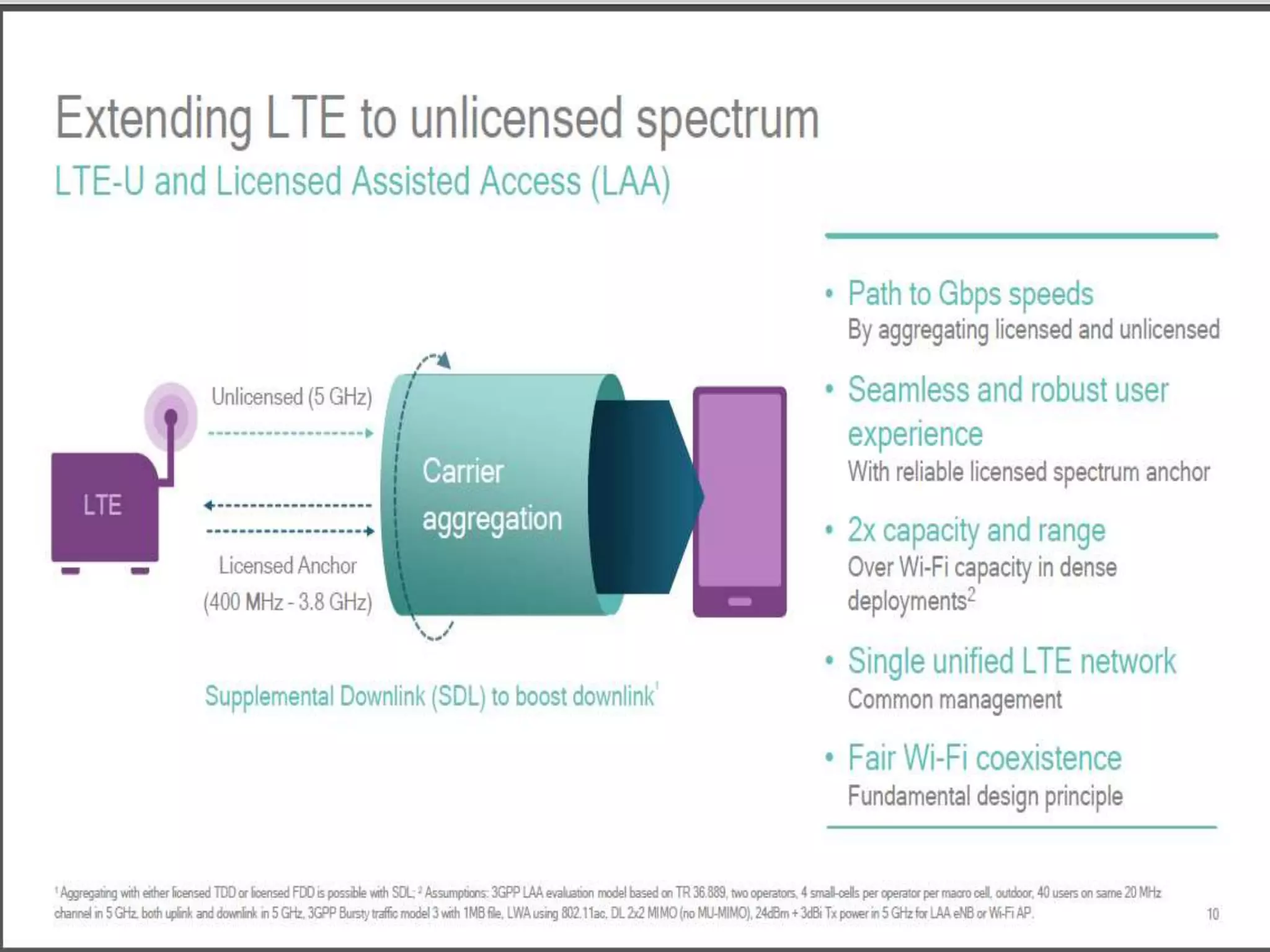
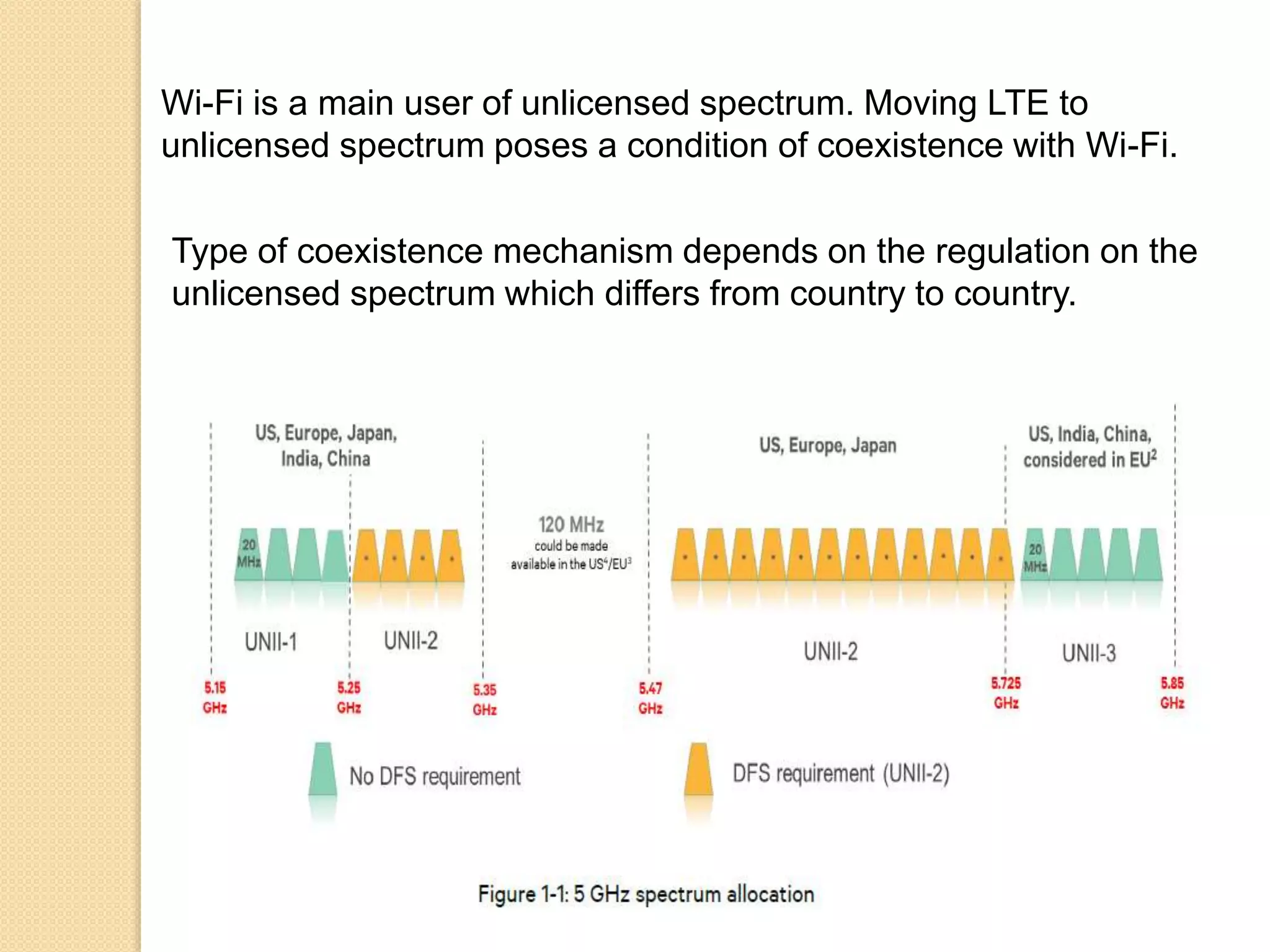
Wi-Fi is a main user of unlicensed spectrum. Moving LTE to
unlicensed spectrum poses a condition of coexistence with Wi-Fi.
Type of coexistence mechanism depends on the regulation on the
unlicensed spectrum which differs from country to country.
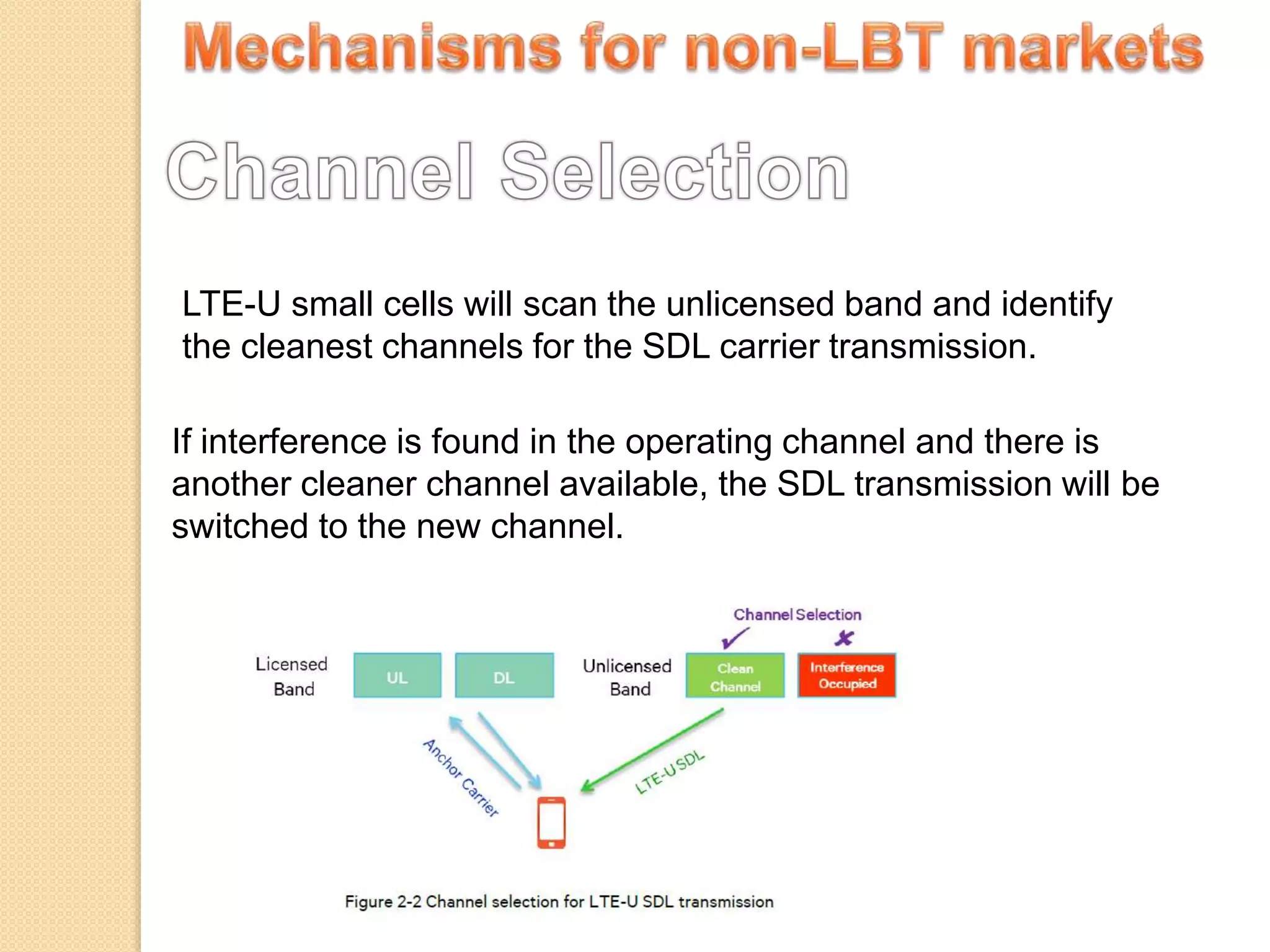
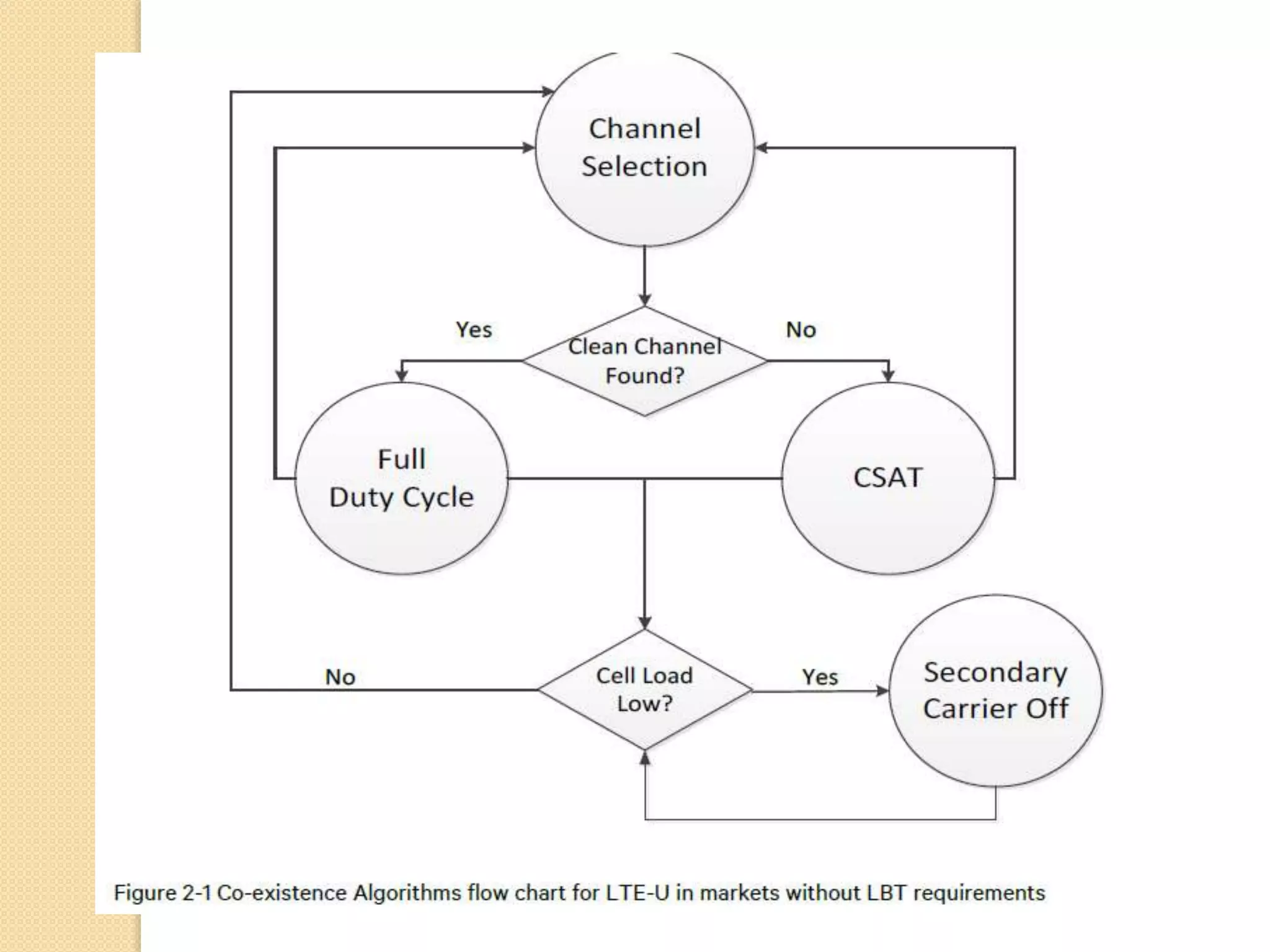
LTE-U small cells will scan the unlicensed band and identify
the cleanest channels for the SDL carrier transmission.
If interference is found in the operating channel and there is
another cleaner channel available, the SDL transmission will be
switched to the new channel.
The goal of these algorithms then is to provide
coexistence across different technologies in a TDM
fashion.
In CSAT, the small cell senses the medium for
longer (than LBT and CSMA) duration (around 10s
of msec to 200msec) and according to the observed
medium activities, the algorithm gates off LTE
transmission proportionally.
The duty cycle of transmission vs gating off is
dictated by the sensed medium activity of other
technologies.
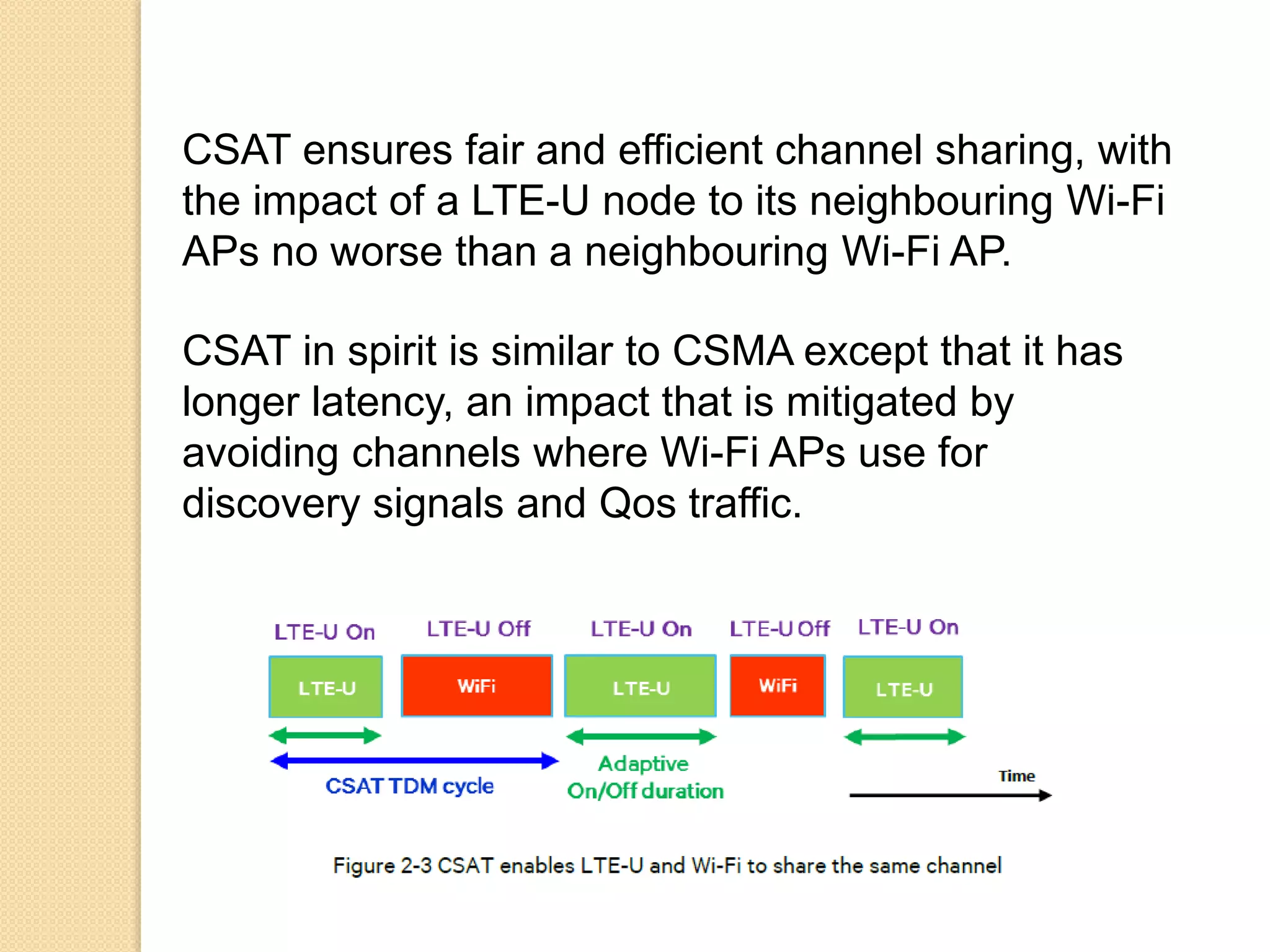
CSAT ensures fair and efficient channel sharing, with
the impact of a LTE-U node to its neighbouring Wi-Fi
APs no worse than a neighbouring Wi-Fi AP.
CSAT in spirit is similar to CSMA except that it has
longer latency, an impact that is mitigated by
avoiding channels where Wi-Fi APs use for
discovery signals and Qos traffic.
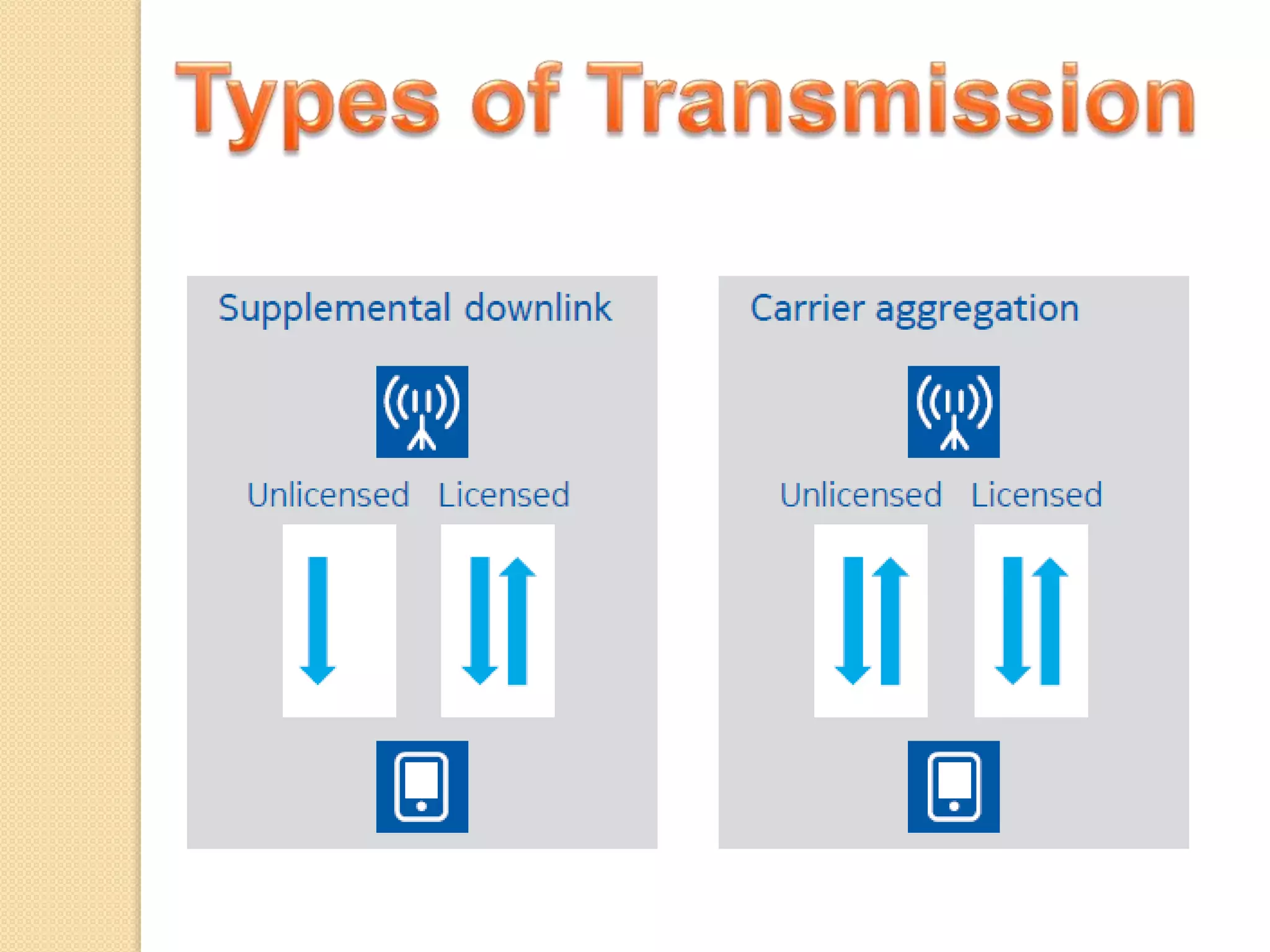
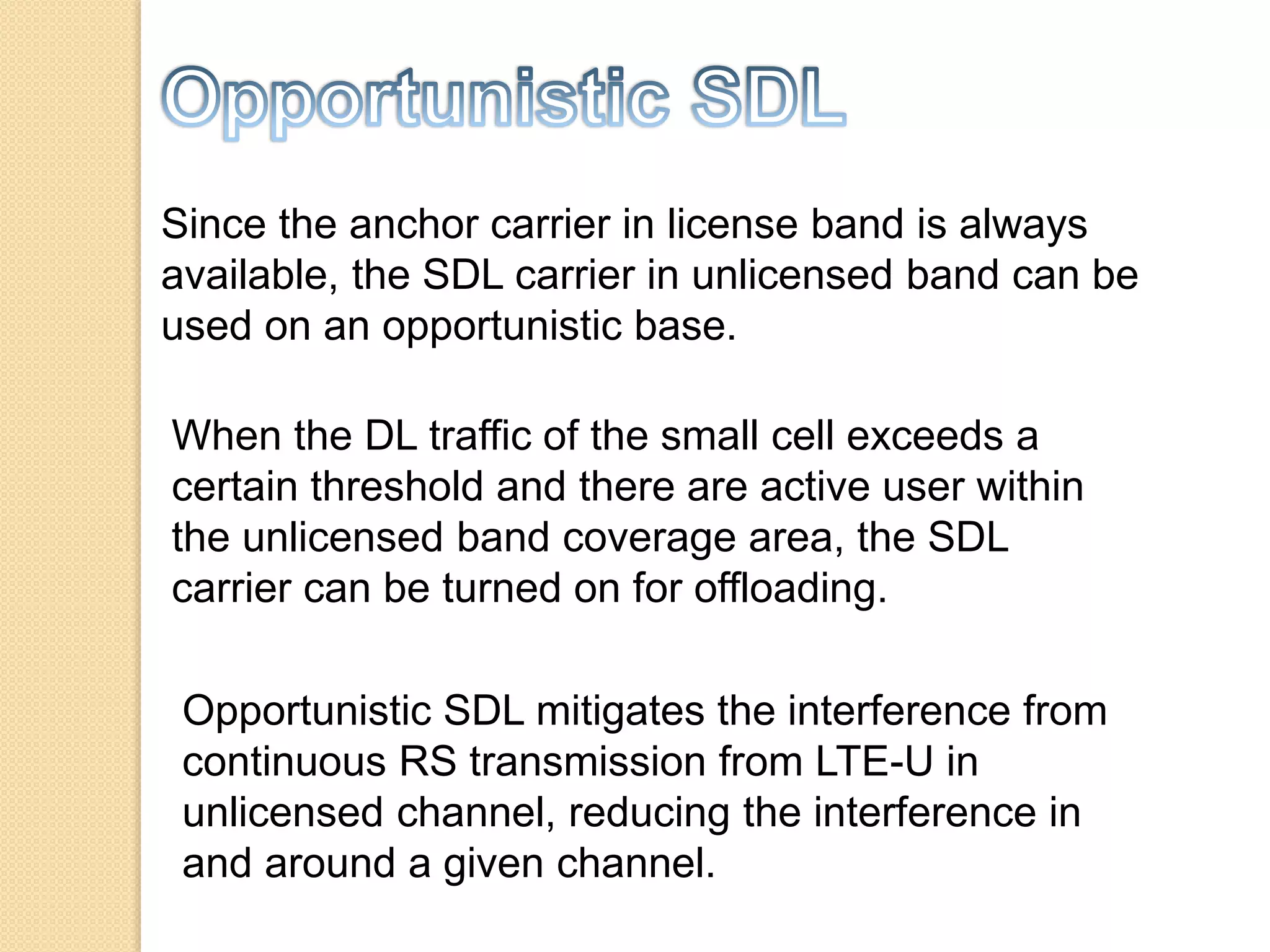
Since the anchor carrier in license band is always
available, the SDL carrier in unlicensed band can be
used on an opportunistic base.
When the DL traffic of the small cell exceeds a
certain threshold and there are active user within
the unlicensed band coverage area, the SDL
carrier can be turned on for offloading.
Opportunistic SDL mitigates the interference from
continuous RS transmission from LTE-U in
unlicensed channel, reducing the interference in
and around a given channel.
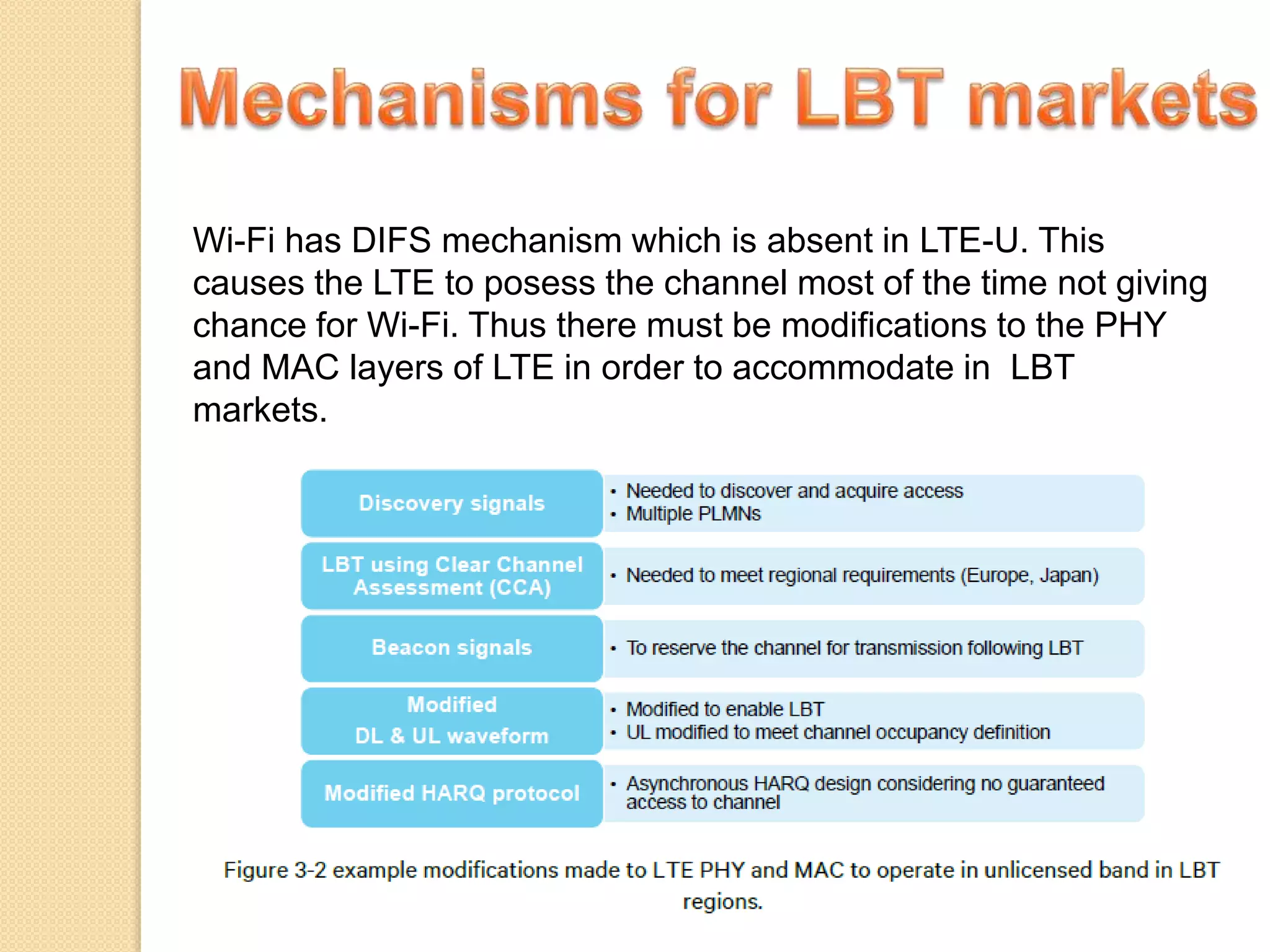
Wi-Fi has DIFS mechanism which is absent in LTE-U. This
causes the LTE to posess the channel most of the time not giving
chance for Wi-Fi. Thus there must be modifications to the PHY
and MAC layers of LTE in order to accommodate in LBT
markets.
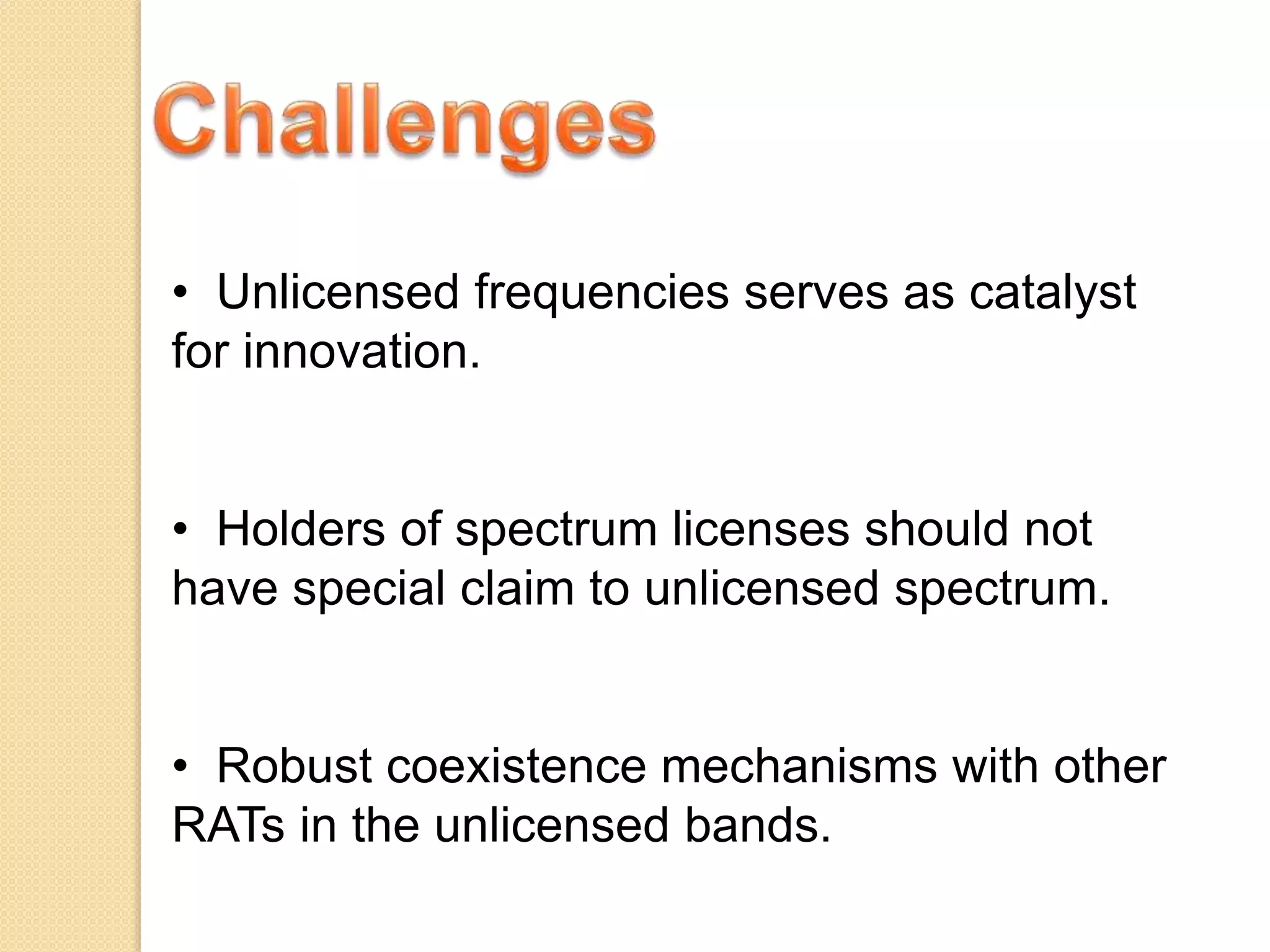
• Unlicensed frequencies serves as catalyst
for innovation.
• Holders of spectrum licenses should not
have special claim to unlicensed spectrum.
• Robust coexistence mechanisms with other
RATs in the unlicensed bands.
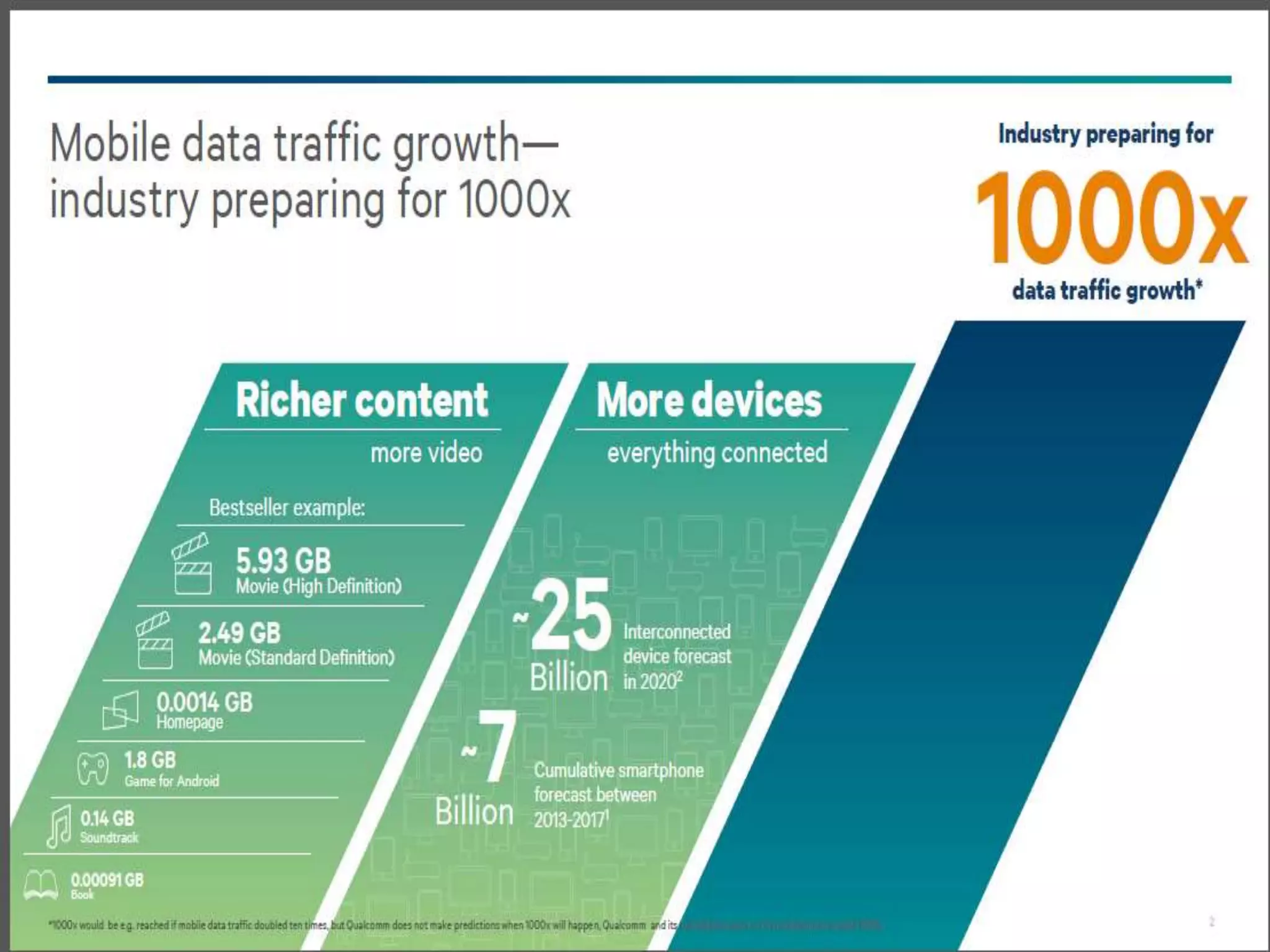
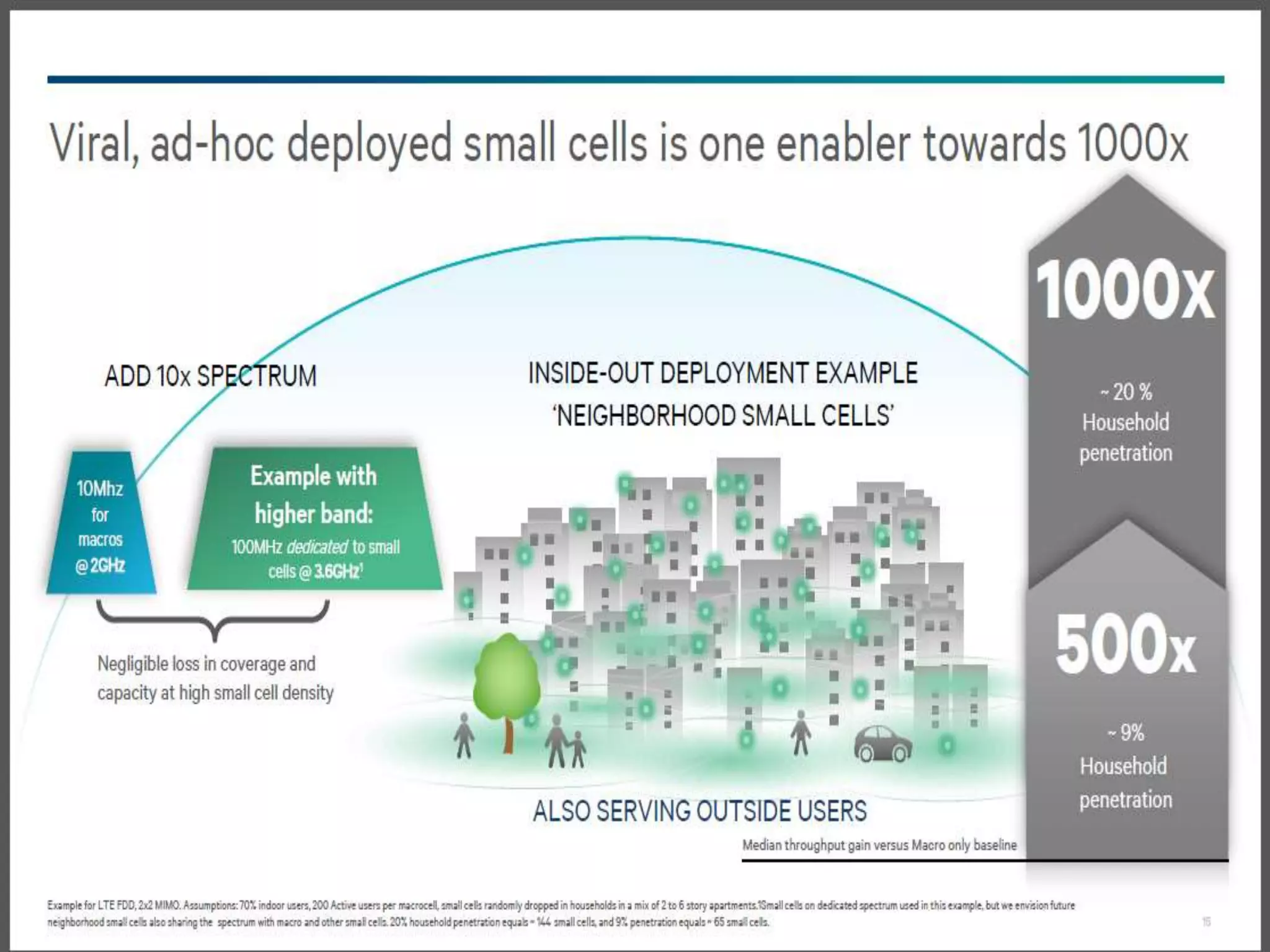
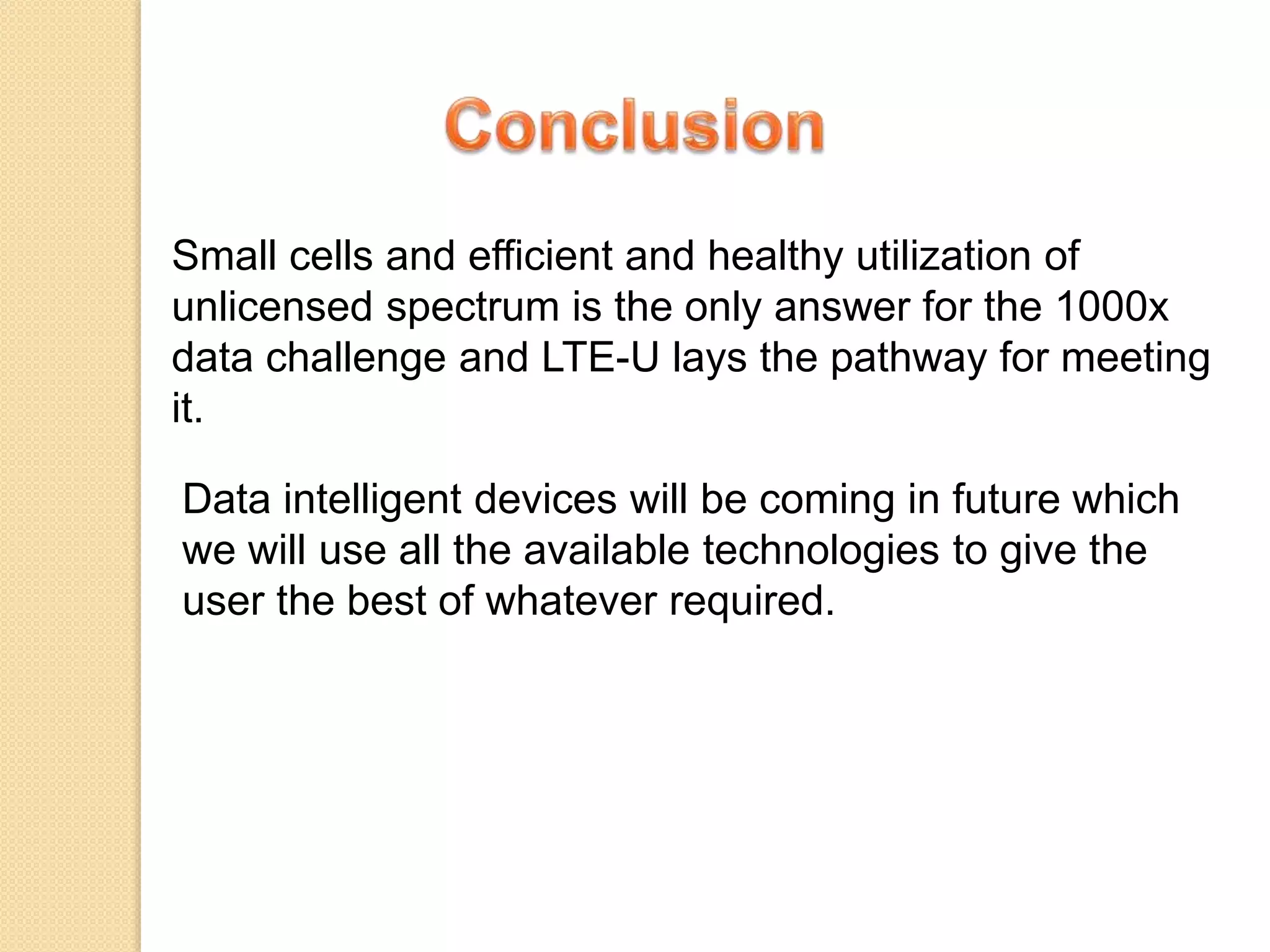
Small cells and efficient and healthy utilization of
unlicensed spectrum is the only answer for the 1000x
data challenge and LTE-U lays the pathway for meeting
it.
Data intelligent devices will be coming in future which
we will use all the available technologies to give the
user the best of whatever required.
 Dr T. Bheemarjun Reddy, HOD, Dept Of CSE, IIT Hyderabad.
‘ Best use of unlicensed Spectrum’ by Durga Malladi, Qualcomm Inc.
 Qualcomm Research LTE in unlicensed spectrum
 Nokia White Paper on LTE in unlicensed spectrum
 DSA Postion Paper on Unlicensed LTE
 3GPP Rel 10/11/12/13

LTE unlicensed

  • 5.
    LTE-A is designedkeeping in view the ever increasing data needs. LTE has higher bitrates in a cost efficient way and, at the same time, completely fulfil the requirements set by ITU for IMT Advanced, also referred to as 4G.  Increased peak data rate, DL 3 Gbps, UL 1.5 Gbps.  Higher spectral efficiency, from a maximum of 16bps/Hz in R8 to 30 bps/Hz in R10.  Increased number of simultaneously active subscribers  Improved performance at cell edges, e.g. for DL 2x2 MIMO at least 2.40 bps/Hz/cell.
  • 6.
     The moststraightforward way to increase capacity is to add more bandwidth.  Each aggregated carrier is referred to as a component carrier. The component carrier can have a bandwidth of 1.4, 3, 5, 10, 15 or 20 MHz and a maximum of five component carriers can be aggregated. Hence the maximum bandwidth is 100 MHz.  The number of aggregated carriers can be different in DL and UL, however the number of UL component carriers is never larger than the number of DL component carriers. The individual component carriers can also be of different bandwidths
  • 9.
    MIMO is usedto increase the overall bitrate through transmission of two (or more) different data streams on two (or more) different antennas - using the same resources in both frequency and time, separated only through use of different reference signals - to be received by two or more antennas.
  • 10.
     The mainreason to introduce CoMP is to improve network performance at cell edges.  In CoMP a number of TX (transmit) points provide coordinated transmission in the DL, and a number of RX (receive) points provide coordinated reception in the UL. It is of two types :
  • 14.
    Wi-Fi is amain user of unlicensed spectrum. Moving LTE to unlicensed spectrum poses a condition of coexistence with Wi-Fi. Type of coexistence mechanism depends on the regulation on the unlicensed spectrum which differs from country to country.
  • 15.
    LTE-U small cellswill scan the unlicensed band and identify the cleanest channels for the SDL carrier transmission. If interference is found in the operating channel and there is another cleaner channel available, the SDL transmission will be switched to the new channel.
  • 16.
    The goal ofthese algorithms then is to provide coexistence across different technologies in a TDM fashion. In CSAT, the small cell senses the medium for longer (than LBT and CSMA) duration (around 10s of msec to 200msec) and according to the observed medium activities, the algorithm gates off LTE transmission proportionally. The duty cycle of transmission vs gating off is dictated by the sensed medium activity of other technologies.
  • 17.
    CSAT ensures fairand efficient channel sharing, with the impact of a LTE-U node to its neighbouring Wi-Fi APs no worse than a neighbouring Wi-Fi AP. CSAT in spirit is similar to CSMA except that it has longer latency, an impact that is mitigated by avoiding channels where Wi-Fi APs use for discovery signals and Qos traffic.
  • 19.
    Since the anchorcarrier in license band is always available, the SDL carrier in unlicensed band can be used on an opportunistic base. When the DL traffic of the small cell exceeds a certain threshold and there are active user within the unlicensed band coverage area, the SDL carrier can be turned on for offloading. Opportunistic SDL mitigates the interference from continuous RS transmission from LTE-U in unlicensed channel, reducing the interference in and around a given channel.
  • 21.
    Wi-Fi has DIFSmechanism which is absent in LTE-U. This causes the LTE to posess the channel most of the time not giving chance for Wi-Fi. Thus there must be modifications to the PHY and MAC layers of LTE in order to accommodate in LBT markets.
  • 23.
    • Unlicensed frequenciesserves as catalyst for innovation. • Holders of spectrum licenses should not have special claim to unlicensed spectrum. • Robust coexistence mechanisms with other RATs in the unlicensed bands.
  • 25.
    Small cells andefficient and healthy utilization of unlicensed spectrum is the only answer for the 1000x data challenge and LTE-U lays the pathway for meeting it. Data intelligent devices will be coming in future which we will use all the available technologies to give the user the best of whatever required.
  • 26.
     Dr T.Bheemarjun Reddy, HOD, Dept Of CSE, IIT Hyderabad. ‘ Best use of unlicensed Spectrum’ by Durga Malladi, Qualcomm Inc.  Qualcomm Research LTE in unlicensed spectrum  Nokia White Paper on LTE in unlicensed spectrum  DSA Postion Paper on Unlicensed LTE  3GPP Rel 10/11/12/13