This document is offered compliments of
BSP Media Group. www.bspmediagroup.com
All rights reserved.
LTE Access Network

All material is Copyright © Informa Telecoms & Media 2001-2010
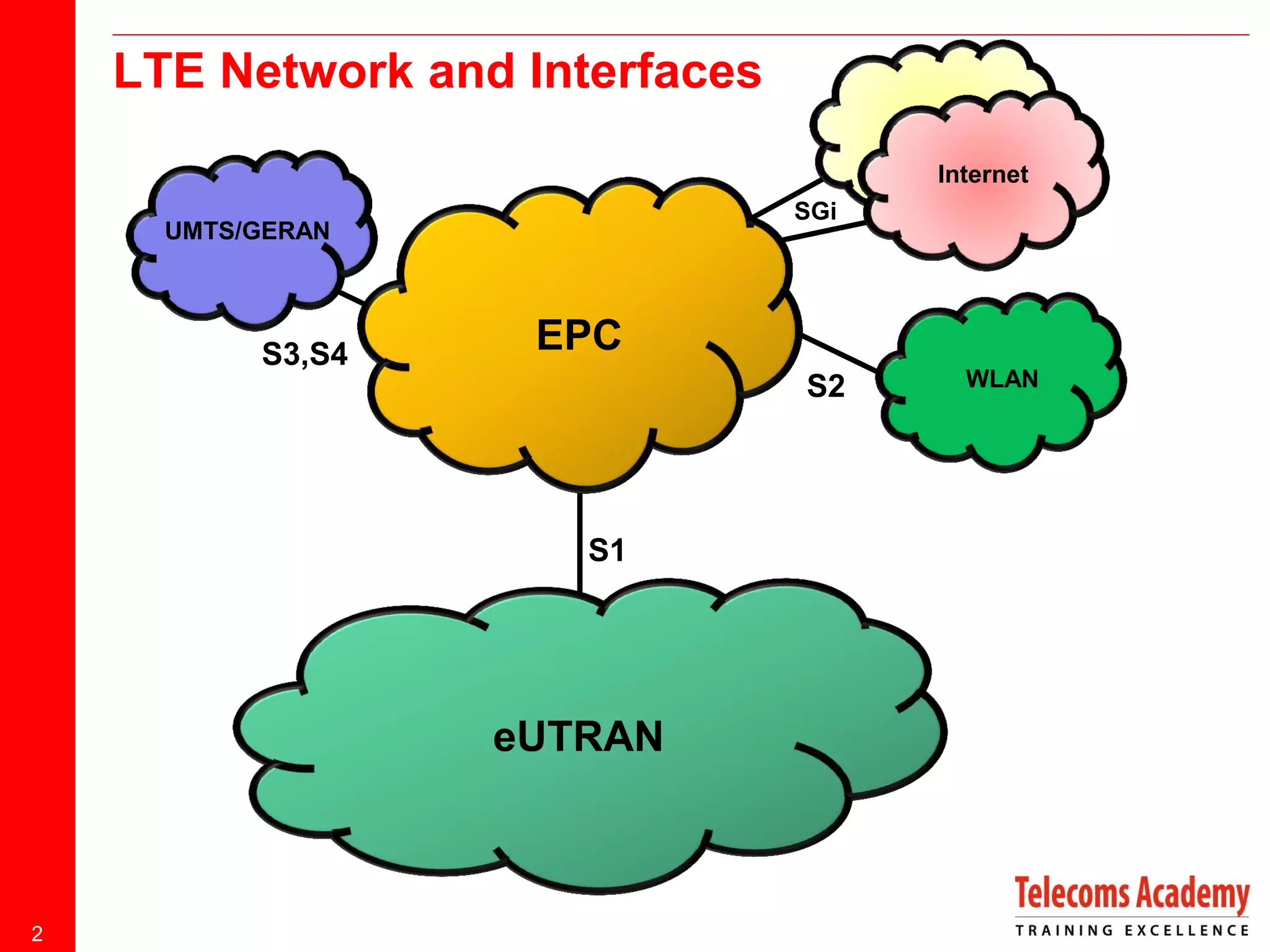
LTE Network and Interfaces
Internet
SGi

UMTS/GERAN

S3,S4

EPC
S2

S1

eUTRAN

2

WLAN
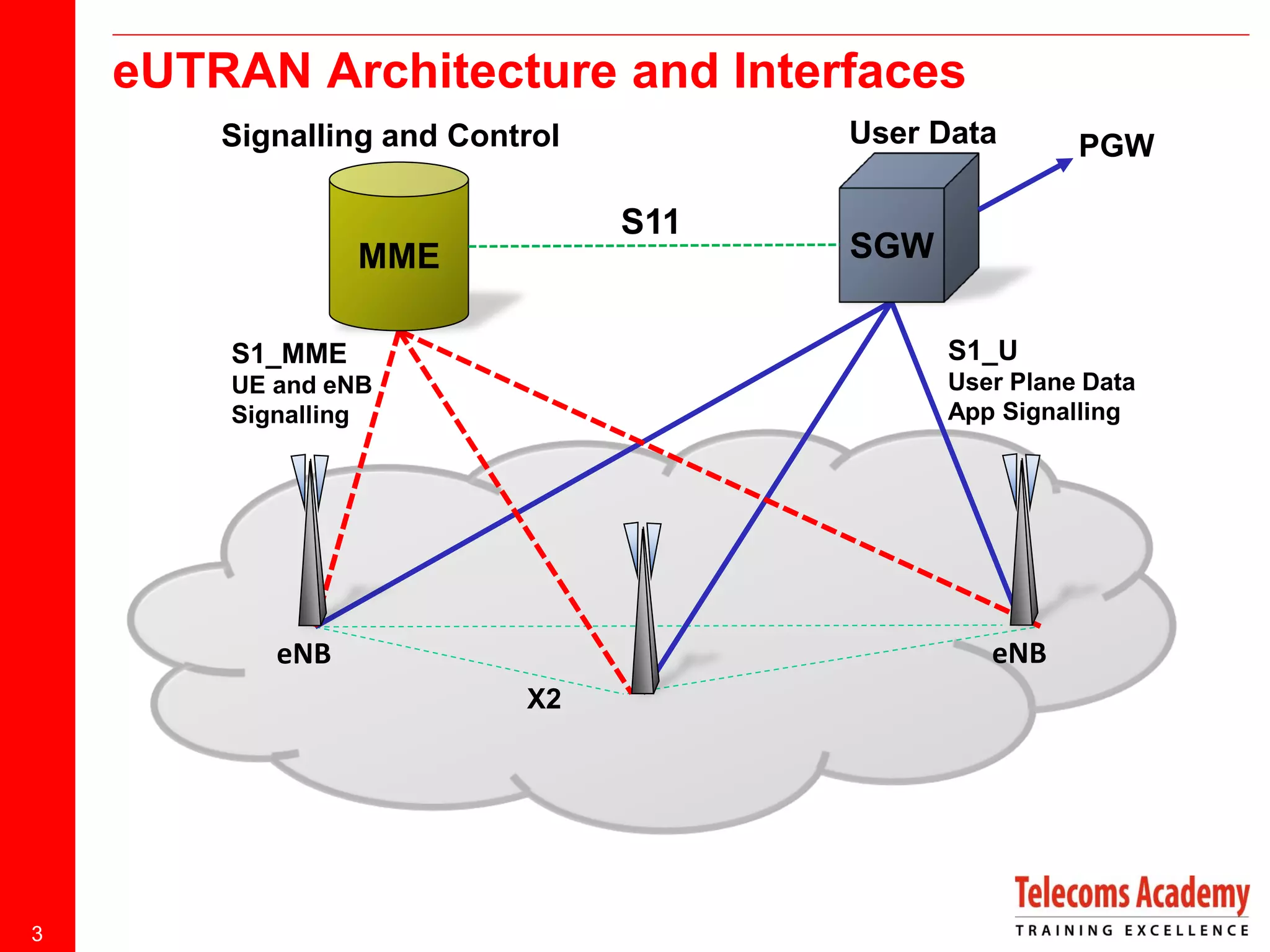
eUTRAN Architecture and Interfaces
User Data

Signalling and Control

S11
MME

PGW

SGW

S1_MME

S1_U

UE and eNB
Signalling

User Plane Data
App Signalling

eNB

eNB
X2

3
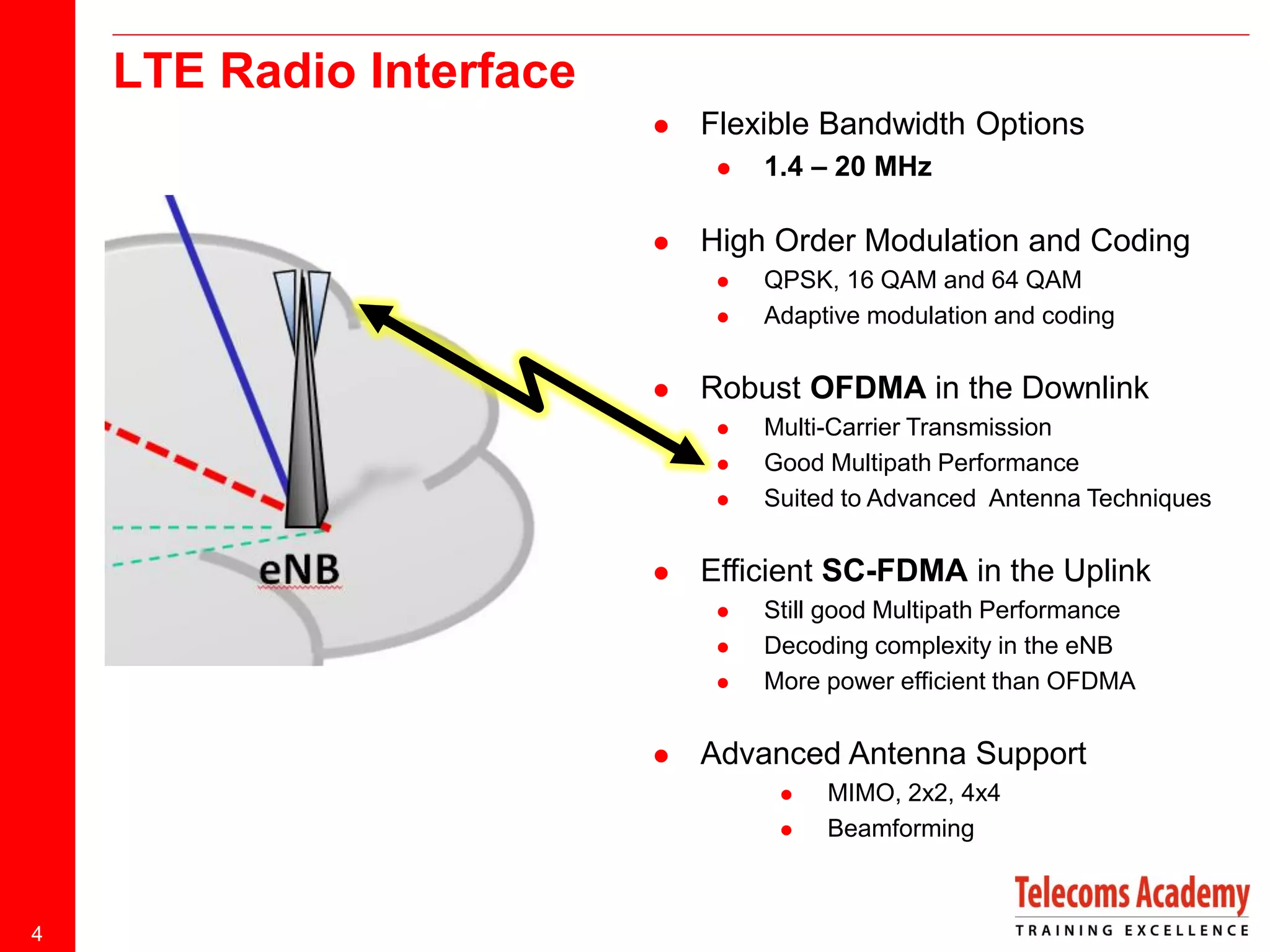
LTE Radio Interface


Flexible Bandwidth Options




High Order Modulation and Coding








Multi-Carrier Transmission
Good Multipath Performance
Suited to Advanced Antenna Techniques

Efficient SC-FDMA in the Uplink






QPSK, 16 QAM and 64 QAM
Adaptive modulation and coding

Robust OFDMA in the Downlink




1.4 – 20 MHz

Still good Multipath Performance
Decoding complexity in the eNB
More power efficient than OFDMA

Advanced Antenna Support



4

MIMO, 2x2, 4x4
Beamforming
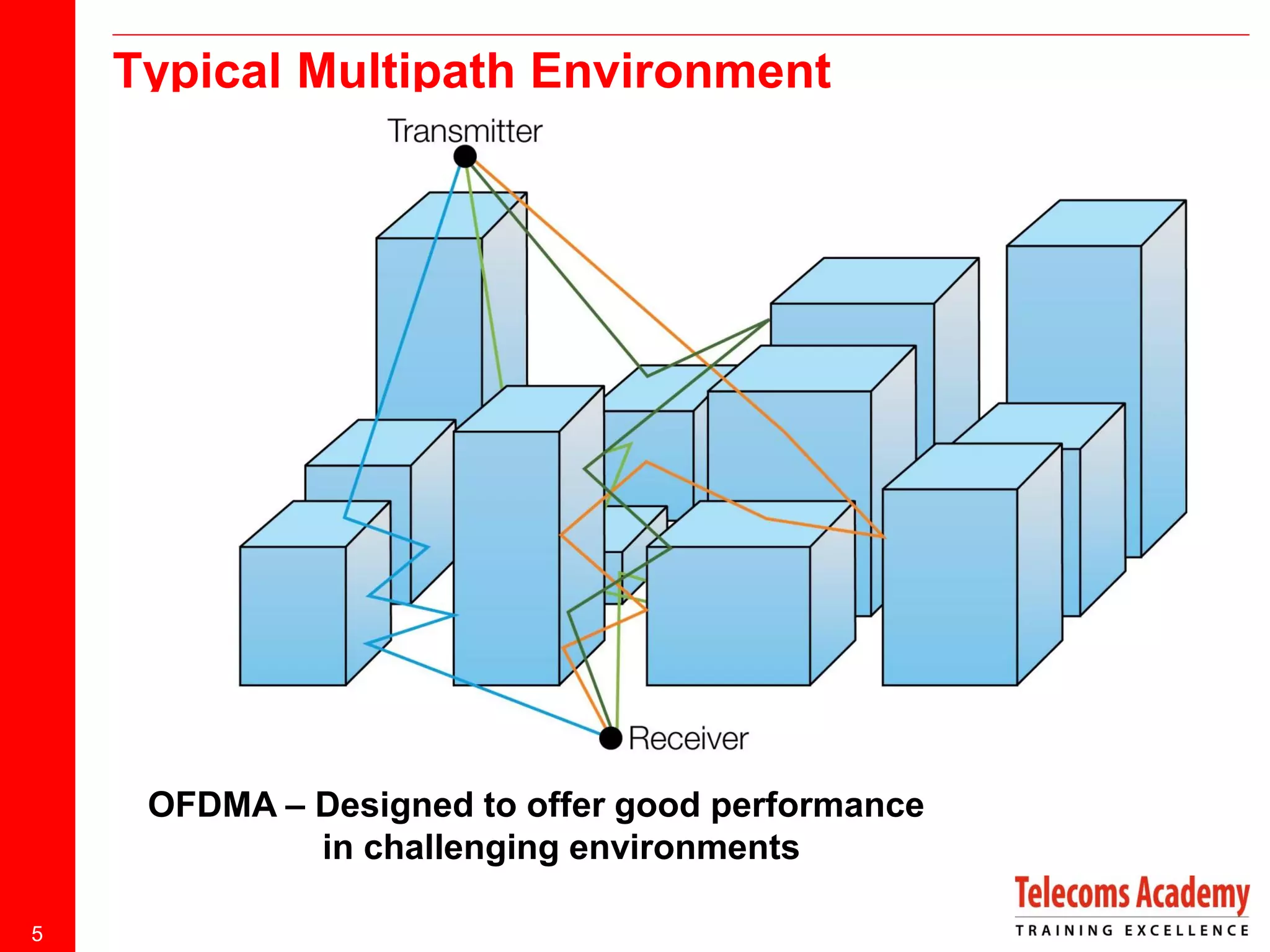
Typical Multipath Environment

OFDMA – Designed to offer good performance
in challenging environments
5
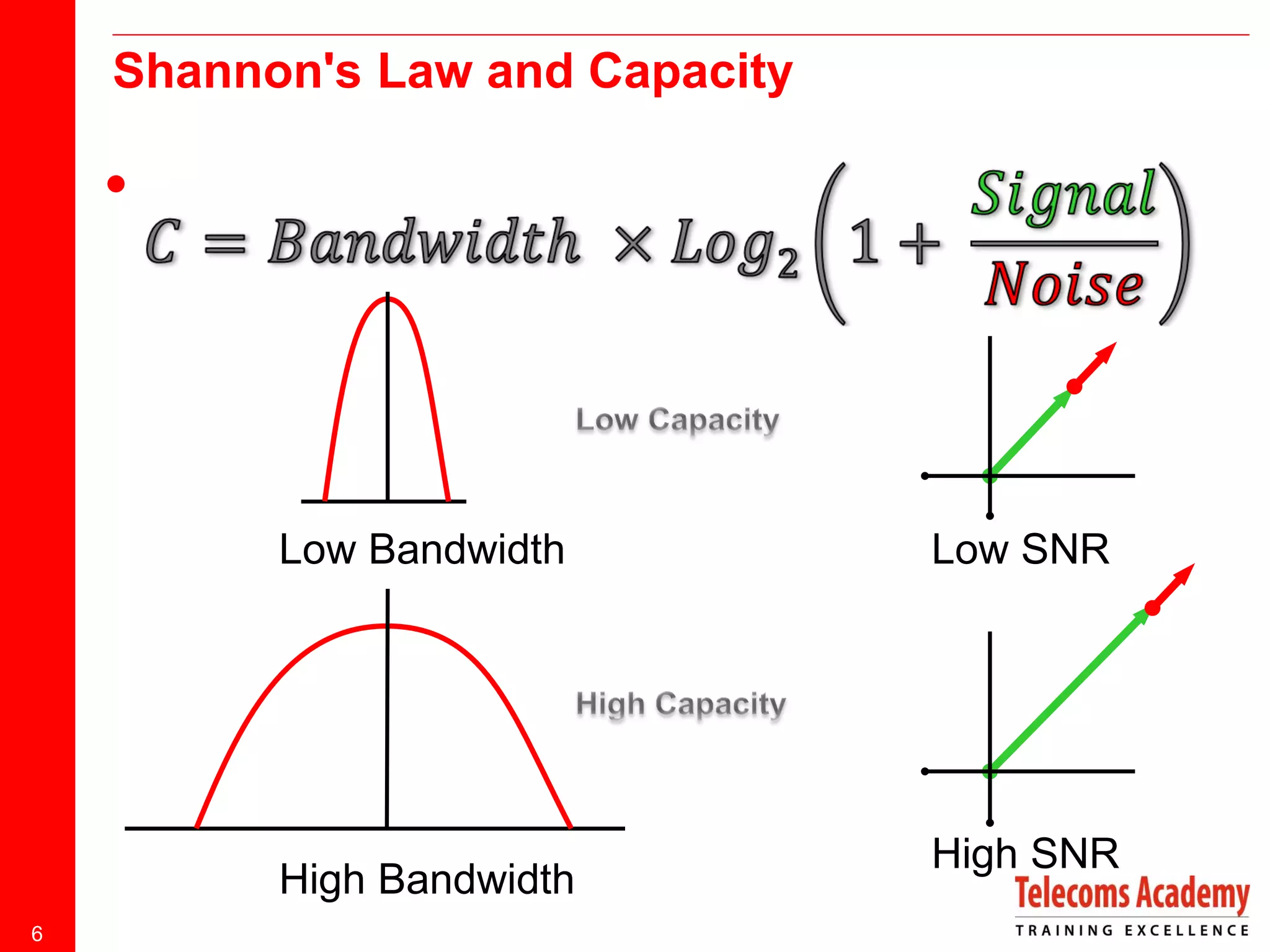
Shannon's Law and Capacity


Low Bandwidth

High Bandwidth
6

Low SNR

High SNR
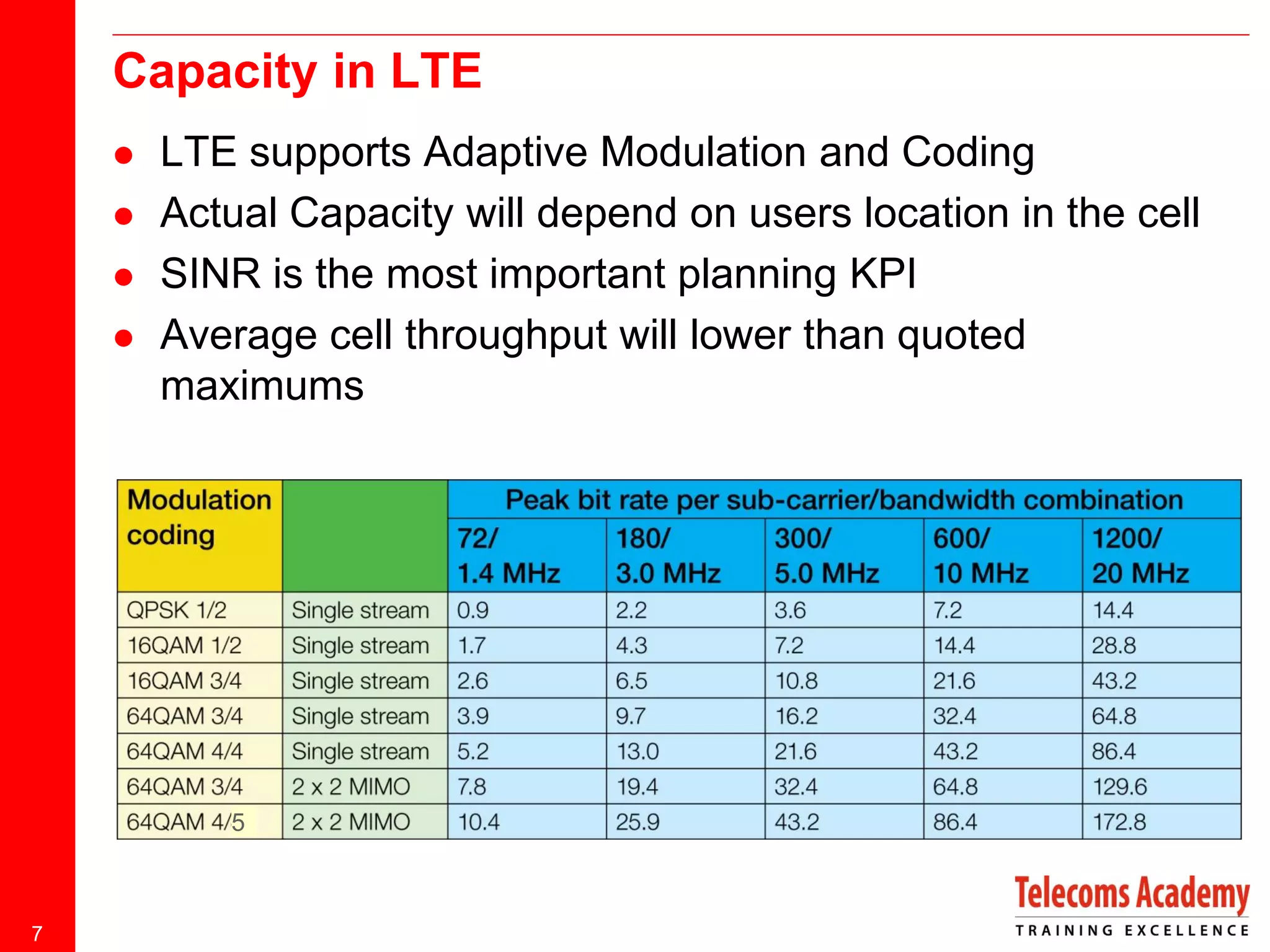
Capacity in LTE






LTE supports Adaptive Modulation and Coding
Actual Capacity will depend on users location in the cell
SINR is the most important planning KPI
Average cell throughput will lower than quoted
maximums

5

7
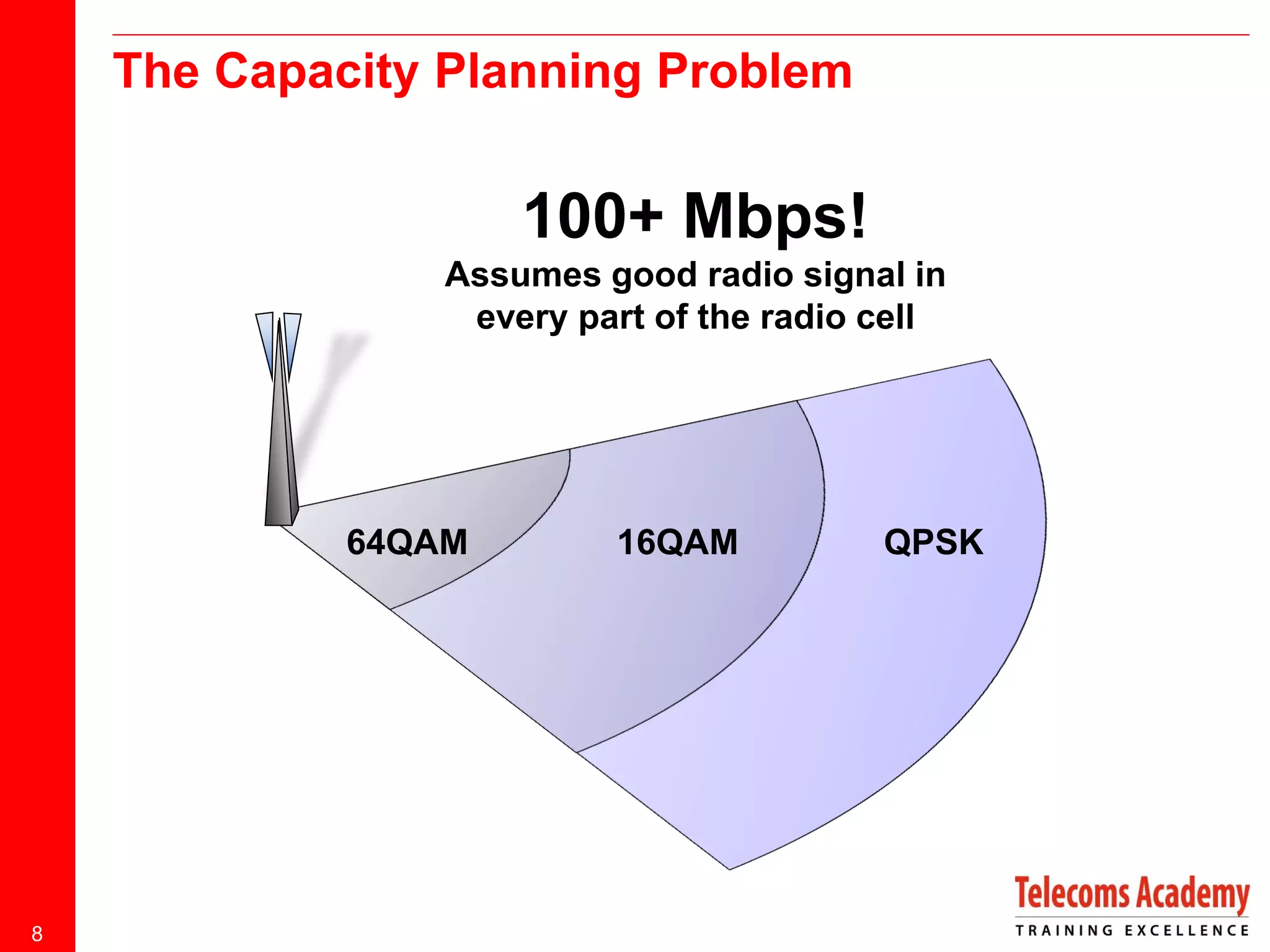
The Capacity Planning Problem

100+ Mbps!
Assumes good radio signal in
every part of the radio cell

64QAM

8

16QAM

QPSK
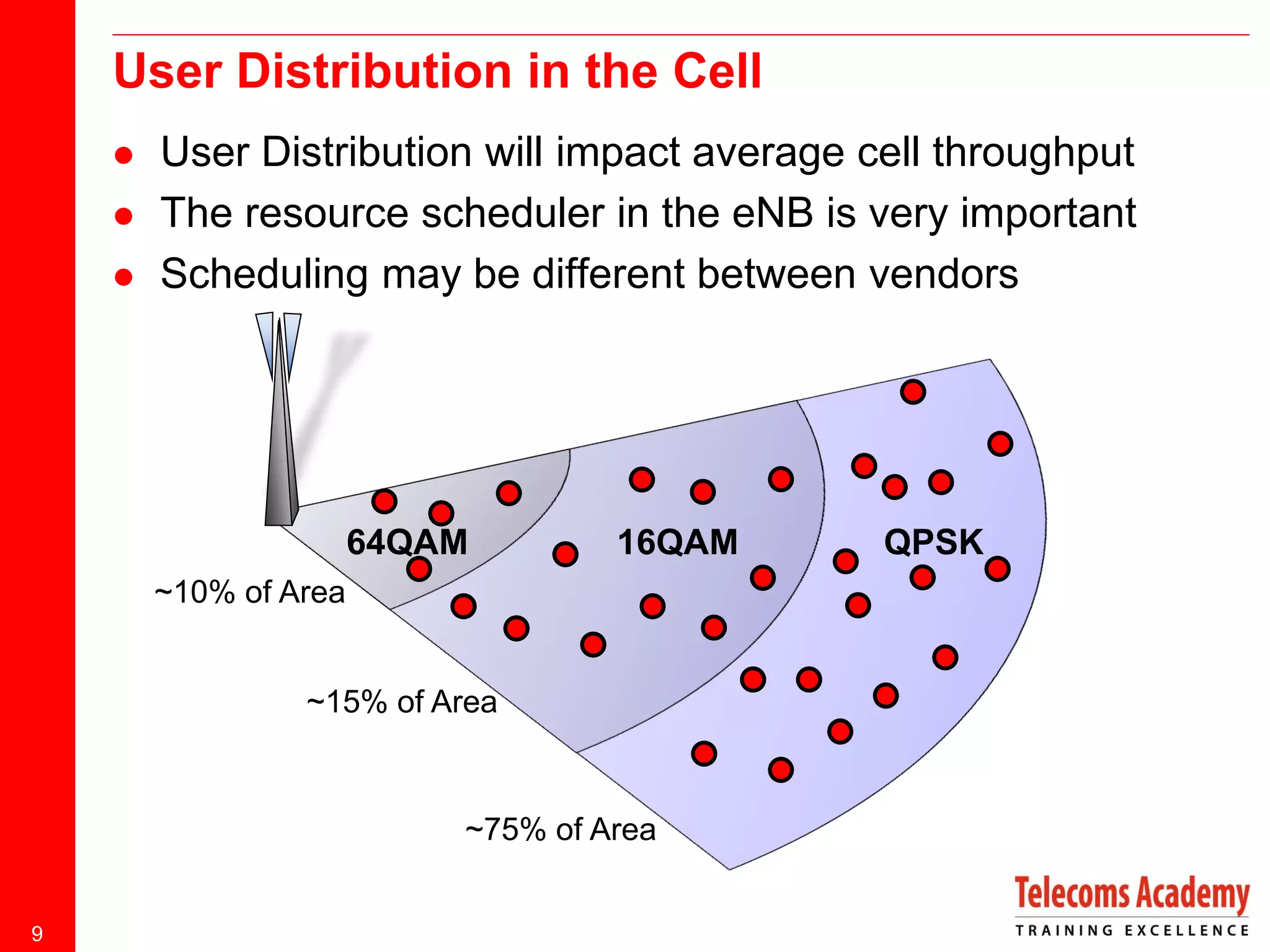
User Distribution in the Cell




User Distribution will impact average cell throughput
The resource scheduler in the eNB is very important
Scheduling may be different between vendors

64QAM

16QAM

~10% of Area

~15% of Area

~75% of Area
9

QPSK
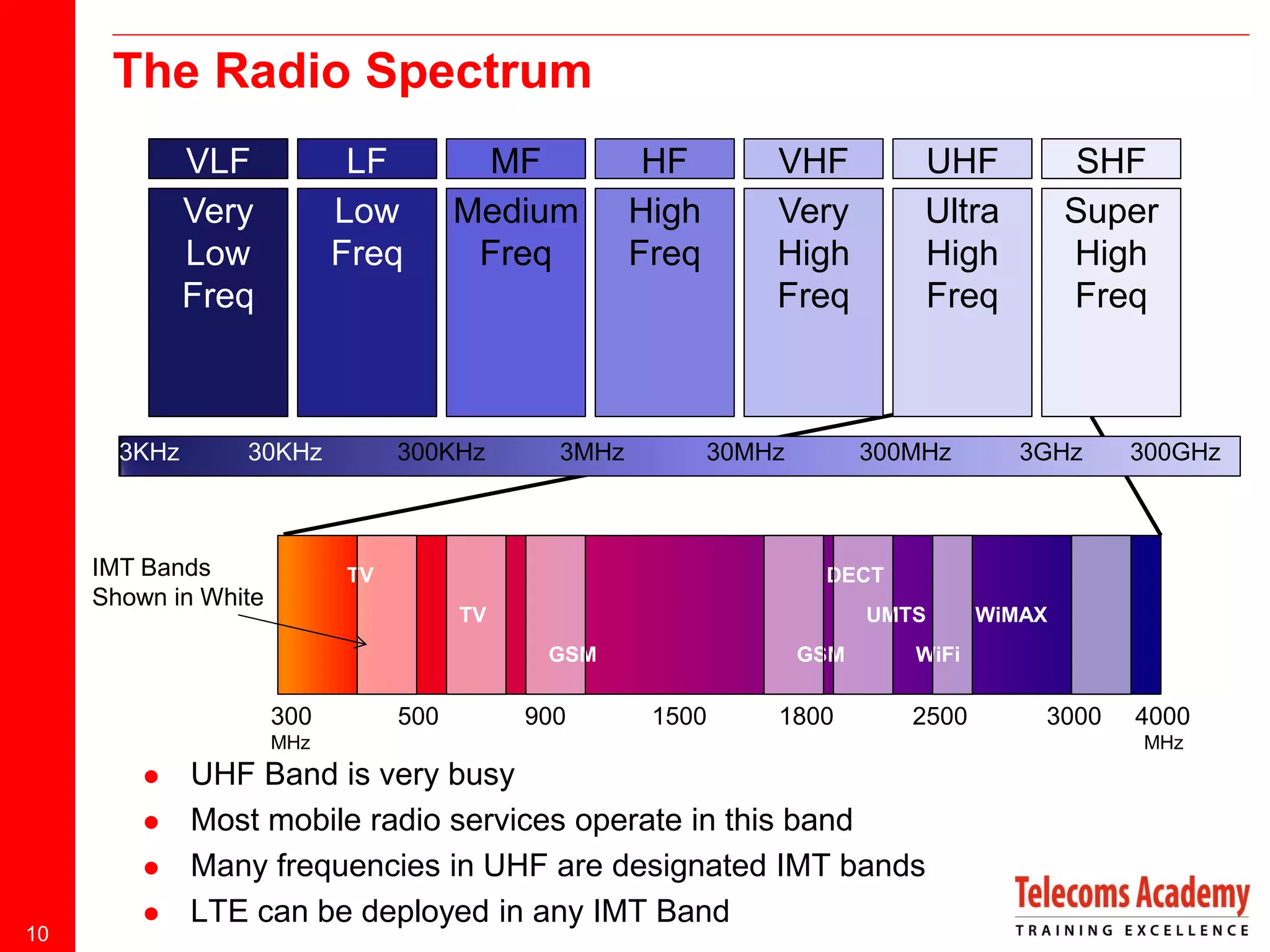
The Radio Spectrum
VLF
Very
Low
Freq

3KHz

LF
Low
Freq

30KHz

IMT Bands
Shown in White

MF
Medium
Freq

300KHz

3MHz

HF
High
Freq

VHF
Very
High
Freq

30MHz

TV

300MHz

UMTS
GSM

500

900

GSM



10



3GHz

300GHz

1500

1800

WiMAX

WiFi

2500

MHz



SHF
Super
High
Freq

DECT

TV

300

UHF
Ultra
High
Freq

UHF Band is very busy
Most mobile radio services operate in this band
Many frequencies in UHF are designated IMT bands
LTE can be deployed in any IMT Band

3000

4000
MHz
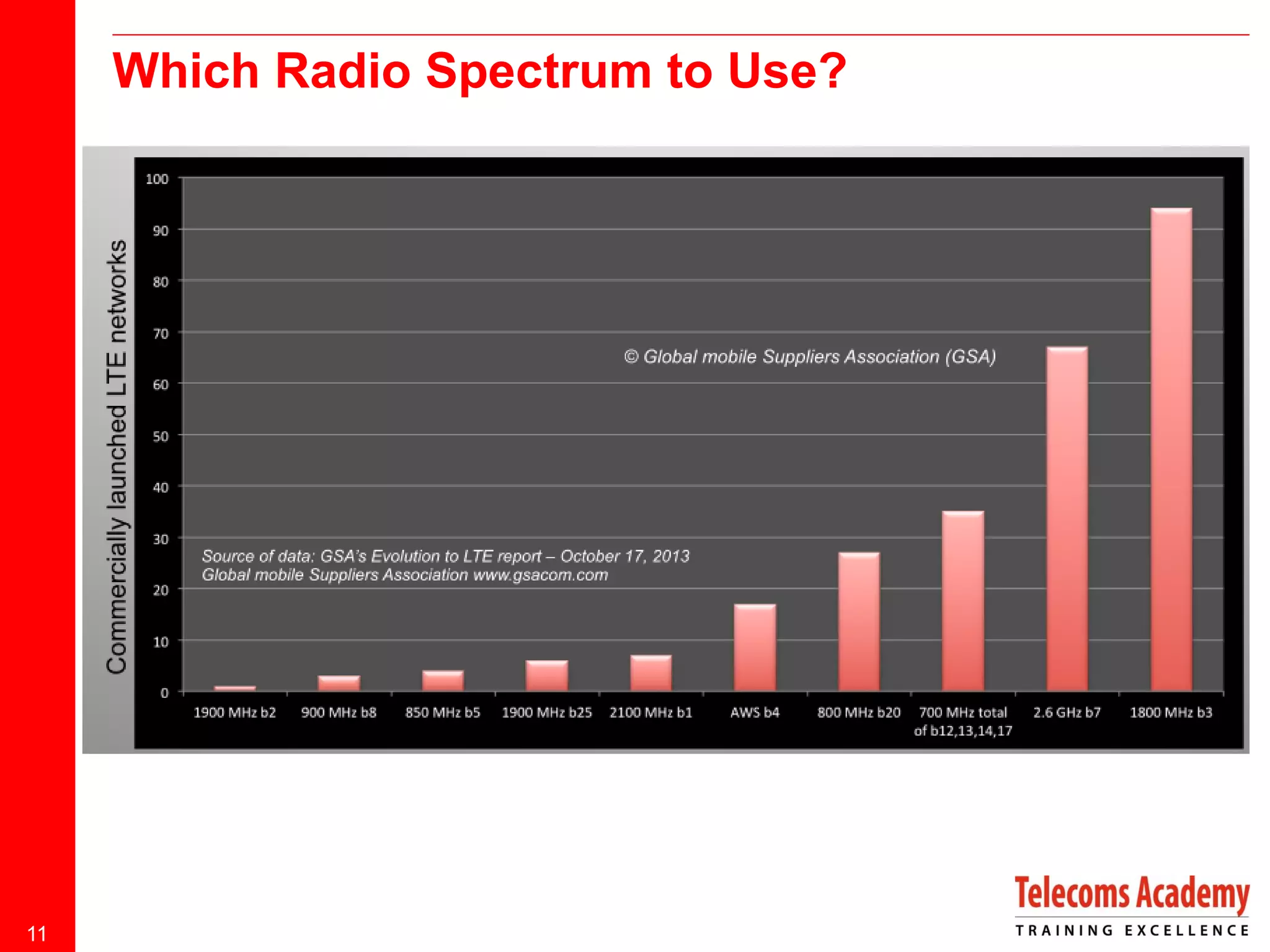
Which Radio Spectrum to Use?

11
12
13
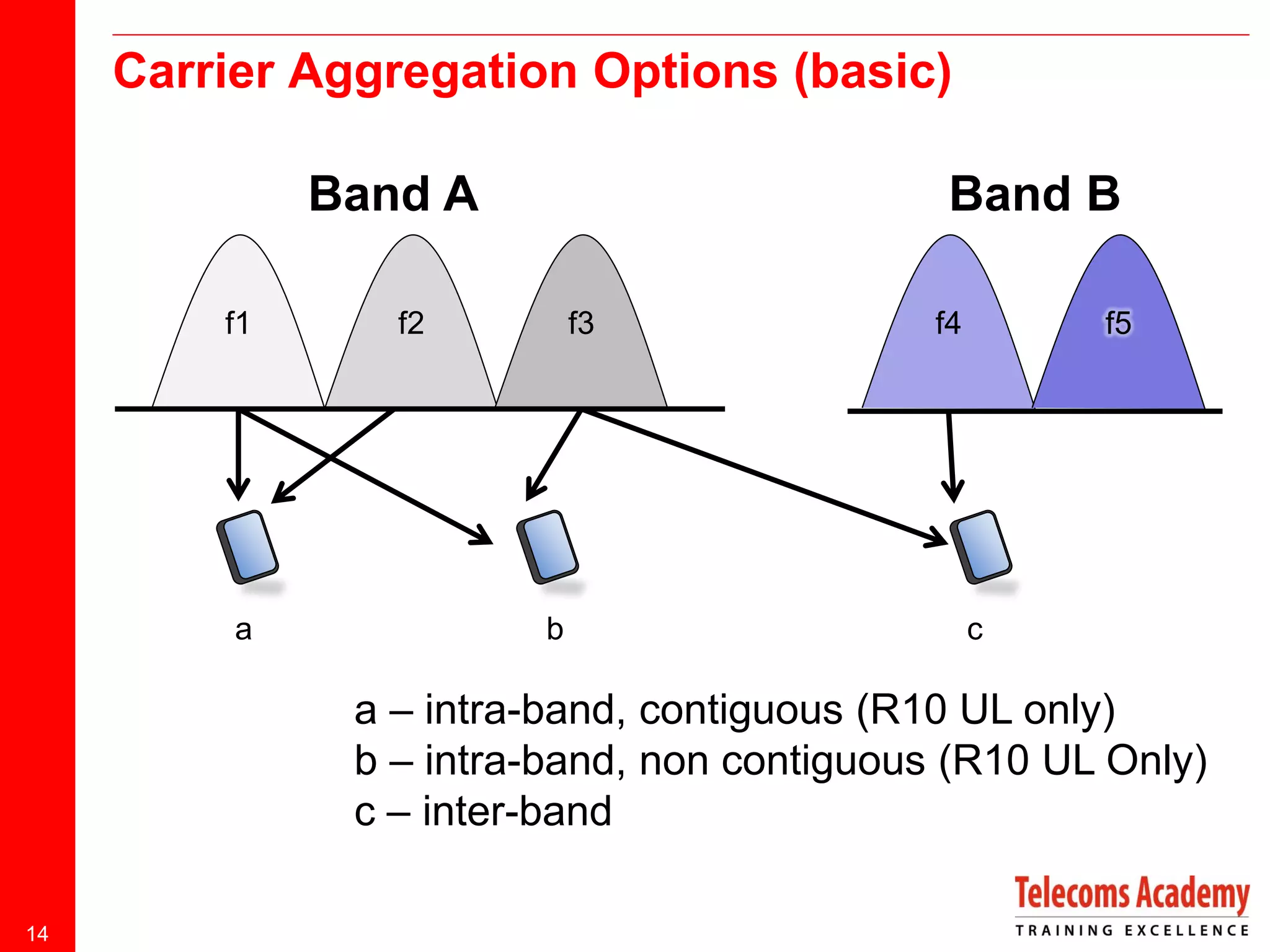
Carrier Aggregation Options (basic)
Band A
f1

a

Band B

f2

f3

b

f4

f5

c

a – intra-band, contiguous (R10 UL only)
b – intra-band, non contiguous (R10 UL Only)
c – inter-band
14
15
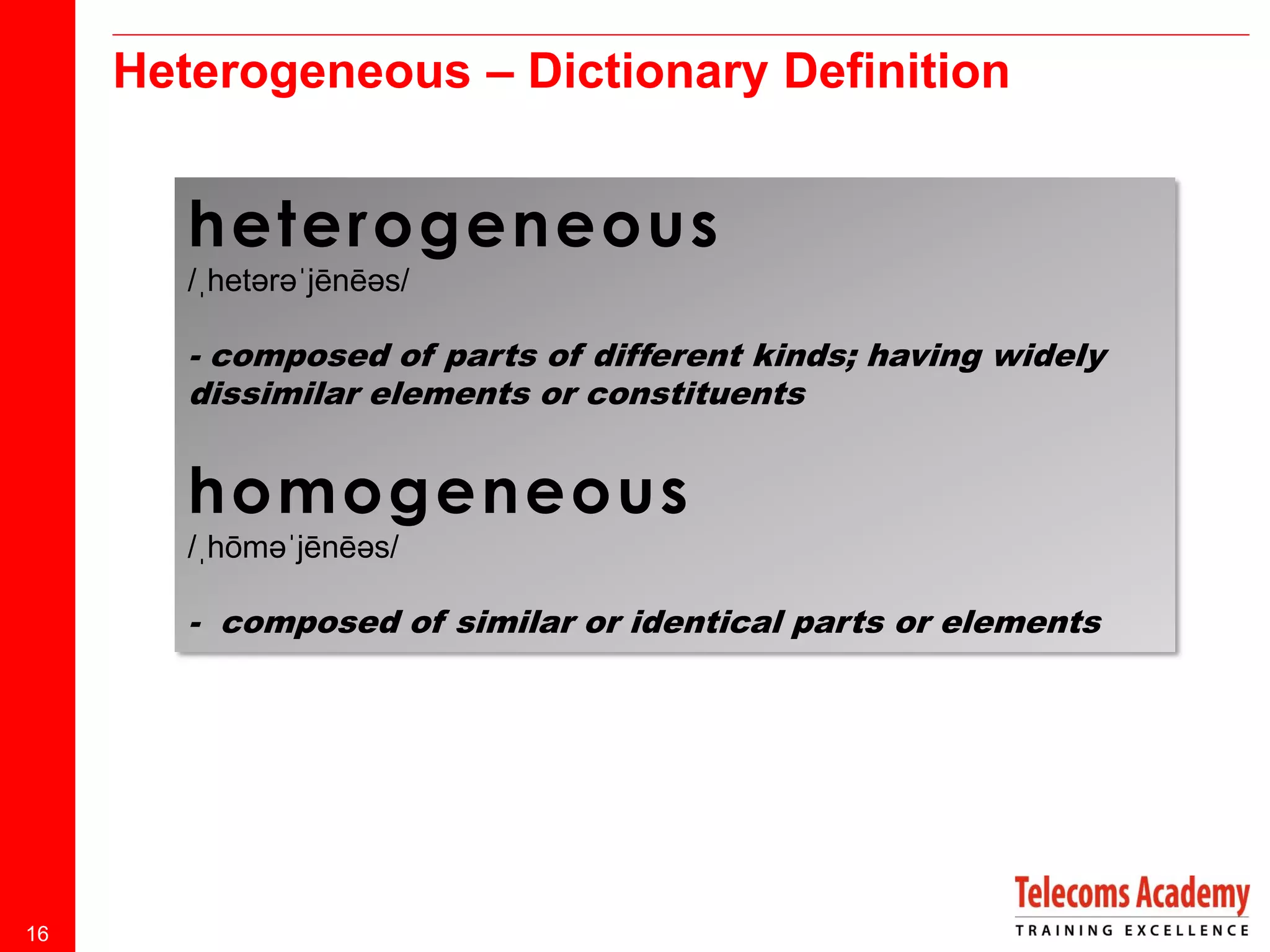
Heterogeneous – Dictionary Definition

heterogeneous
/ˌhetərəˈjēnēəs/

- composed of parts of different kinds; having widely
dissimilar elements or constituents

homogeneous
/ˌhōməˈjēnēəs/

- composed of similar or identical parts or elements

16
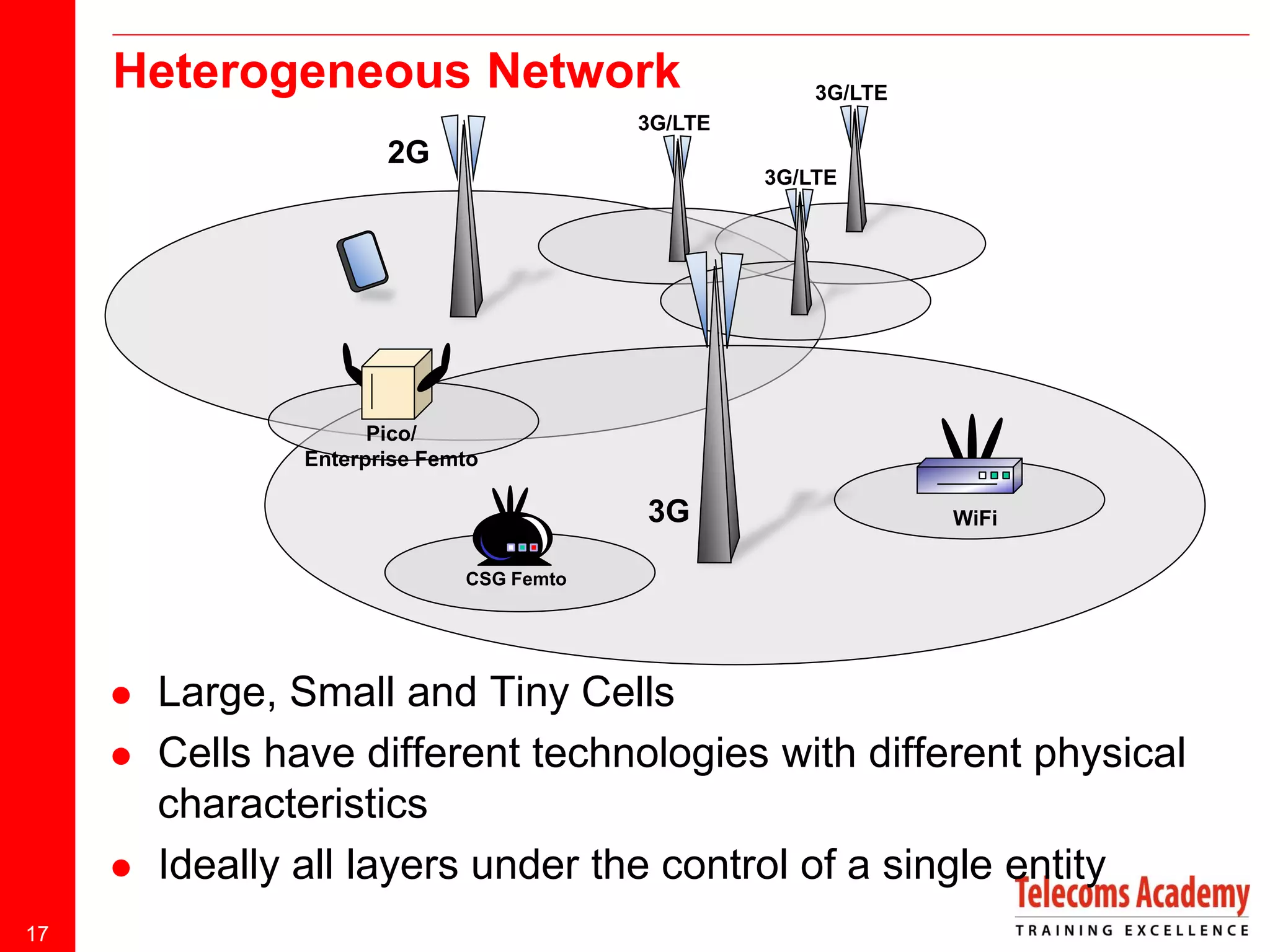
Heterogeneous Network

3G/LTE

3G/LTE

2G

3G/LTE

Pico/
Enterprise Femto

3G

WiFi

CSG Femto





17

Large, Small and Tiny Cells
Cells have different technologies with different physical
characteristics
Ideally all layers under the control of a single entity
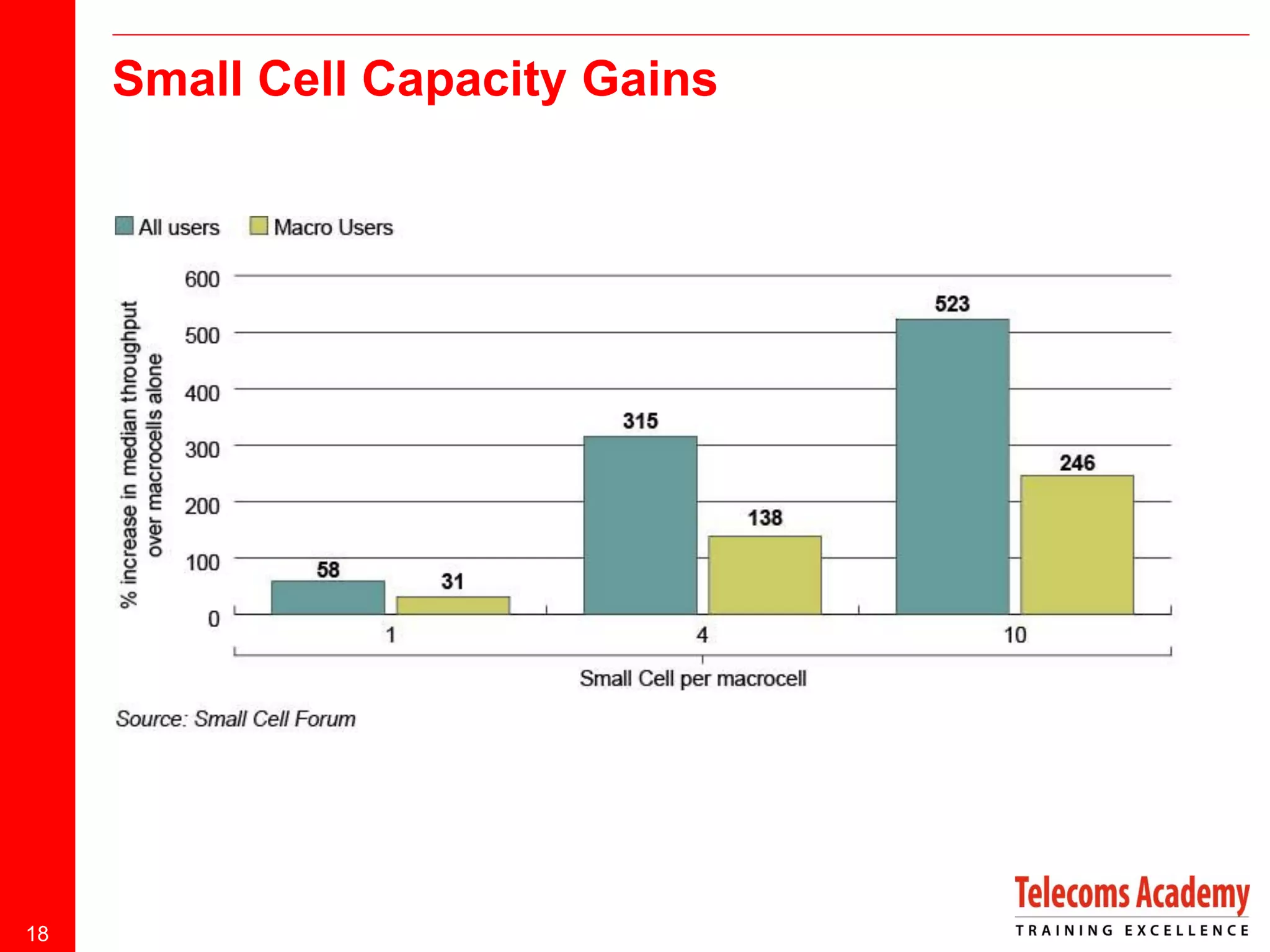
Small Cell Capacity Gains

18

LTE Access Network

  • 1.
    This document isoffered compliments of BSP Media Group. www.bspmediagroup.com All rights reserved.
  • 2.
    LTE Access Network Allmaterial is Copyright © Informa Telecoms & Media 2001-2010
  • 3.
    LTE Network andInterfaces Internet SGi UMTS/GERAN S3,S4 EPC S2 S1 eUTRAN 2 WLAN
  • 4.
    eUTRAN Architecture andInterfaces User Data Signalling and Control S11 MME PGW SGW S1_MME S1_U UE and eNB Signalling User Plane Data App Signalling eNB eNB X2 3
  • 5.
    LTE Radio Interface  FlexibleBandwidth Options   High Order Modulation and Coding      Multi-Carrier Transmission Good Multipath Performance Suited to Advanced Antenna Techniques Efficient SC-FDMA in the Uplink     QPSK, 16 QAM and 64 QAM Adaptive modulation and coding Robust OFDMA in the Downlink   1.4 – 20 MHz Still good Multipath Performance Decoding complexity in the eNB More power efficient than OFDMA Advanced Antenna Support   4 MIMO, 2x2, 4x4 Beamforming
  • 6.
    Typical Multipath Environment OFDMA– Designed to offer good performance in challenging environments 5
  • 7.
    Shannon's Law andCapacity  Low Bandwidth High Bandwidth 6 Low SNR High SNR
  • 8.
    Capacity in LTE     LTEsupports Adaptive Modulation and Coding Actual Capacity will depend on users location in the cell SINR is the most important planning KPI Average cell throughput will lower than quoted maximums 5 7
  • 9.
    The Capacity PlanningProblem 100+ Mbps! Assumes good radio signal in every part of the radio cell 64QAM 8 16QAM QPSK
  • 10.
    User Distribution inthe Cell    User Distribution will impact average cell throughput The resource scheduler in the eNB is very important Scheduling may be different between vendors 64QAM 16QAM ~10% of Area ~15% of Area ~75% of Area 9 QPSK
  • 11.
    The Radio Spectrum VLF Very Low Freq 3KHz LF Low Freq 30KHz IMTBands Shown in White MF Medium Freq 300KHz 3MHz HF High Freq VHF Very High Freq 30MHz TV 300MHz UMTS GSM 500 900 GSM   10  3GHz 300GHz 1500 1800 WiMAX WiFi 2500 MHz  SHF Super High Freq DECT TV 300 UHF Ultra High Freq UHF Band is very busy Most mobile radio services operate in this band Many frequencies in UHF are designated IMT bands LTE can be deployed in any IMT Band 3000 4000 MHz
  • 12.
  • 13.
  • 14.
  • 15.
    Carrier Aggregation Options(basic) Band A f1 a Band B f2 f3 b f4 f5 c a – intra-band, contiguous (R10 UL only) b – intra-band, non contiguous (R10 UL Only) c – inter-band 14
  • 16.
  • 17.
    Heterogeneous – DictionaryDefinition heterogeneous /ˌhetərəˈjēnēəs/ - composed of parts of different kinds; having widely dissimilar elements or constituents homogeneous /ˌhōməˈjēnēəs/ - composed of similar or identical parts or elements 16
  • 18.
    Heterogeneous Network 3G/LTE 3G/LTE 2G 3G/LTE Pico/ Enterprise Femto 3G WiFi CSGFemto    17 Large, Small and Tiny Cells Cells have different technologies with different physical characteristics Ideally all layers under the control of a single entity
  • 19.