Learning Strand 2
Scientific and Critical Thinking Skills
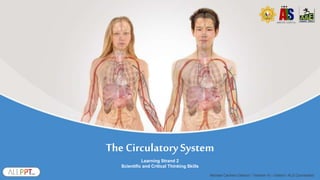
The CirculatorySystem
Michael Cachero Gelacio / Teacher III – District I ALS Coordinator
Answer the following:
Name the function of th
e respiratory system.
State three parts of the r
espiratory system.
Cite two ways of taking
care of the respiratory sy
stem.
Give three diseases that
can affect the respiratory
system.
# 1
# 2
# 3
# 4
WHAT YOU ALREADY KNOW
Lesson 1
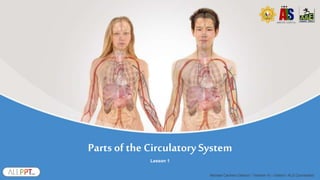
Parts of the Circulatory System
Michael Cachero Gelacio / Teacher III – District I ALS Coordinator
HEART
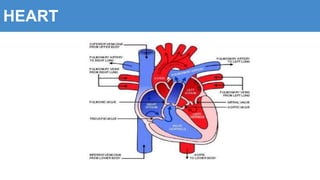
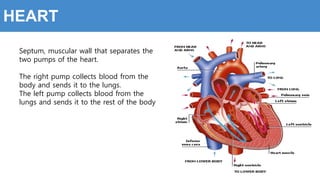
Septum, muscular wall that separates the
two pumps of the heart.
The right pump collects blood from the
body and sends it to the lungs.
The left pump collects blood from the
lungs and sends it to the rest of the body
HEART
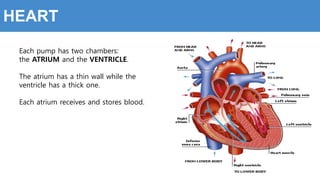
Each pump has two chambers:
the ATRIUM and the VENTRICLE.
The atrium has a thin wall while the
ventricle has a thick one.
Each atrium receives and stores blood.
HEART
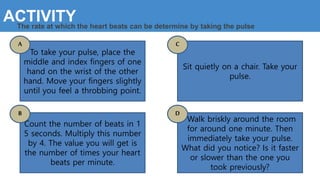
To take your pulse, place the
middle and index fingers of one
hand on the wrist of the other
hand. Move your fingers slightly
until you feel a throbbing point.
Count the number of beats in 1
5 seconds. Multiply this number
by 4. The value you will get is
the number of times your heart
beats per minute.
Sit quietly on a chair. Take your
pulse.
Walk briskly around the room
for around one minute. Then
immediately take your pulse.
What did you notice? Is it faster
or slower than the one you
took previously?
A C
B D
The rate at which the heart beats can be determine by taking the pulse
ACTIVITY
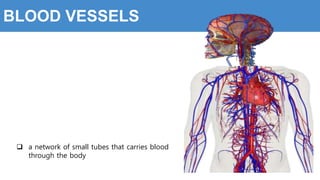
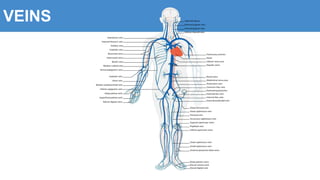
 a network of small tubes that carries blood
through the body
BLOOD VESSELS
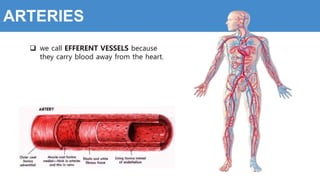
 we call EFFERENT VESSELS because
they carry blood away from the heart.
ARTERIES
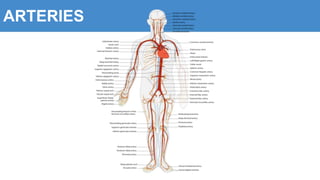
ARTERIES
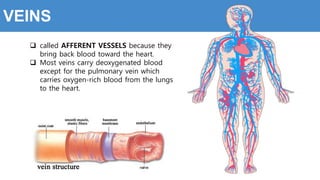
 called AFFERENT VESSELS because they
bring back blood toward the heart.
 Most veins carry deoxygenated blood
except for the pulmonary vein which
carries oxygen-rich blood from the lungs
to the heart.
VEINS
VEINS
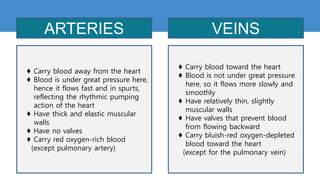
VEINSARTERIES
♦ Carry blood away from the heart
♦ Blood is under great pressure here,
hence it flows fast and in spurts,
reflecting the rhythmic pumping
action of the heart
♦ Have thick and elastic muscular
walls
♦ Have no valves
♦ Carry red oxygen-rich blood
(except pulmonary artery)
♦ Carry blood toward the heart
♦ Blood is not under great pressure
here, so it flows more slowly and
smoothly
♦ Have relatively thin, slightly
muscular walls
♦ Have valves that prevent blood
from flowing backward
♦ Carry bluish-red oxygen-depleted
blood toward the heart
(except for the pulmonary vein)
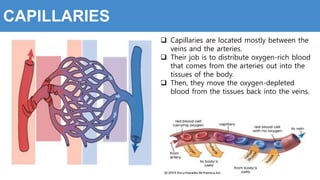
 Capillaries are located mostly between the
veins and the arteries.
 Their job is to distribute oxygen-rich blood
that comes from the arteries out into the
tissues of the body.
 Then, they move the oxygen-depleted
blood from the tissues back into the veins.
CAPILLARIES
Do you see the bluish green vessels just beneath the surface of your skin?
THESE ARE SOME OF YOUR VEINS.
Why do they appear bluish green? That’s because they carry oxygen-deplet
ed blood. OXYGEN-DEPLETED BLOOD IS BLUE, OXYGEN-RICH IS RED.
In the space provided before each statement, write True if the statement is correct.
Write False if the statement is incorrect.
______ 1. The circulatory system is composed of the heart and blood vessels.
______ 2. The heart is located in the abdomen.
______ 3. The heart is the most hardworking organ in the body.
______ 4. The heart stops beating every now and then.
______ 5. The heart pumps about 5 liters of blood every minute.
______ 6. The heart is made up of two pumps that work together.
______ 7. Arteries bring blood to the heart.
______ 8. Capillaries are efferent vessels.
______ 9. The pulse is the stretching and relaxing of the artery wall.
______10. The heart has four chambers.
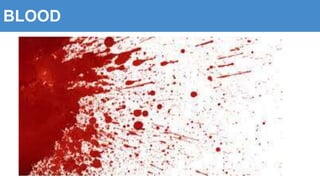
BLOOD
BLOOD
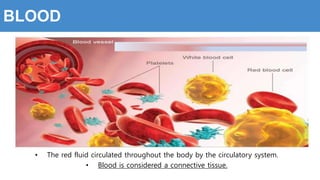
• The red fluid circulated throughout the body by the circulatory system.
• Blood is considered a connective tissue.
BLOOD
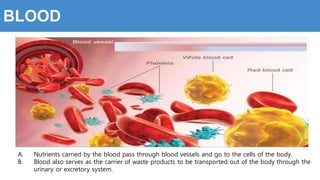
A. Nutrients carried by the blood pass through blood vessels and go to the cells of the body.
B. Blood also serves as the carrier of waste products to be transported out of the body through the
urinary or excretory system.
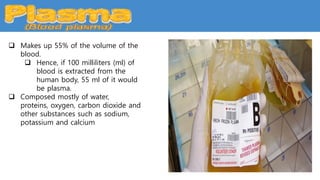
 Makes up 55% of the volume of the
blood.
 Hence, if 100 milliliters (ml) of
blood is extracted from the
human body, 55 ml of it would
be plasma.
 Composed mostly of water,
proteins, oxygen, carbon dioxide and
other substances such as sodium,
potassium and calcium
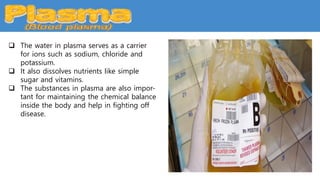
 The water in plasma serves as a carrier
for ions such as sodium, chloride and
potassium.
 It also dissolves nutrients like simple
sugar and vitamins.
 The substances in plasma are also impor-
tant for maintaining the chemical balance
inside the body and help in fighting off
disease.
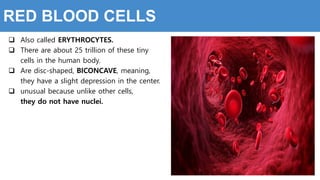
 Also called ERYTHROCYTES.
 There are about 25 trillion of these tiny
cells in the human body.
 Are disc-shaped, BICONCAVE, meaning,
they have a slight depression in the center.
 unusual because unlike other cells,
they do not have nuclei.
RED BLOOD CELLS
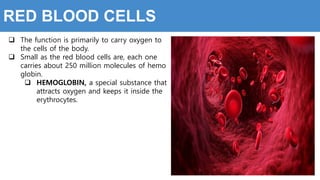
 The function is primarily to carry oxygen to
the cells of the body.
 Small as the red blood cells are, each one
carries about 250 million molecules of hemo
globin.
 HEMOGLOBIN, a special substance that
attracts oxygen and keeps it inside the
erythrocytes.
RED BLOOD CELLS
WHITE BLOOD CELLS
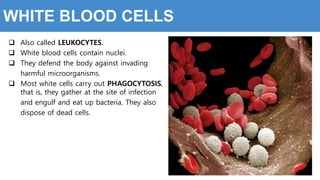
 Also called LEUKOCYTES.
 White blood cells contain nuclei.
 They defend the body against invading
harmful microorganisms.
 Most white cells carry out PHAGOCYTOSIS,
that is, they gather at the site of infection
and engulf and eat up bacteria. They also
dispose of dead cells.
TYPES OF WHITE BLOOD CELLS
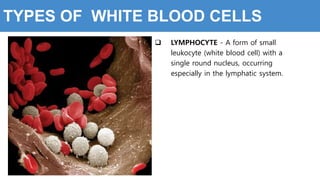
 LYMPHOCYTE - A form of small
leukocyte (white blood cell) with a
single round nucleus, occurring
especially in the lymphatic system.
TYPES OF WHITE BLOOD CELLS
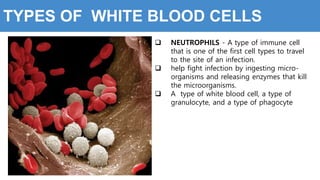
 NEUTROPHILS - A type of immune cell
that is one of the first cell types to travel
to the site of an infection.
 help fight infection by ingesting micro-
organisms and releasing enzymes that kill
the microorganisms.
 A type of white blood cell, a type of
granulocyte, and a type of phagocyte
PLATELETS
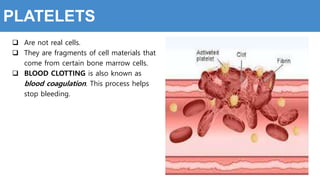
 Are not real cells.
 They are fragments of cell materials that
come from certain bone marrow cells.
 BLOOD CLOTTING is also known as
blood coagulation. This process helps
stop bleeding.
PLATELETS
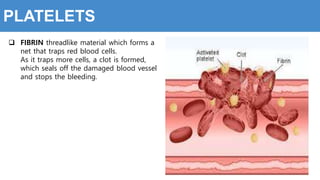
 FIBRIN threadlike material which forms a
net that traps red blood cells.
As it traps more cells, a clot is formed,
which seals off the damaged blood vessel
and stops the bleeding.
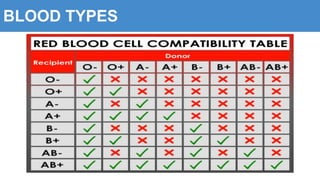
BLOOD TYPES
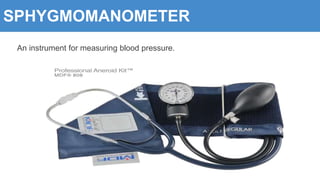
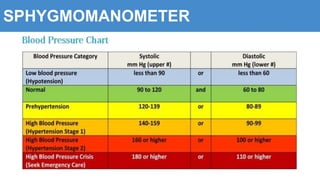
SPHYGMOMANOMETER
An instrument for measuring blood pressure.
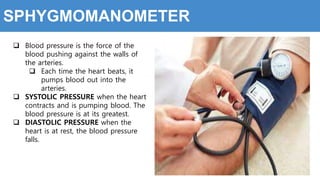
SPHYGMOMANOMETER
 Blood pressure is the force of the
blood pushing against the walls of
the arteries.
 Each time the heart beats, it
pumps blood out into the
arteries.
 SYSTOLIC PRESSURE when the heart
contracts and is pumping blood. The
blood pressure is at its greatest.
 DIASTOLIC PRESSURE when the
heart is at rest, the blood pressure
falls.
SPHYGMOMANOMETER
Lesson 2
Diseases That Affect CirculatorySystem
Michael Cachero Gelacio / Teacher III – District I ALS Coordinator
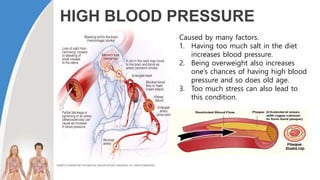
HIGH BLOOD PRESSURE
Caused by many factors.
1. Having too much salt in the diet
increases blood pressure.
2. Being overweight also increases
one’s chances of having high blood
pressure and so does old age.
3. Too much stress can also lead to
this condition.
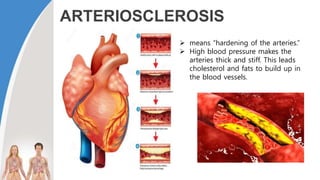
ARTERIOSCLEROSIS
 means “hardening of the arteries.”
 High blood pressure makes the
arteries thick and stiff. This leads
cholesterol and fats to build up in
the blood vessels.
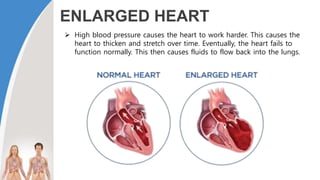
ENLARGED HEART
 High blood pressure causes the heart to work harder. This causes the
heart to thicken and stretch over time. Eventually, the heart fails to
function normally. This then causes fluids to flow back into the lungs.
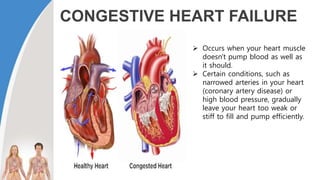
CONGESTIVE HEART FAILURE
 Occurs when your heart muscle
doesn't pump blood as well as
it should.
 Certain conditions, such as
narrowed arteries in your heart
(coronary artery disease) or
high blood pressure, gradually
leave your heart too weak or
stiff to fill and pump efficiently.
CONGESTIVE HEART FAILURE
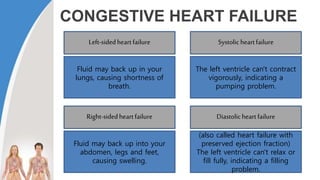
Fluid may back up in your
lungs, causing shortness of
breath.
Fluid may back up into your
abdomen, legs and feet,
causing swelling.
Right-sidedheartfailure
The left ventricle can't contract
vigorously, indicating a
pumping problem.
Diastolicheartfailure
(also called heart failure with
preserved ejection fraction)
The left ventricle can't relax or
fill fully, indicating a filling
problem.
Left-sidedheartfailure Systolicheartfailure
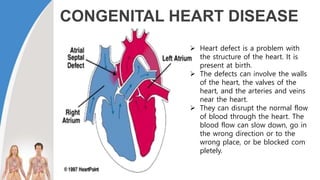
CONGENITAL HEART DISEASE
 Heart defect is a problem with
the structure of the heart. It is
present at birth.
 The defects can involve the walls
of the heart, the valves of the
heart, and the arteries and veins
near the heart.
 They can disrupt the normal flow
of blood through the heart. The
blood flow can slow down, go in
the wrong direction or to the
wrong place, or be blocked com
pletely.
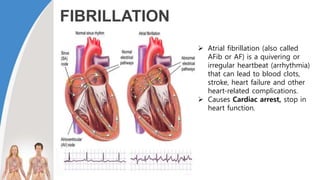
FIBRILLATION
 Atrial fibrillation (also called
AFib or AF) is a quivering or
irregular heartbeat (arrhythmia)
that can lead to blood clots,
stroke, heart failure and other
heart-related complications.
 Causes Cardiac arrest, stop in
heart function.
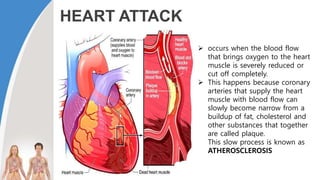
HEART ATTACK
 occurs when the blood flow
that brings oxygen to the heart
muscle is severely reduced or
cut off completely.
 This happens because coronary
arteries that supply the heart
muscle with blood flow can
slowly become narrow from a
buildup of fat, cholesterol and
other substances that together
are called plaque.
This slow process is known as
ATHEROSCLEROSIS
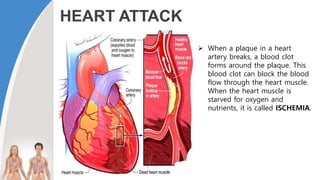
HEART ATTACK
 When a plaque in a heart
artery breaks, a blood clot
forms around the plaque. This
blood clot can block the blood
flow through the heart muscle.
When the heart muscle is
starved for oxygen and
nutrients, it is called ISCHEMIA.
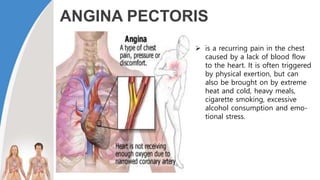
ANGINA PECTORIS
 is a recurring pain in the chest
caused by a lack of blood flow
to the heart. It is often triggered
by physical exertion, but can
also be brought on by extreme
heat and cold, heavy meals,
cigarette smoking, excessive
alcohol consumption and emo-
tional stress.
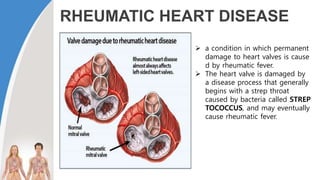
RHEUMATIC HEART DISEASE
 a condition in which permanent
damage to heart valves is cause
d by rheumatic fever.
 The heart valve is damaged by
a disease process that generally
begins with a strep throat
caused by bacteria called STREP
TOCOCCUS, and may eventually
cause rheumatic fever.
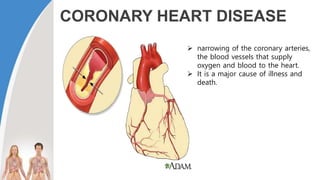
CORONARY HEART DISEASE
 narrowing of the coronary arteries,
the blood vessels that supply
oxygen and blood to the heart.
 It is a major cause of illness and
death.
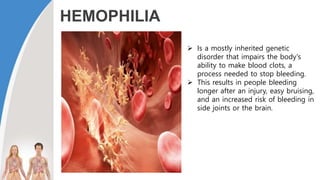
HEMOPHILIA
 Is a mostly inherited genetic
disorder that impairs the body's
ability to make blood clots, a
process needed to stop bleeding.
 This results in people bleeding
longer after an injury, easy bruising,
and an increased risk of bleeding in
side joints or the brain.
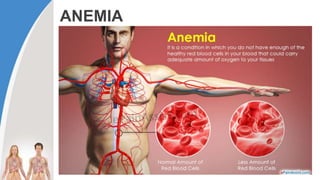
ANEMIA
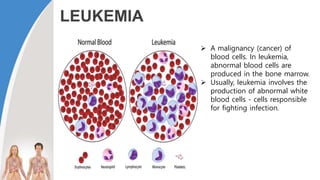
LEUKEMIA
 A malignancy (cancer) of
blood cells. In leukemia,
abnormal blood cells are
produced in the bone marrow.
 Usually, leukemia involves the
production of abnormal white
blood cells - cells responsible
for fighting infection.
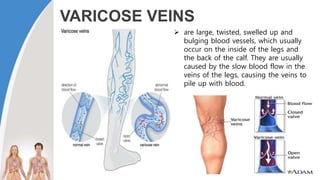
VARICOSE VEINS
 are large, twisted, swelled up and
bulging blood vessels, which usually
occur on the inside of the legs and
the back of the calf. They are usually
caused by the slow blood flow in the
veins of the legs, causing the veins to
pile up with blood.
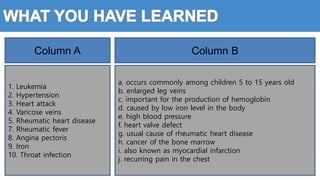
1. Leukemia
2. Hypertension
3. Heart attack
4. Varicose veins
5. Rheumatic heart disease
7. Rheumatic fever
8. Angina pectoris
9. Iron
10. Throat infection
a. occurs commonly among children 5 to 15 years old
b. enlarged leg veins
c. important for the production of hemoglobin
d. caused by low iron level in the body
e. high blood pressure
f. heart valve defect
g. usual cause of rheumatic heart disease
h. cancer of the bone marrow
i. also known as myocardial infarction
j. recurring pain in the chest
Column A Column B
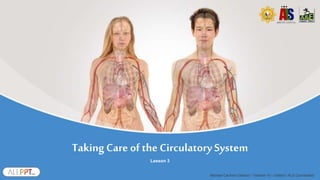
Lesson 3
Taking Care of the CirculatorySystem
Michael Cachero Gelacio / Teacher III – District I ALS Coordinator
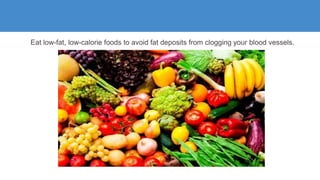
Eat low-fat, low-calorie foods to avoid fat deposits from clogging your blood vessels.
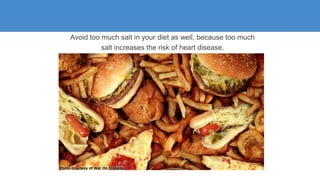
Avoid too much salt in your diet as well, because too much
salt increases the risk of heart disease.
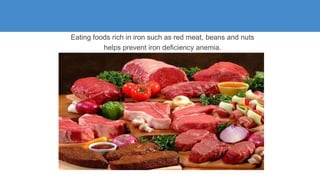
Eating foods rich in iron such as red meat, beans and nuts
helps prevent iron deficiency anemia.
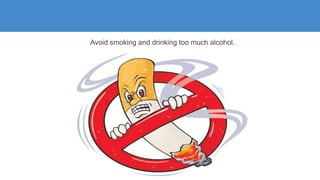
Avoid smoking and drinking too much alcohol.
Exercise regularly
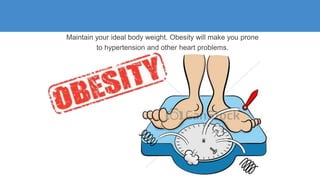
Maintain your ideal body weight. Obesity will make you prone
to hypertension and other heart problems.
Learn to relax. Stress puts more work on your heart.
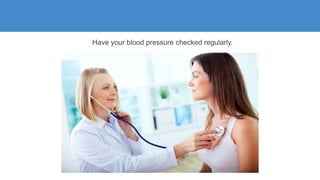
Have your blood pressure checked regularly.
WHAT YOU HAVE LEARNED
Answer the following:
A. Write True in the blank if the statement is correct and
False if it is incorrect.
______1. Eating salted peanuts is healthier than eating unsalted ones.
______2. Iron helps you avoid anemia.
______3. Smoking is bad for the circulatory system.
______4. Infections can cause diseases of the heart.
______5. Hypertension and other heart problems are linked to obesity
and high-fat diet.
B. Enumerate five ways to take care of your circulatory system.
1. ______________________________________________________
2. ______________________________________________________
3. ______________________________________________________
4. ______________________________________________________
5. ______________________________________________________
SA INYONG PAKIKINIG
MARAMINGSALAMAT PO
Michael Cachero Gelacio / Teacher III – District I ALS Coordinator

Ls 2 6 The Circulatory System

  • 1.
    Learning Strand 2 Scientificand Critical Thinking Skills The CirculatorySystem Michael Cachero Gelacio / Teacher III – District I ALS Coordinator
  • 2.
    Answer the following: Namethe function of th e respiratory system. State three parts of the r espiratory system. Cite two ways of taking care of the respiratory sy stem. Give three diseases that can affect the respiratory system. # 1 # 2 # 3 # 4 WHAT YOU ALREADY KNOW
  • 3.
    Lesson 1 Parts ofthe Circulatory System Michael Cachero Gelacio / Teacher III – District I ALS Coordinator
  • 4.
  • 5.
    Septum, muscular wallthat separates the two pumps of the heart. The right pump collects blood from the body and sends it to the lungs. The left pump collects blood from the lungs and sends it to the rest of the body HEART
  • 6.
    Each pump hastwo chambers: the ATRIUM and the VENTRICLE. The atrium has a thin wall while the ventricle has a thick one. Each atrium receives and stores blood. HEART
  • 7.
    To take yourpulse, place the middle and index fingers of one hand on the wrist of the other hand. Move your fingers slightly until you feel a throbbing point. Count the number of beats in 1 5 seconds. Multiply this number by 4. The value you will get is the number of times your heart beats per minute. Sit quietly on a chair. Take your pulse. Walk briskly around the room for around one minute. Then immediately take your pulse. What did you notice? Is it faster or slower than the one you took previously? A C B D The rate at which the heart beats can be determine by taking the pulse ACTIVITY
  • 9.
     a networkof small tubes that carries blood through the body BLOOD VESSELS
  • 10.
     we callEFFERENT VESSELS because they carry blood away from the heart. ARTERIES
  • 11.
  • 12.
     called AFFERENTVESSELS because they bring back blood toward the heart.  Most veins carry deoxygenated blood except for the pulmonary vein which carries oxygen-rich blood from the lungs to the heart. VEINS
  • 13.
  • 14.
    VEINSARTERIES ♦ Carry bloodaway from the heart ♦ Blood is under great pressure here, hence it flows fast and in spurts, reflecting the rhythmic pumping action of the heart ♦ Have thick and elastic muscular walls ♦ Have no valves ♦ Carry red oxygen-rich blood (except pulmonary artery) ♦ Carry blood toward the heart ♦ Blood is not under great pressure here, so it flows more slowly and smoothly ♦ Have relatively thin, slightly muscular walls ♦ Have valves that prevent blood from flowing backward ♦ Carry bluish-red oxygen-depleted blood toward the heart (except for the pulmonary vein)
  • 15.
     Capillaries arelocated mostly between the veins and the arteries.  Their job is to distribute oxygen-rich blood that comes from the arteries out into the tissues of the body.  Then, they move the oxygen-depleted blood from the tissues back into the veins. CAPILLARIES
  • 16.
    Do you seethe bluish green vessels just beneath the surface of your skin? THESE ARE SOME OF YOUR VEINS. Why do they appear bluish green? That’s because they carry oxygen-deplet ed blood. OXYGEN-DEPLETED BLOOD IS BLUE, OXYGEN-RICH IS RED.
  • 17.
    In the spaceprovided before each statement, write True if the statement is correct. Write False if the statement is incorrect. ______ 1. The circulatory system is composed of the heart and blood vessels. ______ 2. The heart is located in the abdomen. ______ 3. The heart is the most hardworking organ in the body. ______ 4. The heart stops beating every now and then. ______ 5. The heart pumps about 5 liters of blood every minute. ______ 6. The heart is made up of two pumps that work together. ______ 7. Arteries bring blood to the heart. ______ 8. Capillaries are efferent vessels. ______ 9. The pulse is the stretching and relaxing of the artery wall. ______10. The heart has four chambers.
  • 18.
  • 19.
    BLOOD • The redfluid circulated throughout the body by the circulatory system. • Blood is considered a connective tissue.
  • 20.
    BLOOD A. Nutrients carriedby the blood pass through blood vessels and go to the cells of the body. B. Blood also serves as the carrier of waste products to be transported out of the body through the urinary or excretory system.
  • 21.
     Makes up55% of the volume of the blood.  Hence, if 100 milliliters (ml) of blood is extracted from the human body, 55 ml of it would be plasma.  Composed mostly of water, proteins, oxygen, carbon dioxide and other substances such as sodium, potassium and calcium
  • 22.
     The waterin plasma serves as a carrier for ions such as sodium, chloride and potassium.  It also dissolves nutrients like simple sugar and vitamins.  The substances in plasma are also impor- tant for maintaining the chemical balance inside the body and help in fighting off disease.
  • 23.
     Also calledERYTHROCYTES.  There are about 25 trillion of these tiny cells in the human body.  Are disc-shaped, BICONCAVE, meaning, they have a slight depression in the center.  unusual because unlike other cells, they do not have nuclei. RED BLOOD CELLS
  • 24.
     The functionis primarily to carry oxygen to the cells of the body.  Small as the red blood cells are, each one carries about 250 million molecules of hemo globin.  HEMOGLOBIN, a special substance that attracts oxygen and keeps it inside the erythrocytes. RED BLOOD CELLS
  • 25.
    WHITE BLOOD CELLS Also called LEUKOCYTES.  White blood cells contain nuclei.  They defend the body against invading harmful microorganisms.  Most white cells carry out PHAGOCYTOSIS, that is, they gather at the site of infection and engulf and eat up bacteria. They also dispose of dead cells.
  • 26.
    TYPES OF WHITEBLOOD CELLS  LYMPHOCYTE - A form of small leukocyte (white blood cell) with a single round nucleus, occurring especially in the lymphatic system.
  • 27.
    TYPES OF WHITEBLOOD CELLS  NEUTROPHILS - A type of immune cell that is one of the first cell types to travel to the site of an infection.  help fight infection by ingesting micro- organisms and releasing enzymes that kill the microorganisms.  A type of white blood cell, a type of granulocyte, and a type of phagocyte
  • 28.
    PLATELETS  Are notreal cells.  They are fragments of cell materials that come from certain bone marrow cells.  BLOOD CLOTTING is also known as blood coagulation. This process helps stop bleeding.
  • 29.
    PLATELETS  FIBRIN threadlikematerial which forms a net that traps red blood cells. As it traps more cells, a clot is formed, which seals off the damaged blood vessel and stops the bleeding.
  • 30.
  • 31.
    SPHYGMOMANOMETER An instrument formeasuring blood pressure.
  • 32.
    SPHYGMOMANOMETER  Blood pressureis the force of the blood pushing against the walls of the arteries.  Each time the heart beats, it pumps blood out into the arteries.  SYSTOLIC PRESSURE when the heart contracts and is pumping blood. The blood pressure is at its greatest.  DIASTOLIC PRESSURE when the heart is at rest, the blood pressure falls.
  • 33.
  • 34.
    Lesson 2 Diseases ThatAffect CirculatorySystem Michael Cachero Gelacio / Teacher III – District I ALS Coordinator
  • 35.
    HIGH BLOOD PRESSURE Causedby many factors. 1. Having too much salt in the diet increases blood pressure. 2. Being overweight also increases one’s chances of having high blood pressure and so does old age. 3. Too much stress can also lead to this condition.
  • 36.
    ARTERIOSCLEROSIS  means “hardeningof the arteries.”  High blood pressure makes the arteries thick and stiff. This leads cholesterol and fats to build up in the blood vessels.
  • 37.
    ENLARGED HEART  Highblood pressure causes the heart to work harder. This causes the heart to thicken and stretch over time. Eventually, the heart fails to function normally. This then causes fluids to flow back into the lungs.
  • 38.
    CONGESTIVE HEART FAILURE Occurs when your heart muscle doesn't pump blood as well as it should.  Certain conditions, such as narrowed arteries in your heart (coronary artery disease) or high blood pressure, gradually leave your heart too weak or stiff to fill and pump efficiently.
  • 39.
    CONGESTIVE HEART FAILURE Fluidmay back up in your lungs, causing shortness of breath. Fluid may back up into your abdomen, legs and feet, causing swelling. Right-sidedheartfailure The left ventricle can't contract vigorously, indicating a pumping problem. Diastolicheartfailure (also called heart failure with preserved ejection fraction) The left ventricle can't relax or fill fully, indicating a filling problem. Left-sidedheartfailure Systolicheartfailure
  • 40.
    CONGENITAL HEART DISEASE Heart defect is a problem with the structure of the heart. It is present at birth.  The defects can involve the walls of the heart, the valves of the heart, and the arteries and veins near the heart.  They can disrupt the normal flow of blood through the heart. The blood flow can slow down, go in the wrong direction or to the wrong place, or be blocked com pletely.
  • 41.
    FIBRILLATION  Atrial fibrillation(also called AFib or AF) is a quivering or irregular heartbeat (arrhythmia) that can lead to blood clots, stroke, heart failure and other heart-related complications.  Causes Cardiac arrest, stop in heart function.
  • 42.
    HEART ATTACK  occurswhen the blood flow that brings oxygen to the heart muscle is severely reduced or cut off completely.  This happens because coronary arteries that supply the heart muscle with blood flow can slowly become narrow from a buildup of fat, cholesterol and other substances that together are called plaque. This slow process is known as ATHEROSCLEROSIS
  • 43.
    HEART ATTACK  Whena plaque in a heart artery breaks, a blood clot forms around the plaque. This blood clot can block the blood flow through the heart muscle. When the heart muscle is starved for oxygen and nutrients, it is called ISCHEMIA.
  • 44.
    ANGINA PECTORIS  isa recurring pain in the chest caused by a lack of blood flow to the heart. It is often triggered by physical exertion, but can also be brought on by extreme heat and cold, heavy meals, cigarette smoking, excessive alcohol consumption and emo- tional stress.
  • 45.
    RHEUMATIC HEART DISEASE a condition in which permanent damage to heart valves is cause d by rheumatic fever.  The heart valve is damaged by a disease process that generally begins with a strep throat caused by bacteria called STREP TOCOCCUS, and may eventually cause rheumatic fever.
  • 46.
    CORONARY HEART DISEASE narrowing of the coronary arteries, the blood vessels that supply oxygen and blood to the heart.  It is a major cause of illness and death.
  • 47.
    HEMOPHILIA  Is amostly inherited genetic disorder that impairs the body's ability to make blood clots, a process needed to stop bleeding.  This results in people bleeding longer after an injury, easy bruising, and an increased risk of bleeding in side joints or the brain.
  • 48.
  • 49.
    LEUKEMIA  A malignancy(cancer) of blood cells. In leukemia, abnormal blood cells are produced in the bone marrow.  Usually, leukemia involves the production of abnormal white blood cells - cells responsible for fighting infection.
  • 50.
    VARICOSE VEINS  arelarge, twisted, swelled up and bulging blood vessels, which usually occur on the inside of the legs and the back of the calf. They are usually caused by the slow blood flow in the veins of the legs, causing the veins to pile up with blood.
  • 51.
    1. Leukemia 2. Hypertension 3.Heart attack 4. Varicose veins 5. Rheumatic heart disease 7. Rheumatic fever 8. Angina pectoris 9. Iron 10. Throat infection a. occurs commonly among children 5 to 15 years old b. enlarged leg veins c. important for the production of hemoglobin d. caused by low iron level in the body e. high blood pressure f. heart valve defect g. usual cause of rheumatic heart disease h. cancer of the bone marrow i. also known as myocardial infarction j. recurring pain in the chest Column A Column B
  • 52.
    Lesson 3 Taking Careof the CirculatorySystem Michael Cachero Gelacio / Teacher III – District I ALS Coordinator
  • 53.
    Eat low-fat, low-caloriefoods to avoid fat deposits from clogging your blood vessels.
  • 54.
    Avoid too muchsalt in your diet as well, because too much salt increases the risk of heart disease.
  • 55.
    Eating foods richin iron such as red meat, beans and nuts helps prevent iron deficiency anemia.
  • 56.
    Avoid smoking anddrinking too much alcohol.
  • 57.
  • 58.
    Maintain your idealbody weight. Obesity will make you prone to hypertension and other heart problems.
  • 59.
    Learn to relax.Stress puts more work on your heart.
  • 60.
    Have your bloodpressure checked regularly.
  • 61.
    WHAT YOU HAVELEARNED Answer the following: A. Write True in the blank if the statement is correct and False if it is incorrect. ______1. Eating salted peanuts is healthier than eating unsalted ones. ______2. Iron helps you avoid anemia. ______3. Smoking is bad for the circulatory system. ______4. Infections can cause diseases of the heart. ______5. Hypertension and other heart problems are linked to obesity and high-fat diet. B. Enumerate five ways to take care of your circulatory system. 1. ______________________________________________________ 2. ______________________________________________________ 3. ______________________________________________________ 4. ______________________________________________________ 5. ______________________________________________________
  • 62.
    SA INYONG PAKIKINIG MARAMINGSALAMATPO Michael Cachero Gelacio / Teacher III – District I ALS Coordinator

Editor's Notes

  • #5 The heart pumps approximately 70 times a minute. In this period, it is able to pump around 5 litres of blood. That is about 100,800 times each day!
  • #6 When you are exercising rigorously and your body cells need a higher rate of blood flow to obtain more oxygen, nutrients and food, the heart pumps more rapidly to force more blood around your body faster. The heart will pump up to 200 times per minute to move 40 litres of blood around your body if it has to.
  • #7 Do you know how a heartbeat sounds? It usually sounds like lub-dub. This sound is produced by the closing and opening of the valves in the heart.
  • #9 an acoustic medical device for auscultation, or listening to the internal sounds of an animal or human body. Latin verb auscultare "to listen")
  • #10 How does blood travel throughout the body? Do you know that if you were to take out all your blood vessels and line them up end to end, they would be able to go around the earth twice?
  • #11 Every time your heart beats, blood is pumped into your arteries. The walls of the arteries stretch as the blood comes in. As it passes by, the walls relax. The stretching and relaxation of the artery wall is the pulse. You feel your pulse at your temples, neck and wrists.
  • #12 Each of the blood vessels listed in the above diagram bring blood to the parts of the body through the arteries. EXAMPLE: Dorsalis Pedis Artery bring blood to the foot. Renal Artery bring blood to the kidneys.
  • #14 Each of the blood vessels listed in the above diagram bring back blood from the body to the heart through the veins.
  • #16 Large arteries branch into smaller arteries called arterioles; large veins branch into smaller veins called venules. These arterioles and venules lead into capillaries, the smallest of all blood vessels.
  • #19 Blood is called the fluid of life. Without blood, human life would not be possible. This is the fluid needed by every cell in your body in order to live.
  • #20 It is a connective tissue because it is produced by the bone marrow inside bones, which are connective tissues. However, compared to other connective tissues, like ligaments and cartilages, blood is liquid. This enables blood to have special properties that other connective tissues do not have.
  • #21 An average of 5 to 6 liters of blood flows through the body at any one time.
  • #24 In fact, only human beings have red blood cells without nuclei. This is so because, having a nucleus decreases the surface area where oxygen can come in to be transported by the cells.
  • #25 When erythrocytes reach the capillaries, the oxygen they carry is given up and transferred to the cells of the body.
  • #30 As the blood escapes from your wound, the platelets stick to the edges of the broken blood vessels, and a complex series of steps begins. The platelets pile up and break apart. Chemicals are released from the broken platelets and damaged blood vessels.
  • #37 This then prevents blood from flowing through the body that can lead to a heart attack or stroke.
  • #43 1. Your heart muscle needs oxygen to survive.
  • #44 1. When damage or death of part of the heart muscle occurs as a result of ischemia, it is called a heart attack or myocardial infarction (MI).
  • #45 The symptoms of angina are similar to those of heart attack, but an attack of angina eases after some time or after medication. However, when one suffers from angina, it usually means that he/she is suffering from a heart disease and therefore, must see a doctor immediately for diagnosis.
  • #46 Rheumatic fever is more common among children 5 to 15 years old. It affects the connective tissues of the body, especially those of the heart, joints, brain and skin. If untreated, the disease can damage the heart valves. A damaged heart valve doesn’t completely close or doesn’t completely open. Rheumatic heart disease can lead to disabling problems and can even cause heart failure.
  • #47 Coronary heart disease (CHD) normally happens when cholesterol accumulates on the artery walls, creating plaques. The arteries narrow, reducing blood flow to the heart. Sometimes, a clot can obstruct the flow of blood to the heart muscle.
  • #48 also called factor VIII (FVIII) deficiency or classic hemophilia, is a genetic disorder caused by missing or defective factor VIII, a clotting protein.
  • #49 There are many types of anemia, but the most common is IRON DEFICIENCY ANEMIA. This is caused by the lack of iron in the diet, which is needed in the production of hemoglobin.
  • #51 They can also be caused by MALFUNCTIONING VALVES in the veins. These valves are supposed to help blood flow upward to the heart, but because of malfunction, some of the blood flows back down into the legs — the wrong direction. Over a period of time, the additional pressure of blood causes the veins to bulge and become visible.
  • #54 Eating vegetables, fruits, nuts, grains and rice can help prevent high blood pressure and other diseases of the circulatory system.