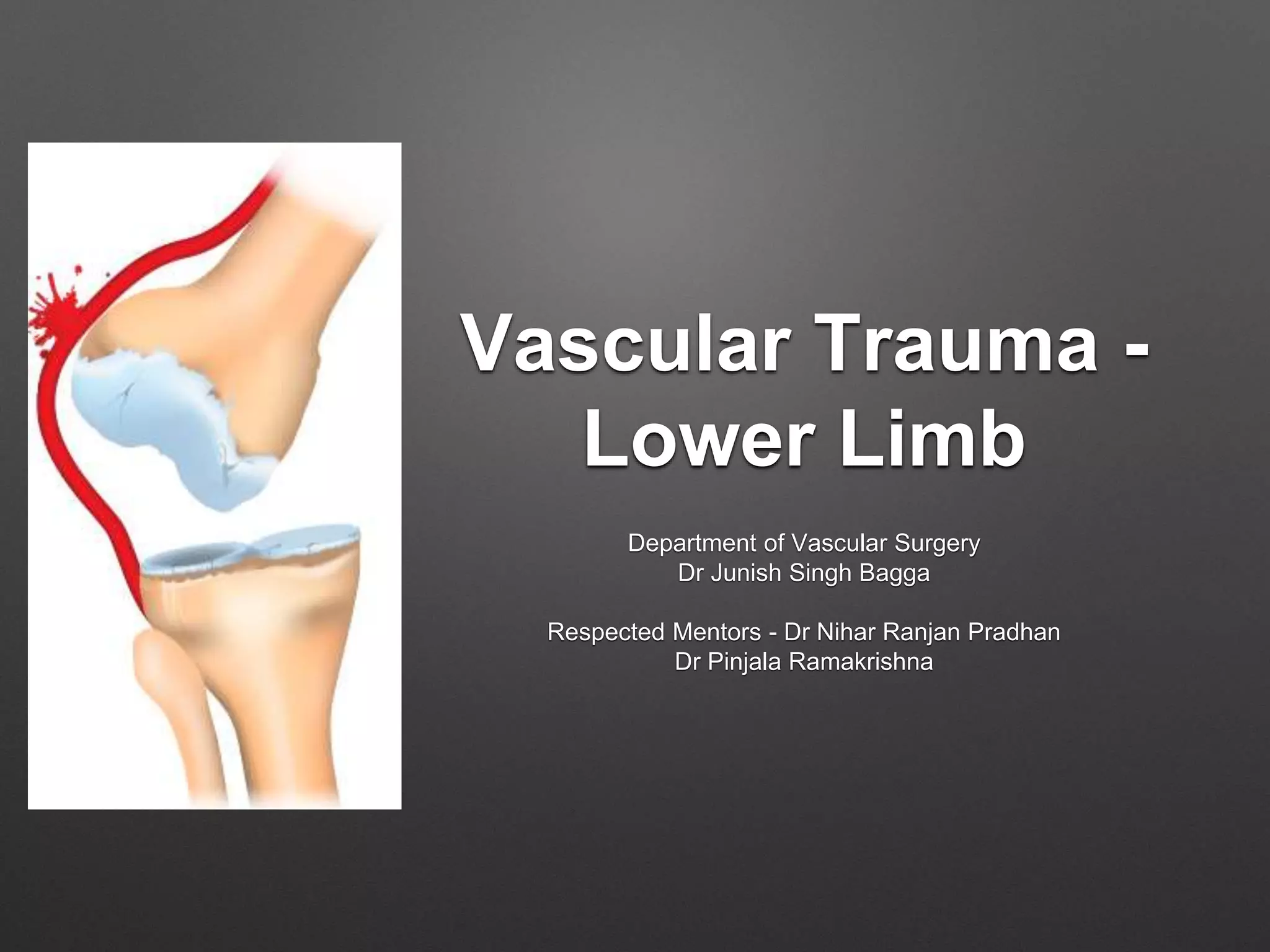
Vascular Trauma -
Lower Limb
Department of Vascular Surgery
Dr Junish Singh Bagga
Respected Mentors - Dr Nihar Ranjan Pradhan
Dr Pinjala Ramakrishna
Epidemiology and pattern of
injury
• Extremity vascular injury - 1-2%
• PROOVIT registry -
Males - 70.5%
Penetrating trauma - 36.5%
Lower extremity - 26%
DuBose JJ, et al; AAST PROOVIT Study Group. The American Association for the Surgery of Trauma
PROspective Observational Vascular Injury Treatment (PROOVIT) registry: multicenter data on
modern vascular injury diagnosis, management, and outcomes. J Trauma Acute Care Surg. 2015
Feb;78(2):215-22
Outcome
• Mortality - more in blunt injury
• Amputation - 7-30% more with infra popliteal injury
Associated tissue injuries -
• Bone # - 80-100% (blunt)
• Venous Injury - 15-35%
• Nerve injury - 10% in lower limb, 40% in upper limb
Examination and
Investigation
• Physical exam alone has high
positive predictive value
• Hard signs - should be surgically
explored
• Soft signs - investigation
• Doppler derived pressure index
• Colour doppler has limited role
• CECT Angiogram
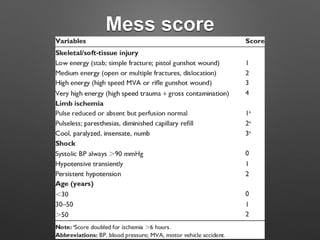
Mess score
Treatment Principles
Non operative Management
• Trauma to distal branches
• May be successful in upto 70 % of cases
• Small, non-flow limiting intimal defects and flaps, small
pseudoanneurysms, AV fistulas
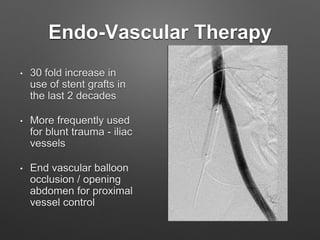
Endo-Vascular Therapy
• 30 fold increase in
use of stent grafts in
the last 2 decades
• More frequently used
for blunt trauma - iliac
vessels
• End vascular balloon
occlusion / opening
abdomen for proximal
vessel control
Open surgical management
• Mainstay
• Preferably with fluoroscopic assistance
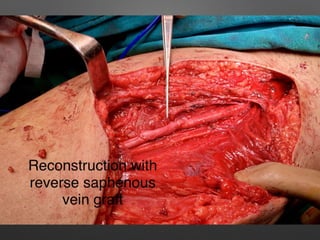
• Reversed saphenous vein grafts
• Vascular control -> Thrombectomy -> repair.
• Anti- coagulation
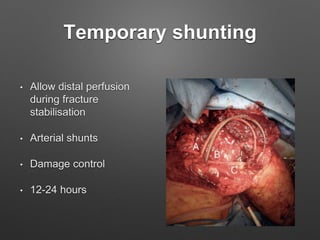
Temporary shunting
• Allow distal perfusion
during fracture
stabilisation
• Arterial shunts
• Damage control
• 12-24 hours
Venous repair vs Ligation
• Controversial
• 24-96 hours post operative all repairs had occluded
• This occlusion can be transient and recanalisation at 12
weeks may be as high as 85%
• Repair may reduce limb edema
• VTE
• Patients physiologic condition
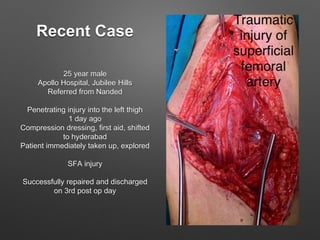
Recent Case
25 year male
Apollo Hospital, Jubilee Hills
Referred from Nanded
Penetrating injury into the left thigh
1 day ago
Compression dressing, first aid, shifted
to hyderabad
Patient immediately taken up, explored
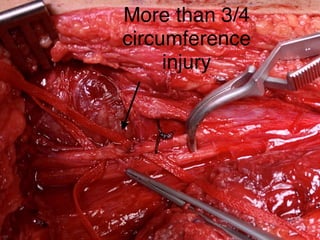
SFA injury
Successfully repaired and discharged
on 3rd post op day
Lower Limb Vascular Trauma - Brief

Lower Limb Vascular Trauma - Brief

  • 1.
    Vascular Trauma - LowerLimb Department of Vascular Surgery Dr Junish Singh Bagga Respected Mentors - Dr Nihar Ranjan Pradhan Dr Pinjala Ramakrishna
  • 2.
    Epidemiology and patternof injury • Extremity vascular injury - 1-2% • PROOVIT registry - Males - 70.5% Penetrating trauma - 36.5% Lower extremity - 26% DuBose JJ, et al; AAST PROOVIT Study Group. The American Association for the Surgery of Trauma PROspective Observational Vascular Injury Treatment (PROOVIT) registry: multicenter data on modern vascular injury diagnosis, management, and outcomes. J Trauma Acute Care Surg. 2015 Feb;78(2):215-22
  • 3.
    Outcome • Mortality -more in blunt injury • Amputation - 7-30% more with infra popliteal injury Associated tissue injuries - • Bone # - 80-100% (blunt) • Venous Injury - 15-35% • Nerve injury - 10% in lower limb, 40% in upper limb
  • 4.
    Examination and Investigation • Physicalexam alone has high positive predictive value • Hard signs - should be surgically explored • Soft signs - investigation • Doppler derived pressure index • Colour doppler has limited role • CECT Angiogram
  • 5.
  • 6.
    Treatment Principles Non operativeManagement • Trauma to distal branches • May be successful in upto 70 % of cases • Small, non-flow limiting intimal defects and flaps, small pseudoanneurysms, AV fistulas
  • 7.
    Endo-Vascular Therapy • 30fold increase in use of stent grafts in the last 2 decades • More frequently used for blunt trauma - iliac vessels • End vascular balloon occlusion / opening abdomen for proximal vessel control
  • 8.
    Open surgical management •Mainstay • Preferably with fluoroscopic assistance • Reversed saphenous vein grafts • Vascular control -> Thrombectomy -> repair. • Anti- coagulation
  • 9.
    Temporary shunting • Allowdistal perfusion during fracture stabilisation • Arterial shunts • Damage control • 12-24 hours
  • 10.
    Venous repair vsLigation • Controversial • 24-96 hours post operative all repairs had occluded • This occlusion can be transient and recanalisation at 12 weeks may be as high as 85% • Repair may reduce limb edema • VTE • Patients physiologic condition
  • 11.
    Recent Case 25 yearmale Apollo Hospital, Jubilee Hills Referred from Nanded Penetrating injury into the left thigh 1 day ago Compression dressing, first aid, shifted to hyderabad Patient immediately taken up, explored SFA injury Successfully repaired and discharged on 3rd post op day