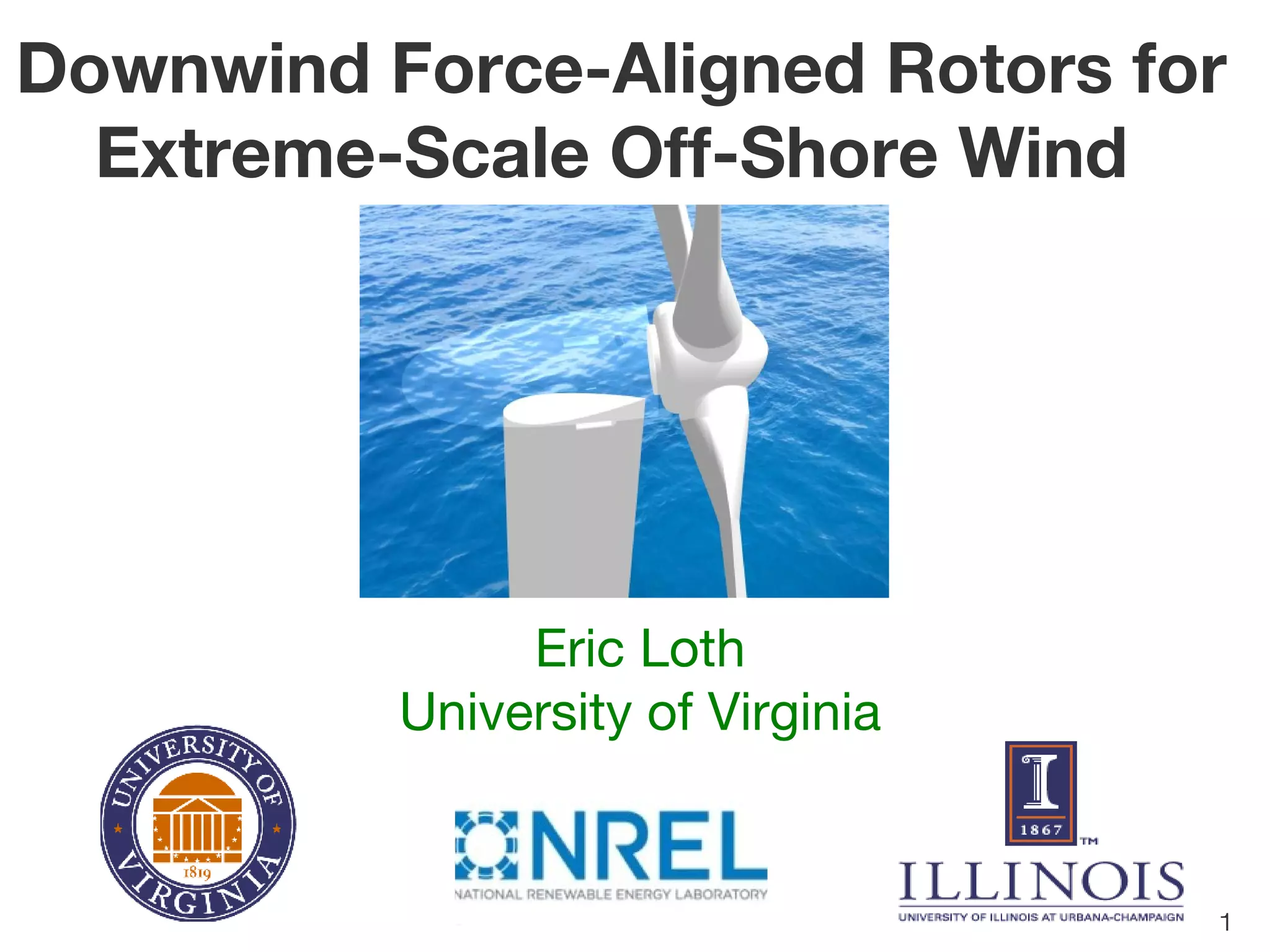
Downwind Force-Aligned Rotors for 
Extreme-Scale Off-Shore Wind 
1 
Eric Loth 
University of Virginia
2 
Early evaluations of new wind turbine concept 
Presentation outline 
Extreme-scale Issues & Force alignment 
Morphing 
Pre-Alignment 
Tower Shadow Issues
3 
Extreme-Scale Issues & 
Force Alignment
4 
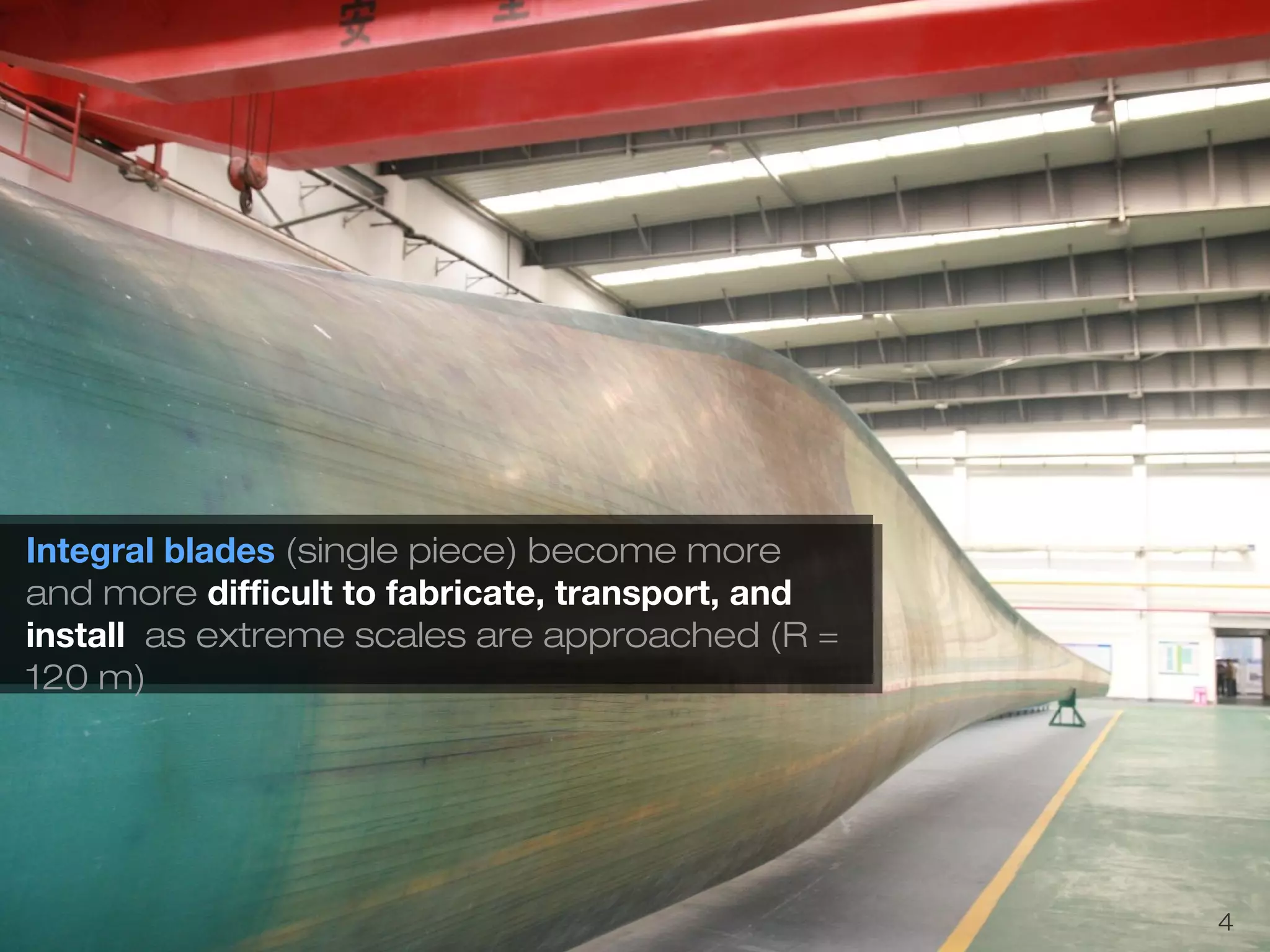
Integral blades (single piece) become more 
and more difficult to fabricate, transport, and 
install as extreme scales are approached (R = 
120 m)
5 
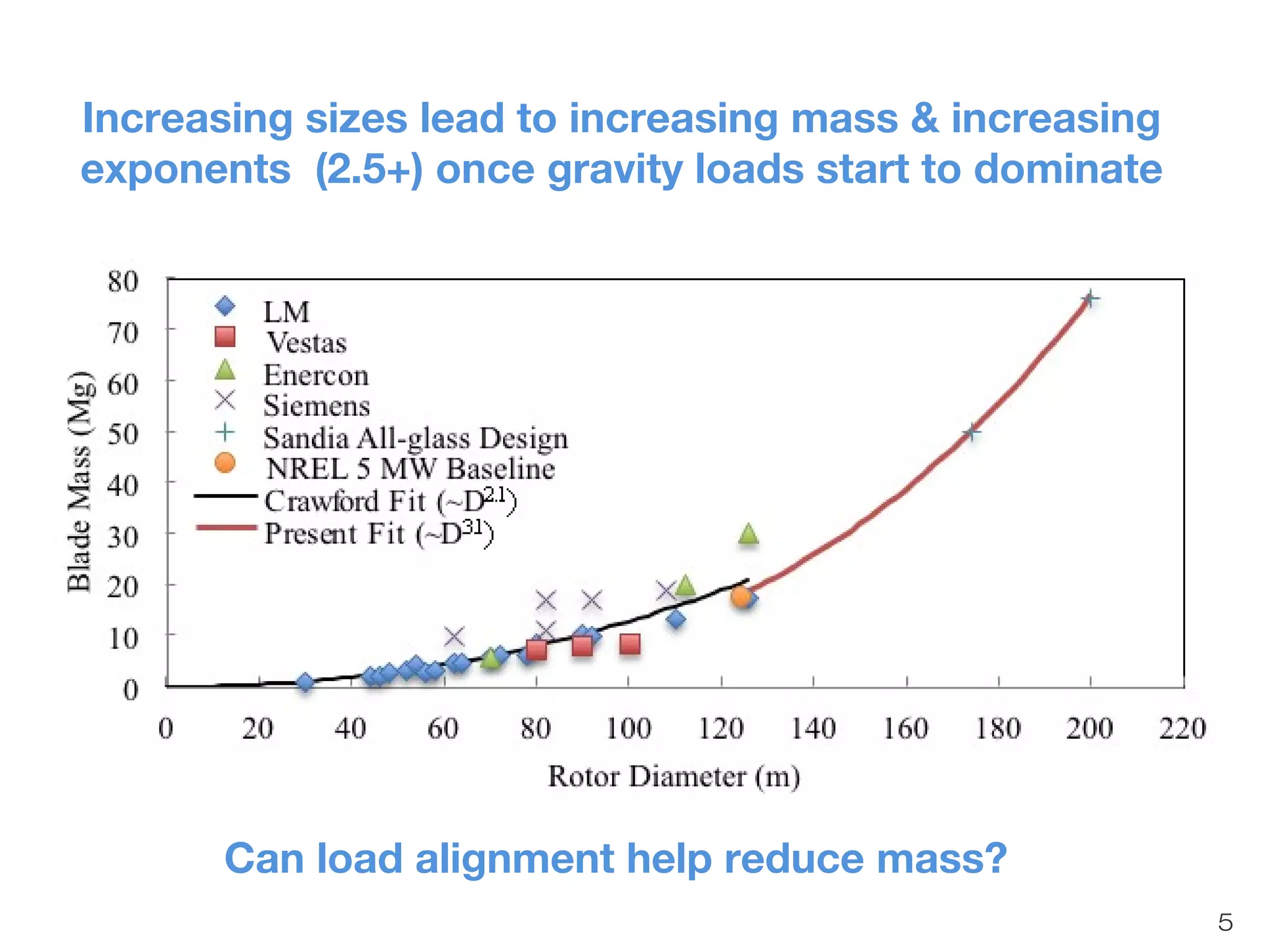
Increasing sizes lead to increasing mass & increasing 
exponents (2.5+) once gravity loads start to dominate 
Can load alignment help reduce mass?
Bio-Inspiration 
6 
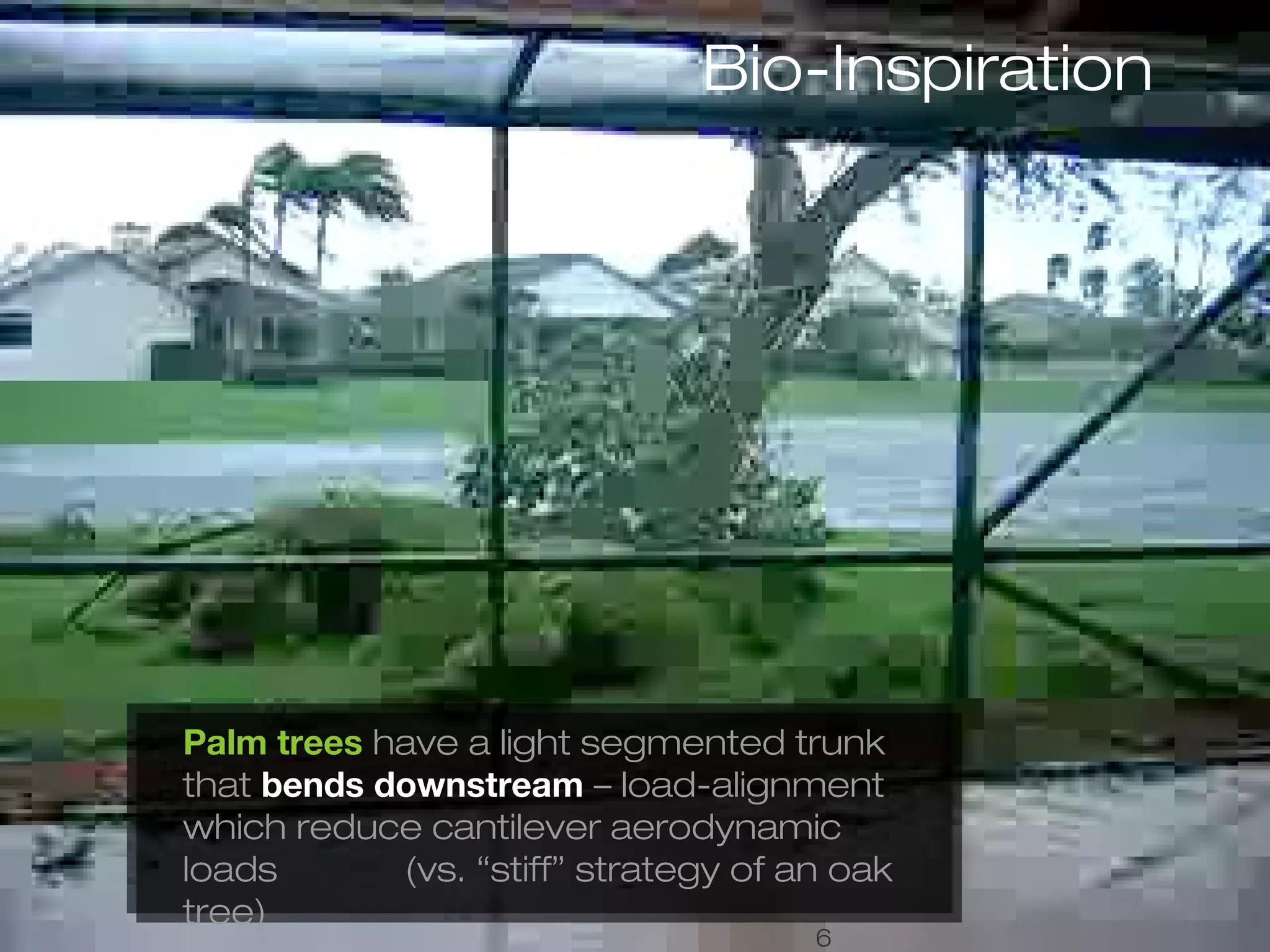
Palm trees have a light segmented trunk 
that bends downstream – load-alignment 
which reduce cantilever aerodynamic 
loads (vs. “stiff” strategy of an oak 
tree) 
6
7 
Wind Turbine Forces 
Conventional vs. Load- 
Aligned 
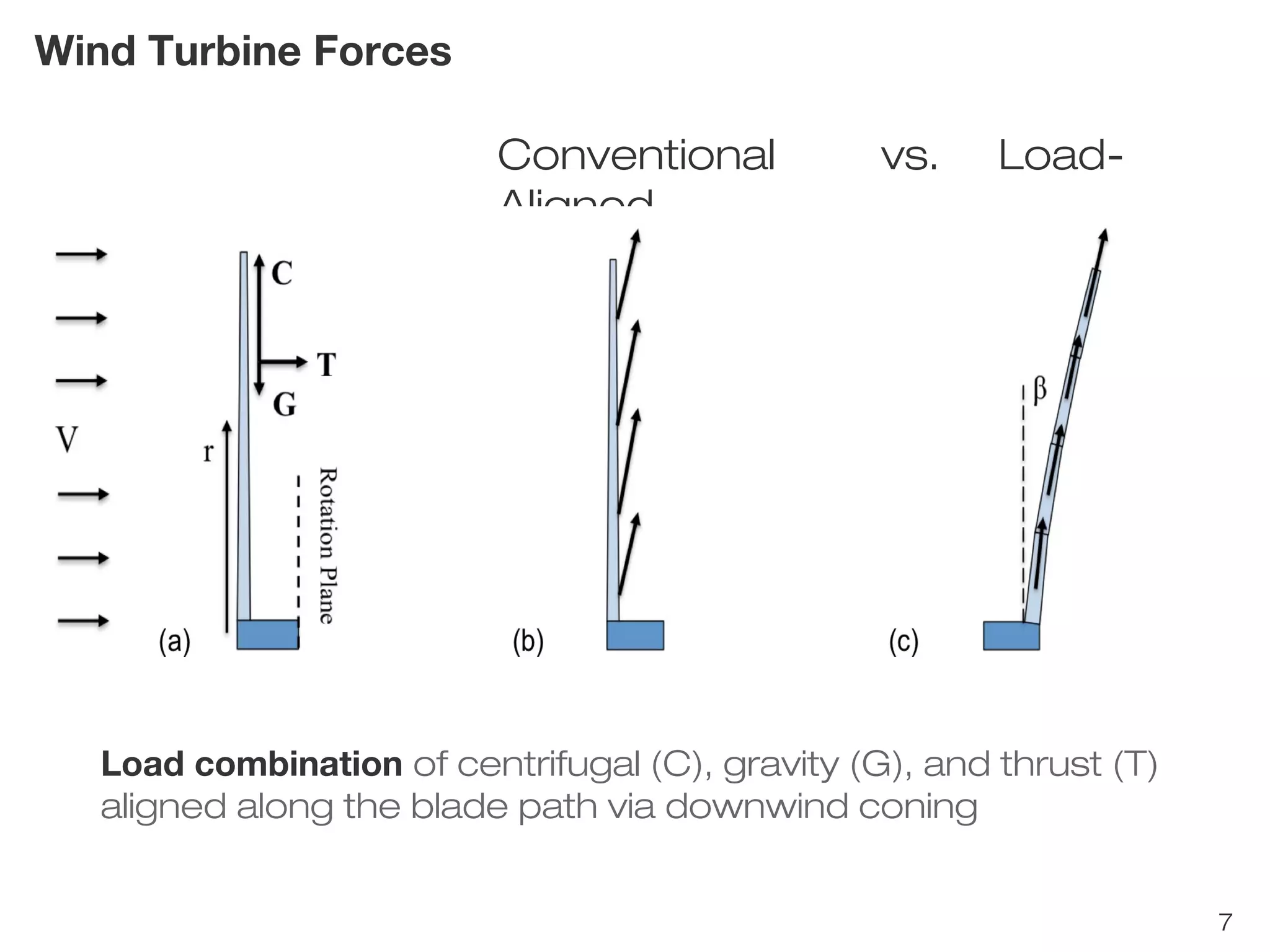
Load combination of centrifugal (C), gravity (G), and thrust (T) 
aligned along the blade path via downwind coning
8 
Load Path Angle 
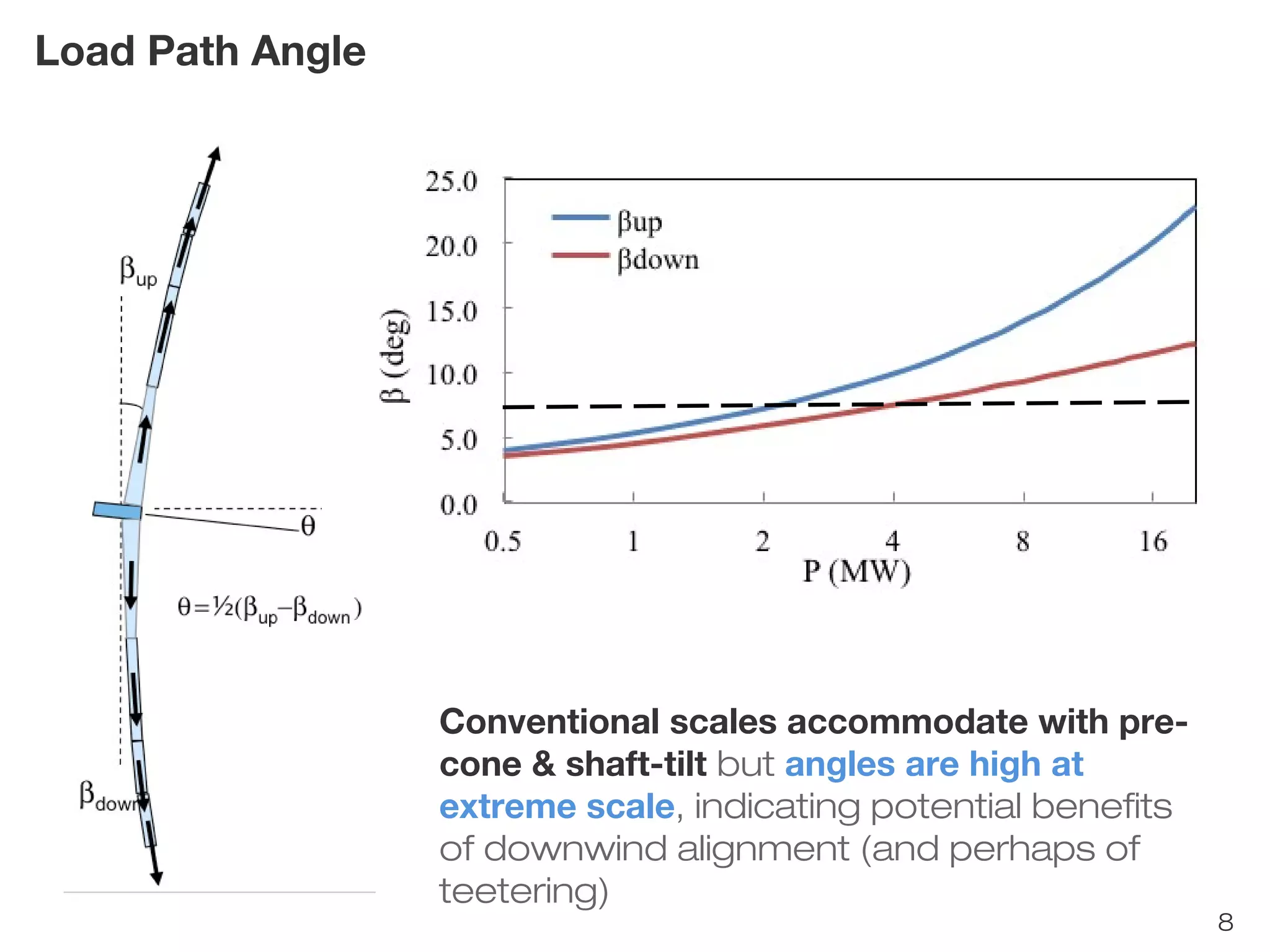
Conventional scales accommodate with pre-cone 
& shaft-tilt but angles are high at 
extreme scale, indicating potential benefits 
of downwind alignment (and perhaps of 
teetering)
9 
Morphing
Morphing in Nature
11 
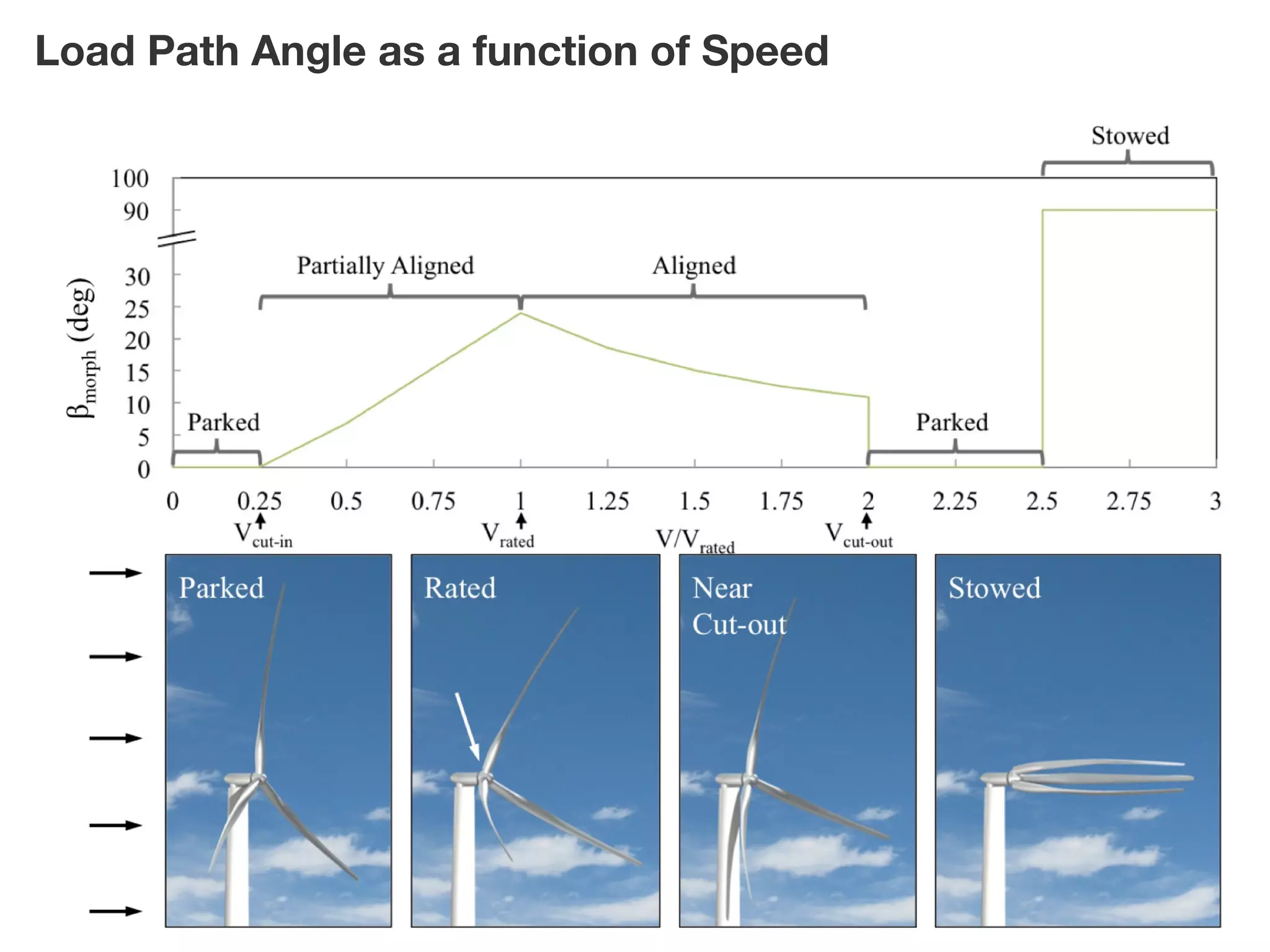
Load Path Angle as a function of Speed 
Small benefit for small turbines but 
significant load-path angles at larger scale, 
indicating potential benefits of alignment 
(and perhaps importance of teetering for 
downwind)
12 
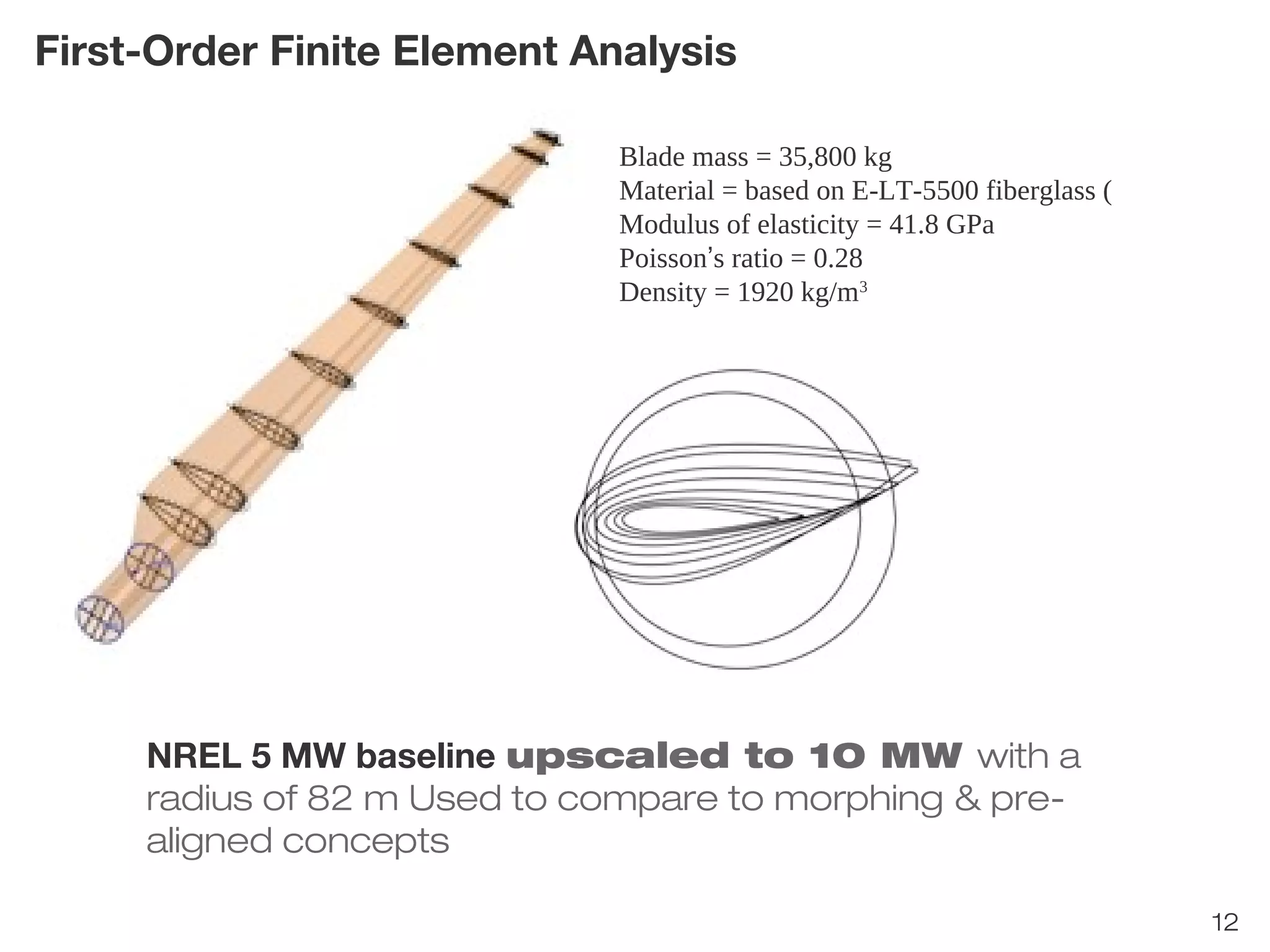
First-Order Finite Element Analysis 
NREL 5 MW baseline upscaled to 10 MW with a 
radius of 82 m Used to compare to morphing & pre-aligned 
concepts 
Blade mass = 35,800 kg 
Material = based on E-LT-5500 fiberglass ( 
Modulus of elasticity = 41.8 GPa 
Poisson’s ratio = 0.28 
Density = 1920 kg/m3
13 
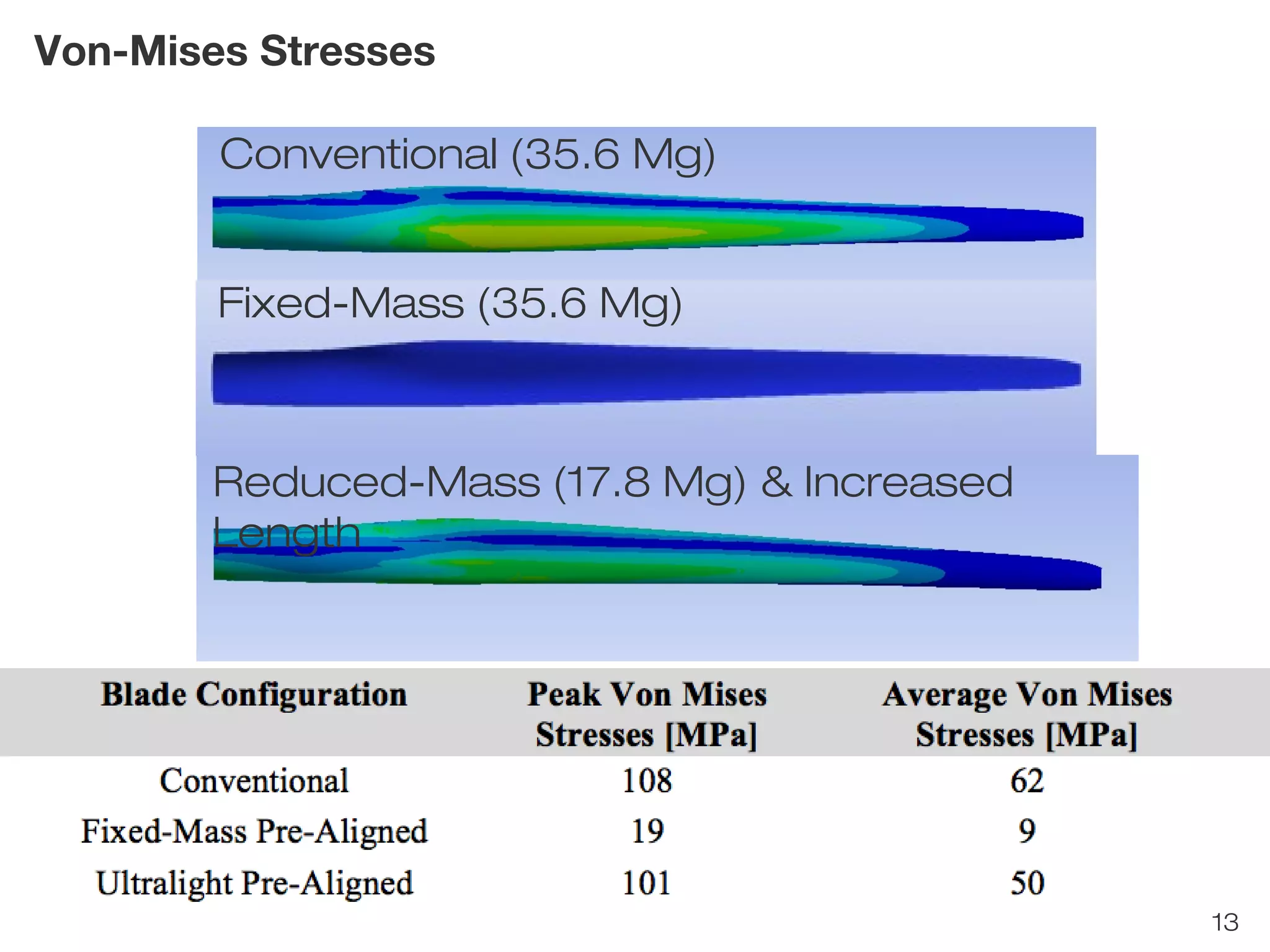
Von-Mises Stresses 
Conventional (35.6 Mg) 
Fixed-Mass (35.6 Mg) 
Reduced-Mass (17.8 Mg) & Increased 
Length
14 
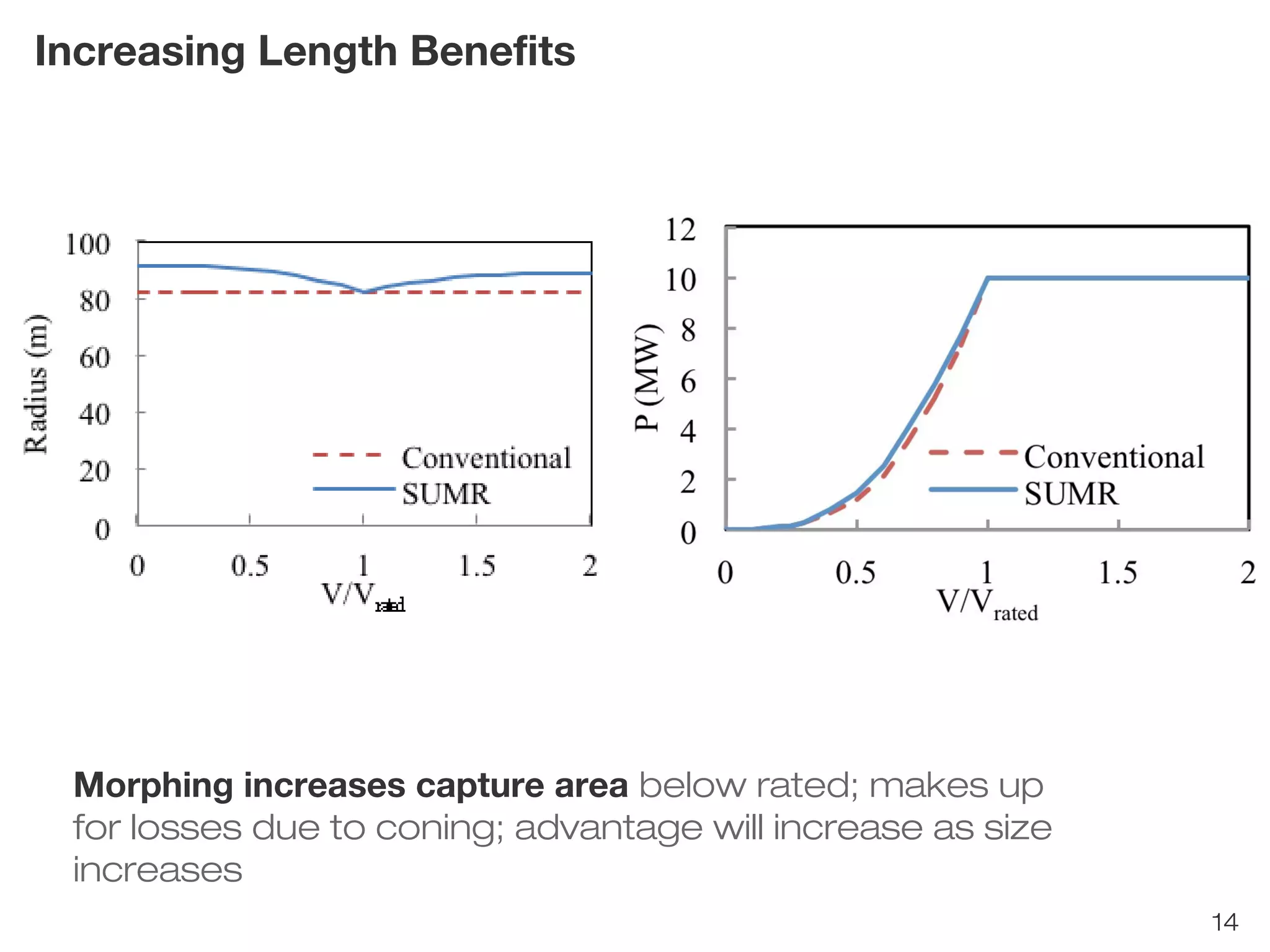
Increasing Length Benefits 
Morphing increases capture area below rated; makes up 
for losses due to coning; advantage will increase as size 
increases
15 
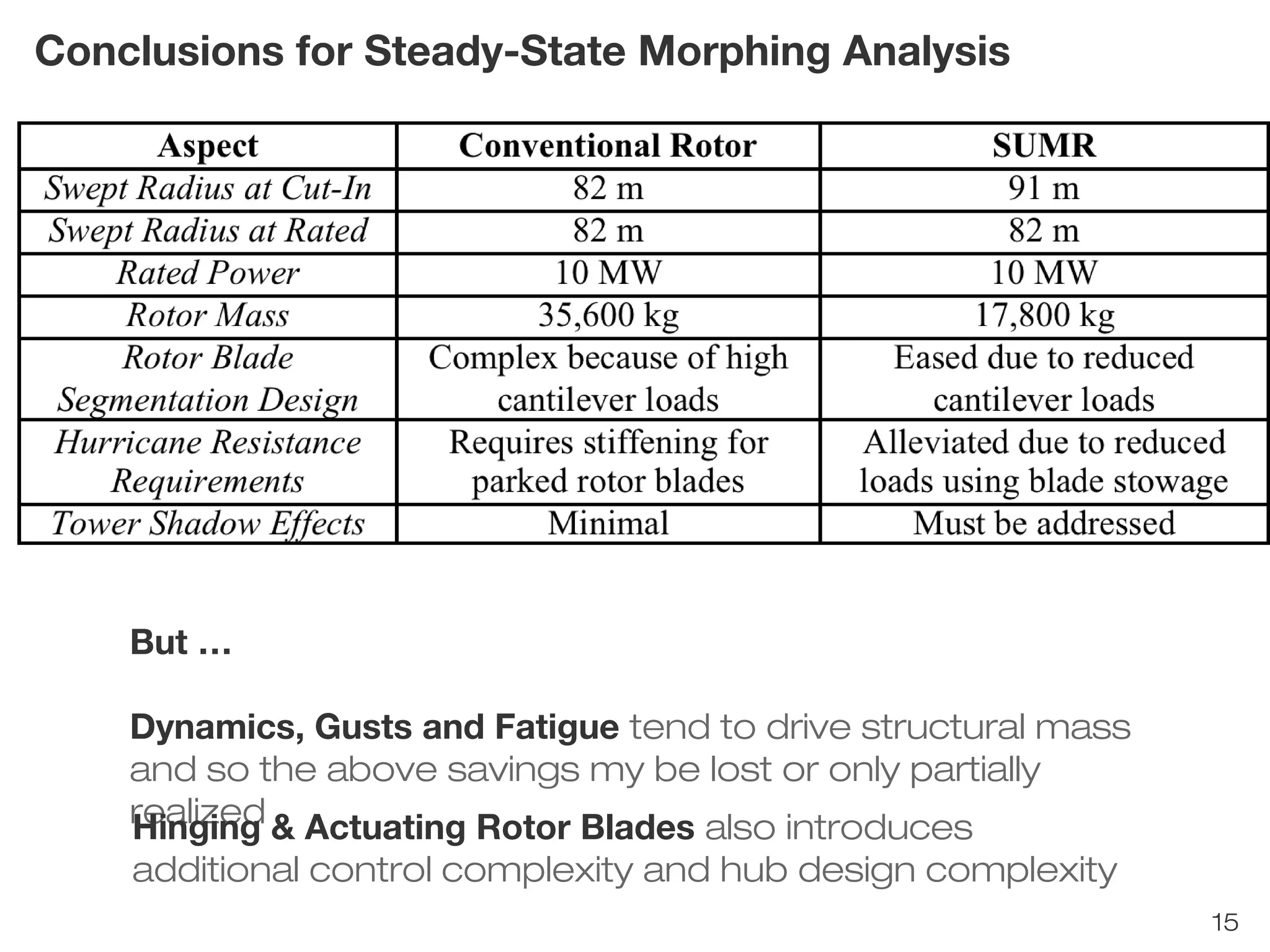
Conclusions for Steady-State Morphing Analysis 
But … 
Dynamics, Gusts and Fatigue tend to drive structural mass 
and so the above savings my be lost or only partially 
rHeianlgizinegd & Actuating Rotor Blades also introduces 
additional control complexity and hub design complexity
16 
Pre-Aligned
1177 
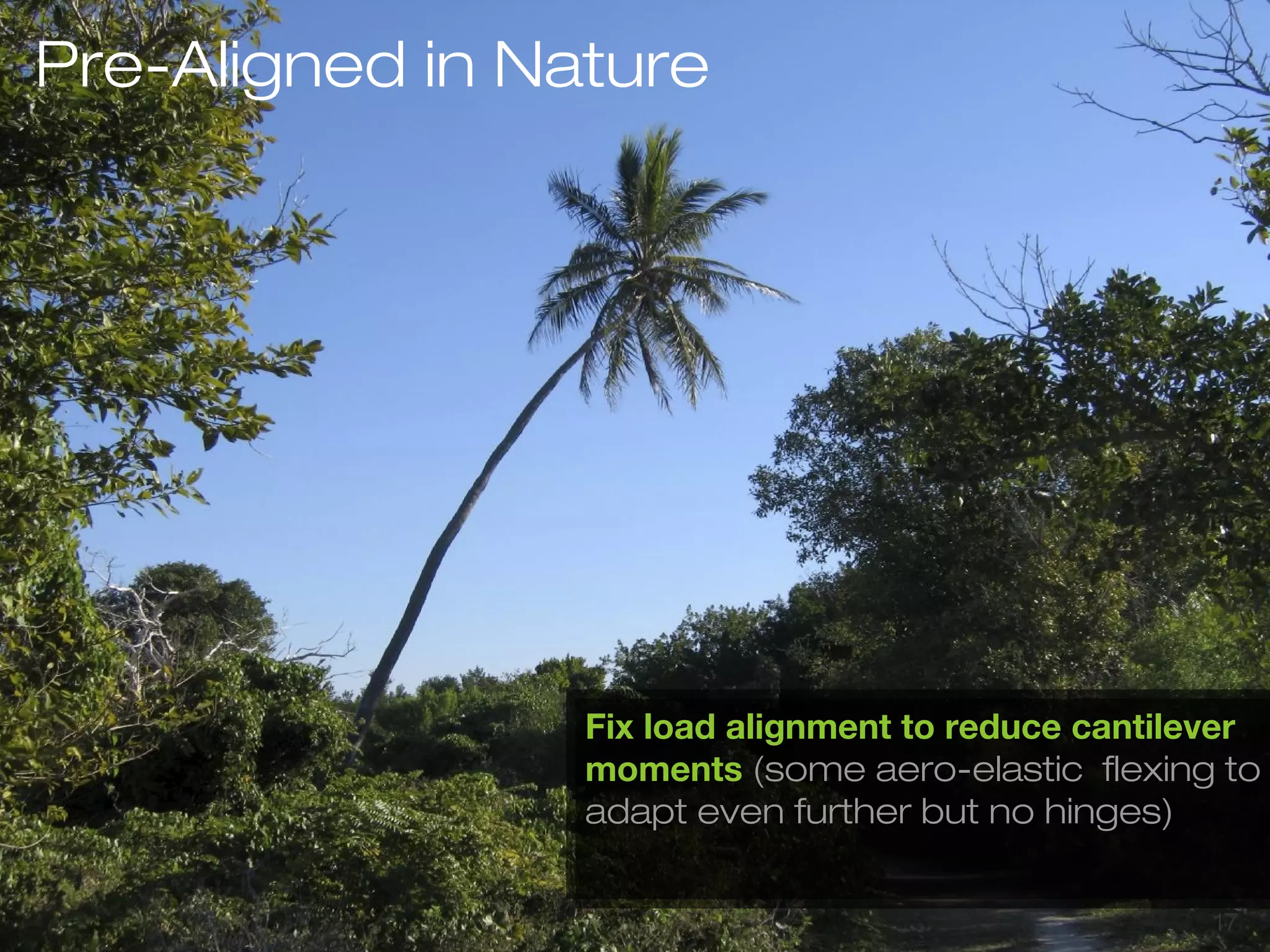
Pre-Aligned in Nature 
Fix load alignment to reduce cantilever 
moments (some aero-elastic flexing to 
adapt even further but no hinges)
18 
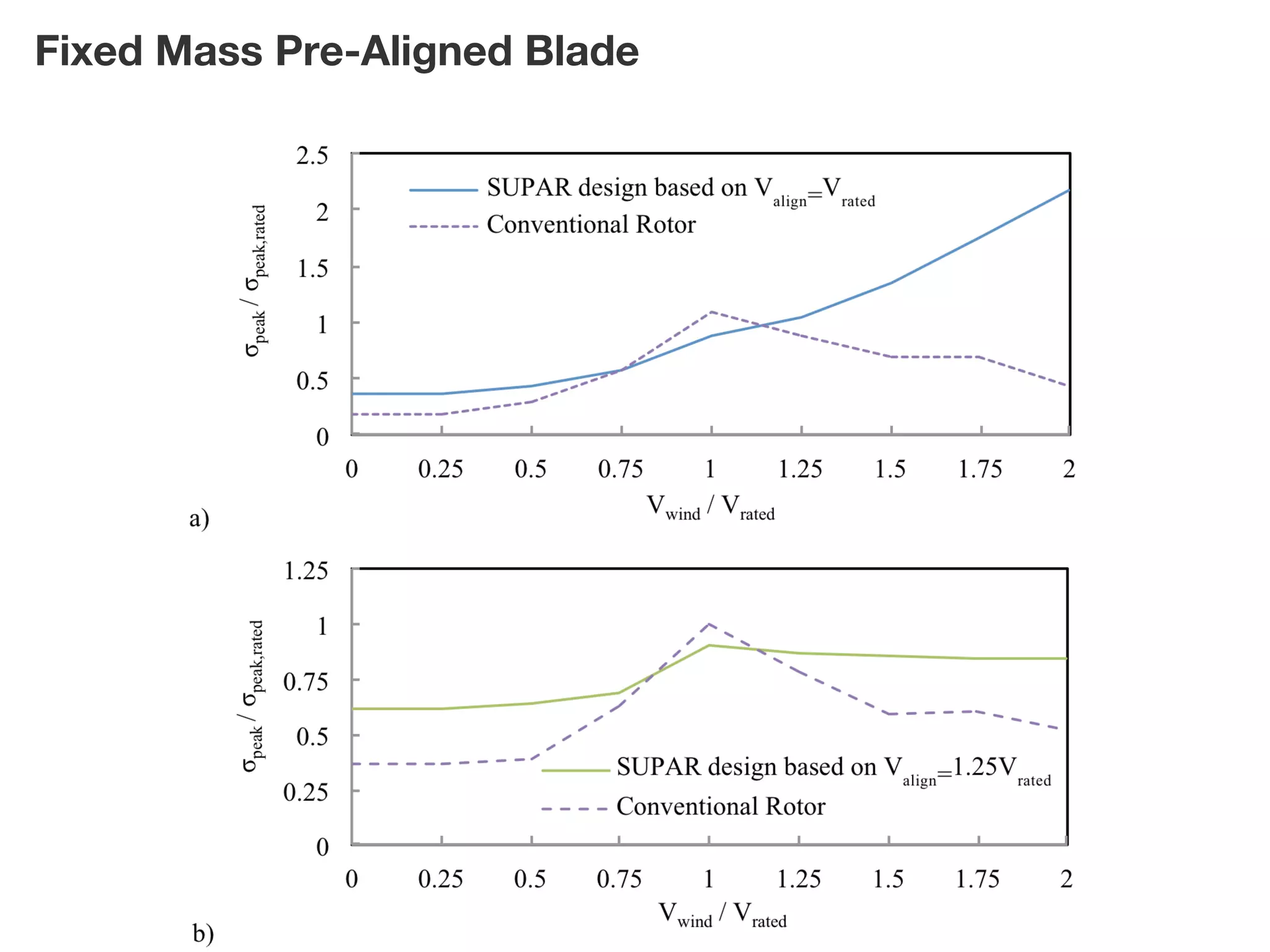
Fixed Mass Pre-Aligned Blade 
Zero moment nodes induced over 4 segments by setting proper 
alignment angles such that resultant force of each segment is 
tension aligned
19 
Tower Shadow Issues
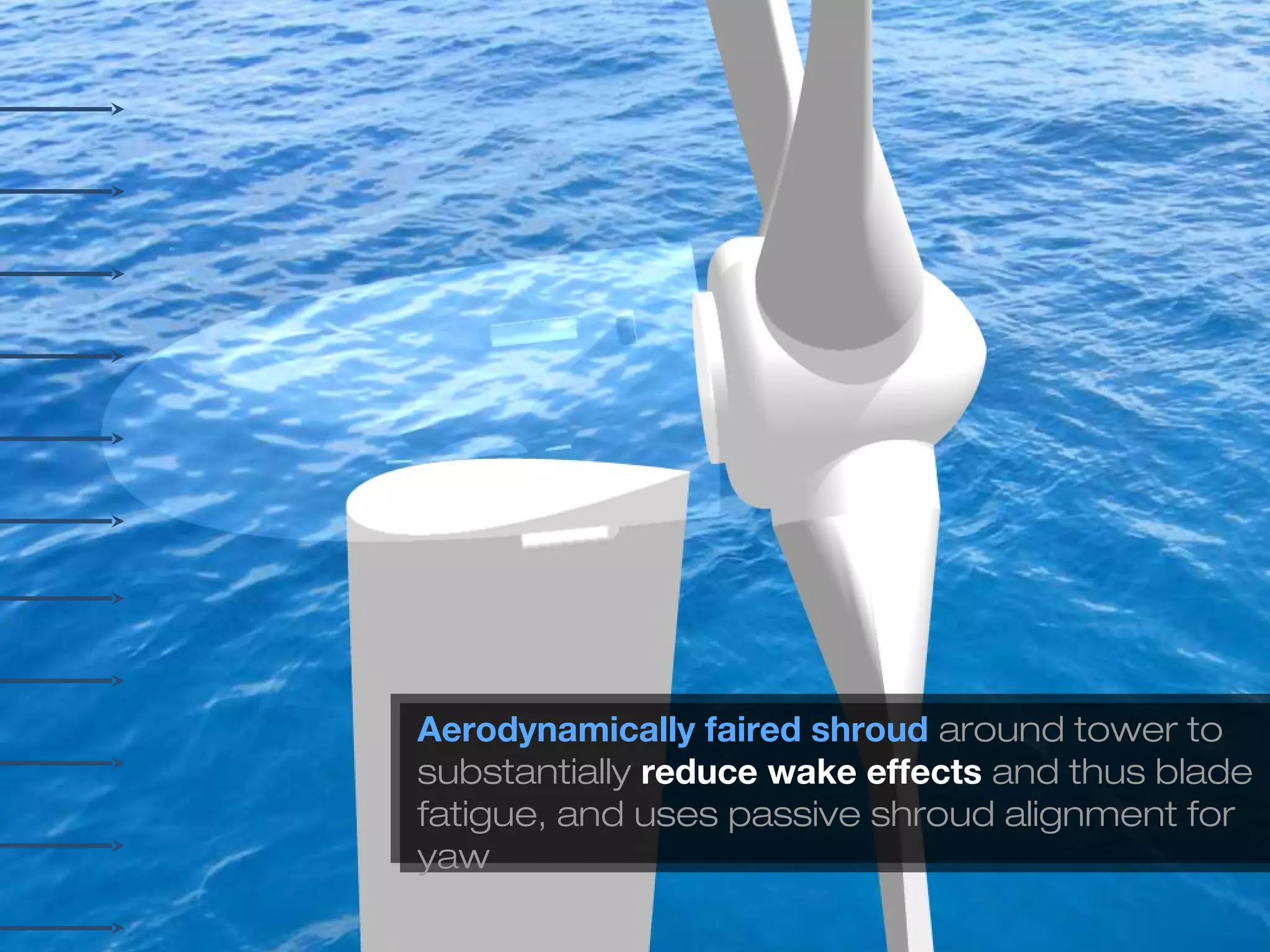
Aerodynamically faired shroud around tower to 
substantially reduce wake effects and thus blade 
fatigue, and uses passive shroud alignment for 
yaw 
20
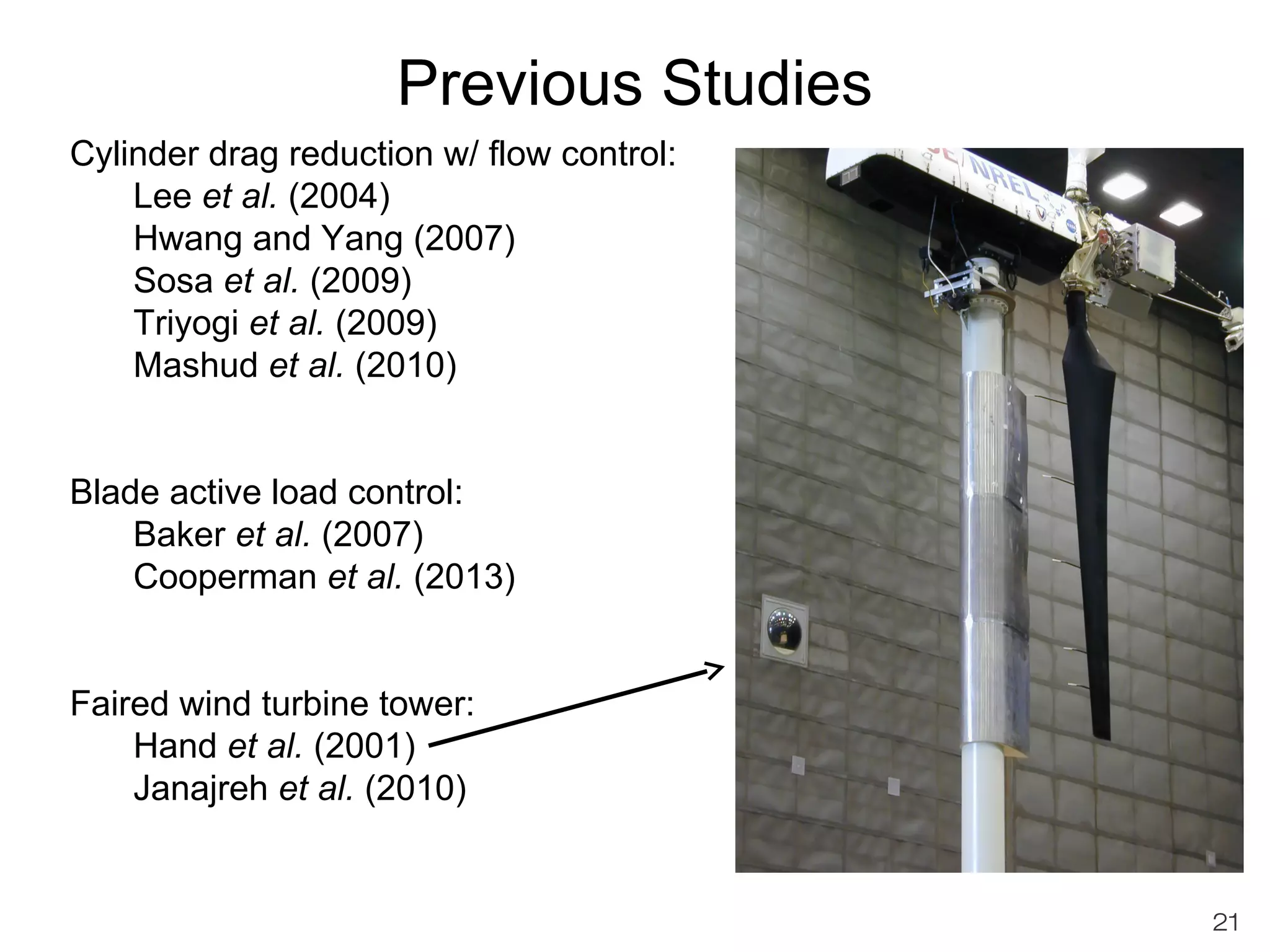
Previous Studies 
Cylinder drag reduction w/ flow control: 
Lee et al. (2004) 
Hwang and Yang (2007) 
Sosa et al. (2009) 
Triyogi et al. (2009) 
Mashud et al. (2010) 
Blade active load control: 
Baker et al. (2007) 
Cooperman et al. (2013) 
Faired wind turbine tower: 
Hand et al. (2001) 
Janajreh et al. (2010) 
21
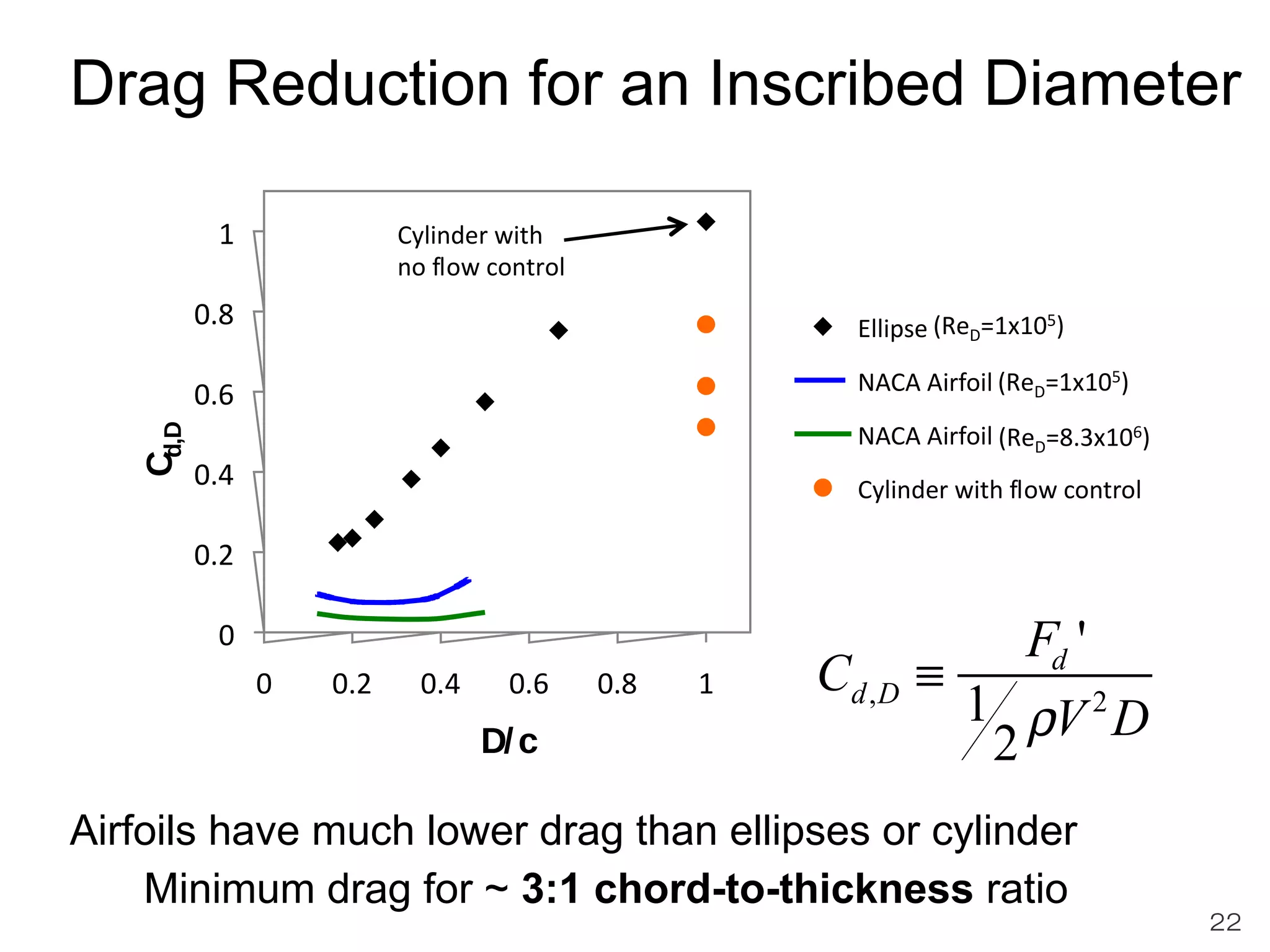
Drag Reduction for an Inscribed Diameter 
1 
0.8 
0.6 
0.4 
0.2 
0 
0 0.2 0.4 0.6 0.8 1 
Cd,D 
D/c 
(ReD=1x10⁵) 
Ellipse 1e5) 
NACA Airfoil (ReD=1x10⁵) 
1e5) 
NACA Airfoil (ReD=8.3e6) 
Cylinder with flow control 
8.3x10⁶) 
Cylinder with 
no flow control 
Airfoils have much lower drag than ellipses or cylinder 
22 
Cd,D º Fd ' 
1 
2rV2D 
Minimum drag for ~ 3:1 chord-to-thickness ratio
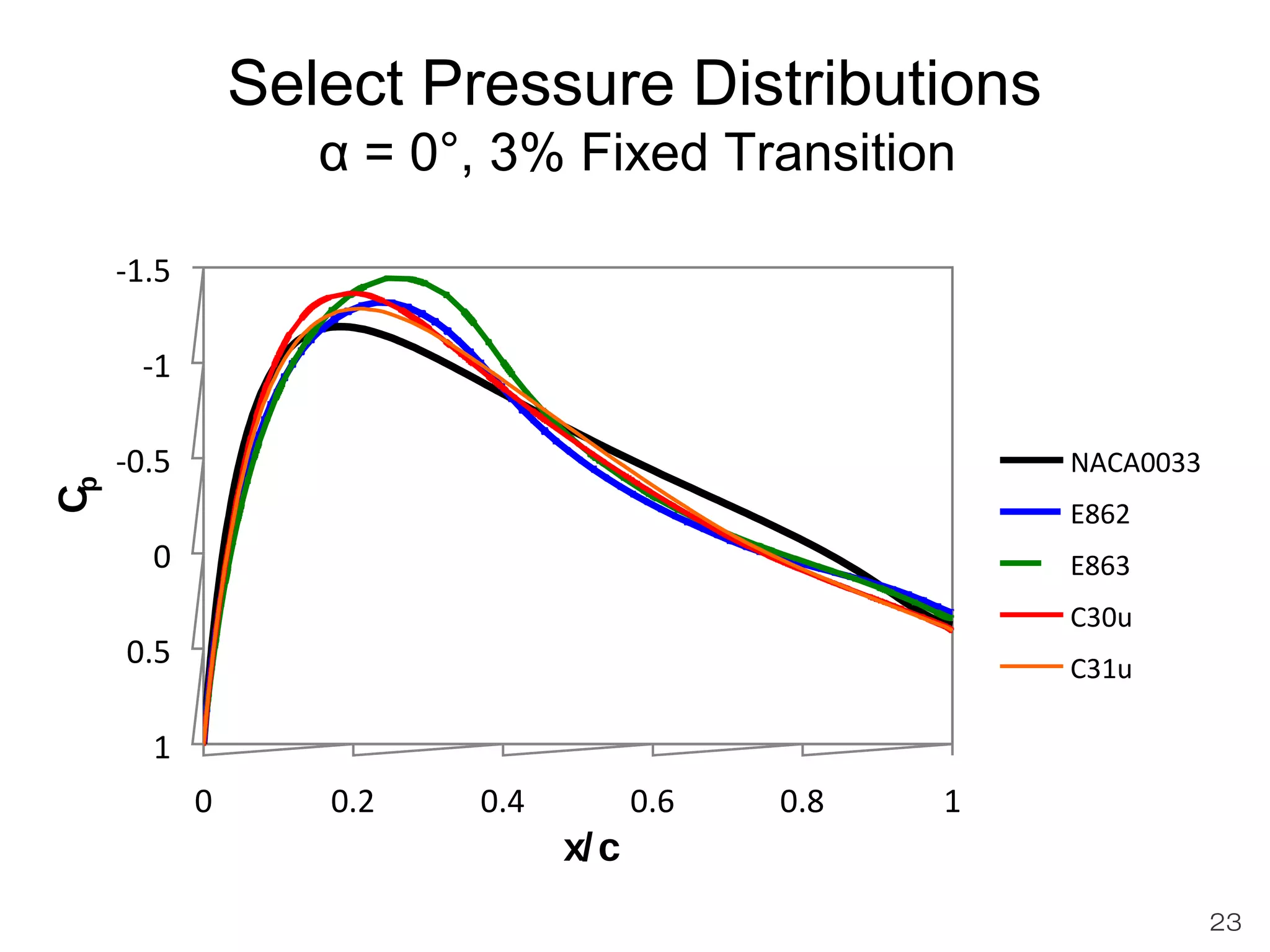
Select Pressure Distributions 
α = 0°, 3% Fixed Transition 
-1.5 
-1 
-0.5 
Cp x/c 
0 
0.5 
1 
0 0.2 0.4 0.6 0.8 1 
NACA0033 
E862 
E863 
C30u 
C31u 
23
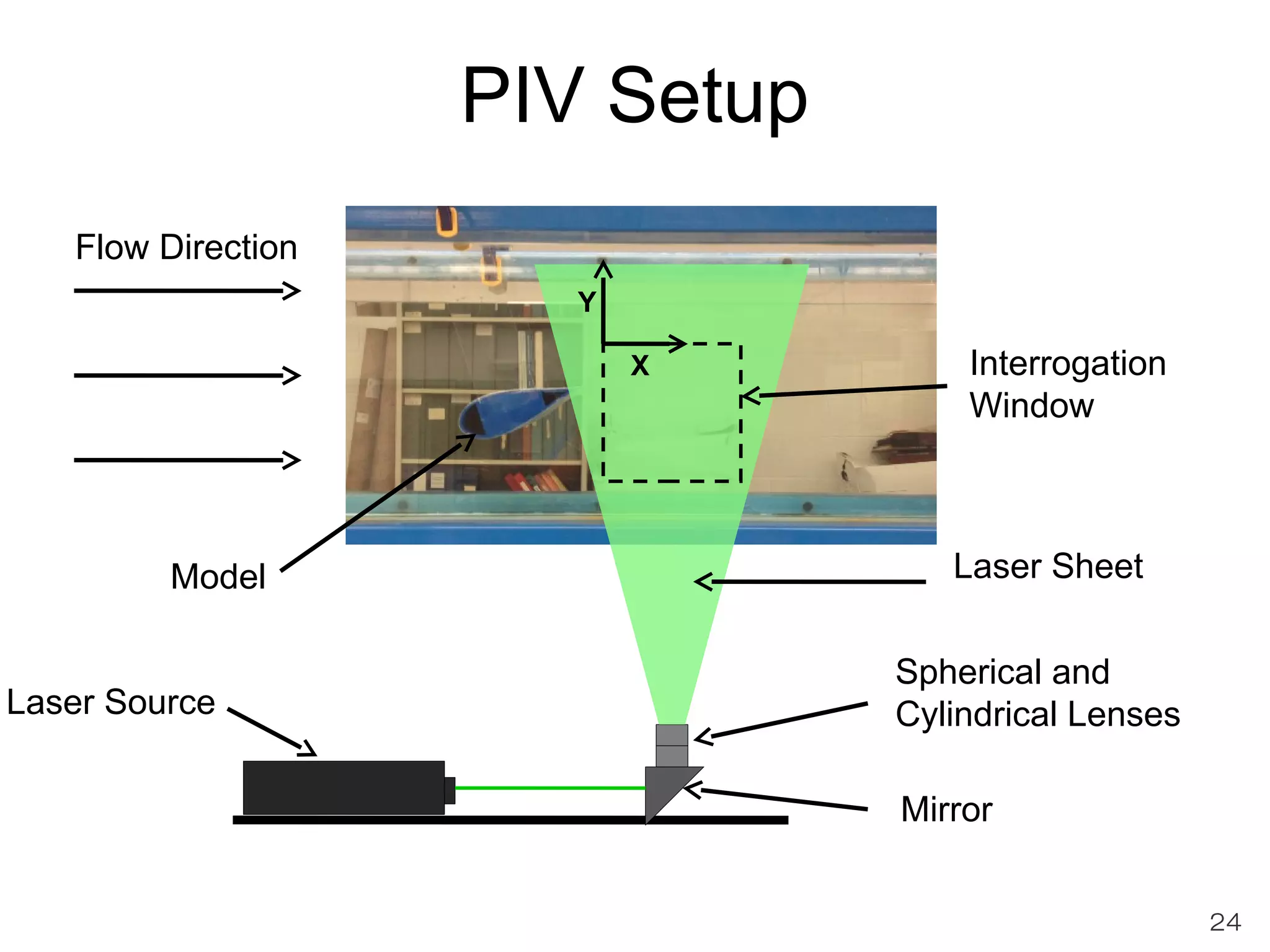
PIV Setup 
24 
Flow Direction 
Y 
X Interrogation 
Window 
Laser Sheet 
Spherical and 
Cylindrical Lenses 
Mirror 
Model 
Laser Source
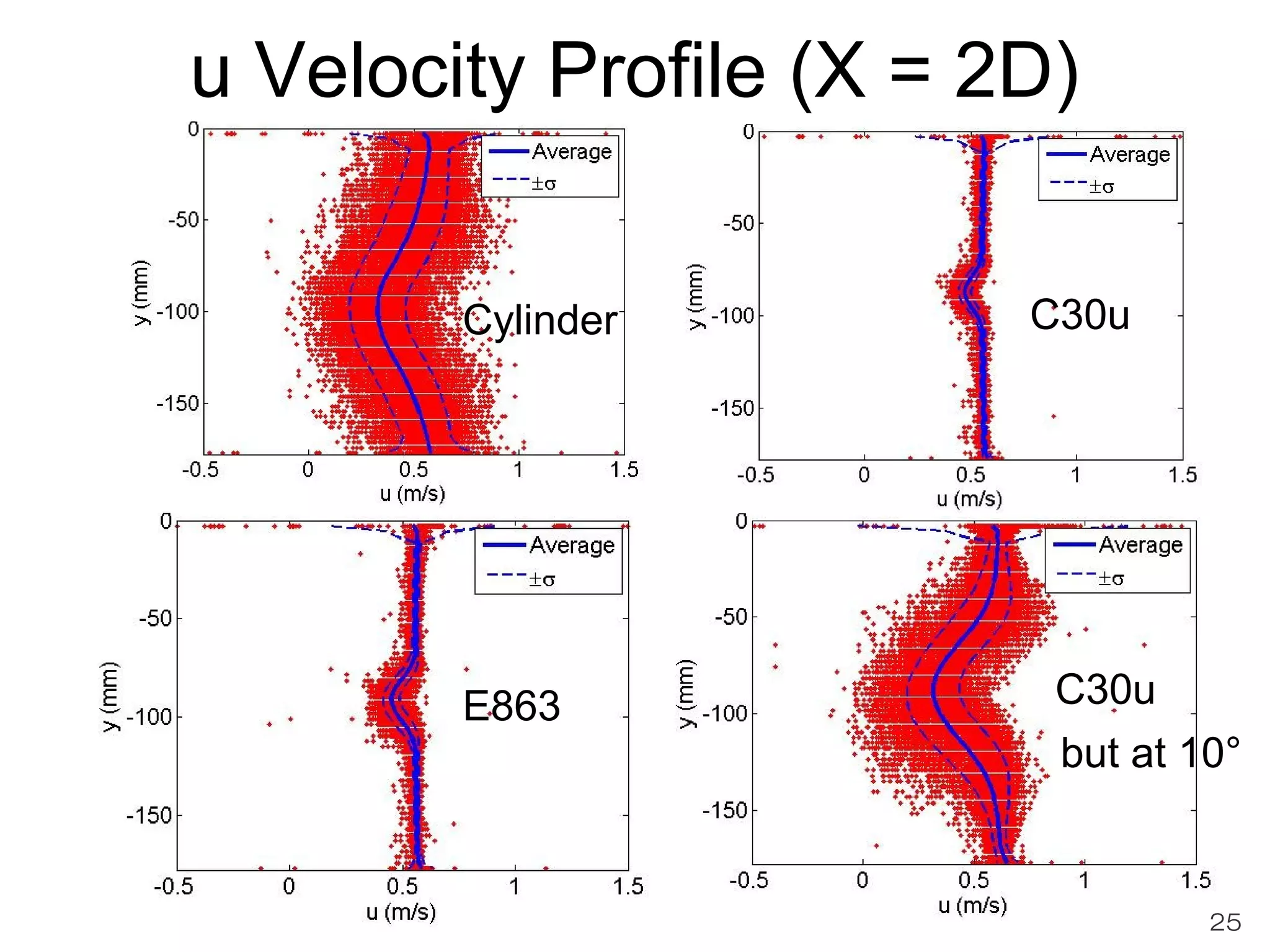
u Velocity Profile (X = 2D) 
25 
E863 
C30u 
C30u 
but at 10° 
Cylinder
26 
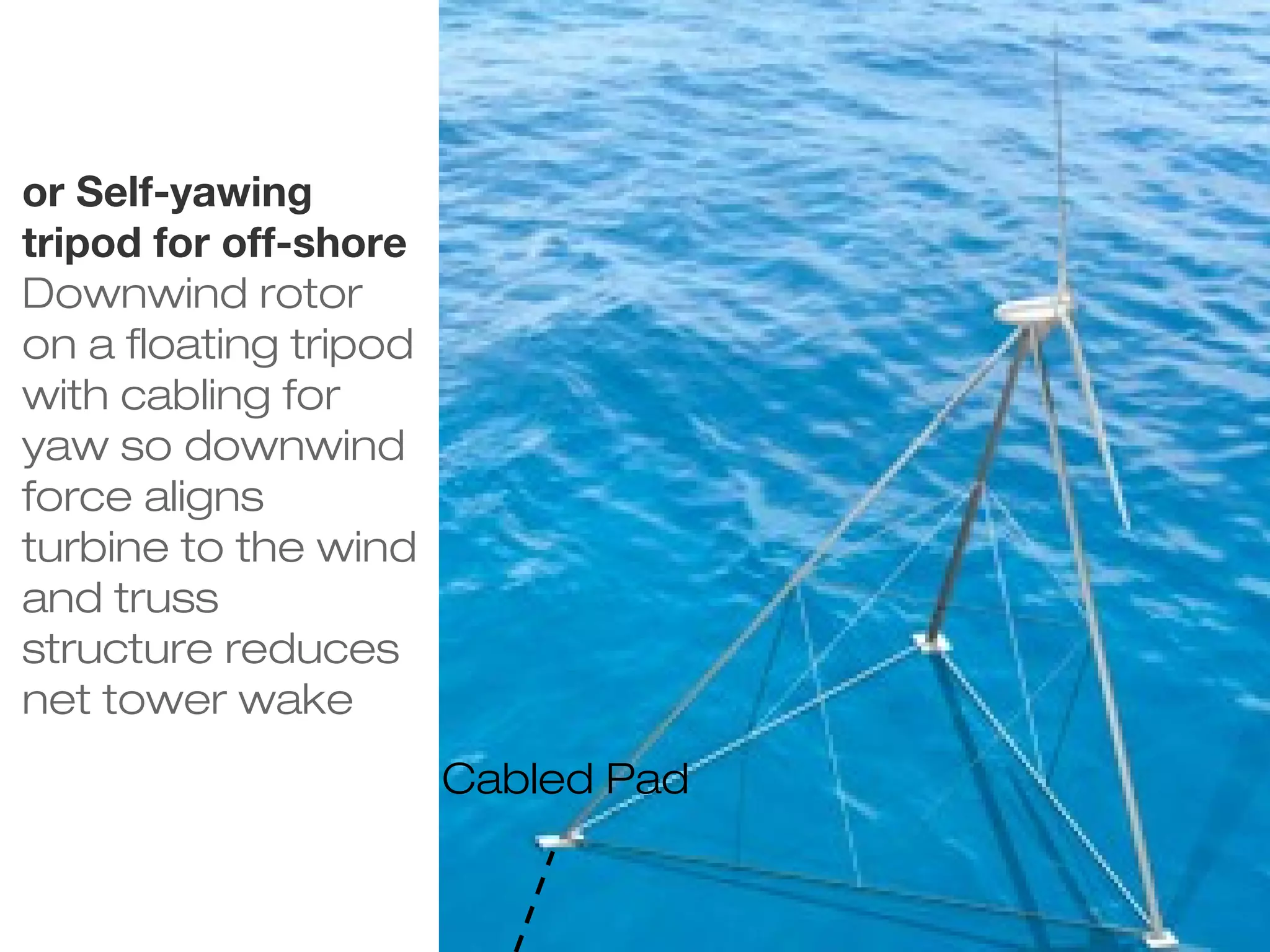
or Self-yawing 
tripod for off-shore 
Downwind rotor 
on a floating tripod 
with cabling for 
yaw so downwind 
force aligns 
turbine to the wind 
and truss 
structure reduces 
net tower wake 
Cabled Pad
27 
CONCLUSIONS 
Steady-state analysis for morphing concept may 
allow substantial reductions in structural blade and 
tower mass at extreme-scales; but, hinge system 
may be heavy & complex 
Pre-alignment reduces complexity while retaining 
most of load savings; however, still have shadow 
effects 
Aerodynamic shrouds can dramatically reduces 
wake effects; however, wind angle changes effects 
and downwind tower loads may be problematic 
Much more work needed to determine relative 
feasibility for force-aligned downwind systems

Sandia 2014 Wind Turbine Blade Workshop- Loth

  • 1.
    Downwind Force-Aligned Rotorsfor Extreme-Scale Off-Shore Wind 1 Eric Loth University of Virginia
  • 2.
    2 Early evaluationsof new wind turbine concept Presentation outline Extreme-scale Issues & Force alignment Morphing Pre-Alignment Tower Shadow Issues
  • 3.
    3 Extreme-Scale Issues& Force Alignment
  • 4.
    4 Integral blades(single piece) become more and more difficult to fabricate, transport, and install as extreme scales are approached (R = 120 m)
  • 5.
    5 Increasing sizeslead to increasing mass & increasing exponents (2.5+) once gravity loads start to dominate Can load alignment help reduce mass?
  • 6.
    Bio-Inspiration 6 Palmtrees have a light segmented trunk that bends downstream – load-alignment which reduce cantilever aerodynamic loads (vs. “stiff” strategy of an oak tree) 6
  • 7.
    7 Wind TurbineForces Conventional vs. Load- Aligned Load combination of centrifugal (C), gravity (G), and thrust (T) aligned along the blade path via downwind coning
  • 8.
    8 Load PathAngle Conventional scales accommodate with pre-cone & shaft-tilt but angles are high at extreme scale, indicating potential benefits of downwind alignment (and perhaps of teetering)
  • 9.
  • 10.
  • 11.
    11 Load PathAngle as a function of Speed Small benefit for small turbines but significant load-path angles at larger scale, indicating potential benefits of alignment (and perhaps importance of teetering for downwind)
  • 12.
    12 First-Order FiniteElement Analysis NREL 5 MW baseline upscaled to 10 MW with a radius of 82 m Used to compare to morphing & pre-aligned concepts Blade mass = 35,800 kg Material = based on E-LT-5500 fiberglass ( Modulus of elasticity = 41.8 GPa Poisson’s ratio = 0.28 Density = 1920 kg/m3
  • 13.
    13 Von-Mises Stresses Conventional (35.6 Mg) Fixed-Mass (35.6 Mg) Reduced-Mass (17.8 Mg) & Increased Length
  • 14.
    14 Increasing LengthBenefits Morphing increases capture area below rated; makes up for losses due to coning; advantage will increase as size increases
  • 15.
    15 Conclusions forSteady-State Morphing Analysis But … Dynamics, Gusts and Fatigue tend to drive structural mass and so the above savings my be lost or only partially rHeianlgizinegd & Actuating Rotor Blades also introduces additional control complexity and hub design complexity
  • 16.
  • 17.
    1177 Pre-Aligned inNature Fix load alignment to reduce cantilever moments (some aero-elastic flexing to adapt even further but no hinges)
  • 18.
    18 Fixed MassPre-Aligned Blade Zero moment nodes induced over 4 segments by setting proper alignment angles such that resultant force of each segment is tension aligned
  • 19.
  • 20.
    Aerodynamically faired shroudaround tower to substantially reduce wake effects and thus blade fatigue, and uses passive shroud alignment for yaw 20
  • 21.
    Previous Studies Cylinderdrag reduction w/ flow control: Lee et al. (2004) Hwang and Yang (2007) Sosa et al. (2009) Triyogi et al. (2009) Mashud et al. (2010) Blade active load control: Baker et al. (2007) Cooperman et al. (2013) Faired wind turbine tower: Hand et al. (2001) Janajreh et al. (2010) 21
  • 22.
    Drag Reduction foran Inscribed Diameter 1 0.8 0.6 0.4 0.2 0 0 0.2 0.4 0.6 0.8 1 Cd,D D/c (ReD=1x10⁵) Ellipse 1e5) NACA Airfoil (ReD=1x10⁵) 1e5) NACA Airfoil (ReD=8.3e6) Cylinder with flow control 8.3x10⁶) Cylinder with no flow control Airfoils have much lower drag than ellipses or cylinder 22 Cd,D º Fd ' 1 2rV2D Minimum drag for ~ 3:1 chord-to-thickness ratio
  • 23.
    Select Pressure Distributions α = 0°, 3% Fixed Transition -1.5 -1 -0.5 Cp x/c 0 0.5 1 0 0.2 0.4 0.6 0.8 1 NACA0033 E862 E863 C30u C31u 23
  • 24.
    PIV Setup 24 Flow Direction Y X Interrogation Window Laser Sheet Spherical and Cylindrical Lenses Mirror Model Laser Source
  • 25.
    u Velocity Profile(X = 2D) 25 E863 C30u C30u but at 10° Cylinder
  • 26.
    26 or Self-yawing tripod for off-shore Downwind rotor on a floating tripod with cabling for yaw so downwind force aligns turbine to the wind and truss structure reduces net tower wake Cabled Pad
  • 27.
    27 CONCLUSIONS Steady-stateanalysis for morphing concept may allow substantial reductions in structural blade and tower mass at extreme-scales; but, hinge system may be heavy & complex Pre-alignment reduces complexity while retaining most of load savings; however, still have shadow effects Aerodynamic shrouds can dramatically reduces wake effects; however, wind angle changes effects and downwind tower loads may be problematic Much more work needed to determine relative feasibility for force-aligned downwind systems

Editor's Notes

  • #2 OLD ACRONYM OF SUFAR
  • #9 wind gradient - avoiding cyclic appearance of cantilever loads while maintaining a fixed rotor geometry with respect to the hub, e.g. individual pitch control, blade flapping, hub teetering with 2 blade
  • #11 compare this to a stiffer oak tree that is uprooted in a hurricane
  • #12 wind gradient - avoiding cyclic appearance of cantilever loads while maintaining a fixed rotor geometry with respect to the hub, e.g. individual pitch control, blade flapping, hub teetering with 2 blade
  • #15 wind gradient - avoiding cyclic appearance of cantilever loads while maintaining a fixed rotor geometry with respect to the hub, e.g. individual pitch control, blade flapping, hub teetering with 2 blade
  • #16 wind gradient - avoiding cyclic appearance of cantilever loads while maintaining a fixed rotor geometry with respect to the hub, e.g. individual pitch control, blade flapping, hub teetering with 2 blade
  • #18 compare this to a stiffer oak tree that is uprooted in a hurricane
  • #19 allows for simpler joint design In order to determine the alignment angles, the blade was segmented into four sections. For each segment, the total aerodynamic, centrifugal, and gravitational forces were calculated and assumed to act at the center of each section. Using the force values, the angle at each joint was set so that the net downstream moment at the node points was zero,
  • #21 The geometric downwind curvature also helps alleviate the tower shadow wake effects since the blade tips (where the effect can be most problematic) are shifted far downstream of the tower from pre-alignment
  • #27 may also help reduce wake effects since the increased stiffness associated with a broader platform allows smaller elements