Vortex Generator Performance Measurement Challenges and Solutions 
Nick Johansen 
Commercial Operations System Engineer 
Sandia Blade Reliability Workshop 
August 28, 2014
2 
Presentation Outline 
1Experimental Set-up 
2Performance Assessment Toolset 
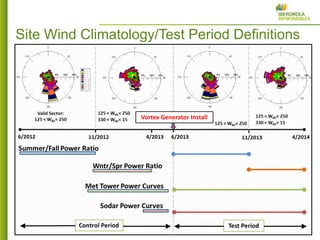
•Site Wind Climatology and Test/Control Period Definitions 
3Performance Assessment Method 1: Power Curve 
4Performance Assessment Method 2: Active Power Relationships 
5Conclusions/Next Steps
3 
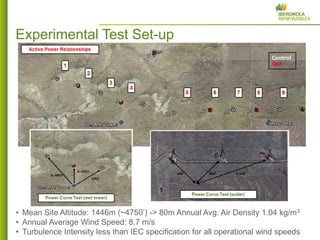
Experimental Test Set-up 
•Mean Site Altitude: 1446m (~4750’) -> 80m Annual Avg. Air Density 1.04 kg/m3 
•Annual Average Wind Speed: 8.7 m/s 
•Turbulence Intensity less than IEC specification for all operational wind speeds
4 
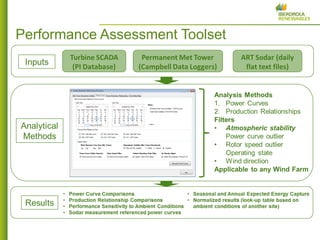
Performance Assessment Toolset
5 
Site Wind Climatology/Test Period Definitions
6 
0 0.2 0.4 0.6 0.8 1 1.2 
0 
0.2 
0.4 
0.6 
0.8 
1 
Wind Speed (normalized) 
Power (normalized) 
Test Period (subset) Power Curves 
vg 
no vg 
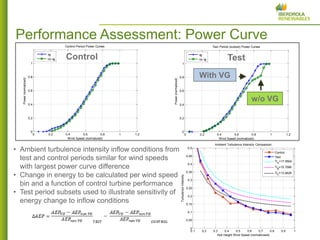
• Ambient turbulence intensity inflow conditions from 
test and control periods similar for wind speeds 
with largest power curve difference 
• Change in energy to be calculated per wind speed 
bin and a function of control turbine performance 
• Test period subsets used to illustrate sensitivity of 
energy change to inflow conditions 
Performance Assessment: Power Curve 
0 0.2 0.4 0.6 0.8 1 1.2 
0 
0.2 
0.4 
0.6 
0.8 
1 
Wind Speed (normalized) 
Power (normalized) 
Control Period Power Curves 
vg 
no vg 
0.1 0.2 0.3 0.4 0.5 0.6 0.7 0.8 0.9 1 
0 
0.05 
0.1 
0.15 
0.2 
0.25 
0.3 
0.35 
0.4 
0.45 
0.5 
Hub Height Wind Speed (normalizwed) 
Turbulence Intensity 
Ambient Turbulence Intensity Comparison 
Control 
Test 
Ti 
A 
=17.9504 
Ti 
B 
=15.7066 
Ti 
C 
=13.4628 
Control Test 
With VG 
w/o VG
7 
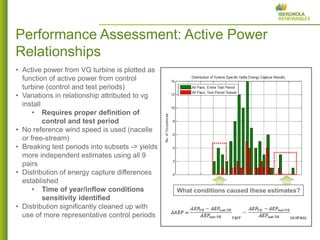
• Active power from VG turbine is plotted as 
function of active power from control 
turbine (control and test periods) 
• Variations in relationship attributed to vg 
install 
• Requires proper definition of 
control and test period 
• No reference wind speed is used (nacelle 
or free-stream) 
• Breaking test periods into subsets -> yields 
more independent estimates using all 9 
pairs 
• Distribution of energy capture differences 
established 
• Time of year/inflow conditions 
sensitivity identified 
• Distribution significantly cleaned up with 
use of more representative control periods 
Performance Assessment: Active Power 
Relationships 
What conditions caused these estimates?
8 
0 0.1 0.2 0.3 0.4 0.5 0.6 0.7 0.8 0.9 1 
0 
0.2 
0.4 
0.6 
0.8 
1 
Power Output (w/o VG) (normalized) 
Power Output (w VG) (normalized) 
Active Power v Active Power Relationship 
Control AVG 
Control AVG-STD 
Control AVG+STD 
Test AVG 
Test AVG-STD 
Test AVG+STD 
0 0.1 0.2 0.3 0.4 0.5 0.6 0.7 0.8 0.9 1 
10 
1 
10 
2 
Turbine with Vortex Generator Power Standard Deviation Sensitivity to Generation Level 
Power Output (w/o VG) (normalized) 
Power STD as Percentage of Power Output (%) 
Control Period 
Test Period 
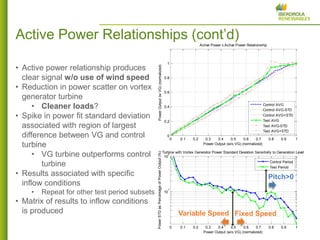
• Active power relationship produces 
clear signal w/o use of wind speed 
• Reduction in power scatter on vortex 
generator turbine 
• Cleaner loads? 
• Spike in power fit standard deviation 
associated with region of largest 
difference between VG and control 
turbine 
• VG turbine outperforms control 
turbine 
• Results associated with specific 
inflow conditions 
• Repeat for other test period subsets 
• Matrix of results to inflow conditions 
is produced 
Active Power Relationships (cont’d) 
Variable Speed Fixed Speed 
Pitch>0
9 
•Inflow conditions in control and test periods to be as close as possible 
•Balance between proximity in time or proximity in inflow conditions 
•Active power relationship methodology yields multiple estimates of energy capture improvements 
•Seasonal/inflow sensitivity identified 
•Nacelle wind speed independent 
•Power curve approach useful although yields fewer estimates of energy capture change 
•Upwind wind resource required can limit useable sectors 
•Performance of vortex generators understood at test site(s) 
•Performance assessment method designed such that results can be applied to other sites 
Conclusions
10 
•Instead of just matching seasons for control and test periods, match exact inflow conditions 
•Wind direction, wind speed and directional shear, turbulence intensity, atmospheric stability, inflow angle 
•VG energy capture improvement of 1-2% estimate is often determined through careful filtering of inflow conditions (non-wake scenarios) 
•For sites that have significant energy capture with close to mid- distance waked inflow, how does the 1-2% change 
•Do VGs impact performance at low wind speeds and high turbulence where high turbulence is known to improve energy capture already? 
Next Steps

2014 Wind Turbine Blade Workshop- Johansen

  • 1.
    Vortex Generator PerformanceMeasurement Challenges and Solutions Nick Johansen Commercial Operations System Engineer Sandia Blade Reliability Workshop August 28, 2014
  • 2.
    2 Presentation Outline 1Experimental Set-up 2Performance Assessment Toolset •Site Wind Climatology and Test/Control Period Definitions 3Performance Assessment Method 1: Power Curve 4Performance Assessment Method 2: Active Power Relationships 5Conclusions/Next Steps
  • 3.
    3 Experimental TestSet-up •Mean Site Altitude: 1446m (~4750’) -> 80m Annual Avg. Air Density 1.04 kg/m3 •Annual Average Wind Speed: 8.7 m/s •Turbulence Intensity less than IEC specification for all operational wind speeds
  • 4.
  • 5.
    5 Site WindClimatology/Test Period Definitions
  • 6.
    6 0 0.20.4 0.6 0.8 1 1.2 0 0.2 0.4 0.6 0.8 1 Wind Speed (normalized) Power (normalized) Test Period (subset) Power Curves vg no vg • Ambient turbulence intensity inflow conditions from test and control periods similar for wind speeds with largest power curve difference • Change in energy to be calculated per wind speed bin and a function of control turbine performance • Test period subsets used to illustrate sensitivity of energy change to inflow conditions Performance Assessment: Power Curve 0 0.2 0.4 0.6 0.8 1 1.2 0 0.2 0.4 0.6 0.8 1 Wind Speed (normalized) Power (normalized) Control Period Power Curves vg no vg 0.1 0.2 0.3 0.4 0.5 0.6 0.7 0.8 0.9 1 0 0.05 0.1 0.15 0.2 0.25 0.3 0.35 0.4 0.45 0.5 Hub Height Wind Speed (normalizwed) Turbulence Intensity Ambient Turbulence Intensity Comparison Control Test Ti A =17.9504 Ti B =15.7066 Ti C =13.4628 Control Test With VG w/o VG
  • 7.
    7 • Activepower from VG turbine is plotted as function of active power from control turbine (control and test periods) • Variations in relationship attributed to vg install • Requires proper definition of control and test period • No reference wind speed is used (nacelle or free-stream) • Breaking test periods into subsets -> yields more independent estimates using all 9 pairs • Distribution of energy capture differences established • Time of year/inflow conditions sensitivity identified • Distribution significantly cleaned up with use of more representative control periods Performance Assessment: Active Power Relationships What conditions caused these estimates?
  • 8.
    8 0 0.10.2 0.3 0.4 0.5 0.6 0.7 0.8 0.9 1 0 0.2 0.4 0.6 0.8 1 Power Output (w/o VG) (normalized) Power Output (w VG) (normalized) Active Power v Active Power Relationship Control AVG Control AVG-STD Control AVG+STD Test AVG Test AVG-STD Test AVG+STD 0 0.1 0.2 0.3 0.4 0.5 0.6 0.7 0.8 0.9 1 10 1 10 2 Turbine with Vortex Generator Power Standard Deviation Sensitivity to Generation Level Power Output (w/o VG) (normalized) Power STD as Percentage of Power Output (%) Control Period Test Period • Active power relationship produces clear signal w/o use of wind speed • Reduction in power scatter on vortex generator turbine • Cleaner loads? • Spike in power fit standard deviation associated with region of largest difference between VG and control turbine • VG turbine outperforms control turbine • Results associated with specific inflow conditions • Repeat for other test period subsets • Matrix of results to inflow conditions is produced Active Power Relationships (cont’d) Variable Speed Fixed Speed Pitch>0
  • 9.
    9 •Inflow conditionsin control and test periods to be as close as possible •Balance between proximity in time or proximity in inflow conditions •Active power relationship methodology yields multiple estimates of energy capture improvements •Seasonal/inflow sensitivity identified •Nacelle wind speed independent •Power curve approach useful although yields fewer estimates of energy capture change •Upwind wind resource required can limit useable sectors •Performance of vortex generators understood at test site(s) •Performance assessment method designed such that results can be applied to other sites Conclusions
  • 10.
    10 •Instead ofjust matching seasons for control and test periods, match exact inflow conditions •Wind direction, wind speed and directional shear, turbulence intensity, atmospheric stability, inflow angle •VG energy capture improvement of 1-2% estimate is often determined through careful filtering of inflow conditions (non-wake scenarios) •For sites that have significant energy capture with close to mid- distance waked inflow, how does the 1-2% change •Do VGs impact performance at low wind speeds and high turbulence where high turbulence is known to improve energy capture already? Next Steps